Out of the Same Mouth

Likewise, the tongue is a small part of the body, but it makes great boasts. Consider what a great forest is set on fire by a small spark. The tongue also is a fire, a world of evil among the parts of the body. It corrupts the whole body, sets the whole course of one’s life on fire, and is itself set on fire by hell.All kinds of animals, birds, reptiles and sea creatures are being tamed and have been tamed by mankind, but no human being can tame the tongue. It is a restless evil, full of deadly poison. With the tongue we praise our Lord and Father, and with it we curse human beings, who have been made in God’s likeness. 10 Out of the same mouth come praise and cursing. My brothers and sisters, this should not be. 11 Can both fresh water and salt water flow from the same spring? 

James 3:5-10 NIV via biblegateway.com (emphasis added)

‘We have two ears and one mouth so that we can listen twice as much as we speak.’

Epictetus (Greek philosopher)

Have you ever made a tape of you speaking, and played it back to listen to yourself? Or have you had someone remind you of what you said earlier in the day or week? Have you been astonished to hear what came out of your mouth (or how someone else interpreted your words)? James, the brother of Jesus, had much to say about the dangerous power of an untamed tongue. “Fire”, “poison”, “corrupt”, “restless”, “evil”, and “deadly” are harsh words, but we should heed James’ warning.

Out of the same mouth come praise and cursing…
Out of the same mouth come worship and complaining…
Out of the same mouth come encouragement and gossip…
Out of the same mouth come blessings and bitterness…
Out of the same mouth come hymns of heaven and threats of hell…

And it’s not just our mouths, anymore. I see (and have seen it in my own feeds) posts on social media that make me wonder if the person posting is aware of what they posted just minutes or hours before–rants and boasts, complaints and smug condemnation sprinkled with Bible verses about Peace and Love, and pictures of puppies. We copy and paste, write and speak “in the moment” out of the emotions and thoughts that we allow to govern us. And while we may forget our momentary outbursts and random sarcastic comments, others do not. God does not ignore them, either. He can and will forgive them, but He isn’t “fooled” by our gracious cover-ups and flowery quote boxes.

Especially in this election season, it is tempting to let emotions and “righteous” indignation cause us to speak or post in ways that show disrespect, disdain, and even hatred toward neighbors, co-workers, and (yes, possibly) relatives who may vote differently or for different reasons than we do. We hurry to post or “share” clever put-downs or preachy thoughts about what others should “know” or how they should think and act. But would we say such things in person? Do we really mean to hurt others in our quest to be “right” or clever or morally virtuous in the eyes of a few people we barely know?

When I pray today, I need to “listen” to what I’ve been saying lately. Do I need to deal with hidden anger or resentment? Do I need to confess (both to God and to someone else) about gossip? Do I need to reconsider the way I speak about my relationships and my achievements (and failures!)? Do I need to stop following or sharing certain sites or content? Do I need to spend less time talking and posting than listening and praying?

The same mouth that praises God should be speaking life, peace, healing, and hope to those around me. The same mouth that promises to follow Christ, should promise to reach out to those for whom He died. The same mouth that gives thanks for Salvation should be eager to share the Good News.

The tongue is powerful–whether as a weapon or a tool; whether controlled or out of control. God wants to teach us to use it as a tool for good. Not just when we pray, or worship, but every time we use it!

It’s Not Enough!

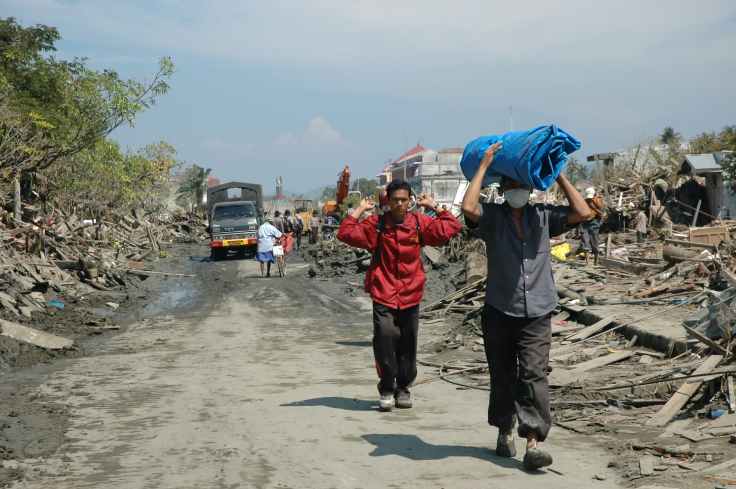
Often, when there is a disaster– especially one that seems preventable and senseless, like a mass shooting or a horrible crash–thousands of people reach out with “thoughts and prayers” for the victims and their families. And, predictably, others will angrily comment that thoughts and prayers are “not enough.” What good are thoughts and prayers in the face of senseless violence or preventable dangers? Shouldn’t we be driven to action? Shouldn’t we focus our efforts on justice or working to guarantee that such disasters can never happen again?

Such anger is natural, and such sentiments may seem more virtuous than offering nebulous emotional support. What, after all, can thoughts and prayers really DO in the face of evil, injustice, pain, and grief?

Well, I can’t speak for “thoughts”, but I have studied prayer for most of my life. I would offer the following words about the effects of prayer:

  • First, prayer reminds me that I am NOT in control of my circumstances– only my reaction to them. I cannot control what happens, what HAS happened, or what WILL happen. And my anger will not change what has already happened, nor will it prevent future disasters from happening. And while I may not be able to prove to others that prayer CAN prevent future disasters or heal present grief, I have known it to do both in my life and in the lives of others.
  • Second, prayer reminds me that there is Someone Bigger than me– Someone Bigger than my circumstances– who has the wisdom and the power to do what even thousands of well-meaning people cannot. Thousands of people coming together can make a difference over time, but God can do miraculously more than we can imagine!
  • Third, praying for others is something I CAN DO— anywhere, anytime– across distances, cultures, time zones, and circumstances. Prayer doesn’t cost anything. It doesn’t require that I have specialized skills or access to physical resources. It may not seem very active, like ranting or screaming, marching or protesting, but it isn’t the same as inaction or apathy.
  • Lastly, praying for others is a first step in helping others. My prayer alone may not seem like “enough”, but prayers have a way of multiplying, and inspiring, and intensifying in positive and impactful ways.

But more than just talking about the effectiveness of prayer, I’d like to pose a couple of questions for those who dismiss prayer as “not enough.”

  • What are you offering (instead of prayers)? Will your thoughts, plans, and actions have immediate or eternal results? Do you have the solution to all the world’s problems? Will you be able to control what happens in the future, or make sense of what has happened in the past? Will your solutions be perfect– no unintended consequences or necessary casualties?
  • If you are so angry about others praying, why waste your energy complaining about it? Go ahead with your own solution/reaction/plan.
  • Is your solution “enough?” Is your anger “enough?” Are your good intentions “enough?” Ultimately, you must wrestle with the existence of evil and injustice in this world. Senseless things happen. Good people suffer, and guilty people enjoy “success.” And nothing we offer is ever “enough” to change the world around us.

Our efforts and actions will never be “enough.” But prayer taps into the reality that God IS ENOUGH. His Grace is sufficient; His Love endures forever; His wisdom is higher than ours, and His power is boundless. He doesn’t always remove us from the chaos and suffering of this world, but He redeems us, and He enters into the circumstances of our own suffering and grief. He gives us courage, strength, hope, and a sense of purpose that goes beyond what we can find in ourselves.

Look-alike Morals

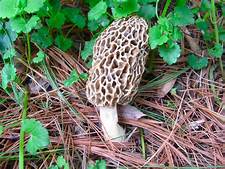
It is Morel season in my home state of Michigan. Morels are mushrooms that only grow in mid-Spring. They are usually found in or near wooded areas, and they are delicious! Thousands of eager hunters search woods, roadsides, forests, orchards, and glades looking for the elusive spores each year. While morels can be “grown,” they are not easy to cultivate. Finding them is like a treasure hunt in all the freshness of spring’s new growth!

Morel mushroom

But there are several look-alike mushrooms– some of which are dangerous and even poisonous– growing now, too. It takes a good eye and some knowledge to tell the difference. False morels may have a similar shape, but they usually are slightly different in color and texture. Some false morels will appear brown, reddish, or even slightly purple, while true morels range from yellow, yellow-gray, or gray-black. False morels may be “puffier” or “spongier” than true morels. And while true morel “caps” attach to their stems, false ones may be detached or flared. It is important to know the difference and to be cautious when collecting the elusive morel.

false morel–gyromitra esculenta

The same is true of morals–there are plenty of people masquerading as men and women of integrity. They are polite, clean, charming; many are even respected members of the community. They may volunteer, give to charities, attend a local church, run for public office, hold a job requiring responsibility and trust. They look and act like honest, kind people. But they may be dangerous– even poisonous. They may even rise to positions in the church, destroying faith and trust among members of their flock, or spreading distrust and confusion among neighbors and even families.

So how do we “spot” the difference? Just as importantly, how do know which type we are!?

There are a few principles in the Bible that we can use to identify “false prophets” and those with “look-alike morals.”

  • First, we need to study what a true “Christ-follower” should look like. It is vital that we take the time to study for ourselves what the Bible says. Asking “what would Jesus do?” does us no good if we don’t know what He actually did and said! Putting all our trust in a role model or a dynamic leader is like choosing a mushroom because it “looks tasty–it could be a morel…”
  • Second, we need to look for people who try to “color” or “shade” the truth to look “tastier.” All the way back in the Garden of Eden, Satan used this trick with Eve– twisting God’s words, adding supposedly “hidden” knowledge, and dismissing the severity of God’s warning:

The woman said to the serpent, “We may eat fruit from the trees in the garden, but God did say, ‘You must not eat fruit from the tree that is in the middle of the garden, and you must not touch it, or you will die.’” “You will not certainly die,” the serpent said to the woman. “For God knows that when you eat from it your eyes will be opened, and you will be like God, knowing good and evil.”

Genesis 3:2-5 (NIV)
  • Closely related to this, we need to look for people who use words to spread division or discontent–including constant critics and complainers. It is tempting to get caught up in arguments about certain traditions, worship styles, external standards, new practices, personal revelation, etc.. But we must avoid such poison, and avoid spreading it! One poisonous mushroom can poison the whole “batch!”
    • Beware of those who arrogantly claim to have “new knowledge” or “new interpretations”– God does NOT change; nor does His Word. New insights and deeper or personal understanding should stand up under testing. Someone who is not willing to be questioned or asked to explain themselves may have a bad reason for their unwillingness. Just because something is traditional, or “old” doesn’t mean it must change.
    • Also beware those who are dismissive toward others in the church, whether they are critical of the teaching, the music, certain ministry programs, or individuals who serve. We are commanded to build one another up, not pass judgment based on personal prefrerences.
  • Look (and listen) closely to make sure we are still “attached” to our stem– the Living Word of God. Many Christians will quote “moral” sayings that are found nowhere in the Bible:
    • “God helps those who help themselves.”
    • “The devil made me do it.”
    • “There are many paths to God.”
    • “All you need is love.”
    • “God just wants us to be happy.”
    • “God will never give you more than you can handle..”
  • Finally, we need to look at the person’s “fruit.” Someone can have an impressive outward show of morals, yet miss out on “bearing fruit.” Such people may display all the trappings of earthly success, yet they seen to have no peace, or their lives seem joyless or filled with discontent or intemperence. In my own life, am I demonstrating Love, Joy, Peace, Patience, Kindness, Goodness, Faithfulness, Gentleness, and Self-Control? (see Galatians 5:22-23) Am I humble? Or am I impatient, unkind, judgmental, fickle, reckless, complaining, bitter, envious, angry, dissatisfied, greedy, worried, and prone to mock others– especially those in the church?

Beware of false prophets, who come to you in sheep’s clothing but inwardly are ravenous wolves.  You will recognize them by their fruits. Are grapes gathered from thorn bushes, or figs from thistles?  So, every healthy tree bears good fruit, but the diseased tree bears bad fruit.  A healthy tree cannot bear bad fruit, nor can a diseased tree bear good fruit.  Every tree that does not bear good fruit is cut down and thrown into the fire. Thus you will recognize them by their fruits.

Matthew 7:15-20 (ESV)

When we find true followers of Christ, we should be able to recognize the treasure of a life redeemed and transformed. While none of us is perfect while we remain in our present bodies, we should be producing a harvest of good fruit that sets us apart from “look-alikes” who are merely outwardly moral.

So Close…

I’ve been reading in the book of Numbers this week. Numbers is not the most exciting book of the Bible. Many of the chapters are about the census, or about further rules and regulations concerning sacrificial offerings, etc.. But the chapters from 11-15 detail a series of rebellions– grumblings against Moses and efforts to return to Egypt. These rebellions happen after over two years after God had led the people out of Egypt. For two years, they have been protected, fed, sustained, and instructed by God himself. His spirit has appeared as a pillar of cloud by day and a pillar of fire by night throughout their journey. They have had manna and quail to eat, water from the rock to drink, and they have seen the vast army of Egypt drowned in a matter of minutes, while they were led through the sea on dry land! 

And now, they are so close to the “finish line.” They are on the very doorstep of the land of Canaan; the land God had promised to GIVE them. All that is left is for Moses to send out some scouts to bring back a report about the land– its cities and farmland, its people and its produce. Those two years must have seemed like a lifetime, but now it would be coming to an end. God would provide a homeland; a place to build houses, raise crops, rear their children, and settle into lives of peace and prosperity.

So what happened? The scouts brought back a factual report. The land had fortified cities, and lush farmland. It was already planted with plenty of fruit trees and vineyards. And there were ancient people groups with mighty warriors. Israel had just taken a census. They also had mighty warriors, and a lot of them! Moreover, they had God’s promise that the land would be GIVEN to them as their inheritance.

They were so close! Victory, rest, and prosperity were so close they should have been able to taste them. Instead, their warriors moaned and wailed like infants. The same people who had vowed to follow the Lord at Mount Sinai, now planned to walk away from His promised prize. They decided to turn around and go back to slavery in Egypt–the same Egypt that God had decimated two years earlier by sending plagues and destroying its army.

Two years of camping and living “on the road,” lost in two hours of grumbling and fear-mongering. And the punishment? Forty years of needless wandering–time to realize what had been thrown away in petty worrying and imagining the worst. Time to regret their reaction and their failure to trust God. Time for God to show them, once again, His ability to keep them safe and sound in the desert places.

And the learning curve would be a steep one. Almost immediately, a group decided that they would “prove” to God that they were ready to conquer Canaan– on their own. But it didn’t work. Then a group decided that Moses was to blame for their misfortune. But they were “swallowed up.” In the forty extra years of wandering, group after group would challenge Moses (and God) and be destroyed from within.  Moses, who had already lived forty years in the wilderness tending sheep, would have to repeat the task, shepherding the entire nation of Israel for forty long and difficult years. And even he would fall victim to his own frustrations, calling water from another rock, but doing it “his” way. Even Moses would fall in the wilderness, never getting to enter the promised land.

How many times have you noticed that the closer we get to a goal, the more likely we are to fall short. We sabotage our own efforts, or we rebel against good instruction. Sometimes we just give up a few yards short of the finish. We are just over half-way through the month of February. What goals or resolutions did you make for this year? How many of them have you stuck with?

Here are three things I take away from the lessons of Numbers 11-15:

  • Look Beyond. Don’t take your eyes off the prize! The scouts’ report was not all bad. Yes, the cities were walled and the warriors were big and fierce. But the walls of Jericho were eventually brought down without a single battering ram, siege ramp, or arrow! Don’t ignore the trials ahead, but don’t let them blind you to the blessings beyond them!
  • Look ahead, not behind. Don’t waste time living in past comforts or running from past mistakes. God has something better than whatever we’re going through now. But God isn’t waiting on the other side. He is beside us, around us, WITH us right now. He is patient with us. It may take us two years (or forty-two!) to reach a goal, but if we learn to follow God, we will never be forsaken.
  • Look UP! God’s spirit didn’t appear on the ground around the Israelite camp. He appeared as a pillar. God called Moses UP on Mount Sinai. We need to stop looking back at our past, or around, comparing ourselves to others, and look at God’s promises. In relation to our goals and dreams, we need to LIFT them up in prayer! Daily!

We are so close! Let’s keep going in the right direction towards God’s promises.

Give Thanks!

At least once each month, I want to share some practical thoughts about pursuing a life of prayer. Since we are in the Thanksgiving season, I thought I would share some ideas about giving thanks.

It’s easy enough to say, “Thank You!” when we receive a gift or someone does something special for us. After all, it’s just two small words, and they are (usually) welcome words at that. But what are some practical ways to grow in our expression of thankfulness and gratitude this season?

  • Of course, we can make a list– “Count Your Blessings”– of all the things we have to be grateful for. But what do we do with the list AFTER we write or type it out? What are some ways to keep a running list of blessings? In what ways can you keep a list visible and interactive? Keep a special journal. Challenge yourself to fill it with all the things you have (tangible and intangible). Keep a whiteboard where the family can add things each week. Can your family fill the white board? Can you fill an entire notebook?
  • Make thankfulness shareable each day. Thank the cashier at the grocery store. Thank your children when they go above and beyond (and see if it doesn’t happen more often!) with their chores. Thank your parents. Thank your spouse. Thank your pastor. Point out to others when there are things that make you grateful– a beautiful day, a favorite sweater, a good meal at a restaurant (or at home!) It will naturally grow thankfulness in your prayer life if you are growing thankfulness in your other relationships– and vise versa!
  • Demonstrate thankfulness– practice random acts of kindness. Be an encourager. Give compliments freely. Donate. Volunteer. Take positive action. You might give OTHERS a reason to be thankful, as well.
  • Seek out gratitude. On days when it seems hard to give thanks, look for it. Look backward– remember better days, and God’s faithfulness in other hard times. Look forward– look at the promises of God for the future. Look sideways– rejoice with those who rejoice. Instead of comparing your lot with others, join in their happiness. Look for ways to be glad for others, just as you would want them to join in your happiness. This is easier to write than to put into practice, but practice will make it easier to do.
  • Practice starting prayer with praise and thanksgiving. It is so tempting, especially when we are facing trials and an unknown future, to start our prayers ASKING, instead of ADORING. It won’t change your situation, but it will change your attitude when you begin with THANKS!
  • Break down your big “thank yous” into little ones. “Thank you for my house..” can become “Thank you for the floors and the roof and the bedroom and the kitchen and the dishes in my kitchen and the tub in the bathroom and for running water…” You get the idea. It will amaze you how detailed God is in meeting ALL our needs!
  • Practice the art of “letting go” of what you do NOT need, and keeping what you will actually use. How much of your clutter can help others? How much stress comes from hanging on to things we no longer need or use? There are many websites and books on this topic; some from a Buddhist perspective, but the idea is valid for all faiths. Jesus said, “Where your treasure is, there will your heart be also.” Matthew 6:21 “Seek first the kingdom of God and His righteousness, and all these things will be added to you.” Matthew 6:33 It is possible to have TOO MUCH to be thankful for! And it is possible to be more thankful for less!
  • Break the complaining habit! Whenever you find yourself complaining, try to stop and replace your complaint with a thank you for something else in your life. Having a bad hair day? Thank God for comfy shoes! Having a difficult day with a teenage child? Thank God that you survived your own teenage years!

Thanksgiving is so much more than just a holiday. It is a way of life– a pursuit that relates very directly to the pursuit of Prayer!

Wealth in the Wilderness

In Exodus, chapter 16, the people of God are wandering in the wilderness of Sin (literally and figuratively!). They begin to grumble and complain about food, contrasting their current situation with their life in Egypt. Whenever I have read this passage in the past, I have assumed that the Israelites lacked food– that they were starving in the desert–and that their grumbling had some merit. After all, they are in a desert. Their complaints about water make sense. Surely, their complaints about food have the same ring of desperation.

Photo by Yogendra Singh on Pexels.com

But a few chapters earlier, and a few chapters later, we get a better picture of the true situation of these wandering bands of Israelites. As they left Egypt, they demanded from Pharaoh that they be allowed to take their flocks and herds! This would suggest that they had sheep, cows, and goats with them–meat and milk in some quantity. They may have had other animals as well– chickens, pet dogs or cats, oxen or horses. The need for water was greater– not only water for the people, but for their animals– but the complaint about meat seems to have had nothing to do with actual need. If anything, their complaint might have been about grazing land for their animals– but they never bring this complaint before the Lord. Either there was enough grass, even in the wilderness, or they had brought grain to feed their flocks. And there was grain for bread–just a few short chapters later, God gives directions for the sacrifices– sacrifices that are to involve rams, bulls, and three different types of bread, cakes, and wafers made with wheat flour!

Photo by Mariana Kurnyk on Pexels.com

The Israelites have provisions. They have taken enough food for the journey up to that point, and more. They complain, not that they ARE starving, but that they believe they will starve. God answers their complaint by sending quail– enough that they got sick of it– and bread from heaven (manna). The manna continues to fall without fail every day (except the sabbaths) for 40 years, throughout all their moving; in every location and season, on rocky mountainsides and dusty plains.

Photo by Sravan Chandran on Pexels.com

God’s amazing and miraculous provision should have produced thanksgiving and worship. Instead, the people got sick of the quail, and continued with their complaining and grumbling for an entire generation as they wandered around the wilderness.

Photo by Ken Ozuna on Pexels.com

How many times do we complain about “needs” that are not needs at all? I find myself worrying about bills getting paid, or the car making “odd” noises, or an aching shoulder. I find myself thinking back to days when I had more money or free time, and far fewer aches and pains. It is tempting to ask God for a return of “the good old days.” But God’s plan for the Israelites didn’t involve pots of meat that came with chains attached. God’s plan for my life doesn’t involve my immediate comfort, but my eternal character. And even in times when I feel like I’m wandering in the wilderness, God never leaves me. I have been poor, but I have not starved. I have been sick, but not left to die alone. I have been lost, but never abandoned.

Photo by Pixabay on Pexels.com

There is wealth in the wilderness–the riches of God are available to those who will trust Him. Like manna, God will provide what only He can, and enough to see us through each day. He doesn’t promise that we will have “pots of meat” or easy circumstances. Instead, if we open our eyes, we will see miracles of grace, showing us how much God loves us and cares for us.

Photo by Irina Kostenich on Pexels.com

God’s people complained a lot, but rarely did they celebrate God’s provision or offer thanks. May we learn from their story, and praise the God who sends quail and manna to the very ones who doubt His mercy and love!

A Few Thoughts About Manna

I’ve already posted recently about Ash Wednesday (see the post from Feb. 15), so it may seem strange on a day of fasting and ashes to be writing about food. And manna doesn’t seem to have much of a connection to prayer– bear with me…

Photo by Karolina Grabowska on Pexels.com
  • Manna was, quite literally, “daily bread.” God sent manna each day for the children of Israel as they wandered and camped in the wilderness on their journey to the Promised Land. It appeared overnight, much like dew, and evaporated in the heat of the day. Yet the small “grains” could be gathered and made into nourishment for the thousands of Israelites who had no other source of bread. Manna and the bread made from it were only good for a day (except on Friday, when twice as much would fall so no work needed to be done on the Sabbath). God provides for our needs daily– we don’t have to worry and fret. Jesus returned to this theme often, including the Sermon on the Mount and The Lord’s Prayer.
  • Manna was uniquely suited for the Israelites in their situation. Manna did not require time to grow, harvest, or prepare. It did not require storage space, as it was collected and used up daily. It did not require yeast, salt, or sugar to be added to it–God designed it to be simple, sufficient, sustaining, and even sweet!
Photo by Liza Summer on Pexels.com
  • Manna was provided even after the Israelites complained and accused Moses (and God!) of leading them into the wilderness to die. God will not withhold punishment (see what happened in Numbers 11 when the Israelites complained about the manna!), but He will provide for our needs out of His love for us, not as a condition of our righteous behavior. All the people had access to manna, even those who complained or were defiant. If someone went hungry, it was not because God refused to provide– but because they chose not to avail themselves of His gift, or because they refused to accept the nature of the gift.
  • Manna was consistent. God didn’t send manna one week and raisins the next; God is faithful and unchanging–the manna wasn’t just a nutritional provision, it was a reflection of God’s nature! God gives good gifts; it is our selfish nature that often takes His goodness for granted, and asks for what we do not need.
  • Once the Israelites reached the Promised Land, the manna stopped. God’s gifts meet our needs– in His way, and in His time. God does not give gifts blindly or absent-mindedly. God knew exactly how much manna to send each day, and exactly when the manna would no longer be needed. He was watching closely the whole time– every step of the journey.
Photo by Arina Krasnikova on Pexels.com

So today, whether or not you are fasting, you can rejoice in the knowledge that God has seen every step of YOUR journey. He will provide for our every need, including the need for forgiveness, courage, physical nourishment, and spiritual growth. All we need to do is look for it, gather it, and use it!

When God Gives You Lemons…

There is a saying–“If life gives you lemons, make lemonade!” In other words, if your life circumstances are “sour,” you should look for ways to make your circumstances into something sweeter.

Often, it seems like God gives us lemons–even when we pray and do what we know is “right,” it seems like our circumstances get no better. In fact, sometimes, they get annoyingly, frustratingly worse. But God does not abandon us; He doesn’t sit back and laugh at our frustration, or leave us to flounder in chaos with no hope. Sometimes, our circumstances are opportunities for God to make lemonade.

Photo by Pixabay on Pexels.com

When God rescued Israel from slavery in Egypt, He did not lead them directly to the Promised Land. Instead, He led them through the wilderness and to the shores of the Red Sea. There, they were trapped by the Egyptian army, complete with horses and chariots and trained warriors. But God’s plans were bigger than the armies of Egypt, and bigger than the sea. God made a path of escape through the sea, and used the very same sea to drown the enemy!

Photo by Polina Zimmerman on Pexels.com

What a miracle! But it wasn’t long before the people began complaining about “lemons” from God–the complained about the food, the journey, the scenery, and their leader, Moses. Even when God did many more miracles– bread from Heaven, meat from the sky, water from the rock, divine intervention in battles– the Israelites were still complaining about all the “lemons” in their life, and longing to go back to Egypt and slavery!

Photo by Juan Pablo Serrano Arenas on Pexels.com

There are seasons in life when it seems like God is giving us lemons–a job loss, an unexpected illness, a wayward daughter, a house fire, civil unrest… Struggles and pain will come into our lives; we should not pretend otherwise, or seek to deny them when they come. And God does not expect us to “make lemonade” all on our own. But He may allow us to be squeezed a bit; He may send the lemons today, and sugar next Monday. He may not give us a fancy carafe and cute little teacups. But He will give us all we need to make lemonade if we are prepared for the task. And usually, He will give us more than enough to set up a lemonade stand and serve others!

Photo by PhotoMIX Company on Pexels.com

Several years ago (2005), I had the opportunity to visit a settlement of Haitian refugees in the Dominican Republic. Multiple mission groups had banded together to provide basic needs– shelter, basic medical services, toilets and showers, etc. Service teams from Canada and the U.S. had come in to build two-room houses and set up a small clinic and school. Donations had come in– clothing, bedding, toothbrushes… Thousands of Haitians had been displaced after a bad hurricane season and massive flooding, and this refugee camp was home to nearly 150 families. Even with the donations, there were shortages– there was running water, but it wasn’t potable. There was rice, but few vegetables and very little meat. Aspirin and antibiotics were rationed, and most of the children were thin, and sad, half-clothed in rags and bare-foot.

Photo by Tamba Budiarsana on Pexels.com

In the midst of all this, there was a miraculous donation– of flip-flops! Literally thousands of pairs of flip-flops–brand new overruns: different sizes, but all the same colors and style–more than enough for every person to have a pair. God had given the people of this settlement a LOT of lemons. Shoes were well and good, but the people needed water… The shoes were distributed– there were even a few left over. But about a week later, it was observed that most of the people were still walking around bare-footed. What had happened to the donated flip-flops? Were the people ungrateful? Were they too proud to use the new shoes? Too fearful?

Photo by Leonardo Rossatti on Pexels.com

Not at all! These amazing people trusted that God could help them turn lemons into lemonade. They loaded the flip-flops into large bags, carried them (bare-footed) on their backs into town (the nearest town was nearly 10 miles away, but it was on the coast and attracted many tourists), pooled what little money they had to rent a booth at the beach, and SOLD the flip-flops. The money they made from the sale of the flip-flops purchased five-gallon jugs of drinking water. The jugs were carried back from town and shared among the members of this growing community. As they continued to sell the donated flip-flops, they purchased other small items– packets of laundry detergent, fly swatters, plastic dishes and cups–and established a small colmado (local store) within their own community. When I was able to visit again a couple of years later, the refugee camp was a thriving community– many of the houses had been painted, and had gardens and picket fences, on which clothes were drying in the sun. And while some children were still running in bare feet, many others had shoes. Some of the shoes were ragged and some were mismatched, but the children were happy and healthy. In the middle of the community, there was a beautiful church. Inside, there was a woman sweeping and singing songs of praise.

I share this story because it both encourages me and shames me. In this season of “lemons”– COVID-19 and violent unrest in my country– I have a choice. I can complain like the children of Israel. I can pray for God to take away the lemons; I can beg for Him to send me lemonade. Or I can look around for opportunities to use what He has provided– graciously provided– and sing His praises as I make lemonade.

Photo by Luis Quintero on Pexels.com

God, grant me the eyes to see your provision amid whatever challenges I face today. THANK YOU for the lemons you have given me today, and, when I am squeezed, help me to become a sweet and refreshing reminder to others of YOUR Grace and Joy.

Unwholesome Talk

My husband and I visited the local Fair in the neighboring county last week.  We love to visit local fairs and festivals (see Pass It On).  We love the pageantry, tradition, history, celebration, food, and general enjoyment.  We also love to see the exhibits– crafts, home arts, commercial exhibits, artwork, produce, and animals.

cows-dairy-cows-milk-food-162801.jpeg
Photo by Pixabay on Pexels.com

Our visit last week began as the fair was “waking up.”  It was after dawn, but still early in the day.  The animals were being fed and/or groomed– some were getting ready to be shown; others were happily munching away as ribbons earned earlier in the week fluttered above their pens.  There were turkeys and rabbits, draft and work horses, ducks, pigs, shaggy highland cattle, newly-shorn sheep, calves, pigeons, roosters, racing horses, jersey cows, goats, geese, and baby chicks.  And there were noises–crowing, lowing, neighing, and squawking, quacking, cooing, oinking and snuffling.  Lastly, the noises of people– classroom groups of children exclaiming over the various animals; their teachers and chaperones reminding them of the rules (“Don’t touch!”, “Stay together”, “Don’t run!”); older couples reminiscing; owners and volunteers and caretakers discussing the tasks of the day.

men and women combining hands together while smiling
Photo by rawpixel.com on Pexels.com

mohawk haan crows close up
Photo by Pixabay on Pexels.com

As the day wore on, the noises changed.  On the midway, announcements blared.  Game booths and vendors hawked their wares and prizes.  Even the animals were noisier– more restless as the crowds grew larger and the heat of the day became oppressive.  The roosters were drowned out by the cackling of hens.  The quiet “good morning” on the lips of strangers passing by turned into harried questions; “Where did you get that corn dog?”  “How much did you pay for it?”  “Do you know where we can get some ice cream?”  “Don’t they have any restrooms around here?”  “Who’s giving out the canvas bags/yard sticks/free popcorn?”

photo of crowd of people in the market
Photo by Nicole Law on Pexels.com

This wasn’t universal–the announcer for the harness races was amazing.  Between races, he gave information about the racing program– how to read it, what the various terms meant, and how to use the guides to understand more about the horses, their training, their pedigree, the drivers, their records, and much more.  What a wealth of knowledge, and what a great opportunity to listen and learn!  And near the dairy barn, a young teen dressed in a cow costume (who had to be roasting from the heat) danced around, mooing and ringing a bell calling people to visit the dairy booth, where other teens cheerfully gave away recipe books, magnets, pens, and information.

sky people colorful colourful
Photo by Scott Webb on Pexels.com

What a contrast to some of the comments from fair-goers and workers.  Some were sullen, some were rude, and some irreverent.  Some of the language was not just unwholesome, it was discouraging, disparaging, and mean.  Again, this was not universal; nor was it unique to this venue.  Go almost anywhere in public, and eventually, you will hear crowing, cackling, snuffling, and quacking by bitter, impatient, and self-involved people.

close up of hand feeding on tree trunk
Photo by Leah Kelley on Pexels.com

Unwholesome talk– rude remarks, snide mumbles, bellowing guffaws, complaints, sarcasm–it starts out small, dripping out of our mouths before we even notice.  But each drip flows into a stream, and then a river, until our words pour out in anger and malice and one-up-man-ship.

Ephesians 4:29 New International Version (NIV)

29 Do not let any unwholesome talk come out of your mouths, but only what is helpful for building others up according to their needs, that it may benefit those who listen.

Psalm 19:14 New Living Translation (NLT)

14 May the words of my mouth
    and the meditation of my heart
be pleasing to you,
    Lord, my rock and my redeemer.


Blog at WordPress.com.

Up ↑