Praying it Forward

Have you ever been the recipient of a small act of kindness, and “paid it forward” by doing something nice for others? It doesn’t have to be an extravagant gesture–someone holds a door open for you, so you do the same for someone else when your hands are free; you give someone a compliment, and as you walk on, you hear them complimenting the next person they see. It doesn’t even have to be the same action–you may see someone pick up trash along the sidewalk, and later you make a small donation to a local charity that collects gently used items for needy residents…

Photo by Pixabay on Pexels.com

The idea is that when we see good things happening, we can be inspired to join in and “spread the good.” In a world full of things that are not so “good”– bitterness, greed, hatred, pushing and shoving, name-calling, apathy, sadness, shame, and evil–good deeds stand out. Even the smallest kind word, smile, or simple act can have an exponential impact when it gets passed on.

Photo by mentatdgt on Pexels.com

Have you ever considered “Praying it forward?” Not as a substitute for “paying it forward”, but as a supplement? When you see someone doing a kindness, or when you are the recipient of that kindness, you can pray:

  • Thank–of course, if you have the opportunity, thank the other person first, but then thank God for HIS goodness and kindness; thank Him for the person you’ve seen or interacted with; thank Him for giving you eyes to see (or ears to hear, etc.) the goodness around you; thank him for others who have blessed you in the past
  • Bless–if you have the opportunity, bless the other person with a smile, or a reciprocal act of kindness, but then ask God to bless the other person–and/or someone else who is on your mind.
  • Ask– ask God for opportunities to “pay it forward”, or just to spread more kindness! Ask how you can show kindness, mercy, and love to others throughout the day. Even more, ask God to intervene (or help you intervene) in places and lives that need more than a small act of kindness.
  • Confess/Repent–sometimes a small act or word of kindness will convict us, reminding us of a time when we have withheld mercy, or have been the means of causing harm or destruction. Use this time to confess and seek to make amends (if possible), or seek forgiveness.
Photo by Vlad Chețan on Pexels.com

May today offer you opportunities to “pay it forward”, and then to “Pray if forward!”

The Prayers of the Righteous

James 5:16 Modern English Version (MEV)

16 Confess your faults to one another and pray for one another, that you may be healed. The effective, fervent prayer of a righteous man accomplishes much.


Romans 3:10-11 Modern English Version (MEV)

10 As it is written:“There is none righteous, no, not one;
11 there is no one who understands;there is no one who seeks after God.

adult back view bald crowd
Photo by David Whittaker on Pexels.com

Anyone can pray.  God hears our prayers.  God answers prayer.  But He doesn’t answer all prayers equally.  That doesn’t mean that God is unfair or unjust.  It means that God listens beyond our words and prayers– He knows our thoughts, He perceives our motives and inmost desires.  He also knows the consequences of all that we ask.

James 5:16 (above) is sometimes misused by Christians to boast in their “effectiveness”: in essence, saying “If God answers my prayers for a comfortable lifestyle or good health, it proves that I am righteous.”  But this is putting the cart before the horse.  The last phrase is contingent upon the first– “Confess your faults to one another, and pray for one another, that you may be healed.”  It is the effective (prayers designed to effect others), fervent (heart-felt, committed) prayer of a righteous (cleansed, renewed in spirit and mind and heart) man (or woman) that accomplishes much (for the kingdom, for healing, for grace, unity, or renewal).  The effectiveness comes after the confession; after the renewal, and through the Holy Spirit.  If we are boasting about our effectiveness, we’re missing the point.

photo of a hippie woman
Photo by Pete Johnson on Pexels.com

It is the humble seeker who prays for and with others, pours herself/himself out for “one another” who accomplishes much.  Such men and women spark movements and revivals, not in their own power or wisdom, but in allowing the Holy Spirit to work in their lives, and in their prayers for others.  Which is more “effective”– getting what I want for myself, or bringing lost souls to new life?

lion sleeping beside rock
Photo by Aldo Picaso on Pexels.com

If your prayers seem to lack power, consider the following:

Who am I praying for today?  What am I praying for myself?  For others?  For the Glory of God?  Am I praying fervently?  Diligently?  Righteously?  In confession and gratitude, as well as supplication?

girl-praying-hands-eyelashes-41942.jpeg

Next, consider what it means to be “effective.”  Are you praying for a healing that doesn’t happen immediately or completely?  God may be using your prayers to great effect in ways you do not expect.  God can bring spiritual and emotional healing even in physical suffering.  He can also bring healing to others as they see our faith and hope at work in difficult circumstances.


woman wearing sleeveless dress
Photo by nappy on Pexels.com

Finally, ask if there is something else you should be doing in addition to praying about the situation.  Are you ignoring a clear call from God to do something (or stop doing something) in obedience to His Word?  Are you harboring a grudge against someone?  Do you need to make things right with someone?  With God?

The effective, fervent prayer of a righteous person WILL accomplish much more than we can imagine.  What would our neighborhood look like if we spent more time on our knees than pointing fingers or shaking fists?

prayermotherdaughter 

Broken Prayers

In “Pursuing Prayer”, I want to explore ways to develop my prayers; to become “better” at praying– more confident, more Christlike.  But along the way, I have found that “better” doesn’t always mean what I think it ought to mean.  Sometimes, becoming “better” requires becoming broken.

food healthy yellow broken
Photo by Pixabay on Pexels.com

I don’t like being broken.  I don’t want to be shattered, ruined, like a broken vase.  I don’t want to pray like a broken record– sending up the same failures, the same weaknesses, the same painful memories.  I don’t want to be pinched, and cracked, and mangled.  I don’t want to be stretched and molded and squeezed.  I want to have comforting chats with God, not drawn-out confessions, or rebukes, or unanswered questions.

broken clay close up crack
Photo by Martins Krastins on Pexels.com

It is tempting to avoid brokenness–cover it up, pretend, deny, ignore its existence.  I don’t want to bring God my questions, my fears, my hurts.  I don’t want to open up the dark places of my soul.  I want to wear a smile and make small talk with God–“How are you today?”  “Just lovely, Father, and how are you?”  “Fine weather we’re having.”  “Yes, thank you for the breezes yesterday.  And could I just put in a plug for my neighbor’s gall bladder surgery?  I told her I would pray for her, so could you just give her a speedy healing?  That’d be great.  Well, gotta run. Talk to you soon…Oh, and I’m sorry for the way I blew up at the kids the other day.  I don’t know WHAT got into me.  You know I’m just not that way, right?  So I’m just asking for grace to kinda cover that up and make it ok again.  Thanks.”

blur broken ceramic clay
Photo by Fancycrave.com on Pexels.com

God is not fooled.  God is not impressed or amused at our shallow righteousness.  He’s not impressed or overcome by our brokenness, either.  But He wants it, anyway.  He wants all of it.  Because He wants to build honesty, intimacy, and most of all, restoration.  God doesn’t want us to wallow in our failures, any more than He wants us to gloat in our false perfection.  He wants to break the bondage they have over us.  He doesn’t get tired of hearing our voices, even in guilt or shame, rage or despair…if they are raised to Him.  He doesn’t want us to stay shattered and ruined.  But He needs us to be redirected, refreshed, rebuilt, rekindled, and renewed.

farm against sky
Photo by Sebastian Voortman on Pexels.com

There are many things that need to be “broken” to become better– we “break” in shoes, we “break” ground to create a new field or prepare for a new building.  We “break bread” to eat it and share it with others.  We “break” horses in order to prepare them to run or work more effectively.  We “break” bad habits.  We even “break” the ice in a new friendship.  The point is not to stay broken, but to “break through” whatever is keeping us oppressed and held down.

petaled flower drawing on white egg shell
Photo by Netaly Reshef on Pexels.com

When I am feeling broken, and I cry out to God, He doesn’t deny my brokenness; He doesn’t turn away in disgust; He doesn’t stick a hasty bandage on my wounds.  God acknowledges my pain, He listens to my questions.  He loves me enough to come and stay with me through the worst moments–even when others have gone; even when I deny His presence and turn my face to the wall–and He begins the process of turning even those scars and cracks and tears into treasures.

Brokenness is inevitable in our fallen and broken world– God is not out to break us; people and time, circumstances, and even our own good intentions will cause us to fall and fail–am I willing to uncover my brokenness and need, and allow God to reshape my shattered dreams?

yellow and pink flowers view behind broken glass
Photo by Pixabay on Pexels.com


The Seven-Layer Prayer

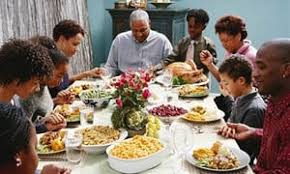
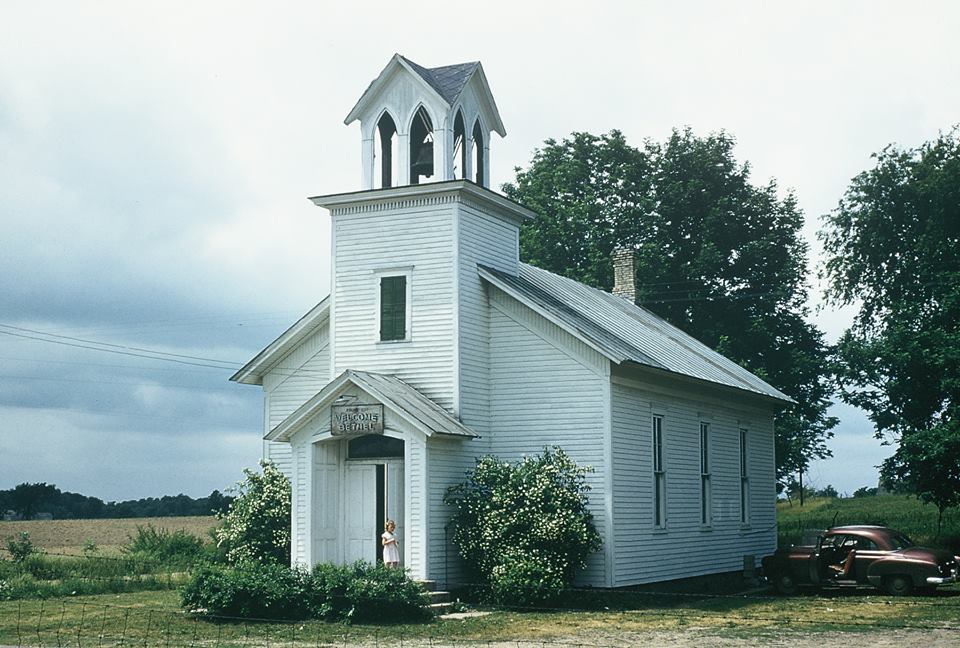
Growing up, I loved going to pot-luck meals at our little country church.  Neighbors, family, and friends would bring large dishes of home-cooked deliciousness for all to feast on as we chatted, laughed, and encouraged one another.  There were certain dishes we all could count on–homemade yeast rolls, courtesy of Lulu M.  Jello with fruit was my mom’s standard.  Another lady almost always brought meat loaf.  Baked beans, candied carrots, fried chicken, chocolate cake, scalloped potatoes– my mouth still waters just from the memories!  The wonderful woman who has since become my mother-in-law brought her famous cookies, and often, a seven-layer salad.

Bethelchurch

I love Mom’s seven layer salad, and I have learned to make my own variation.  It’s easy, it’s delicious, it’s healthful, and it travels well.  I’ve seen other recipes that use different vegetables, don’t use eggs or meat or mayo–I’m sure they’re ok, but I’m happy to stick with the basic outline that follows below.

I was thinking about the seven-layer salad the other day– it’s a wonderful dish for this time of year– chilled and utilizing fresh produce, and I realized that you can use a similar “recipe” for prayer.  So here’s my modified “Seven-Layer Prayer” recipe:


  • First, start with a layer of “Let Us”
    • Prayer doesn’t happen without an act of the will.  We must be deliberate about setting aside time and thought for prayer every day.  We should “leaf” the busyness and chaos of the day and “romaine” in fellowship with the Father!

salad vegetables vegetarian lettuce
Photo by Daian Gan on Pexels.com

  • Next, add a layer of “Care”-rots (shredded).
    • 1 Peter 5:7 New King James Version (NKJV)
      casting all your care upon Him, for He cares for you.
    • Give your worries and cares over to the One who cares most about you and all those you love.
  • Now you can add the “Peas” that passes all understanding
    • Trust that God hears and answers prayer.
    • Trust that God is in control.
    • Trust that God is Good, Wise, and Loving.
    • Rest in the knowledge that “God’s Got This!”

beans carrots close up colorful
Photo by George Becker on Pexels.com

  • Here’s where I like to add some “Meet” (usually bacon!, sometimes ham or chicken)
    • While it’s vital that we spend time in personal, private prayer, God also wants us to meet regularly with others for fellowship, mutual encouragement, accountability, PRAYER, and guidance.
  • Now it gets a little dicey–diced onion (sometimes I substitute green onions or sliced or diced mushrooms)
    • Time to peel back the layers, and cut through to the root of anything that is getting in the way of a closer walk with God–confess it and give it over to Him.
    • Sometimes, this process may cause tears, or involve a little dirt– clean it up before you proceed!
  • Time for some dressing– mayonnaise or salad dressing.  Annoint your salad, and your prayer, with oil.  Remember, God has annointed you to spread His love and grace to others.  Don’t forget to add this to your prayer life.  Just as the dressing will coat all the elements of the salad, so God’s Spirit will surround and influence your words and actions done for Him!
  • “Cheese!”  It’s a “gouda” idea to round out prayer with a time of joyful thanksgiving.  Pile it on– God’s given us a LOT for which to be “grate”-ful!

board cheese close up dairy
Photo by Pixabay on Pexels.com

  • Finally, the garnish– Hard-boiled eggs.  These remind me of the new life we have in Christ, the Triune nature of God (we used to have lessons in Sunday School about the egg having three parts but being a single egg.  We don’t use the shell in the salad, of course, but you can’t make a boiled egg without all three parts…), and also, the yolk reminds me of Heaven’s streets of gold.  In prayer, we should remember God’s faithfulness in fulfilling His promises, and the hope we have in Him.

That’s the basic recipe for a seven layer salad– enough of each ingredient for a healthy “layer”.  I’ve added extra layers a couple of times–diced tomatoes or peppers are good if you are planning to eat the salad quickly, but they will cause sogginess  if you let the salad sit.  (Also, if you use peas, use fresh if you can– drain canned peas, or get rid of any ice crystals if using frozen peas. )

watering plants with a watering can
Photo by Kaboompics .com on Pexels.com

A good seven-layer prayer should also be presented fresh, and savored.  It’s delicious, it’s good for you, it feeds others, and it travels well!  Try some!

Positioning for Prayer

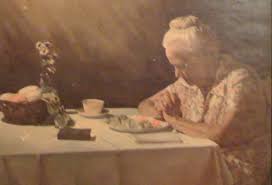
Bow, kneel, stand; hands folded, hands raised, hands clasped–there are many positions we assume when praying.  And different types of prayer seem to have different positions.  We tend to say grace seated or standing behind our chair at the table.  Some families hold hands; others bow their heads and fold their hands.  Some corporate prayers call for kneeling; others are said standing.  Some people bow, some kneel on the floor with arms outstretched; some curl up in their favorite easy chair; some face east or toward a certain focal point; some touch or hold an object, like a rosary or a Bible, or the wall or surface of a sacred place.  Some pray with eyes closed; others with eyes raised toward Heaven.

Does any of this posturing and positioning really matter?  Does God have a preference?  A requirement?  Does He get offended if I stand, or keep my eyes open or neglect to hold my hands a certain way?

gracelady

The answer is not as easy as one might think–The Bible has many specific accounts of prayer, as well as many commands and guidelines.  Hebrew priests stood with hands raised to pronounce blessing and to seek God’s favor.  King David’s psalms are poetic prayers.  They don’t often describe a position of standing or kneeling, but many of them imply a position of lying down, pacing, clapping, shouting, climbing, etc.  Jesus often prayed alone, and spoke of praying privately– in corners and closets away from prying eyes and listening ears.  On the night of the Last Supper and in the Garden of Gethsemane, the Bible describes Jesus as praying while “looking toward Heaven” (John 17:1), and later, “he fell with his face to the ground and prayed.” (Matthew 26: 39)

All this indicates that positions matter in relation to the function or the nature of the prayer.  And that’s where I want to focus my thoughts today.

God isn’t displeased if I stand to pray, rather than kneel–unless I am standing in pride and arrogance.  He is pleased if I kneel in humble and contrite spirit, but not if I kneel out of false humility or to impress others with my self-righteous posturing.  If I bow my head at the table out of habit, and forget who I am supposed to be talking to, or “pretend” to kneel instead of leaving the comfort of my chair– then I may need to take a new position; a new attitude of prayer.

kneelprayer

God isn’t impressed with our physical position in prayer– but I believe he wants our whole self, our undivided attention and our physical and emotional expression and attitude.  Sometimes, the physical position comes as a natural extension of our grief, our joy, our reverence, and our stillness before His throne.  Other times, our physical position brings us out of our pride, our busyness, and prepares our heart attitude.

I have had moments–even days– when I was not naturally motivated to quiet my spirit, bow my head or my heart, and kneel before my Maker.  But in kneeling, and bowing my head, and closing my eyes, I was positioning more than just my body.  I was coming in obedience to the one– the only one– who can transform my mind, renew my spirit, and soothe my restless heart.  Other times, I could not kneel for the joy and exuberance of the moment.  Standing on tiptoe, hands raised, head raised, and heart raised, I sang out to my Father in gratitude and awe.

So the answer to the question– Does our position in prayer matter?– would seem to be, “no.”  What matters is our attitude. God is not impressed or fooled by an outward show–he is concerned with our heart’s desire to be close to him. There is, however, one position that is pivotal in the pursuit of prayer.  That is the position of Faith.  In Hebrews, we are told that “without Faith, it is impossible to please God, for whoever comes to him must believe that he exists, and that he rewards those who earnestly seek him..”(Hebrews 11:6)  Jesus spoke of faith that can move mountains, even if it is the size of a mustard seed.  Whether kneeling or standing, grieving or rejoicing, our prayers must be accompanied by faith– faith that God exists; that he is loving and gracious and all-powerful to save; faith that our “position” in him is one of reconciliation and renewed life through his grace and the finished work of Jesus Christ; faith that he will hear our prayers and answer according to his will; faith that his will is altogether good and perfect– even when we don’t understand it in the here and now.

One final thought–though the Bible does not specifically require that we kneel to pray as we pursue a relationship with him, it does declare that one day, “at the name of Jesus, every knee should bow, in heaven and on earth, and under the earth, and every tongue confess that Jesus Christ is Lord…” (Philippians 10-11a).  I can practice kneeling in this life, knowing that it won’t go to waste!

Perpetual Prayer

I Thessalonians 5:16-17:  “Be joyful always; pray continually”(NIV)
“Rejoice evermore; pray without ceasing” (KJV)

Two verses; five simple words, but they are among the most misunderstood and misused phrases in the New Testament.  Critics of the faith use these verses to paint Christianity as a religion of unrealistic fanatics– “shiny-happy,” posturing adherents who do nothing but offer empty words to a deaf and apathetic deity from sunup to sundown.  Christians use them to bash or shame others.  Feeling depressed or worried?  “Tsk, tsk– we’re supposed to be joyful always!”  Struggling with circumstances or doubts?  “You’re not praying enough (or not praying the right way, or with the right motive, or not really praying at all).”  I’m not sure how saints like this actually live when they’re not busy judging others, but I think these verses are important enough for a closer look and more careful treatment.

Both convey the idea of constant engagement, but common sense tells us that they don’t mean 24/7/365…you cannot express joy or recite prayers in your sleep, and God isn’t asking Christians to go without sleep, or to give up all other normal activities.  Nor does he ask us to be false or insincere in either pursuit.  We are called to rejoice with those who rejoice, but also to weep (or mourn) with those who weep.  We are allowed to be mournful, to be remorseful, to be angry, even.  We are called to pray, but not to the exclusion of other activities– eating, talking, working– prayer is no excuse to stop engaging with other people, or to skip out on work that needs to be done.  There is a similar idea in the Boy Scout motto– “Always be prepared.”  This doesn’t mean staying awake every night, or waiting on edge throughout each day, always expecting an imminent crisis.  But it does mean that one should be vigilant, attentive to events and circumstances, and have an attitude of preparedness.  I would suggest that we do the same with prayer and joyfulness.

These reminders come at the end of a letter that the Apostle Paul wrote to the Thessalonians, who were mostly new converts–very eager to learn all about Christ and how to follow him.  They were hard-working (mostly), and generous, and conscientious.  But they were falling into two bad habits–worry, and comparison.  In this context, the reminders take on a different shade of meaning.  If we are prone to worry, it robs us of all joy.  It saps our strength, our enthusiasm, our purpose; it leaves us exhausted and unable to lift our faces, let alone lift up others around us. Similarly, if we are comparing our performance with others, we are wasting energy, losing our focus, and we become disillusioned and ineffective.

Always be joyful–joyful–not giddy or silly or amused, but filled with joy– ready to celebrate small victories, cherish small moments, laugh off small defeats and set-backs, and ready to grit your teeth against the suffering and the darkness, because you know how the story ends. We don’t need to be simplistic or naive to be optimistic and joyful– we just need to plug into the source of joy.  And that joy becomes our strength in the midst of trouble and our anchor in the midst of chaos.

Pray without ceasing–be perpetually prepared to turn worry into prayer, triumph into praise, pain into petition, doubt into dialogue, heartbreak into heart-cry, gladness into gratitude, and remorse into restoration.  Practice making time for prayer, but don’t limit your time with God to a penciled-in appointment with an agenda and a timer.

time

Don’t skim these short verses; don’t miss out on the blessings they bring.  The practice of “always” in this life is but a shadow of what we will experience of Joy and Communion with God throughout eternity.

Rejoice!  Enter His presence with gladness– come early, come often.  Sit and stay awhile!  Make yourself at home!  Now– arise, go forth, and conquer!

What? A Privilege?!

“What a Friend we have in Jesus,  all our sins and griefs to bear!  What a privilege to carry everything to God in Prayer!”

The word “privilege” has taken a beating lately.  A privilege used to be considered a good thing.  Merriam-Webster defines it as, “a right or immunity granted as a particular benefit, advantage, or favor.”  A privilege is granted–given as the prerogative of someone in power or authority– to someone else.  It may be given as a reward, or granted for a limited time and under certain conditions.  But a true privilege is a gift–you can’t make your own privilege, and you cannot own or control a privilege– the terms are set by the giver, not the receiver.

In the past generation, the word “privilege” has become charged with political and societal connotations.  Those connotations, and the issues surrounding them, are worthy of discussion and could fill volumes, but I want to talk about a privilege that should be free of undertones and dubious meanings.

Prayer is a pursuit, and a practice.  It is personal, practical, and powerful.  But it is also a privilege.  Often one that we take for granted.

In pursuing prayer, we are not just developing a personal routine or discipline.  We are not just approaching a powerful supernatural entity.  We are fallen creation entering the presence of a Holy Creator; we are rebels entering the throne room of the King of Kings.

We have the right to approach God; to talk to, converse with, ask favors of, plead with, confess to, and expect answers from the One who creates galaxies with a single spoken word, and designs every unique flake of snow.  This same God grants us the right to draw breath, to experience both beauty and wonder, to question and to create.

Prayer in ancient times was almost universally accompanied by sacrifices, and surrounded with ritual– incense, bowing and prostrating oneself, covering or uncovering the head–in recognition of the horrible chasm, the great separation between God and mankind.  Many traditions still use ritual for prayer, and there is nothing wrong in this reminder of God’s Holiness and Sovereignty.  Yet God talks of prayer in intimate terms.  He didn’t impose ritual and sacrifice for his benefit, but for ours.  Several times throughout the Bible, he makes clear that he does not require the blood of bulls and goats–what he wants most is a humble and pure heart.  At the moment Jesus died, the great veil in the Temple was ripped in half from top to bottom–the most holy place laid open to all who might come into God’s presence.  Christ’s death and resurrection were not just means of saving us from Hell, but the means of bringing restoration of the intimacy God designed from the beginning.  God– Almighty, Omnipotent, and completely Holy–wants to give us the privilege to enter his presence and pour out our thoughts, feelings, burdens, and triumphs; to share intimacy with HIM.  We are not just objects of his care (or his wrath), not just creatures in whom he has a certain fond but distant interest.  We are recipients of lavish love and priceless privileges– forgiveness, power over sin, power to become more Christlike, restoration and renewal, and yes,  the pursuit of  prayer.

Blog at WordPress.com.

Up ↑