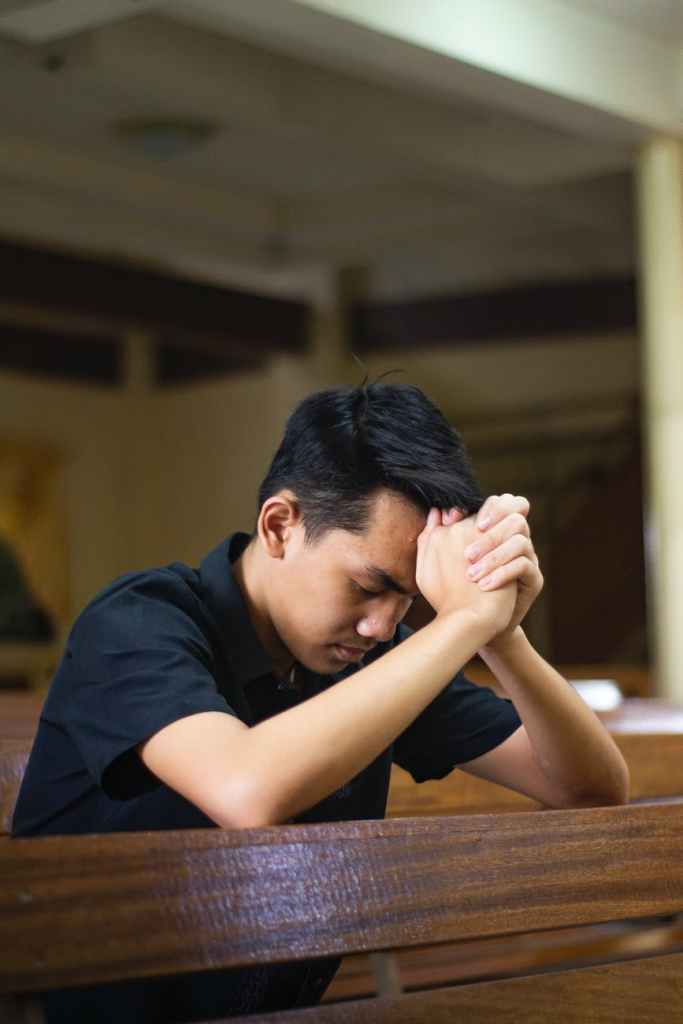
Hallelujah! Amen!

At least once a month this year, I hope to include a post on helpful tips to improve our pursuit of prayer. These are tips I’ve gathered over the years, and it helps me to remember as I write about them.

Today, I want to talk about starting and finishing well.

Beginning prayer with a Hallelujah helps focus my attention where it should be– on God! Too many times, I start praying with a “need” mindset. I’m focused on a need or a situation in my life or the lives around me. But the greatest “need” I have is to lift my eyes and focus on the ONE who is higher and greater and more powerful than any situation; the ONE who can satisfy every “need” and bring justice, restoration, and hope to any situation.

I have learned two different acronyms for prayer over the years– ACTS and PRAY. ACTS stands for Adoration, Confession, Thanksgiving, and Supplication. PRAY stands for Praise, Repent, Ask, and YES! (action). In both, the first step is to bring praise and adoration to the One who is worthy of it.

Sometimes, this is easy to do. Sometimes, it is painful. When I am stressed, worried, grieving, or convicted, my focus is inward and downward– and I can spiral into depression, isolation, and fear. The last thing I want to do is turn my focus away. God’s glory and righteousness can be blinding in the face of dark depression and despair. And yet–

Start small. Begin with one aspect of God’s character that you have experienced– His Grace, His Faithfulness, His Love. Meditate on it. Express it. Expand on it. Recall some of the specific ways in which God has been gracious, faithful, or loving. Think about some of God’s other attributes– His wisdom, power, omnipresence; His eternal nature, His creation. Soon, it becomes easier to speak, and even sing, His Praise!

Often, this will lead naturally into confession and repentance. When we begin by focusing on God’s greatness, His Holiness, and His majesty, our worries show themselves for lack of faith; our needs, while still real, reveal opportunities for God to “show up!” and for us to learn new depths of His character IF we are humble, obedient, and willing to learn.

Praise and Adoration are important first steps in prayer. But it is equally important to end our prayers well. Sometimes, our “Amen” is muted as our focus returns to our requests. And sometimes, it can be difficult and even painful to say “Amen!” I KNOW God is all-gracious, all-knowing, and all-powerful. But I also know that I don’t have enough money to pay the latest bill, or that I have been diagnosed with an incurable disease, or that my son or daughter is still lost. And I know that God may be asking me to walk through the valley of the shadow of death. He will be beside me, but He’s not going to remove the shadow or the valley to make it easier.

Over the years, I have found that it is better to wrestle IN prayer than to end with a half-hearted Amen. I must go back to Adoration; find my Thanksgiving, reclaim my Yes, Lord! before I say, “AMEN!” Otherwise, I am like the double-minded person in the book of James: being tossed like a wave in the ocean and filled with petty doubts in spite of my knowledge of God’s goodness.

End your prayer on a high note today. Remember to sandwich requests and concerns between hymns of praise and odes of thanksgiving. “Amen” should always echo our “Hallelujah!”

As Far as the East is From the West..

In blogging about prayer and in keeping a prayer journal, there is one type of prayer I don’t dwell on very often.  Prayers of confession and repentance are very important, but I don’t  include them in my journal and I don’t spend much time analyzing them.  It’s not that I want to ignore them or that I want to give a false impression that I don’t say them.

arrogant

I’m a saint–but only in the sense that Christ’s blood is my atonement and my only hope of salvation.  He who started the work is still working, and there’s a lot of work yet to be done.  So, while I include prayers of confession and repentance in my practice of pursuing prayer, I don’t write them down or share them publicly.

Photo by Mikhail Nilov on Pexels.com

Here are some of the reasons I don’t spend more time talking about confession:

trueconfessions
  • Confession is not meant to be a public spectacle.  It is generally private and very personal between an individual and God.  Apologies may be public, and repentance may include public atonement or recompense, but those are not prayer; rather they are the actions taken in conjunction with  and as a result of prayer and confession.
  • Confession is fundamental– it’s not a prayer option, or a stylistic preference–every one of us has sinned, and we all need to admit to our sins, bring them before the throne of God’s grace, and ask for his forgiveness.  Hiding sins, denying sins, or lying about them will get in the way of all our other prayers.
  • Writing about past sins keeps them alive and keeps the focus on me and on my faults, rather than on God and on His Grace.
  • Making confession public has a tendency to devolve into gossip and self-justification.  Descriptions of my sinful actions will necessarily be from my incomplete and very biased point of view.  Other people can be misrepresented and hurt.
  • But the last reason is my favorite– I don’t waste time writing down and discussing past sins because GOD HAS FORGOTTEN THEM!  Writing them down, rehearsing them, analyzing them–even analyzing how I might approach confession won’t change God’s response:

10 he does not treat us as our sins deserve
    or repay us according to our iniquities.
11 For as high as the heavens are above the earth,
    so great is his love for those who fear him;
12 as far as the east is from the west,
    so far has he removed our transgressions from us.

Psalm 103:10-12 New International Version (NIV)
  • The key is that we DO confess– humbly, consistently, and with a heart of true repentance.  What follows is a free and forgiven conscience, no longer weighted down or pulled off focus by guilt and doubt.
pexels-photo-941693.jpeg

Debt Free!

7“Blessed are those

    whose transgressions are forgiven,

    whose sins are covered.

Blessed is the one

    whose sin the Lord will never count against them.”

Romans 4:7-8 (NIV) via biblegateway.com (See also Psalm 32:1-2)

Ask me about my most embarrassing moment, or my greatest failure..better yet, ask one of my friends or relatives! We tend to hang on to our past, especially our mistakes, our hurts, our missed opportunities, and our shortcomings. When I taught public speaking in a local high school, I heard horror stories about why “I can’t get in front of people and talk.” The fear of public speaking rates higher in some studies than the fear of Death! And often, the fear is based on an incident from early childhood of people laughing at a small, but very public mistake. Such moments haunt us.

Photo by Alex Green on Pexels.com

As we grow older, we let our regrets live large– those things we “would have, should have, could have” done, or the things we shouldn’t have said, but can never un-say. And even if we try to move on or forget the past, there always seems to be someone who cannot let go, cannot forgive, or cannot forgive. Lives have been stunted and ruined by the ghosts of “what happened” when…

Photo by Wildan Zainul Faki on Pexels.com

God is all-knowing. There is nothing we’ve ever done, said, or even thought, that He “missed,” ignored, or “lost track of.” God has total recall over all the centuries and eons of time– past, present, and even future! And yet, God offers to forgive ALL our sins, and to “remember them no more.” God will never bring up “that time when you disappointed me…” God will never look at you with condemnation over anything you have confessed and repented over. It’s not that God will never be able to recall what happened; but He will no longer “charge it to your account.” He has chosen to pay the consequences in His own Blood, so that you can be debt free.

Photo by Ric Rodrigues on Pexels.com

Imagine if you had no bills. If all your mortgages, utility payments, credit card debt, medical bills–everything that you were responsible to pay– all were stamped “Paid in full.” You never had to worry about interest payments, late fees, repossession, evening phone calls from bill collectors, credit scores, etc. What a weight off your shoulders! Imagine if you had no reason to fear getting in front of a room full of people to speak or sing or give a presentation– no fear that others would judge your every hesitation, or whether your tie was straight, or your hair was mussed, or you stumbled over a word or phrase or tripped on the steps leading up to the podium. Imagine being accepted and embraced by the very one who, by rights, should be your most severe critic.

Sometimes, when we see God as our critic, our judge, or our opponent, we’re not seeing God as He really is– we’re seeing a reflection of ourselves– harsh, judgmental, unwilling to forgive others; unwilling to forgive ourselves. The very first deception of the Enemy was to distort God’s image from Creator and Sustainer to Judge and Tyrant. Yet Satan is called “The Accuser,” not God. God’s Holy Spirit may convict us of Sin– causing us to see that we have done wrong– but His purpose is always to correct and restore us, not to haunt and condemn us. Even the “worst” sins are not beyond God’s ability or willingness to forgive. Jesus forgave His accusers, His betrayers, and His executioners from the Cross!

Photo by Alem Su00e1nchez on Pexels.com

Forgiveness is not easy. Sin is real; it has real and terrible consequences. Sin hurts, humiliates, victimizes, and traumatizes. And its effects do not simply vanish if we say, “I forgive.” But hanging on to the pain and anger keeps us from finding and experiencing the healing and wholeness that Jesus offers. Forgiveness does not mean that the sin, or the pain, never happened– God will not “forget” injustice just because we forgive the unjust. Forgiveness means that we no longer need to try to collect the debt from someone else– because God has already promised to pay it back with interest! And forgiving yourself doesn’t mean that your past actions didn’t happen or didn’t cause pain. In fact, whenever there are opportunities to atone for past actions, or ask forgiveness from those we have wronged, we should take them. But where such opportunities are impossible for us, even when we cannot see how such pain could be redeemed or relationships restored, God has promised that we can move beyond our past mistakes and live a new , blessed, and debt-free life.

Photo by Pixabay on Pexels.com

When we approach God in prayer, we come as we are– people with past mistakes, very human emotions, including doubt and fear, and unworthy to stand on our own before a perfect God. But it is God who invites us to come to Him– debt free and embraced by His limitless Grace!

Photo by Joseph Ruwa on Pexels.com

But I Didn’t…

I could have welcomed that visitor at church this morning…
The one who looked a little lost; a little overwhelmed.

Photo by cottonbro studio on Pexels.com

I could have smiled when I paid my utility bill the other day–
When the clerk asked if she could help me, and thanked me, and sent me on my way.

I might have offered my unused coupons to that young man who was shopping–
The one with two boisterous kids in the cart, and very few groceries.
Maybe he would have been offended. But maybe it would have given him an opportunity
And a little hope.

I thought about calling an old friend and asking if we could pray together.
Maybe we could have met for tea or gone for a walk together.

Photo by cottonbro studio on Pexels.com

I had planned to clean out the closet and set aside some clothes to take to a local shelter.

I considered calling my sister, sending a card to that widower from church, or e-mailing my cousin…

I really needed to spend a little time in confession and repentance, and cleansing.
I needed to be renewed, recharged, and transformed. At least, I thought I did.
But something else claimed my thoughts, and my good intentions.
Now, I just feel worn and guilty and unworthy.

Photo by Engin Akyurt on Pexels.com

And the “thing” is– I didn’t do anything horrible. I didn’t make anyone cry, or rob a bank.
I didn’t burn dinner or break the speed limit. I didn’t break my marriage vows or embezzle a fortune.
I didn’t break the law– I didn’t even break a sweat!

I just
Didn’t.

Lord, today, I pray that you would light a fire under me. Help me to see the opportunities all around me– tiny acts of kindness, and truths that I need to hold tight. Show me people who need a listening ear, or a helping hand, or a word of encouragement. Help me to move “at the impulse of your love.” And when You direct me to be still, help me to be still and KNOW that You are a God of purpose and hope; joy and abundance. Help me to BE first–to Be obedient, to Be humble, to Be available. But then, help me to DO what you would have me do for Your Great Name. Thank you for second (and third) chances to BE and DO all that brings You honor. Amen.

Photo by Munmun Singh on Pexels.com

Where Two or Three Are Gathered

I grew up in a church that made prayer a priority. I know many churches that still do this, but I know that some churches today just leave prayer up to the individual Christian. They may open the service with a prayer, and close with a prayer, and even offer a prayer service in the mid-week, but they do not focus on prayer as a congregation. With many churches, corporate prayer doesn’t seem very practical– they are just too large, or too focused on spending their time in worship. But I think something of value is lost when the church doesn’t come together in prayer.

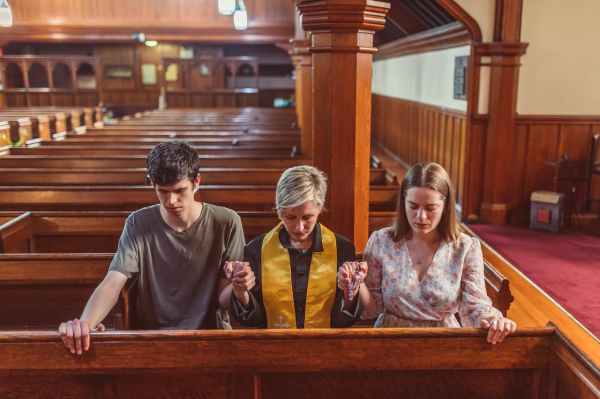
Prayer IS an individual pursuit. It should be part of each Christian’s daily walk. And most of what I write (and practice) about prayer happens personally. But Jesus practiced both personal and corporate prayer. Even in His agonizing prayer in the Garden of Gethsemane, He wanted close friends to be nearby praying, rather than sleeping (see Matthew 26:36-46 and Luke 22: 39-46). When instructing His disciples in how to pray, He used the term, “Our Father,” not “My Father.” Christianity , including prayer, cannot be practiced in isolation. We need to pray for others, and with others, and be prayed for by others!

Photo by Tima Miroshnichenko on Pexels.com

In the small country church where I grew up, prayer was woven into the service. Prayer requests would be shared, and people would take turns praying aloud, until one prayer leader would close the prayer time with an “Amen!” In the church where I currently attend, we still share prayer requests on-line, and a list of requests gets sent out once a week. Occasionally, we will break into small groups during service to pray for particular focus or a specific request. Additionally, we have a mid-week prayer meeting, where we spend an hour just praying as a small group.

Why do I emphasize the need for group or corporate prayer? Over the years, I have seen many benefits:

  1. I love “hearing” the hearts of others. We don’t all pray exactly the same. Even if we are reciting a prayer (like The Lord’s Prayer) there are different voices, different inflections, different tones, that bring a richness and diversity to prayer. And that is a great reminder that God is the God of ALL of us, even as He is the God of EACH of us. He is OUR God, every bit as much as He is MY God.
  2. There is comfort and even power in praying together. My personal prayer may be sincere, but it is usually silent, and may be influenced by my surroundings, my mood, my distracting thoughts, etc.. But there is a different atmosphere when two or three (or more) are taking turns praying, adding to the thoughts and prayers of others, and pouring out their hearts in concert with other believers. I get a broader perspective when I pray with others. I hear more than just my own voice and my own thoughts. It doesn’t change whether or not God listens to my prayer, but it changes the way I think and feel– it isn’t just “MY” prayer– it is “OUR” prayer.
  3. I learn more about prayer by practicing with others. I know many people who will not pray in a group, because they feel their prayers are “lacking” somehow. And this is a dangerous way to think! I have learned amazing lessons of faith from simple prayers; amazing lessons of doctrine from eloquent prayers; amazing insight from broken and contrite prayers; and even lessons from “runaway” prayers that go on and on. And praying in a group is not about how much you say, but by how much you are present in the moment.
  4. Corporate prayer is a rich tradition. Jewish priests would lead the entire nation of Israel in prayer during various festivals. Many of the psalms are written as prayer-songs for a congregation to sing together. The early church made prayer a part of their meeting together (see Matthew 18:20, Acts 2:40-47, Romans 15:6, others…)
  5. Corporate prayer strengthens my faith and the faith of others. Intellectually, I “know” that God listens to and answers my prayers, but when I pray with others, it strengthens my experiential knowledge that God is listening– because I am listening, and being listened to!
  6. Corporate prayer challenges my perspective in relation to my own sinfulness and God’s grace. Corporate prayer should not be used as a “True Confessions” session, where we try to outdo each other in confessing secret sins or wallowing in self-righteous recitations. But it should bring us into a realistic awareness of our very human nature, and of God’s amazing Grace. Corporate prayer takes us out of our “self” and focuses on God’s sovereignty in ways that personal prayer sometimes misses. Corporate prayer tends to focus on gratitude, humility, and thinking of others more highly than yourself. And that is often a stepping stone to confession and the awareness of God’s forgiveness.
  7. Corporate prayer lends itself to structure. That’s not to take away from unstructured and spontaneous prayer, but corporate prayer tends to have a stated purpose, and sometimes a stated format. From “round robin” prayer, where people pray in a particular order around a circle; to “popcorn” prayer, where people jump in and take turns until a certain time has elapsed; to structured prayer, where people pray in a strict order and with definite purpose for a slotted time, corporate prayer tends to be more disciplined that personal prayer. That doesn’t make it better or worse, but it is a different way to pray, which can help foster discipline in other areas.
Photo by Luis Quintero on Pexels.com

Are you part of a prayer group at your church or in your community? If so, cherish this rich opportunity. If not, make a point of connecting with other believers– at church, in your community, or even on-line. Share requests. Set aside time to pray together, or even separately, but at the same time. Live stream prayer. Pray with someone over the phone, if you don’t have a prayer group or congregation nearby.

It will change your prayer life!

For more information about corporate prayer: https://www.allaboutprayer.org/corporate-prayer.htm https://www.crosswalk.com/faith/prayer/reasons-why-corporate-prayer-is-powerful-and-essential.html

The ACTS of Prayer

It’s another new year, and many of us are resolved to pray– pray more, pray better, pray longer, etc. That’s a good resolution, but without a plan, it can fizzle out as the year goes on. It’s not that we stop praying altogether; it’s just that we end up praying the same old way or about the same old things, and our pursuit of prayer becomes another routine.

This year, I want to present several “How-to’s” of prayer– at least one every month– to keep things fresh. Today is ACTS. ACTS is an acronym that stands for Adoration, Confession, Thanksgiving, and Supplication. I learned this method way back in college, and our Wednesday morning prayer team at church still uses it each week.

Photo by Luis Quintero on Pexels.com

Start by coming to God in worship and ADORATION:
List some of the Names of God–Father, Creator, El Shaddai, LORD, King of Kings, etc., OR
List the attributes of God–Merciful, Mighty, Humble, Everlasting…
Pray one of the Psalms…
Sing or recite the words of a worship hymn or praise chorus…
Think of creative ways to spend some time expressing God’s Worth and Majesty.

This may be difficult the first time; it may feel awkward at other times. Don’t be discouraged. God inhabits the praise of His People, whenever, wherever, and however we make the effort!

Photo by Karolina Grabowska on Pexels.com

Second, spend some time in CONFESSION:
Ask God to examine your heart to see if there is any wickedness that has gone unacknowledged..(Psalm 139:23-24)
Confess specific sins as you think of them…
Confess your need for God’s forgiveness and His Guidance..
Resolve to take action– either action to seek forgiveness from those you have wronged, or action to change course in the future, or action to let go of past resentment..

Sometimes, you may need to stop and take the action NOW before you continue in prayer. Sometimes, you may need to let go of your own lingering guilt and shame over past actions for which you have already confessed. Remember, God removes our Sin as far as the East is from the West, (Psalm 103:12) and He will remember it no more– so we must trust in His forgiveness and move forward; not stay stuck in the past!

Photo by Tima Miroshnichenko on Pexels.com

Next, THANK God–for His provision, and for His Mercy:
Thank God for His daily provision of life, health, strength, and unfailing Love!
Thank Him for the people in your life– those who encourage as well as those who challenge you!
Thank God for His Mercies that are new every morning (Lamentations 2:22-23)
Thank Him for His forgiveness and cleansing (1 John 1:9)
Thank Him for His eternal presence (Hebrews 13:5; Deuteronomy 31:6)

Don’t confuse this with step one–ADORATION is about Who God IS. Thanksgiving is about What God has Done for YOU. It is easy to recite a verse about what God has done for others– take time to make it personal, especially in light of whatever you have just confessed!

Photo by Luis Quintero on Pexels.com

Last, bring your petitions and requests in SUPPLICATION to the Father:
Bring your heart-cry for lost friends and relatives…
Ask for God to work in situations that have you frustrated..
Plead for Justice and Righteousness to be done in the world around you..

Pray for leaders, elected officials, and church leaders..(1 Timothy 2:1-4)
Ask for the strength to resist temptation, stand firm, and run the race that is set before you.. (1 Corinthians 10:13, 1 Corinthians 16:13, 1 Corinthians 9:24, more..)

It isn’t that this is the least important step, but it works better when it follows the other three steps. NOW you are in the right frame of mind to present requests. They can be seen in their proper perspective. Instead of a giant wish list of things you hope God might do for you, you can present requests that you KNOW God already knows about, cares about, and for which He already has a plan! You can come in confidence, knowing that you have peace with God because He has forgiven your sins and restored your relationship as His son or daughter– nothing stands in the way! And you have just rehearsed (and said Thank You!) for all the ways God has been faithfully working in your life!

Does this sound like a lot of time and energy? It is. But it doesn’t have to be for every prayer you pray. This is for special time set aside for deep prayer. OR, you can break it up throughout the day: Wake up with praise and adoration (it will make an immediate difference!), spend some time at the end of the work day confessing (when it’s still fresh!), and end the day with thanksgiving and supplication (what a way to find peaceful rest– give all your cares over to God who has done so much for you (1 Peter 5:7)!

However you choose to do it– consider trying the ACTS method this week. Do it during your quiet time, or try it with a group. Develop a habit of coming to prayer in this order.

Keep watching this space for more ideas to stimulate your prayer life. Let’s pursue prayer together in 2023!

Be Sure Your Sin Will Find You Out

Photo by Monstera on Pexels.com

When I was a child, my Mom used scripture to teach and correct me. One of her favorites was found in Numbers 32:23b “..you may be sure your sin will find you out.” This was a warning not to try to hide or excuse bad behavior. I could lie about cleaning my room, but sooner or later, Mom would find out. I could pretend to eat my peas at dinner, but sooner or later, my pile of uneaten veggies would show up as evidence. And I could be nice to my little sister around company, but that wouldn’t fool those who knew us well, or convince my sister that I wasn’t going to be bossy after they left. Most importantly, God would know what I did– and I would know that God knew!

Sin is more than just a simple action, or an accident. Sin is an infection–a poison. And it leaves traces, and scars, and has consequences– not just in actions or consequences, but in the shaping of our minds, attitudes, and character. Sin– concealed, denied, ignored, or excused–breeds and grows; it poisons our thoughts and emotions. Instead of reacting openly and honestly, we become defensive, secretive, paranoid, and apprehensive.

Photo by Meruyert Gonullu on Pexels.com

Praying involves communicating openly and honestly with God. Sin will get in the way of that communication. Not on God’s part– He is unchanging. But on our part– we will not be fully open with God. We will be suspicious of His goodness, and doubtful of His mercy. We will try to hide our guilt and our true motives. As early as the Garden of Eden, this is the pattern. Adam and Eve tried to hide from God after they had eaten the forbidden fruit. “Where are you?” asked God (Genesis 3:9). Certainly He knew where they were, and why they were hiding. But Adam replied, “…I was afraid because I was naked; so I hid.” (Genesis 3:10) When God asked Cain about his brother, Cain tried to cover-up the murder with distractions. “I don’t know. Am I my brother’s keeper?”(Genesis 4:9) God never asked Cain whether or not he was responsible for his brother. But God already knew that Cain had killed Abel; Cain’s attempts to redirect the conversation did nothing to hide his guilt– it merely confirmed that Sin had wormed its way into his thoughts and attitudes. Cain never asked for forgiveness. He never confessed to the murder of his brother. Instead, he received the punishment for his sin– banishment and isolation. Later, Cain’s descendants even bragged about their family history of murder and exile! (Genesis 4:23-24)

Photo by NEOSiAM 2021 on Pexels.com

Of all the people we might try to impress, God cannot be fooled by our false righteousness. He cannot be impressed or distracted by arguments or justifications. And He can’t ignore how Sin is poisoning us, and leading us toward death– both physical and spiritual death. Even “little” “secret” sins will infect our relationships– with God and with others– and cause us to grow emotionally and spiritually numb. Unfortunately, the poison of Sin can cause us to withdraw further from the very source of healing. We attempt to bargain with God; to justify or excuse our actions in our own eyes, asking Him to ignore our condition. We may even be defiant, knowing we deserve punishment, but doubting God’s willingness or ability to bring about justice. We march boldly in the opposite direction, doubling down on our bitterness, anger, or shame.

Photo by Karolina Grabowska on Pexels.com

We need to seek God’s mercy and grace through confession and repentance. God is faithful to forgive and eager to restore to us the joy of His salvation (Psalm 51:11) He will do what all our mind-games and excuse-making cannot do–He will remove our sins from us as far as the east is from the west (Psalm 103:12). And once the poison of Sin is drawn off, we can see and hear, think and act with a clear conscience, free of guilt and shame; free of secrets and excuses. We may still face the earthly consequences of our actions– punishment for things we’ve stolen or lives we’ve hurt, broken relationships or changed circumstances–but the eternal consequences of death and separation from God have been erased by the Blood of Christ and removed forever.

Photo by Akshar Dave on Pexels.com

And that will lead us to prayers of worship and thanksgiving, freely and joyfully raised!

For more discussion on this principle, see https://www.gotquestions.org/be-sure-your-sin-will-find-you-out.html

Suing God

I have a friend who wants to sue God. She’s not entirely serious, but she has a lot of anger toward God. She feels that God “owes” her an explanation for her life circumstances, as well as a general justification for war, famine, and other evils that she reads about in the paper or sees on the news. She believes He (or She or S/he or It– my friend isn’t sure that God exists, but cavils at the idea of calling God “Father” or “He”–she finds it sexist) is being unfair in a thousand different ways.

Photo by Alex Green on Pexels.com

My friend doesn’t read the Bible, and is only vaguely familiar with the story of Job. Job wanted to take God to court. His life had crumbled around him, and he wanted God to explain why, especially as he didn’t “deserve” the circumstances he faced. Amazingly, in the Biblical account, we learn that Job was “right.” He didn’t deserve to lose his family, wealth, and health. He had done nothing “wrong.” That doesn’t mean that he was sinless. But he confessed any sins, made atonement– he even sacrificed to make atonement for any sins his children might have committed. Job was a “righteous dude!” My friend– not so much. Like most of us, she would probably be ready to admit that she’s made some mistakes here and there, though she doesn’t feel that they are particularly heinous. She’s more than willing to “let bygones by bygones” for herself and others– shouldn’t God do the same, without making us confess and humble ourselves? Who does God think He is, anyway?!

Photo by Craig Adderley on Pexels.com

But this is the point. God is GOD–He is not a man, or even a superman, that He is compelled to explain Himself to us; to seek our approval or accommodate our whims, wishes, or plans. In the story of Job, God never gives Job the explanation he’s looking for (again, amazingly, WE the readers are given a “behind the scenes” look and told exactly why Job is being tested and allowed to suffer). Nor does God justify Job’s circumstances or spell out his list his “rights.” Instead, He presents Job with a few keen questions to remind Job (and us!) of who God is, and who Job is not!

Photo by Keenan Constance on Pexels.com

Like my friend, I am often disturbed, puzzled, and saddened by some of life’s circumstances, and by the evils I see around me. But when I begin to question why, the Bible reminds me to ask a few keen questions: Did I create the world? Do I have the power or authority to re-create or re-order the world around me? Can I change my own circumstances, or those of others? Can I change nature, weather, geography, biology? Can I make times and seasons obey my instructions? Can I see a thousand years into the future, or remember a thousand years in the past? Am I immortal? Omniscient? Omnipotent? Holy?

Photo by Yunus Tuu011f on Pexels.com

But more than that, I have to ask: If God never gives me answers or explanations for what has happened or is happening, or will happen– what will change? If God answers all my questions– what can I say or do about it? Can I teach God how to oversee the Universe? Can I explain to God what He already knows better than I do? Job’s ultimate response was worship. I have a choice to rage against my creator, or I can trust Him with my past, present, and future. I can worship God right now, in my “not-knowing,” or I can rebel against the one who gives me life and breath– the one who created everything around me, before me, behind me, under and over me– the one who is sovereign over the entire universe.

Photo by Andrea Piacquadio on Pexels.com

My friend wants to sue God– or at least demand answers from Him. I hope she will consider pur-suing Him, instead. He is big enough to meet our anger and our questions, and He is big enough to handle all the things we don’t know or understand.

Prayer and Weight Loss

Recently, I found out that I have developed diabetes. One of the ways to lower my glucose count and mitigate the effects of diabetes is to lose weight– something I’ve been trying to do over many years with little success!

Photo by Andres Ayrton on Pexels.com

Weight loss can be a tricky thing– the harder I try, the less I seem to lose. In fact, sometimes, I gain weight instead! Part of the process is not to think of it as weight loss, but as a change of attitude and lifestyle. It is easy to get fixated on numbers– calories, carbs, ounces, serving sizes, etc.. But numbers alone don’t tell the whole story. It’s not just what I eat, or the amount, but when, and how, and why. Am I skipping meals? Do I fry my vegetables in butter, or drown them in cream sauces? Do I eat because I am bored, or stressed? Do I exercise? Do I drink enough water?

Photo by Lisa Fotios on Pexels.com

Prayer can be a tricky thing, as well. It shouldn’t be complicated or stressful, but I can add all kinds of expectations and structures to my prayer life that actually get in the way. I can stress about whether I am praying enough, or too little; whether I am forgetting to pray for someone, or if I’m praying selfishly for a certain situation; whether I am too distracted or tired; the list seems endless.

Photo by MART PRODUCTION on Pexels.com

One of the biggest barriers to prayer comes when we carry the extra “weight” of subtle sins like guilt, fear, doubt, or pride. And just like physical weight loss, the harder we try to deal with it using our own willpower and our own wisdom, the less likely we are to “lose” it. The only way to lose this kind of weight is to confess it– asking God to take it and replace it with a new way of thinking and a new attitude. Instead of focusing on what I need to lose, I need to start focusing on what I will GAIN as I change my eating habits.

Photo by Andrea Piacquadio on Pexels.com

My current weight-loss goal is to lose between 15-20 lbs. over the next three months (in time for summer). But my REAL goal is to change my way of cooking and eating, such that I am living a healthier lifestyle going forward. My current prayer goal is to spend more time in prayer (an hour each day). But my REAL goal is to develop prayer habits that further my relationship with God– to continue to draw closer to Him. It’s worth losing old habits and attitudes to gain so much more!

Cooking Up Prayer

I love to cook. And it occurred to me that praying can be a lot like cooking:

Photo by Maarten van den Heuvel on Pexels.com
  • Prayers are made up of different ingredients–worship and adoration, confession, requests and supplication, thanksgiving, even questions..
  • Sometimes what we pray for, and the “finished product” of what God chooses to do don’t look or taste the same. But if we don’t “follow the recipe,” sometimes we end up with a disaster. Sometimes our thoughts and prayers are like adding a cup of salt, where we were supposed to add a cup of sugar! God knows the difference, and He adjusts accordingly!
  • There are many different “cooking” methods for prayer. Some prayers need to simmer–they take time and dedication; others “sizzle”– they are more immediate and urgent. There are even “raw” prayers– tortured cries of the heart. Some prayers are “cock pot” prayers– we give the matter to God and let it stew for quite awhile, only to see results much later.
  • Some prayers involve “heat”–we are either in hot water, or we are in a pressure cooker; maybe we’re half-baked! God doesn’t always turn down the heat– He knows just the right temperature for each situation, and He also knows when to remove us from the heat!
Photo by Prince Photos on Pexels.com

Prayer is much more than a recipe or a even a good meal. But I hope we all take some time to “cook up” a healthy, satisfying prayer time today.

Photo by Gary Barnes on Pexels.com

Blog at WordPress.com.

Up ↑