What’s Your Destination?

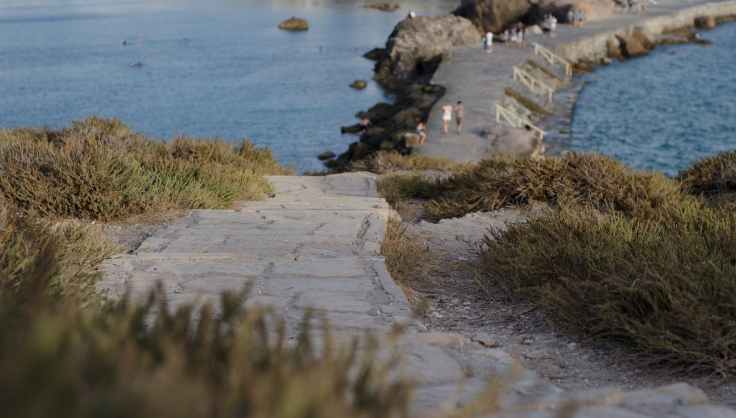
Recently, my husband and I took a weekend trip.  We had a destination in mind, but had to decide on a route.  Looking it up on the computer, we were given an estimated distance and travel time based on a programmed route that was found to be the “fastest.”  However, this route was not necessarily the shortest, or the most scenic, or the safest.  Knowing our destination, my husband was able to reconfigure the program to map out a route that fit our needs.  It got us to the correct destination, and allowed us to travel safely, leisurely, and confidently.

After we reached our initial destination, we decided to take a side trip.  Since we hadn’t counted on taking the side trip, we didn’t have a route.  We relied on the same technology, but, not knowing our exact destination, we typed in a general location and followed the instructions we were given.  We missed an important exit and had to reconfigure…we changed our plans and had to reconfigure…we misspelled the name of the new destination and were sent miles out of our way before we realized what had happened…we ran into an unexpected detour which sent us more miles out of our way.

pexels-photo-490411.jpeg

Knowing your destination, and having a good map or set of directions can make a huge difference.  We still had an enjoyable trip, but we might have been able to do more if we had planned a little better–one of the places we decided to visit had just closed by the time our reconfigured driving directions got us there!   And we might have been able to cut several miles off of the detour route if we knew the local roads better (it didn’t help that our map application wasn’t working at the critical moment, either!)

auto automobile automotive car
Photo by Mikes Photos on Pexels.com

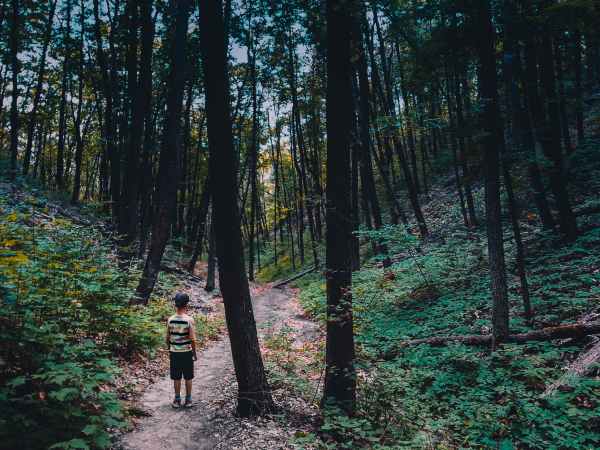
In life, there are many “programs” that offer advice, direction, and focus to get us to a destination.  There are weight-loss programs, “life coaches,” self-help books, universities, “mindfulness” seminars, even religions that promise to guide us along a particular path.  But if we don’t have a clear destination in mind, we can end up wandering down a detour or even a dead end.  What started out with such promise becomes a maze of questions, unmet expectations, and frustrating twists and turns.

pexels-photo-618955.jpeg

So what is my destination in pursuing prayer?  Where do I want to end up at day’s end?  In a year?  When I face the end of my life (if God chooses to let me see the end approaching)? I want to experience the kind of prayer life that honors God, deepens my relationship with Him, and has an impact.  There are many “paths” of prayer– but they have different destinations.  Meditation, recitation, fasting and praying, praying corporately or in isolation–I need to map out a course that will get me to the goal.  And I need to rely on the guidance provided by the Bible, the Holy Spirit, and godly counselors and teachers.

pexels-photo-935944.jpeg


I Sing Because I’m Happy

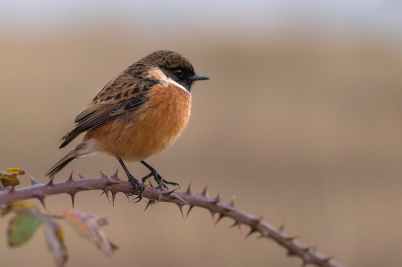
There is a great old hymn– His Eye Is On the Sparrow– and the chorus says:

I sing because I’m Happy,
I sing because I’m Free.
His eye is on the sparrow,
And I know He watches me.

Full lyrics here

It is a great reminder that, as followers of Christ, we always have a reason to be happy and to sing his praises, even when circumstances are confusing or situations are trying.

pexels-photo-145378.jpeg

I love this old song, but sometimes, even though I have reason to be happy, I don’t feel like singing.  The same happens with prayer.  Some days, I’m just not feelin’ it.  It’s not necessarily that I’m miserable or angry.  Sometimes, I’m distracted, or even happy doing self-centered things.

I find it easier to pray when I’m sad or needy– my brokenness brings me closer to God.  When things are going along just fine, I sometimes forget the true source of my joy and strength.  I take for granted that God and I are close, not realizing that I haven’t spoken to him lately, or that I have whispered a quick, shallow prayer, but I haven’t spent much quality time with the lover of my soul.

There is an old Chinese proverb that says: “I don’t sing because I am Happy– I am happy because I sing.”

pexels-photo-462442.jpeg

At first, it may sound like this is a contradiction of the beloved hymn, but really it is a complement.  I sing because I’m happy, but if I sing no matter how I start out feeling, I find myself happier!  I pray because I want to be close to God, but I stay closer to God because I pray.  When I was younger, I used to base my prayer life on how I felt.  It’s yet another reason I now use a prayer journal. Read more about keeping a Prayer Journal  It keeps me disciplined and helps me maintain a stronger prayer life.  We all know that prayer is a key element in building a strong relationship with God and others, but it has to be practiced to be effective.  Other key elements are:

  • Reading the Bible/doing a Bible study
  • Fellowship with other believers
  • Obedience– Actively following God’s example
  • Confession/Forgiveness

Any of these elements can become lackluster and difficult, especially if we aren’t practicing them daily.  And all of the elements will become stronger through practice.  Not only that, but they will blend together better, and the end result is a stronger, healthier, happier you.

pexels-photo-236149.jpeg

And that’s worth singing about!

Forgiveness is Free: It Isn’t a Free Pass

Yesterday, I posted about praying for our enemies– those who have hurt us.  We are commanded to forgive those who have wronged us, to do good to them, and to pray for them.  But I want to make sure I don’t give the wrong impression about offering forgiveness.

Forgiveness doesn’t ask us to excuse the inexcusable, or trust the untrustworthy.  Forgiveness is trusting that God, in His wisdom, His Holiness, and His timing, will bring justice, healing, and peace, when nothing else can.  This is important to remember, both as someone who asks for forgiveness, and as someone who gives it.

Jesus offers forgiveness–full, and free, and perfect– he died to make that offer.  He gave it to whoever believes on His Name.  But here’s the catch…he didn’t make that offer so you can temporarily wipe the slate clean and go on sinning without consequence.

Oscar Wilde wrote a chilling novel, “The Picture of Dorian Gray”, Dorian Gray/Wikipedia    in which the title character finds a way to trap his soul, with all its ugliness, hatred, anger, and sin, inside a portrait.  No matter what Dorian does, no matter how twisted or evil, he continues to look fresh, young, innocent, and handsome.  The effects of his dissipated lifestyle–drug addiction, sleepless nights, years of hard living, even murder–are all trapped in the portrait.  Over the years, the portrait haunts Dorian with its monstrous transformation from young man to gnarled wraith.  In desperation, he “kills” the portrait– and himself– in disgust and anguish.

dorian_gray_by_pti_spb-d6f1lmr

We live in an age of appearances– if all appears well on the surface, we ignore the deeper, long-term consequences of our sin.  If we “get away with” small sins, we run the risk of sinking deeper into a sham lifestyle.  We go through the motions of asking forgiveness, when what we really seek is escape from the consequences of our own actions.  We begin to see sin as a valid alternative to obedience–I can obey God if it is convenient, but when it’s not, I can just ask forgiveness.  This is a road strewn with lies, excuses, evasions, and it ends in death.  It is a lifestyle that makes a mockery of God, of his Holiness, His Sacrifice on the cross, and His loving offer of restoration.

God doesn’t just want to transfer your ugliness and rebellion into a painting to hide it away.  He wants to remove it “as far as the east is from the west.”  We don’t become perfect in an instant, but our past is expunged so that we can be free to choose obedience and live more abundantly in fellowship with a Holy God.  When we are truly sorry for our sins and seek true forgiveness, we want to make better decisions, we want to right wrongs– we want to redeem the past rather than merely escape from it.

pexels-photo-1018478.jpeg

When we, as imperfect people, offer forgiveness to someone else, we are not able to do what God does.  Our forgiveness is imperfect; like love, or discipline, or a new habit, it needs to develop and grow.  Forgiveness is not about freeing the offender, or wiping the slate clean for the other person.  It’s about freeing yourself to heal, to move away from slavery to the pain of the past, and to learn to trust God to bring justice.

Forgiveness isn’t natural or easy.  No one deserves forgiveness– that’s what makes it a miracle that God offers it to anyone who asks.  But God doesn’t undo our sin.  He doesn’t erase our actions, or clean up the messes we have made.  If I commit murder, God can forgive me, wash away the guilt of what I’ve done, and give me the power to live a life that seeks to do good, rather than evil.  But he’s not going to bring my victim back to life, or cause a judge and jury and the family of my victim to say, “Aw, that’s alright– you’ve probably learned your lesson.  No hard feelings.”  He can (and has) caused amazing healing to happen in such situations, but that’s the exception, not the expectation.

Similarly, if you have been hurt and you offer forgiveness, it doesn’t mean that the other person is no longer responsible for his/her actions.  It doesn’t mean that you were never hurt or betrayed, and it doesn’t mean that you trust them immediately and without reservation. It is not hateful, intolerant, or unforgiving to allow justice to catch up with someone who has hurt you– it IS unforgiving to seek beyond justice to vengeance and self-defined retribution.

pexels-photo-133170.jpeg

This is particularly important in cases of abuse.  If someone has abused you, physically, emotionally, or mentally, they are likely to make you feel the guilt they don’t want to deal with.  “You drove me to it.”  “You are the only one who understands my anger.”  Forgiving this person does not mean– it NEVER means– that you agree with their tactics and false accusations, or that you are giving them a pass.  But it DOES mean that you are giving them, and the damage they caused, over to the God of all justice.  Your case is closed; your final judgment is in his hands, and you are free to begin again– begin to heal, begin to see how God can bring something important and good and eternal out of something broken.  Forgiveness is impossible, but God will give you the power to do it– it may take several attempts, and several years, but when it comes, it will be the miracle of God working through you to glory!

Bloom Where You Are Planted

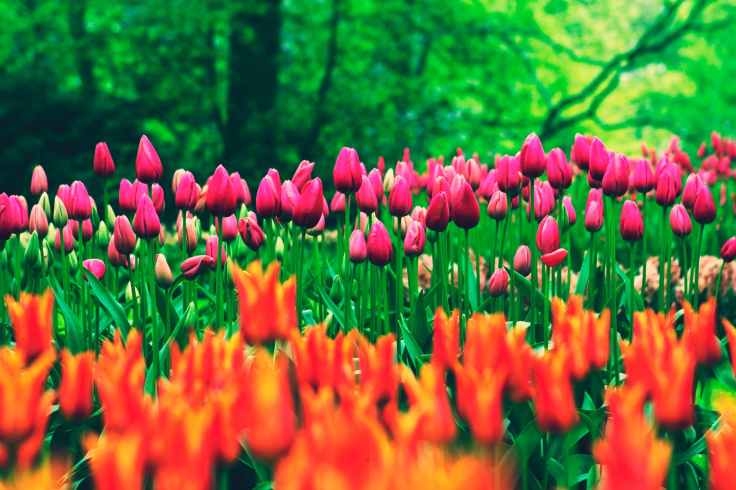
I love living in Southwest Lower Michigan– especially in the spring.  We have blossoms everywhere– apple blossoms, cherry blossoms, dogwood, red buds, tulips and irises, hyacinth and daffodils.  The rich earthy smell of freshly plowed gardens and fields permeates the air, and rides on the breezes coming off Lake Michigan.  Birds, newly returned from their winter wanderings are busily building nests, chirping away, while the sun’s rays chase away the last of the winter chill each morning.  There is color and new life everywhere you turn.

pexels-photo-165542.jpeg

We have a lot of spring festivals in the area, most of them centered on the blooms and blossoms that fill the countryside.  Gardens, orchards and fields are not just for show around here– they are also important parts of our economy and eco-system.  Without a good spring full of blossoms, buds, and blooms, we may have a disastrous harvest in the fall, and run-off of the soil; bees will die off, wild and domestic animals will have less grass and fewer berries to eat.  A late spring can shorten the growing season and shrink the harvest; an early spring can bring buds out too soon, only to have them lost to a late season frost or to have them mature too early and be burned in a mid-summer drought.

And yet, I have seen crocuses burst through two inches of snow; buds that defy harsh weather and cruel winds.  I have seen daffodils blooming where there once was a house and a yard, but now there are only brambles and foundation stones.  I have seen trees twisted and split by long-ago storms– one side dead and rotting, but with buds and new branches on the other side.

crocus-flower-spring-purple-60120.jpegpexels-photo-1031413.jpeg

It is easy to bloom when you are in a lovely flower bed, with tilled earth, fertilizer, gentle rains, just the right amount of sun, and protection from the winds and pests and birds.  But it is more spectacular to bloom in the desert; to defy the odds and stand in stark contrast to brambles, a broken-up sidewalk, or a litter-filled back alley; to bloom in the snow and sleet or weather a flood or a tornado.

pexels-photo-1035739.jpeg


Not always so with prayer.  Sometimes, it is easier to pray when we feel our own needs and shortcomings; when we are driven by our circumstances to call out for help.  When all is well, we may be grateful, but we may also begin to slack off.  We stop asking for wisdom and guidance, coasting in the beauty and ease of a good life, and forgetting that the beauty and the ease– indeed the life itself– is not our right, but a gift.  Amid so many other beautiful prayers, ours seem drab and ordinary, almost unworthy of God’s notice.

But God DOES notice– he has placed each of us where he wants us to bloom and grow– to pray, to fellowship, to walk with other believers and give off the fragrance of His grace as we live our lives in obedience to Him.  Have you been planted in an apartment complex?  Have you been planted as a suddenly single parent of three kids?  Have you been planted on a campus?  In a group of friends that all have Harleys?  Or one block from a rescue mission or homeless shelter?  A classroom full of high-energy first-graders?  A community that has had a lot of crime and blight?

pexels-photo-991681.jpeg

God has not placed you in circumstances to reward or punish you, but to grow you in the soil that can produce the best harvest.  Is your prayer list filled with needy people who live in turmoil and rebellion?  Bloom where you are planted– you may be the only person praying for your cantankerous neighbor– the only raindrop or fertile soil s/he will ever encounter.  Has God placed you in a family of people who taunt you for your faith?  Bloom where you are planted– pray for strength to stand firm in the beauty of meekness and compassion in the face of their taunts and disdain.  Are you in a greenhouse full of self-righteous orchids making you feel dowdy and wilted by comparison?  Bloom where you are planted– pray for God’s eyes to see the beauty in yourself, as well as those around you, and stop trying to be an orchid where God needs a lily.

Has God planted you in trying circumstances?  Bloom where you are planted– pray for God’s Peace as you face each day:

Matthew 6:25-34 English Standard Version (ESV)

Do Not Be Anxious

25 “Therefore I tell you, do not be anxious about your life, what you will eat or what you will drink, nor about your body, what you will put on. Is not life more than food, and the body more than clothing? 26 Look at the birds of the air: they neither sow nor reap nor gather into barns, and yet your heavenly Father feeds them. Are you not of more value than they?27 And which of you by being anxious can add a single hour to his span of life?[a] 28 And why are you anxious about clothing? Consider the lilies of the field, how they grow: they neither toil nor spin, 29 yet I tell you, even Solomon in all his glory was not arrayed like one of these. * 30 But if God so clothes the grass of the field, which today is alive and tomorrow is thrown into the oven, will he not much more clothe you, O you of little faith? 31 Therefore do not be anxious, saying, ‘What shall we eat?’ or ‘What shall we drink?’ or ‘What shall we wear?’ 32 For the Gentiles seek after all these things, and your heavenly Father knows that you need them all. 33 But seek first the kingdom of God and his righteousness, and all these things will be added to you.*

34 “Therefore do not be anxious about tomorrow, for tomorrow will be anxious for itself. Sufficient for the day is its own trouble.

*Emphasis added

Blog at WordPress.com.

Up ↑