“The Willing Suspension of Disbelief”

It’s been nearly 45 years since I first heard this phrase, but it has resonated with me ever since.  Samuel Taylor Coleridge wrote of it over 200 years ago, speaking of how readers interact with literature, especially when it contains fantastical or supernatural elements.  Our high school English teacher and drama coach, Mrs. Barr spoke of it not only in the context of literature but in the context of the theater.  In fact, in all art, the artist depends on at least some willing suspension of disbelief on the part of his/her audience. 

 In visual art, we must believe that a few strategic blobs of color, or carefully shaped pieces of marble or wood have captured something timeless and true about a single moment in time– that movement and emotion and life can be held immortal on a canvas or a statue or a tapestry.  We must suspend our disbelief that paint, or wood, marble or stone exists only as itself– in the artist’s capable hands, mere matter transcends its ordinary form to touch our very soul.   In music, we can hear, in the well-played notes of an instrument, the sounds of birds, the falling rain, the crashing of thunder, the marching of armies, or the buzzing of bees.  Music doesn’t just touch our ears, it can touch our souls. Shakespeare also alluded to this in a comical way: “Is it not strange that sheep’s guts should hale souls out of men’s bodies” (Much Ado About Nothing– Act II, Scene 3) We can listen to a symphony without being moved, but in the willing suspension of disbelief, we can be transformed and inspired by notes on a page and breath being blown into wood or brass or fingers or bows being drawn over “sheep’s guts”.

 In literature or in the movies, we must suspend our disbelief that mythical creatures, aliens, monsters, and talking animals live among us as a normal occurrence– for the duration of the story…Dragons must be vanquished, Fairy Godmothers must be allowed to help poor Cinderella to the ball, and The Raven must repeat his ominous line, “Nevermore.”  Frodo must hide from orcs and Nazgul in order to reach the Fires of Doom and destroy the One Ring. Charlotte must spin her wordy webs and Papa Bear must exclaim, “someone has been sitting in my chair.”  As children, we shed our disbelief readily and enter into the story, falling in love (or having nightmares about) imaginary characters. As adults we become cynical, and lose some of our ability to enter into imagination and other-wordly realms.

I was recently reminded of this concept of the willing suspension of disbelief in two different contexts– loss of Faith, and the deception of the internet– including “fact checking” and AI.  Very different experiences, but I think they both tie in.

First, in the loss of Faith.  I know so many people, family, friends, even strangers, who write passionately about their loss of Faith.  Oh, they don’t call it that.  They have other terms, other catchphrases– they talk about their “Deconversion” or their “Awakening”.  They are too smart, too savvy, too enlightened to give credence to Faith in Jesus, or in any “god” or divine being.  After all, they cannot see “Him” or “it”; they cannot prove His existence (they can’t prove His non-existence either, but that’s another story). Believing in God, they claim, is the same as believing in fairy tales.

And yet…Keats once posited, “Beauty is truth, truth beauty– That is all ye know on earth, and all ye need to know” (Ode on a Grecian Urn).  Earlier in his poem, he also says, “Heard melodies are sweet, but those unheard are sweeter;  therefore, ye soft pipes, play on; not to the sensual ear, but, more endear’d, pipe to the spirit ditties of no tone…”  There is an acknowledgement that we do not just exist in a physical plane, but in a world of metaphysical marvels– memory, hope, and yes, even “fairy tales”.

Of course, we know that there is no Cinderella– no “happily ever after” in this world.  Life is not a fairy tale story.  But our lives ARE stories– we have a beginning and an end.  We want to find a purpose, a reason for being who we are, where we are, and even when we are.  We search for our “true” identities.  We dream dreams and harbor hopes.  We battle evil forces– the demanding boss, the annoying neighbors, blizzards and tornadoes, cancer…And we believe very strongly in concepts of justice and injustice, fairness and unfairness, goodness and evil–metaphysical concepts.  We long to be understood, accepted, “seen,” and loved (ever after!).  And we must suspend our disbelief in the face of evil to search for the good.  We must suspend our disbelief in our own worth to make choices that preserve our health and develop our latent talents.  Indeed, we must believe and cherish what we do NOT see or have never experienced, or we will be crushed by our (often temporary) realities.  When cynicism and disbelief BECOME our belief system, we become the living dead.  Oh, we can continue doing “good” things without believing in God; we can espouse a code of “good living”, we can take care of our bodies and emotions within a framework of humanism and self-esteem.  But we will not experience the fullness of Truth, or Beauty, or majesty, that lives in Faith.

Loss of Faith represents, what I would call an “unwillingness” to suspend disbelief, or a tendency to cling to only that which can be experienced on a physical plane. But there is another danger– that of an “unwilling” suspension of disbelief–believing things that are deceptive, because they are presented as “truth.” This includes such things as “fake news” on the internet, “fact checkers” who tilt the truth and “throw shade” on inconvenient or uncomfortable truths, and AI-generated stories meant to “create” truth  where none exists.

I would like to say that I am immune to such things; that my knowledge and dependence on truth cannot be subjected to manipulation.  But that is not always true.  I see a touching story on Facebook about a young person who is missing– please spread the word– only to find out that the post is several months out of date.  I see a meme that accuses one political big-shot or a celebrity or even a corporation or business of being corrupt, unfair, evil, etc., and I am outraged– until I realize that the original post was generated by a person or group that is completely unknown to me.  I don’t know their true experience, or their motivation in spreading this information (or false information).  It MAY be true, it MAY be completely false, but it is most likely somewhere in between– not nearly as bad as portrayed, or as every bit as bad as other politicians, celebrities, or companies who aren’t mentioned in the meme or article.

Outrage— especially outrage that is deliberately and manipulatively generated– is the suspension of not just disbelief, but of discernment. We immediately judge.  We immediately feel our blood pressure rise, our cheeks flame, and our breathing accelerate.  We become passionately angry, but we also become instantly indignant and self-righteous.  I would never I cannot tolerate… But what have we done on a smaller scale? Are we SO innocent? Do we have the authority to judge based on a single article or photo?

But it is not just outrage that can be deliberately and manipulatively generated.  AI and bad actors on the internet and other media sources can also manipulate our hopes, our disappointments, and our beliefs in what has happened and what is happening around us.  Stories appear online that sound authentic, narrated by well-modulated voices (many of which seem familiar), telling us that this event took place and changed someone’s life, or that this celebrity has finally “spilled the dirt” about beloved co-stars who died a couple of decades ago.  Others purport to give “wise words” from aging actors or writers or recently dead corporate gurus.  We suspend our disbelief, or our suspicions, because we trust the voice or the photoshopped picture.  We choose to believe the worst of people we already dislike.  We choose to believe only the best of people we like.  If a stranger came up to me on the street with a story like this, I would be suspicious.  Who are they? Why are they telling me this?  Why should I trust them?  But we suspend our disbelief if we see it in print with what looks like credible photos and when narrated by what we assume to be a credible voice.  If we bother to look at the source, even that seems credible– I may not have heard of this news service, but it has the word “news” in its heading…

We put our Faith in things seen– even if they are false, while we hold truth and beauty to be suspicious, because we have lost the ability to hope and trust in something beyond our own wisdom and personal perceptions.  

We need dreamers and artists and writers who see truth and beauty in the universal and metaphysical realities of faith and hope and majesty.  And we need people with the discernment to disbelieve what strangers claim to “show” and “tell” us with their clever manipulations.

Both Faith and “the willing suspension of disbelief” depend on the Will.  We have to make choices in what we are willing to believe and how far we are willing to search for the truth– both in what we can see, and in what we cannot.

Death Cannot Stop True Love

I’ve spent the past few days revisiting one of my favorite movies, The Princess Bride. The movie is based on a “fractured” fairy tale, written by William Goldman. In it, a spoiled young farm girl falls in love with a lowly farm hand. When he leaves to make his fortune, the girl promises to wait for his return. When word comes back that he has been killed, she swears that she will never love again, and becomes a pawn of a wicked prince.

** SPOILER ALERT**

Of course, her true love, Westley, has not been killed, and when he finally finds Buttercup, she has agreed to marry the wicked prince, who has had her kidnapped and plans to kill her. “Why didn’t you wait for me?, ” Westley asks. “Well..you were dead,” replies Buttercup. “Death cannot stop true love. All it can do is delay it a while, ” says the intrepid Westley, to which Buttercup replies, “I will never doubt again.”

In true fairy-tale fashion, Westley and Buttercup must face many obstacles, including all the dangers of the “fire swamp,”capture, torture, a fake marriage ceremony, and Westley being “mostly dead”– again– before they can have their happy ending. But in the end, “true love” wins over all trials and obstacles, and Westley and Buttercup “live happily ever after.”

We live in a post-modern age, where people tend to sneer at notions like fairy tales, true love, and “happily ever after.” We are more likely to echo the words of the bitter Dread Pirate Roberts, who tells Princess Buttercup that “life is pain, highness, and anyone who tells you differently is selling something.” Ironically, the Dread Pirate Roberts is really Westley in disguise. His life is filled with painful trials, and “inconceivable” obstacles, but he perseveres, and his “happily ever after” makes all that came before fade from memory. Because, in the end, death CANNOT stop true love. It may take a few miracles, and lots of patience, forgiveness, and faith, but true love “bears all things, believes all things, hopes all things, endures all things” (1 Corinthians 13:7 ESV)

God’s love is true– it is sure and enduring. God’s presence goes with us even into the valley of the shadow of death–even if the shadows and darkness block our sight; even if death seems sure to win. His rod and staff are not tools of torture and dread, but reminders that He is there to guide us, even if we cannot see His face in the gloom.

Photo by Francesco Ungaro on Pexels.com

Life is filled with pain–and Westley was right; anyone who tells you differently is selling you something. God doesn’t promise that our path will always be on smooth ground in sunny pastures. We may face separation from loved ones, flame spurts and quicksand, betrayal by friends, battles with giants, wicked rulers, even rodents of unusual size. But in each of these situations, we have God’s very presence to comfort us and help us endure to the end. And the “happily ever after?” It is eternal and glorious like nothing we have ever known or even imagined.

Photo by Sachin C Nair on Pexels.com

Fairy tales are not real– but God’s word is. The very reason such tales and myths and legends endure is because they echo what we know to be true– Truth, and Love, and Justice, and Honor, and Hope, and Faith–they are eternally enduring and strong. We recognize the truth that “Death cannot stop true love– all it can do is delay it for a while.” https://www.biblegateway.com/passage/?search=Romans+8%3A31-39&version=ESV

The Three-and-a-Half Miracles of Inigo Montoya

**Spoiler alert** If you have not seen this movie, or read the book, I will be disclosing large portions of the plot in the paragraphs below.

I love the movie, The Princess Bride. Though it is not a “spiritual” tale, and not meant to be a Christian allegory, I find a lot of Biblical truth in this story. In my last post, I looked at the skeptic, Vizzini, whose exaggerated claims of intellect and trust in his own brilliance lead to his downfall.

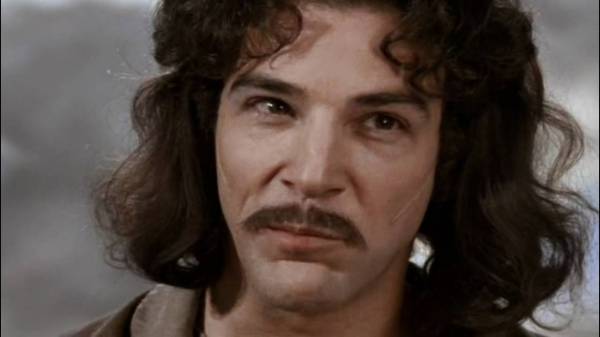
Today, I want to look at one of his sidekicks– Inigo Montoya. Inigo is a reluctant mercenary. He works for Vizzini “just to pay the bills.” His only real ambition is to find his father’s killer and demand vengeance. This has been his guiding ambition for over 20 years, and he is committed to killing his father’s murderer in a duel– if only he can find the elusive villain!

Photo by mali maeder on Pexels.com

Inigo knows three things– he knows the villain roams free and has never been brought to justice; he carries the scars from his own failed sword fight with the man, so he knows his skill and ruthlessness; and he knows the man has six fingers on his right hand. He doesn’t know the man’s name or rank, where he lives, what he does for a living, if he still lives, if he has a family– he really doesn’t know how or where to look for him, and he has no plan beyond challenging the man to a rematch to avenge his father.

I cannot condone Inigo’s thirst for vengeance https://www.biblegateway.com/passage/?search=Romans+12%3A19&version=ESV, nor his half-baked plan to achieve his goal. But Inigo’s great love for his father and his belief in justice make him a likable character. Unlike Vizzini, Inigo seems concerned for the princess’s welfare and fate, and reluctant to be involved in something that could lead to her harm (or even death). Once he meets the “man in black” who comes to rescue the princess, he treats him with honor and admires his courage and skill, even as he is pledged to try to stop him. He allows his foe to catch his breath, prepare for battle, and even shares his sad tale in the hopes that the man in black can help him find his Nemesis.

Inigo isn’t a very good villain; he is too honorable, too ready to help others he meets along the way. But he attracts miracles along his journey, and I’d like to look at three-and-a-half miracles today.

Miracles come in different types. Some are miracles of preservation; some are miracles of healing; some of transformation.

Photo by Daisa TJ on Pexels.com

Inigo’s first “miracle” is actually a series of miracles of preservation. Three times, Inigo is involved in sword battles, and three times he is preserved. At age eleven, he watches as his father is ruthlessly slaughtered by the villainous six-fingered man. Inigo tries to fight for his father’s honor, but is defeated. The six-fingered man leaves him scarred and humiliated, but considers Inigo nothing more than a “brat,” and considers that he has “taught him a lesson,” so he lets him live. It doesn’t seem like a miracle, but Inigo is given a chance to grow up, when he easily could have been killed. He uses this opportunity to become a great swordsman, so he can find his father’s killer and challenge him to a rematch! When Inigo challenges the mysterious man in black, he is formidable in battle, yet he loses. He is winded, scratched, and disarmed by the stranger, and expects to be killed. Yet, again, he is spared– this time out of respect. The stranger renders him unconscious, but does not kill him. Inigo recovers and finally gets the chance for vengeance against his nemesis, Count Rugen. He challenges the Count to a duel. But the Count cheats, and Inigo is gravely wounded before the battle even begins. Miraculously, he finds the strength of body and will to continue the fight. Struggling against the loss of blood, the taunts of his enemy, and his own sense of failure, Inigo continues to fight, gaining strength and momentum, until he wins–bringing justice to his father, and defeating his enemy.

The second miracle is one of guidance. Inigo needs help to reach his goal of finding and confronting Count Rugen. He needs the help of the very man he fought earlier– the mysterious man in black. But the tables have turned. The man in black has been taken captive and tortured. Inigo must find and rescue him. In desperation, he prays for guidance. He enlists God’s help in locating the man who can help him. But his prayer seems to go unanswered. He stumbles around in the woods, lost and defeated. Finally, he leans against an old tree–and in doing so, he triggers the secret door leading to the torture chamber where the man in black lies, left for dead.

The third miracle is one of revival and restoration. The man in black seems to be dead, so Inigo and his friend, Fezzik, take the body to a man named Miracle Max, to be brought back to life. Of course, this is a fairy tale (though a fractured one). We don’t expect to find miracle workers in the middle of a forest. But we often pray for miracles in hospital wards, courtrooms, and rescue shelters. God sends miracles– but he often does so through the skills and willingness of others. In this case, Miracle Max delivers a crushing blow– he does not have the power to bring someone back from the dead. However, the man is black is NOT dead; he is only “mostly” dead. Miracle Max concocts a restorative potion, delivered in a chocolate-coated pill. The man in black makes a halting, but timely, recovery, allowing Inigo to track down the evil Count and bring him to justice. (It also allows the man in black to finish his quest, rescue the Princess and defeat her wicked fiance.)

Photo by Suliman Sallehi on Pexels.com

After three miracles, Inigo finishes his quest and faces a surprising new problem. His whole life has centered around revenge. Now that he has achieved his goal, he has no future; he has lost his sense of purpose. And this is where the “half” miracle happens. Inigo’s character is noble, even if his obsession with vengeance has been unhealthy. Along the way, he has befriended Fezzik, and rescued a man who was deemed to be an enemy. He has fought bravely and with honor, and has not been corrupted by money, power, or violence. His new friend, the man in black, offers him the chance to start over– as the Dread Pirate Roberts! (Lest this sound truly “dreadful”, it has already been explained that the name and reputation are what brings terror into the hearts of the other pirates..once again, this is a fairy tale, where pirates can be heroes.)

Inigo Montoya is a flawed character– he is a drunkard, a mercenary, living with years of failure and haunted by his thirst for revenge. He is not wicked in the same way as Count Rugen or the evil Prince Humperdink, but he is lost, confused, angry, bitter, and unable to save himself. He is a sympathetic character because he is a lot like many of us. But Inigo’s life is transformed by miracles– mostly unsought–giving him the opportunity to start a new life, make new friends, and explore new opportunities.

Photo by Min An on Pexels.com

What unsought, and even unacknowledged, miracles have come into your life? How many times has God preserved your life, guided you in unexpected directions, provided healing or renewal to your physical, emotional, or spiritual being, and given you unexpected new opportunities?

God doesn’t always give us an instant or dramatic miracle– even when we pray for one. Sometimes, he allows us to collapse against a tree, or be scarred by our enemies, or spend twenty years chasing a quest only to find ourselves unfulfilled at the end of it.

But God IS in the business of miracles– and unlike Miracle Max, he doesn’t charge a fee. God’s ways are not our ways https://www.biblegateway.com/passage/?search=Isaiah+55%3A8-9&version=ESV , but His ways are always working for our eventual and ultimate good https://www.biblegateway.com/passage/?search=Romans+8%3A28&version=ESV— if we learn to trust. The big difference between Inigo and his unfortunate employer, Vizzini https://pursuingprayer.blog/2020/02/17/inconceivable/, is that Inigo trusted in something bigger than his own exaggerated intellect. He sought to help others and be helped by them, instead of merely using them.

Photo by Johan De Jager on Pexels.com

May our lives be filled with miracles today– great or small–and may we see them and celebrate their true source!

Blog at WordPress.com.

Up ↑