3 Blessed be the God and Father of our Lord Jesus Christ, the Father of mercies and God of all comfort, 4 who comforts us in all our affliction, so that we may be able to comfort those who are in any affliction, with the comfort with which we ourselves are comforted by God. 5 For as we share abundantly in Christ’s sufferings, so through Christ we share abundantly in comfort too. (2 Corinthians 1:3-5 ESV)
What is Comfort? If you trace the origins of the word back to Latin, it comes from the same root as forte or fortify (fort, or fortare). The idea is one of strengthening, encouraging, giving courage and vigor. The prefix, com-, means jointly, or together. Comfort is what gives us strength as we come together. So, when I say that I am comfortable lying inert in an easy chair all by myself, I am actually missing the real gift of comfort.
Comfort is not the absence of pain or suffering. We cannot give comfort to someone who is enjoying a trouble-free life. In fact, when Jesus spoke to the crowds during His ministry on earth, He often made some people very ‘un’-comfortable by jolting them out of their self-righteousness and self-importance. Jesus did not lead a ‘comfortable’ life of ease and plenty; instead, He lived a life of comforting those in distress– the sick, the outcasts, the guilty, those who had little hope and even less strength. He went without many of the conveniences and securities we take for granted– a house, steady income, status, luxuries, a bank account, a college degree–He didn’t treat Himself to the perks of being a Rabbi or take vacations at a resort on the Sea of Galilee– instead, He spent some of His ministry calming the stormy waters and comforting His terrified disciples! (See Mark 4)
When we pray for someone to be comforted, we long to see them strengthened and encouraged. But sometimes, we also desire that God would make their life easy and free of problems. This is natural– no one likes to suffer– but the promise of comfort is NOT to make our life easy and full of constant happiness. The point of comfort is to help us strengthen each other, cheer each other on, encourage one another, and thrive together, no matter our circumstances.
Comfort, strength, encouragement– they are meaningless to someone who never has had to struggle. But to anyone who has felt alone and abandoned IN their struggles, comfort is a priceless gift– one that God gives us in abundance so that we can pass it on. It is exactly what Jesus practiced during His earthly ministry– He traveled dusty roads, enduring hardship and discomfort to bring healing and hope to thousands and gave His very life ‘a ransom for many.’ (Matthew 20:28 KJV)
Who could use your gift of comfort and encouragement today? Say a prayer of comfort– thanking God for the times He has given you strength and courage– and practice giving that comfort to someone else! Send a note, lend a hand, make a phone call, visit, give a smile to a stranger– it doesn’t take a lot– but make the most of every opportunity to strengthen those around you.
I love puzzles and mysteries. I love word games and jigsaws, number puzzles, logic puzzles, whodunnits and scavenger hunts. I love finding solutions and seeing justice triumph. But solutions are not always available in real life. I know families who have waited decades without ever finding out who killed their loved one– or why. I know brilliant people who struggle with illnesses for which there is no cure. I watch the news, and I can’t find any logic or justice in many of the reports. And I am haunted by the constant refrain of critics and cynics who dismiss prayer– “Keep your ‘thoughts and prayers’, I don’t want them!” “What good is prayer at a time like this?” “Where was God…?” “Shouldn’t you be DOING something, instead of praying?”
Prayer may seem, in our modern society, counter-intuitive and unproductive. We are used to having answers and solutions at our fingertips. We have seen many diseases ‘conquered’ by scientific advances– vaccines and surgeries and hygienic practices. We have seen modern miracles of technology and communications. Prayer seems old-fashioned, clunky, rooted in the metaphysical, rather than rational activity. Prayer doesn’t promise that all the questions will be answered and all the mysteries solved in 180 pages. It doesn’t come with an ‘answer’ page at the end. Prayer depends on our acknowledgement that we DON’T have all the answers– that we may not even have the right questions– and that the answers may never come, or make sense to us, in this lifetime. In fact, one of the secrets of pursuing prayer is recognizing that life’s greatest mysteries are not ‘solved’ so much as ‘unfolded’ by a wise and all-knowing God.
So it is with disappointment and dismay that I find most mystery fiction dismisses, omits, or even outright mocks prayer. Many of the famous detectives of fiction are either non-religious or religious skeptics– Sherlock Holmes, Inspector Morse, Philip Marlowe, Sam Spade, Nero Wolfe, Alex Cross, Kurt Wallander, Temperence “Bones” Brennan, the Hardy Boys, Amelia Peabody, and a host of others. While many are simply non-religious, others express either ambivalence or contempt for religion– especially organized Christianity– and many of its practices, including prayer, adhering to Scripture, and depending on God rather than relying on rationality and science.
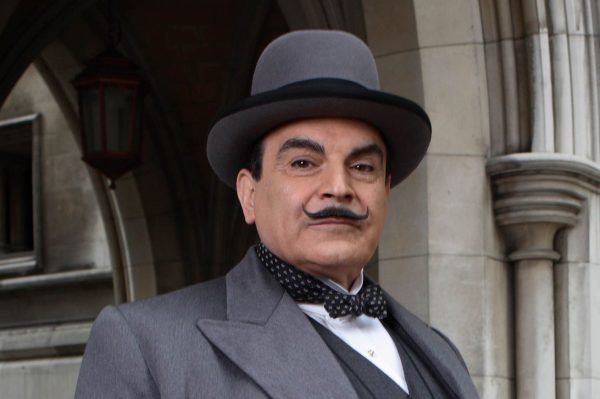
This is not universally true. Many fictional detectives and amateur sleuths ARE quite religious– Father Brown, Brother Cadfael, Sister Frevisse, and one of my all-time favorites, Hercule Poirot. Poirot is not a priest, but he is devoutly Catholic and is often described as spending time with his rosary in earnest prayer. He has a Biblical sense of morality and is often frustrated and even angry with the evil he sees around him. In spite of his arrogant boasts about his ‘little gray cells’ and his amazing success in solving mysteries, he still possesses a great curiosity and a reverence for the divine and mysterious nature of life, love, and faith. As much as he hates evil, and wants justice, Hercule Poirot avoids becoming angry and cynical about people.
How do I respond to evil? Do I spend quality time in earnest prayer? Do I use the gifts God has given to make the world a little better, or do I waste my time in anger, bitterness, and finger-pointing? Am I overly proud of my own ‘little gray cells’ when I solve a puzzle, or am I grateful for God’s gifting? Have I actually learned to ‘hate the sin, but love the sinner?’ Am I able to walk in faith, knowing that there are some mysteries I will never solve, and some prayers that God will answer in HIS time, not mine?
Puzzles and mysteries are fun to solve and challenging in ways that help develop our logic and skills. But they can become an idol and a distraction from the reverence that belongs to God alone. Mysteries remind us that God’s purposes are not to keep us in the dark, but to lead us one step at a time toward Him. And each step should include prayer.
Forgiveness doesn’t ask us to excuse the inexcusable, or trust the untrustworthy. Forgiveness is trusting that God, in His wisdom, His Holiness, and His timing, will bring justice, healing, and peace, when nothing else can. This is important to remember, both as someone who asks for forgiveness, and as someone who gives it.
Jesus offers forgiveness–full, and free, and perfect– he died to make that offer. He gave it to whoever believes on His Name. But here’s the catch…he didn’t make that offer so you can temporarily wipe the slate clean and go on sinning without consequence.
Oscar Wilde wrote a chilling novel, “The Picture of Dorian Gray”, Dorian Gray/Wikipedia in which the title character finds a way to trap his soul, with all its ugliness, hatred, anger, and sin, inside a portrait. No matter what Dorian does, no matter how twisted or evil, he continues to look fresh, young, innocent, and handsome. The effects of his dissipated lifestyle–drug addiction, sleepless nights, years of hard living, even murder–are all trapped in the portrait. Over the years, the portrait haunts Dorian with its monstrous transformation from young man to gnarled wraith. In desperation, he “kills” the portrait– and himself– in disgust and anguish.
We live in an age of appearances– if all appears well on the surface, we ignore the deeper, long-term consequences of our sin. If we “get away with” small sins, we run the risk of sinking deeper into a sham lifestyle. We go through the motions of asking forgiveness, when what we really seek is escape from the consequences of our own actions. We begin to see sin as a valid alternative to obedience–I can obey God if it is convenient, but when it’s not, I can just ask forgiveness. This is a road strewn with lies, excuses, evasions, and it ends in death. It is a lifestyle that makes a mockery of God, of his Holiness, His Sacrifice on the cross, and His loving offer of restoration.
God doesn’t just want to transfer your ugliness and rebellion into a painting to hide it away. He wants to remove it “as far as the east is from the west.” We don’t become perfect in an instant, but our past is expunged so that we can be free to choose obedience and live more abundantly in fellowship with a Holy God. When we are truly sorry for our sins and seek true forgiveness, we want to make better decisions, we want to right wrongs– we want to redeem the past rather than merely escape from it.
When we, as imperfect people, offer forgiveness to someone else, we are not able to do what God does. Our forgiveness is imperfect; like love, or discipline, or a new habit, it needs to develop and grow. Forgiveness is not about freeing the offender, or wiping the slate clean for the other person. It’s about freeing yourself to heal, to move away from slavery to the pain of the past, and to learn to trust God to bring justice.
Forgiveness isn’t natural or easy. No one deserves forgiveness– that’s what makes it a miracle that God offers it to anyone who asks. But God doesn’t undo our sin. He doesn’t erase our actions, or clean up the messes we have made. If I commit murder, God can forgive me, wash away the guilt of what I’ve done, and give me the power to live a life that seeks to do good, rather than evil. But he’s not going to bring my victim back to life, or cause a judge and jury and the family of my victim to say, “Aw, that’s alright– you’ve probably learned your lesson. No hard feelings.” He can (and has) caused amazing healing to happen in such situations, but that’s the exception, not the expectation.
Similarly, if you have been hurt and you offer forgiveness, it doesn’t mean that the other person is no longer responsible for his/her actions. It doesn’t mean that you were never hurt or betrayed, and it doesn’t mean that you trust them immediately and without reservation. It is not hateful, intolerant, or unforgiving to allow justice to catch up with someone who has hurt you– it IS unforgiving to seek beyond justice to vengeance and self-defined retribution.
This is particularly important in cases of abuse. If someone has abused you, physically, emotionally, or mentally, they are likely to make you feel the guilt they don’t want to deal with. “You drove me to it.” “You are the only one who understands my anger.” Forgiving this person does not mean– it NEVER means– that you agree with their tactics and false accusations, or that you are giving them a pass. But it DOES mean that you are giving them, and the damage they caused, over to the God of all justice. Your case is closed; your final judgment is in his hands, and you are free to begin again– begin to heal, begin to see how God can bring something important and good and eternal out of something broken. Forgiveness is impossible, but God will give you the power to do it– it may take several attempts, and several years, but when it comes, it will be the miracle of God working through you to glory!
There have been a LOT of fireworks in our area over the past week, and we’re gearing up for even more this weekend. Tomorrow is July 4– Independence Day in America. This year marks 250 years since the signing of the Declaration of Independence from Britain by the American colonists.
What does this have to do with Pursuing Prayer?
There will be a lot of talk about Freedom tomorrow. Freedom from tyranny. Freedom from colonialism. Freedom to pursue happiness, etc. It IS called Independence Day, after all, so there will be much talk about the freedom to make one’s own way in the world; freedom from restrictive rules and old traditions. Freedom to dream new dreams and forge new paths.
Freedom is precious. It SHOULD be celebrated. But it can also be a dangerous ideal, when divorced from God’s Truth. The very first sin resulted from the wish for “freedom.” Free from God’s rule; free to choose disobedience, to protest God’s decisions and challenge His sovereign wisdom.
The Founding Fathers of the United States wanted freedom from the tyranny of distant and deaf kings and Parliament. They protested unfair taxation, soldiers who could come into their homes with no warrant, and laws passed thousands of miles away with no representation or recourse. They wanted freedom from corrupt laws and the indifferent men who made and enforced them. They believed so strongly in a form of government that would be described four score and seven years later as “of the people, by the people, and for the people” that they risked their lives and their legacies to bring it about.
Modern historians have championed the idea that our Founding Fathers were Deists– that they were not Christians, not devoted to the worship of a Judeo-Christian, sovereign and all-powerful GOD, but rationalists who paid scant lip-service to the prevailing monotheistic beliefs of the time. They argue that God was an afterthought for most of these men– that the bulk of their thought and planning revolved around Greek and Roman government and civics.
That line of thought dismisses the strongest language of the Declaration of Independence. “We hold these truths to be self-evident, that all men are created equal, that they are endowed by their Creator with certain unalienable rights…”
WE– not just a few of the members, but all who signed this document agreed with this language, so much so that “for the support of this Declaration, with a firm reliance on the protection of divine Providence, we mutually pledge to each other our Lives, our Fortunes and our sacred Honor.” (emphasis added)
HOLD– the founders weren’t just expressing a noble possibility about truth, justice, and rights. They were staking their lives on the absolute belief that God was THE creator and giver of all rights and freedoms.
THESE TRUTHS–not a plurality of good ideas or noble aspirations, but the very specific and timeless truths about our origins and heritage as human beings created by a loving, wise, and just God.
TO BE SELF-EVIDENT– even those founding fathers who were less devoted to the Bible teachings of the Church, recognized, as the Apostle Paul wrote: “…what may be known about God is plain to them, because God has made it plain to them. For since the creation of the world God’s invisible qualities—his eternal power and divine nature—have been clearly seen, being understood from what has been made, so that people are without excuse” (Romans 1:19-20 NIV). In fact, it was the self-evident nature of these truths that compelled later generations to root out the hypocrisy of slavery in a land founded on the truth that “all men are created equal” and that they have been given the “unalienable” right to liberty!
The Founding Fathers, in holding to these self-evident Truths, challenged, not God, but all existing human forms of government. Their Declaration ignited discussions, arguments, revolutions, and counter-movements around the world. Two hundred and fifty years later, we are still arguing about the meaning behind the Declaration of Independence, as well as the Constitution and Bill of Rights that arose from it. We celebrate our INDEPENDENCE with pyrotechnic shows and sparklers, parades, and concerts. But the fireworks, noise, and bursts of light also echo the explosions, bombs, gunfire, and deadly force that have been risked and braved ever since the Declaration was issued. We also celebrate a legacy of prayer and DEPENDENCE on God. America is not great because its people were better than the people of other nations. It did not become great by its military might or its wealth. It started out as a ragged smattering of colonies, and it came with many flaws and “baggage” from its colonial days. But throughout our history, we have held to “unalienable” truths– eternal truths– that echo God’s Word and God’s wisdom.
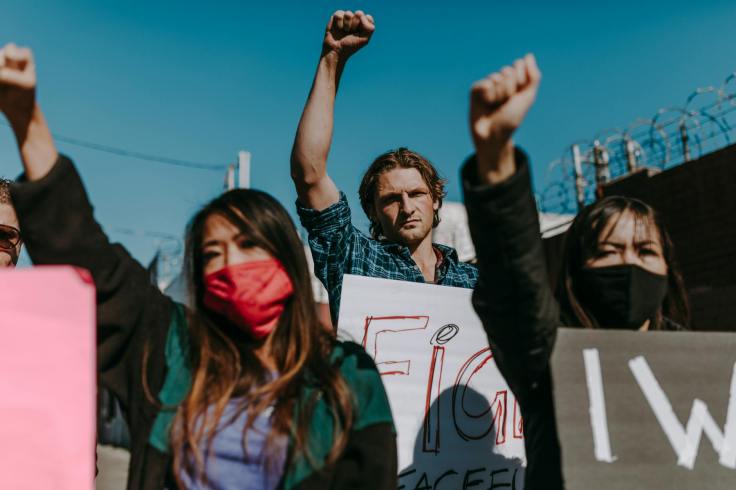
Many people today argue for freedom, not from tyrannical government, but freedom from God, from the Bible, from tradition, and from even common sense. The same people who claim oppression from their government are free to criticize it, march in protest, and move freely around and away from their “oppressors.” Protesters demand the freedom to be wealthy, well-fed, comfortable, and supported, without the responsibility to defend their neighbors, share their wealth (only ask that others do all the sharing!), or work for the common good. Others take for granted their right to own property and goods, to pursue an education (including free public schools and libraries), to have and express opinions and beliefs that do not conform to those of elected or appointed officials, to meet in public or private without fear of losing their lives or livelihoods, and the right to worship (or not) without being told how or who or when to do so.
This year, we can expect protests and expressions of disrespect for our government and its leaders. We can also expect that many Americans will claim to celebrate “freedom” even as they are slaves to sin and rebellion.
True Freedom calls for worship. The Founding Fathers laid a foundation for governmental and social freedoms, but they could not grant us–even in the amazing documents they created– eternal Freedom from sin and death. Only the Creator and Giver of All good gifts can do that.
Tomorrow, as we celebrate two hundred fifty years of American Freedom, let’s not forget nearly 2000 years of Christian Freedom! That’s worth more than just a great fireworks’ show. That’s worth a lifetime of worship and joy!
At the risk of alienating several family members and friends, I feel I need to make the following statement: The United States of America is not, has never been, and will never be a “Christian Nation.” I am not saying this in disparagement of my homeland– I’m not suggesting it is an irreligious nation. But I think the term “Christian Nation” gets used presumptiously to suggest that America is uniquely righteous, or immune from criticism or judgment. America is not a theocracy, and it is not a bastion of Christian virtue. We are a nation “under God”, but not a nation that recognizes God as its supreme ruler. Our government, while based on principles handed down through centuries of Judeo-Christian practice, is built around documents written by and for the people of this nation, independent of their adherence to that practice or to those doctrines. 1st Amendment and Religion
Our government does not sponsor Christian churches, nor does it require its citizens to belong to a particular religion or religious group in order to enjoy its rights, freedoms, and protections. We do not have federal laws that punish those who believe other tenets or practice other faiths that do not fall under the Judeo-Christian umbrella. Our courts may limit the practice of religion (including Christianity) when it conflicts with a “compelling” governmental interest, such as public safety. And our citizens who are practicing Christians are not united in how they apply Christianity to politics, and vice-versa. Our members of Congress are not elected based on their adherence to a religious practice, and our leaders are not required to be clergy (the very thought is pretty laughable to most of us in today’s political climate!). America is designed to be a nation that practices one of the most basic tenets of the Bible–that humans have the gift of Free Will, and the right to use it.
Having said all that, I also want to be clear that the Judeo-Christian tradition has played and (for now) continues to play an enormous role in our laws, societal construct, and civilization. I’m not here to ignore that or dismiss it as unimportant. My goal is to point out that prayer and politics should not be conflated or equated–prayer is not and never has been the equal of political thought or action–prayer is always superior!
As Christians, not only in America, but anywhere in the world, we are called upon to live worthy of Christ and his Gospel. That doesn’t mean burying our heads in the sand or staying silent in the face of evil and injustice– we should be engaged in our communities, and in our civic responsibilities. But it also doesn’t mean that we protest, promote, plot, and proceed politically in our own power or wisdom. We are commanded to pray for those in leadership and authority– those we voted for and those we didn’t! We are commanded to submit to those same authority figures, to show them honor and respect, even if we are opposed to their policies and seeking to reverse those policies. We are commanded to live (as much as it depends on us) in peace with our neighbors, to love our enemies, and bless those who curse us. Our patriotism and our political expression must be in line with, and submit to, our commitment to follow Christ. To show contempt or hatred for our nation and its leaders is to show contempt for the God who is sovereign over them. But that same God will not excuse us for turning a blind eye to sin and corruption, or worse yet, covering it up or calling it righteousness. Our prayers, both personal and political, need to be based in truth and love.
Even as we live in tumultuous times, we are commanded to pray. In relation to our nation and our society, I think there are at least four important things to keep in mind:
Our real citizenship is in Heaven. Praying for our nation, its leaders, its laws, etc., is in line with Scripture; worshiping our nation, its leaders, its laws, etc., is idolatry.
Our neighbors, our nation, our world– they won’t change because we enact a new law, win an election, change the economy, or wipe out war. People, nations, and societies will change because they have had an encounter with Jesus Christ, and they have been transformed by his Grace. Are they seeing HIM in our actions, our Facebook and Twitter feeds, our interactions on the street; are they hearing HIM in our conversations; are they overwhelmed by HIS grace when they meet us? Pray that God will help us be faithful in the small things. Our actions speak louder than our words– and that includes the words of our prayers!
God’s ways are not our ways–we need to be careful that we are not praying for (and demanding, and offering on our part) a quick compromise, a superficial spirituality, and a cheap grace that substitutes for a deep and lasting revival. Don’t ask God to “fix” the world and then wonder why he sends the repairman to your door, or recruits you to scrub toilets!
We are in a battle, but it is not with people and it is not going to be won by playing politics–we must learn to identify the real enemy, so we can put on the correct armor and reach for the right weapons. Our shield is not the flag– it is Faith. Our sword is not a clever argument– it is the simple truth of the Gospel. Victory has already been declared. Remember to rejoice when we pray for our nation and our world– the Lamb has Overcome!
Prayer connects us to the power of the King of Kings and Lord of Lords, whose banner over us is Love.
My father was a quiet man. He loved music, and jokes, and animals, and peaceful summer nights listening to crickets and sipping tea on the front porch. My father was not a man of lengthy, eloquent prayers. His prayers were often short and sometimes punctuated with emotional tears. But my father prayed. He led our family in prayer and devotions; he prayed in church on Sunday mornings and Wednesday evenings. He spent much time, head bowed, talking silently with his Savior.
I have often spoken of my mother’s prayers. But fathers play a different role. My mother’s prayers always seemed to wrap me in a cozy blanket of affection and hope. My father prayers were more like an umbrella– spreading out over our family to seek God’s protection and grace. Even if Dad’s voice wavered in prayer, his vocabulary was bold, filled with a rock-solid faith, and a deep sense of God’s power and wisdom ready to be poured out on our family.
But the most lasting impression I have of my father’s prayers is that of Dad’s reverence for God. I never, EVER, heard my father take the Lord’s name in vain. (Not even when his favorite baseball team was losing– again!) I never heard him express doubt of God’s care, His provision, or His wisdom. He approached the throne of grace with awe and deep gratitude. He never lost his sense of wonder at God’s creation, or his sense of awareness of and need for God’s mercy.
We need men of prayer. I am so grateful for a husband who prays– regularly, fervently, compassionately, and boldly. What would happen in our world if more men prayed daily in the quiet of their homes or places of work? Our society makes fun of men who pray on public platforms, praising themselves as much or more than they praise God. It denigrates prayer as weakness and hypocrisy, but what if more men of faith led their families in daily prayer? What if, with trembling voices, more men sought out wisdom and strength to meet the challenges they face, instead of putting on a brave but false face of independence and self-sufficiency? What if, instead of excusing vulgarity and cursing, more men took the challenge to clean up their language and set better examples?
Yesterday was Father’s Day. We celebrate fatherhood, even though our culture often struggles to define what makes a “good” father. Men of Faith are not perfect; but they serve a perfect Father– God! And those who follow God can be great examples of God’s strength, His care, His protection, His Wisdom, and His joy! If you know men of faith– take some time this week to let them know how much their good example means. If you know men who are struggling to become better fathers, point them to the Scriptures. Show them grace as they grow into men of courage and integrity. Encourage them to finish the race, to keep going, and to leave the kind of legacy that matters most. And don’t forget to lift them up in prayer!
I love being “in the know”–being part of a great secret and knowing that I got the information first (or at least earlier than someone else). But I don’t like spoilers– learning about things that I was hoping to discover for myself. I don’t want to know the ending to that new novel from my favorite author until I read it. I don’t want to know how the new blockbuster movie ends before I have had a chance to see it. I don’t want to know that my favorite character in a TV show dies at the end of season three before watching it in all its tragic impact.
There are, however, some “spoilers” that should be shared, and God has given them to us in His word.
First and foremost– in the battle of good and evil– God Wins! The victory has already been won, and the outcome is certain.
Second– Christ Messiah will return to earth. He will come in triumph and glory. While none of us know the hour or the day of that return, it will come quickly, like a flash.
Before Christ’s return, we will face chaos and trouble in this world. That is also certain, though we have the power to face it and God has the power to turn it to good.
We will face death and the judgment of God–those who trust in Jesus Christ will still die; we will still be judged. Only the blood of Christ, and our faith in his finished work will save us from the wrath our acts deserve.
Every knee shall bow, and every tongue confess, that Jesus Christ is Lord to the Glory of the Father (Phil. 2:10-11).
Knowing these “spoilers” doesn’t ruin our prayer life– instead, that knowledge gives us the power, the passion, and the promise to pray as if our lives depend on it! Moreover, it should move us to pray and act on these truths in all our dealings with others. Not to become arrogant about our knowledge, but to be compassionate and forgiving toward those who don’t have it or haven’t accepted it.
I get to travel every day. I journal my prayers in a daily notebook. Prayer Journal (click here to get ideas or learn more) Each day has a heading and four sections– one for birthdays or other “memory days”; one for thematic prayers (generalized themes like “family”, “community”, “global concerns”, “culture”, etc.); one for urgent requests, and one for a region of the world–nations, major cities, local communities. On busy days, I send a short prayer and try to remember what I know, or imagine what I’d like to know, about that area. Some days, I have the luxury of time to look up information or history about that area– what is the language, capital city, literacy rate, average age, major religion, geography, economy, etc.
Our world is full of wonder, variety, crisis, and opportunity–I want to add all of this to my pursuit of prayer. It reminds me of several things:
I am not the center of the universe– my issues and problems are not unique or exceptional.
God has placed me here to interact with others–I can’t reach out and connect with 6 billion others, but I can become more aware of their needs and way of life.
The world is a big place–seeing it on the screen via the internet sometimes causes me to forget that. And as I see how big the world is, I also need to remember that God is even bigger!
The world is full of variety. Not everyone lives or thinks or worships as I do. Not everyone faces the same circumstances, the same temptations, the same struggles. Yet God sees and hears each one who calls on him. He doesn’t have trouble understanding languages and dialects– he doesn’t get culture shock. He is not an American Jesus, or a Brazilian Jesus, or a Korean Jesus. He’s not an urban Jesus or a remote mountain village Jesus, or a gated community Jesus. When we enter eternity, we will share it with amazing brothers and sisters from every corner of creation. He’s got the whole world in his hands!
Many millions of people around the globe have never heard the Gospel– or they’ve heard lies and misrepresentations. Millions of other believers are being persecuted for believing in Jesus or for sharing the good news of Salvation in His Name. People in every nation, every community, are suffering.
We are commanded, as Christians, to “go into all the world” and preach the gospel. I may not be able to travel to “all the world”, but I can “go” in prayer, sharing on-line, and learning about needs, as well as in sending out and praying for those who can travel.
I am grateful for the opportunities God has given me– to learn about him and worship him in freedom; to travel and participate on short-term mission opportunities; to meet and share with missionaries, travelers, students, foreign workers, and others who share their culture and knowledge and perspectives; and for the global work of the Savior, and my privilege to share in it.
Time to pack my bags– I’m heading to Ireland tomorrow!
It appears on our money in the United States. It is our official national motto, “In God We Trust.” See article here But is it true?
In recent years, many people and groups have tried to challenge this simple four-word phrase. Some claim that it violates the “separation of church and state”. However, the phrase is not specific to any one religion– most of the major world religions (and most of those practiced in America) agree that there is (at least) one God, who can and should be trusted.
I actually worry a little less about those who are challenging the phrase than about those who simply ignore it or give it lip service. And I pray that I don’t fall into the latter group, but in certain moments, I can’t honestly say that I am trusting fully in God. Instead, I tend to trust in various “God-like” things:
I trust my own intuition or my own reason
I trust “experts”
I trust “the science”
I trust “the numbers”
I trust in the money that bears the motto
I trust in my own strengths and abilities
I trust in my husband
I trust my church
I trust my family
I trust what I read on Wikipedia or what I look up on Google
I trust what my friends send me on Facebook or through my e-mail
I trust what “they” say on TV
I trust what I read on a cereal box or food label
I trust headlines
I trust photos and videos I see on the news
I trust what I hear on the radio
I trust celebrity endorsements
I trust public opinion
I trust my feelings…
Of course, some of the things listed above are obviously suspect; others seem reliable and true. It’s hard to argue against some of the things on the list– it’s hard to doubt what I see, what can be measured, or what has proved true in the past. And yet, I have been hurt and betrayed by many of these things– my feelings are unreliable; my friends or family give me advice with good intentions, but bad results; images and even eyewitness accounts don’t always tell the whole story, and, increasingly, honesty and integrity are being crushed out by compromise and expediency. “If it bleeds, it leads…” “The truth is evolving..” “We all have our own ‘truth’..”
God’s truths are eternal and righteous; that doesn’t make them easy or comfortable. Sometimes it seems as though God takes a stand on both sides of an important issue– or that He takes no side at all– leaving us confused and wanting quick and well-defined answers. I have friends who agonize about being on the “wrong side of history” with many current issues. Let’s face it– no one wants to be on the “wrong side” of anything. We draw lines and pick sides– both sides can’t be “right”, can they? So how can we know if we’re trusting God if God is silent or ambiguous?
In the end, there are a few guidelines that have helped me be more confident and have acted as anchors for my faith:
Reading the Bible: not a verse here, or a chapter there to support a particular action or position–consistent reading THROUGH the Bible– from beginning to end, or at least through an entire book at a time.
Asking tough questions: I would love to assume that I already know the answers or have the “right” opinions, but if I can’t handle being challenged; if I never have any questions or can’t ask the ones I keep pushing down, that should be a sign. Sometimes the more questions I ask, the more I have! But, as uncomfortable as it is in the beginning, it is better to ask, and chase after an uncomfortable answer than to ignore the question or pretend to have all the answers.
LISTENING— really listening, whether to friends who seem to know all the answers (see above) , or those with really good questions. It also means listening to those with whom I am tempted to disagree, and to those with whom I passionately disagree. Listening is not the same as accepting or agreeing, but it is important for at least two reasons:
Every person is made in the image of God– how I treat them is a reflection of my love for God. I will fall short; I will still hurt people’s feelings, whether or not that is my intention, but if I’m doing it through pride, hatred, or disdain, I am dishonoring God.
Second, I cannot say I understand a person if I’m cutting them off, talking over them, and finishing their sentences for them. Often, while we may disagree on semantics or details, it turns out we agree on more than we assume we know about “the other side.”
Praying for wisdom and discernment. It sounds odd to those who trust in their own understanding, but God WILL open your eyes, ears, and mind to truth, even if it’s being twisted, covered up, hidden, or falsified. God promises, again and again, to give wisdom freely to those who ask. He doesn’t want us to be confused and frustrated– but He does want us to seek out His truth instead of wallowing in the bog of “little white lies” and obfuscation around us.
Waiting and listening for the Holy Spirit to prompt my conscience. This is much like asking for wisdom, but more subtle, and in some ways more dramatic. The Holy Spirit is our guide and counselor (think Jiminy Cricket, but much more spiritual and always right). Even if I’m not aware enough to know what to ask or what to question, the Holy Spirit will often prompt me. Have you ever been reading along, or listening to someone’s story, and suddenly you just get the sense that something is “wrong”– you’re not getting the whole truth; or there is a detail that stands out and doesn’t make sense, and it keeps niggling at your conscience? Yeah– that. Pay attention to that– even amidst the graphic images and angry voices surrounding you.
Keeping track of God’s faithfulness– I don’t maintain this blog because I “wish” that God was faithful, or because someone managed to convince me that this is what I “should” believe. God has proven faithful through all my questions. I know I can trust Him because I have trusted Him through good times and difficult times; times when it didn’t make sense, when it wasn’t popular, and when circumstances pointed in other directions. I have seen God’s hand at work in history and prophecy and personal testimony in ways that defy expectation and explanation.
And whether of not it’s printed on my money; whether or not it’s popular or “patriotic” or punishable by law, I will continue to trust in God. He is trustworthy and true; faithful in mercy and love; sovereign and altogether righteous. In God I have trusted; In God I trust; and In God I will continue to trust!
Have you ever looked at a series of pictures that “zoom” in or out (or both)? Something that seems “normal” in size suddenly becomes a tiny detail in a much larger picture. Or one tiny detail grows large enough to show intricacies hitherto unseen. It is mind-blowing to think of how many details there are in God’s universe–little things that go unnoticed and unappreciated every day. But not by God. God knows and cares about every single detail– from the individual hairs on your head, to the variations and whorls of each of your fingerprints; from the gradations of colors in each moment of each sunrise, to the exact air temperature in each square foot of atmosphere around the world; from the wings of every butterfly to the fins of every fish– nothing escapes his notice or falls through the cracks.
We can pray with confidence that God hears every word we say, and knows the thoughts we can’t even put into words. I believe God loves to hear all our details. He loves listening to us, because of his great love for us. He wants us to hold nothing back. This is especially true when we pour out our deepest delights and our most pressing burdens. He wants to share them with us– to double our joy, and shoulder our pain.
I was reminded about God’s attention to detail while reading His word one morning. I was reading through one of the books of history (II Kings) in which the various kings of Israel and Judah are listed, along with short accounts of “what happened” during their reigns–some kings are given several paragraphs or a couple of chapters; others merely a sentence or two. In the midst of all this, there is a curious reference in II Kings 14:25. King Jeroboam II of Israel is accounted a generally wicked king, but he did restore some of the ancient boundaries of the country, “in accordance with the word of the Lord, the God of Israel, spoken through his servant Jonah, son of Amittai, the prophet from Gath Hepher”– that’s right, THAT Jonah– the one of the giant fish and the adventure in Ninevah (see Paltry Prayer ). How many times have I read the story of Jonah, and passed right over this reference to him in another book! The Bible is full of such hidden hints and corroborating details. I believe that God put them there to remind us of his great attention to detail. The God who lists genealogies throughout his word— long lists of otherwise forgotten names; the one who makes a point of listing palace guards and minor officials, and builders and temple workers–this God sees ME! He sees YOU! He hears us when we call. He knows all of our quirks and idiosyncrasies– and loves each unique detail of our makeup.