I have a very bad habit (one among many). I tend to be competitive, and a bit of a perfectionist when I work at something. I’m never satisfied with “good enough” when I think I can do a little better. This includes shopping for bargains. I will go to great lengths to stretch a dollar; to save a few cents–outlet and discount stores, sale shelves, bargain basements–I’ve haunted them all.
But prayer shouldn’t be a “bargain basement” encounter. God is not in the business of selling. He’s in the business of redeeming. God is lavish in his Grace, and sufficient– even abundant– in his blessings.
It’s not that I should sit back and expect God to lavish me with abundant resources and comforts. But why do I hunt for the “bargains” in my prayer life? Why do I ask God for the bare minimum when I pray– “Lord, just help me get through this next hour.” “Father, help me pass this test.” “God, I need 10 dollars to get through the week.”
I’m eager to hunt for resources that I “find” at a bargain. Why am I not eager to see how God provides for my needs every day? Why is it more satisfying to work hard for what I need, than to see God come to my rescue when my efforts are not enough?
It’s not that I am asking for bad things or wrong things, or that I should be asking for so much more. But what does my attitude say about God? I say that God is Love, I say that he is Good. I say that he can do anything, and that he is gracious and merciful. But my prayer life says otherwise.
It’s time that I ask God for “my daily bread”, without expecting day-old leftovers. And, when he chooses to give me Manna, it’s time for me to see that provision for the miracle and the blessing that it is.
Candy canes, Christmas cookies, hot cocoa, fruitcakes, and families feasting…this season is filled with food and memories of food shared with those we love.
But there is no feasting in the Biblical tales of the Nativity. No cookies or pies, no roast lamb or goose, no hot cocoa or fruitcake. So is it wrong to celebrate Christ’s birth with tasty treats?
I don’t think so. (And not just because I enjoy tasty treats!) We speak about seeing Jesus as the Light of the World, and hearing the Word of God, and feeling the warmth of God’s Love…God speaks to us through our senses, and taste is no different. There is nothing inherently sacred about Christmas cookies. And even foods like pretzels and candy canes, which can be symbolic of prayer or the shepherd’s crook, or other religious symbols, are still ordinary. Yet they can also be ways to experience the season of Advent (or Easter or other holidays) in a sensory, spiritual way.
The Bible is not silent about food and feasting. In fact, King David said:
” Oh, taste and see that the Lord is good! Blessed is the man who takes refuge in him! Oh, fear the Lord, you his saints, for those who fear him have no lack! “
And Jesus would invite each of us to “taste and see” His goodness as we remember His death and resurrection:
23 For I received from the Lord what I also delivered to you, that the Lord Jesus on the night when he was betrayed took bread, 24 and when he had given thanks, he broke it, and said, “This is my body, which is for you. Do this in remembrance of me.” 25 In the same way also he took the cup, after supper, saying, “This cup is the new covenant in my blood. Do this, as often as you drink it, in remembrance of me.”
As we prepare to celebrate the Nativity of our Savior, may we engage all of our senses to recognize His goodness, and may we share the memory of all the good things He has given us– physical and spiritual. May we delight in the tasty treats, but let us also remember that Jesus is also the “Bread of Life,” and the “Living Water.”
Also, in this time of bounty and excess, remember that we are to “taste” and see God’s goodness, and to share it! Christmas gluttony does nothing to remind us of God’s goodness, and may prevent other “hungry souls” from being able to enjoy. And that doesn’t just apply to food. May we be eager to share– food, laughter, hugs, good news, compassion, and the truth. The sweet and the bitter…may we taste and recognize our health, strength, and life in the Goodness of our Great God.
Thank you, Jesus, for being our nourishment. Thank you for precious memories shared around tables–food and fellowship, laughter and love. Thank you for being God With Us in every “sense.”
We are approaching Thanksgiving in America. Too often, Thanksgiving is lost amidst the shuffle between Halloween and Christmas. No one dresses up for Thanksgiving; no one passes out treats. There aren’t the same long-standing cultural traditions that we have with Christmas– no trees to decorate, no “Thanksgiving” cookies to make, no “Thanksgiving” elves or Santa Claus. There are turkeys, and sometimes stories about Pilgrims and Natives sharing a peaceful feast, but even that has become a sore topic. In fact, for many people, Thanksgiving is about three things– eating, watching parades on TV, and watching Football (trying to stay awake after all that food!). Some families give a nod to the spirit of Thanksgiving by going around the table and reciting the things for which they are thankful. But we rarely take the opportunity to draw attention to the Giver of all good things. We are more likely to be thankful for things we have as a result (we think) of our own hard work, wise decisions, and “good luck.” Families may travel long distances to be together, but even that is going out of fashion, as young adults often opt to spend the day with their friends or even on their own, and older adults are often “celebrating” without any family present.
I love Thanksgiving. It is one of my favorite holidays. But I think we have lost much of the spirit of Thanksgiving. Thanksgiving is not just about one day with lots of food spent with family or friends. Thanksgiving is really a lifestyle. The Bible is rich with thanksgiving and praise:
“I will give to the Lord the thanks due to his righteousness, and I will sing praise to the name of the Lord, the Most High.” Psalm 7:17 “I will give thanks to you, LORD, with all my heart; I will tell of all your wonderful deeds.” Psalm 9:1 “Enter his gates with thanksgiving and his courts with praise; give thanks to him and praise his name.” Psalm 100:4 “Give thanks in all circumstances; for this is the will of God in Christ Jesus for you” 1 Thessalonians 5:18 “Do not be anxious about anything, but in everything by prayer and supplication with thanksgiving let your requests be made known to God.” Philippians 4:6 “And let the peace of Christ rule in your hearts, to which indeed you were called in one body. And be thankful.” Colossians 3:15 “Through him then let us continually offer up a sacrifice of praise to God, that is, the fruit of lips that acknowledge his name.” Hebrews 13:15
We have much to be thankful for, but when we look at the Bible verses, Thanksgiving is NOT about WHAT but about WHO. We can be thankful for good health, but we should “give thanks” to the One who gives LIFE– even when we aren’t enjoying perfect health. We can be thankful for our family, but we should really be thankful for the One who created and designed families– including our imperfect, slightly dysfunctional family.
Job learned this lesson well. He was extremely blessed– one of the richest men in all the land. He owned cattle and land, had a large family, and was highly respected. But when he lost it all, he still took time to thank God– not just for the good things He had given Job, but for who He was and is. Job acknowledged that the same God who gives is also the God who takes away– yet He is just, Holy, and awesome. He is sovereign and merciful. And, in the end, Job was restored to health, prosperity, honor, and given a new family.
Jesus was always thanking God– and not for the things we might expect! Jesus arrived in Bethany to find His friend Lazarus dead. Yet He thanked the Father. He did not thank God for “letting” Lazarus die, but He thanked Him for always hearing His prayers, including His prayer to restore Lazarus to life. Jesus thanked God for food– even though He proved that He could turn water into wine and small amounts of food into feasts! Jesus even thanked the Father for hiding His message from those who think they are wise, while revealing it to the lowly and meek. Imagine how much easier His ministry would have been if God had simply opened everyone’s heart and mind to accept that Jesus was the Messiah! But it pleased God to make Jesus’ ministry “fail” on many levels and lead to the Crucifixion. In spite of this, Jesus praised the Father for His wisdom and sovereignty.
We can be thankful to God, not just when things are going well, and we are feeling blessed, but when things are dark and chaotic, or we feel as though we have failed. We don’t ignore the grief of loss, the pain and struggles we face– but we look beyond to the God who sees, hears, heals, and makes all things new in His time. We can thank God in all circumstances, because He is GREATER than all circumstances!
This season, may we take time to contemplate– not just all the good things we have–but to dive deep into who God IS. May we say with Job, “The LORD giveth, and the LORD taketh away; Blessed be the Name of the LORD!”
Our church has been presenting a series of sermons on being a BLESSing to our neighbors. BLESS is an acronym for Begin with Prayer; Listen with Care; Eat Together; Serve like Jesus; and Share Stories. We were challenged the first week to choose four close neighbors. We were to pray for them, and if we didn’t know them well, to reach out and make contact. This has been a true challenge for David and I, because we live in an apartment above our shop. Most of our neighbors are not residential, but commercial! Nevertheless, we decided on a couple of commercial “neighbors” and a couple of non-traditional “neighbors.” We started praying– praying for opportunities to get to know our neighbors a little better, and praying for their health, well-being, etc. We’re getting to know some of the workers at the two commercial locations, and getting to know our chosen “families” a little better. We’ve been more intentional about stopping to visit or chat, and making sure we listen and respond sincerely– this is not just a short-term “project” but an opportunity to build closer relationships. And we’ve been praying for opportunities to develop closer friendships.
So this week was the sermon I’ve been dreading– “Eat together.” You might wonder why this is so fearsome–doesn’t everyone like to eat? And I love meeting over a nice meal. I love to cook, as well. The problem? Our apartment is tiny and upstairs– NOT conducive to inviting people over for a warm, comfortable meal shared around a large table. We have two mismatched chairs around a small table in our tiny kitchen, and two more mismatched armchairs in the living room. No couches, no designated dining room, no space to “entertain” guests. I want to serve others. I want to grow friendships. But I’m not a hostess. Not in a cracker-box-sized apartment upstairs. I know this seems petty– I’ve known amazing hostesses who live in shacks and invite guests to sit on a dirt floor. I know. But I still struggle with the idea of entertaining others in my current circumstances.
I knew it was coming– we looked at all the examples in the Bible of good and even sacred things happening around the table and/or involving food– Passover Seders, Communion, the Wedding Feast of the Lamb (among others)… “But Lord,” I prayed, “I can’t invite the entire staff next door to my home for a meal. And some of the “residential” neighbors we are praying for are elderly and can’t manage the stairs to our apartment even if we had the room to host a meal. And it’s too expensive to invite some of the families or staff to a restaurant. How are we going to be able to bless others and “Eat” together?”
But God isn’t bound by conventional ideas– even when it comes to hospitality. At the end of the service, we were surprised by an announcement from our pastor– one of the families in our church owns a fruit farm. Last year, they had a bumper crop of apples, and they donated several bags of the apples to the church. There were enough apples for each family to take several bags to “BLESS” our neighbors! No meal to fix. No apologizing for the smallness and shabbiness of our living space. But a chance to share FOOD with my neighbors and bless them with wonderful apples! Thank you, God!
David and I wasted no time– we delivered most of the apples yesterday afternoon! And we had so many apples, we were able to bless more than just the four locations we had decided on earlier in the series. We were able to bless at least 13 different families/ businesses with at least one full bag of apples! We blessed families with small children, a retired couple; a single person on a fixed income; an extended family of four generations; we blessed people who go to another church; we blessed people who don’t attend church at all. We blessed the staffs at a couple of local businesses, and shared laughter (and concerns) with several friends, old and new.
Not everyone wanted the free apples. One family turned down our offer. Some people are suspicious of free gifts; some are too proud to accept food as a gift; some are simply not interested, or too busy. It is the same with the Good News. Some people do not want what we have to offer in Christ. Some are suspicious; some are too proud or even too ashamed to believe that God has Good News for them. Some are too caught up in their problems or their ambitions. We must not be discouraged, though. God has not given us such a precious gift without also giving us the opportunity share it with others. And we will see how God continues to work in mysterious ways. Some people were surprised and confused by the concept of “apples of blessing.” They wondered what we might ask for in return. We smiled and said there were no strings attached– we just wanted to share our blessing with them! Some people took more apples than we had planned to give them– that’s ok, too. Others wanted to bless us in return– we received over two dozen eggs in gratitude for a couple of bags of apples! Today, I’ll be delivering the last few bags to businesses that were closed yesterday (to share with their staff). I’m excited to share this gift–and I’m reminded of how good it is to share the free gift of the Gospel!
God didn’t change the circumstances of our apartment. I worried that I would be asked to host an elaborate meal, or that I would miss out on blessing others because of our circumstances. But in God’s economy, we can show hospitality, love, generosity, and compassion on the street. We can share food in a way that opens up opportunities to make memories, share stories, communicate prayer requests and concerns, serve others’ needs, and make new friends. There are dozens of ways we can open our hearts and our lives to our neighbors, serve them, and pray for them…
We kept one bag of apples– maybe someone in our neighborhood would like a pan of apple crisp! And now, David and I have a few extra eggs! Anyone interested?
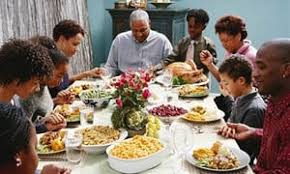
When I was growing up, we always said grace before our meals. It wasn’t an afterthought; it wasn’t an affectation. It was just part of the meal. We sat down, said grace, and started eating. Sometimes, Dad did the honors; sometimes, it was Mom. And sometimes, my sister or I were asked to say it. It was usually something simple, though it wasn’t always the same. We would say grace at home, around our own table, and we would say grace at restaurants– wherever and whenever our family was together for a meal.
Today, my husband and I have the same tradition. We don’t have children in the house, but he and I take turns saying grace, and if one of the grandkids happens to visit, they know they may be asked to take a turn, as well. If David and I are eating out, we still take a quiet moment to hold hands, close our eyes, and say grace. Some times, other diners or wait staff will stare (or glare) or comment, but most of the time, they don’t even notice.
So why do we do it? Is it no more than force of habit? Are we just “holier” than other diners? Do we really think it impresses God if we say grace, or that God will be angry if we don’t say it?
No. But we believe saying grace is important. Here are some reasons why:
Grace is about gratitude. In our busy lives, it can be tempting to take things for granted– even things like food and family. We are BLESSED to have food to eat, and family with whom to share it. We are blessed when we go out to eat to have others cook and clean up for us. We are blessed whenever our family or neighbors can share a meal with us. God is a loving and gracious God, and grace is a time to remember our blessings.
Grace slows us down for just a minute to REMEMBER who we are, and who God is! All our blessings– including food and family and time to share them– come from God. Grace reminds us to be humble as well as thankful. It reminds us to see God’s hand at work in even the smallest and most mundane happenings in our lives. And it reminds us that God is faithful in all things, big and small.
Grace also helps us to remember to thank the people involved in our meals– the ability to buy groceries; the work it takes to prepare our food; friends and family who share our meals; neighbors who have given or traded with us for food; the cooks and wait staff that serve us at restaurants. Saying grace helps us SEE how we are interconnected; how we depend on God and on others in every area of our lives.
Grace gives us the opportunity to lift up our immediate worries and give them to God, instead of holding on to them. Grace is more than just a quick word about food. It is a time for us as a couple (or a family) to pray together about worries that are on our minds. Then, instead of being stressed as we eat, we can stay “in the moment” with each other, and enjoy mealtime together! It’s also a great way to share our thoughts, feelings, and concerns in a safe and informal environment. How much better mealtime is when stress and frustration are diminished, and joy and peace are given a seat at the table, instead!
Saying grace is much more than just a quaint habit from a bygone era. It is a vital part of our growth as individual Christians, and as a Christian couple. I believe it is a simple and quiet witness to others. I believe it has benefits for our digestion, our attitudes, and our emotions, as well.
Grace– not just the mealtime prayer, but the concept of Grace– is not loud or showy. It is, however, consistent, lovely, and powerful. May we say grace; may we show grace; may we live in the power of Grace today!
A young man walked into a local superstore. He was nondescript: late twenties or early thirties, dark hair, light brown skin, deep brown eyes, clean cut, quiet and friendly-looking. He was alone.
He came in by the pharmacy, and started down the first aisle. He saw a woman staring at a box– a home pregnancy test. She looked fearful, tired, and sad. He started to reach out to put a hand on her shoulder.
“Hey! Where’s your mask?! You can’t be in here without a mask– state mandate. What are you? Some kind of COVID-denying homicidal maniac? Hater! Get out of here!” This from another lady at the end of the aisle. The sad woman disappeared around the corner. Without a word, the man pulled a mask from his pocket and slipped it over his mouth and nose. He continued down the aisle. “I hope you get COVID and die!”– a parting shot from the second woman.
The man turned a corner and approached the brightly-colored Easter display area– candy, plastic eggs, plush bunnies, baskets filled with small toys, and lots of plastic grass. One area boasted crosses–wooden crosses on stakes to put in the yard, filigree crosses to hang on the wall, pewter crosses on chains of various lengths for necklaces, bracelets, key rings… A few wall hangings and lawn banners with sunrises, lilies, cute little chicks, and old country churches. More candy. The larger bags were on sale. To the right, there were adorable clothes for the kids– suits for the little boys, frilly dresses and bonnets for the little girls. Most were 20% off. There were “dress-up” costumes, too–rabbit ears and and flower hats and fairy wings. There was even a chicken outfit with feathers. Off to the end, there were deeply discounted Halloween costumes for 70% off–zombies and vampires, witches and skeletons. A special end-cap held yet more candy.
As the man left the area, he shook his head. He wandered over to the Home Decor and craft area in a fog. There he found framed art. “God Bless America!” “Life is Better at the Lake” “Love Never Fails” “Sleep, Drink, Fish, Repeat” “Faith, Family, Freedom” “These Boots Were Made For Walkin'”, plus several with pictures–Wonder Woman, Harley-Davidson, Captain Morgan, Elvis Presley, and Marilyn Monroe.
He kept going. There were books and magazines–best-sellers, romance series, biographies, horror and self-help books. Magazines filled with gossip and gaming, guns and glamour, gardening, goddesses, and gigabytes. Just for Easter, there was a special display of leather-bound Bibles, next to the Spring Gardening guides and photographic histories of favorite Major League Baseball teams.
The man bypassed the mesmerizing glow of wide-screen TVs and computers, strolled past the sporting goods and garden center, and turned away from the auto and hardware sections. He spent a couple of minutes glancing at the furniture– prefab and chipboard dressers and bookshelves, patio tables made of plastic or resin or metal tubing; floor-model chairs and lamps already scratched and discounted.
As he approached the grocery area, his eyes widened–aisle after aisle of canned goods, packaged dinners, bags of cookies and flavored popcorn, rows of olives and pickles and hot peppers, an entire section for bread and rolls. And the meats! Large banners announced special prices this week on ham and lamb, rolls, potatoes, and special Easter cakes.
As He left the superstore, there was a bench just outside. The man sat down, sank His head into His nail-scarred hands, and shed a tear.
I had to fast overnight for some bloodwork I had done this morning. No food for 12 hours; no water for 8 hours before the blood draw. It shouldn’t seem like such a difficult thing, but at 9 or 10 p.m., I imagined I smelled food. My mouth watered– and then it felt dry. I felt woozy and weak. Surely I could have just a cracker or some orange juice, right? But no, I finished the fast and rejoiced to eat breakfast after the blood draw was complete. And simple scrambled eggs tasted sooo good! Oddly, I have often gone several hours without food and without all the imagined side effects I felt last night. The actions were the same, but the focus was on what I was doing, not what I was missing.
Fasting has become popular in recent years. I know several people who practice intermittent fasting for weight loss and other health benefits. Others fast for religious reasons (other than prayer); some people give up certain foods ritually, for Lent or other festivals. Some even fast in dangerous ways (anorexia, etc.) Fasting is usually about our relationship (sometimes an unhealthy relationship) with food.
Prayer, on the other hand, is all about our relationship with God. And when the Bible speaks of Prayer and Fasting, it is also about our relationship with God. The Bible gives many examples of fasting– even “extreme” fasting. Moses, King David, Jesus, and the Apostles all practiced it. Sometimes entire groups (churches), cities (Nineveh–see Jonah, chapter 3), and nations (Israel/Judah) fasted. The Bible also gives us many reasons to do fasting, including repentance of personal or national sin, deep personal struggles, and focusing on a single issue, such as the unsaved, the persecution of fellow Christians, seasons of famine, or ongoing injustices. But the Bible isn’t specific with guidelines and rules about fasting, because, like prayer, it is primarily a pursuit. It’s not about the extremes or the number of days, or the amount of food we “give up.” It is about the pure pursuit of God’s sufficiency. God is not impressed by whether we fast for one day or forty; He does not count the number of calories we might have consumed or the amount of weight we lost. He doesn’t measure the strength of our will power or our “success.” He isn’t impressed by posturing and virtue signaling. What He does ask is that we pray with complete focus and integrity, without the distractions that food, entertainment, and even sleep can sometimes become.
We can fast for hours or days– miss one meal or fifteen–and still “miss” the blessing of prayer, because we are focused on what we are doing (or not doing) instead of focusing on what God is doing. We can also “fast” in ways that have nothing to do with food– turn off the TV or phone, retreat from crowds and busyness, even “fast” from sleep! The point is not that WE are “better” for fasting, but that fasting is “better” for US!
Today, consider a small “fast”– replace a coffee break, snack, meal, hour of social media, or that extra 15 minutes of sleep with some time alone and wholly abandoned to God. Not only will we come away refreshed and not “missing” whatever we traded, but we will more fully enjoy those same activities or foods when they take their rightful priorities. Remember, prayer and fasting is not a contest or a ritual, it is a pursuit and an adventure! Enjoy it!
Some thoughts:
1) Fasting is as individualized as praying. There is no perfect “formula.” But there are several helpful suggestions. You can set a time limit (one day; 12 hours, etc. without food or a certain activity) or a food/activity limit (only one meal a day for seven days, only one television program per night for a week). You can plan days or weeks ahead to fast for a definite period, or you can decide spontaneously to start fasting until you feel led to stop. One caveat– Fasting is not a game. It IS a commitment, and shouldn’t be done without a real desire to get closer to God.
2) Having said that, fasting isn’t about your will power, or success/failure. Sometimes, circumstances will prevent you from completing a planned fast. Certain health issues or family situations may prevent you from fasting for a day or more. Sometimes you will fall short of the goal you set. Don’t let that stop you from trying again, or trying differently. God isn’t about perfection on your part– He IS about helping you grow stronger and more complete as you continue to walk with Him.
3) Fasting is personal. It isn’t about looking virtuous, posting about your struggles, or comparing yourself to others. (See Matthew 6:16-18) That doesn’t mean it can’t be done as a group. But group fasting should be about a single focus or topic, not about making everyone in the group conform to a preconceived expectation. There is great encouragement to be found in praying as a group, and some encouragement in fasting as a group, but remember, fasting is between you and God, not you and the group, or you and all your Facebook friends.
NOTE: At least once a month this year, I want to offer some practical suggestions on how we can better pursue a life of Prayer and living the Christian Life. I hope this post gives each reader something to consider.
There is a common English saying, “You are what you eat.” It suggests that if you eat a lot of fatty foods or sugary foods, you will suffer the consequences– you will become fat or develop health problems associated with sugar, cholesterol, etc. There is some truth to the saying, especially if a person eats such foods to excess, and does not eat a balanced diet that also includes foods high in fiber, vitamins and minerals, and other nutrients.
But the saying also suggests that a person’s diet determines their identity, which is not true, and often involves labeling and unfair judgment. And the judgment comes, not just based on what a person eats, but sometimes how, when, and where a person eats: “couch potato” “gourmand” “junk food junkie” “vegan” “carnivore” “gluten-free” “keto” “midnight snacker” “carboholic” “power foods” “see-food diet (if I see it, I eat it!)” “fitness diet– I’m all about fitness –(fittin’this) whole pizza in my mouth!” “picky eater” “fast food” “five-second rule” etc.
The truth is, our relationship to food can indicate aspects of our personality or character, but it is not “who we are,” unless our entire life is about food. (Even for those with conditions like anorexia or bulimia that turn food and/or eating into an obsession, it is one aspect of their life–a diagnosis, not an epitaph.)
Our world today is filled with opportunities to make an idol of food and eating, diets, nutritional fads, supplements, etc. We end up ashamed of every meal– counting calories, pointing fingers at those whose eating habits don’t live up to our standards (while secretly envying them), trying to excuse (or hide) any trip through the fast food drive-thru window, feeling guilty over a candy bar, or feeling depressed when we cannot afford to eat like the people we see in magazines, in movies, or on TV. In religious circles, we champion “God-given” diets, some of which are not given by God. “What would Jesus eat?” The Daniel Diet, or The Shepherd’s Diet– these may be good principles and even helpful nutritionally, but they won’t “save” you or make God love you better than He already does.
Jesus himself addressed this question. His disciples were being singled out by the religious leaders of their day because they ate without performing the ritual handwashing ceremonies. They were declared “unclean” for eating in this manner. But Jesus saw through this criticism. It wasn’t based on God’s law, but on the human traditions that had been added over the centuries. What God had said about cleanliness and hygiene was meant for general health AND to distinguish the nation of Israel from other cultures whose eating practices were sometimes part of their worship of idols. After chastising the Pharisees for their hypocrisy, Jesus turned to the crowd:
Matthew 15:10-20 English Standard Version (ESV)
10 And he called the people to him and said to them, “Hear and understand: 11 it is not what goes into the mouth that defiles a person, but what comes out of the mouth; this defiles a person.” 12 Then the disciples came and said to him, “Do you know that the Pharisees were offended when they heard this saying?” 13 He answered, “Every plant that my heavenly Father has not planted will be rooted up. 14 Let them alone; they are blind guides. And if the blind lead the blind, both will fall into a pit.” 15 But Peter said to him, “Explain the parable to us.” 16 And he said, “Are you also still without understanding? 17 Do you not see that whatever goes into the mouth passes into the stomach and is expelled? 18 But what comes out of the mouth proceeds from the heart, and this defiles a person. 19 For out of the heart come evil thoughts, murder, adultery, sexual immorality, theft, false witness, slander. 20 These are what defile a person. But to eat with unwashed hands does not defile anyone.” https://www.biblegateway.com/passage/?search=Matthew+15%3A10-20&version=ESV
Notice that Jesus did not say that it is healthier or better to eat with unwashed hands, nor did He say that people should eat without washing– instead, He was speaking common sense about obsessive and judgmental practices. Jesus himself followed the traditional kosher diet of His people, as did His disciples. Jesus also fasted, and recommended it as a companion to disciplined and earnest prayer.
It isn’t what we eat, or when or where that makes us who we are. Our eating habits and diets may help our bodies, but they won’t save our souls, or make us better than our neighbor. In fact, if our eating habits are more important than our neighbor–if we use them to try to manipulate, control, shame, or label our neighbor–we need to reconsider how “healthy” they really are.
Diets are not bad. Food is not bad. Pride, envy, self-righteousness– these are bad for the heart, the stomach, and the soul. Let’s be grateful for food, but even more, let’s be grateful for a God who knows us intimately and thoroughly– a God who knows that we are NOT “what we eat!”
4-5 Celebrate God all day, every day. I mean, revel in him! Make it as clear as you can to all you meet that you’re on their side, working with them and not against them. Help them see that the Master is about to arrive. He could show up any minute! 6-7 Don’t fret or worry. Instead of worrying, pray. Let petitions and praises shape your worries into prayers, letting God know your concerns. Before you know it, a sense of God’s wholeness, everything coming together for good, will come and settle you down. It’s wonderful what happens when Christ displaces worry at the center of your life. 8-9 Summing it all up, friends, I’d say you’ll do best by filling your minds and meditating on things true, noble, reputable, authentic, compelling, gracious—the best, not the worst; the beautiful, not the ugly; things to praise, not things to curse. Put into practice what you learned from me, what you heard and saw and realized. Do that, and God, who makes everything work together, will work you into his most excellent harmonies. 10-14 I’m glad in God, far happier than you would ever guess—happy that you’re again showing such strong concern for me. Not that you ever quit praying and thinking about me. You just had no chance to show it. Actually, I don’t have a sense of needing anything personally. I’ve learned by now to be quite content whatever my circumstances. I’m just as happy with little as with much, with much as with little. I’ve found the recipe for being happy whether full or hungry, hands full or hands empty. Whatever I have, wherever I am, I can make it through anything in the One who makes me who I am. I don’t mean that your help didn’t mean a lot to me—it did. It was a beautiful thing that you came alongside me in my troubles.
Philippians 4:4-22 (The Message)
I have been blessed with the opportunity to do a couple of short-term mission trips. I am not a “Missionary” in the traditional sense. I have not left friends and family behind to move to a new culture or live among strangers for years to spread the gospel. I basically took some working vacations, met dozens of wonderful new friends, learned about the work they are doing in their community, and joined in helping them with a couple of small projects (painting, sorting donated clothes and shoes, working in the school, helping organize a library, putting together scrapbooks, etc.) I was able to go back and visit five times over a dozen years and watch as the children grew up, the school added on, the staff changed, and the mission work focus became broader and more community-focused.
Two things about visiting the mission field– you meet amazing people and you hear amazing stories. Some people will become life-long friends. Some people teach you and touch you in unexpected ways, even if they cross your path only on a single day. Some stories make you re-evaluate all the things you take for granted. Some stories leave you laughing or crying along with your new friends. Some just leave you speechless.
One such story happened on my first visit. We went on a “field trip” to see a developing community not too far from the border between the Dominican Republic and Haiti. Hundreds of Haitian refugees had flooded into the D.R., and at least two mission groups from the U.S. and Canada were working to provide housing, healthcare, and schooling for homeless families. Several teams of workers had already started building small cinder-block houses, a couple of bath houses/bathroom facilities, etc. in an area that used to be a sugar cane field. The houses were serviceable, and had basic electricity and running water. However, the water was only good for washing, not for drinking. The houses were close together, with very small plots for gardening, but the land was rocky and dusty. There was a centralized “administration” building, with a small clinic and other basic community services, a small elementary school, and a small chapel. Most of the homes had an electric light bulb hanging from the ceiling, but no other appliances. Meals were still cooked over a small open fire in the main room of the house. Cots or bed rolls took up most of the other room. The bathrooms were in the communal bath houses.
Not the actual location, but this is not too different from what the first houses were like– very basic.
I set the scene above so the circumstances are clear. These families were happy to be alive, and to have any shelter at all, but they were not living in luxury, nor were they moping and in despair about their condition. Part of our visit was to bring awareness to what efforts were already underway, and what needs were still outstanding. Medicine was scarce; many of the families had at least one person who was HIV positive, and many of the others had issues resulting from malnutrition and untreated childhood diseases. Jobs were hard to come by– the sugar cane plantations and rum factories had a history of exploiting their workers, and very few other jobs were open to Haitians who either didn’t speak the language or had no work permit/official identification. The mission organizations were not set up to provide jobs, income, or food and water. They were surviving on donations, which were sporadic and usually consisted of non-perishable items like clothes and hygiene items (toothpaste and soap).
Into this scene, the mission had received a princely donation of several hundred pairs of flip-flops. One of the bigger department store chains in the states and an overstock of black and white flip-flops– different sizes, but all the same style and colors. There were enough that everyone in the community could have a new pair of shoes! However, after the shoes were distributed, the administrators noticed that people were still going around barefoot. Very few of the people were wearing the new shoes. Finally someone asked if there was a problem with the shoes.
The answer they received is the heart of the story, and a lesson I have never forgotten. The people were very grateful for the shoes. But their greater need wasn’t for shoes. God had heard their prayers and supplied their need. Several enterprising members of the community had bundled dozens of pairs of flip-flops, carried them nearly eight miles into the nearest beach-front town, and found a spot along the beach where they sold the shoes to foreign tourists. Other groups did the same thing. Using the money from the sale of the flip-flops, they bought bottled water and produce at other roadside stands, carried them back to the community. This way, such items would be readily available while they waited for crops to grow in their gardens or a closer source of drinking water could be found.
On a later trip, we visited this community again. There were flowers, gardens, and two or three “colmados” (Dominican-style corner markets), which had grown out of two or three houses being torn down and reassembled. The community was flourishing. The “administration” center was still used mostly as a clinic and community meeting center, but some of the community members were administrators there. The school and church had grown, and there was now an arts and crafts center; community members were making candles, necklaces, wood carvings, and other items for sale at the beach, where they now had an established booth. God had used hundreds of unwanted, discarded shoes to supply an opportunity for people to work together and build a thriving community. There are still issues– health issues, domestic issues, economic issues– plaguing this settlement. But it is now “home” to hundreds of families who once had nowhere to go, and it is a beacon to surrounding communities, giving hope to hundreds more in the area. And, while some of the community members still go barefoot, most have shoes– shoes they chose and bought and paid for with their own money!
I’ve told this story before, because it is such a strong lesson in looking for and making use of every opportunity. God’s gifts are never wasted on us IF we choose to see them as gifts. Even our abundance– our “leftovers” and “overstocks” can benefit others in ways we might never imagine. And our efforts– even small ones taken in the midst of struggles– will pay dividends when we trust in God to supply our true needs.
In Exodus, chapter 16, the people of God are wandering in the wilderness of Sin (literally and figuratively!). They begin to grumble and complain about food, contrasting their current situation with their life in Egypt. Whenever I have read this passage in the past, I have assumed that the Israelites lacked food– that they were starving in the desert–and that their grumbling had some merit. After all, they are in a desert. Their complaints about water make sense. Surely, their complaints about food have the same ring of desperation.
But a few chapters earlier, and a few chapters later, we get a better picture of the true situation of these wandering bands of Israelites. As they left Egypt, they demanded from Pharaoh that they be allowed to take their flocks and herds! This would suggest that they had sheep, cows, and goats with them–meat and milk in some quantity. They may have had other animals as well– chickens, pet dogs or cats, oxen or horses. The need for water was greater– not only water for the people, but for their animals– but the complaint about meat seems to have had nothing to do with actual need. If anything, their complaint might have been about grazing land for their animals– but they never bring this complaint before the Lord. Either there was enough grass, even in the wilderness, or they had brought grain to feed their flocks. And there was grain for bread–just a few short chapters later, God gives directions for the sacrifices– sacrifices that are to involve rams, bulls, and three different types of bread, cakes, and wafers made with wheat flour!
The Israelites have provisions. They have taken enough food for the journey up to that point, and more. They complain, not that they ARE starving, but that they believe they will starve. God answers their complaint by sending quail– enough that they got sick of it– and bread from heaven (manna). The manna continues to fall without fail every day (except the sabbaths) for 40 years, throughout all their moving; in every location and season, on rocky mountainsides and dusty plains.
God’s amazing and miraculous provision should have produced thanksgiving and worship. Instead, the people got sick of the quail, and continued with their complaining and grumbling for an entire generation as they wandered around the wilderness.
How many times do we complain about “needs” that are not needs at all? I find myself worrying about bills getting paid, or the car making “odd” noises, or an aching shoulder. I find myself thinking back to days when I had more money or free time, and far fewer aches and pains. It is tempting to ask God for a return of “the good old days.” But God’s plan for the Israelites didn’t involve pots of meat that came with chains attached. God’s plan for my life doesn’t involve my immediate comfort, but my eternal character. And even in times when I feel like I’m wandering in the wilderness, God never leaves me. I have been poor, but I have not starved. I have been sick, but not left to die alone. I have been lost, but never abandoned.
There is wealth in the wilderness–the riches of God are available to those who will trust Him. Like manna, God will provide what only He can, and enough to see us through each day. He doesn’t promise that we will have “pots of meat” or easy circumstances. Instead, if we open our eyes, we will see miracles of grace, showing us how much God loves us and cares for us.
God’s people complained a lot, but rarely did they celebrate God’s provision or offer thanks. May we learn from their story, and praise the God who sends quail and manna to the very ones who doubt His mercy and love!











































 Pursuing Prayer