Where Are the Altars?

In the Biblical books of the prophets (Isaiah, Jeremiah, Ezekiel, etc.), there are many references to altars and sacrifices–both the ones built to honor Jehovah God, and those designed for idols.

Israel and Judah were guilty of building thousands of altars and shrines to false gods. Some of them were found even inside the Holy area of God’s own temple! As part of God’s judgment, He repeated that He would no longer accept the empty sacrifices of His people–He would no longer hear their prayers, unless they repented.

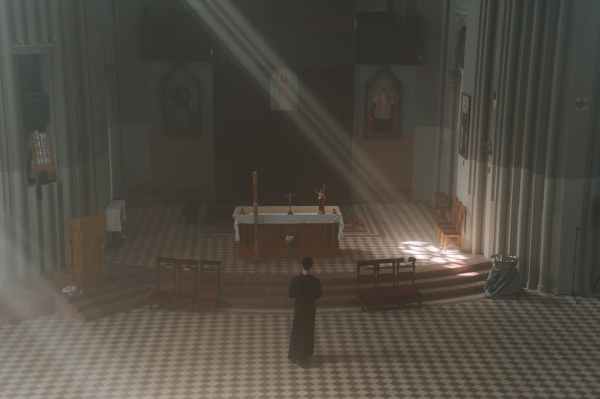
I read these words and wondered– Where are our altars today? When I was a child, many of the older churches had what we called an Altar. It was usually a raised platform, with a podium for the minister, and possibly a “host table” for communion. My childhood church also had a small table that held a large Bible. Sometimes, the platform would have a railing around the edge, with a couple of stairs on either side. And, while many churches “passed the plate” for offerings, some had a special plate on the railing of the altar, where people would march up and place their offerings for the week. There it would sit for the rest of the service–random dollar bills of random denominations in random states of being crumpled, folded, and worn, along with checks, and, sometimes even coins. All of them brought forward and placed on the altar.

In many churches, the altar was where congregants would come to receive communion. The most important church events happened “at the altar.” Weddings, baby dedications, Bible readings and sermons, even funerals– all happened at the altar.

And often, we would have an “altar call.” The pastor, or a guest evangelist would urge people from the congregation to meet at the altar– to repent, to receive forgiveness, to be renewed and refreshed as we offered ourselves to God. There we were– random denominations of people, in random stages of obedience or rebellion, all answering the call to follow Christ as Lord. Some stayed there for a few minutes, praying silently. Others might be there for an hour, crying out, trying to find the words to express pain, guilt, or gratitude and awe, that GOD would meet with US there! Sometimes, we would form small groups to pray and give encouragement; sometimes we would disperse, too moved to speak at all. The Altar was the focus of the service– the place where God met with us; where He received our worship and our offerings; where we were challenged and made ready for spiritual battle.

Today, many churches have stages, like any large theater or event center. There is no railing, but there are hundreds of spotlights and fog machines. There is no podium for the pastor–just a headset and maybe a small stand for notes. Sometimes, the pastor reads from a teleprompter. Often, he or she is joined by a full band or orchestra, and dozens of singers, actors, or other assistants. No one from the congregation approaches the stage– why would they get up from their comfortable reclining padded seat? No one even “needs” to bring a Bible– the sermon text is printed out on the giant screens hanging above the stage. Our worship is comfortable, and entertaining. Many of us don’t even go to a church building, anymore. We can livestream worship services, or watch from a satellite location. We don’t even have to change out of our pajamas! And we feel blessed, and filled with excitement to be part of something dynamic and spiritually uplifting.

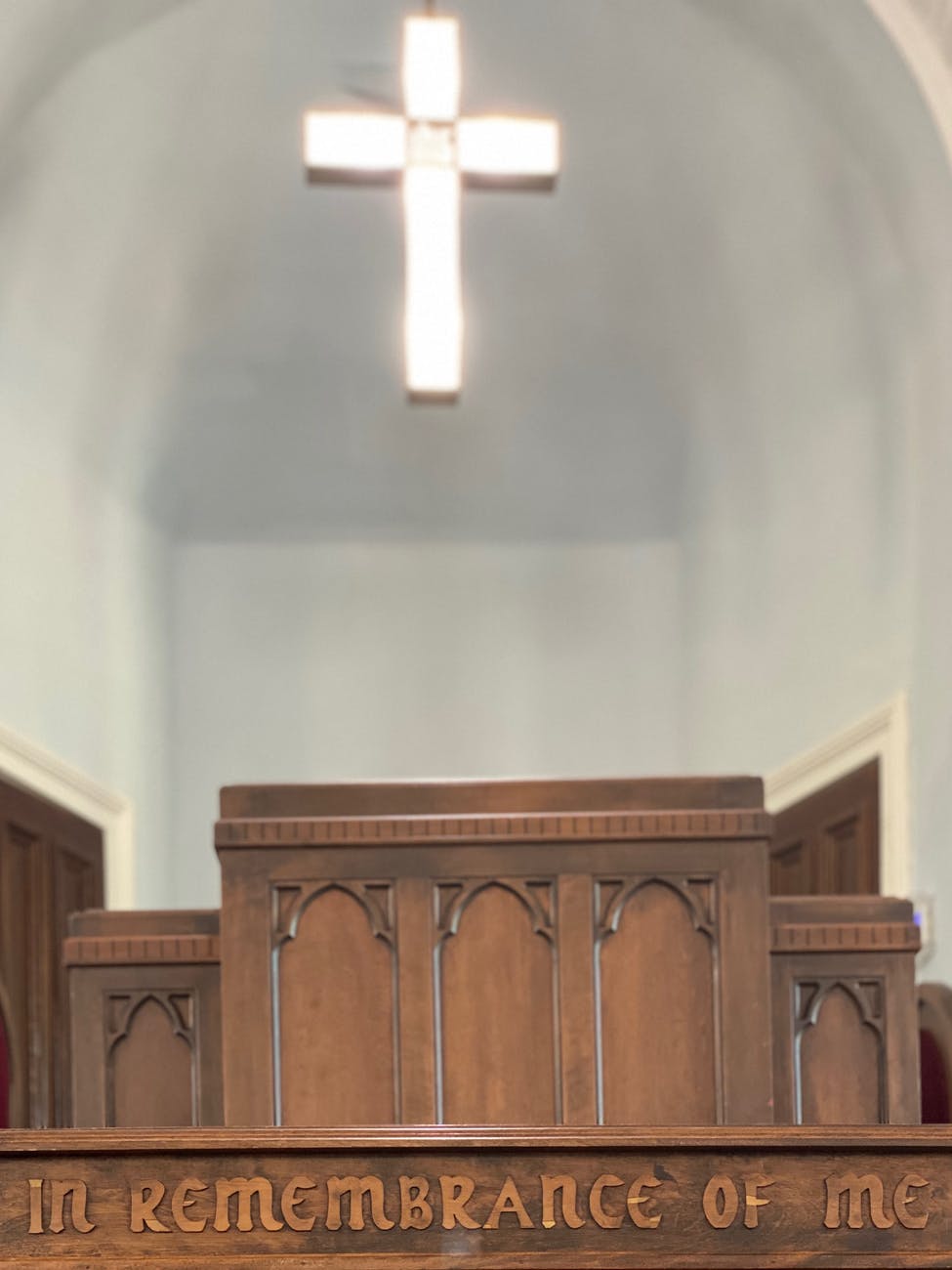
But we have no altars. There is no place for someone to lay their offering before God; no place to meet with Him in repentance or revival. There is no place to remind us of sacrifice and atonement. Oh, to be sure, many churches have a large cross on display somewhere. Some even have the “host table” for communion– somewhere in the wings, just in case–but the concept of an “altar” has all but disappeared from churches in the West. It is an anachronism–something ancient and uncomfortably part of the distant mists of tradition.

I miss the altar. I believe God misses it, too.

Miss Whitcomb

When I was in seventh grade, I had a teacher named Miss Whitcomb. She was notorious throughout the school system as the “toughest” teacher we would ever have. She was ruthless. She demanded absolute quiet, she did not grade “on a curve,” and she never smiled. She had an ongoing war with grape-flavored chewing gum and students who were three seconds late for class. She gave impossible assignments and offered little in the way of help, comfort, or guidance. She had a point system for behavior, and most students ended up earning detentions. Everyone dreaded her class. Many normally confident and competent students failed her class. They worried themselves into sleepless nights and second-guessing their own abilities.

I suffered through two years of Miss Whitcomb’s classes. I had her for American History, English, and introductory drafting class. She was exacting and frustrating. But I learned a lot. Her assignments often seemed impossible, but some of them were creative as well as challenging. I never learned to love Miss Whitcomb’s class, but I learned to survive it– and, while I can’t say I learned to like her, I learned to respect her.

Years later, I returned to my home town as a teacher. And Miss Whitcomb was my colleague. A new generation of students were suffering under Miss Whitcomb’s impossible demands, and many were sure they could petition the school administration to get her fired. They came to me seeking support. I wouldn’t give it. I told them I remembered how difficult her classes were, but that I felt that it was important that they experience tough teachers, like Miss Whitcomb, because they would often experience tough bosses or professors, and tough situations as adults; learning to survive Miss Whitcomb’s class would give them practice for tough times in the future. And I suggested that they look at her classes as a challenge to be faced, rather than a punishment to be feared.

I had a difficult time understanding why Miss Whitcomb was so “tough.” But I got an insight from an unexpected event. A group of high school students were going on a field trip to see the hit musical, “Les Miserables” at a local university theater. They needed chaperones, and I agreed to come, as it was a wonderful chance to see a national touring company perform a terrific play. Surprisingly, Miss Whitcomb also came as a chaperone. I never thought of musicals as “her thing,” but she had decided to give it a try. Of course, the students were terrified of her, and she ended up sitting on the far side of the group (but it was a much quieter ride up to the campus!)

The play was magnificent, but Miss Whitcomb was very disturbed by it. The next day, she tackled the teacher who had organized the trip to complain. Her complaint was not with the students or the performers. It was about the story itself! She was somewhat familiar with the novel’s plot, but seeing it “live,” she was bothered by the character of Javert, and his pursuit of the main character, Jean Valjean. In the story, Javert has spent the better part of 25 years tracking Valjean, an escaped convict. When he finally finds him, Valjean ends up saving his life. Javert cannot reconcile that the “criminal” he has been looking for– his enemy– has saved him. Miss Whitcomb so identified with Javert, that she found the story untenable.

Why was she so upset? Because Javert was “righteous.” He represented the law. His quest was legal–his foe, Valjean, HAD escaped from prison. He had every “right” to pursue him and force him to complete his extra sentence (Valjean had completed his original term). But Javert was the one, in the end, who needed to be saved. And Valjean, who had every reason to let Javert die, risked his life to save his arch-enemy. This was not how Miss Whitcomb viewed life. The righteous should be the saviors; the guilty should be punished, not celebrated. Miss Whitcomb understood right and wrong– but she had no room for grace or forgiveness.

There is a Bible verse that has always caused me to be curious. Romans 5:8 is well known– “But God demonstrates His own love for us in this: while we were still sinners, Christ died for us.” But Romans 5:7 says, “Very rarely will anyone die for a righteous person, though for a good person someone might possibly dare to die.” (emphasis added) Paul is making a distinction that Jesus also often made–not everyone who is “righteous” is “good.” In Mark 10, Jesus is asked by a rich young ruler what he must do to inherit eternal life. The young man calls Jesus, “good teacher.” But before Jesus answers the question, he turns it back on the young man. “‘Why do you call me good,’ Jesus asked. ‘Only God is truly good” (v. 18). The rich young ruler does not want to know how to become “good.” He does not want to learn from Jesus. He merely wants to be judged as “good enough” to inherit eternal life. And he believes that he is “righteous” enough to have earned it.

Miss Whitcomb was a dedicated teacher. She was a “righteous” educator. But she never learned (or was able to teach) compassion, humility, or mercy. And that was a lesson her students missed. It is a lesson far greater than knowing U.S. History, or Government, or English grammar. I have heard from some of her adult education students that she was far less harsh with them. I hope this is true. She had a lot to give, and she suffered greatly from her own high standards and lack of compassion in relation to her younger students. I believe she had “good” intentions– that she believed her high standards were “right” and that any show of mercy was a weakness. But she missed out on so much– so many students who might have liked her better, and learned more from her–by putting righteousness ahead of mercy.

Photo by Ivan Samkov on Pexels.com

We serve a God who is BOTH– completely HOLY and Good, and Righteous, as well as merciful, gracious and compassionate. God forgives us without lowering His standards. He sent His Son to save us– While we were yet sinners! Romans 5 continues, “ Since we have now been justified by his blood, how much more shall we be saved from God’s wrath through him! For if, while we were God’s enemies, we were reconciled to him through the death of his Son, how much more, having been reconciled, shall we be saved through his life!” (Romans 5:9-10) We don’t have to be terrified of God. We don’t have to be constantly reminded of our past guilt and shame. We don’t have to fear that we will “fail” to please God if we choose to follow Him.

Voice Mail

A couple of weeks ago, I was at a prayer meeting, and I set my phone to vibrate, so it wouldn’t ring and disturb everyone during prayer time. But I forgot to change the settings afterward. For three days, things were pretty quiet as my phone sat vibrating in my purse across the room, or plugged in to the charger overnight! I had several missed calls, and many voice mail messages waiting for me when I finally noticed what had happened. Some of the callers were trying to get in touch with me about my car’s extended warranty, but most were calls about personal or business matters that I should have responded to– if only I had heard the phone ring. This didn’t stop me from sending calls or text messages to other people; it just meant that I didn’t get their messages to me.

I think sometimes, we can do the same thing with other forms of communication, including prayer and Bible study. We send messages to God, but we live with our “ringers” off– unable to receive or respond to God’s messages to us. And, as we become aware of our neglect, we are afraid to check our “voice mail,” lest we find harsh or condemning messages from God. “Where have you been? Why aren’t you answering my calls? I’ve been trying to get in touch!”

Throughout the books of the prophets, God left such messages for His people. They “knew” His law, and His promises; yet they were deaf to His voice, and hard-hearted toward Him. Even as invaders were approaching, ready to destroy the Temple and carry the people away into exile, they ignored God’s call to return to Him and follow His ways. Instead, they prayed to worthless idols and made worthless treaties with neighboring nations– treaties they wouldn’t even keep. They listened to false prophets who only told them what they wanted to hear– that God would come to their rescue and ignore their “bad habits” and idolatry. Again and again, God sent prophets with messages of terror and destruction. And mixed into each was a message of hope and restoration–exile would come, but so would a Savior.

God still speaks through prophecies, though rarely. His greatest word was Jesus Himself, living out His Holy character, and dying to show us both the cost of Sin and the Glory of Grace! God’s “Voice Mail” message to us is Our Savior– not to save us from foreign invaders or earthly trials, but to save us from the power and slavery of Sin. His message is clear and consistent–“Follow Me!”

There are many other messages clogging our voice mail– from car warranties to frivolous memes; from distracting messages to false promises. It is important to check which messages are coming from God’s word, which messages are consistent with His Word, and which ones are contrary to His Word. God will never send a message that contradicts His Character– He will not whisper to us about “cheap grace” or set us up for failure. He WILL warn us of the consequences of Sin and offer us forgiveness whenever we repent.

Photo by Sunshine Caro on Pexels.com

Today, I need to check my “Voice Mail”. God is glad when I speak to Him, but He also wants me to listen and obey; to follow Him. There is a warning in God’s message– something far worse than a temporary exile is headed our way. But there is NO condemnation– only a plea to return to Him, and enjoy the Grace He wants to lavish on us. God’s message is far better than a car warranty– it is a message of Salvation and Eternal life; a continuing message of Hope and Restoration. If only I will listen and respond! Have you checked your voice mail lately?

Avoiding the Heat

We’ve been experiencing a heat wave. The temperatures are high, but the humidity makes it feel even hotter. People are doing whatever they can to avoid the heat– everything from driving around to stay in the air-conditioned car, wearing loose fitting clothes, wearing wide-brimmed hats for extra shade, drinking lots of cold water, or staying indoors with fans. Others have no alternative– they must walk in the heat, work in the heat, or try to find whatever shelter or shade is available, even if it offers only relief from the harshest rays of the sun.

Today, we are getting rain– blessed relief– cool drops of water and lower temperatures, along with clouds to hide the sun’s piercing rays. Even so, the rain has come with wind and even some flooding and storm damage. Even our “relief” poses some danger! So there is limited relief from the heat, but once the rain front passes, the temperature may rise, and the humidity will once again make the air steamy and oppressive.

Watching how people work and plan and worry about avoiding the heat of summer reminds me of how we work and plan and worry about avoiding another kind of “heat”– accountability and judgment. Hell is described as a “place of eternal torment”, a “lake of fire,” and a “blazing furnace.” People will do almost anything to avoid such a place. They try to pretend it doesn’t exist; they create “air-conditioned” philosophies and religions that block the reality of judgment and punishment; they worry and work and plot ways to escape their fate.

Jesus clearly taught that Hell is real, and that it is a place of darkness, suffering, gnashing of teeth, and despair. Someday there will be a “heat wave,” as all those who have rejected God’s offer of forgiveness and His Sovereignty face His judgment and righteous wrath. There will be no rain to bring relief or refreshment; no shade or cooling breeze of grace– only the unbearable oppression of guilt, shame, and self-torment that comes from being outside of God’s loving care.

There is a way to “avoid the heat” of God’s wrath– He offers complete restoration and eternal life for those who turn from sin and follow Him. Jesus, through His life, ministry, death, and resurrection, made it possible for us to live in God’s presence– His Light, His Glory, and His Love– in joyful eternity. We do not have to worry and work and plot how to “avoid the heat.” We need only put our trust in the one who sends the heat and wind and rain in their seasons, and whose Grace shades us from His wrath.

Part of this trust is being able to call out to God in our times of “heat”– whether from guilt or oppression–and ask for His blessed relief. Sometimes, we need to call on His Grace and forgiveness. Sometimes, we need to call on His promises– not to remind Him, but to remind ourselves that our “heat” is temporary, and His relief is eternally effective. This week, our “relief” from the heat came in the form of rain storms. We might be tempted to complain about the manner of God’s response to our cries for help in the moment. But we must remember that the storms and the heat waves of this life are temporary– the fires of Hell, and the blessings of Heaven are eternal.

Promises to Keep

The month of June is “Anniversary Month” in much of my family. My parents and one set of grandparents were all married on June 1st. My brother and sister both celebrate anniversaries next week, as does my one of my brothers-in-law. Marriage is in trouble in our society– many marriages are ending in divorce, while others are choosing to wait longer before making a commitment or choosing not to marry at all.

Photo by Lombe K on Pexels.com

We tend to celebrate marriage as being all about feelings of love, but marriage is really about making and keeping promises. Two people stand before witnesses and take sacred oaths to be faithful, to love, honor, and cherish (and yipes! sometimes even to obey) one another for the rest of their lives. And most people who take such oaths do so with honest intent. Why, then, does it seem to be failing so often?

Photo by Asad Photo Maldives on Pexels.com

One of the reasons has to do with expectations. We expect the same giddy feelings of delight we have during courtship to carry us dreamily into the future. And we expect that the way we act during courtship will be the norm– the “happily ever after” fairy-tale life of story books and romance novels. We expect that we will always be the same as we are now: young, carefree, beautiful/handsome, and eager to please and be pleased by the boy/girl of our dreams… This is unrealistic. And even when we say we know better, we hang on to unrealistic expectations for our relationships, just as we do for other situations and circumstances. Even our “soulmates” can disappoint us, fail to understand us, suffer failures and setbacks, battle depression or addiction, lose their youth and good health, and even question their feelings for us.

Another related issue is that we usually take vows when we are young and our future looks bright. Circumstances can change; plans can fail. War, disease, financial ruin, the loss or miscarriage of a child or children, forced changes in living arrangements or work schedules– all can put enormous stress on a marriage.

But not all marriages crumble under the weight of unusual or unexpected circumstances. Some seem to erode slowly, even under “good” circumstances. Why?

One reason I’ve seen as I look around is a seeming inability to make and keep small promises. We make big, broad promises at a wedding– “for better or worse, richer or poorer, in sickness and in health..” “’til death us do part…” But we don’t promise to forgive him when he leaves the toilet seat up for the fifth time this week, or wait for her while she tries on every one of the six outfits she can’t decide on for the upcoming class reunion. We don’t promise to compromise on which family we will visit for Christmas each year, or what color we will have in the dining room. We think of marriage as a series of negotiations (which it IS), but ones in which one of us “wins” and the other “loses.” And if we consider that we are the “loser” in enough negotiations, we feel entitled to “break” our little promises.

Photo by Kindel Media on Pexels.com

Almost two years ago, my husband suffered an injury at work. He “punctured” his leg–the injury wasn’t huge, but it was deep, and on the back side of the leg, where he couldn’t see it. He knew it hurt, but thought it would heal up. Instead, it became infected. We had to go to the local wound clinic for several months, but between visits, I had to change the dressings, wash the wound, apply the various antibiotics and salves, redress the wound, etc.. David was still working full time, so the dressings would sometimes get sweaty and dirty on top of everything else. I promised to be faithful “in sickness and in health”– and that included washing out the pus-filled wound and caring for the pus-soaked dressings; it included wrapping his leg every other night for weeks. We went through hundreds of yards of gauze and anti-stick dressings, tubes of several different antibiotic salves, special compression socks, etc. Hundreds of dollars and hours later, his leg is slowly getting back to “normal.” During this same period, I was diagnosed with type 2 Diabetes. David has had to be patient with me as I learn to eat (and cook) differently. He has had to help me with glucose testing, dealing with low-sugar episodes, and put up with mood swings (even more than normal!).

And our health odyssey could be much worse– what about those who have to deal with cancer or dementia? But I think sometimes we minimize the commitment needed for the smaller, chronic conditions. The stress may be smaller, but it piles up, just the same. Our promises need to hold in the daily crises– big and small. And our promises need to hold when there is no crisis– and no adventure, either. Many marriages fall victim to “smooth sailing.” Things settle into a routine, and promises that were made to sustain the marriage in the face of “richer or poorer” fall apart in the settled comfort of middle class complacency. Vows take for “better or worse” fall apart in the “blah” and boredom of “good enough.”

Marriage is designed to be a picture of our relationship with Christ. As Christians, we are the “bride” of Christ! But we may need to review our vows and our commitment. Christ is eternally faithful; are we? In our flesh and our frail humanity, we cannot remain faithful on our own. But where are we? Have we lost our first love? Are we committed to Christ even in the midst of chronic illness or small setbacks? Are we flirting with the world because we have become “bored” with our Christian Walk? Has our joy been eroded by our failure to share our little stresses and secret sins with the Lover of our Soul?

Often, when we take a moment to remember our wedding day, we are reminded of the commitments we made, and the joy we felt on that special day. It can be bittersweet, if we have let circumstances or feelings pull us away from the one we love (or if they have moved away from their commitment). But it can be a wake-up call, as well, reminding us that promises made and promises kept are what leads to long-term joy and security. It can be helpful to take a few moments (or more) every once in awhile to remember when we came to Christ, and be reminded of the commitment we made– and the promises He has kept!

Read Jeremiah 31 for more about God’s “marriage” covenant with Israel

https://www.openbible.info/topics/the_bride_of_christ

Use the link above to read more about marriage in the context of Christ and the Church

As Far as the East is From the West..

In blogging about prayer and in keeping a prayer journal, there is one type of prayer I don’t dwell on very often.  Prayers of confession and repentance are very important, but I don’t  include them in my journal and I don’t spend much time analyzing them.  It’s not that I want to ignore them or that I want to give a false impression that I don’t say them.

arrogant

I’m a saint–but only in the sense that Christ’s blood is my atonement and my only hope of salvation.  He who started the work is still working, and there’s a lot of work yet to be done.  So, while I include prayers of confession and repentance in my practice of pursuing prayer, I don’t write them down or share them publicly.

Photo by Mikhail Nilov on Pexels.com

Here are some of the reasons I don’t spend more time talking about confession:

trueconfessions
  • Confession is not meant to be a public spectacle.  It is generally private and very personal between an individual and God.  Apologies may be public, and repentance may include public atonement or recompense, but those are not prayer; rather they are the actions taken in conjunction with  and as a result of prayer and confession.
  • Confession is fundamental– it’s not a prayer option, or a stylistic preference–every one of us has sinned, and we all need to admit to our sins, bring them before the throne of God’s grace, and ask for his forgiveness.  Hiding sins, denying sins, or lying about them will get in the way of all our other prayers.
  • Writing about past sins keeps them alive and keeps the focus on me and on my faults, rather than on God and on His Grace.
  • Making confession public has a tendency to devolve into gossip and self-justification.  Descriptions of my sinful actions will necessarily be from my incomplete and very biased point of view.  Other people can be misrepresented and hurt.
  • But the last reason is my favorite– I don’t waste time writing down and discussing past sins because GOD HAS FORGOTTEN THEM!  Writing them down, rehearsing them, analyzing them–even analyzing how I might approach confession won’t change God’s response:

10 he does not treat us as our sins deserve
    or repay us according to our iniquities.
11 For as high as the heavens are above the earth,
    so great is his love for those who fear him;
12 as far as the east is from the west,
    so far has he removed our transgressions from us.

Psalm 103:10-12 New International Version (NIV)
  • The key is that we DO confess– humbly, consistently, and with a heart of true repentance.  What follows is a free and forgiven conscience, no longer weighted down or pulled off focus by guilt and doubt.
pexels-photo-941693.jpeg

Debt Free!

7“Blessed are those

    whose transgressions are forgiven,

    whose sins are covered.

Blessed is the one

    whose sin the Lord will never count against them.”

Romans 4:7-8 (NIV) via biblegateway.com (See also Psalm 32:1-2)

Ask me about my most embarrassing moment, or my greatest failure..better yet, ask one of my friends or relatives! We tend to hang on to our past, especially our mistakes, our hurts, our missed opportunities, and our shortcomings. When I taught public speaking in a local high school, I heard horror stories about why “I can’t get in front of people and talk.” The fear of public speaking rates higher in some studies than the fear of Death! And often, the fear is based on an incident from early childhood of people laughing at a small, but very public mistake. Such moments haunt us.

Photo by Alex Green on Pexels.com

As we grow older, we let our regrets live large– those things we “would have, should have, could have” done, or the things we shouldn’t have said, but can never un-say. And even if we try to move on or forget the past, there always seems to be someone who cannot let go, cannot forgive, or cannot forgive. Lives have been stunted and ruined by the ghosts of “what happened” when…

Photo by Wildan Zainul Faki on Pexels.com

God is all-knowing. There is nothing we’ve ever done, said, or even thought, that He “missed,” ignored, or “lost track of.” God has total recall over all the centuries and eons of time– past, present, and even future! And yet, God offers to forgive ALL our sins, and to “remember them no more.” God will never bring up “that time when you disappointed me…” God will never look at you with condemnation over anything you have confessed and repented over. It’s not that God will never be able to recall what happened; but He will no longer “charge it to your account.” He has chosen to pay the consequences in His own Blood, so that you can be debt free.

Photo by Ric Rodrigues on Pexels.com

Imagine if you had no bills. If all your mortgages, utility payments, credit card debt, medical bills–everything that you were responsible to pay– all were stamped “Paid in full.” You never had to worry about interest payments, late fees, repossession, evening phone calls from bill collectors, credit scores, etc. What a weight off your shoulders! Imagine if you had no reason to fear getting in front of a room full of people to speak or sing or give a presentation– no fear that others would judge your every hesitation, or whether your tie was straight, or your hair was mussed, or you stumbled over a word or phrase or tripped on the steps leading up to the podium. Imagine being accepted and embraced by the very one who, by rights, should be your most severe critic.

Sometimes, when we see God as our critic, our judge, or our opponent, we’re not seeing God as He really is– we’re seeing a reflection of ourselves– harsh, judgmental, unwilling to forgive others; unwilling to forgive ourselves. The very first deception of the Enemy was to distort God’s image from Creator and Sustainer to Judge and Tyrant. Yet Satan is called “The Accuser,” not God. God’s Holy Spirit may convict us of Sin– causing us to see that we have done wrong– but His purpose is always to correct and restore us, not to haunt and condemn us. Even the “worst” sins are not beyond God’s ability or willingness to forgive. Jesus forgave His accusers, His betrayers, and His executioners from the Cross!

Photo by Alem Su00e1nchez on Pexels.com

Forgiveness is not easy. Sin is real; it has real and terrible consequences. Sin hurts, humiliates, victimizes, and traumatizes. And its effects do not simply vanish if we say, “I forgive.” But hanging on to the pain and anger keeps us from finding and experiencing the healing and wholeness that Jesus offers. Forgiveness does not mean that the sin, or the pain, never happened– God will not “forget” injustice just because we forgive the unjust. Forgiveness means that we no longer need to try to collect the debt from someone else– because God has already promised to pay it back with interest! And forgiving yourself doesn’t mean that your past actions didn’t happen or didn’t cause pain. In fact, whenever there are opportunities to atone for past actions, or ask forgiveness from those we have wronged, we should take them. But where such opportunities are impossible for us, even when we cannot see how such pain could be redeemed or relationships restored, God has promised that we can move beyond our past mistakes and live a new , blessed, and debt-free life.

Photo by Pixabay on Pexels.com

When we approach God in prayer, we come as we are– people with past mistakes, very human emotions, including doubt and fear, and unworthy to stand on our own before a perfect God. But it is God who invites us to come to Him– debt free and embraced by His limitless Grace!

Photo by Joseph Ruwa on Pexels.com

God Alone Knows..

Photo by Lgh_9 on Pexels.com

God alone knows how to humble you without humiliating you, and how to exalt you without flattering you.

E. M. Blakelock

This is at once a simple and extremely profound statement. God knows us so well, He knows exactly those areas where we tend toward pride and disobedience. But unlike our accuser, Satan, God doesn’t stand around saying, “AHA! AHA!” and pointing out our faults with glee. His loving discipline will cause us to be confronted with our errors–and our own pride and failure to obey may cause us to be humiliated by others–but God’s purpose is to bring us to repentance and transformation, not shame and dishonor. God wants us to learn from our mistakes, not be imprisoned by them.

Photo by Andrea Piacquadio on Pexels.com

In the same way, God knows our strengths and glories in our wise use of His gifts. But He loves us far to much to flatter us and lead us to improper pride. If we go there, we do so led by our own temptation. God may choose to do great things around us, for us, even through us– but they are God’s great deeds, and we are blessed to be part of the process.

One of Satan’s greatest lies is that we must be “like God”– knowing good and evil, and able to always choose the right course in our own power and wisdom. Such thinking leads us to wonder if God will be unable or unwilling to forgive us– that we must never falter, totter, or doubt. “All have sinned and fall short of the glory of God…” (Romans 3:23 NIV). But THAT is not the Good News of the Gospel– merely the reality of our lost state. Guilt without remedy is hopeless and dead! Such a picture places God in the place of prosecutor. But God is both our just judge (rather than an unforgiving one), and our faithful advocate! The Good News is that “…God shows His love for us in that while we were still sinners, Christ died for us.” (Romans 5:8 ESV) We can be “like God”– not through our own efforts, or by our own self-delusion– through the blood of Christ! God knows us; He knows every mistake we’ve ever made, and every good deed we’ve ever attempted, regardless of our motive or our success or failure. And HE makes it possible for us to have abundant, eternal life with Him.

God WILL humble us; and He WILL exalt us according to His wisdom. But God is more concerned about our ultimate well-being and redemption than in our temporary feelings, or our standing in human society. He is not a superficial God. His healing is deep, and His discipline brings life.  “He makes the sun rise on both the evil and the good and sends rain on both the righteous and the unrighteous. ” (Matthew 5:45 CEB) God isn’t impressed by any show of self-righteousness or claims of victimhood. “You didn’t think, did you, that just by pointing your finger at others you would distract God from seeing all your misdoings and from coming down on you hard? Or did you think that because he’s such a nice God, he’d let you off the hook? Better think this one through from the beginning. God is kind, but he’s not soft. In kindness he takes us firmly by the hand and leads us into a radical life-change.” (Roman 2:4 The Message)

Photo by Andrea Piacquadio on Pexels.com

My prayer for today is two-fold– first, that I would seek God’s opinion and His just judgment, so that I can confess, repent, and adjust my heart accordingly. Second, I would pray that I might seek to see others as God does; that my love for others would cause me to encourage and admonish with pure love, and not selfish ambition or spite.

The ACTS of Prayer

It’s another new year, and many of us are resolved to pray– pray more, pray better, pray longer, etc. That’s a good resolution, but without a plan, it can fizzle out as the year goes on. It’s not that we stop praying altogether; it’s just that we end up praying the same old way or about the same old things, and our pursuit of prayer becomes another routine.

This year, I want to present several “How-to’s” of prayer– at least one every month– to keep things fresh. Today is ACTS. ACTS is an acronym that stands for Adoration, Confession, Thanksgiving, and Supplication. I learned this method way back in college, and our Wednesday morning prayer team at church still uses it each week.

Photo by Luis Quintero on Pexels.com

Start by coming to God in worship and ADORATION:
List some of the Names of God–Father, Creator, El Shaddai, LORD, King of Kings, etc., OR
List the attributes of God–Merciful, Mighty, Humble, Everlasting…
Pray one of the Psalms…
Sing or recite the words of a worship hymn or praise chorus…
Think of creative ways to spend some time expressing God’s Worth and Majesty.

This may be difficult the first time; it may feel awkward at other times. Don’t be discouraged. God inhabits the praise of His People, whenever, wherever, and however we make the effort!

Photo by Karolina Grabowska on Pexels.com

Second, spend some time in CONFESSION:
Ask God to examine your heart to see if there is any wickedness that has gone unacknowledged..(Psalm 139:23-24)
Confess specific sins as you think of them…
Confess your need for God’s forgiveness and His Guidance..
Resolve to take action– either action to seek forgiveness from those you have wronged, or action to change course in the future, or action to let go of past resentment..

Sometimes, you may need to stop and take the action NOW before you continue in prayer. Sometimes, you may need to let go of your own lingering guilt and shame over past actions for which you have already confessed. Remember, God removes our Sin as far as the East is from the West, (Psalm 103:12) and He will remember it no more– so we must trust in His forgiveness and move forward; not stay stuck in the past!

Photo by Tima Miroshnichenko on Pexels.com

Next, THANK God–for His provision, and for His Mercy:
Thank God for His daily provision of life, health, strength, and unfailing Love!
Thank Him for the people in your life– those who encourage as well as those who challenge you!
Thank God for His Mercies that are new every morning (Lamentations 2:22-23)
Thank Him for His forgiveness and cleansing (1 John 1:9)
Thank Him for His eternal presence (Hebrews 13:5; Deuteronomy 31:6)

Don’t confuse this with step one–ADORATION is about Who God IS. Thanksgiving is about What God has Done for YOU. It is easy to recite a verse about what God has done for others– take time to make it personal, especially in light of whatever you have just confessed!

Photo by Luis Quintero on Pexels.com

Last, bring your petitions and requests in SUPPLICATION to the Father:
Bring your heart-cry for lost friends and relatives…
Ask for God to work in situations that have you frustrated..
Plead for Justice and Righteousness to be done in the world around you..

Pray for leaders, elected officials, and church leaders..(1 Timothy 2:1-4)
Ask for the strength to resist temptation, stand firm, and run the race that is set before you.. (1 Corinthians 10:13, 1 Corinthians 16:13, 1 Corinthians 9:24, more..)

It isn’t that this is the least important step, but it works better when it follows the other three steps. NOW you are in the right frame of mind to present requests. They can be seen in their proper perspective. Instead of a giant wish list of things you hope God might do for you, you can present requests that you KNOW God already knows about, cares about, and for which He already has a plan! You can come in confidence, knowing that you have peace with God because He has forgiven your sins and restored your relationship as His son or daughter– nothing stands in the way! And you have just rehearsed (and said Thank You!) for all the ways God has been faithfully working in your life!

Does this sound like a lot of time and energy? It is. But it doesn’t have to be for every prayer you pray. This is for special time set aside for deep prayer. OR, you can break it up throughout the day: Wake up with praise and adoration (it will make an immediate difference!), spend some time at the end of the work day confessing (when it’s still fresh!), and end the day with thanksgiving and supplication (what a way to find peaceful rest– give all your cares over to God who has done so much for you (1 Peter 5:7)!

However you choose to do it– consider trying the ACTS method this week. Do it during your quiet time, or try it with a group. Develop a habit of coming to prayer in this order.

Keep watching this space for more ideas to stimulate your prayer life. Let’s pursue prayer together in 2023!

That Makes Me White as Snow…

What can wash away my sin?
Nothing but the blood of Jesus;
What can make me whole again?
Nothing but the blood of Jesus.
Oh! precious is the flow
That makes me white as snow;
No other fount I know,
  Nothing but the blood of Jesus.
For my cleansing this I see—
Nothing but the blood of Jesus!
For my pardon this my plea—
Nothing but the blood of Jesus!
Nothing can my sin erase
Nothing but the blood of Jesus!
Naught of works, ’tis all of grace—
Nothing but the blood of Jesus!
This is all my hope and peace—
Nothing but the blood of Jesus!
This is all my righteousness—
Nothing but the blood of Jesus!

What Can Wash Away My Sin (Nothing But the Blood of Jesus) by Robert Lowry (emphasis added)
Photo by Sergey Platonov on Pexels.com
Photo by Liza Summer on Pexels.com

Last week, I was out shoveling snow. It is not unheard of for us to get snow at this time of year, but it is not usual to have this much, this early. I don’t like shoveling, but I love watching the snow fall– thousands of individual flakes floating around, glinting in the light, and turning everything a pure, sparkling white.

It doesn’t last– the snow gets blown around, and the snow near the streets gets brown and dingy from the traffic. It turns slushy or gets piled up into heaps like so much garbage. The snow in the country gets crusty, even if it stays relatively white. It looks colder, harder, more brittle. There is something pure and magical in new-fallen snow that even snow itself can’t replicate. Artists have tried to capture it in paintings; scientists have tried to study it and replicate it; Hollywood has tried to use substitutes in movies (sometimes painted corn flakes, or sometimes soap flakes). There is still something about real, new snow that is unique and fragile and filled with promise–even in its coldness, it speaks of laughter and joy. (Maybe not while I am shoveling it, but…)

Photo by Pixabay on Pexels.com

God is the creator and sender of snow. He has storehouses of it (Psalm 135:7; Job 38:22) And it is the image God gives us of forgiveness. (Isaiah 1:18) The purity and softness; the glimmer and weightlessness; the crisp, other-worldliness of falling snow–that is the picture of a forgiven heart! Just as God sends snow to refresh the earth when it looks the most bleak and dead, so God sends forgiveness to hearts that feel cold and dead inside, weighted down and dirty with guilt and shame and Sin. God covers our sins with His forgiveness– and He brings renewal from the inside; new growth, new blossoms, new fruit from what was empty, barren, and used up. And even when snow gets dirty, or crusty– a fresh blanket of new snow revives, cheers, and brightens the landscape.

Photo by RFA on Pexels.com
Photo by Maria Orlova on Pexels.com

God’s forgiveness is compared to snow, but it is far more powerful. White snow can cover up brown and barren trees and gray streets for a f, but God’s forgiveness comes, not in white, but in bright red. It comes through the shed blood of Christ, freely and lavishly given to wash away the scarlet stain of Sin. Red cancels out red, leaving purity and newness that comes from no other source. No artist can capture it; no scientist can discover its makeup; no Hollywood studio can recreate it; nothing on earth can compare or compete with its wonder and power.

Today, I am thankful for the message of snow, and even more thankful for the forgiveness that God offers. He may have storehouses for the snow, but His power to forgive is beyond measure, and His mercies are new every morning! (Lamentations 3:23)

Blog at WordPress.com.

Up ↑