Praying Scripture

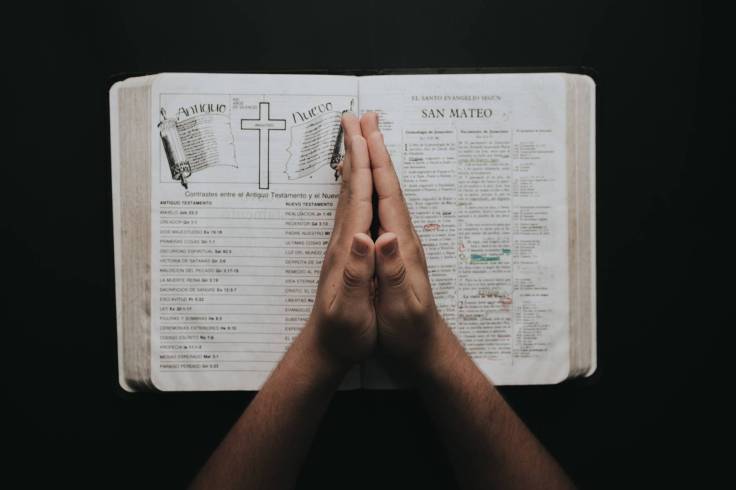
This is not a great secret or a new discovery, but a reminder that we can “pray” the Scriptures. Sometimes, we do this in corporate prayer, as in a congregation reciting “The Lord’s Prayer” together. But often, it is when we are reading God’s word, or a particular verse haunts our memory that we echo the words in our prayer life. There are so many benefits from this:

Photo by Luis Quintero on Pexels.com
  • We are joining in a great tradition– much of Scripture records the prayers of the patriarchs and of Jesus Himself. When we echo those words, we affirm them–both to God and to ourselves.
  • We are praying in the light of the truth–God’s own words on our lips can keep us from trying to put our words in God’s voice!
  • We are deepening our understanding and experience of Scripture– making it personal, rather than just a learning exercise or a daily duty.
  • We are deepening our experience of Prayer– it is more than just me talking to God. It is me agreeing with God’s Word, and God’s Word literally speaking through me.
  • We are reminded of what prayer can do– many of the prayers of Scripture are followed by answers, from prophecies to miracles to movements of the Holy Spirit.
  • We are reminded that God answers prayer that is consistent with His will– not all Biblical prayers were answered in the ways that their petitioners hoped or expected!

The Bible is full of wonderful examples of prayers. Here are just a few to get started:

  • Abraham’s prayer for God to spare Sodom in Genesis 18 (v. 23-32).
  • Moses praying for God to forgive Israel’s sin and disbelief in Exodus 32 (v. 31-32)
  • Moses praying for a successor to lead Israel into the Promised Land (Numbers 27:16-17)
  • Gideon’s prayer for guidance in Judges 6
  • Manoah’s prayer for help in raising his son Samson in Judges 13
  • David’s prayer in 2 Samuel 7 (v.18-29)
  • Elijah’s prayer for God to send fire from Heaven in 1 Kings 18 (v.36-37)
  • Several of the Psalms, including 3, 51, 90, 102, 103, 105, and many others.
  • Hezekiah’s prayer for God to save Israel from their enemies in Isaiah 37 ( v.16-20)
  • The prayer of Jebez in 1 Chronicles 4:10
  • Habakkuk’s prayer for revival in Habakkuk 3: 2-19
  • Jesus’ prayer in Matthew 11:25
  • Jesus’ prayer for His disciples (John 17)
  • Jesus’ prayer in the Garden of Gethsemane (Matthew 26:39-44)
  • Jesus’ prayer from the cross in Luke 23:34
  • Stephen’s prayer in Acts 7:59-60
  • Prayer of worship in Heaven in Revelation 5:13

https://christian.net/resources/the-top-most-powerful-prayers-in-the-bible/

In addition, Bible passages that describe the Character and Majesty of God the Father, the Son, and the Holy Spirit can be used as prayers of worship and adoration. Bible stories and events can be lifted up in worship of God’s power and faithfulness through the ages. Jesus’ teachings (such as the Beatitudes) can be lifted up as the desire of our hearts, and as requests for the strength and wisdom to follow Him.

Photo by cottonbro on Pexels.com

Now unto him that is able to keep you from falling, and to present you faultless before the presence of his glory with exceeding joy, To the only wise God our Saviour, be glory and majesty, dominion and power, both now and ever. Amen.

Jude 1:24-25

Blessed Are the Peacemakers..

“Blessed are the peacemakers, for they shall be called the children of God.” (Matthew 5:9)

Matthew 5:9

We live in a time of conflict. Wars, protests, upheaval, domestic violence, gangs, shootings, and more leave us praying for peace.

Photo by Alotrobo on Pexels.com
Photo by Francesco Paggiaro on Pexels.com

Today is a reminder of violence. “Good Friday” is filled with reminders of torture, injustice, and brutal death on a cross. There is almost nothing about this day that suggests “Peace.” And yet, it is because of this day, and this cruel and violent death, that WE can have peace with God. Jesus made peace for us by suffering at the hands of corrupt and brutal men. He could have fought back. He could have called down legions of angels to avenge each cut and bruise He suffered. With a breath or a single word, He could have slain the entire Roman Empire, freed the nation of Israel, and claimed victory and “peace.” He could have avoided the violence of beatings and death. He could have appealed to Pilate, who already was inclined to release Him. He could have argued with the Sanhedrin, or said whatever they required to secure His pardon and avoid the cross. He could have run away in the Garden, and stayed hidden and given up His ministry for safety and “peace.” But He didn’t. He didn’t fight back, He didn’t argue, He didn’t plead. He healed the ear of one of His arresting officers. He welcomed one of the thieves crucified next to Him into the Kingdom of God. He made provision for His mother’s well-being. He forgave those who accused Him and crucified Him–even from the Cross!

Photo by Liza Summer on Pexels.com

Jesus said that those who make peace will be called the children of God. Not those who seek peace– those who make peace. There is a difference. We tend to seek peace through avoidance. We isolate, insulate, hibernate and alienate, all in attempting to find peace. We avoid conflict. We avoid attachments that might cause us heartbreak or betrayal. Even in our prayers (and I’m speaking from personal experience), we ask for peace without pain or involvement. We want God to shower us with peace and protection, but we don’t ask for the courage or the strength to “make” peace.

Photo by RODNAE Productions on Pexels.com

Making peace involves reaching out, taking risks, being willing to suffer misunderstanding, conflict, and injustice. It means that we will “take up our cross” and be willing to die to our own comfort and safety for the sake of Christ. That does not mean that we are to be combative, aggressive, abusive, or contemptuous. But, like Jesus, we are to stand firm, even as we offer open arms to those who disagree with us, mock us, even persecute us. True peace is a gift–first from God, and passed on to others who do not deserve it. It is a gift of Grace and Love. The Children of God should be makers of peace, not avoiders of conflict. We need to meet violence and aggression with strength of purpose and positive action. And that should be reflected in our prayer life as well.

Photo by Luis Quintero on Pexels.com

How can I make peace today through prayer and service? What cross can I bear for the sake of Christ, and the Cross He bore for me?

Blessed Are the Pure in Heart..

“Blessed are the pure in heart, for they shall see God.” (Matthew 5:8)

“Create in me a pure heart, O God, and renew a steadfast spirit within me.” (Psalm 51:10)

Photo by Min An on Pexels.com

I’ve been looking through the Beatitudes and how they relate to prayer. Jesus said that the pure in heart are blessed, for they shall “see God.” Have you ever spoken to someone who wasn’t looking at you? They looked past you, or around you, or down at their device, but they didn’t attempt to make or maintain eye contact. It can be disconcerting, and even rude. And yet, there are times when, with our divided hearts, we come into prayer without really looking for, or at, God.

Photo by RODNAE Productions on Pexels.com

At other times, our hearts cloud our vision, giving us a distorted view of God. We harbor sin or guilt, and we see God as unforgiving or unfair. We are holding on to our own will, and we see God as restrictive or demanding.

Photo by Andrea Piacquadio on Pexels.com

The pure in heart see God as He really is– Glorious, Merciful, Wise, and Just. They see evidence of His lovingkindness and faithfulness all around them. They see themselves through His eyes– beloved and forgiven–and they see others through the eyes of Grace.

This is not our natural state. We are NOT pure in heart. We are self-centered, self-absorbed, and self-conscious. King David recognized this profoundly when he was caught in his great sin of adultery and murder. In his own lust and selfishness, he had seduced the wife of another man, and when she became pregnant, David arranged to cover up the first sin–by having the man murdered. David was not a notorious scoundrel. He was even called, “a man after God’s own heart.” But when he was confronted with his guilt, David “saw” himself as he really was– not a victim of circumstance, or a martyr to passion, or a king who was above the law, but a man who had committed evil against others, and against a Holy and Sovereign God.

Photo by Nicola Barts on Pexels.com

David’s prayer was in line with his vision. Not only did he see himself as he really was; he saw God as HE really is: Holy and Just, but willing and able to restore David’s purity of heart. David’s God is the same today as He ever was. He longs to make us clean; to restore to us the joy of our salvation (see Psalm 51:12), and give us the power to pursue our purpose and leave our past sins behind.

Photo by Edu Carvalho on Pexels.com

When we desire to “see God,” we must desire this cleansing and restoration of purity. We can pray without it, but we cannot look at a Holy God with an unclean spirit. All we can do is look elsewhere– talking to the wall or the floor. God still hears us, but he wants to have a real conversation; one full of intimacy and understanding.

So, today, will I make “eye contact” during my prayer time?

Blessed Are the Poor In Spirit

I want to spend some time this month exploring the Beatitudes and how they relate to our prayer life. Today I want to look at Matthew 5:3: “Blessed are the poor in spirit, for theirs is the kingdom of Heaven.”

How do I approach God’s throne of Grace? Do I come with a list of what I want, and what I’ve accomplished for God? Do I come reluctantly, grudgingly, holding back some part of who I am or who I have been? Do I come flaunting my self-righteousness? Or do I come empty of all but my desire to be in the Presence of my Maker?

Photo by Pixabay on Pexels.com

Many people have interpreted (and misinterpreted) this phrase. Jesus does not insist that we be financially destitute, or drained of all enthusiasm or emotion. But He does require that we come recognizing our need of Him. We may not be physically needy in the moment– we may be well-fed, comfortable, or even wealthy by human standards. But we are all in need of God’s presence and His provision. On my own, I may believe that I have earned all that I seem to possess, but I cannot supply the air that I breathe, or guarantee that my health will remain perfect, or that I will be able to keep what I think I own, or force others to accept or respect me. “Man supposes, but God disposes” is an old phrase, but an accurate one.

Photo by cottonbro on Pexels.com

When I approach God in prayer, no matter how rich or poor I may seem, I am dependent on God for everything. And this is true for every one of us. So I don’t approach God as someone “needier” or “less needy” than my neighbor. And I don’t approach God with any power to bargain or demand, or even to request– except that God has invited me and sought me out in His Love and Mercy!

And this is the rest of the Beatitude– “for theirs is the kingdom of Heaven.” God has opened up Heaven and invited me to walk with Him, to learn from Him, to receive His blessings, and to live with Him throughout eternity. His riches! His Glory! His Presence! Every time I pray, I trade my poverty for God’s bounty. I trade my confession for His forgiveness. I trade my helplessness for His Wisdom and Power to triumph over adversity and confusion, grief and doubt, sickness and lack.

It is when I come to Christ believing that I possess or control all that I suppose to be “mine,” that I lose the Blessing of His sufficiency and His perfection.

“Thank you, God of Mercy, and Ruler of All, for the privilege of coming to you. I come empty and spent–show me where I am holding on to something less than You, or trying to claim Your wealth as my own. Teach me to rest in the sufficiency of Your kingdom, even as I continue to serve you here on earth.”

Praying For the Past

I was thinking earlier this week about a past friendship– one that involved pain, abuse, and struggle. While we have moved on, and I hope we have both found peace and closure, there are still memories, both good and bad. The past has a way of popping up at odd moments, and sometimes, it pops up in pain.

Photo by RF._.studio on Pexels.com

Prayer isn’t really about the past. What’s past is gone– but it can be redeemed. That is the Good News of the Bible. God is about redeeming our past, and transforming our present and future. When Jesus prayed, and when He taught His disciples to pray, He never mentioned the past. So what do we do with the past when it comes to prayer?

While I don’t have any complete or definitive answer to that, I do have a few thoughts:

  • Don’t wallow in the past. If Jesus has redeemed you, He has redeemed your past as well. Rejoice and be thankful for this incredible gift! We can’t erase the past, but we don’t have to keep living there.
  • Focus on the present, and give both your past and your future into His hands. It’s easy to say, and to write, but it takes time and effort and the work of the Holy Spirit to continue to do this. It’s a daily task!
Photo by Teona Swift on Pexels.com

If you are still bothered by aspects of your past, ask for wisdom to do the following:

  • Pray for wisdom to learn from the past–both your mistakes, and situations you have had to face.
  • Pray for courage to face the past– to apologize, to make atonement, or to rebuild relationships where possible, and the courage to let go of situations you cannot “fix.”
  • Pray for those people and situations that were part of your past–acknowledge them, and lift them up before God’s Throne of Grace.
  • Pray for release from lingering feelings of guilt, and lingering temptations to return to past behaviors and/or toxic relationships.
Photo by Min An on Pexels.com

The past can be powerful in shaping our present and future. God knows this, but He wants to remind us that He is MORE powerful! That doesn’t mean that we will sail through the present, or that we won’t carry scars from our past. But those scars are not the whole of our story, any more than the grave is the end of it.

He who was seated on the throne said, “I am making everything new!” Then he said, “Write this down, for these words are trustworthy and true.”

Revelation 21:5 (NIV)

Whiter Than Snow

Today, I am choosing to be thankful for snow. I don’t really like driving in it, or shoveling it, but there are some wonderful things about snow. God made it– in fact, the Bible says He has storehouses full of it (Job 38:22)! So what are some of the wonders of snow?

Photo by Haoshuang Lou on Pexels.com
  • Snow acts as a natural insulator of soil, roots, and underground bulbs and plants. When temperatures plummet, the snow acts as a blanket, protecting all that lies below ground.
Photo by Maria Orlova on Pexels.com
  • Snow– especially new-fallen, clean snow, reflects light and brightens the landscape. With less natural sunlight, this is very important, not just for plants, but for people. Physical and mental health is enhanced when we get adequate amounts of light. Visibility is also enhanced– even at night!– when there is a snowy ground-cover.
  • Snow is a better way to add moisture to the air and ground in winter–when winter rainfall freezes, it is much heavier and more dangerous than snowfall.
  • Snow can be fun! Skiing, sledding, making snowmen, and snow forts– it’s not just fun for children.
Photo by Jill Wellington on Pexels.com
  • Snow can be good for business! Ski resorts, plowing services, parks with cross-country ski trails, and many others depend on snow.
  • Snow accumulates– especially in mountainous regions– and refreshes rivers and lakes as it melts in the spring. Running water from snowmelts feed brooks and streams, and replenishes underground springs and wells as it seeps in. In this way, God gently wakes up mountainside forests and glens, turning them from white (or gray) to vibrant green.
Photo by David Dibert on Pexels.com
  • Snow is beautiful! (Especially if I don’t have to drive in it or shovel it.) It glistens on the bare tree branches and settles in mounds on the fields. It sparkles in the moonlight and glories in the sunrise. It delights us as it dances on the air, swirling and hovering and settling on our eyelashes or fingertips, only to melt away like a dream. We hear often about the marvel of snowflakes– each one is completely unique in its design and makeup. We may even take it for granted– especially after a particularly large snowstorm! But God chooses to lavishly pour out His creativity and love into each tiny flake that falls to the ground and melts with a mere breath. How much more does He pour out His love on each one of us!
  • God uses snow as a metaphor for His forgiveness. See Psalm 51:7, Isaiah 1:18. “Snow” white is considered pure, radiant, and refreshing. In just such a way, God can take our failures and mistakes, and replace them with His righteousness, making us pure, radiant, and able to be refreshed and to offer refreshment to others!
Photo by Liza Summer on Pexels.com

Praying “Seventy Times Seven”

The Apostle Peter once asked Jesus if he should forgive someone up to seven times. He seemed to feel this was generous and even noble, but Jesus said that Peter should be willing to forgive someone “seventy times seven” times (or seventy-seven times! (for an excellent discussion on this exchange, see https://www.biblestudytools.com/bible-study/topical-studies/why-is-seventy-times-seven-still-so-radical-today.html. For the context, see Matthew 18.)

The same applies to praying for someone. I know many people who ask for prayer almost daily –often for the same “little” problems or complaints. The selfish, human part of me sometimes wants to judge what is “worthy” of my prayer, and what is not. But this is not for me to judge. Other people are too proud to ask for prayer. That does not make them better or stronger people, or less “needy” of my prayers. I need to be willing to pray for everyone as I have the opportunity: that includes when they request my prayers (over and over) or when they refuse to share their needs at all. Someone who is struggling with ongoing issues needs my compassion and wisdom, not my judgment. Someone who resents my prayers needs my compassion and wisdom, too. We are to pray without ceasing, not just when we think it is “worth” doing. (see 1 Thessalonians 5:17)

Photo by Liza Summer on Pexels.com

There is a caveat here. My prayer life should not be determined by others’ expectations. I should gladly pray for the person who asks; however, I should NOT let someone else determine how or what I should pray. In other words, if someone is asking me to pray for “healing,” I will gladly lift up their situation and leave it in God’s hands. I will ask God to heal that person according to His will and in His timing. If they are asking me to pray for total instant healing, I will still pray, but I won’t demand of God what is not His will to do. If they are asking me to pray that they win the lottery because they gambled away their rent money, or avoid prosecution for a crime they committed, I will not pray for things that so clearly contradict God’s will. If someone else is telling me not to pray for them, I will not promise NOT to pray at all, but I will not insist that they listen in; nor will I pray that God “fix” them as I would like. I will pray for their safety, healing, well-being, etc.– again, according to God’s will and timing. Some people are afraid that I will pray for them to be saved against their will. Some people think that because I pursue prayer as a lifestyle, that I have an “in” with God– that He will do what I ask, when I ask, because it is me asking. That is not how God, or prayer, operates. I have seen God do miracles, but I have also asked Him for healing that never came in this lifetime, or for things that turned out very differently than I expected. And I have prayed for the salvation of others, but I don’t have the power or authority to change their will or pierce their conscience– that is the work of the Holy Spirit.

Photo by Dimitry Zub on Pexels.com

Sometimes, it is difficult to keep praying for the same stubborn person, or the same unresolved situation. When God doesn’t answer us how or when we expect, it can seem as though He isn’t listening, doesn’t care, or even taunts us with silence and frustration. It can be tempting to give up– to think that our prayers are “not working.” But, once again, that is not how God, or prayer, “work.” Often, while we are staring at the situation that doesn’t seem to change, we miss seeing the changes happening in other areas of our life, or the obstacles that are being cleared from our path going forward. This is true of prayers we lift up for others, as it is for ourselves. We continue praying anyway. Sometimes, prayer changes our outlook– sometimes prayer even ends up changing how we pray! Prayer isn’t about getting what we want; it’s about getting closer to the heart of God!

Photo by yash bhavsar on Pexels.com

So, if we are willing, we can keep praying–seventy-seven days in a row! Even 490 days! Not because God is counting the days or keeping score of our faithfulness, but because we know that God is faithful in ways we cannot see with out limited vision, or know with our limited understanding.

The Work is “Donne”

Wilt Thou forgive that sin where I begun,
Which is my sin, though it were done before?
Wilt Thou forgive those sins through which I run,
And do them still, though still I do deplore?
When Thou hast done, Thou hast not done,
For I have more.
Wilt Thou forgive that sin by which I have won
Others to sin? and made my sin their door?
Wilt Thou forgive that sin which I did shun
A year or two, but wallowed in a score?
When Thou hast done, Thou hast not done,
For I have more.
I have a sin of fear, that when I have spun
My last thread, I shall perish on the shore;
Swear by Thyself that at my death Thy Sun
Shall sine as it shines now, and heretofore;
And, having done that, Thou hast done,
I have no more.

A Hymn to God the Father John Donne, 1623
John Donne

I enjoy studying the poetry of John Donne. https://www.biography.com/writer/john-donne Even though he lived 400 years ago, he wrote about very timeless and personal topics. Donne lived during a time of religious tumult and persecution. Born into a Catholic family, he later converted to Anglicanism and became a powerful preacher, as well as a poet, and lawyer. Throughout his life, he wrestled with deep theological questions of sin, guilt, redemption, and death. Yet he did so with wit, humor, and passion. The poem above, written during a long illness and near the end of his life, is filled with puns on his last name, Donne. Would God’s redemptive work ever be “done” in “Donne?” He struggles with the knowledge that his sins, having been forgiven, must be forgiven again and again. Does God never say, “Enough! I am done!?” What about stubborn sinful habits? What about sins that have led others to sin? What about last-minute, unconfessed sins?

Photo by Teona Swift on Pexels.com

The real question is, “How sufficient is God’s Grace?” Does God sprinkle out Grace sparingly on each sinful act, or does Christ’s blood cover All? Do our stubborn, habitual acts of rebellion pile up to a point where God cannot forgive? Having forgiven us once, twice, seventy times seven– is there a limit to His willingness to pour out Mercy? Theologically, the Bible is clear. The answer is a resounding, “NO.” God will not withhold His Grace from those who have sought it. God will never be “Done” with “Donne.” Nor will He be “done” with any of us who have chosen to follow Him. But in his all-too-human logic, Donne jokingly suggests that though God “hast” done/Donne, He “hast not” done/Donne. In other words, while Donne “belongs” to God– he has confessed his sins, and eagerly seeks to follow Christ, he still wrestles with fears that his small sinful acts prove that God does not fully “have” him– that He still lives separated from God.

Photo by Sinitta Leunen on Pexels.com

But the final sin of the poem is fear– fear that somehow, at the last, Death will prevail, and Donne will “perish on the shore,” rather than be taken into Heaven. He pleads that Christ’s blood (“Thy Sun/Son”) will be sufficient; that God’s promise of eternal life will indeed hold true, and that the work of salvation is indeed “done.” In the end, the poet hopes that “Thou hast Donne.” And he must trust that God’s promises will hold, for “I have no more.” Donne cannot stop death, he cannot do anything to save himself from sin, but he can be “done” with worry and trust in “Thy Sun/Son.”

Photo by Samuel Theo Manat Silitonga on Pexels.com

I am strangely encouraged by Donne’s poem. We all have moments of questioning and niggling doubts. And even though we “Know” the truth, our fears and emotions can play tricks on our mind. But Donne, even while putting such doubts and fears on paper, takes them to the Source of Hope. This is not a poem of accusation or despair. It is an honest and passionate desire to hear God’s calm assurance. And it is part of a long tradition that runs through the Bible. Jacob literally wrestled with an angel of the Lord (Gensis 32), Moses argued with God about going back to Egypt (Exodus 4), David questioned God (Psalm 10); even Jesus asked God, “Why have you forsaken me?” (Matthew 27). But in our doubts and questions, God’s still, small voice echoes, “I will never leave you nor forsake you.” (Hebrews 13:5), “My Grace is sufficient for you.” (2 Corinthians 12:9), and “Neither height nor depth, nor anything else in all creation, will be able to separate us from the love of God that is in Christ Jesus our Lord.” (Romans 8:39).

Photo by S Migaj on Pexels.com

God’s work is ongoing, but it is also “done”– it is complete, whole, sufficient, and eternal. And even if we occasionally wonder and even question, we can choose to rest in His promises. Just as the poet concluded, if God “hast” done/Donne, “I have no more”– he needed to have no other fear of sin or sin of fear. And through Donne’s poetry, God’s assurance is being passed on– the work continues to be “Donne!”

Photo by Nicholas Githiri on Pexels.com

If You Only Knew…

36 One of the Pharisees asked him to eat with him, and he went into the Pharisee’s house and reclined at table. 37 And behold, a woman of the city, who was a sinner, when she learned that he was reclining at table in the Pharisee’s house, brought an alabaster flask of ointment, 38 and standing behind him at his feet, weeping, she began to wet his feet with her tears and wiped them with the hair of her head and kissed his feet and anointed them with the ointment. 39 Now when the Pharisee who had invited him saw this, he said to himself, “If this man were a prophet, he would have known who and what sort of woman this is who is touching him, for she is a sinner.” 40 And Jesus answering said to him, “Simon, I have something to say to you.” And he answered, “Say it, Teacher.” 41 “A certain moneylender had two debtors. One owed five hundred denarii, and the other fifty. 42 When they could not pay, he cancelled the debt of both. Now which of them will love him more?” 43 Simon answered, “The one, I suppose, for whom he cancelled the larger debt.” And he said to him, “You have judged rightly.” 44 Then turning toward the woman he said to Simon, “Do you see this woman? I entered your house; you gave me no water for my feet, but she has wet my feet with her tears and wiped them with her hair. 45 You gave me no kiss, but from the time I came in she has not ceased to kiss my feet. 46 You did not anoint my head with oil, but she has anointed my feet with ointment. 47 Therefore I tell you, her sins, which are many, are forgiven—for she loved much. But he who is forgiven little, loves little.” 48 And he said to her, “Your sins are forgiven.” 49 Then those who were at table with him began to say among themselves, “Who is this, who even forgives sins?” 50 And he said to the woman, “Your faith has saved you; go in peace.”

Luke 7:36-50 (ESV)
Photo by Victoria Borodinova on Pexels.com

The Pharisees in the New Testament seem to spend a lot of time judging and criticizing everyone. They rail at Jesus for healing people on the Sabbath, they grumble about His disciples not following the ritual hand-washing customs, and they are constantly critical of Jesus for “hanging out” with sinners and undesirables. We shake our heads and lament how narrow-minded they were. But I have to wonder what would happen in today’s world if Jesus were walking among us today. Would He “hang out” at our churches? Would He praise those who spend their time pointing out the hypocrisy of others? Would He be a “social justice” warrior?

Photo by Pressmaster on Pexels.com

Many of Jesus’s miracles were done quietly and without pretense. No one criticized “what” Jesus was doing. No one said, “you shouldn’t be healing people,” or, “how dare you turn water into wine.” Instead, they criticized “how” Jesus did His miracles and what He said about Himself, others, and God. In the book of Luke, we have a story that doesn’t even involve a miracle. Jesus was invited to be the guest of a Pharisee. Jesus didn’t turn down the invitation. He didn’t start out criticizing the host or the food. But when a woman crashed the party– a woman known all around town for her sinful ways–and made a scene, Jesus didn’t recoil in horror, order her to leave, or stop her from making a fool of herself. The Pharisee, believing that he had “unmasked” Jesus as a charlatan, concluded that Jesus didn’t “know” what sort of woman she was. But Jesus, breaking His silence, ended up “unmasking” the Pharisee, instead.

Photo by Klaus Nielsen on Pexels.com

Jesus “knew” what sort of woman made such a spectacle of herself–one who needed compassion and forgiveness. Jesus knew exactly “who” and “what” she was. But He also knew who created her, loved her, and wanted to redeem her to become someone better. Moreover, He knew what kind of man Simon (the Pharisee) was. He started out with a parable about cancelled debt and a question. Simon answered the question correctly, but he had missed the point. Simon “knew” the woman was a sinner; he didn’t recognize that he was a sinner, too! Simon thought he was smarter and holier than Jesus. He didn’t know himself, and he didn’t recognize Jesus as God in the Flesh.

Photo by Anna Tarazevich on Pexels.com

How often I make the same mistake! I think I “know” who God wants me to love and honor– those who say all the right words and wear the right clothes and belong to the right church. But if I want to follow in Jesus’s footsteps, I will have compassion on the people who most need it; I will be ready to forgive those who owe me the most; I will spare judgment where I do not “know” all that God knows about someone else.

Photo by MART PRODUCTION on Pexels.com

It is easy to lift up in prayer those I admire; those to whom I am already close. It is more difficult to pray for those who persecute me, or taunt me about my belief in Christ. It is difficult to withhold judgment about why they may dislike me or why they distrust Christians in general. It is tempting to pray for their “exposure” or punishment, rather than their well-being. It may be unpleasant to spend time with them or take them seriously. But it is essential that I do, with God’s help, what I would not do in my own pride and limited knowledge. Otherwise, like Simon, I am showing only how little I love the one who died for me– and the person I choose to hold in judgment and contempt.

Photo by Pixabay on Pexels.com

I have a lot of work to do in this area. Just today, I read a news snippet about a political office-holder; one with whom I heartily disagree. My first instinct was to pray that she be ousted from office in the next election, and publicly scorned. And perhaps that will happen. But my first priority should be to pray that she would be protected in her current role as public servant, and that God would give her wisdom and discernment in the months ahead. Not because she is a “better” person; but because Jesus died for her. If she were the woman in this story, would I be another Simon the Pharisee? I pray not.

Nothing But the Blood

As I write this, it is still Sunday evening. This morning, we sang a classic hymn at church– “Nothing But the Blood of Jesus.” It’s an old hymn, and familiar; we often sing such hymns on auto-pilot and without really thinking of the wonderful words and truths coming out of our throats.

Photo by cottonbro on Pexels.com

“What can wash away my sin?– Nothing but the blood of Jesus.” “What can make me whole again?–Nothing but the blood of Jesus.” When I come to God in prayer, confessing my sins, it is not my prayer that makes me clean. Nothing I can say or do will give me right standing before God. I am a sinner, and I fall short of God’s glory. I also trespass against His holiness, and even His mercy. I am guilty, and there is no “magic” prayer that will heal me or exonerate me.

Photo by Michelle Leman on Pexels.com

Yet I come before a Holy God and make my confession. Not because He doesn’t know that I have sinned. Not because my words will save me. I come because I know that the Blood of Jesus Christ has, and will make me whole and justified. I have no need to hide the truth of my condition, or try to make my own justification or sanctification. Christ has done it all.

Photo by Ian Panelo on Pexels.com

Prayers of confession are not for God’s benefit, but for ours. To hide our guilt, or to excuse it, is to despise God’s amazing gift of Grace. When we confess to God, it is not because He wants to humiliate us or cause us additional guilt– though this is often the lie we tell ourselves. God is eager to remove our guilt and to guide us in His righteous ways. But He will not save us against our own will or without our permission. He will not conspire with us to hide our secret sins, or pass the blame on to someone else. To do so would be to submit to OUR will. WE are NOT God, though we sometimes act as though our ways are better than His.

Photo by Pixabay on Pexels.com

I’m so glad that God is God– that His ways are perfect, and that I can trust Him completely. Even when I fall short, I can trust that God has already paid the price to make things right– something I could never do, and something I find too wonderful to fully comprehend.

Nothing but the blood can save me. And anything other than the blood will fail to set me free. My prayers of confession– no matter how polished or pious or piteous– cannot unlock the mystery of salvation and restoration. But they acknowledge the marvelous reality that it IS FINISHED! God’s Grace is sufficient! Hallelujah!

Blog at WordPress.com.

Up ↑