Where Am I?

Smack-dab in the center of Sin and Pride;
You could find me in Peril, Intrigue and Rebellion–
Guilt surrounded me, pain and despair held me fast.
But I was not in Repentance, Mercy, or Grace.

I had to die to “I”– let it go and let the Son redeem the Sin
Trade Pride for Prayer, and Hype for Hope.

But I am no longer lost or dead– and no longer a slave to sin or pride.
I can now be found in Faith, and Charity;
I thrive in Fellowship, I have a Friend in Jesus,
A Spirit to guide me, and a vision for Eternity.
It is not “I” who lives, but “I AM” who lives in me.
Salvation, forgiveness, life, and victory are all mine;
Alive in Him, I am found in Christ– sanctified,
And never alone.

sky sunset person silhouette


Romans 8:1-5 King James Version (KJV)

There is therefore now no condemnation to them which are in Christ Jesus, who walk not after the flesh, but after the Spirit.For the law of the Spirit of life in Christ Jesus hath made me free from the law of sin and death.For what the law could not do, in that it was weak through the flesh, God sending his own Son in the likeness of sinful flesh, and for sin, condemned sin in the flesh:That the righteousness of the law might be fulfilled in us, who walk not after the flesh, but after the Spirit.For they that are after the flesh do mind the things of the flesh; but they that are after the Spirit the things of the Spirit.


1 Corinthians 15:57 New International Version (NIV)

57 But thanks be to God! He gives us the victory through our Lord Jesus Christ.


  • A brief note about Scripture references and quotes:  I try to give scripture references and quotes in various translations, though I give most in the New International Version (NIV), the English Standard Version (ESV) or the King James or New King James versions (KJV or NKJV).  I don’t intend to cause confusion by doing this.  There are several excellent translations/versions available, and for a good comparison, there are several wonderful Bible study websites (two of my favorites are Bible Gateway and Bible Hub  ).  I simply find that there are some nuances that make for easier reading or use in the blog.  Often, one translation will have notes and cross references that are wonderful for further study, but confusing to include as part of the blog quote.  I encourage anyone to read the verses in whatever translation they have available, feel most comfortable using, or feel is most trustworthy.  I also welcome comments or corrections.

Praying for the Enemy

pexels-photo-984953.jpeg

Everybody has enemies.  And when I use the term “enemies”, I’m mosl referring to two types of people.  There are the people who are your enemies– they hate you.  They are scheming to hurt or destroy you; people who defame or slander you; people who betray you; people who cheat and lie to and steal from and abuse you or those closest to you.  Then there are the people for whom you are an enemy– you don’t like them, you don’t trust them, you don’t respect them; you probably defame or gossip about them, and you hurt them, even if it is unintentional.  Some enemies fall into both categories, but not all.

And then there are existential “enemies”– not personal enemies, but those who live in opposition to our way of life, or our beliefs, or our nation. There are enemies within and enemies without– those who argue in the street, and enemies who plan catastrophic destruction to entire groups of people. And sometimes, those enemies can include “us.” “Us” v. “Them.”

I would love to say that I have no enemies–of any type.  But, alas, they exist.   God calls on us to love our enemies, to pray for them, to show them kindness, and to bless them!  In our own power, we can’t do this.  We can make the attempt to forgive the unforgivable, to love the unlovable, and reconcile the impossible, but we fall short in our attempts:  the betrayal is too deep; the hurt is too overwhelming; the damage is irreversible, and the impossible is just…well…impossible.

pexels-photo-1058068.jpeg


 Loving our enemies is one of the proofs of God’s existence, his goodness, his power, his own boundless love at work through our imperfect words and efforts.  Praying for our enemies, showing kindness and grace in the face of hatred and betrayal–these are miracles that defy explanation.  That is one good reason to keep praying for the enemies in our lives– God can work through us to effect reconciliation, healing, and peace. And this includes those enemies who want to do is immeasurable harm. We don’t have to pray for their triumph at our expense– but we should be praying for their salvation; for their safety; for their good! Yes, even “those” enemies. God can change even the most horrific situation.

pexels-photo-984926.jpeg

Another good reason is that prayer changes US.  Praying for our enemies is difficult.  It is humbling.  It breaks our pride and forces us to let go of the bitterness and recognize God’s rightful place as judge, avenger, and healer.  It reminds us that God’s love, being boundless and eternal, stretches to those people who don’t deserve it, whether that is the hurtful person you don’t want to forgive, or the hurtful YOU who needs to be forgiven. God even loves those who seek our destruction. God loves those who hate HIM! God prayed for those who crucified Him– while He was dying. Can we say that we follow Him and do any less?

But praying for our enemies isn’t just about bringing peace and harmony or transforming us into better versions of ourselves.  No amount of willpower, or good intention, or logic, or internal fortitude, or peaceful meditation, or persuasive rhetoric, or even powerful prayer will be enough to eliminate our enemies or make us perfect in love. Our prayers may stop neighborhood chaos or family feuds. They may even cause wars to cease. But they may NOT. Jesus is the Prince of Peace– not me. My job is to recognize that I cannot bring peace, but I can live in the Peace that passes all understanding– even in the midst of chaos and turmoil. And I can show love, even as I stand up for truth and hold fast to God’s Word. Love doesn’t mean that I will compromise. But I will respond with compassion– even in conflict.


pexels-photo-669032.jpeg

We pray FOR our enemies, but not all of our enemies.  There are two enemies we need to pray AGAINST– Sin and Satan.  They are the true enemies, trying to destroy both sinner and sinned-against.  They are not just our enemies, but enemies of God.  Both are defeated.  Their power is illusory, and their damage, while intensely painful, is temporary.  And when we refuse to pray for our human “enemies” we serve their destructive purposes. When we follow our own fears, hurts, and feelings of outrage, instead of God’s wisdom in showing love to our enemies, they gain a temporary victory. And we end up on the losing end!

 

Almighty!

I’ve been looking at the Names of God lately. In my last post, I meditated on “Adonai”– The LORD. God has the ultimate authority over all things. He is the Master; the King; the Ruler; the One LORD of All.

Today, I want to explore a related Name– Almighty. It is often used in conjunction with LORD. God is the LORD ALMIGHTY. Whereas LORD refers to God’s ultimate authority, Almighty refers to His Absolute Ability. He is all-powerful, all-wise– able to do exceedingly, abundantly, above all that we could ever ask or imagine (see Ephesians 3:20). There is literally nothing that God cannot do. There are many things He WILL not do– He will never leave or forsake those who are His; He will never be untrue to His own Word or break His promises; He will never change His nature or be untrue to it– but He CAN do whatever He wants.

And this is where we sometimes fail to grasp the fullness of His name, Almighty. We know that He is Mighty; that He is mightier than we are, at least. But He is the source of Everything! He is mightier than Nature–He spoke all of it into being! He is mightier than Time– He is unbound by time or age or deterioration. He is mightier than Sin and Death– He proved that through the death and resurrection of Jesus Christ! He is mightier than the dark emptiness of space– He holds the entire Universe in His Hands!

And that brings me to the subconscious wonder of the name, Almighty. God is not JUST all-powerful and eternally capable. His Almighty nature is GOOD! All of His power is regulated and matched by Mercy and Grace! He has the authority (as LORD) and the power (as the Almighty) to be a terrible enemy. In fact, Job speaks of this repeatedly when he feels that God is punishing him unfairly (see Job 27). I can’t argue against God and win; I can’t grapple with God and defeat Him (Jacob tried that in Genesis 32). I am powerless against God– physically, mentally, spiritually–I cannot “win” against God by fighting, arguing, cajoling, bargaining, or using any weapon. There is no army, no spirit, no power that can budge God from His plans.

But God is NOT my enemy or my rival! Only Sin and my own rebellion and pride can make me an enemy of God. In fact, He wants a relationship with me; He wants me to live in peace and harmony with Him! He has moved Heaven and Earth to reconcile me to Himself through the death and resurrection of Jesus Christ! He is like a mama bear or a lioness with their cubs, jealously guarding me from Sin and Death. He is my Father, my protector, my provider, and my Shepherd– the ALMIGHTY! And yet He cares about the smallest details of my life– He numbers the hairs on my head and keeps track of any injustice that has ever been done to me (or by me!) to be settled and made perfect on the Day of Judgment.

What a humbling thought! What a joyous reality! The Almighty LOVES ME! He LOVES YOU! And His Love is all-powerful and eternal. The ALMIGHTY IS LOVE! How can I not praise Him! How can I not see Him in every moment!

Talk is Cheap

We are entering the season of Lent.  It is supposed to be a season of reflection, repentance, confession, and preparation.  Some people refer to it as a spring cleaning of the soul.  It is a time when many give things up or abstain from things– certain habits or routines, certain foods or activities.  This can be a good practice for many reasons– it teaches us discipline and patience; it reminds us of all that Christ gave up for us; it turns our focus from common earthly things to spiritual matters; and it frees us from habits and routines that have not only pulled us away from God, but away from each other.

I grew up with very mixed, and mostly negative, feelings about Lent. Neither my family nor my church celebrated Lent.  Many of my friends did, and their stories did very little to change my views.  I saw the season as drudgery, self-imposed punishment, dreary and legalistic, a cheerless, fruitless, and (mostly) meatless way of counting down to Easter.  No one seemed to “celebrate” it– it was more like they endured it.  My views have since changed, but I don’t think they were all that uncommon, and I think I was missing something of great value, something I would like to explore.

There are three important elements of Lent that I have struggled with, and I would like to share what I’ve learned.

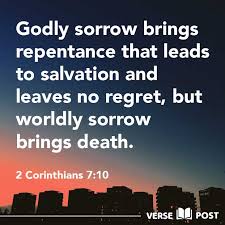
  • There is great value in sober, somber reflection.  Our world is constantly calling us to revelry, happiness, entertainment, activity, and superficial comfort.  We see weakness in mourning for, and admitting to, our sins. We judge those who are serious and sober as “stodgy”, “boring”, and “prosy”.  We feel awkward in stillness and silent self-examination.  But the Bible paints a very different picture.  And the practices of fasting, confession, and meditation, practiced across a spectrum of religions, have been shown to promote better physical, mental, and emotional health, as well as spiritual well-being.

godlysorrow

  • Because we don’t value Godly sorrow– we sometimes substitute other practices that make a mockery of what Lent should be about.  I know I am not perfect, but I don’t want to feel that emptiness, that bankruptcy of spirit, that comes with honest confession and repentance.  In fact, I sometimes “glamorize” what is really petty.  I justify my bitterness, I excuse my selfishness, I “confide” my dislikes and judgmental thoughts about others.  And I bring these sins before God, not in sorrow and humility, but in scandal, as though he will be shocked or even entertained by my wayward behavior

trueconfessions

  • Which brings me to the third thing–cheap grace.  I spend a lot of time talking about Christian living– about the value of prayer, and confession being good for the soul.  I talk about being forgiven, and loving God, and wanting to serve him better.  But I have fallen into the very bad habit of seeing God as Ward Cleaver, or Ozzie Nelson– lovable and authoritative, but not Sovereign or supremely Holy –“There, there, child.  That’s all right.  You’ve confessed, and you’ve learned your lesson.  We’ll just forget that ever happened.”   Lent should lead us to dependence on God’s amazing grace.  It is the work of Christ in us– and only that– that saves, renews, and empowers us.  There is a danger in our culture that we cheapen grace by making the focus on what we know, or say about Christianity, rather than what God does through us.  Cheap grace leads to cheap talk–in my daily life, and in my prayer life.

This year for Lent, I’m not going to talk about giving up fast food, or Facebook, or shopping at my favorite store.  I’m not going to set a checklist or a target for random acts of kindness or giving alms.  I’m not even going to set a schedule for extra prayers or a list of special prayers just for this season.  There’s nothing wrong with any of those; in fact, if you’re thinking of doing any of the above (or all of the above), I encourage you to do it with all my heart.  My prayer for the next forty days will be to invite God to clean out the pretense and hand-wringing, sweep away the cobwebs of analyzing and making excuses, and empty my heart of pride, self-sufficiency, and false guilt, so that he can fill it again with love for him and for others.  Love that is more than cheap talk.  Love that pours out life and renewal– just as Christ poured out his blood on Good Friday, poured out glory on Easter morning, and poured out power at Pentecost.  Not because it was part of a 40-day program of renewal, but because it could not be contained.

But it starts with ashes and repentance.

psalm139

Sowing the Wind

“They sow the wind, and reap the whirlwind…”  Hosea 8:7

Hosea was a prophet who foretold the destruction (and eventual restoration) of his people.  God was pouring out his judgment against an unfaithful nation, and he used the tragic family life of Hosea as a living example of his dealings with Israel.  Hosea married a prostitute; an unfaithful and unloving spouse who chased after men with ready money and cheap gifts.  But when her activities resulted in slavery, shame, and despair, Hosea redeemed her and restored her as his wife.  In the same way, God had made a promise to the people of Israel, but they had broken their covenant and followed their own rules, chasing after the surrounding cultures, with their foreign gods and their hedonistic rituals, including human sacrifice, temple prostitutes, and divination.  There are many metaphors used throughout this book, but one that often stands out is the short phrase found in chapter eight.  In it, God is talking about the unfaithful priests and leaders of Israel, who have not only betrayed God in their rebellion and idolatry, but have led others astray.  God says of them that they have sown the wind, and are reaping/will reap the whirlwind.

How does this relate to us today in our pursuit of prayer?

I believe that many of us are sowing the wind– we do it in our careless words, gossip, rumor-mongering, complaining, babbling, prattling, and yes, in our half-hearted obedience, and our tepid prayers.  We often come to God, not eager to commune with him, or to hear his voice, not in humble adoration and open confession, but to complain, wheedle, and boast.  We pay lip service to his Holiness, while refusing to give up that bad habit that “isn’t really all that bad.”  We thank him for his Grace, but harbor resentment against a neighbor or family member who slighted us.  We ask for him to bring us success in our plans and ventures without really making sure if they line up with his will.  We excuse our lack of attendance at church, and our failure to spend time in God’s word.  We make rash promises to do “better” if God just gets us through this week.  We ask for his blessing, and thank him for the riches he has bestowed on us, but we turn our noses at those in our backyard who are in need.  We are bold about posting “Christian” sayings on Facebook, X, Pinterest, and Instagram–almost as bold as posting about our favorite new Brew Pub or Spa trip or “almost inappropriate” joke, or latest political rant.  Except that our “Christian” posts are less entertaining and more critical of others.  (They’re usually really pretty, though– pictures of flowers or mountain streams or desert sunsets–it’s really easy to “like” and “share” a sunset!.)  We cheapen the Gospel, we cheapen the Christian walk, we cheapen prayer, when we pursue it as a hobby or a social habit. Bur prayer is not something we do only because (or only when)  it makes us feel “good” or “better”– it is something we pursue because it brings us life and peace for eternity, and it brings glory and joy to the King of Kings.

“They sow the wind, and reap the whirlwind…”  There is a price for this shallow, careless pursuit of something that looks and feels vaguely like Godliness.  It is the whirlwind…being tossed about by “every wind of doctrine” as Paul warns against in Ephesians 4.  It is being caught up in doubts and half-truths, compromises, hypocrisy, division, scandal, and shame.  It is having to face the onslaught of detractors and persecution that come as a result of so many of us abusing and misrepresenting the very Gospel of the one whose name we carry.   “Oh, what peace we often forfeit; Oh, what needless pain we bear; All because we do not carry everything to God in prayer.”  The words of that old hymn are no less true today– when we trifle with prayer, carrying only our selfish needs, our petty complaints, and our flimsy agendas to God in prayer, we pay a huge price.

There is another metaphor, this one in the Gospel of John, that I think helps us combat this tendency to “sow the wind”–  Jesus says of himself in John 15 that he is the vine, and we are the branches.  If we are faithful, we remain in him– we draw our life and strength from him– and we are fruitful.  Remaining in him, we are grounded– he provides the roots that keep us from blowing every which way.  And he provides the nourishment, and strength to grow and produce more fruit.

I say “we” because I too am guilty of having sown the wind.  The great news, in Hosea and in the Gospel of John, is that God is eager to restore us– to graft us in–to welcome us home after our storm-tossed wanderings.  Let’s get serious about abiding in God, instead of scattering the latest “feel-good” religious spam.  God, forgive me for the times I have cheapened your precious gift of prayer.  Help me to abide in you, and refrain from careless words to you, about you, and about others.

Sacrificial Prayer

I call this blog “Pursuing Prayer.” I believe prayer is a pursuit; a discipline that one can learn from, grow into, and practice faithfully in life. But prayer is also a sacrifice. It involves giving of time, space, and honest reflection.

Sometimes, prayer is a willing and joyful sacrifice. I want to come and spend time with My Father in praise and worship, adoration, and even asking for His guidance and wisdom. But sometimes, the sacrifice is hard. I may dread coming to God when I know I have been dishonest or unfaithful. Like any relationship, I cherish the easy times, the relaxing times, and the expectations of challenges met and conquered. I don’t look forward to the hard work, the waiting, or the corrections that God may have for me.

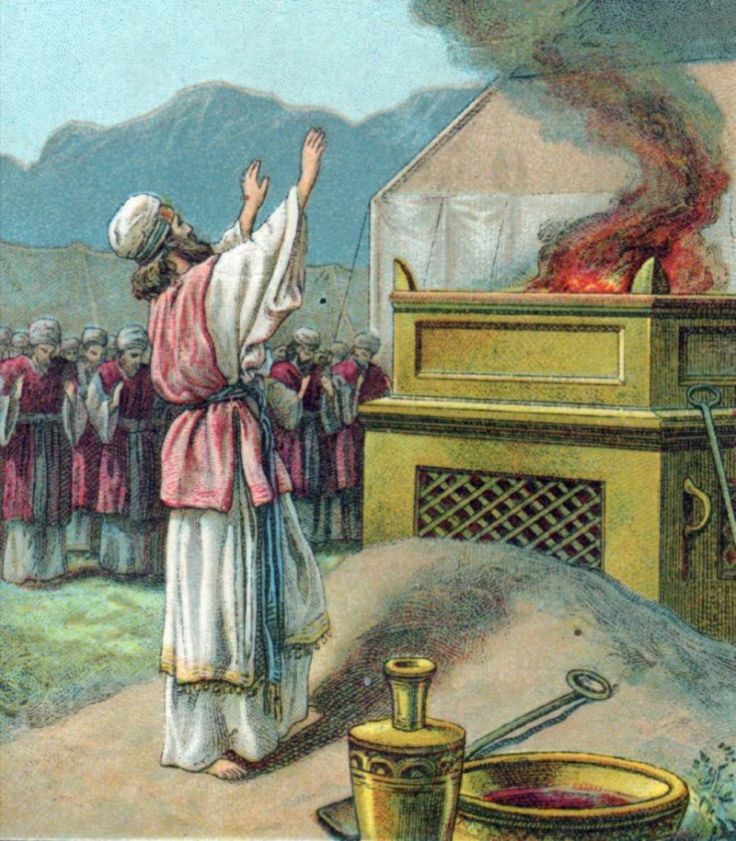
One type of sacrifice that doesn’t belong in the prayer of a believer is the Sin sacrifice. As described in the Old Testament books, the sin sacrifice had to be given to cover over the sins of individuals, priests and even the entire nation. The Israelites even had to give a sin offering for unintentional or accidental sins!

Unfortunately, I sometimes make the mistake of thinking that I must make a similar “sin sacrifice” in my prayer life– that I have to rehearse and recount all my past sins before God will hear me or act on my behalf. And that is NOT Biblical. If we are truly trusting in Jesus’ finished work on the cross, we are not obligated to offer token sacrifices as a means of covering over our past. Christ’s blood IS sufficient! (See 1 John 2:2, 2 Corinthians 5:21,1 Peter 2:24, and Romans 5:9 among others)

So when I talk about prayer of confession, I’m not talking about pouring out long laundry lists of sins I committed last week or thirty years ago. God already knows– in fact He knew about them before they happened!–and He has already forgiven me. That doesn’t mean that He wants me to pretend they never happened or that He doesn’t want me to feel the regret or understand the consequences of what I have done. Instead, He wants me to understand and rejoice in His overwhelming Mercy and Grace! My sacrifice, when I confess my sins, is a sacrifice of praise for God’s willingness to offer what I can never earn or deserve or atone for– complete forgiveness and restoration! I am agreeing with God about who I am and what I’ve done, AND about what He has done for me!

There are other times when prayer can be a difficult sacrifice. Sometimes, I am compelled to pray for those who have hurt me, or those whose actions have hurt others. I am commanded to pray for leaders– that may include church leaders who have sinned, or national leaders who have broken their promises or caused great damage. I am commanded to love my enemies, even if they never repent for things they have done.

Once again, I should be reminded of the sufficiency of Christ’s sacrifice for our sins. He didn’t just die for my Sin; He died for the sins that were committed against me. I may still feel the pain and consequences of that Sin for as long as I live on this earth. But I can trust and be confident that God has dealt with it. And that causes me to rejoice, because I can’t turn back time; I can’t undo the bad things that have happened; I can’t create perfect justice to punish my enemy. But I can let go of the burden of trying to make things “as they should be.” God will do it; He has promised! I can stop wallowing in the “what ifs” or the “what-could-have-beens;” the endless “whys” and “why me’s” that take up so much of my time and focus. Instead, I can leave them as a sacrifice on the altar of prayer, pledging my trust in the Almighty to heal and help me forgive as I have been forgiven.

We don’t practice the old animal sacrifices of the Old Testament. And we don’t have to! But sacrifice is more than just bleeding sheep and burning incense. Sacrifice is offering all of who we are to the One who created us, sustains us, forgives us, and gives us abundant life!

“…Lose All Their Guilty Stains!”

“There is a fountain filled with blood
Drawn from Immanuel’s veins;
And sinners plunged beneath that flood
Lose all their guilty stains.”
William Cowper

I love old hymns. So often, they express Biblical truths in simple purity, or in soaring poetry, that captures both the imagination and the memory.

Recently, I was listening to a radio broadcast of a sermon about mercy. It was a wonderful sermon, and the pastor talked about the richness and wideness of God’s mercy and lovingkindness in various situations– when we face injustice, pain, loss and grieving, guilt, and even when we are unaware of it throughout our life (Psalm 139:16-17) From the womb to the tomb, we live in the Mercy of God– God extends His Mercy and Grace for as long as we are alive to call out for it, accept it, and receive it. More than that, His Mercy and Lovingkindness endures forever (Psalm 136).

Later that day, I was doing housework– I had dirty dishes to wash and laundry to do. And there were stains! I have plastic dishes that I used to heat up leftovers in the microwave, and some of those leftovers had tomato-based sauce or cinnamon or turmeric. The dishes have a film of red or brown or yellow that didn’t come out, even when I washed and soaked them. A few of the stains will eventually fade away, but some of them will never come out. I also have clothes that are stained. David and I still wear them around the house, but there are paint stains, ink stains, oily stains, and mustard stains that didn’t come out the first time I washed (or the second or third time!)

As humans, we all have stains of one type or another. We try to hide them; we try to scrub them; we try to cover them up. Some of our stains are external and visible– scars or blemishes, imperfections and disabilities, worn or tattered “second-hand” clothes, missing teeth, poor posture, obesity, being “too” short or tall–things that people notice right away. Other stains are deep inside– guilt, shame, fear, anger, hatred, bigotry, envy, arrogance, hopelessness, depression, broken-heartedness, loneliness– we try to hide them by isolating, covering up, pretending that all is well, or denying the extent of our brokenness.

I was touched by the sermon about how God’s Mercy reaches us in all of these circumstances. The Bible is full of examples of God’s Mercy and its transforming power. But the words of this old hymn came to my mind, and a deeper realization swelled as I sang them quietly in my own heart: “And sinners plunged beneath that flood LOSE ALL THEIR GUILTY STAINS!”

I spend time washing and scrubbing at stains– silly mistakes, accidents, upsets– and even if I am successful, I can often point out where the stains were or find the last vestiges of them on an old shirt or a white plastic bowl. But I don’t “LOSE” stains. I don’t have the power to make stains totally disappear– especially stubborn ones like ink and oil. But the stains I worry about most– guilt, pain from my past, worry about how others might judge me– these stains are all in my doubting mind. In God’s Mercy, THEY DON’T EXIST! That doesn’t mean that others WON’T still judge me, or that I won’t still remember old hurts. But God WON’T! Their power is broken. God has removed them as far as the east is from the west (Psalm 103:12-14)

Sin leaves stains in our lives– even if the sin wasn’t ours to begin with. That person who bullied me in third grade– that left a stain. The way I reacted– that probably left a stain, too. When I nearly died as an infant– that wasn’t my sin, or even my parent’ sin. But it left a stain because I was born into a world where we have disease, defects, and disasters. I have Diabetes. Part of that “stain” can be blamed on things I ate, and lifestyle choices I made. Part of that is genetic. There are people who live with abuse, injustice, chronic pain, and lasting heartaches. And God’s Mercy didn’t stop any of that from staining their lives.

But the “fountain…drawn from Immanuel’s veins” is powerful enough, and God’s Mercy is amazing enough to make those stains disappear. In this life, I still have to deal with diabetes, fatigue, misunderstandings, and my own sinful lapses. People still struggle with cancer, poverty, war, and doubt. But the stains won’t follow Christians into eternity. There won’t be any vestiges of uncleanness; there won’t be any memory of the hurts and losses we suffered during this lifetime. Christ’s blood is powerful enough, and His Mercy vast enough to make the effects of sin DISAPPEAR!

The Lost Art of Saying Grace

“God is great, God is Good…”
“Come, Lord Jesus, be our guest…”
“For what we are about to receive…”
“Bless us, O Lord, and these, Thy gifts…”

Saying grace at the family dinner table used to be a tradition.  So much so, that it has been made fun of several times in the movies and on television.  Some families recited a favorite prayer; others selected a family member to do the honors.  Some families held hands; some closed their eyes; some stood.  But NOBODY touched their plate until the Amen.

Grace has fallen out of favor in recent years.  Some families still practice it for the holidays or special occasions, but many of us have lost the art of saying grace.  In fact, many of us no longer have a family dinner table.  Some of us eat, sleep, and live alone; others share a house, but rarely a meal, and never a grace.  I would like to think that many of us WOULD say grace more often if  we made time and effort for it, but many others actually hold grace in contempt, calling it old-fashioned; a senseless ritual, or a meaningless tradition.

I want to look a little more closely at grace– how and why we say it, and what it means (or should mean) as part of our daily walk with God.  Calling grace a meaningless tradition may sound harsh, but it may also be a valid criticism.  If “Come, Lord Jesus…” could be replaced with “Gentlemen, start your engines…”, then it might be time to rethink the entire practice.  Similarly, if we dust off grace, only to say it for company, or to show that we still acknowledge tradition and have “good manners”, we’re missing the point.  Grace should be more than just a moment to bow our heads, say a few familiar words, and dig in…grace has become laughable and spoof-able precisely because it has become senseless, formulaic, awkward, and grudging.

I am a big fan of Jimmy Stewart. And this short clip from the beginning of the movie Shenandoah is a prayer said sarcastically by a bitter man who lost his wife and promised her that he would continue to raise their children in a “Christian” home, in spite of his own anger against God. (He later has a change of heart in the movie.) There are many other film and TV scenes that make fun of saying grace without any remorse, repentance, but with a heavy dose of disdain.

I read a tragic statement by someone who claimed that saying grace is actually “graceless”– tactless and inane.  The writer suggested that when we thank God for food, we are really thanking him for feeding us, and choosing to bless us, as he allows others to starve– that saying grace makes us feel more special/less guilty in light of social and economic inequities, which he blithely allows.  In other words, saying grace, in this person’s opinion, makes us arrogant and apathetic to the condition of others, while giving an unjust God undeserved thanks.

I would posit that it should be just the opposite.  I suppose there are many who pray with the arrogant mindset suggested above, but their mindsets and their hearts are not mine to judge.  True grace is not about the recipient of the grace, or the other potential recipients of grace, but about the giver–God– and his worthiness to receive our sincere thanks.  If I believe that God is indeed unjust, then it makes little sense to feel “blessed” or “special” at all– an unjust God is also capricious and unreasonable is not likely to be impressed or swayed by my smug “thank you,” anyway.  So not praying doesn’t make me any less arrogant or apathetic toward others, nor does it move me to be more grateful or more generous than one who prays.  It merely passes the blame for all injustice to God, leaving me off the hook, and making me feel more just than God.

tablegrace

However, if God is loving and gracious, promising perfect justice in his time, and forgiveness to those who seek him; a God who promises to be close to the poor in spirit, those who hunger and thirst for righteousness, and who are broken and contrite; I am not thanking him for who I am, for what I have, or for what I think he should do.  I am thanking him for who he is and for what he has chosen to give.  Some days, I may NOT have a lot to eat, or pleasant surroundings. I may be the victim of injustice done by evil people. But I can still thank God for what I DO have and for who HE is. And on those other days, in thanking him for the very things I would take for granted, I am reminded that blessings are not given for me to boast about or hoard, but to share with others.  That’s what saying grace SHOULD do–cause us to reflect on God’s goodness, our true neediness, and our call to share God’s blessings with a needy world.

Grace is also an invitation– asking God to be part of every moment of our day.  According to his Word, he’s always present, anyway.  But grace is a way of acknowledging and welcoming that presence.  And that invitation isn’t limited to Thanksgiving or Sunday dinner with the whole gang.  That invitation can be made anywhere, by anyone, at any meal (or snack, or midnight raid on the fridge!)

Is God welcome at our dinner table?  Does he share in our drive-thru breakfast, or our trip to the deli?  Do we allow him to join us at the restaurant, where others might overhear and find us quaint and old-fashioned?  Does he sit with us in front of the TV or computer as we absent-mindedly munch on a sandwich?  Grace isn’t about our goodness, our riches, or worthiness to enjoy God’s blessings.  Grace is about a gracious God who has poured out blessings on a graceless and fallen world; a God who loves us all equally and offers to give us something more precious than food– freedom, forgiveness, and family–forevermore.

gracelady

“God IS great; God IS good; Now we thank him for our food.”
“Come, Lord Jesus, be our Guest; let this food to us be BLESSED”
“For what we are about to receive, may the Lord make us TRULY grateful.”
“Bless us, O Lord, and these, THY gifts, which we are about to receive from THY bounty. Through Christ, our Lord. Amen.”
“Dear Heavenly Father, thank you for this day and this food. Bless it to our good and to your glory. May all we say and do bring honor to Your Name. Amen.”


“Your Mission, Should You Choose to Accept It…”

Anyone old enough to remember the old TV show, or anyone who has seen the movies with Tom Cruise, will recognize the title quote from Mission Impossible.  A message, containing details of a top secret mission, would be sent to an agent of the CIA.  After the message had been delivered, it would self-destruct, and the agent would set out to save the world from terrorists or other worldwide threats.  It made for exciting entertainment– speeding trains, double agents, close calls with assassins, death-defying stunts, and lots of explosions– all happening in exotic locations around the world.

Prayer doesn’t usually involve death-defying stunts or explosions, but in can involve a mission, and exotic locations.  As I started keeping a prayer journal, I wanted to pray for people around the world– except I’m not a world traveler.  I’ve never been to Fiji or Burundi, Greenland or the Gobi Desert.  I know some missionaries who have lived or are living overseas, and their newsletters are helpful and personal– I can pray for them, for their fellow workers, and for their neighbors and friends and circumstances across the globe.  But I wondered, couldn’t I do more?  What if I set aside one day for every country on earth– to pray for that country and its people even once a year?  That might seem like an impossible mission.  How can I pray effectively for a country if I don’t even know where it is or how to pronounce its name?  Thankfully, I have a lot of help.  The internet is a great resource for finding out about countries, especially those in the news.  But one of my favorite resources is the CIA!pexels-photo-319968.jpeg

The Central Intelligence Agency of the United States of America is not just in the spy business.  They collect “intelligence”– facts about our world and every country in it–maps, statistics, flags, forms of government, populations, literacy and mortality rates, and so much more. https://www.cia.gov/the-world-factbook/
By visiting their site, you can find out more about any country in the world, and use that information to pray for very specific needs–countries that have been ravaged by war, disease, faltering economies; those countries facing turmoil from burgeoning immigration or sectarian violence.  You can find out the official language(s) of any country, the approximate breakdown of religious affiliation, the percentage of the population that suffers from obesity, illiteracy, or poverty– even some of the history and social structure. Are there major rivers or mountain ranges in that country?  What natural resources do they have (or not have).

knowledge-book-library-glasses-159743.jpeg

As I put together a yearly prayer journal, I realized that there are actually more days than countries. But that’s ok. In a single year, I can pray for every nation, but I can also lift up each state in the U.S., every Canadian province, and several major world cities! I can even pray for continents and oceans and focue on one geographic area every day!

I don’t spend hours poring over each country, city, state or continent each day– sometimes, I just lift up that area by name, knowing that God already knows the needs and situations in each place better than I ever could (even with the help of drones and spies).  But when I have the time, I like to learn more about the amazing diversity of peoples, languages, cultures, and circumstances around the world.  It reminds me that God has all of them in his hand, on his mind, and in his heart at all times.  It’s a big world out there, though it often seems to be shrinking.   God is Bigger!  There are a lot of tragic circumstances and heartbreaking issues around the world.  God is still Sovereign!  There are millions of people in remote and forgotten corners of the world– God sees and cherishes all of them!

I still have my “first world” problems, and personal issues to bring to the throne of Grace, but what a privilege to be able to lift up others– people I have never met in places I will never be able to visit–knowing that I can have a tiny part in the work God wants to do in their lives, as well as in mine.

Out of Time

We are saying goodbye to another year–It hardly seems like we’ve already reached the end of 2024. Time seems to travel faster each year, even though I know I have the same amount of time each day. But it feels like I keep running out of time! At some point, 2025 will “run out” of its designated time. We live in a world limited by time and space.

But God lives outside of earthly time and space– He rules them, bends them, and contains them in His sovereignty. I often write about the omnipresence of God– that He is everywhere. In fact, the only place He is NOT is Hell; and He’s even visited there, once… But God is also omnipresent in time. He IS the God of Abraham, Isaac, and Jacob– always, and all at once, along with being the God of everyone who has ever called and will ever call upon His name to put their trust in Him. God IS in the past; He is ever present, and He is ALREADY in the future, acting and overseeing His plans and purposes.

With the birth of Jesus Christ, God did not step out of time– instead, He inserted Himself into time and space and obeyed the limits He Himself had placed. He came exactly when He had determined, exactly where, and exactly how He had planned. And the same is true of His death and resurrection. His death on the cross was not a moment too soon, and not a single second overdue. Yet, Jesus was at the mercy of the very time and space He had created. Just like us, He was limited to being in one place at a time, and limited to the circumstances around Him.

Nothing shows this better than the story of Lazarus (John 11). A close friend of Jesus, Lazarus became mortally ill. Word was sent to Jesus so He could come immediately and heal Lazarus, but He delayed in coming. He delayed for two days, continuing to work where He was before going to help friend. He knew that Lazarus would not survive. By the time He arrived in Bethany, Lazarus had not only died, but had been buried. Both of Lazarus’s sisters greeted Jesus with the same rebuke–” If you had been here, my brother would not have died…” The God who is everywhere, always, was limited by His physical form, and had to walk to Bethany. He could not continue to work in one area, and be in Bethany at the same time. Nor could He stop time and space so the Lazarus’s sickness could “wait” for Jesus’s arrival days later. But the Sovereign, Omnipresent God had not “run out of time” to save His friend. Even in His human form, in His “inability” to get to Bethany “in time,” Jesus was acting according to His Sovereign plan. He brought Lazarus out of the grave! He was “there” in all of His power and mercy. And He was precisely where and when He needed to be!

As we enter a new year, it comes with limitations–12 months, 52 weeks, 365 days, and so on–we can’t see what will happen, or where we will be in March or September. It may seem that God is “late,” or “absent” in our circumstances. We may be tempted to stop praying when we don’t see immediate answers. We may, like Mary and Martha, be tempted to scold the very author of Life when we don’t get the answer we want when we want it.

This year, let us remember that God is beyond time and space. This allows us to trust that He can and will do what is best, when it is best. It also allows us to trust that God can make the most of OUR time as we trust it to Him. We may be limited to 24 hours a day, but we serve a God who can stretch and bend time, and supplement even our smallest efforts and resources with the endless riches of His Grace!

Blog at WordPress.com.

Up ↑