The Twenty-third Psalm is one of the most quoted and well-known poems in the Bible. In its short six verses are contained some of the deepest truths and most beautiful images in scripture.
Today, I want to look at just the first five words of the psalm: The Lord is my shepherd. Familiarity with these words can rob them of their true power. Imagine if we used a modern-day analogy: The Prime Minister (or King or President) is my life coach, or home health care nurse, or bodyguard. Can you imagine!?
How often do we gloss over these words and fail to see the amazingly powerful message there. The LORD– Yahweh, the Almighty, Ruler of the Universe– is MY shepherd. He does all the kind of things a shepherd does for his sheep– feeds, leads, protects, and provides. He fights off predators, binds up wounds, and shears off the extra wool that can get us entangled in briers or slow down our progress. He stands with us in the heat and cold, and finds shelter for us from the wind and rain. He does all of this for me, when I can’t; because I can’t. He knows everything about me– my strengths and weaknesses and limitations. He knows everything about what I need– where the best grass and water are and how to get there; how much rest I need before the next stage of our journey; the likelihood that I will wander off and need to be called back to the flock. He knows what dangers lie ahead, and how to deal with them.
The Lord IS my shepherd– He is always on the job. He hasn’t left me alone in green pastures, or sent someone else to take me through the valleys. He didn’t start out as my shepherd and then decide to quit. He isn’t waiting for me to reach a certain stage or measurement before I qualify to be His sheep.
The Lord is my Shepherd– not my task-master, nor yet my servant. He is both my Lord and my caretaker– my master and my minister. When I pray today, it is not to someone remote and aloof or powerless and malleable– I am bleating in my sheepish voice all my praise, my love, my irrational worries, and my sincerest gratitude, to the eternal and all-powerful shepherd who calls me by name.
I Thessalonians 5:16-17: “Be joyful always; pray continually”(NIV)
“Rejoice evermore; pray without ceasing” (KJV)
Two verses; five simple words, but they are among the most misunderstood and misused phrases in the New Testament. Critics of the faith use these verses to paint Christianity as a religion of unrealistic fanatics– “shiny-happy,” posturing adherents who do nothing but offer empty words to a deaf and apathetic deity from sunup to sundown. Christians use them to bash or shame others. Feeling depressed or worried? “Tsk, tsk– we’re supposed to be joyful always!” Struggling with circumstances or doubts? “You’re not praying enough (or not praying the right way, or with the right motive, or not really praying at all).” I’m not sure how saints like this actually live when they’re not busy judging others, but I think these verses are important enough for a closer look and more careful treatment.
Both convey the idea of constant engagement, but common sense tells us that they don’t mean 24/7/365…you cannot express joy or recite prayers in your sleep, and God isn’t asking Christians to go without sleep, or to give up all other normal activities. Nor does he ask us to be false or insincere in either pursuit. We are called to rejoice with those who rejoice, but also to weep (or mourn) with those who weep. We are allowed to be mournful, to be remorseful, to be angry, even. We are called to pray, but not to the exclusion of other activities– eating, talking, working– prayer is no excuse to stop engaging with other people, or to skip out on work that needs to be done. There is a similar idea in the Boy Scout motto– “Always be prepared.” This doesn’t mean staying awake every night, or waiting on edge throughout each day, always expecting an imminent crisis. But it does mean that one should be vigilant, attentive to events and circumstances, and have an attitude of preparedness. I would suggest that we do the same with prayer and joyfulness.
These reminders come at the end of a letter that the Apostle Paul wrote to the Thessalonians, who were mostly new converts–very eager to learn all about Christ and how to follow him. They were hard-working (mostly), and generous, and conscientious. But they were falling into two bad habits–worry, and comparison. In this context, the reminders take on a different shade of meaning. If we are prone to worry, it robs us of all joy. It saps our strength, our enthusiasm, our purpose; it leaves us exhausted and unable to lift our faces, let alone lift up others around us. Similarly, if we are comparing our performance with others, we are wasting energy, losing our focus, and we become disillusioned and ineffective.
Always be joyful–joyful–not giddy or silly or amused, but filled with joy– ready to celebrate small victories, cherish small moments, laugh off small defeats and set-backs, and ready to grit your teeth against the suffering and the darkness, because you know how the story ends. We don’t need to be simplistic or naive to be optimistic and joyful– we just need to plug into the source of joy. And that joy becomes our strength in the midst of trouble and our anchor in the midst of chaos.
Pray without ceasing–be perpetually prepared to turn worry into prayer, triumph into praise, pain into petition, doubt into dialogue, heartbreak into heart-cry, gladness into gratitude, and remorse into restoration. Practice making time for prayer, but don’t limit your time with God to a penciled-in appointment with an agenda and a timer.
Don’t skim these short verses; don’t miss out on the blessings they bring. The practice of “always” in this life is but a shadow of what we will experience of Joy and Communion with God throughout eternity.
Rejoice! Enter His presence with gladness– come early, come often. Sit and stay awhile! Make yourself at home! Now– arise, go forth, and conquer!
During my youngest years, I called my father “Daddy.” Daddy was someone to hold me when I was tired, or frightened, or just in need of a hug. Daddy had all the answers; he could turn my tears into giggles, my pouts into apologies. His stern word could melt away rebellion; his smile could fill my heart to bursting.
As I grew older, he became “Dad.” Dad was wise. Dad gave good advise– even when I didn’t always take it. Dad listened and showed interest in what I said. Dad challenged me to do better, think deeper, try harder, and work smarter. Dad didn’t pick me up and carry me, but he was there beside me when I needed someone to lean on or lend a hand. Dad was my coach and advocate.
As an adult, Dad sometimes became “Pa.” Pa was someone who had “been there”. He had experience, and wisdom. He had patience and compassion. But his days of coaching and propping me up were fewer; his days of sharing his own faults, his unfulfilled dreams, his regrets–commiserating rather than commanding– grew more and became more precious to me. He was still my father, but he was also my friend– a fellow traveler on this road; one I knew well and loved dearly. One I respected and trusted, even though he was not perfect.
I was blessed to have a father who was good and kind; a man of integrity and humor; a man who loved his family more than life, loved his neighbors, his community, music, nature, animals, and good food. Most of all, he loved God. Not with fire and brimstone fanaticism, but with humble astonishment that God would send his son to die for him. He lived in the wonder of that truth– that “whosoever believeth (in him) should not perish, but have eternal life” included him.
I say all this, not just to honor my earthly father, or to thank my heavenly father for that relationship, but to point out how prayer is often a reflection of how we view fatherhood. Some people have a difficult time praying and trusting God because they have never known an earthly father; or they’ve only known earthly fathers who were distant, unapproachable, or abusive. If this is the case for you, may I encourage you to ask God to reveal himself in a fresh way, with a name and vision that is personal and distinct from the earthly father you have known. Some people view God as “Daddy”–someone who fixes everything, holds us close, and keeps us safe. And he is all those things. But he is also “Dad” who wants to challenge us and coach us to grow and develop our character. He is “Abba”, and “Senor”, “Lord,” and “Father” and “Papa”. He is not “Pa” in the sense I knew my father, in that we are not his peers when we reach adulthood. He has no faults to share, no regrets. But he wants to share that precious intimacy that comes with time and familiarity–he wants us to develop trust and love as we get to know him better, however we call him.
There is one clear difference between God and any of our earthly parents– God is GOD– he is the creator and ruler of galaxies, and of microcosms, omnipotent and omniscient, omnipresent and eternal, holy and sovereign.
And when I pray, I pray to him– almighty King of Kings– and my Father!
What do I bring before God when I pray? Awe, gratitude, requests, confession, what’s on my mind, my heart…there are many things I can lay on the altar. But what do I bring God that doesn’t originate with Him? What do I bring that has value independent of God? Nothing.
My relationship with God is completely uneven. God is the provider of everything I need. I owe Him everything, and have nothing to give that can begin to “repay” Him. What a blow to my pride, my self-sufficiency! What is the point of pretending I have anything to bring before an all-knowing and all-powerful God? All of nothing is still nothing.
But wait…
What do I bring before God when I pray? Awe for the beauty and power that inspires and uplifts me; gratitude for the blessings He has poured out so lavishly– life, health, family, joy, peace, grace, love… I bring requests, not idly, spewing them out to the wind or to random passers-by, but purposefully, to a God who hears. Confession, not coerced through torture, not met with unbearable punishment, but given freely in the knowledge that there is forgiveness and restoration on the other side of confession and repentance. I can bring thoughts, fears, hopes, dreams, joys, pains, disappointments, and frustrations and lay them on the altar–not as a reluctant sacrifice of a servant, but as the outpouring of love from a child to her beloved Father.
I can’t out-give God. But that’s not a fault or a lack. Instead, it is the mind-blowing reality that God is able to GIVE abundantly above all that I can hope or imagine. And even though He needs nothing, He eagerly desires to share with me all the awe and wonder, all the beauty and grace, all the majesty and power of who He is, and to accept from me the joy and humble acceptance of His gifts–nothing more, and nothing less.
I could give God nothing– no time, no credit, no joy, no love. Instead, I want to choose to give all. Because even all of nothing is still ALL, thanks be to God!
We all have lists of “favorites”– favorite color, favorite foods, favorite songs, favorite bands, favorite movies, favorite books…the list goes on and on. And we all have our comfort zones– preferences, habits, traditions, routines– that impact the way we go through our daily lives. There is nothing inherently wrong with having favorite things or preferences. But we can let such things become idols or obsessions that get in the way of prayer and worship.
We all know someone who has a “pet peeve”–it comes up in every conversation, overshadows more important issues, and becomes a defining characteristic of that person. “Grammar Nazi”, “Clean Freak”, “Political Junkie”, that person who always spoils the new movie by giving you their critique; the person who can spot a piece of lint on your sweater from across the room; the person at the restaurant who is never satisfied…
We probably also know someone who “plays favorites”– they show favoritism in their families, in the workplace, and in other situations, to the detriment of others. They are unjust in their treatment; giving very unequal amounts of attention, time, energy, and love to those around them. This world plays favorites– we have celebrities, rock stars, corporate bigwigs, power brokers, tyrants, and billionaires, while countless millions remain nameless, forgotten, and oppressed.
God doesn’t “play favorites.” He chooses to bless both the just and the unjust; he offers the same salvation and mercy to rich and poor, foolish and wise, famous and forgotten, sanctimonious and scandalous; to any who will receive him. We must remember this in our prayers. God wants to hear our heart-cry; he wants all of it– our favorite praises, our naked confessions, our pet peeves, and our deepest needs. He does not bless us based on who we are, or how urgent our request may be to us–remember, he knows what is on our mind before we do! AND, he already knows our deepest needs, and which seemingly unimportant moments will have the greatest impact in our lives, and in our world.
One of the benefits I have found in keeping a prayer journal is reading back requests and needs I have raised–for two reasons. First, I am amazed and encouraged to see all the ways God has answered prayer over the months and years as I look back. I am reminded, humbled, astonished, and grateful–I receive fresh inspiration to worship, evidence to trust, and encouragement to hope.
Second, I am watching to see if I am “praying favorites”–spending more time listing and praying for “rock star” requests (miraculous healing, “prayer chain” prayers from the internet for people I don’t know, selfish prayers, praying for people based on their “importance”, etc.) than for the “other things” (my friend who wants prayer because she’s having a bad day, that friend who wants me to pray that his mother’s car will start after a cold and snowy weekend, confessing that “little” sin, praying for my annoying neighbor who just lost her cat, etc. ), There’s nothing wrong with praying for the former, unless those prayers are squeezing out other needs and getting in the way of being wholly open before God and seeking His heart and others’ needs above my own preferences.
There is an old joke about a church that invited a visiting pastor to speak. The church secretary called him to ask the title of his sermon, and he very pompously announced that he would be speaking about “Justification by Faith, and Not of Works.” He was astonished to find, when he arrived to preach, that his pronouncement had been misinterpreted. The sign outside read, “Come this Sunday– Just a Vacation by Faith, and No Work!”
Christians often give the impression, and sometimes operate under the false belief, that we are on vacation– permanently; that our lives are, or should be, ones of carefree enjoyment and counting our blessings. We say things like “Let, go, and Let God!”; “This world is not my home!”, and “Won’t God Do It!” We wait for God or someone else to “fix” the problems around us, saying that “I’m praying about it.” It’s not wrong to say any of these things in context– we SHOULD let go of our needless worry and our constant running after the things of this world. We should remember that our citizenship is in Heaven. We should remember that it is God working all things together for good, and that “He who began a good work (in us) will be faithful to complete it.” And prayer should always be the first step we take. But that doesn’t excuse us from action. The Bible never paints a picture of saints on vacation. We have a race to run, seeds to plant, and battles to fight. We are not tourists in our neighborhoods and communities. We have a job to do. God gave us hands, and feet, and voices, and brains. He intends that we use them for his service.
We must remember this in our prayer life, as well. We need to “carry everything to God in Prayer,” the little things, the tough things, the awkward things. We must speak words of truth and encouragement, and challenge, to ourselves as well as others. We must not grow weary of doing good. God has promised an abundant life, with an easy yoke and rest for our souls. He promises to strengthen and encourage us in the work we do. Best of all, he promises that we will be “Justified” by our faith in HIS finished work. Our work will not be in vain, and our faith will be rewarded– not with a splendid vacation, but with eternal life with our Creator. Now that’s a trip worth working for!
Yesterday was Mother’s Day here, celebrating and honoring the mothers in our lives. Mother’s Day can be a wonderful day of celebration. But it can also be one of the most painful days of the year. Millions of women each year face acute heartbreak on this day– instead of celebration, they face the haunting memories of abandonment or separation, infertility, miscarriage, infant deaths, broken relationships, missed opportunities, regrets, suicide, and the loss of their own mothers. There are no cheery greeting cards or perky flower baskets that can erase that kind of gut-wrenching pain– no pithy words or consolation gift that makes this day easy or comfortable.
I have an awesome mother-in-law, the world’s best sister, world-class sisters-in-law, a remarkable step-daughter, daughter-in-law, granddaughter, and a host of other wonderful women in my life. I love being an auntie, step-mom, daughter-in-law, (step) grandma, great-aunt, and great-grand-aunt! I love that I am still in touch with former students and story hour kids, Sunday School and Bible School attendees, and others I have had the honor to mentor. So I celebrate Mother’s Day and honor those people and all the ways their lives have impacted mine, and (hopefully) my life has connected with theirs.
But none of that chases away the ache of never having a child of my own– never knowing the joy of tucking my own child into bed; never being able to kiss away a boo-boo or a bad dream and say the words, “Mommy loves you.” None of that will bring back my beloved mom or grandma my favorite aunts, mentors and friends who are gone. I miss them more each year; I miss their wisdom, their strength, their comfort.
Maybe because of my own experience, I’m more attuned to it, but I see and hear a lot of pain around this time each year. My heart goes out to all of the women with empty arms– the women who had to bury a huge chunk of their heart along with a child they can never hold; the women who had to say goodbye to the only one who could ever reassure them that, “Mommy loves you.”
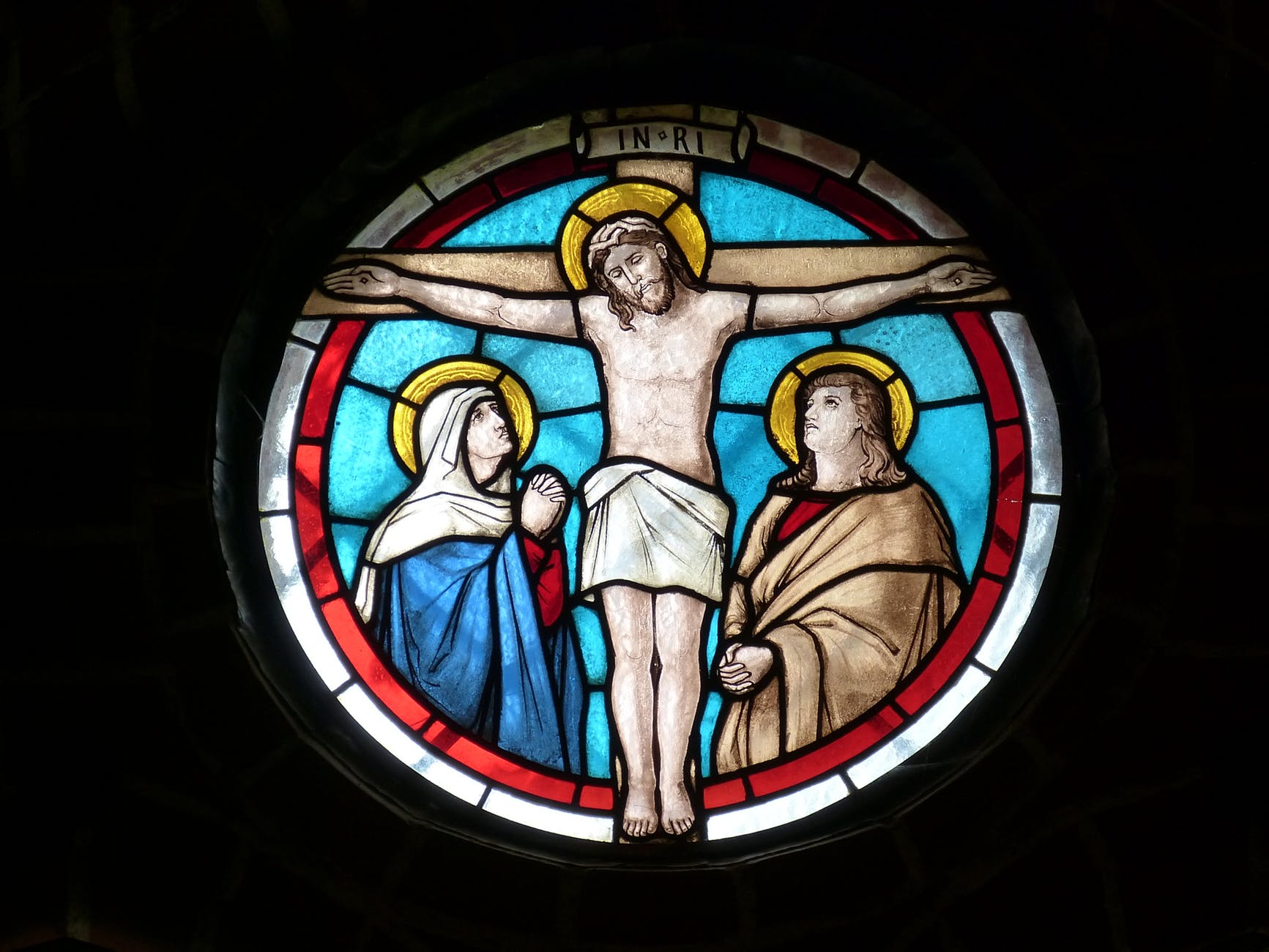
My prayer today is that you would know that even in those moments when your heart is crushed, and your arms ache to hold or be held, that you are not alone; you are not forgotten. God knows the aching loss of seeing his only son on the cross as he took his last gasping breath before he died. Jesus experienced the sting of rejection from the people who should have called him brother, and “Father.” Throughout the Bible, God gave us examples of women (Eve, Sarah, Hagar, Rebecca, Leah, Rachel, Hannah, Elizabeth, Mary and others) who knew the ache of barrenness, rejection, strife, and loss of children. God saw their pain; he heard their cries of distress and their prayers. He sees you too. He hears you. He loves you beyond anything you can imagine, and beyond where any grief, guilt, or despair can take you.
More than this, he has promised to be close to the poor in spirit, those who mourn, the broken-hearted, and to those who need rest and comfort. He promises his presence, and he promises to turn our mourning into joy and bring us peace. He is eager to restore us, to renew our strength, and to reassure us that we are loved with an everlasting love. God created us in his image– and that includes the image of a mother hen gathering chicks, It includes the image of Mary who wrapped the God of the Universe in swaddling cloths and tucked him into a manger of hay, and who watched as that same God of the Universe died for her.
God knows the passion, the pain, and the pure love of a woman’s heart– even when “Mother’s Day” hurts.
At the age of 14 months, just after I had learned to walk well, and had learned to say “Mama” and “Da-da”, I became very ill. Our doctor was baffled– I was tired and weak, I was losing weight, but I wasn’t carrying a fever. It wasn’t any of the “usual” culprits– we did find out I was allergic to penicillin, but other antibiotics had no effect. We tried a different doctor– he was also stumped, and all the while, I got weaker. My desperate parents prayed for healing as the weeks went on. I was too little to even describe any symptoms– I whimpered and slept; I ate very little, and became too weak to walk.
God was listening to my parents’ prayers, even though the situation seemed impossible and tragic, and God seemed silent and distant. My mother, in the years since this incident, has shared with me the “breakthrough” moment for her– that moment when her prayers changed from “heal my little girl”, to “thy will be done.” Not immediately, but shortly after that, the new doctor was inspired to look for another cause. After some blood tests, he determined that my body wasn’t absorbing and processing protein. As soon as I began a regimen of protein booster shots, my health began to improve. I was still sickly as a child; I had immunity issues, and I was small for my age, but I was out of grave danger. I had to relearn how to walk, and my return to solid foods (especially meat) was a gradual one. I have no actual memory of these events, but I learned a valuable lesson about prayer.
When we pray “Thy will be done,” we sometimes think it is “our” will vs. “God’s” will… that God’s will is always opposed to ours; that it will lead to us losing whatever it is we are holding on to. That may be the case, sometimes. We grapple with God’s will, struggling and wrestling, like Jacob, until we are forced to give in. Some of us limp our way to the altar of prayer. But God’s will is not set in relation to ours– His will is His own. It is higher than ours. It is perfect and complete. That doesn’t always make it pleasant, comfortable, or easy. In my family’s case, it meant months of trips to get shots– every day for the first few weeks; every week for months afterwards, and every month after that until the time I started Kindergarten (a year later than I might have if I had been healthier). For many, “Thy will be done,” means saying goodbye to a loved one. Sometimes it means losing a limb, or letting go of a cherished dream. But what we see; what we experience; these are mere moments in God’s plan for our eternity. Like the booster shots I had to have as a child, they bring a momentary sting, and the fear of them may loom large, but in God’s plan, they bring us the opportunity for life and health and ultimately, triumph.
Sometimes God’s will means walking through the fire, or walking through the valley of the shadow of death. Long before my birth and health scare, my mother had lost twins, and been a divorced mother of a young son. She had already faced death and heartbreak and hardship. After this incident, she would be hurt by my brother’s teenage rebellion, face depression, and go through health issues with my father before his death; but she would also gain another daughter and live to see grandchildren and great-grandchildren who brought her joy. In my own life, I have faced the shattered dream of wanting children of my own. I struggled for years with singleness, when I wanted to be married and have a family. But God’s will was for me to learn patience, compassion, and empathy for others who hurt in these areas. And he has blessed me with a family I would never have imagined–not only the husband, step-children, and grandkids, but all the students and children I met through my careers in education and public libraries.
It is natural and easy to pray for what our will, our feelings, or our intuition tells us is best– healing for the sick (immediate healing is even better), success for our ventures and those of our families and friends, safety in travels and daily routines, prosperity, and happiness. It is not wrong to want these things. But it is better by far to remember that God is sovereign and good. Giving him complete control over our situations is not weakness; it is not “giving up”. Instead, it is investing our future– putting it in the hands of the one who holds tomorrow, and all of eternity! It is trusting the one who is most trustworthy to make the most of our hours and days, our treasures and our dreams.
Even Jesus taught His disciples to pray “thy will be done on earth as it is in heaven” (Matthew 6:10b). But He didn’t just teach that phrase to His disciples– He prayed it Himself in the Garden of Gethsemane. “Father, if you are willing, take this cup from me; yet not my will, but yours be done” (Luke 22:42). Jesus knew he would face humiliation, torture, and death. He knew that He would take on the punishment for all the sins of the world– punishment He did not deserve– and that He would be subject to the full wrath of God. In His humanness, He was anguished to the point of sweating drops of blood. Yet He chose to pray, “Thy will be done.”
I have never been in that kind of anguish– even when I was so very sick or depressed about seemingly broken dreams. But I still find it difficult to fully surrender to God’s sovereign will when the future is in doubt, and when the present looks overwhelming. But growth and victory come when I let God take the reins and guide me through the valleys and wilderness walkways of life. His will is mysterious and sometimes scary, but He is always faithful. And I know that from experience.
Tigers and turtles; flamingos and fleas; whales and warthogs; skinks and skunks; rocks and rosebuds; Eskimos and Ecuadorians–God’s world is filled with variety. Chirping birds and thundering herds; roaring seas and buzzing bees. Colors, sounds, smells, and sensations– we are surrounded by glimpses of glory, echoes of eternity, and hints of Heaven.
Often, we take for granted the beauty of God’s creation– we don’t stop seeing it, we just stop marveling at it. Instead of drinking it in, we drown it out. We criticize, analyze, and theorize…why did God make rats? how does He exist outside of time? when will He change the seasons this year (will we have spring? how long will winter last)? what is the purpose of dust? why are some animals (or rocks or plants) colorful, or noisy, or deadly, or smelly, or slow? And we miss the forest for the trees– we get caught up in the amazing details and infinite variety in creation, and miss the majesty of the creator– His sense of the ridiculous in things like tumbleweeds and walking sticks, dust devils and platypuses, or His artistry in butterfly wings, dew on spiderwebs, and cascading waterfalls– in geodes and dimples and mewling kittens. We miss the elegant design in a bees knees, or galaxies, or a banyan tree.
God creates– it is an element of His character. And we are made in His image– we long to create. From drafting sentences to making a pie to shaping a piece of wood into something sturdy and useful– we long to produce, to concoct, to cause growth, to heal, to nurture, and to effect change. We are also created with a deep appreciation of creation– the wisdom and the work it takes to set planets spinning, and ecosystems cooperating, and to unfold a new sunrise every morning.
If you haven’t already, take a few minutes asking God to open your eyes and ears to the song and dance of creation today–from dandelions to darting dragonflies to the amazing variety of people dodging traffic or making conversation around you. Join in!
Spring has arrived. In my part of the world, that means many people are hoping for milder temperatures, gentle spring rains, and new growth after the cold and colorless winter. Most of us love the idea of spring, and the promise it brings. Those soft days of baby birds chirping outside our window as the gentle raindrops roll down; of newly budded trees and flowers opening to the warmth of the sun; the smell of freshly turned earth in gardens and fields; the bleating of lambs and the down of chicks and ducklings; children squealing in delight as they leap from puddle to puddle in their colorful boots; the world slowly waking up in a thousand shades of green..
Of course, it never seems to go exactly like that– sometimes the weather this time of year can be volatile– tornadoes, freak ice storms, sudden heat waves, flooding, or a mix of all of the above in a matter of hours! Chirping birds can’t be heard over the roar of traffic and blaring car radios. The smell of exhaust chokes out the aroma of rich dirt or fresh flowers. The same rain that brings puddles also brings mud and run-off and potholes in the road. And, possibly because we have such expectations of spring, it seems to fly by and disappear almost before it comes. There is a joke that sort of summarizes the unpredictable nature of spring around here– “I love spring in Michigan (or insert another Midwest state)– last year it was on a Wednesday!”
Like the season of spring, prayer holds promise and expectation. God promises to hear our prayers, but sometimes our expectations are not in line with God’s answers. Farmers pray for dry days to plow and plant, and rain to come before and after to soften the earth and water the seeds. Little League players want the rain to come on Monday, and the diamond to be dry by Saturday. School children want the rain to come overnight, so the playground will be dry for recess. Commuters want the rain to fall after they drive to work and before they have to drive home. All may pray for rain, but not in the same way, for the same reasons, or at the same time.
We all want the promise of easy growth, gentle weather, and comfortable routine. But God’s plan may involve blustery days and muddy driveways. God will bring rain, and sunshine, in his time. He will calm the storms and blow away the clouds. He will send us flowers and rainbows, and perfect days for flying kites and playing baseball. And maybe, this year, it will be on Wednesday! But the stormy days remind us of three things:
God is with us through the storm. He is with us when the rains come; and when the clouds roll back to reveal the rainbow. He knows the pain you feel when you view the storm damage and assess the loss. Even as the seasons change, he has promised to be with us always
God is stronger than our storms. His ways are wiser than ours, and his plans are better. We may be drenched and covered in mud when we expected to be dry and comfortable, but the race isn’t finished yet. We may fall down, but we’re not out! He can give us the resources and the power to rebuild, renew, and start over. No matter how short (or long) our season of storms, it is only a season– it will pass. Just as winter gave way to spring, spring leads to summer–sometimes overnight; sometimes in fits and starts.
God is eternal. Storms and seasons are local and temporary. I may be experiencing spring in Michigan, but others are experiencing rainy season in India, or “fall” in New Zealand. It can be sunny here, and snowing in Minnesota, and raining at my cousin’s house in Alabama. And when I am praying for rain, someone close by is praying for sunshine. But someday, and for all eternity, God will be our source of light– there will be no need for storms and seasons, no need to pray for rain.






























 Pursuing Prayer