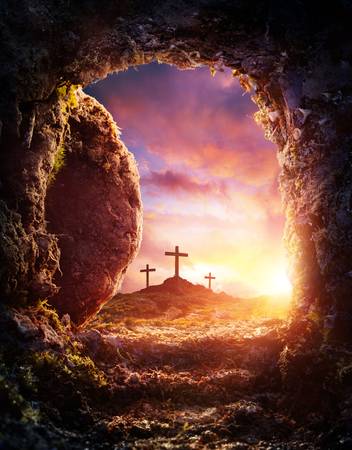
We are living in dark days– days of death counts, and dire predictions; of fear and grief and chaos. Masks, social distancing, angry outbursts, collapsing economies, job loss, political unrest, disease, plague–we are in the grip of a global pandemic. “Bring out your dead.” It’s a phrase from hundreds of years ago, and the horrors of other plagues and other disasters. Tombs, graveyards, skulls and visions of death abound. And yet, as Christians, we celebrate an empty tomb…
It’s been over a month since many Christians celebrated Easter (and almost a month for Orthodox Christians). How soon many of us forget the power of the resurrection. Our world is gripped with fear and anger. But we should be gripped with hope and healing. We celebrate an empty tomb– a testament to the victory of life over death, and hope over chaos!
Even when we use the symbol of the cross, it is not about Christ’s death, but his ultimate victory that we celebrate. Jesus himself even referred to the cross in these terms in John 3:
“Just as Moses lifted up the snake in the wilderness, so the Son of Man must be lifted up, that everyone who believes may have eternal life in him.”
Jesus is speaking with Nicodemus, a Pharisee and religious teacher. He is referring to an historic incident in the wilderness, when the Israelites had rebelled (once again), and the Lord sent venomous snakes among them. Nicodemus would have known about this incident, but Jesus presented it as more than just history– it was a foreshadowing of God’s perfect plan of salvation! https://www.biblegateway.com/passage/?search=Numbers+21%3A4-9&version=NIV God had Moses make a bronze snake to be lifted up on a pole. When the people looked up and saw the bronze snake, they could live. In just such a way, when Jesus was “lifted up” on the cross, he didn’t just die. He battled death to bring life to anyone who “looks up” and believes.
That ancient symbol of a snake on a pole is used by physicians to represent healing. The ancient symbol of Christ on the cross is used to represent redemption and eternal life. Combined with the reality of an empty tomb, we can celebrate life in the midst of any circumstances.
These are difficult days–even with the hope of eternal life, we still have to face the sadness and grief of death, the confusion and hardship of economic chaos, and the uncertainty of what tomorrow will look like– socially, politically, economically, and physically. But we need only “look up” and beyond our circumstances to be reminded that this is not the whole story. There is an empty tomb– ours! There is victory–ours! Won for us by the perfect plan of God, and the perfect obedience of Jesus Christ.
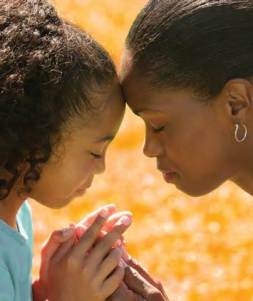
Sunday will be Mother’s Day. People are already talking about how this year will be “different” because of COVID-19. They say it will be more difficult because of the social distancing measures in place. And it will be for many families. There will be few family gatherings, few long and happy discussions around a dinner table, fewer flowers, fewer hugs…Many will still have the opportunity to see their mothers/children via skype or zoom or through a window. Many can still hear a familiar and much-loved voice over the phone, and send messages via text, email or even a letter or card. But it’s not the same. There is something about a mother’s presence– her touch, her voice, her smile, the subtle scent that belongs to no one else– that we cherish and celebrate.
But for many people, this Mother’s Day will be no different. Sadly, there are many who will spend Mother’s Day alone. There is a visceral, painful place– a gaping wound– where there is no “Mother” on Mother’s Day. Maybe it’s caused by death–either the death of our mother, or the death of our child/children. Maybe it’s some other wrenching separation– Alzheimer’s, a ruptured relationship, addiction, mental illness, abandonment, deployment, rejection… We miss what once was, or we miss what we never had. COVID-19 may bring this horror to some this year, and it may leave some with that horror for years to come, but the pain and loss is no different for being caused by a virus. The pain of losing (or not having) a Mother runs deep. It may be felt more keenly on this day, but it aches and gnaws every day. Mothers give life. They nurture. They are the safe arms in which babies find peaceful rest (..eventually). They are the kissers of boo-boos; the proud recipients of our first attempts at writing, and drawing; our first audience for concerts and dances; our first teachers and nurses, police officers, drill sergeants, and life coaches; often our first playmates, too.
For many years, I have lived on “the other side” of motherhood. I am a daughter– blessed with an amazing, kind, strong, wise and Godly mother. I cherish the relationship we have, and look forward to the time when I can visit with her in person, instead of over the phone. She spent long nights rocking me to sleep; hours praying and crying by my hospital bed when I almost died as a toddler; listened patiently while I ranted and railed in teenage rebellion; encouraged me when I was exhausted from work and frustrated about living alone; and taught me the joy of spending time with God and loving others. And I want to honor her every day for the Godly example she has been to me and to others.
But I have spent most of my adult life outside the experience of motherhood, watching others with tiny arms wrapped around their necks, others kissing boo-boos and receiving artwork, others taking pictures of their graduating seniors and swapping stories with other moms. And, I have been reminded– sometimes in subtle ways, sometimes with contempt–that I do not “belong.” “You don’t know what I go through.” “You don’t understand.” “Who do you think you are to tell me about my daughter? You’re just her teacher. I’m her MOTHER!” “You can’t tell my children what to do.” None of these statements are wrong– but they hurt. And most of them come from someone else’s pain– their fear of failure, their frustration, their guilt, even a lack of sleep or a migraine…
Because of my experience, however, I have learned two things– a greater appreciation for my own excellent mother; and a new appreciation for the role I have been allowed to play as an “Other.”
Mothers are vital, but they are not perfect, and, especially where they are missing or rejected or removed, the world needs Others. Women (and men) who will stand as surrogates, substitutes, and valued helpers. Sometimes it is a thankless job; often it is temporary, even momentary, and unexpected. Throughout our lives, there are Others who inspire us, who have our backs, who cheer for us through track meets, or at dance recitals, or spelling bees. Others who may not kiss boo-boos, but patch them up in the moment. There are Others who are the first to spot our hidden potential, or warn us of dangers that no one else has spotted. Others who pray for us, cry with us, and share our smiles. Others who buy Girl Scout cookies, or magazine subscriptions, lemonade, or raffle tickets.
It was not God’s will for me to be a Mother. I have been blessed in recent years to be a step-mother and -grandmother, and I adore my kids and grandkids. I am so grateful for the mothers and others who shaped their lives, and the honor of being part of their families. But God has also given me a lifetime of being an Other. I may not have the “normal” experience of Motherhood, but I’ve had my share of doubts, failures, “bad” days, and sleepless nights. And I’ve been blessed to get to know hundreds of children– through school, Bible School, Sunday School, mission trips, Story Hours, school visits, Summer Reading, camps, baby sitting, extended family, and more.
If you are a mother– celebrate Mother’s Day this year. There are millions who have been denied the honor. And many who have lost the privilege.
If your Mother is still alive, but you can’t be with her– celebrate Mother’s Day this year. If you can’t be together in person, make an effort to be together in word and spirit. Flowers are nice; a fancy meal is fine, too, but your time– listening, sharing laughter and memories–it priceless. There will come another year when you won’t be able to be with her– and no phone line or video chat will be able to bring her closer. If your mother is alive, but your relationship is strained, you can still celebrate Mother’s Day. Use this day as a starting point to move forward– some relationships can be repaired if you are willing to take a first step. Others need closure. All relationships need forgiveness– for YOUR sake.
If you are missing your mother or have no mother–celebrate Other’s Day this year. Look for the people who have encouraged or uplifted you– aunts, neighbors, teachers, college roommates–let them know they’ve made a difference.
If you are not a mother– and even if you are– you are someone’s Other. Celebrate the opportunity to be the best Other you can be. Someone needs an Other today!
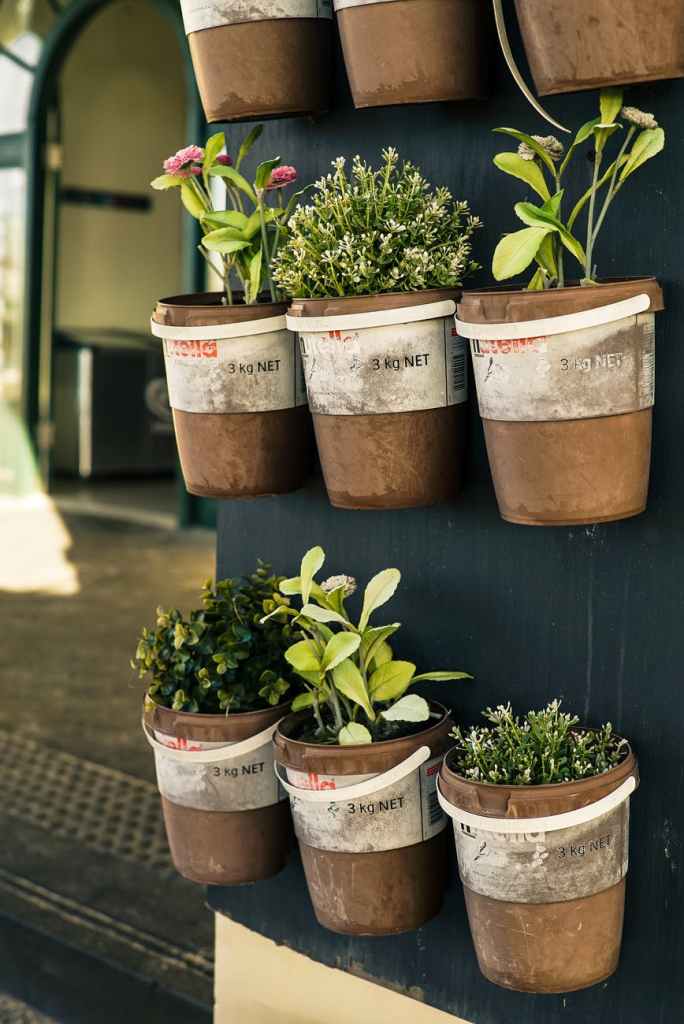
Today, my husband was finally able to get out and go to the grocery. He saw that they were unloading some herbs, already started and ready to plant. It got me thinking about various herbs and their symbolism. What we plant in our garden; what we use in our cooking; how we “season” our prayer life– it all makes a difference. So here are some tips for “seasoning” our prayers…Make sure to add:
Rosemary– for remembrance. Remember and worship God for who He is. Remember His past goodness. Remember His faithfulness. Remember His Great Love. Remember that He sees and hears you; He knows you intimately, and loves you eternally.
Sage– for wisdom. Ask for it. God longs to give you stores of wisdom and guidance. He longs for you to seek His wisdom every day.
Fennel– for praiseworthiness. God is worthy of all our praise and worship. Prayer is just one way of expressing His worthiness and glory!
Mustard seed– for faith. Faith grows exponentially larger and stronger when it is tended. One seed of faith can produce a large plant, which in turn produced hundreds of new seeds. Don’t let the weight of doubt crush that little seed–it really is enough! Not because of the size of your faith, but because of the size of the One in whom it rests.
Horseradish/radishes– for bitterness and contrition. A Holy God can only be approached by those whose sins have been forgiven. God offers mercy and grace in abundance– for those who acknowledge their sin and wish to be restored in Grace. Confession and repentance should be a regular part of our prayer life… and this leads to..
Hyssop– for cleansing. King David prayed: “Cleanse me with hyssop, and I will be clean; wash me, and I will be whiter than snow…Create in me a pure heart, O God, and renew a steadfast spirit within me.” (Psalm 51: 7, 10) May we seek to have a pure heart and a steadfast spirit. And as we are cleansed, we will have…
Parsley– for gratitude and joy. Parsley brightens and garnishes; it brings a finishing touch and its bright green color suggests growth and abundance. Prayer should result in thankfulness and rejoicing as we enter into the very presence of the Giver of All Life.
Thyme–for, well, time. Take time every day to meet with God. Make both “quality time” and “quantity time” when you can, knowing that God wants to be part of your day, all day, every day.
Chives– for usefulness and peace. Chives add flavor and balance when used in cooking. Bring your daily tasks, your goals, even your everyday worries to God in prayer. Pray as you work, as you run, as you do useful things throughout the day. This will lead to peace and purpose.
Garlic– for strength and healing. Especially in times when people are experiencing sickness and confusion, prayer brings strength. As we pray for healing– physical, emotional, and spiritual– we cast our cares upon a Loving and Omnipotent God.
But then, he does three important things: He recounts what he knows of God’s character, he waits, and he hopes.
Sometimes, when I cry out to God, I expect God to reveal Himself to me with an immediate and positive answer. And, occasionally, God does answer prayer with a dramatic and instant result. But most of the time, God answers first with silence. Not because He is cruel or uninterested or too busy to acknowledge my cry. He gives me time to reflect– on His nature, and the nature of my need. And He gives me time to find peace and trust in the middle of the storm.
I spent much of yesterday crying out– I am frustrated with the uncertainty surrounding COVID-19. I am angry at the misinformation and conflicting reports; I don’t know what to believe about staying put or venturing out–is it allowed? Is it safe if I wear a mask? Can I go to the park or beach? When can I re-open my shop? Can I make the payments until it can be re-opened? When can I safely see my family and friends again? Will it be safe to hug them? And I am frustrated with the way I see people treating each other– yelling, screaming, eager to condemn everyone else’s behavior while justifying their own. And I find myself saying and doing the same thing from the relative safety of my computer screen– after all, I can’t yell at anyone to their face if I can’t leave the house, right? But I can let my 300 closest friends know how heartless and selfish they are if they don’t see things my way! They’re KILLING people! They’re betraying family members! They’re living in fear! They have no compassion! And I cannot make them do what I think is right!
But when I stop the crying and carrying on, and justifying, and finger-pointing; when I stop to remember who God is, and who I am, I remember that God IS attentive. And not just to my frustration, but to everyone’s needs– the person who is living in terror; the person who is suffering pain, grief, agony, and loss; the person who is defiant and uncaring and angry. God is attentive, but He is also overflowing with mercy. If He kept records– if He only looked upon mankind to find evidence of our guilt or to pour out shame and punishment– who could stand? Who would have the authority to tell God how He should direct the universe? Who could say that they were more capable of dispensing life and death, health and sickness, mercy and justice? Would I? It is no little thing to cry out to the God of the universe. And yet, God listens attentively to our every cry. Especially when we cry out to Him for mercy, for wisdom, for peace, and for healing. His answer may not look like what we expect, but He never fails to listen in Love.
And as I contemplate God’s power, wisdom, compassion, grace, and authority, I can wait. And that doesn’t mean that I sit in a lotus position and stop seeing the pain and chaos and death. Or that I count to ten and hold my breath. Or that I set a timer and think happy thoughts for 20 minutes. No. I wait like a watchman– like a sentry waiting for whatever may happen– alert and ready to do my duty. And I wait like a watchman for the dawn– for the light of day to see clearly; for the end of my watch, when there will be rest.
This season is difficult, but it will end. It will give way to a new dawn– with new challenges! But just as the Psalmist tells Israel, I know I can put my hope in the Lord, for “with the Lord is unfailing love and with him is full redemption (v. 7). If I cry out, knowing that God is willing to listen and able to save, but I don’t stand firm in hope, I can still be swept away by the winds of doubt and the current of angst.
139 O Lord, You have searched me and known me. 2 You know my sitting down and my rising up; You understand my thought afar off. 3 You [a]comprehend my path and my lying down, And are acquainted with all my ways. 4 For there is not a word on my tongue, But behold, O Lord, You know it altogether. 5 You have [b]hedged me behind and before, And laid Your hand upon me. 6 Such knowledge is too wonderful for me; It is high, I cannot attain it.
7 Where can I go from Your Spirit? Or where can I flee from Your presence? 8 If I ascend into heaven, You are there; If I make my bed in [c]hell, behold, You are there. 9 If I take the wings of the morning, And dwell in the uttermost parts of the sea, 10 Even there Your hand shall lead me, And Your right hand shall hold me. 11 If I say, “Surely the darkness shall [d]fall on me,” Even the night shall be light about me; 12 Indeed, the darkness [e]shall not hide from You, But the night shines as the day; The darkness and the light are both alike to You.
13 For You formed my inward parts; You [f]covered me in my mother’s womb. 14 I will praise You, for [g]I am fearfully and wonderfully made; Marvelous are Your works, And that my soul knows very well. 15 My [h]frame was not hidden from You, When I was made in secret, And skillfully wrought in the lowest parts of the earth. 16 Your eyes saw my substance, being yet unformed. And in Your book they all were written, The days fashioned for me, When as yet there were none of them.
17 How precious also are Your thoughts to me, O God! How great is the sum of them! 18 If I should count them, they would be more in number than the sand; When I awake, I am still with You.
19 Oh, that You would slay the wicked, O God! Depart from me, therefore, you [i]bloodthirsty men. 20 For they speak against You wickedly; [j]Your enemies take Your name in vain. 21 Do I not hate them, O Lord, who hate You? And do I not loathe those who rise up against You? 22 I hate them with [k]perfect hatred; I count them my enemies.
23 Search me, O God, and know my heart; Try me, and know my anxieties; 24 And see if there is any wicked way in me, And lead me in the way everlasting.
We can’t hide from God. We can ignore Him, deny His existence, even rage against Him. But we cannot escape His Spirit. We cannot hide who we are or what we think from Him. And we cannot flee from His goodness or mercy; we cannot run beyond His ability to restore us, heal us, or save us. He knows the worst about us, and He calls us to the very best we can be. Which begs the question– Why would we want to escape from God? Why do we try to hide from Him? What is it about God that would give us a reason to flee?
There are many terrifying things in this world–right now, we are faced with a global pandemic; a plague that brings sickness and death. Now THAT is something worth hiding from! Many of us are “sheltering in place,” trying to hide out until it is safer to interact with others. The disease seems to be everywhere–but it really isn’t– it cannot go where there are no hosts to carry the virus. It can be spread wherever we find other people who are infected, or where the virus lingers on surfaces. The disease does not seek us out or come searching for us if we stay put. Unfortunately, “sheltering in place” comes with its own dangers. We cannot survive long in a bubble. We are interdependent. We need food, medicine, fresh air, and interaction with family and friends to survive and thrive. Hiding away from a tiny virus is only effective in the short term. And there are other diseases from which we cannot hide– cancer and heart disease, and even other viruses that are active, but haven’t been traced or identified.
There are other terrors that we try to escape by fleeing– hurricanes, fires, floods, war, etc. And we may escape immediate danger from such terrors–if we have advance warning or if we have the means to escape. But there is no place of absolute safety: no place on earth where such dangers cannot exist. There is no Utopia– no earthly dwelling, community, or settlement where there is only goodness, harmony, peace, and plenty. There is no place to hide, and no place of escape.
It is understandable that we should want to hide from danger or flee bad things, even if such escape is impossible in life. But why should we wish to hide from a loving and merciful God? Is He as bad as COVID-19? Is He as threatening as a hurricane or an air raid?
Certainly, He is as powerful (and even more) than any of the dangers we fear. God has the power, and the authority, to judge, punish, and destroy all who live on the planet. He has the power to obliterate all of His creation, and none of us could stop Him or challenge His right to do as He pleases. And if we should challenge God’s authority, we would be wise to want to run away, hide, or escape the consequences of such foolishness.
Adam and Eve tried this long ago. After they sinned by eating the Fruit of the Knowledge of Good and Evil, they hid from God. And God’s response was not instant obliteration. He didn’t storm through Eden, destroying everything in His righteous anger before torturing Eve, making Adam watch in horror before He killed them both. Nor did God negate His Holiness by changing the consequences of sin. Death DID enter creation– along with disease, pain, guilt, envy, hatred, lying, greed, destruction– they all exist, persist, and continue to plague all of God’s creation to this day.
But God’s first act–His first words to Adam and Eve after their rebellion– was to seek their presence. God came to walk in the Garden; to meet with Adam and Eve. He called out to them, “Where are you?” He wasn’t asking because He didn’t know that they were hiding. He knew where they were, and why. And even in assigning their punishment, God did not throw extra guilt and recrimination at the fallen couple. He didn’t shout, “How could you do this to ME?!” “How dare you!” “I wish I’d never made you!” “You’re worthless. What a waste of time and energy. Get out of my garden! I never want to see you or hear from you again!”
God’s Spirit is always seeking reconciliation, communion, restoration, and love. God is Holy, and God is Merciful. Holiness desires Whole-ness. Mercy desires Peace. God pursues us, not because He wants to infect us or devour us or destroy us– God wants to hold us, heal us, and give us Life.
The danger is not in God’s presence, but in our ability to reject it. God is everywhere, but not everyone will see Him, accept His authority, or welcome His mercy. Some will spend a lifetime hiding and fleeing, only to discover that God will, reluctantly, give them what they want– an eternity without Him. Without Grace, without Love, without Peace, without Wholeness, without Hope.
That is a fate far worse than waking up to “shelter in place,” or even suffering through a virus that can separate us from loved ones for weeks, months, or even a short lifetime.
There are many things worth fleeing in life– But we can find joy, hope, and peace in the presence of a Loving and Omnipresent God.
I have a friend who is very keen to study if prayer “works.” His theory is that if someone were to measure the number of prayers said in various regions of the world during the COVID-19 pandemic, and compare those numbers to the rates of infection, numbers of deaths, etc, for the same regions, one could “prove” whether or not prayer is effective.
I don’t think my friend is being sarcastic or overly cynical– I believe he is sincere in wanting to study prayer. I accept his desire to study prayer–to quantify it, even to “prove” it, or legitimate it for those who are skeptical. Unfortunately, he wants to study it as an observer, and not a participant, and he wants to conduct a physical study of a metaphysical practice.
Scientists are conducting several studies during this time, to see what “works.” Does social distancing “work” better than building up “herd immunity?” Is there a treatment that works better, or faster than others? Can we develop an effective vaccine? What practices– social, hygienic, medical, political– might help mitigate the spread of future viruses? Even these studies will not be definitive. The results will depend a great deal on methodology, and the conclusions will be open to interpretation.
There are additional problems in studying whether or not prayer “works” or not, because prayer is metaphysical. Here are just a few of the “measurement” problems:
How do you measure prayer? By length of time? Number of words used? The number of prayers prayed by each person over a certain period of time?
Do you count ritual prayers? Mantras? Meditation? Unspoken “thought” prayers? Recitations? Prayers spoken “in tongues” or in ecstatic states?
Do you count corporate prayer as a single prayer or by the number of people in the group?
What about social media? Do you count all the people who say they will send “thoughts and prayers?” Do you count those who say they “will pray,” or only those who are “praying,” or “praying now.”
If you are testing by geographical region, how do you account for people who are praying for others around the world?
How do you measure the efficacy of prayer (as opposed to other factors)? If a region has a higher mortality rate, even though many people prayed, does that mean that prayer “doesn’t work?” Or does it mean that the mortality rate would have been even more devastating (given other factors) without prayer?
More than just measurement problems, there are problems with the very nature of prayer that make such a study impossible:
Even if you could come up with a standard definition of “prayer” in order to get a count, prayer is not a physical substance or action. Prayer is not a “cause and effect” exchange. It is communication. If ten people say the same thing at the same time to the same person, it is not necessarily “more effective” than a single person-to-person exchange. If a thousand people pray to the same “god” who is not a god–“Mother Nature” or “The Force,” for example, it cannot be compared to a single person praying to a Loving and All-Powerful God.
God’s ways are not our ways. If we are measuring for one thing, God may be working for a different, unseen outcome. If more people contract the virus during the “study period”, we see that as “failure.” But God may be preparing that region to build up a resistance or immunity for a future outbreak. God answered prayer in a mighty way that we won’t see immediately. I have known a great many people, and prayed for a great many people who have not received physical healing in this world. They have suffered. They have died. But that doesn’t mean that prayer “didn’t work.” Their sufferings and eventual deaths have often brought about unbelievable works of God– salvation, families restored, friends discovering renewed purpose, strengthened efforts to fight disease, injustice, poverty, etc., and communities coming together in unity and hope.
Prayer is not about measurable results. Prayer is a heart-cry to a caring Creator. It doesn’t just involve asking for healing or miracles or “wish fulfillment.” Prayer involves thanksgiving, worship and adoration, repentance and confession, sharing burdens, asking questions, and building an eternal relationship with God Almighty.
In the end, any study results will be interpreted differently by different people. Some people will be convinced by numerical comparisons to re-consider their view of prayer. Others will never be convinced, no matter how much “evidence” someone else presents.
Prayer isn’t like taking an aspirin, or holding a protest rally, or doing research for a cure. Prayer isn’t about “winning the battle.” It isn’t about “what works.” It isn’t about “what” at all. It’s about WHO.
God “works.” God is sovereign, loving, and wise beyond what we can imagine. His ways endure. And He has vanquished the power of death and disease. Yes, it can still touch us in the here and now, spreading havoc and pain and mourning. But it will never triumph over Hope, and Life, Truth, and Faith. And when we pray, we connect to the source of all that is Eternally victorious! Beyond ANY measure!
There is a distance– A yawning, gaping separation Between me and my loved ones, Between families and friends, Between us and each other, Between us and YOU.
And yet, You are here, Waiting, whispering… Words of hope and comfort, Words of healing and peace, Words of love and unity.
You are life. You are truth– Brighter than fear, More powerful than death, Closer than our next precious breath.
Banish the distance, Lord. Banish the fear and loneliness; Banish the chaos and darkness; Bring us –all of US–together– In peace In health In hope, In Your eternal Love.
When I was just over a year old, I became very ill. Several doctors were consulted, but no one seemed to know what was wrong. I was losing weight, growing weaker, lost the strength to walk (something I had just started doing), and losing the will to thrive. I cried and moaned throughout the day, and had trouble falling asleep normally– demanding constant attention and comforting, but not showing any signs of fever or infection.
Our minister at church anointed my head with oil for healing. Everyone prayed fervently. Mom and Dad took turns staying with me at the hospital, trying to calm my fears and hope that I would get better. Finally, one of the doctors (a third- or fourth-opinion at that point) suggested that I might have a protein deficiency–that my body was not processing proteins correctly, as I had just started eating meat and more complex dairy. He suggested a course of booster shots that lasted well into my fifth year; it was one part nightmare, and three parts miracle– daily, then weekly, monthly, and quarterly trips to get the dozens of booster shots, but I lived, grew, and was able to live a normal life. My childhood was filled with nightmares and many sleepless nights, even after my health began to improve. But I learned to love meat and dairy, trust the doctor and nurses who administered the dreaded shots, and embrace life.
I tell this story in relation to Psalm 23:5, not to make a plug for anointing as a miracle “cure” or magical ritual. I realize that healing comes in God’s time and will, and that not everyone who prays for (or anoints for) healing receives it in this life. But I DO believe in the power of prayer, and I do believe in the act of anointing. It is not the oil, or the ritual involved that brings about powerful healing, however. It is a representation of God’s power to heal– and it brings with it an awareness of His presence and sovereignty.
When David talks of anointing, he speaks from multiple layers of experience. As a shepherd, David would pour oil over the heads of his sheep. This served two purposes– it would keep insects from burrowing in and around the eyes, nose, ears, and necks of the sheep, where they could do untold damage, and where sheep could not dislodge them; and it would help them as they grazed among briers and rocks where they might get snagged, cut, or scraped. Oil brought protection and healing.
But David was also a King. He had been anointed by Samuel to be the next King of Israel as a young man. Even though he had to wait through years of danger, war, and exile, he had been chosen and set aside by God. God had seen him through and raised him to prominence, and He had signaled all that through anointing.
God is our Good Shepherd. He anoints our heads with oil– for protection, for healing, for service, and for ordination. Our Shepherd cares deeply for our physical and spiritual needs. And He appoints us to His service–He has a purpose and a position for each of us in His kingdom.
In days of confusion and suffering, we can forget to look for the Shepherd’s presence and His provision. We may lose strength, and even the will to thrive. But God can and will strengthen us with “spiritual protein” in His word and through fellowship. He will provide us with “booster shots” of blessings– friends who pray for us and with us; scripture that inspires and convicts; hymns and songs that remind us of His amazing grace and love; moments of prayer and meditation that carry us through the day. God will provide the daily anointing we need– and when we turn our face toward His, we will see eyes of love and feel His gentle hands of grace as He gives us all we need.
For more on Biblical anointing– it uses, meanings, and symbolism, check out these resources:
My husband and I own a small retail business. Last winter, we were victimized by shoplifters. They stole several items, worth over $1,000. The same couple stole items from other businesses in the area. The police investigated, compared descriptions of the suspects, traced their movements, and got an arrest warrant. The couple fled, and it took months to find them and bring them into custody. They have been arrested, and we have been to court for a preliminary hearing, with another potential court date in about a month.
The court sent us a long series of papers to fill out, including a victim impact statement, where we were to describe how the suspect’s alleged actions impacted us personally, as well as how our business was damaged. Even though this was not a personal crime (we weren’t physically threatened or harmed, or specifically targeted with an intent to ruin our business), there are still scars–distrust, fear, frustration, and loss, to name a few. Just because a crime isn’t personal, doesn’t mean that no one suffers. It has been an awkward process to write out the victim statement, and to appear in court and recount all that happened that day, but it has also been a good process.
Being a victim is not a pleasant experience. It is frightening, humiliating, maddening, and bewildering. “How could this have happened?” “Why did it happen to me/us?” “What did I/we do wrong?” These are honest questions that go unanswered. But the biggest question may be “Where was God when this happened?” Didn’t he know? Didn’t he care? Why didn’t he act to stop this crime? Why did he allow it to touch us?
In the months since this happened, I’ve learned to ask some other questions of God–
What other “bad” things have you kept from us without our knowledge? What good things have you showered on us that we took for granted?
Who else has suffered the same or worse things– how can I reach out with empathy or understanding?
Where are people suffering without justice? Even though we have had a long wait, we know that the police and court system have been working for us. Where are people living who suffer without hope, in silence, and in fear of seeking help?
What can we learn from this experience? How can we make our store and our community “safer”? How can we heal, and bring justice instead of wallowing in hurt or seeking revenge?
God has a plan, even in times of trial and questioning. We all will be victims at some point in our life–of injustice, of crime, of disease, of poverty, of losses, of disaster, and of sin’s consequences– our own sins and the sins of others. We can also be victors, through the power of the Holy Spirit. We can overcome bitterness and addiction; we can triumph through cancer, depression, or heartbreak; we can rise above setbacks and circumstances; we can choose forgiveness and healing over hatred and self-sabotage. We can move from being perpetual victims to eternal victors, through Jesus Christ our Lord!
In “Pursuing Prayer”, I want to explore ways to develop my prayers; to become “better” at praying– more confident, more Christlike. But along the way, I have found that “better” doesn’t always mean what I think it ought to mean. Sometimes, becoming “better” requires becoming broken.
I don’t like being broken. I don’t want to be shattered, ruined, like a broken vase. I don’t want to pray like a broken record– sending up the same failures, the same weaknesses, the same painful memories. I don’t want to be pinched, and cracked, and mangled. I don’t want to be stretched and molded and squeezed. I want to have comforting chats with God, not drawn-out confessions, or rebukes, or unanswered questions.
It is tempting to avoid brokenness–cover it up, pretend, deny, ignore its existence. I don’t want to bring God my questions, my fears, my hurts. I don’t want to open up the dark places of my soul. I want to wear a smile and make small talk with God–“How are you today?” “Just lovely, Father, and how are you?” “Fine weather we’re having.” “Yes, thank you for the breezes yesterday. And could I just put in a plug for my neighbor’s gall bladder surgery? I told her I would pray for her, so could you just give her a speedy healing? That’d be great. Well, gotta run. Talk to you soon…Oh, and I’m sorry for the way I blew up at the kids the other day. I don’t know WHAT got into me. You know I’m just not that way, right? So I’m just asking for grace to kinda cover that up and make it ok again. Thanks.”
God is not fooled. God is not impressed or amused at our shallow righteousness. He’s not impressed or overcome by our brokenness, either. But He wants it, anyway. He wants all of it. Because He wants to build honesty, intimacy, and most of all, restoration. God doesn’t want us to wallow in our failures, any more than He wants us to gloat in our false perfection. He wants to break the bondage they have over us. He doesn’t get tired of hearing our voices, even in guilt or shame, rage or despair…if they are raised to Him. He doesn’t want us to stay shattered and ruined. But He needs us to be redirected, refreshed, rebuilt, rekindled, and renewed.
There are many things that need to be “broken” to become better– we “break” in shoes, we “break” ground to create a new field or prepare for a new building. We “break bread” to eat it and share it with others. We “break” horses in order to prepare them to run or work more effectively. We “break” bad habits. We even “break” the ice in a new friendship. The point is not to stay broken, but to “break through” whatever is keeping us oppressed and held down.
When I am feeling broken, and I cry out to God, He doesn’t deny my brokenness; He doesn’t turn away in disgust; He doesn’t stick a hasty bandage on my wounds. God acknowledges my pain, He listens to my questions. He loves me enough to come and stay with me through the worst moments–even when others have gone; even when I deny His presence and turn my face to the wall–and He begins the process of turning even those scars and cracks and tears into treasures.
Brokenness is inevitable in our fallen and broken world– God is not out to break us; people and time, circumstances, and even our own good intentions will cause us to fall and fail–am I willing to uncover my brokenness and need, and allow God to reshape my shattered dreams?































 Pursuing Prayer