Avoiding the Heat

We’ve been experiencing a heat wave. The temperatures are high, but the humidity makes it feel even hotter. People are doing whatever they can to avoid the heat– everything from driving around to stay in the air-conditioned car, wearing loose fitting clothes, wearing wide-brimmed hats for extra shade, drinking lots of cold water, or staying indoors with fans. Others have no alternative– they must walk in the heat, work in the heat, or try to find whatever shelter or shade is available, even if it offers only relief from the harshest rays of the sun.

Today, we are getting rain– blessed relief– cool drops of water and lower temperatures, along with clouds to hide the sun’s piercing rays. Even so, the rain has come with wind and even some flooding and storm damage. Even our “relief” poses some danger! So there is limited relief from the heat, but once the rain front passes, the temperature may rise, and the humidity will once again make the air steamy and oppressive.

Watching how people work and plan and worry about avoiding the heat of summer reminds me of how we work and plan and worry about avoiding another kind of “heat”– accountability and judgment. Hell is described as a “place of eternal torment”, a “lake of fire,” and a “blazing furnace.” People will do almost anything to avoid such a place. They try to pretend it doesn’t exist; they create “air-conditioned” philosophies and religions that block the reality of judgment and punishment; they worry and work and plot ways to escape their fate.

Jesus clearly taught that Hell is real, and that it is a place of darkness, suffering, gnashing of teeth, and despair. Someday there will be a “heat wave,” as all those who have rejected God’s offer of forgiveness and His Sovereignty face His judgment and righteous wrath. There will be no rain to bring relief or refreshment; no shade or cooling breeze of grace– only the unbearable oppression of guilt, shame, and self-torment that comes from being outside of God’s loving care.

There is a way to “avoid the heat” of God’s wrath– He offers complete restoration and eternal life for those who turn from sin and follow Him. Jesus, through His life, ministry, death, and resurrection, made it possible for us to live in God’s presence– His Light, His Glory, and His Love– in joyful eternity. We do not have to worry and work and plot how to “avoid the heat.” We need only put our trust in the one who sends the heat and wind and rain in their seasons, and whose Grace shades us from His wrath.

Part of this trust is being able to call out to God in our times of “heat”– whether from guilt or oppression–and ask for His blessed relief. Sometimes, we need to call on His Grace and forgiveness. Sometimes, we need to call on His promises– not to remind Him, but to remind ourselves that our “heat” is temporary, and His relief is eternally effective. This week, our “relief” from the heat came in the form of rain storms. We might be tempted to complain about the manner of God’s response to our cries for help in the moment. But we must remember that the storms and the heat waves of this life are temporary– the fires of Hell, and the blessings of Heaven are eternal.


The Longest Day

Today is the Summer Solstice. In the Northern Hemisphere, it marks the “longest day” of the year. However, today will have exactly the same number of minutes and hours as any other day. The difference is the amount of sunlight/daylight hours, as opposed to hours of night/darkness. And even this varies by where we live in relation to the equator. Those who live close to the equator will see little difference today– those near the North Pole will not see the sun dip below the horizon at all.

In some ways, today is NOT the longest day of my year. One of the longest days for me so far this year was the day my mother died. Even though it was February, when the days are “short,” that day was filled with questions, emotions, and obligations. Time seemed to stand still for a while, as we took in the reality that she had left us to go Home, and then time seemed to expend for all the aftermath of death. Who needed to be called and contacted? What would we need to do in the coming days and weeks to plan a funeral, notify authorities, pay bills and close accounts, etc.? How would we notify family and friends without “missing” someone? Each tick of the clock seemed to bring new thoughts and emotions.

I was thinking about time recently. We are still busy cleaning up Mom’s house and settling her estate. Days seem to pass quickly now, as we have deadlines, and much work to keep us busy. I’m glad for the extended daylight hours, but I’m also tired! Most days– even longer days!– I feel like I’m falling behind. And I find many hours are “wasted” on unimportant things; inconsequential things. Will I spend my time today any differently or more efficiently than any of the “shorter” days to come?

The Bible says a lot about time. (https://www.openbible.info/topics/time) We are creatures bound by time. We have a beginning and an end; we have a limited life span. And we do not know those limits. We cannot break the bonds of time to live longer lives, or to live our lives in the distant past or future. That is the “stuff” of science fiction and daydreams. We cannot bargain for more time, whether we are thirty and diagnosed with cancer or ALS or another terminal illness, or we are ninety-two and long to reach our centennial birthday. Even our individual days are dictated by the march of time. We cannot live our days backward. We cannot stop the clock or stretch out a certain hour over any other. Instead, we must make the most of every minute; every day that we are given.

But we were not created just for one short lifespan. Our bodies will wear out and die, but our spirits were created for eternity. There will be no “longest” or “shortest” days in Heaven or Hell. There will be no sunsets, no endings or “do-overs”, no deadlines. For the Christian, this is a great comfort. My Mom has said her last “Goodbye.” She never has to worry about deadlines, unfinished tasks, or “putting off until tomorrow..” My grieving is over a temporary loss; a brief “au revoir”, rather than a gaping chasm of eternal separation.

But there will be a very different “longest day” for those who do not choose Christ in this life. And that day will be one of endless darkness, endless despair. There will be no sunrise, no rest, no refreshment or renewal, no “tomorrow.” Today, I pray that we would “number our days” in this life (Psalm 90:12), and put them to good use. I pray that I would reflect God’s love to those who are living in the shadow of that endless darkness. I pray that the Holy Spirit might shine a light (through me and through others) that would draw people to Him.

There will be many hours of light today, but the days will grow shorter. The seasons remind us that time on Earth is fickle and fleeting. May we live wisely in this “longest” day of the year!

Happy Birthdays

Today marks 90 years since my mother was born. She didn’t live to see this birthday; she died back at the end of February. But birthdays were important to my mother– hugely important. She never forgot a birthday. Mom was pretty sharp into her later years. She might forget someone’s name–for awhile. She might forget a few details about what happened yesterday or last year, but she didn’t forget to take her medication. She would eventually remember that name she couldn’t come up with earlier in the day. And she had an elaborate system of calendars, date books, and directories to help her remember birthdays.

Photo by Bich Tran on Pexels.com

Mom had a large desk calendar. Each day’s “square” was covered in her handwriting– names, numbers, etc., reminding her of birthdays and anniversaries of her relatives, friends, neighbors, and church family. If she knew your name and birthday, it was on her calendar. If she knew your age, it was on there, as well. If she knew your anniversary, it was there, too. If she knew. your birthday and/or anniversary AND your address, you received a greeting card– and it generally arrived on the exact date! Mom did this for literally hundreds of people each year.

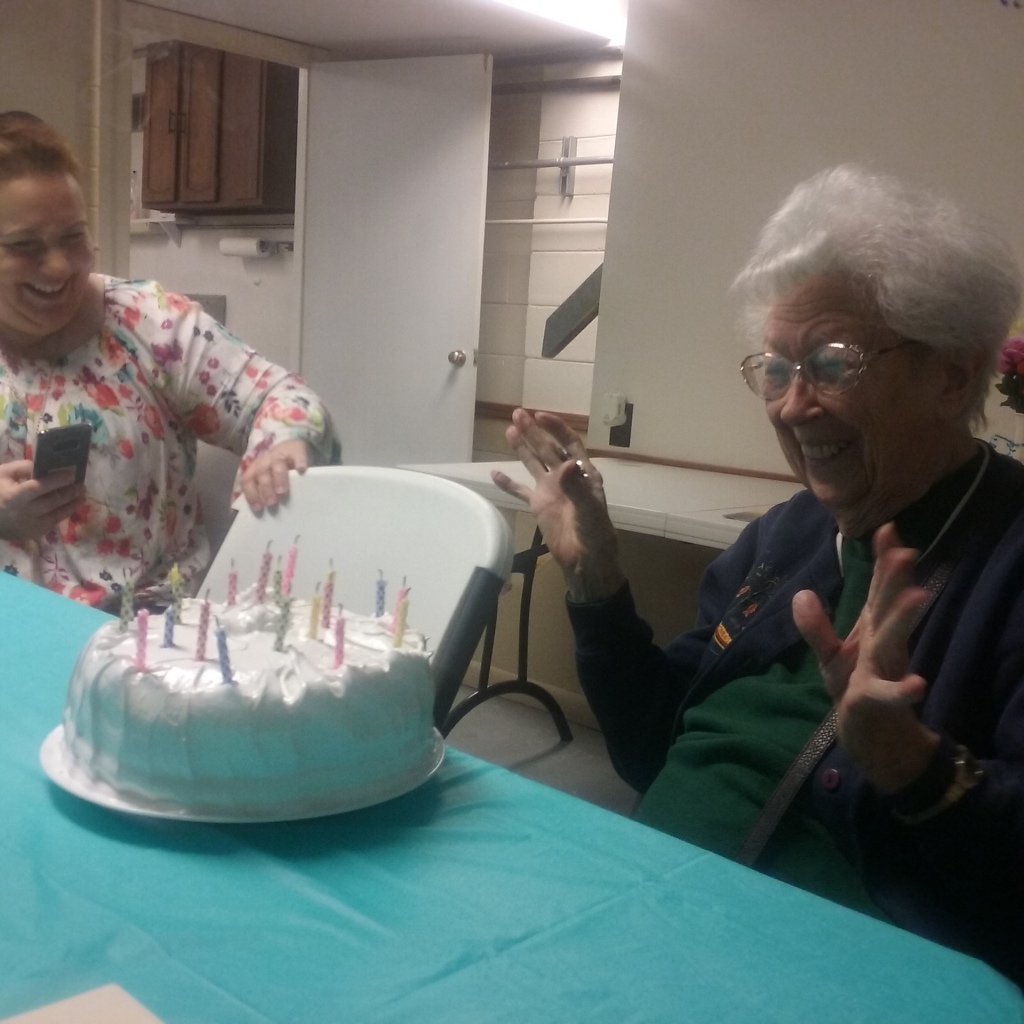
Today hits me hard. Not because Mom made a fuss about her own birthday–even special ones like a 90th. She enjoyed getting a card or gift, or having some cake or ice cream on her birthday, but that’s not what I miss. I miss the absolute joy she had in remembering others, and in being remembered. I can still see the look of childlike glee on her face when she and a friend were both surprised with a birthday party a few years ago. She was delighted for her friend as much as for herself. I can remember her insistence that certain cards be placed in the mailbox on certain days, so that they would not arrive too early or late, but just at the right time for someone’s special day. I remember shopping with her for box after box of greeting cards. Even though she bought “in bulk,” filling a basket or cart with multiple boxes of cards, she was very choosy about them– looking over the designs and the messages inside each box. Often, she had “buyer’s remorse” about a particular box of cards: she wasn’t satisfied with the tone or the greeting. In a box with four different designs, she might send out cards with two of the designs and just leave the others untouched.

Birthdays were important to Mom because individuals were important to her. She wanted every person she knew to feel loved, remembered, and special. Because they ARE! Not just by Mom, but by the God she loved and served.

Mom loved birthdays, including her own. But Mom had another birthday. Mom won’t celebrate another earthly birthday– she won’t get any cards or ice cream today– but she is celebrating her “other” birthday today. She did not knew the exact date, but she was born into eternal life when she accepted Jesus as her savior, and that birthday has no end. It is much more important than her earthly birthday, and fills her (and all who love her) with a greater joy. I can only imagine the gleeful expression on her face at this moment that “was” her birthday, and in every moment since she went “home.” And it’s in large part due to my Mother’s witness and influence that I also have a “second” birthday. I don’t knew its exact date, though I remember it was a beautiful summer day. Later this year, I will celebrate my earthly birthday–and it will be a bit sad without Mom’s card and her smile. But I know that we will someday share much more than a cake with candles, or a greeting card or a wrapped gift.

Photo by Pixabay on Pexels.com

Mom taught me to appreciate birthdays– and to share the joy of wishing others a “Happy Birthday.” And to anyone celebrating an earthly birthday today, “Happy Birthday!” But I am looking forward to the day that I can share eternity with all those who have a “second birthday” in Christ! I’ll see Mom again, but even that will pale in comparison to experiencing God’s presence and the love He lavishes on His Children!

Just think– God loves you so much that He never forgets your earthly birthday. He not only knows your birthday, He remembers the exact moment of your conception, and every moment since! He knows you and loves you so much that He wants you to have another Birthday into eternal life with Him! And that is better than any earthly birthday card, cake, gift, or party you could ever celebrate! If you have a “second” birthday, even if you don’t know the exact date, I want to wish you a “Happy Birthday” as well– today and every day!

Where Do Prayers Go?

Do you ever pray “directional” prayers? Some people pray TO something or TOWARD something. It may be positioning yourself to pray toward the east or toward the rising sun, or even toward a particular holy place. Some people pray to the moon or stars or a statue or image of a person. Some people pray rather aimlessly into the sky or the ceiling or the floor.

Does it matter? What does the Bible say?

In Exodus, when God gave Moses the Ten Commandments, He said, “Thou shalt not make unto thee any graven image.” In other words, no carved images of any animal or person that takes the place of God. For some people, this extends to icons and statues of Jesus; for others, it means only idols from other religious traditions.

However, later in Israel’s history, when King Solomon dedicated the first Temple, he prayed that when people prayed toward the Temple in Jerusalem, that God would hear from heaven and intervene. For many, this edict still holds true– they focus many, if not all their prayers toward the city of Jerusalem. Others specifically pray to the “Wailing Wall”– the last part of the Temple that still stands. Tradition states that the Spirit of God “dwelt” in the Temple– therefore to pray to the Temple was to pray to the God who lived there.

Jesus did not command His followers to pray toward the Temple itself, but rather to pray directly to “Our Father, which art in Heaven.” Throughout the Bible, the image of prayer is linked with the image of smoke or incense– rising toward Heaven. Jesus sometimes is described as looking up toward Heaven as He prayed. But other times He bowed or knelt as He prayed.

So what are we to conclude? Which is the “correct” direction for our prayers?

There is no conclusive answer in the Bible. And I think this is because God is Omnipresent. He is everywhere at once, so that we can pray anywhere, facing any direction, without a fixed focus point. There is only one direction that is “wrong.” And that is when our heart is facing away from (in rebellion to) God. We can pray aimlessly to nothing and no one, or to something that we know is NOT the One True God–to creation itself or to an invisible but remote “Force.” But the Bible IS clear that we are to pray to God alone– Father, Son, and Holy Spirit– and directly and personally to Him. We do not need a personal altar in order to be heard; we do not need to be facing an icon or a building or the rising sun or an imaginary point in the stratosphere. God Himself, through Christ– will accept and respond to our prayers. God will hear us from anywhere, in any position or circumstance. Altars and images and icons may represent Christ and His Holiness– they can be helpful tools in reminding us of who we are in relation to Him–but they must never become replacements for His Spiritual Presence.

Our prayers end up– through whatever mysterious and wandering way– finding their true destination, which is the heart of God Himself, when we seek Him sincerely and whole-heartedly. In much the same way, God’s answers to us will find their way through His Holy Spirit, no matter where we are or what direction we are facing.

Photo by cottonbro on Pexels.com

God transcends space and time, and can be found by those who seek Him from the ends of the earth. I am greatly comforted by this truth. My Father is in Heaven– and right beside me, and dwelling within me! He is always listening, and always available.

Last Goodbyes

I missed posting here last Friday– we were busy planning my mom’s funeral. Mom died last week at the age of 89. We spent most of last week planning how to say our last goodbyes.

Goodbyes are never easy. And those that come with death are painful. We will miss our Mom, Grandma, Great-grandma, friend, cousin, neighbor, aunt, surrogate mom, and all the other roles she filled during her earthly life. We will miss her smile, her warm friendship, her faithfulness, her drive and passion, her energy, and her zest for life and adventure. I used to call or visit her every day. I will never again hear her voice in this life. I will never again hold her hand or share a laugh with her on this side of heaven.

But saying goodbye, for Christians, is NEVER permanent. I have said my very last goodbye to Mom, because someday, I will say “Hello!” to her again. And along with her, I will be welcomed into eternity by the One who created me and loves me even more than Mom did! No more painful partings; no more wondering when I will see her or speak to her again.

She is with so many loved ones to whom she had to say, “goodbye” over the years. And all of them are joyful and secure in the knowledge that there will be no more “goodbyes” in Heaven.

Mom was a prayer warrior, as I have said before. She prayed daily, multiple times a day, lifting up friends, relatives, and even strangers. And I will miss knowing that she is praying for me. But there is Someone Else who is praying for me daily– even constantly! Jesus sits at the right hand of the Father, making intercession for us every moment!

Photo by Daka on Pexels.com

His disciples were in anguish at the thought of having to say “goodbye.” But Jesus told them to be glad, because He would send a comforter, the Holy Spirit, to them after He went away. They said their last “goodbye” to their beloved Teacher, but He didn’t leave them alone to grieve. He left them with a mission to achieve. He also left them with a promise that He was coming back! And this time, He would bring them to their eternal home in Glory!

And Mom has done something similar. She left a legacy of caring and praying and sharing the Gospel. She left hundreds with hope and peace for their future. And now it’s important to carry the baton; to finish our leg of the race, and continue the mission that Jesus passed on to His disciples long ago; the legacy that was passed to Mom, and that she has passed on to us. Someday, all the “last goodbyes” will have been said; all the last bitter tears shed, and we will all celebrate the arrival of God’s Glory. The only thing left to bid “goodbye” will be Sin and Death, grief and mourning.

I thank God for “Last Goodbyes.” Because I know that Goodbye is never the end for those of us who know Christ. We will be sad for awhile, but our grief will be swallowed up in joy and victory!
Goodbye, Dear Mom– for now. You are safe and secure. Your prayers have been answered, and ours continue in hope and confidence. Amen!

Looking Beyond..

Have you ever tried to read through the Bible in a year? There are many programs that can help you do it–even Bibles divided into daily readings. Some are organized in segments–a short passage from the Old Testament; one from the New; a Psalm, and two or three verses from Proverbs. Mine is organized in bits from Genesis to Revelations– a few chapters or a short book each day, with every seventh day set aside for reflection.

Photo by Luis Quintero on Pexels.com

It’s curious– the Bible is organized naturally in rough chronological order. In January, as we look ahead to a new year, we are challenged to look back and read about how the world began; in December, we read about the “end” of the world as we know it. But of course, Revelations isn’t about “the End.” It is about the new beginning– a New Heaven and a New Earth.

Photo by Bich Tran on Pexels.com

As this year closes, and we naturally look ahead to next year, Revelations challenges us– not just to look ahead, but to look beyond! We can’t see the future, even if we try to prepare for it, or even control it. We can’t know for certain even what will happen in the next days and weeks of next year. But God has given us a glimpse of what will be– in His time. If this year has left us complacent, we must look beyond that complacency to see God’s righteous judgment. If this year has us frustrated about injustice, we must look beyond to see God’s coming endless reign of Peace. If thoughts of next year leave us confused or worried, we must look beyond to see how God’s plan is from everlasting, and that He is Sovereign over time and circumstance.

On January 1st, many of us will “start over” reading the Bible, with the opening of Genesis 1– “In the Beginning, God created the heavens and the earth..”, reminding us again that God has been in control all along. The story is the same–Creation, the Fall, the Promise, the Incarnation, the Crucifixion and Resurrection, and the coming Return of Christ– just as God is the same, yesterday, today, and forever (Hebrews 13:8).

We can look ahead– and hope that 2023 will bring goodness, adventures, triumphs, etc.. But we can look beyond, with a certain and sure hope that God has the future in His Mighty, Holy Hands!

Photo by Sunshine Caro on Pexels.com

Lord, Thank you for this past year. Thank you for giving us new opportunities in the coming year, whatever circumstances may bring. Thank you for your wisdom and sovereignty in all things– that we can have complete confidence in You! Help us to enter 2023 with that confidence, and honor You in the days ahead, and throughout eternity. Amen.

In the Beginning Was the Word…

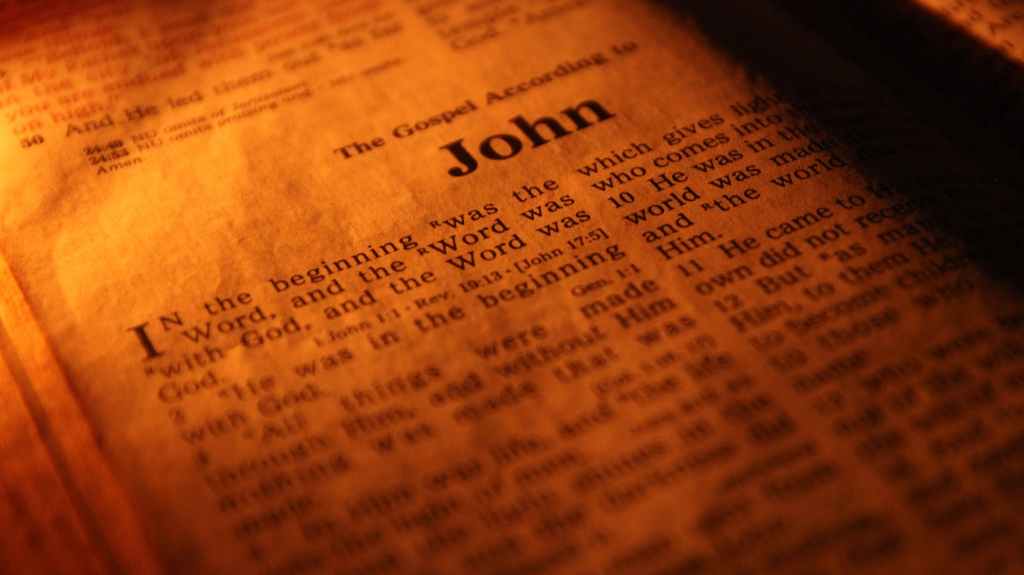
In the beginning was the Word, and the Word was with God, and the Word was God. The same was in the beginning with God. All things were made by him; and without him was not any thing made that was made. In him was life; and the life was the light of men. And the light shineth in darkness; and the darkness comprehended it not. There was a man sent from God, whose name was John. The same came for a witness, to bear witness of the Light, that all men through him might believe. He was not that Light, but was sent to bear witness of that Light. That was the true Light, which lighteth every man that cometh into the world. 10 He was in the world, and the world was made by him, and the world knew him not. 11 He came unto his own, and his own received him not. 12 But as many as received him, to them gave he power to become the sons of God, even to them that believe on his name: 13 which were born, not of blood, nor of the will of the flesh, nor of the will of man, but of God. 14 And the Word was made flesh, and dwelt among us, (and we beheld his glory, the glory as of the only begotten of the Father,) full of grace and truth.

John 1:1-14 (Authorized KJV)
Photo by Jeswin Thomas on Pexels.com

We celebrate Christmas as the “birth” of Christ. Yet, the Bible tells us that Jesus (Christ) was in the beginning with God: Jesus had no beginning and no end. He is eternal with the Father and Spirit. We call this season before Christmas “Advent”– we await and celebrate, not the birth of a new being, but the advent of His coming from Heaven to earth.

Photo by Pixabay on Pexels.com

Jesus came to Earth for many reasons– some of which are given in the Bible, and some of which are likely beyond our comprehension. He came to live among us as a man of flesh and bone (John 1:14); He came to bring life and light (vv.4-9); He came to live a sinless life, which He sacrificed as a ransom for the sins of the those who repent: and He came to serve others–to model the kind of service that God desires from us (Matthew 20:28). Jesus came in obedience to the Father (John 6:38). Finally, Jesus (as a member of the Triune Godhead) came because “God so Loved the World” (John 3:16) –He Wanted to come! The Advent was part of God’s perfect plan. It was not Plan B, developed after the fall of man. It was so “from the beginning.” It was foretold and prophesied. It was planned down to the tiniest detail.

Photo by Ketut Subiyanto on Pexels.com

Jesus has always been. He has always been The Word of God. Jesus speaks. Jesus listens. When we pray, it is natural to speak words to The Word. Jesus created us to communicate. Unlike any other creature on earth, mankind chooses to communicate through complex and subtle language, as well as through art, music, dance, architecture…even food! We chatter about trivia; we choose to wear certain colors to express our moods; we make silly faces at infants and delight in their own facial contortions.

Photo by Antoni Shkraba on Pexels.com

Prayer is so important, because it is the essence of expressing our hearts and minds to the very one who created us to BE communicators. God listens through all the words of all the languages we use (or the non-verbalized thoughts, groanings, etc.) to hear our true heart-cry.

Photo by Pavel Danilyuk on Pexels.com

This season, we take time to reflect on just what it means that Jesus was “In the Beginning…” as well as in the manger. We reflect that “before Abraham was”–He IS (John 8:58). We glory in the knowledge that He is the same yesterday, today, and forever! (Hebrews 13:8). These “words” give us life and hope and joy– not just now, but throughout all the years of our lives.

What a reason to say just a few words today in prayer!

“What Must I Do?”

18 And a ruler asked him, “Good Teacher, what must I do to inherit eternal life?” 19 And Jesus said to him, “Why do you call me good? No one is good except God alone. 20 You know the commandments: ‘Do not commit adultery, Do not murder, Do not steal, Do not bear false witness, Honor your father and mother.’” 21 And he said, “All these I have kept from my youth.” 22 When Jesus heard this, he said to him, “One thing you still lack. Sell all that you have and distribute to the poor, and you will have treasure in heaven; and come, follow me.” 23 But when he heard these things, he became very sad, for he was extremely rich. 24 Jesus, seeing that he had become sad, said, “How difficult it is for those who have wealth to enter the kingdom of God! 25 For it is easier for a camel to go through the eye of a needle than for a rich person to enter the kingdom of God.” 26 Those who heard it said, “Then who can be saved?” 27 But he said, “What is impossible with man is possible with God.” 

Luke 18:18-27 ESV via biblegateway.com

I love that Jesus didn’t just give pithy answers to questions, but often went in roundabout ways to explore the motives behind them. I also love how He would use others’ questions, mixed with parables, metaphors, or other figurative language to stimulate further thought. And His parables and word pictures, while short and simple, have layers of meaning that cause us to ponder deeper issues.

The “Rich Young Ruler” in the above story came to Jesus with a question. “What must I do to inherit eternal life?” Instead of answering the question, Jesus seems to get distracted by the young man’s greeting. “Why do you call me ‘Good?'” Did the young man really think that Jesus was better, or wiser, or more righteous than the religious leaders of the day? Or was he trying to flatter Jesus? Or did he think that Jesus would see him as an equal (or even superior) when he found out how righteous the ruler was? Jesus got to the heart of the greeting– “No one is good except God alone.” And therein lies the true answer to the ruler’s question, as well. There is nothing anyone can do to be “Good” enough to inherit eternal life.

Photo by Anna Tarazevich on Pexels.com

Jesus could have said this, but would the young ruler have accepted this answer? Probably not. His question betrays an assumption that he WAS good enough– that he had already done all that was required and that Jesus would surely be impressed and announce to the crowd that here was an example of someone who was worthy of eternal life. Instead, Jesus led the man through his pride by naming a few of the commandments– the very ones the ruler was so sure of. Indeed, this seemed to be exactly what the ruler was hoping to hear– proof that he had “passed the test.” Ironically, he was addressing Jesus as “Good teacher, ” but seemed to miss that fact that he was also addressing the only One who is truly Good! Jesus–God in the flesh — the very one whose death would guarantee that anyone would “inherit” eternal life. This young ruler doesn’t want Jesus to be his “Lord” and “Savior,” he just wants Jesus’s opinion.

Photo by Bryan Catota on Pexels.com

But then, Jesus pulled the rug out from under this man’s assumptions. “One thing you still lack.” One thing…I’m sure the young ruler thought it would be a fine point in the laws or traditions he know so well– some minor point that could be cleared up with a gift or a small offering. I find this a fascinating statement, because it is followed by “sell all you have and distribute to the poor…” It seems like such an oxymoronic statement. You lack one thing, therefore, you must give away all that you have. How is that possible? Because the “one thing” the rich man lacked was not an object; not something he could check off a list of “things I can do to impress the religious leaders.” This man lacked humility; he lacked a self-awareness of his own need. And he lacked the understanding of what it means to “inherit” eternal life. No one “earns” an inheritance. Even someone who is rewarded with an inheritance must trust in the goodwill of the person writing the will, and will only inherit under the terms of the will. Jesus’s “terms” were not that the man had to become destitute or spend the rest of this life as a beggar. But faced with the choice of his comfortable life in the here and now, or eternal and abundant life in heaven on God’s terms, this man chose earthly wealth and spiritual poverty.

Photo by HASSAN YAR JANJUA on Pexels.com

Almost lost at the end of Jesus’s surprising answer are the last two phrases, “and you will have treasure in heaven; and come, follow me.” This man wanted eternal life as an extension of his comfortable life on earth. He did NOT want eternal life enough to sacrifice his present comforts or his preconceived notions of “goodness.” He did not want to follow Christ– he only wanted to consult with Him.

Photo by Anna Shvets on Pexels.com

I find it uncomfortable to hear about the young ruler’s rejection of Christ. I understand the initial shock of the disciples as Jesus uses the illustration of a camel going through the eye of a needle to compare with a “rich” person coming into the kingdom of God. Wasn’t Abraham wealthy? Wasn’t Solomon rich? What about King David? If riches make it impossible to follow Christ, who can gain eternal life? Thankfully, Jesus redirects the focus– it’s not about the riches; and it’s not about what we “do”– it is God’s “Good” pleasure to give eternal life to those who choose to “follow” Him.

Photo by Tima Miroshnichenko on Pexels.com

“Good Teacher and Lord, help me to remember this lesson as I come before you in prayer. You have not asked me to ‘earn’ my inheritance. It is your gift to answer my prayers as you see fit; to be the Lord of my life; to be merciful and gracious to me; to prepare a place for me to live with You for eternity. What you ask of me is that I ‘follow’ you– that I listen to your call; that I accept Your “terms” of inheritance; that I share Your Grace and Mercy with those around me.”

Always On the Go

“On the Go..”, “Going, Going, Gone!”, “Get Up and Go”–it seems that we spend a lot of our time either going somewhere or planning to go somewhere. Traveling, commuting, hiking, even walking in place; it seems we can’t stay still and in one place for any length of time.

Photo by Dom J on Pexels.com

Sometimes we’re on the move trying to get to a destination; other times we’re trying to escape from a situation. We go to the store; we go to a party; we go to an amusement park or a movie to escape from home and “normal” life for awhile. We go to the beach or the woods to experience nature; we go to the city to experience more people “on the go!” We go to work; we go back home.

Photo by Lisa Fotios on Pexels.com

Many times in the Bible, God explicitly commanded people to “Go;” Abraham was told to go to a land where God would lead him; Moses was told to go to Pharaoh, and tell him to “Let my people GO!” Jonah was told to go to Ninevah; Ananias was told to go to the house where Saul was staying after his encounter on the road to Damascus. The Disciples were told to “Go into all the world!”

Photo by Valentin Antonucci on Pexels.com

But there is one important exception–Jesus calls us to go into all the world, but He also commands us to “Come!” And unlike a command to Go–first here, then there, then somewhere else–the command to “Come” is full of closure and finality. We will not be forever “on the go” in Heaven. We will be Home. The God who is outside of time and space bids us join Him in the Eternal Everywhere–we cannot “Go” anywhere where He doesn’t exist, but someday, we will live in our ultimate destination– the eternal awareness of His constant, encompassing presence!

Photo by Johannes Plenio on Pexels.com

That’s the great good news of the GOspel. But it comes with a warning. Just as Heaven is an eternal destination, with no more need to “Go” anywhere, so Hell is an eternal destination, with no way of escape. Those in Heaven will have eternal rest– the peace of being where we were meant to be. Those in Hell will be eternally restless–wanting to escape from shame, guilt, and loneliness; wanting to escape to peace, rest, joy, and communion– always wanting to go, but unable to leave.

Photo by Ekrulila on Pexels.com

This compulsion to “go” throughout life is a nagging reminder that we have an ultimate destination. Either we are “going” toward a purpose and a destination, or we are wandering, lost and restless, never reaching the end of the race.

Photo by Emma Bauso on Pexels.com

Today, let’s pause for a moment and evaluate where we are going today. Even a long journey, over rough terrain, can be filled with joyous anticipation. Even a short journey on smooth roads can be filled with stress and regret. Let’s remember our destination, even as we “press on” today.

“Wait For It…”

Movies and television shows are breeding grounds for popular phrases that enter the culture and resonate with millions of people.  Just utter the phrase, and nearly everyone in the group “gets” the reference.  A recent American sitcom has made the phrase “Wait for it..” an iconic reference to comedic timing.  It’s often the anticipation of a punchline, a pratfall, an ironic twist, that makes it memorable or noteworthy, and a clever person will use the timing to maximize the humor in a joke or prank.

We have an innate desire to see “what happens” next in life– “Where will I be in five years?”  “Will I get the job?”  “When will the baby come?” “Will she say ‘Yes’?” “Will the tests come back negative?”  The last thing we want at such times is a clever, smug comedian sitting back and using our anticipation for his own entertainment.

man wearing black zip up hooded jacket facing camera
Photo by Jou00e3o Jesus on Pexels.com

Often, the wait is exciting, short-lived, and rewarded with relief in the form of a pleasant outcome–She does say, “Yes!”; or the medical test comes back with good news. Sometimes, the anticipation of the “punch line” produces shared laughter. But sometimes, it seems that the “joke” is on us– the wait never seems to end, or the punch line comes with a gut-wrenching punch–we didn’t get the job; the baby comes too early; the plans and the hard work end in disaster and shame.

Some people imagine God sitting in Heaven, smug and distant, pointing at us and laughing, “Wait for it..”  Every time they face disappointment, frustration, oppression, they raise their fists to Heaven and blame their creator for everything they haven’t gotten, every missed opportunity, every setback, every heartache.  “If God really loved me, he would not let me be hurt/sad/poor…”

woman working girl sitting
Photo by Alexander Dummer on Pexels.com

But, when God says “Wait for it…”, he’s not talking about a punchline or an ironic twist of fate.  He knows that bad things will happen, but he’s not asking us to wait for those things.  And he certainly isn’t sitting back laughing at our pain and disappointment.  He’s asking us to wait for something better.  Something we cannot even begin to imagine.  A restoration of all things– the dead brought back to life, the sick completely healed, the love we long for lavishly poured out in its fullness.

Anticipation is not part of a joke; hope is not corny or naive– it is built into the very soul of each person.  We long for what we have never experienced, but what we know is “out there”.  In this world, we will be left anticipating, because NOTHING can measure up to what God has in store.  Even the best of relationships, the best of comforts, the best of experiences, will leave us wanting something more.  And this is a gift, even though it can leave us disappointed, restless, and even hurt.  In light of what’s coming, there is no loss or setback so great as to cancel out the hope and the promise that stirs within.

man architecture london kings cross
Photo by Negative Space on Pexels.com

It’s because of this that we can pray with confidence in the midst of our struggles, and with abandon in times of frustration and pain.  We live in the finished work of the cross, but the unfinished and ongoing work of renewal and restoration.

Photo by Min An on Pexels.com

Wait for it..

Blog at WordPress.com.

Up ↑