Praying in Heartbreak

Yesterday was Mother’s Day. And it was a good day. It started out cold and wet, but I got to spend time with my mother, my mother-in-law, several other family members, and some dear friends from childhood. It was a happy day, and it ended with sunshine breaking through the late afternoon clouds, birds singing, and a full heart of memories and gratitude.

Photo by Pixabay on Pexels.com

But Mother’s Day wasn’t always like that for me. For many years, it was one of the worst days of my year. No matter the weather or the company, there was always a shadow of barrenness and emptiness. Yes, I was grateful for my mother; for my grandmothers and aunts and other relatives; for my friends and their adorable children. But I felt shut out– I was not a mother. I would never be a mother. I was always on the outside looking in.

Photo by Andrea Piacquadio on Pexels.com

My circumstances are slightly different now, but I am still not a “natural” mother. No one calls me “mama” or even “grandma.” But Mother’s Day isn’t meant to be a day of sorrow and emptiness, and after years of prayer and letting go of expectations, God is showing me how to enjoy and embrace the circumstances in which He has placed me.

Photo by Design Killer on Pexels.com

I am not alone in this struggle– far from it. For the past few weeks, I have heard from heartbroken people who dread Mother’s Day. Those who have lost their mothers face the reminder of their grief and loss. It is particularly hard on those who were unable to spend precious days with a dying mother due to COVID restrictions, or lost their mother to COVID. Some mothers are reminded of the wrenching loss of a child– still birth, drug overdoses, suicide, auto accidents, childhood cancer– gut-churning emptiness where once there was a promise of joyful life, grandchildren, shared memories, and so much more. Other mothers (and their children) face the pain of separation and severed relationships. Many, like me, face the reminder that they are NOT a mother– not a “real” mother–even if their circumstances or careers are filled with children “not their own.” And some people face multiple circumstances that cause grief, bitterness, alienation, anger, and despair.

Photo by Ken Ozuna on Pexels.com
Photo by rawpixel.com on Pexels.com

These feelings of sadness and loss are natural, but they do not have to weigh us down or control how we face each day. God wants to share these burdens; He wants to carry the weight of our brokenness and free us to experience joy and peace– even in the midst of our pain! And on those days when our circumstances threaten to overwhelm us, God is never more than a prayer away. He doesn’t make our grief disappear; He doesn’t erase our memories. But He can redeem them with a changed perspective and new hope.

Mother’s Day, Father’s Day, Valentine’s Day, birthdays, anniversaries, etc.– each can bring bitterness and heartbreak, as well as joy. We do well to pay attention to those around us who dread such holidays, and offer the comfort, hope, and encouragement of a listening ear, a loving heart, and, most of all, a loving God who longs for us to pray in and through our heartbreak.

Laughing With the Sinners

There is a line in a song by Billy Joel (Only the Good Die Young) which reads, “I’d rather laugh with the sinners than cry with the saints. The sinners are much more fun.”

There is a myth about sin– that sin is fun and obedience is drudgery. Sinners laugh and live carefree, happy lives, while “saints” lead gloomy lives filled with tears, worry, and anguish. Heaven will be filled with sour-faced do-gooders playing harps, while Hell will be an eternal party.

Photo by Julia Larson on Pexels.com

Nothing could be further from reality. While sin gives momentary pleasure and temporary laughter, it also leads to devastating pain and haunting regret. Broken families, lost relationships, stress, and guilt are just some of the consequences of sin. The idea that “I’m not hurting anybody– I’m just doing what makes me happy” is a false comfort.

Photo by Victoria Borodinova on Pexels.com

Similarly, while obedience may require us to make sacrifices or suffer momentarily, it also leads to great reward–discipline, wisdom, integrity, and a legacy of hope and help. The idea that “I’m missing out on the fun” is also a false one. “Saints” may cry, but often their tears are for the misfortunes of others!

Unfortunately, the common stereotype of sinners laughing while saints cry or, more often, sit in judgment, is based on observation. I have known some very sour Christians. They may not be crying, but they frequently make others around them cry! They nag, scold, wag their fingers, consign their neighbors and family members to Hell, and act as though they are too good for everyone else. When challenged about their negative attitude, sometimes they suggest that they are just “waiting for Heaven.” Others plead a genuine concern for others, and they worry that the laughter they hear now will turn to mourning in the future.

Photo by Paul Theodor Oja on Pexels.com

But I have also known joyful Christians– laughing, singing, encouraging others, whistling while they work, even laughing in the face of suffering and persecution! They, too, are “waiting for Heaven.” But in the meantime, they are celebrating their new and abundant life in Christ. Their attitude and actions attract others, and reflect the love, joy, peace, and hope that transcends the mere “happiness” of a moment’s sinful pleasure.

Photo by Akshar Dave on Pexels.com

The Bible says much about the value of both laughter and tears; of joyous celebration and sober reflection. In the end, ALL of us are “sinners”–no one is righteous on her/his own. Jesus, when He walked the earth and interacted with people, wept and celebrated with them. The Pharisees reprimanded Jesus and His disciples for their “feasting” and spending time with prostitutes and tax collectors. And yet, Jesus had harsh words about sin and Hell, and often spent time alone and in anguish of heart.

Photo by Andrea Piacquadio on Pexels.com

The crying of saints is not, in itself, of any more value than the laughter of sinners. But laughter and happiness in the moment cannot save us from the sting of death or the yawning emptiness of an eternity without God. And that is no laughing matter! Unfortunately, the song is based on an empty myth. Death comes to all of us, young or old, “good” or “bad,” gloomy or exuberant in life. What makes the difference is not our laughter or tears, or even our efforts to obey or live “good” lives– what makes a difference is GRACE and FAITH. And I’d rather live with the redeemed than die with the defiant!

Thank You For “Wee” Things…

Photo by Tetyana Kovyrina on Pexels.com

For the sound of my husband breathing
For the tick of the clock on the wall
For daffodils peeping through the sleepy earth
For the robins’ cheerful call

For the scent of frying bacon
For wrinkles and gray hair
For dishes in the drainer
For memories to share

Photo by Magda Ehlers on Pexels.com


I thank You for the “wee” things
And I thank You for the “WE” things
I thank You for the fleeting things
And for the “barely see them” things

For times of laughter; times of tears
For times of loneliness and fears
For so many times throughout the years
You’ve proved Yourself “The God Who Hears”

Photo by Josh Sorenson on Pexels.com

For bedtime stories and toddler sighs
For strangers met on planes and trains
For warm “hellos” and teary “good byes”
For Easter eggs and candy canes

For rainbows, sunsets, and gentle waves
For snowflakes and fragile butterflies
For echoes in mountains, and woods, and caves
For hands to hold and twinkling eyes

Photo by nappy on Pexels.com


Thank You, Lord for loving me
For Hope and Faith and Peace
Thank You for Salvation Free
Your promises to believe.

Where Are You, God?

I’ve missed posting a couple of blog posts this past week. My husband and I have been ill. We both came down with COVID, and my husband ended up in Hospital for a week with COVID-related pneumonia. As I write this, he is scheduled to be released to come home, where he will continue to recuperate. I will be finished with my quarantine period, but I am still recovering, as well.

Photo by Nandhu Kumar on Pexels.com

It can be very tempting in times of sickness or unexpected struggles to ask, “Where are you God, in all this?” And, while some would say it is not appropriate to question God, I think this is a good question to explore. There is nothing wrong with the simple question, if you are seeking an honest answer. Here is part of the answer I’ve received over the past two weeks:

Photo by Olya Kobruseva on Pexels.com
  • Where: I know all the “correct” and spiritual answers– “God is everywhere, omnipresent.” “God is seated on His Throne.” “God is right beside you, and His Spirit is within you…” These are big answers, true and Biblical. But they can be very cold comfort when you see your husband struggling to breathe, or when you are exhausted and frightened. God is omnipresent, but He is spirit– invisible and undetectable through our physical senses. We can “know” He is present, but we can still question His “Presence.”
    But when we are seeking His presence in the question, there are so many wonderful and comforting answers. God IS Everywhere– so that even when my husband is miles away in a hospital room and I am alone in our apartment, God is in both places at the same time, providing rest, wisdom, and healing! God IS on His Throne– orchestrating timing and people to offer their skills, advice, services, prayers, encouragement, and more. David and I have been sick, and even in danger, but God did not abandon us. He provided for us to be able to get David to the hospital at the right time; He provided friends and family to help us– even strangers to pray for us and encourage us. God’s Spirit gave us strength and courage to ask the right questions, make decisions, and trust Him through this process. And God will continue to be working within, and around, and through us as we continue to heal.
Photo by Arnie Chou on Pexels.com
  • Are: We may claim that God is omnipresent and omnipotent– always present and all-powerful– but often when things don’t go according to our plan, we question. Not so much where God is at the present moment, but where WAS He? Why didn’t He stop this from happening? And where will God be tomorrow, when the medical bills start to arrive? Doesn’t He know or care about the aftermath? The fall-out? When will my husband be able to return to work, if ever? How did we get exposed to COVID? Why didn’t God prevent it? How much more will we suffer?
    But once again, God IS omnipresent– not just in space, but in time. God knew this would happen long before we had ever heard of COVID. God has already seen the future play out. He knows the end from the beginning, and every step in between. I tend to get lost in all that I cannot see– past and future, why and how–but God is so much bigger than all that. There is NOTHING that can take God by surprise or cause Him to fail in His plans for us. God spends a great deal of time throughout the Bible reminding us of His promises; many of which are promises of His Presence, His Provision, His Protection, and His Peace. He never promised that our lives would be easy, problem- or worry-free, or boringly comfortable. Such lives don’t shape us or develop our character; they teach us nothing about God or ourselves. God wants us to have an abundant life– a life full of “LIFE”! And that means facing challenges that show us how to trust our Loving Father, and cause us to see the depths and breadth of His Love and Power.
  • You: God is Spirit; He is invisible and indescribable. Yet He is a personal God, and wants a personal relationship with each of us. It is easy to lose sight when I am worried or suffering– I forget the heights and depths of what God has done to pursue that relationship with me– ME! I never have to ask “Where is the God of the Universe?” I can ask, “Where are YOU?!” And even though God is Spirit, He also has a “body”– US! God is in the welcome voice of loved ones, and the hugs (even virtual ones during these days of quarantine) of family and friends. God is in the offers of help and advice from friends and strangers alike. God works through US to bring us together, to encourage, and strengthen, and guide us every day– on good days and difficult days alike.
Photo by Pixabay on Pexels.com
  • GOD: Illness gives one plenty of time to think, reflect, and meditate on God. It is a stark reminder that I am NOT God (and never could be, thankfully), and that God knows and always does BEST, even when I can’t see or understand. I know many thousands of people have not survived their COVID journey– they didn’t recover; they lost their husband or wife or other loved ones. God doesn’t stop being God when we don’t get a “happily ever after” ending. Some day, David and I will each die. We will leave or be left behind by other loved ones. God is still GOOD; He is enduringly FAITHFUL; He grieves WITH us, just as He rejoices with us. He SUSTAINS us, and He REDEEMS us.
Photo by Edu Carvalho on Pexels.com

Where are you, GOD? YOU are everywhere, always, and perfectly where and when and how YOU should be. And I will praise YOU!

When Christmas Wasn’t Merry

I know several people who had a very Merry Christmas this year. Some of them flew to exotic locations and spent Christmas on the beach, or in a big city with lights and dozens of family members. Some of them spent a cozy Christmas in a cabin with roaring fires and glittering snow-covered trees, eating sumptuous meals and unwrapping expensive gifts.

Photo by Pixabay on Pexels.com

But most of the people I know spent a Christmas that wasn’t “post-card” perfect. Some of them were alone in a small apartment with no presents and no heat. Some were working at a job they hate because they had no other option. Some were grieving loved ones lost in the past months. Some of them are facing economic mountains– debt, job loss, medical bills or taxes they cannot pay, no money for rent or groceries… Some are battling cancer or alcoholism, anger, or fear. Some are estranged from their families, or separated from loved ones because of COVID, or deployment, or divorce. And some are facing persecution, starvation, homelessness, disease, or war.

Photo by Levent on Pexels.com

Christmas comes, whatever our circumstances– and so does the Christ Child. Jesus didn’t come to the earth to bring us all “better” circumstances or worry-free holidays, but to deliver us from eternal death, and equip us to endure the circumstances we face in life. Jesus himself came in chaotic and stressful circumstances, and He came, knowing that He would face rejection, hatred, injustice, and death on a cross.

Photo by Alem Su00e1nchez on Pexels.com

There are millions of people who spent a “Merry” Christmas and missed the whole point. Some of us indulged in a gift-giving frenzy that left others in the cold. Some of us allowed envy, fear, greed, or bitterness to color our Christmas. In the process, many of us lost sight of the true gifts of Christmas– Peace, Joy, and Goodwill. In fact, “His divine power has given us EVERYTHING we need for a godly life through our knowledge of Him who called us by His own glory and goodness.” (2 Peter 1:3)

And these gifts are not temporary, like earthly Christmas gifts. They are always available, and they never break, expire, or grow dim. My prayer for this year(and the year to come) is that we all may find–and share!– these eternal and astounding gifts, this “inheritance that can never perish, spoil, or fade…kept in heaven for you” (1 Peter 1:4)

Photo by Porapak Apichodilok on Pexels.com

Christmas Day may not always be merry in this life, but because of Christmas we can face an eternity that will never disappoint, and we have a living Hope that can carry us through even the darkest hours!

I Hate Waiting…

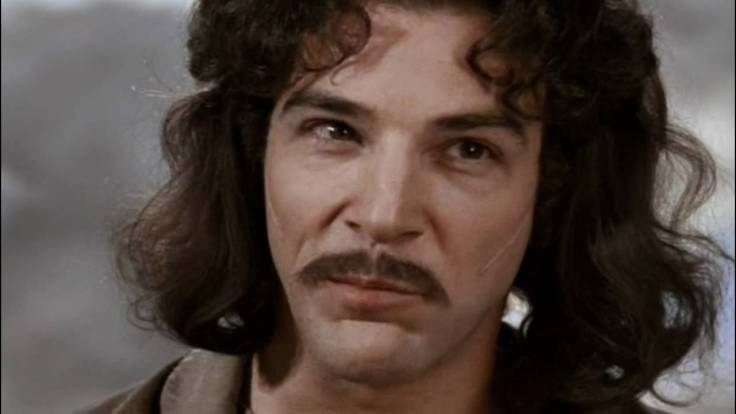
One of my favorite movies is “The Princess Bride.” It’s a quirky movie, based on a novel by William Goldman. It’s part fairy-tale, part satire, part warm and funny love story. In it, one of the characters, Inigo Montoya, is impatiently trying to track down his father’s killer, the vicious Count Rugen. Ironically, to fund his quest for revenge, he takes a job working as a mercenary for Rugen’s mentor, Prince Humperdinck. Part of his job is to kidnap Humperdinck’s fiancee, Princess Buttercup, and kill the mysterious man who is trying to rescue her. When the mysterious masked man climbs the perilous Cliffs of Despair, Inigo waits at the top to challenge him to a duel.

But Inigo is impatient. He calls down to the struggling masked man. “I do not suppose you can hurry things up a bit,” he suggests. He even offers to help the man–“though I do not think you will accept my help, since I am only waiting to kill you..”

Inigo is not cut out to be a vicious mercenary– clearly– because he befriends the masked man before their deadly duel (which doesn’t result in anyone’s death). He even waits–yes, WAITS– for his opponent to get rested and prepared before the duel begins. Inigo may hate to wait, but he has developed the gift of waiting for others when it really counts. (A skill he demonstrates elsewhere in the tale.)

Photo by Ric Rodrigues on Pexels.com

What does any of this have to do with prayer? We are entering a season of Advent. It is a reminder that the whole world waited impatiently for the coming of the Messiah. Centuries of impatience; centuries of expectation, centuries of waiting for a coming Hope.

Photo by Pixabay on Pexels.com

We will spend a few weeks waiting– and it may be made more anxious because of COVID–waiting for presents, or to reunite with family. And we all hate waiting. We are uncomfortable with delayed expectations, and uncertainty in our immediate future. Even with the joyous anticipation that Christmas brings, the period of Advent can be nerve-wracking.

Inigo Montoya spent years anticipating and “waiting” to exact revenge for his father’s death. He hated waiting. But he used that time wisely. In the waiting, he prepared. He studied the art of sword-fighting. He searched far and wide for his quarry. His life revolved around this less-than-holy goal. And, though he “hated” waiting, he waited for decades, never giving up, and finally, achieving his goal. Along the way, he made many mistakes, but he also made friends, and avenged his father’s honor.

Photo by Jeswin Thomas on Pexels.com

This Advent, we “await” the coming of the Christ child. And, as followers of that same Christ, we await His victorious second coming. This is so much better than waiting for revenge. We wait for reconciliation, for restoration, and for renewed life! We have a great hope– the anticipation of Eternal Victory and Joy! How are we preparing? Do we spend our time complaining? Do we give up? Or do we seek diligently, not for a six-fingered man to kill, but for opportunities to spread the Joy and Hope we have found?!

Photo by August de Richelieu on Pexels.com

The Lord Has Taken Away…

20 Then Job arose and tore his robe and shaved his head and fell on the ground and worshiped. 21 And he said, “Naked I came from my mother’s womb, and naked shall I return. The Lord gave, and the Lord has taken away; blessed be the name of the Lord.”

Job 1:20-21 ESV (via biblegateway.com)
Photo by Pixabay on Pexels.com

The book of Job presents us with a startling picture. Job is a godly man; a righteous man; a man of faith and good works. And yet, God allows him to experience loss upon loss– Job loses everything, short of his life and his nagging, bitter wife. His first response is praise and worship! But as the losses sink in; as the pain and agony and grief continue, Job questions God’s justice and wisdom. Job, like us, wants answers that make sense. He is willing to suffer– even greatly–IF he can see the purpose of his suffering, and justify it to himself.

Photo by RODNAE Productions on Pexels.com

We are getting ready to celebrate Thanksgiving tomorrow in the U.S.– a day when we celebrate what God has given us. We normally celebrate family, health, good food, material blessings, etc. We celebrate abundance and comfort; peace and plenty; family and freedom. But his year, our celebration will be quite different. The Lord has taken away…

Photo by Karolina Grabowska on Pexels.com

Some of us have lost jobs, or we’ve lost our good health to COVID or related factors, or we’ve lost loved ones, often without the chance to say our final “goodbyes”. Millions of us have lost the ability to move about freely and conduct “normal” errands and activities. Schools and businesses are closed or operating from a distance. Families and friends have been kept apart. Much that gave us comfort and happiness has been “taken away” this year. And God has allowed it all to unfold. He has not “taken away” this disease or its consequences. He has not “taken away” floods, or fires, or hurricanes. He has not given us answers or explanations.

Photo by Collis on Pexels.com

Job’s initial praise turns to questioning. While he does not “curse God and die,” as his wife suggests, Job spends his time wondering, “Why me?” His friends try to find answers– “you must have done something to deserve this, Job.” Because God does not “punish” the righteous. It isn’t logical; it isn’t fair; it isn’t just.

Photo by Alem Su00e1nchez on Pexels.com

Except that God laid on His own Son– on Himself– the guilt and punishment for all those who are unrighteous. What Job went through–unknown and unseen to him and his friends–was a glimpse into what God Himself would suffer. Christ lost everything–INCLUDING his life– in order to bring salvation to all those who are willing to believe and receive it. Christ was willing to give away His dignity, His power, His friends and family, and His life. And the Lord allowed it all to be taken.

Photo by Andrea Piacquadio on Pexels.com

Many people read the story of Job– his loss and all his questions and complaints–and conclude that God is not fair or just. They find Him to be capricious and unwilling to ease Job’s suffering or answer his questions. They conclude that God is wicked and unworthy of Job’s praise or trust.

But to do so is to ignore the end of the story– God DOES “answer” Job; He gives Job a chance to justify himself and bring his case. And more than that– He gives Job more than he had before. Job ends up with more children to love, renewed health, and even more wealth than he lost. https://www.biblegateway.com/passage/?search=Job+42&version=CSB And the same is true of Jesus Christ. Because of His “loss,” the world has gained the priceless gift of Salvation by Grace. Christ has become the first of millions to taste victory over death and enter into eternal life. https://www.biblegateway.com/passage/?search=1+Corinthians+15%3A20-23&version=NIV

Loss and grief still exist in this world; disease and suffering and hardship still plague us this year. But we have SO much to celebrate at Thanksgiving. When the Lord “takes away,” it is not because He is capricious, or jealous of our wealth or happiness. It is not because He is unkind or uncaring. At just the right time, and forever more, the Lord will Give without end– lavishly, extravagantly, abundantly. Nothing He takes away in this life– even a cherished love one–is beyond all hope of comfort, redemption, or restoration. Our losses cannot compare to the riches of His Grace and Love. This is a great mystery, but as Job discovered, God WILL DO IT!

Photo by mentatdgt on Pexels.com

Blessed be the name of the Lord! Let us Thank and Praise His Holy Name!

My Father’s World

As I look outside, there are bare branches on the trees, and the grass is covered in fallen leaves. The beauty of early autumn has almost gone, and winter is coming. The air is brittle and chilly, but not as cold as it will be in another month.

Photo by Alexander Butenko on Pexels.com

Yet, this is My Father’s world. I trust that winter will come, and pass. Spring will follow, and the trees will once again be covered in leaves and filled with birdsong and new life.

Photo by Lina Kivaka on Pexels.com

As I listen to the news, I hear of COVID deaths and hospitals filled with the sick and suffering. I hear of political unrest, and people spewing hatred, anger, and fear for the future. There is chaos and uncertainty, injustice, and pain. There are hurricanes and fires, floods, and earthquakes.

Photo by Inzmam Khan on Pexels.com

Yet, this is My Father’s world. He sends rain on the just and the unjust; He brings healing and hope, even in the darkest hours. This world does not belong to any one nation, or political party, or natural disaster, or epidemic. Such circumstances have the power to cause destruction and fear, but they do not have power over the Creator of all things. Their reign is temporary and limited. And ” ‘tho the wrong seems oft so strong,” God is eternally sovereign– nothing that happens today can either take God by surprise, or cause Him to quake.

Photo by Pixabay on Pexels.com

I meet with people who are discouraged, angry, bitter, and scared. And I cannot “fix” the world around me with good intentions, or hard work. I cannot give assurance based on my own efforts or my own wisdom. I don’t know the answers, and I don’t have the solutions. I will make mistakes. I will say things that cause confusion, or even offense.

Photo by Ken Ozuna on Pexels.com

But this is not my world; and it isn’t the world of those who try to discourage me, judge me, take advantage of me, or manipulate me. This is My Father’s world. And in this moment, I will choose to look for His hand and listen for His voice.

Photo by Magda Ehlers on Pexels.com

AMEN!

Mustard Seeds..

He said to them, “Because of your little faith. For truly, I say to you, if you have faith like a grain of mustard seed, you will say to this mountain, ‘Move from here to there,’ and it will move, and nothing will be impossible for you.”

Matthew17:20 ESV (via biblehub.com)

Faith is a vital part of life, and especially a life in pursuit of prayer. If I don’t believe that God exists, and that He rewards those who earnestly seek Him (Hebrews 11:6) then my prayers are little more than wishes made on a star or empty dreams.

Photo by sobhan joodi on Pexels.com

During Jesus’ ministry on earth, He lamented often that His disciples had so little faith. And yet, He said that if they had “faith like a grain of mustard seed,” nothing would be impossible. In fact, Jesus used seeds in a lot of His teaching. He talked of seeds scattered on different types of soil; mustard seeds growing into large plants; seeds in good soil yielding exponentially large harvests. There is something about seeds that can teach us about the nature of faith. And, according to Jesus Himself, we need to learn about and practice faith in greater measure!

Photo by Karolina Grabowska on Pexels.com

So what are some of the seed lessons we still need to learn?

  • Seeds start out small. Jesus used a mustard seed, mentioning that it is one of the smallest of all seeds. So often, we want to start out “large” in our faith. We see our doubts as failure, rather than immaturity. We see our slow growth as weakness–and it is! It is that very weakness that God wants to use to show HIS strength. When Jesus “lamented” that the disciples had so little faith, He wasn’t condemning them– instead He was pointing out that faith is a process–that seeds GROW into larger plants.
  • Seeds do not produce plants unless they are planted! I see websites and Christian bookstores selling jewelry featuring a small glass case with a tiny mustard seed inside. It’s a nice reminder of Jesus’ teaching about faith, but carrying around a mustard seed is NOT the same thing as having faith like a mustard seed. Faith that is never planted and rooted in good soil will remain nothing more than a seed– useful as a piece of decoration, perhaps, but dormant and unproductive. If I have faith “like a mustard seed” in money, or power, or in my own wisdom and skills, it is no more effective than if I throw it on the sidewalk, wear it around my neck, or put it in my pocket.
Photo by Torsten Dettlaff on Pexels.com
  • Seeds need soil, light, and water. Faith doesn’t grow in isolation. I need to listen to others, share with others, and, most of all, live in the good soil of God’s word. I need to pray for others– and I need the prayers of others! I need to talk to God daily; but I also need to read His words to me daily!
  • Seeds are designed to produce a harvest– fruit, grain, trees, and new seeds! I get distracted, thinking of how faith impacts MY life and my Christian walk. God wants me to grow stronger in my own, yes. But He wants my faith to be multiplied by being visible. Even a root vegetable sends a shoot or a plant above-ground, so there is evidence of growth underground. In doing go, the original seed will disappear! There are days when I cannot see my “mustard seed.” But that is (I hope) because the seed is becoming a mustard plant– producing evidence of God’s sustaining power and love, and providing “seeds” for others to plant.
Photo by icon0.com on Pexels.com

There are days when my faith may feel small and dead. But I need to remember that the power is not in the “seed” of faith– no matter how small; no matter how large its potential–it is in planting that seed and letting God’s power transform a seed into fruit that will last!

Photo by Pixabay on Pexels.com

More more on this topic, see:https://www.crosswalk.com/faith/bible-study/what-does-jesus-mean-by-faith-as-small-as-a-mustard-seed.html

I Pledge Allegiance..

The U.S. is getting ready for a national general election. We’ll be voting for officials, from local commissioners all the way to the office of President. There are campaign ads and political conventions– banners, slogans, hats, t-shirts, and lots of American Flags. And, while many of the normal rallies and “whistle-stop” campaigns have been cancelled due to Covid-19, the conventions have been marked by people reciting the Pledge of Allegiance to our Flag and all it stands for.

Photo by Element5 Digital on Pexels.com

“I pledge allegiance to the Flag of the United States of America, and to the Republic for which it stands, one Nation under God, indivisible, with liberty and justice for all.”

Much has been made recently about just two words of this pledge–“under God”– which were added more than 65 years ago. Interestingly, between 1892 and 1942, there were at least two versions of the pledge being used. One version stated: “I pledge allegiance to my flag, and the republic for which it stands. I pledge my head and my heart to God and my country. One country, one language and one flag.” Another version (which was altered and officially recognized by Congress in 1942), originally read: “I pledge allegiance to my Flag and the Republic for which it stands, one nation, indivisible, with liberty and justice for all.” https://en.wikipedia.org/wiki/Pledge_of_Allegiance.

Photo by Brett Sayles on Pexels.com

There are Americans who are using the Pledge of Allegiance, the U.S. Flag, even the words, “under God,” to cause division, chaos, and ill-will to flourish in the weeks leading up to the election. Some are trying to redefine what it means to be an American; what the Flag stands for. People on “both sides” are trying to rewrite our history–denying that it contains both good and bad; triumph and tragedy, promises kept and promises broken.

Photo by Pixabay on Pexels.com

As an American, I seek to live and act in such a way as to honor this nation and those who live here. Part of pledging allegiance to the flag (for me at least) is a promise to uphold those principles upon which this nation was founded: the conviction that all people are created equal (not just here, but around the world); that they are endowed by God with the right to live, to think and act according to the free will God gave them, and to pursue those dreams and activities that will bring hope, goodness, prosperity, and general “happiness” to themselves and to others. That does not mean that all people will use their free will wisely, or that they will all achieve equal outcomes and equal success regardless of their skills, resources, or efforts, however. Governments are instituted to protect the opportunities and rights of all, not to ensure that everyone gets the same life, the same will, and the same definition of “happiness.”

Photo by Sharefaith on Pexels.com

I also pledge to defend and protect and preserve this land–figuratively and literally. It is my duty to care for the trees and rivers, lakes and meadows, wildlife and even the air. It is my duty to encourage my neighbors, to vote on local ordinances, and cast my ballot for local, state, and federal offices. It is also my duty to speak out, to write, to act in the cause of justice. Finally, it is my duty to obey the laws that govern this country–not because I voted for them, or because they are convenient, or because I see an immediate benefit from them, but because they are justly enacted laws. If I don’t like a law, I pledge to see if it can be amended or repealed. I may use civil means to protest injustice– sit-ins, peaceful marches, legal suits, petitions, etc.. But my allegiance to this nation and its people means that I pledge not to put others in danger, or to deprive them of their lives or livelihoods in my pursuit of change. I will, however, defend myself and others from anyone who would try to take away these sacred rights.

I love my country. I love the world God created and the unique and diverse people He designed to fill it. But ultimately, my highest allegiance is not to America. It isn’t to my neighbors, or my family, or to the planet. My heart, mind, soul, and spirit belong to God. My allegiance to Him comes before any other. If my nation turns away from God; if it denounces all that is sacred, and demands that I do the same, I can no longer pledge my allegiance to its flag. If I am asked to destroy innocent lives, or deny God’s existence, or forced to speak lies in the name of patriotism, I must follow my first allegiance.

Photo by cottonbro on Pexels.com

In times like these, it can be very easy to get “wrapped up” in the Flag, and the patriotic speeches, and the political rhetoric. Candidates paint themselves in the best colors, and attempt to make their opponents look evil, uncaring, and incompetent. But I have not pledged my allegiance to any candidate. I will choose to vote for the individuals I believe are best suited to bring about changes or preserve policies that honor both God and our founding principles. And I will pray for all elected leaders, whether I voted for them or not. But my hope, and trust, and allegiance, is to God above all, And all else, even the United States of America, is “Under God.”

Blog at WordPress.com.

Up ↑