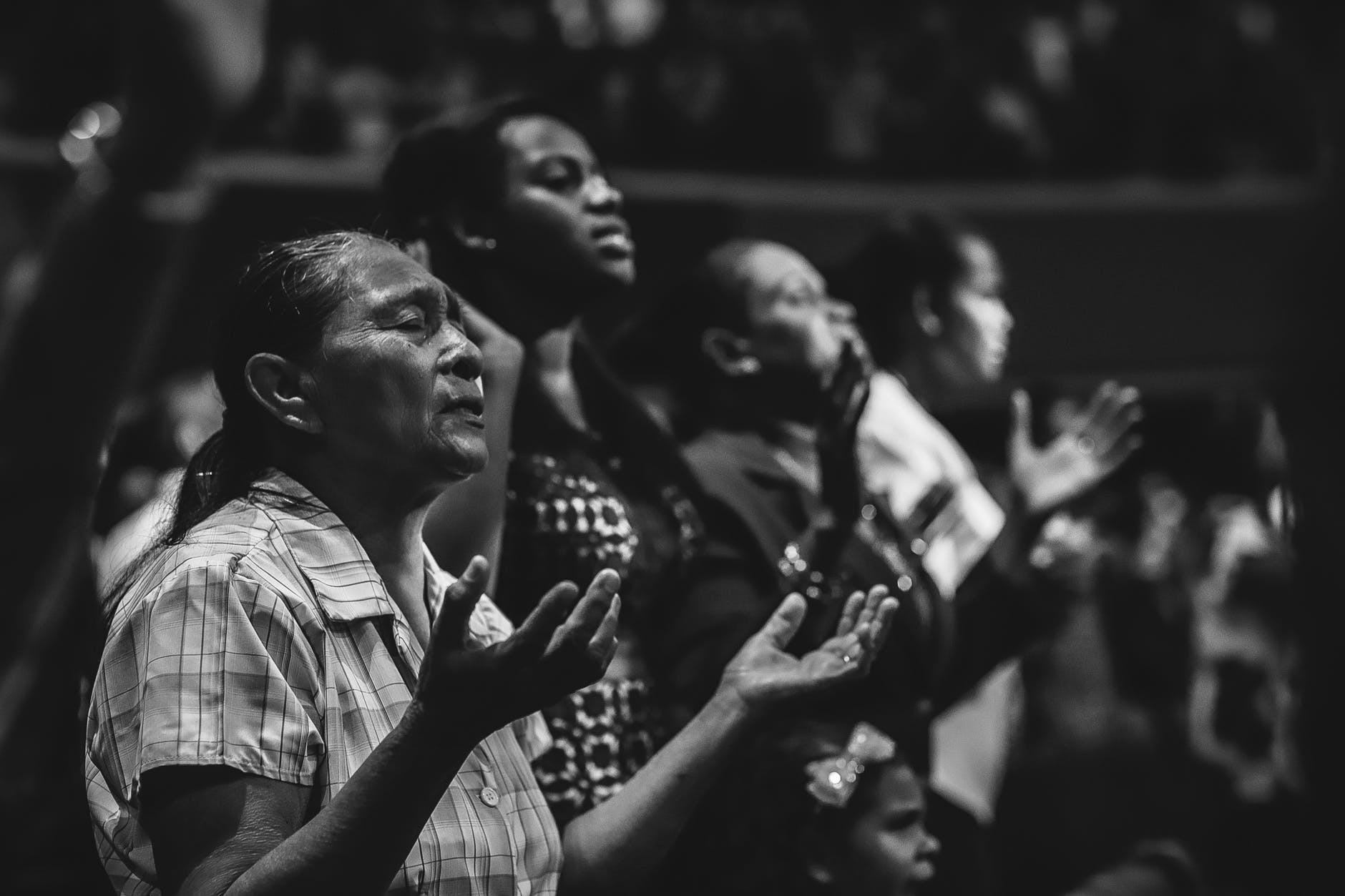
“A Mighty Fortress is our God; a bulwark, never failing..” These words are known and sung (in various translations and languages) around the world. But Martin Luther wrote this song over four hundred years ago. What relevance can these words have in an age of nuclear bombs and globalized economies and climate change? What do they mean to us today?
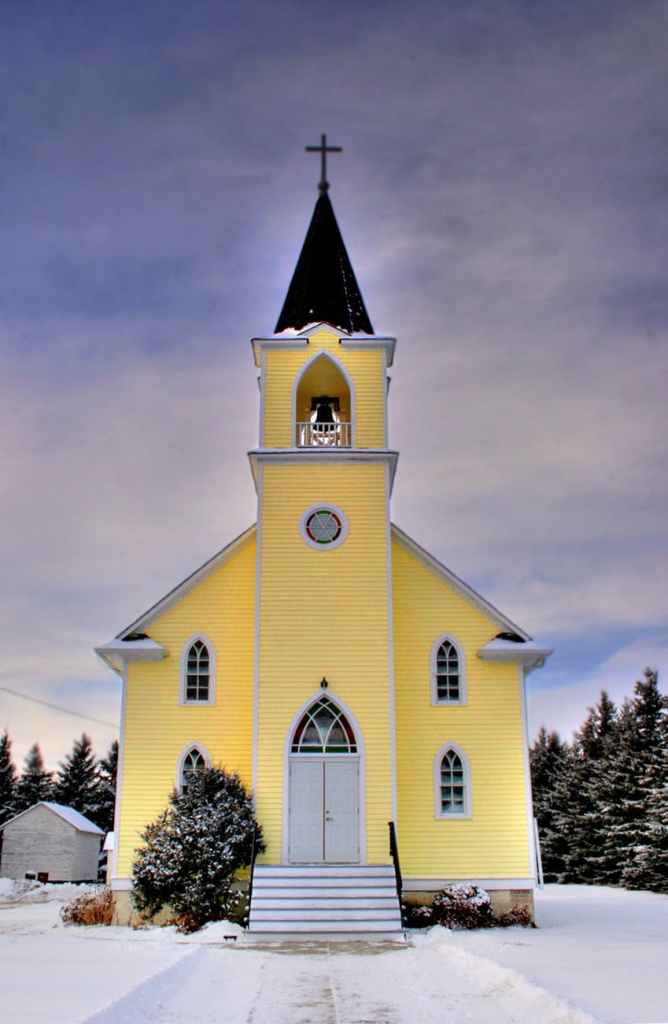
I don’t live in a nation of many castles. There are two stone “mansions” in the small town where I live. They seem tiny compared to mansions in other parts of the U.S. and the world. And we have a small armory; home to a National Guard outpost. But a mansion (or even an armory) is not the same as a castle or a fortress. Mansions are built to be impressive; armories are built to be immediately prepared for disasters or attacks; castles are built to be impregnable and permanent. Our God is not just a fortress; one outpost among many mighty gods– He is The Mighty One–uniquely sovereign, eternally victorious, and perfectly protecting all within His power.
And this protection doesn’t depend on my might or fighting ability, or my weapons or strategies. It depends on my being inside the fortress, safe and sound. The war rages all around, but it cannot defeat me, so long as I am in the fortress.
There are mighty castles, forts, towers, citadels, and walls around the world– all built by people and victims of the ravages of war, time, weather, fire, bad management, etc. Over the years, types of fortresses have given way to new weapons designed to bring them down. Wooden forts are susceptible to fire; stone castles can be brought down by catapults, battering rams, and bombs. Underground bunkers can even be ruined by earthquakes or nuclear assault. And yet, we are still amazed at the power and legacy they represent. Many have stood for hundreds or even thousands of years. But God is eternal; His might and protection will never fail. No weapon forged or imagined can triumph over His power and sovereignty.
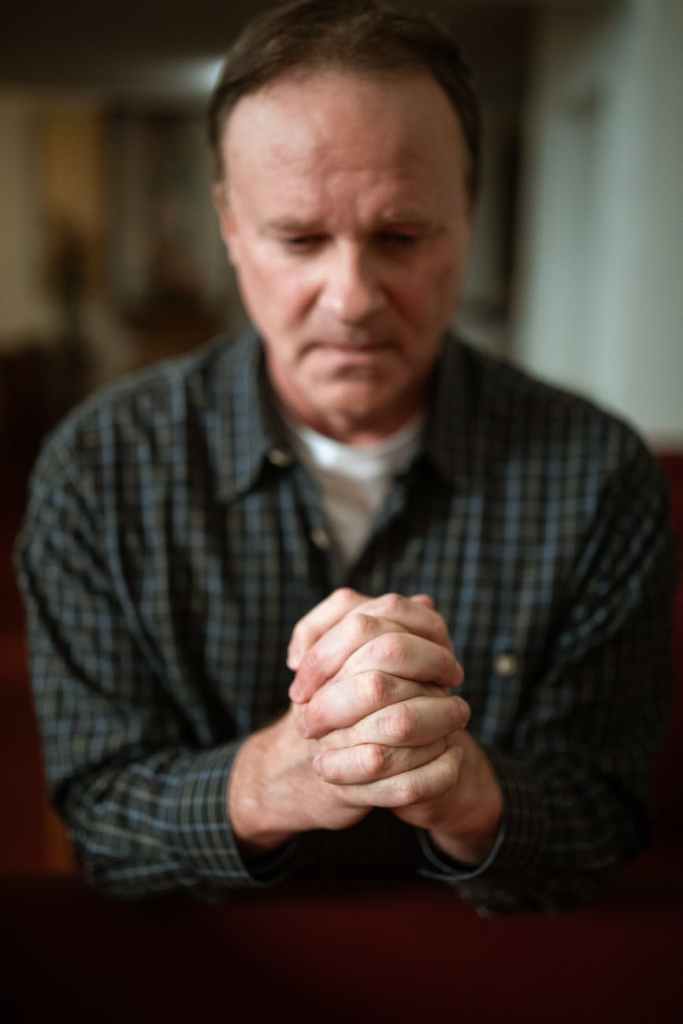
Prayer brings us into the safe and powerful presence of God Almighty. There is nothing of our worries, our guilt, our doubts, or the accusations of the enemy that can shake the foundations of God’s fortress. And the cornerstone is none other than Jesus Christ– unshakable, victorious, and eternally one with the Father and the Spirit.
That doesn’t mean that we won’t ever find ourselves in battle, trusting in God’s armor against the arrows of the enemy. But the war is already won– His Kingdom is forever! And ever!
“Praise Him, Praise Him, Jesus our Blessed Redeemer…” “Here I am to Worship. Here I am to bow down. Here I am to say that You’re my God…”
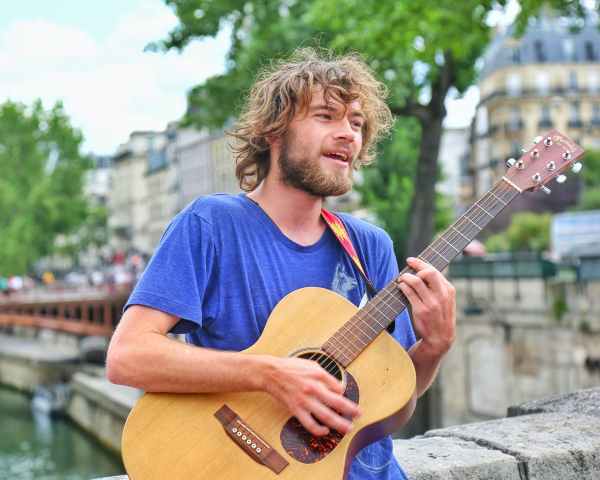
Have you prayed a hymn lately? Or maybe meditated on a single phrase from a recent worship chorus at Church? Music is often a language unto itself, and can be a great tool for prayer. Recently, I spoke of praying scripture. This is very similar, and in fact, many of the Psalms are both prayer AND scripture. There is something about music that can transcend words alone to communicate our thoughts, emotions, and even memory as we pray.
Just like praying scripture, there is also a temptation to use music to substitute for prayer, and we should seek to avoid that. But in general, music can be a great inspiration and addition to our pursuit of prayer. I find that hymns reach back through my memory to pull out great truths of faith that I can pray back to God, while newer worship choruses often capture emotions, including both praise and confession. At times, I have even used secular music, including love songs and the blues, to tap into emotions that I want to share with the One who loves me eternally and cheers me when no other can.
King David is the quintessential “singer/prayer” in the Bible, and his Psalms are wonderful to use. Many of them are still being put to new music and can be sung, as well as read or recited. But there are thousands of hymns, songs, choruses, cantatas, operatic masses, chants, raps, and more that can be presented as prayer. How?
Use whatever method fits you best– use the radio, an MP3, streaming service, CD, etc., to play a song, or sing it a capella; if you are a musician, you can play the song on your instrument and sing along or think of the lyrics as you play.
Go through one verse of the song over and over– or one line or phrase that has a particular meaning. Meditate on it before the one who inspired it. “A Mighty Fortress is our God…A Mighty Fortress are you, God… A bulwark never failing… NEVER failing…”
Do a “mash up” as you are singing one song another one may come to mind. Create a medley of personal worship. Some songs might even run into each other!
Don’t be afraid to add dance or movement. Clap along. Lift your hands. Sway.
If you are having trouble getting started, find a book of hymns or songs, or tune the radio to a station that plays good music.
Make up a song from your heart! Reach back into your memory for a children’s chorus (if you grew up in church). Change the lyrics to “redeem” a classic rock song (it sounds strange, but it is not impossible for most tunes!)
Make a joyful noise!– Don’t worry if you are not a great singer. God listens to your heart!
How firm a foundation, ye saints of the Lord, Is laid for your faith in His excellent word! What more can He say than to you He hath said— To you who for refuge to Jesus have fled?
“Fear not, I am with thee, oh, be not dismayed, For I am thy God, and will still give thee aid; I’ll strengthen thee, help thee, and cause thee to stand, Upheld by My gracious, omnipotent hand.
“When through the deep waters I call thee to go, The rivers of sorrow shall not overflow; For I will be with thee thy trouble to bless, And sanctify to thee thy deepest distress.
“When through fiery trials thy pathway shall lie, My grace, all-sufficient, shall be thy supply; The flame shall not harm thee; I only design Thy dross to consume and thy gold to refine.
“The soul that on Jesus doth lean for repose, I will not, I will not, desert to his foes; That soul, though all hell should endeavor to shake, I’ll never, no never, no never forsake.”
“How can you believe in a God who lets bad things happen?” We live in perilous times; dangerous times. Fires have swept through Canada and Hawaii (and elsewhere); massive heat waves have caused drought and death in many parts of the world; hurricanes have hit California and and the Caribbean, and another threatens Florida even as I write this. Wars rage in Ukraine and elsewhere; crime seems rampant in major cities on every continent. Diseases– even those we considered eradicated or “tamed” are making a comeback. Waste and pollution devastate our oceans, rivers, woodlands, and even the air we breathe. Often, it seems as if God is absent or powerless–sitting on the sidelines and letting bad things happen. Those of us who claim faith in an omnipotent, loving, and gracious God are mocked and challenged. How can we believe in the face of such evil, disaster, and injustice? How can we offer the empty comfort of prayers and assurances?
It can be very difficult to face such challenges– there are no easy answers and “mic-drop” moments for us in this world. But that doesn’t mean that there are no answers or that our faith is “blind” or without merit.
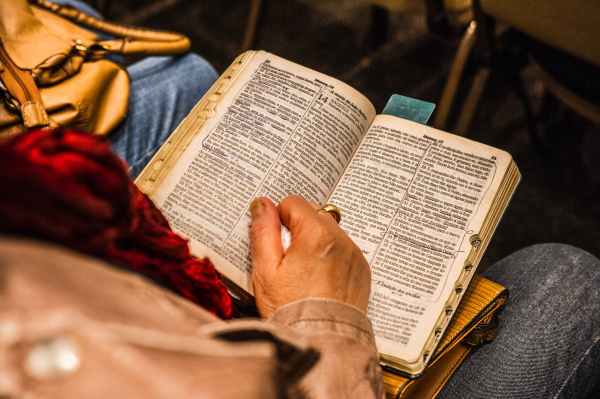
The Bible is filled with examples of people who followed God in extraordinary circumstances, often in the face of great evil and with little logical expectation of God’s blessing or help. Abraham traded a wealthy, safe, and honorable life in his native land to live as a stranger and a nomad among foreigners. Even after God seemed to fulfill the promise of a son, he tested Abraham’s faith, asking him to sacrifice his only son Read the complete story here... Many people see this story as a horrific example of injustice and cruelty– and if Abraham had been required to go through with the sacrifice, it might seem even more unjust and cruel. However, there are two points to consider:
God clearly planned to rescue Isaac–there was a ram in the thicket all ready and waiting. Abraham may not have known God’s purpose in asking such a thing, but he had faith that “God will provide for himself the lamb…” God may have been “testing” Abraham, but he already knew the outcome. The “test” was not for God–perhaps not even for Abraham–the test was for Isaac and all who would follow and experience the blessings that came through this amazing act of faith.
The story of Abraham, like so many others, is given to illustrate difficult truths– sometimes about God’s character, or OUR character, or the nature and consequences of Sin. These stories also often form patterns of allegory, foreshadowing, or illustrations of key principles and events. Abraham was told to sacrifice his only and very beloved son– a horrible prospect for any father. But God provided a substitute sacrifice– a lamb– allowing Isaac to live and become the father of many nations. God’s plan for the salvation of the world was built on the same pattern. God sent his only and very beloved “son” to be the substitutionary sacrifice for the sins of all mankind– a horrible prospect for a loving Heavenly Father. And this time, the son willingly gave His life to become the fulfillment of the promise acted out in Abraham’s story.
And, of course, there are hundreds of other stories– throughout the Bible, and throughout history– that demonstrate the blessings that come through radical and even tiny acts of faith in God.
Hebrews, chapter 11 lists several examples. And a key verse in the chapter points out:
13 These all died in faith, not having received the promises, but having seen them afar off, and were persuaded of them, and embraced them, and confessed that they were strangers and pilgrims on the earth.
Hebrews 11:13 (KJV)
These great examples of faith died without seeing the end results..but the end results are there for US to see! Faith in humanity– faith in Science– faith in ourselves– these are doomed to end in disappointment. Not because we don’t believe enough; not because these things are “bad”– but because faith needs an unshakeable, immovable, solid, and eternal foundation. Our faith in Christ is not a blind faith, an empty faith, or a desperate faith– it is a Faith that is firmly rooted in history, in observable facts, and in revealed truth. And even in the fiercest storms, the worst of disasters, and the overwhelming flood of hatred and evil in the world, our faith stands firm and sure– not because it is “our faith”, but because it is built on Him who is before and above all things–yesterday, today, and forevermore.
Our very firm foundation may seem invisible to the world, but that doesn’t change its reality or its power. We pray to the ONE who calms storms, who tears down and builds up kingdoms, and who holds all of eternity, including our future, in His hands. Fires, floods, trials, and terrors cannot overwhelm those who put their trust in Jesus. We may still get wet, singed, singled out, persecuted, and knocked down, but we will never be abandoned or defeated, or forsaken. Even if it seems like God is holding a knife to our neck– remember how the story ends! There is a lamb who has taken our place. God will not put an end to our hope. Even death cannot separate us from His Love and His Purpose for eternity. It’s all there– in His Excellent Word!
I was reminded today of an old hymn; one that I heard as a child and did not understand at all. Have you ever heard a new song, and completely mis-heard the lyrics? As a young child, I often heard hymns sung that were familiar to the adults but “new” to me. This was one of them. I paid little attention to the first verse, but the chorus!?! I was convinced the congregation was singing, “Wienies (the word my grandparents sometimes used for hot dogs)! Wienies! Wienies on the everlasting arms…” It sounded like a righteous chorus of hot dog vendors at a baseball game. What could hot dogs possibly have to do with living for Christ? I giggled and snorted, and my grandmother, who was standing next to me, quietly leaned over and asked what I found so funny. When I explained it to her, she too began to giggle a little, and we shared a (quieter) giggle and smiles throughout the rest of the hymn. (Sacrilegious, I know, but it seemed very funny to a five-year-old.) Later, my grandmother lovingly explained the hymn–turning a “silly” song into a wonderful testament of God’s tender, loving care that touches me to this day.
There is another old hymn, known as “The Solid Rock” or “On Christ the Solid Rock I Stand. ” One of the lines of the hymn states, “I dare not trust the sweetest frame, but wholly lean on Jesus’ Name.” Jesus IS the solid rock, the everlasting arms, and the “frame” on which we can both stand and rest secure. He is also our anchor in any storm (see “My Anchor Holds” https://wordpress.com/post/pursuingprayer.blog/5828)
There is a curious story in the Bible about the Apostle Paul and a young man named Eutychus. https://www.gotquestions.org/Eutychus-in-the-Bible.html. The story is found in Acts 20:7-12 https://biblia.com/bible/esv/acts/20/7-12, and involves a young man listening to the Apostle Paul. As Paul talks on into the night, the young man, sitting in the third story window, falls asleep, falls out of the window, and plummets to his death. Luke, who authored the the gospel which bears his name and the book of Acts, was a doctor, and an eyewitness of this event. He clearly states that Eutychus died from his fall. But Paul runs outside and immediately brings Eutychus back to life, returning inside to finish his talk and eat with the crowd– who are amazed and relieved to find their friend alive and well. The Bible doesn’t say what they had to eat– certainly NOT hot dogs– nor does Luke spend time giving details of the aftermath of such a miracle. Paul simply picks up the limp form in his arms, lets everyone know that the young man is alive, and they all return upstairs and pick up where they left off: “breaking bread” and talking!
Luke’s story doesn’t say whether or not Eutychus was alone in the third story window, or leaning against a wide window frame or perched precariously before he fell into “a deep sleep.” I have always imagined him perched comfortably leaning against the side of a wide and open window frame, one leg drawn up and the other dangling as he listened to Paul speak. As the night wore on, he may have slouched a bit, or even turned to lean his whole back against the frame, pulling both legs up onto the wide ledge. I imagine there were others sitting close by. There may even have been others leaning against the window frames! But as they were engrossed in Paul’s message, and whatever questions were being asked and answered, Eutychus drifted into sleep and lost his balance. My mental picture may be completely wrong, but I don’t think of him hugging a narrow space and sitting tense or afraid and clinging to the window frame before sleep claimed him. I imagine that he felt safe and secure in his position, never expecting to fall to his death; never expecting to become famous for falling asleep during one of Paul’s sermons!
I don’t recommend to anyone that they trust themselves to a window frame, a third story balcony, a too-comfortable seat at the theater, or to hot dogs eaten in bleacher seats at the baseball game. God doesn’t call us to get comfortable! Even if we are listening, and trying to follow Jesus, we may still fall– literally, like Eutychus, or figuratively. We may misunderstand, or get confused or weary and lose our focus. We may put ourselves at risk by leaning on the wrong frame. I believe that the story of Eutychus has several lessons for us.
First, we should be on guard. Eutychus wasn’t doing anything especially risky or unusual at the time of his death. It would have been common for people to sit where they could see and hear a speaker– not unlike sitting in bleachers at a baseball game!–and most houses were constructed so that windows were open. We often do things that seem natural and even good, but we, too, can “fall asleep” in complacency, routine, tradition, and other things that can lead to a “fall.”
Second, we should be slow to condemn. Again, Eutychus wasn’t doing anything that “deserved” death. There was nothing overtly sinful about his situation, nor does the Biblical account suggest any reason to judge Eutychus: this was an accident that might have happened to anyone. There is something cold and un-Christlike that sometimes arises in modern Christian culture. Many of us are quick to see any misfortune as “proof” of something lacking in others. Lacking in Faith; lacking in commitment or obedience; lacking in knowledge; lacking in God’s favor. Such an attitude shows a lack of compassion and a lack of humility! Eutychus is one of US! His death would have been a tragedy– his resurrection was a source of joy. We don’t know WHY Eutychus fell– but we know that God intended for him to be saved. And isn’t that where our focus should always be?
Lastly, the story of Eutychus reminds us of Paul’s marvelous words to the Roman believers:
35 Who shall separate us from the love of Christ? Shall tribulation, or distress, or persecution, or famine, or nakedness, or danger, or sword? 36 As it is written, “For your sake we are being killed all the day long; we are regarded as sheep to be slaughtered.” 37 No, in all these things we are more than conquerors through him who loved us. 38 For I am sure that neither death nor life, nor angels nor rulers, nor things present nor things to come, nor powers, 39 nor height nor depth, nor anything else in all creation, will be able to separate us from the love of God in Christ Jesus our Lord.
Romans 8:35-39 ESV
God could have kept Eutychus from falling from that third story window, but I believe He meant for that story to come down through the ages. It is not just a miracle, and a testament to the power of God and given to the Apostle Paul. It is a great reminder that even when we are trying to listen and follow God, we can still end up trusting in the wrong things and “falling asleep”. But no matter how far we fall, or how broken or “dead” we may seem to be, God sees us, cares for us, and wants to give us new life! Nothing– not even death– can separate us from God’s loving care or His ability to give us restoration and renewed life! We can rest “safe and secure from all alarms” when we remain in (or return to) the reassuring, everlasting arms of our Savior.
Some days, I feel like Eutychus– lying broken and useless three stories below where I began. Other times, I feel like a confused hot dog vendor, calling out to God for “Wienies”, when I really need Wisdom and Grace. Still other times, I feel like one of the crowd– wondering why Eutychus fell, instead of wondering at God’s miraculous ways. But God is faithful to bring me back time after time, wrapping me in his amazing “Everlasting Arms”:
I’ve been reading through the book of Job this past week. Job’s story challenges us– especially if we trust in our circumstances to confirm God’s love for us. Job was a seeming pawn in a situation beyond his control or understanding. He lost nearly everything– his cattle, flocks, all his children, and even his health. The only thing he did not lose was his nagging wife, and his faithful, but very unhelpful friends.
At first, Job’s friends seem very supportive. They stay with him, saying nothing, just offering their presence for a week! But then, they start spouting the kind of useless aphorisms and accusations that make Job’s bad situation infinitely worse. They “remind” him that good people don’t suffer–only the wicked experience pain and loss. This knowledge, they assure him, comes from their own experience, and the wisdom of the past. When Job protests that he is innocent, that his suffering is NOT because of his own wickedness, they become increasingly angry and irrational– making up accusations and heaping blame on Job for daring to “question” God.
But Job’s friends, even though they speak with confidence and sound very much like many people we hear today, are wrong. Job’s experience is real–suffering comes to the innocent, while the wicked often “get away with” their sin, living lives of ease and comfort at the expense of others. We see it in the world around us– innocent people are the targets of mass shootings, or war, or famine, or disease. Meanwhile, criminals get “off” on a technicality; decorated war “heroes” destroy entire cities; powerful tyrants bend laws and oppress the helpless.
Where is God in all this? WHO is God in all this? There are many different responses, but I want to look at three that are all present in the book of Job:
Mrs. Job: “Curse God and Die.” Some people look at evil and suffering, and they decide that God must be a fraud. Either He cannot or He will not destroy evil, or He would have done so before now. They declare with great defiance that either God does not even exist, or He must be malicious, capricious, petty, and weak.
Job’s friends: “Everyone knows that God rewards good and punishes evil.” Doesn’t the Bible say this? Isn’t this what we learned in Sunday School? Surprisingly, most of us would say, “Yes, that is exactly what I learned as a child, and it is exactly what the Bible says!” But look closer. The Bible says that “All have sinned and fall short of the glory of God.” (Romans 3:23) It goes on to say that “The Just shall live by faith” (Habakkuk 2:4 and Romans 1:17)–not their good works. God DOES reward goodness, and he DOES punish evil– but He also redeems the wicked and causes the good to go through times of trial and suffering. God is more than a two-dimensional dispenser of rewards and punishments. God’s ways are not our ways (Isaiah 55:8), and there are times that He chooses not to explain His ways “in the moment” of our suffering, or in the moments when wickedness seems to be “winning.” Unfortunately, when bad times come; when we experience pain, or watch someone else going through inexplicable suffering, if our view of God is incomplete or two-dimensional, we are left repeating the little we KNOW (or think we know) about God, and defending, not God’s character, but OUR knowledge. This is especially true if we have not been tested ourselves.
Job: “Though He slay me, yet will I trust in Him.” (Job 13:15) “I know that my redeemer lives, and that in the end he will stand on the earth. And after my skin has been destroyed, yet in my flesh I will see God;I myself will see him with my own eyes—I, and not another. How my heart yearns within me!” Job 19:25-27 Even when Job struggled with his pain and suffering–even as he defended his character to his accusing friends, Job KNEW that God was GOD. He knew all that his friends were saying ABOUT God, but he also knew God–even when he didn’t understand His actions. And after all the arguments had been made and all the “easy” answers had been spilled out, GOD did not slay Job; he did not leave him in his agony. Neither did He provide Job with detailed answers or explanations. But He redeemed the situation– Job ended up with more blessings than before. More importantly, Job ended up with a greater understanding of who God is.
When all is not well with our health, or our finances, or our safety, or our relationships, it can still be “well with (our) Soul.” God does not change, but He does ask us to trust Him, even when His ways are not our ways. God will reward good and punish evil– but it may not be in our lifetime or as we imagine. God may stay silent during times of great stress and pain, but He will not leave us! In every situation, we can trust Him.
A few years ago, singer and songwriter Matt Redman came out with a worship tune that has become a favorite for many. It’s called “10,000 Reasons.” But, while the song is recent, the idea and sentiment is not. In fact, it reminds me of at least two older hymns I remember from my childhood.
There is nothing particularly “magical” or spiritually significant about the number 10,000–it appears several times throughout the Bible, and usually signifies a large number or amount–it’s a number big enough to be impressive; it is difficult for most of us to imagine having 10,000 cattle on a farm, or 10,000 trees in an orchard, or 10,000 children to feed and clothe and house! It would be difficult to remember 10,000 names or 10,000 different passwords, or phone numbers– we can write them down or store them, but to remember them all on our own? Nearly impossible. And try to sit down and write out the titles of 10,000 books or movies of songs–or 10,000 people you have met in your lifetime. It might take days (unless you cheat and use a database), and even then, you probably would end up listing items that wouldn’t “count”– people you had not actually met or titles that were unfamiliar to you.
We live in a world of huge numbers– millions and billions and trillions– numbers so huge that they don’t really seem “real.” The Bible doesn’t use a lot of these numbers; instead, God uses pictures and metaphors, like “stars in the sky” or “grains of sand on the seashore:” objects beyond counting and beyond comprehension. Yet there are large numbers in the Bible– specific numbers of warriors, priests, and people in the nation of Israel at various times in their history; large amounts of money owed or gifts given; large distances…and God is a God of them all. God knows the exact number of hairs on each head (sometimes many thousands, and sometimes just a handful!); He knows the number of grains of sand on each beach on every seashore and lake shore, and the amount of water in each lake and pond and sea. He knows the name and size and position of every star and every planet and all their satellites.
If we were to list all the many reasons that God is great, and good; kind and loving; powerful and majestic and holy– if we found one new reason every day, it would take more than 27 years to find 10,000 reasons! And we would only be getting started!
But here’s the catch: we will never find 10,000 reasons if we never begin to search for them. God will still be the “fairest of 10,000;” He will still be majestic and faithful; sovereign and glorious– but we can miss it all, and waste our life on 10,000 trivialities, or 10,000 complaints, or 100,000 lesser things.
God doesn’t publish a list of 10,000 (or 100,000 or a million) reasons to worship Him– but He gives us the opportunity to discover new reasons each and every day. And He invites us– all of us– to come and discover “10,000 charms” in the loving embrace of His Son! We are never more than a prayer away from another reason to sing His praises!
It’s another new year, and many of us are resolved to pray– pray more, pray better, pray longer, etc. That’s a good resolution, but without a plan, it can fizzle out as the year goes on. It’s not that we stop praying altogether; it’s just that we end up praying the same old way or about the same old things, and our pursuit of prayer becomes another routine.
This year, I want to present several “How-to’s” of prayer– at least one every month– to keep things fresh. Today is ACTS. ACTS is an acronym that stands for Adoration, Confession, Thanksgiving, and Supplication. I learned this method way back in college, and our Wednesday morning prayer team at church still uses it each week.
Start by coming to God in worship and ADORATION: List some of the Names of God–Father, Creator, El Shaddai, LORD, King of Kings, etc., OR List the attributes of God–Merciful, Mighty, Humble, Everlasting… Pray one of the Psalms… Sing or recite the words of a worship hymn or praise chorus… Think of creative ways to spend some time expressing God’s Worth and Majesty. This may be difficult the first time; it may feel awkward at other times. Don’t be discouraged. God inhabits the praise of His People, whenever, wherever, and however we make the effort!
Second, spend some time in CONFESSION: Ask God to examine your heart to see if there is any wickedness that has gone unacknowledged..(Psalm 139:23-24) Confess specific sins as you think of them… Confess your need for God’s forgiveness and His Guidance.. Resolve to take action– either action to seek forgiveness from those you have wronged, or action to change course in the future, or action to let go of past resentment.. Sometimes, you may need to stop and take the action NOW before you continue in prayer. Sometimes, you may need to let go of your own lingering guilt and shame over past actions for which you have already confessed. Remember, God removes our Sin as far as the East is from the West, (Psalm 103:12) and He will remember it no more– so we must trust in His forgiveness and move forward; not stay stuck in the past!
Next, THANK God–for His provision, and for His Mercy: Thank God for His daily provision of life, health, strength, and unfailing Love! Thank Him for the people in your life– those who encourage as well as those who challenge you! Thank God for His Mercies that are new every morning (Lamentations 2:22-23) Thank Him for His forgiveness and cleansing (1 John 1:9) Thank Him for His eternal presence (Hebrews 13:5; Deuteronomy 31:6) Don’t confuse this with step one–ADORATION is about Who God IS. Thanksgiving is about What God has Done for YOU. It is easy to recite a verse about what God has done for others– take time to make it personal, especially in light of whatever you have just confessed!
Last, bring your petitions and requests in SUPPLICATION to the Father: Bring your heart-cry for lost friends and relatives… Ask for God to work in situations that have you frustrated.. Plead for Justice and Righteousness to be done in the world around you.. Pray for leaders, elected officials, and church leaders..(1 Timothy 2:1-4) Ask for the strength to resist temptation, stand firm, and run the race that is set before you.. (1 Corinthians 10:13, 1 Corinthians 16:13, 1 Corinthians 9:24, more..) It isn’t that this is the least important step, but it works better when it follows the other three steps. NOW you are in the right frame of mind to present requests. They can be seen in their proper perspective. Instead of a giant wish list of things you hope God might do for you, you can present requests that you KNOW God already knows about, cares about, and for which He already has a plan! You can come in confidence, knowing that you have peace with God because He has forgiven your sins and restored your relationship as His son or daughter– nothing stands in the way! And you have just rehearsed (and said Thank You!) for all the ways God has been faithfully working in your life!
Does this sound like a lot of time and energy? It is. But it doesn’t have to be for every prayer you pray. This is for special time set aside for deep prayer. OR, you can break it up throughout the day: Wake up with praise and adoration (it will make an immediate difference!), spend some time at the end of the work day confessing (when it’s still fresh!), and end the day with thanksgiving and supplication (what a way to find peaceful rest– give all your cares over to God who has done so much for you (1 Peter 5:7)!
However you choose to do it– consider trying the ACTS method this week. Do it during your quiet time, or try it with a group. Develop a habit of coming to prayer in this order.
Keep watching this space for more ideas to stimulate your prayer life. Let’s pursue prayer together in 2023!
During this season of the year, we hear a lot of “Christmas” music. Much of it is secular music–Santa Claus and magical snowmen, gifts and parties, and the Holiday “blues.” But much of it is related to the real reason for Christmas: the birth of Our Lord. And the number of songs, hymns, cantatas and symphonies related to Christ’s birth is staggering! Popular secular singers record “their” versions of favorite hymns; choirs and orchestras present new songs and ancient melodies. Many of the songs fall into two distinct categories, however. There are quiet lullabies–peaceful and meditative, focused on the infant in the manger; and there are Hallelujahs– joyful and majestic, focused on the wonder of God coming to earth.
I don’t know if there were actually lullabies OR Hallelujahs on that first Christmas. The Bible mentions the visit of the angels, but they were “praising God and SAYING, ‘Glory to God in the Highest..'” We often assume that their praise included singing, but the Bible isn’t specific. But it is interesting to look at the contrast of the quietness of the manger and the Glory of the angel hosts, and hear the contrast in the hymns we raise at this time of year.
Lullabies, and quiet songs, like “Silent Night,” or “Away in a Manger” call our minds and hearts to the humility of the Christ child. Babies are cute and engaging. And they are not “silent.” But they do not command authority and majesty. Babies cry out for help. They are needy in a way that God is NOT. And yet…God came in the form of a helpless baby. The God who created the galaxies needed someone to feed and change Him; to carry Him from place to place and rock Him to sleep. “O, Little Town of Bethlehem” reminds us that He came to a cattle shed in a small town, rather than to a palace in the seat of power.
Hallelujahs, like “Joy to the World” and “Hark, the Herald Angels Sing,” remind us that this was no ordinary child. And yet…the angels did not appear IN the manger or even in the little Town of Bethlehem. The Angels were compelled to sing their praises, not to the learned priests, or the courts of power, but to dumb-founded shepherds on a cold hillside. What an explosive visitation! Their praises (whether shouted or sung) shattered the quiet and the darkness. Like a sudden fireworks display, the Glory of God’s servants split the night.
God enters our hearts– sometimes quietly, like the cooing of an infant; sometimes dramatically, like a chorus of angels. God is at work– sometimes in humble moments and ordinary gestures; sometimes in glorious flashes of insight and inexplicable miracles. And this season, our prayers will rise up– sometimes like the humble cries of a newborn baby; sometimes like the soaring songs of angel hosts– prayers of need; prayers of thanksgiving; prayers of awe-struck worship; prayers of simple confession of our own unworthiness, and of God’s sufficiency and everlasting Love. Peace and Glory; lullabies and Hallelujahs; simplicity and majesty– all wrapped up on a manger of hay on one Holy Night.
I’ve mentioned this before, but many of my childhood memories of church revolve around old hymns, sung with more gusto than musicality– joyful noises, just not always faithful to the notes. But they were faithful to the Word, and the Worship of Christ. I will always be grateful for that heritage.
In the more informal services on Sunday nights or Wednesday nights before we settled in for prayer, the worship leader would often ask for members of the congregation to call out the number of any random hymn. We would (attempt) to sing it, often a capella, just the first verse, or maybe the first and last. It gave people a chance to sing an old favorite, or a hymn we hadn’t sung in awhile. Sometimes, a brave soul would find a “new” hymn– one no one (or almost no one) had ever heard. Occasionally, the evening church hour would revolve solely around this worship model– a hymn-sing service. It’s a dying practice, and one that deserves to be preserved. My church has done it a few times over the past years, a local chapel does it once a month, and Bible Study Fellowship in our area begins with hymn-sing every week. It’s a great way to learn old hymns, long-forgotten choruses, and treasured truths of doctrine set to music.
But I digress. As a child, I liked this spontaneous activity, except for one thing. I knew that if Mr. Teeter opened the hymnal and started to clear his throat, that he would suggest the same hymn he always picked. It never seemed to vary– ever. Mr. Teeter was one of the older men of the church. He was in his seventies, short, with wisps of white hair, wise and twinkling eyes, and a big, red nose like a strawberry, which he often blew–loudly–into his pristine white handkerchief. He always came to church in a suit, complete with a hat, which had its own special spot on the hat rack in the entryway. I could not imagine him any other way. And every time he had the opportunity, he would choose to have us all sing, “I Love to Tell the Story.”
I wasn’t much impressed with the song. It seemed old-fashioned. It was simple. It had no soaring musical passages– sometimes, it even sounded whiny to my young ears. I dreaded the thought that we would sing it (yet) again. I would try to get my hand up and choose another hymn, any other hymn, before Mr. Teeter could clear his throat. I did not understand why he never seemed to want to sing other hymns– I knew he liked “Standing on the Promises,” “Blessed Assurance,” even “Leaning on the Everlasting Arms!” But, while he could be stalled for one or two other numbers, he would eventually call out the dreaded number, and we would sing at least one verse. It’s not that I hated the song, and I certainly had respect for Mr. Teeter, but I just couldn’t figure out why THIS song? Why EVERY time?
Just a couple of years before his death, Mr. Teeter gave his salvation story in front of the church. Many of us had never known about his wild early years; his drinking or his rebellion against his family and the church. Many of us assumed he had always lived a quiet, rather pious life. He radiated the peace and wisdom of a man who walked daily with his God. And then, he told of his fascination with this old hymn. He liked the very simplicity of it–his life wasn’t based on some grand theological argument, or a complicated list of heroic actions he had achieved to win his salvation. His life–his born-again, wonderful, eternal life– was because someone had told him an old, old story, he had believed it, and that had made all the difference. That simple old story has been the same since the beginning– God made the world, mankind sinned and fell short of God’s glory, God sent His Son to pay the price of that fall, and Jesus’ death and resurrection allows anyone who believes to be adopted as a son or daughter of God. And though Mr. Teeter knew the old story inside and out, and lived it, he never tired of it. He was “hungering and thirsting” to hear it again!
Whenever I hear this song now (or suggest it), I think of Mr. Teeter singing with saints and angels, his quiet voice full of emotion, his eyes filling with tears of gratitude and worship, as he gets his request–“and when, in scenes of glory, I sing the new, new song, ’twill be the old, old story that I have loved so long. I love to tell the story; ’twill be my theme in glory to tell the old, old story of Jesus and His love!”
I have been revisiting old hymns lately as I write about my pursuit of prayer. This is partly because I believe that prayer is a form of worship, and is closely tied to other forms of worship– meditation, singing, etc.. Sometimes, it can be helpful to pray songs or to sing prayers– look at the entire book of Psalms!
Our church has recently been involved in revival services– two weeks of time set aside to evaluate our daily walk with Christ. We need periods of revival and refreshment, conviction and confession, repentance and reflection. Without them, we will wander; without them we will wither and grow cold, and lose sight of our first love.
One of the first nights, we explored the idea of surrender. We say that we trust God; that Jesus is Lord, that we are followers of Christ…but do we really demonstrate those truths by the way we live? Have we really surrendered our will, our lives, our futures to God? We claim that He is sovereign over big things– all of creation, world affairs, and such–but is He Lord over the little things? Do I trust Him with my reputation when someone misrepresents me to others? Do I trust Him with my diet when I am tempted to overeat? Do I trust Him with my time when someone asks me to help them on my day off?
One of the keys to this hymn (and to prayer) is in the first verse– “..in His presence daily live.” There are times when I feel the need to surrender; times when I feel wholly surrendered and devoted. But there will be other days when the feeling just isn’t there. My surrender needs to happen daily– in the “good” times and in the “difficult” times. Sometimes, I just need to pray that the Holy Spirit will guide and empower me to recognize and surrender those areas that I have tried to “take back” from Him.
And then, I need to be intentional about letting go–one piece at a time, if necessary–each day saying, “Yes” to God instead of “Yes” to those things that pull me away. It’s not always easy to say, “I surrender all.” It’s even harder to actually follow through. We want to hang on to things that are comfortable, familiar, even “good.” We want to hang on to things that seem to promise safety, success, or fulfillment– even when God offers more.
I’m not writing this because I have mastered the discipline of surrender– I need to learn to let go, to trust God more, to risk what I cannot keep to gain what I cannot lose (paraphrasing from Jim Elliot–https://www.brainyquote.com/quotes/jim_elliot_189244. That is my prayer today, for myself, and for others.