My Body, My Choice?

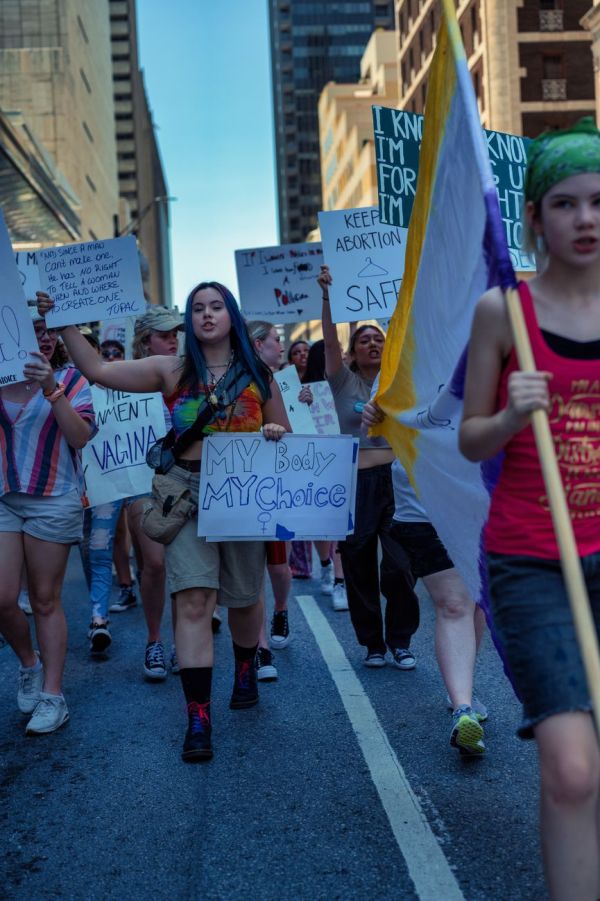
The news is constantly filled with stories about women (and men and children) who want to have complete control over their bodies– they want to choose their gender, dramatically change their appearance, and determine when (or if) they will have children, commit to relationships, or accept the responsibility that comes with having a body.

In many ways, “my body, my choice” seems reasonable and even fair. No one wants other people to have control over their life and death, or their health and welfare, with no say and no choice. But often, this phrase is twisted into a fantasy that every person can do whatever s/he wants with their body, without accepting the consequences or responsibilities that come with their behavior or their natural abilities.

I once saw an online argument in which a young and earnest writer boldly claimed that “bodily autonomy is a ‘thing.'” They went on to argue that ‘bodily autonomy’ gave them the right to government-funded abortion on demand, access to puberty blockers, the right to identify as whatever gender (or species) they felt like, all without restriction or ‘judgment’ by anyone else. What? “Bodily Autonomy” is a phrase, suggesting that a person has the right to control or “own” their own body, and not answerable to any other authority, law, or limitation. But being a ‘thing’ doesn’t make ‘bodily autonomy’ a reality. I can make many choices about my body– but there are many realities over which I have no “choice”– no control or authority or resources to accomplish.

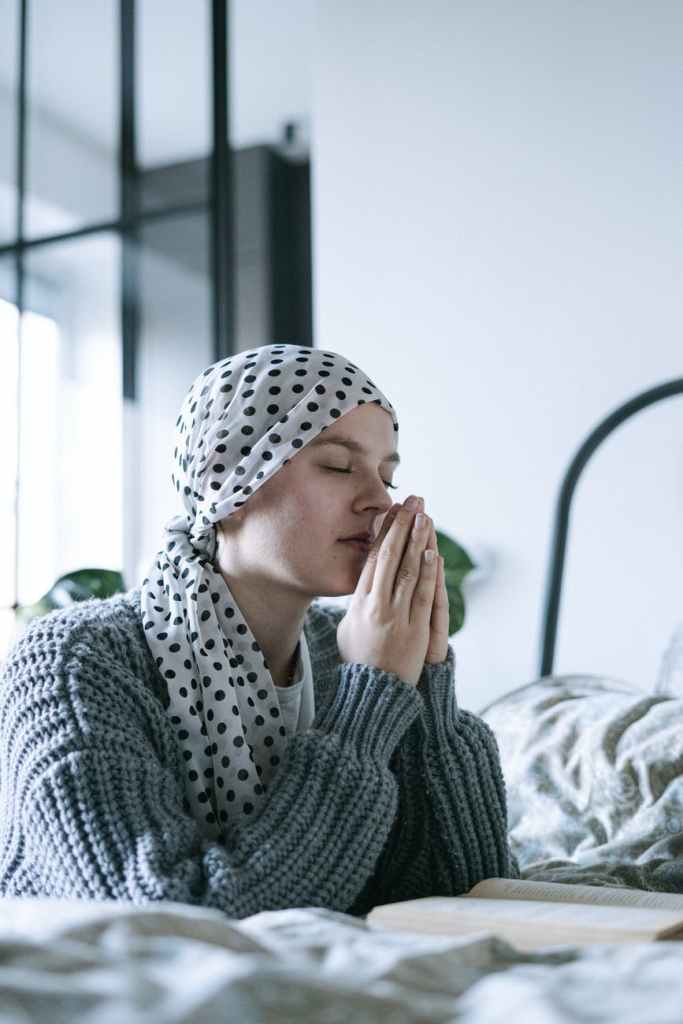
I’m short. I cannot suddenly become tall. I am a woman. No matter how many hormones I pump into my body, no matter how many surgeries I could have to make me look or sound like a man, or “function” somewhat like a man, I will never have a man’s body or a man’s DNA. I am barren. The idea that pregnancy was always a “choice” for me denies the very real emotional struggle I went through in accepting my body’s limitations. I recently lost a sister-in-law to cancer. What a mockery to chant “my body, my choice!’ to someone who is dying of cancer or who was born with cystic fibrosis or is battling ALS or multiple sclerosis. And sometimes, other people violate our bodies– we may struggle, but we cannot prevent someone else from abusing us physically or sexually. So, although bodily autonomy may be a “thing” or an ideal, it is not a guarantee. And if the choices we make in our body end up abusing, hurting, or killing another living being, that is not autonomy– it’s unjust and predatory.
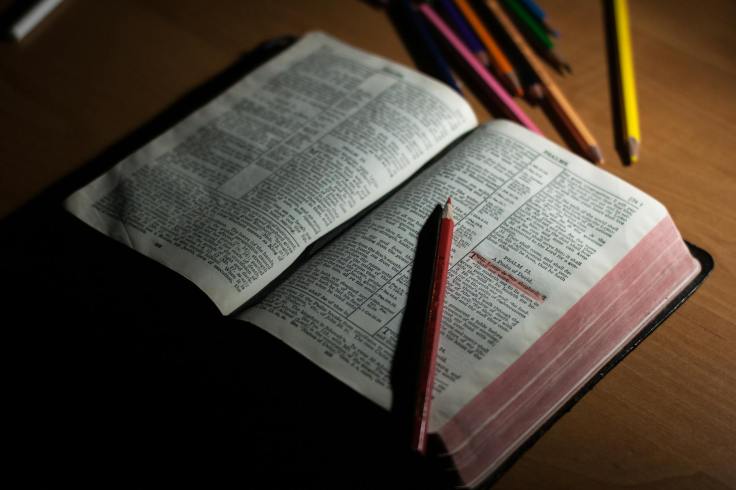
But what does the Bible say? Does God give us choices about our bodies?

There is nothing specific in the Bible about gender dysphoria, or plastic surgery. There is no mention of third trimester abortion or modern feminism, or queer lifestyles. But there are many teachings about our bodies AND our choices. And surprisingly, the Bible does NOT say that we have no control or “rights” over our own bodies. Instead, the Bible tells us the following:

  • God is the creator of all life. Life is a gift from God, not a random accident. And no one– NO ONE– can spontaneously come into being. So, the idea of “bodily autonomy” cannot be true of anyone who has ever depended on someone else to be born or to grow up or to become pregnant. God’s word makes it clear that “autonomy” is NOT the goal of creation. God’s purpose for us is to connect– with Him and with each other. He created men and women different, yet complementary. He created families to live and work together– the old teaching the young, as the young care for the old–sharing and building a legacy. Sin corrupts God’s design– it seeks to subvert it and destroy it, replacing it with a twisted independence that leads to isolation and loneliness, distrust, anger, pride and hatred.
  • God doesn’t make mistakes. He doesn’t delight in our struggles, our limitations, or our diseases. But Sin corrupts– right down into our DNA. God does not wipe out the consequences of Sin in our world– not yet. Someday, He will bring an end to all the causes of suffering, confusion, and grief. But in the meantime, He promises to be present WITH us THROUGH the struggle. We may not understand fully how our bodies work or why they do (or don’t do) what we might like. We may wonder why we look the way we do, or why our nose is “too small” or our body is shaped like a pear, when we want it to be an hourglass, or our hair in impossible to keep tamed, or we face a family history of oversized ears. We may struggle with diabetes, asthma, epilepsy, hypothyroidism, and even gender dysphoria. But God isn’t sitting in the wings, laughing at our circumstances. He promises to be both “present” and “sufficient,” even in the midst of our pain and uncertainty.
  • God calls us to take care of the bodies He gave us to the best of our ability. That means it is sinful to have indiscriminate sex with unknown partners who may be carrying venereal diseases– and also to overeat or starve ourselves with fad diets, or to pierce ourselves with unclean needles, whether getting a tattoo from an unlicensed and unclean parlor, or shooting up with heroin. Sexual and gender issues grab headlines and make for great political fodder, but we can make the mistake of thinking that such sins are “bigger” than lying or gossip or greed or pride, or that they are unforgiveable– they are NOT! God can remove the stain of abortion, rebellion, gossip, addiction, lying, drunkenness, body shaming, and judgmentalism.
  • God HAS given us the power of choice– we can choose our behaviors, our lifestyle, our morals, and our relationships. He has also given us governments to create laws and punishments for those who break them. But a law doesn’t actually prevent you from doing an act– it merely outlines the negative consequences for breaking that law. Laws can’t prevent people from committing murder, rape, theft, arson, etc., but laws provide a framework for responsibility and punishment to discourage certain behaviors and affirm the rights of even the most vulnerable among us. In other words, a law can’t prevent you from having an abortion or a sex change– but it can limit your ability to do so by forcing you to face negative consequences– jail time, higher fees, fewer practitioners willing to make such decisions “easy” and socially acceptable. God has given us His law in the Bible to show us how far we have fallen away from His standards and His character. On our own, we will never fulfill the entire law. But that is the heart of the Gospel– Jesus came to free us from both the power of Sin and the condemnation that comes from yielding to it. The Holy Spirit can give us the power to make Godly choices, knowing that Christ’s atoning sacrifice has paid the price for our sinful choices of the past.
  • Our choices come with consequences. We are ‘free’ to make bad choices, but we (and others!) are not free of the consequences of our choices. “My body, my choice” is an anthem of entitlement– of rights without responsibilities. Many of our choices carry great risks. Abortion is not a risk-free solution to a “problem.” Just as pregnancy presents risks, so does the medical procedure to end one. Clinics can minimize the risks, but there is no such thing as a guaranteed “safe escape” from an unplanned pregnancy. Sex change operations are even riskier, with complications that can be profound, chronic, and extremely painful. Risky health and sex habits don’t become any less risky just because they are legal or socially accepted. Experimenting with drugs can end in tragic death or lifelong damage to the heart or brain, as well as the horrors of addiction. Eating or drinking in excess will still lead to health problems, even if there is a new miracle fad drug that masks the early symptoms.
  • Sin has consequences that are often NOT of our making or choosing. It is not fair, it is not just, and it is not your fault. Punishing an innocent person will not take away that fact. It only spreads the consequences of Sin to someone else– someone who will be another innocent victim– YOUR victim. Cutting off family and friends because they don’t “affirm” your new lifestyle will not change them. It will hurt them. It will hurt you. It will not make your lifestyle any more acceptable to them. Aborting a baby will not change the circumstances of the pregnancy or make the abuse or memories of a rape disappear. Someday, God will restore justice, reward hope, and remove all grief and pain for those who learn to trust Him.

In the end, God has given you “your” body, and He has given you “your” choice. But He also warns you of the consequences of making selfish, dangerous choices that can result in death, heartbreak, regrets, and long-term damage for short-term benefits. He also promises the blessings of recognizing that “your” soul was made to have a relationship with a Holy and Perfect God, and that your “choice” to follow Him will bring eternal and glorious benefits, including a new and sinless “body” in Heaven. I pray that I will make good choices to take care of “my body” today. And I pray that eyes and minds will be opened to the wonder of God’s gift of life, and His plan for every “body” around me.
Revolutionary Thoughts

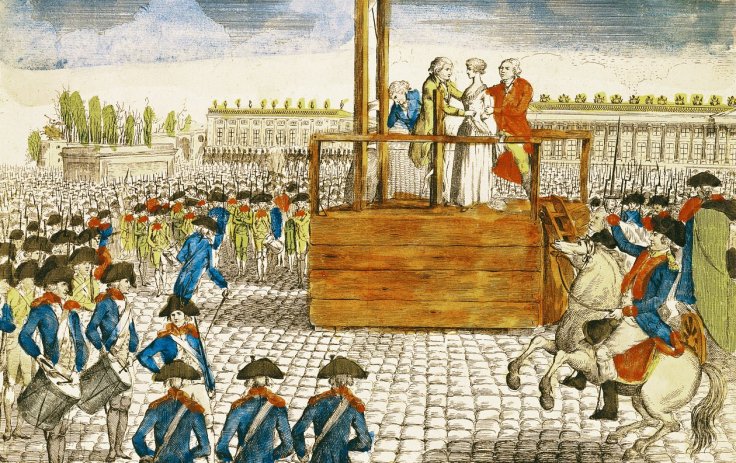
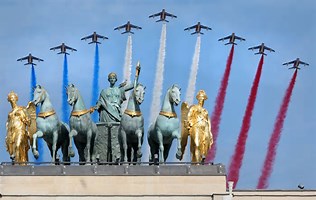
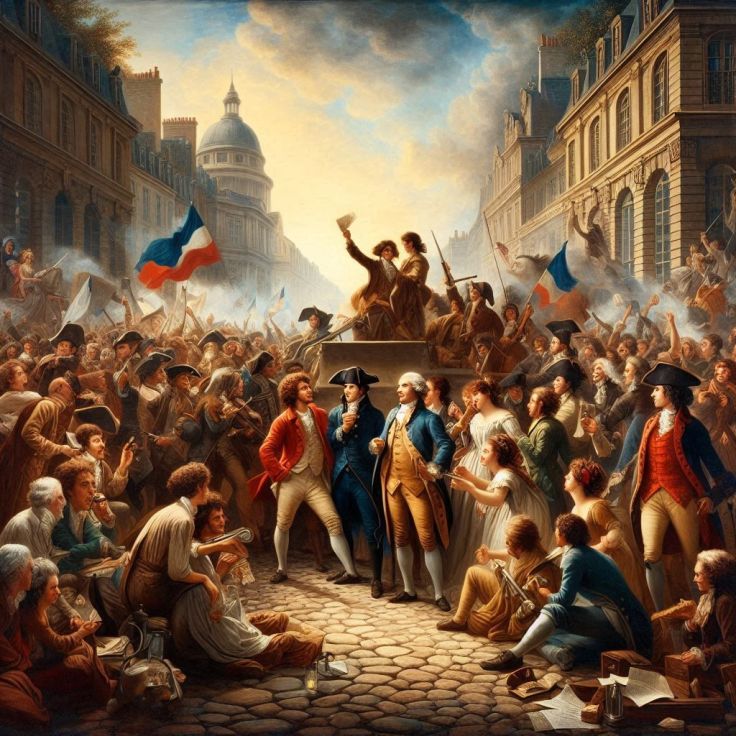
Yesterday was Bastille Day. We don’t celebrate Bastille Day in America, but we should reflect on it. On July 14, 1789, many citizens of Paris stormed the ancient fortress of the Bastille, seizing its munitions and freeing its prisoners. It marked the beginning of the French Revolution, and the end of the ruling monarchy there.

The French Revolution was an indirect result of the success of the American Revolution, which raged just a decade before. The French admired the Americans, and dreamed of throwing off the repressive monarchy and ruling class and creating a new republic with Liberty, Equality, and Brotherhood for all.

But the French Revolution became known over time, not primarily because of its success, but because of its excess. The French Revolution is remembered for its murder of the royal family, the extensive use of the guillotine to execute aristocrats and opponents, for the rise of cruel and vindictive leadership, and a general bloodbath in around the capital city of Paris. While the French still celebrate Bastille Day, they tend to downplay the immediate aftermath of their “freedom”.

The American Revolution certainly wasn’t without bloodshed and power struggles, and by 1789, the fledgling nation was still ironing out its Constitution and dealing with rebellious outbreaks. But the French Revolution led to the rise of dictators, including Napoleon, keeping France in a state of almost perpetual warfare and internal power struggles for the next 50 years. So what made the difference?

Well, I’m not an acknowledged expert, though I have studied this period of history, but I think there are at least three differences that are worth noting:

  • The American Colonies were not trying to overthrow the entire British Government or demolish the monarchy. They were thousands of miles away from the seat of government that controlled them, and they were breaking away from an existing nation, not pulling it down from the inside. There were many aspects of the British Parliamentary government that the Americans respected and even copied. And they already had colonial governments and structures in place, though their power had been limited under British Rule. They were not trying to destroy Britain– just kick them out of the Americas! The French, however, were ready to destroy over a thousand years of French Monarchy in their own backyard. The French aristocracy wasn’t oppressing them from thousands of miles away– in fact the French Colonials in Canada and the West Indies often had more freedom than their citizen counterparts living just outside of Paris.
  • Second, the American Revolution was about justice, not revenge. The Declaration of Independence outlined specific injustices that had been either ignored or perpetuated by the British Government and the King– often in direct contradiction to their own founding principles. The Revolution, though bloody, was considered a necessary evil to correct those injustices, and the resulting Constitution was created to address ongoing injustices in the newly formed United States. In France, the arrests and trials of the nobility were not enough to satisfy the thirst for revenge against those who had been oppressed. Those who rose to power succumbed to its lure and desired more authority and wealth. What started out as a noble dream turned into a chaotic nightmare as innocent idealists were punished, not for crimes they had committed, but for threatening the new balance of power.
  • Finally (and controversially, perhaps), I would argue that the American Revolution was bathed in Prayer in ways the French Revolution was not. I don’t mean to suggest either that American patriots were all Christians or were all prayer warriors, nor that the French were evil or morally bankrupt. But if one reads the documents of the founders of The United States and those of the leaders of the French Revolution, there is a striking difference in the way they reference God and Prayer. France– and Europe in general– had experience the Age of Enlightenment. And while those ideas (both good and bad) spanned the Atlantic, the Americans had maintained a culture of reverence for God and dependence on Prayer in their daily lives that had diminished in “the old world.”

Revolutions can change (or build) a nation. Rebellions can sometimes lead to change for the better. But without prayer, insight, humility, and dependence on God, cries for “Liberty” can unleash chaos and revenge, before any real change can come about.

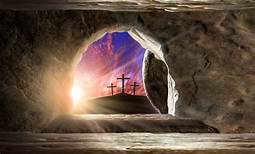
Lastly, I want to remember another “storming of the fortress” that happened long before either the American or the French Revolution– nearly 2000 years ago, Christ stormed the gates of Hell, after being crucified. This was not a Revolution in the same sense as the wars of the 18th century, but a revolution in the way we related to the tyranny of Sin. Christ single-handedly broke the curse of Sin and Death, so that we can live in freedom! We have Liberty to walk with God, washed clean of the guilt and weight of Sin, and free of the sting of Death. We can live in the Freedom to do what is right and good, noble and true.

In our daily lives, we must also be careful in our freedom. We must not become complacent about evil and injustice, nor so comfortable with our liberty that we forget the price Jesus paid for it. We must take a stand against injustice and evil, but we must also call out in prayer and remember that justice is not the same as revenge or power. It belongs, ultimately, in the hands of God. May the French celebrate their republic and the freedom it has brought them. May they also give thanks to God for preserving it for 247 years, in spite of challenges and threats. May those of us who live in freedom continue to depend on God for wisdom in using it to make the world a better place for all.

Prayer and Pyrotechnics

There have been a LOT of fireworks in our area over the past week, and we’re gearing up for even more this weekend. Tomorrow is July 4– Independence Day in America. This year marks 250 years since the signing of the Declaration of Independence from Britain by the American colonists.

What does this have to do with Pursuing Prayer?

There will be a lot of talk about Freedom tomorrow. Freedom from tyranny. Freedom from colonialism. Freedom to pursue happiness, etc. It IS called Independence Day, after all, so there will be much talk about the freedom to make one’s own way in the world; freedom from restrictive rules and old traditions. Freedom to dream new dreams and forge new paths.

Freedom is precious. It SHOULD be celebrated. But it can also be a dangerous ideal, when divorced from God’s Truth. The very first sin resulted from the wish for “freedom.” Free from God’s rule; free to choose disobedience, to protest God’s decisions and challenge His sovereign wisdom.

The Founding Fathers of the United States wanted freedom from the tyranny of distant and deaf kings and Parliament. They protested unfair taxation, soldiers who could come into their homes with no warrant, and laws passed thousands of miles away with no representation or recourse. They wanted freedom from corrupt laws and the indifferent men who made and enforced them. They believed so strongly in a form of government that would be described four score and seven years later as “of the people, by the people, and for the people” that they risked their lives and their legacies to bring it about.

Modern historians have championed the idea that our Founding Fathers were Deists– that they were not Christians, not devoted to the worship of a Judeo-Christian, sovereign and all-powerful GOD, but rationalists who paid scant lip-service to the prevailing monotheistic beliefs of the time. They argue that God was an afterthought for most of these men– that the bulk of their thought and planning revolved around Greek and Roman government and civics.

That line of thought dismisses the strongest language of the Declaration of Independence. “We hold these truths to be self-evident, that all men are created equal, that they are endowed by their Creator with certain unalienable rights…”

WE– not just a few of the members, but all who signed this document agreed with this language, so much so that “for the support of this Declaration, with a firm reliance on the protection of divine Providence, we mutually pledge to each other our Lives, our Fortunes and our sacred Honor.” (emphasis added)

HOLD– the founders weren’t just expressing a noble possibility about truth, justice, and rights. They were staking their lives on the absolute belief that God was THE creator and giver of all rights and freedoms.

THESE TRUTHS–not a plurality of good ideas or noble aspirations, but the very specific and timeless truths about our origins and heritage as human beings created by a loving, wise, and just God.

TO BE SELF-EVIDENT– even those founding fathers who were less devoted to the Bible teachings of the Church, recognized, as the Apostle Paul wrote: “…what may be known about God is plain to them, because God has made it plain to them. For since the creation of the world God’s invisible qualities—his eternal power and divine nature—have been clearly seen, being understood from what has been made, so that people are without excuse” (Romans 1:19-20 NIV). In fact, it was the self-evident nature of these truths that compelled later generations to root out the hypocrisy of slavery in a land founded on the truth that “all men are created equal” and that they have been given the “unalienable” right to liberty!

The Founding Fathers, in holding to these self-evident Truths, challenged, not God, but all existing human forms of government. Their Declaration ignited discussions, arguments, revolutions, and counter-movements around the world. Two hundred and fifty years later, we are still arguing about the meaning behind the Declaration of Independence, as well as the Constitution and Bill of Rights that arose from it. We celebrate our INDEPENDENCE with pyrotechnic shows and sparklers, parades, and concerts. But the fireworks, noise, and bursts of light also echo the explosions, bombs, gunfire, and deadly force that have been risked and braved ever since the Declaration was issued. We also celebrate a legacy of prayer and DEPENDENCE on God. America is not great because its people were better than the people of other nations. It did not become great by its military might or its wealth. It started out as a ragged smattering of colonies, and it came with many flaws and “baggage” from its colonial days. But throughout our history, we have held to “unalienable” truths– eternal truths– that echo God’s Word and God’s wisdom.

Many people today argue for freedom, not from tyrannical government, but freedom from God, from the Bible, from tradition, and from even common sense. The same people who claim oppression from their government are free to criticize it, march in protest, and move freely around and away from their “oppressors.” Protesters demand the freedom to be wealthy, well-fed, comfortable, and supported, without the responsibility to defend their neighbors, share their wealth (only ask that others do all the sharing!), or work for the common good. Others take for granted their right to own property and goods, to pursue an education (including free public schools and libraries), to have and express opinions and beliefs that do not conform to those of elected or appointed officials, to meet in public or private without fear of losing their lives or livelihoods, and the right to worship (or not) without being told how or who or when to do so.

This year, we can expect protests and expressions of disrespect for our government and its leaders. We can also expect that many Americans will claim to celebrate “freedom” even as they are slaves to sin and rebellion.

True Freedom calls for worship. The Founding Fathers laid a foundation for governmental and social freedoms, but they could not grant us–even in the amazing documents they created– eternal Freedom from sin and death. Only the Creator and Giver of All good gifts can do that.

Tomorrow, as we celebrate two hundred fifty years of American Freedom, let’s not forget nearly 2000 years of Christian Freedom! That’s worth more than just a great fireworks’ show. That’s worth a lifetime of worship and joy!

Declaration of Dependence

Today, America marks the 249th anniversary of the signing of the Declaration of Independence. In it, colonial leaders listed several reasons why they no longer held allegiance to the British Crown. Many of their reasons involved abuses by the King or by Parliament in relating to their colonial citizens. Taxation without representation; passing unjust laws; requiring people to quarter (feed and house) soldiers who often harmed and cheated them; refusing to hold the soldiers accountable for their offenses– even murder; refusing to allow the colonials to trade with other nations, etc. But there was something more.

We hold these truths to be self-evident, that all men are created equal, that they are endowed by their Creator with certain unalienable Rights, that among these are Life, Liberty and the pursuit of Happiness.–That to secure these rights, Governments are instituted among Men, deriving their just powers from the consent of the governed, –That whenever any Form of Government becomes destructive of these ends, it is the Right of the People to alter or to abolish it, and to institute new Government, laying its foundation on such principles and organizing its powers in such form, as to them shall seem most likely to effect their Safety and Happiness.

In drafting and ratifying these words, the founders of the United States did something unique. They did not just establish an independent government; they established a model for both independence and dependence IN government. Government is not independent of certain inalienable rights, nor of the Creator of those rights. Governments are not the highest authority in the land. Governments are instituted and derive their power, not by their own actions and decisions, but from the consent of the governed. Governments DEPEND on their ability and willingness to serve the people.

Of course, there are wicked and improper governments, and Britain’s rule in 1776 was not the worst example of tyranny or despotism the world had ever seen. The United States has not always lived up to the ideals and principles of the Declaration of Independence. Less than a century after the Declaration was adopted, the United States was engulfed in a war that tested its ideals. The nation was divided by the issue of slavery. Nearly half of the states still practiced slavery, meaning that hundreds of thousands of people were being treated far worse than the “rebellious” colonists of previous generations. Our nation as a whole was not delivering on its promised declaration that “all men are created equal” or that they were endowed by their creator with rights to “life, liberty and the pursuit of happiness”.

But when our nation has remembered its Dependence– our need for God and our need to care for the safety and opportunity for those under our jurisdiction–remarkable things have happened. The union was “saved.” Voting rights were not just extended but enshrined in our Constitution. Americans joined the fight in Europe and around the world on more than one occasion to secure rights for people who were being oppressed, tortured, and even exterminated. The “Promise of America” draws people from diverse nations and cultures and stands as a model for the rest of the world.

Sadly, today, many here in the United States want Independence from America. Our culture has devalued life, exchanged liberty for conformity, and traded the pursuit of happiness for indulgence and selfishness. We want to be independent of responsibility– to our families, to our neighbors, to our nation, and to God. We do not want a government that protects those rights that are endowed; instead, we want a government to give us assumed “rights” that are really permissions to defy God’s laws. We want to be free to redefine morality, escape the consequences of our own poor choices, and feel virtuous without pursuing virtue.

What will happen to our country if this trend continues? On the eve of celebrating our 250th year, we may be on the brink of falling apart. Issues like abortion, immigration, health care mandates, and transgenderism threaten to divide our country, just as slavery did over 150 years ago. Americans are divided on political, economic, religious, and cultural issues. We can’t seem to agree on what we mean by “rights, ” “freedom,” or “pursuit of happiness.” We can’t even seem to define what a “woman” is or decide how many genders to fight for. Everyone wants to speak out, but no one seems willing to listen– except to find another point of disagreement. We are no longer “united” states– we are warring factions in a series of culture wars.

But what happens when American Christians declare our Dependence on God and on His Word? Many around us have declared their independence from God’s laws–even to the point of denying His existence. Many people live in a self-imposed despotism; they are enthralled by a false “freedom” from morality, reverence, and even common sense. But Christians– wherever they live– are called to submit to the authority of Christ above all. We depend on Him– not on our customs, not on our history, not even on the words of the Declaration of Independence. And we are to lean on God, not on our own understanding or our superior morality or our ability to shout louder than the next person! Our Freedom comes through Christ alone!

True “freedom” comes from dependence, not independence. When we depend on Christ’s finished work on the Cross, we are free from the weight of Sin and the power of Death. When we depend on God’s wisdom, we find understanding. When we depend on God’s guidance and discipline, we gain freedom from guilt and shame. When we depend on God’s power to channel our emotions and energy, we find purpose and joy.

Today, I declare my utter dependence on God– on the Salvation He provided through Jesus Christ, and on the power of His Holy Spirit to lead me through this life. I am glad to be an American, but my ultimate citizenship is in Heaven. The “promise of America” is a good thing: the promise of Heaven is glorious and life-changing!

Free to Pray

Today, the United States will celebrate our “Independence Day.” Two hundred forty-six years ago, fifty-six men pledged their lives and fortunes by signing a Declaration of Independence from Great Britain and the rule of its king, George III.

We talk a lot about freedom and independence on this day. For many, it is a bittersweet reminder that not all Americans were “free” during the first decades of our existence as a nation. For others, it serves as a rallying point to urge for further movement toward freedom from tradition and restraint. We talk of freedom and independence as though the terms are interchangeable…as if the only way to understand freedom is in the context of independence from someone or something else. We want to be free from the constraints of tyrants, oppressive bosses, or prudish parents. But freedom from something implies freedom to do or become something else.

Photo by cottonbro on Pexels.com

In the case of our fledgling nation, freedom from the British Empire meant the freedom to create a new nation– not just to modify an old national identity, but to create a new identity; to have a new “birth” of freedom. Freedom from oppressive rule does not eliminate the need for restraint and responsibility. Indeed, it creates a great need to define limits and practice self-discipline. Total freedom– without boundaries, rules, or responsibilities– leads to its own destruction.

A few years after the Declaration of Independence, once “freedom” had been won by long years of war and the sacrifice of many soldiers and their families, some of the same men were joined by others to draft a national Constitution. Almost immediately, the Constitution was amended to include a Bill of Rights, outlining certain Freedoms which had been implicit, but were now spelled out for all to uphold. The very first of these rights covered the freedom of expression– both in speech, and in worship.

Photo by Sharefaith on Pexels.com

Americans have the freedom to speak. We can speak publicly about our thoughts, our feelings, our beliefs– without the fear of imprisonment or government retaliation. We can write or post blogs, regardless of whether others agree with us, or like what we have to say. This is an incredible freedom– I can create novels or poetry; I can recite speeches or create persuasive advertising; I can talk for hours about nothing at all! But it also comes with responsibility– I could write falsehoods about my competitors, or speak out disparagingly about a neighbor. I could do great damage with my words. My neighbor or competitor might take me to court and sue me for libel or defamation, but the damage would already be done.

Photo by EKATERINA BOLOVTSOVA on Pexels.com

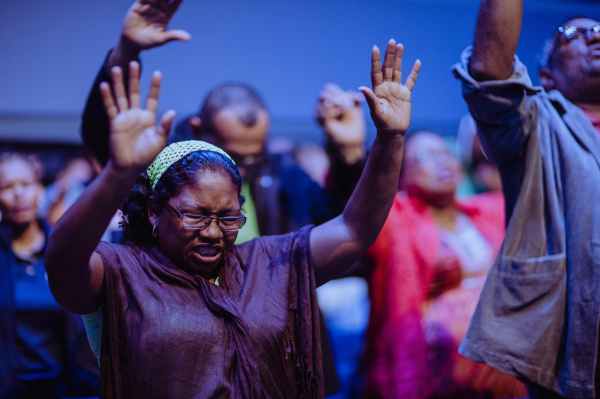
Americans also have the right to religious expression. Our Supreme Court recently upheld the right of a high school football coach to say a prayer on the football field after a game. Americans can assemble for worship, whether in a church, a mosque, a synagogue, or an open field. We can pray– aloud, in a group, over a loudspeaker, even–and the Government cannot legislate that only “approved” prayers are allowed. This might make a few people squirm– Wiccans, Baptists, Scientologists, Hassidic Jews, Shi’ites, Druids, and Satanists ALL have this right. But each of us has the responsibility to respect the rights of all to pray.

Photo by Ivan Samkov on Pexels.com

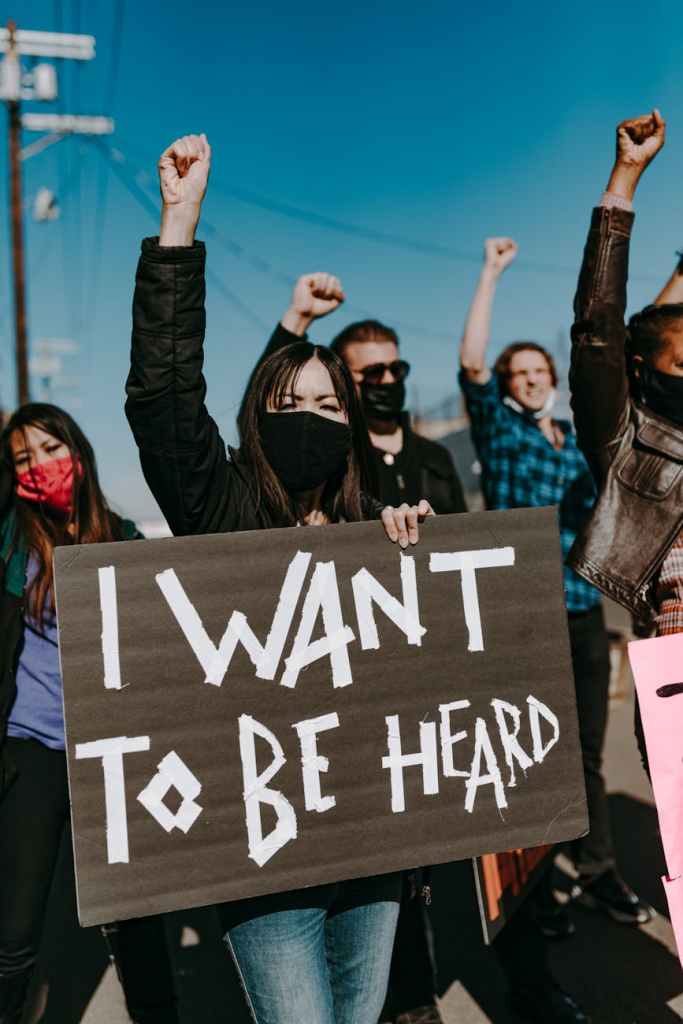
But that brings me to this point– we have the freedom to pray under the Constitution, but that freedom means nothing to the Christian without the greater Freedom to Pray granted by God Himself. Anyone can offer a prayer to empty air, to a created idol, to a metaphysical “being”–but governments cannot give us the freedom to be HEARD, to be WELCOMED into the presence of the Almighty. Only God gives that freedom– and He gives it to ALL who seek His face! I don’t have to be an American to pray. I don’t have to be given the legal right to pour out my heart to my Heavenly Father– HE invites me to pray. All I need is the belief that God hears and responds to my prayer– even a silent one delivered in peril of Government retaliation. God’s invitation is more powerful than any oppression that seeks to stop me from calling on His Name!

Photo by Tima Miroshnichenko on Pexels.com

God took great pains to illustrate this in bringing the Israelites out of Egypt. God took a “nation” of slaves out of Egypt, and led them through the wilderness and into their own inheritance in the Promised Land. They had the freedom to pray, and to worship this Great God. But over the years, they lost that freedom, and ended up going into exile, slaves to the pagan nations around them. Yet God remained faithful, hearing their prayers even from the nations where they enslaved. God’s promises and His invitations remain, regardless of the rise and fall of Empires or religious movements.

So today, especially in light of my right as an American to pray freely and publicly, I want to challenge myself, and anyone reading this to spend time today in earnest prayer and thanksgiving. What a privilege to be “Free” to pray!

We Hold These Truths…

We hold these truths to be self-evident, that all men are created equal, that they are endowed by their Creator with certain unalienable Rights, that among these are Life, Liberty and the pursuit of Happiness–Declaration of Independence, Thomas Jefferson (July 4, 1776)

Full text of the Declaration of Independence

We’re getting ready to celebrate our Independence Day in America.  There will be parades, cookouts, parties, fireworks, and a host of other celebrations.  There will be a lot of flag-waving and patriotic displays.  At some gatherings, there may be readings of our Declaration of Independence.  This document was drafted to outline, not just a list of reasons why they should rebel, but what they hoped to build as a result of their struggle for freedom.

man in red and white musical suit playing flute during daytime in camera focus photography
Photo by Pixabay on Pexels.com

Over 240 years later, this document, and what it stands for, is still relevant and calls us to a high standard– one our nation has not fully achieved.  In spite of the great strides we have made and the example we have been to the rest of the world, in recent decades, we have left behind many of the very truths we aspired to hold.

First, there is a dangerous belief that “truth” is no longer self-evident, nor is it timeless.  We don’t hold beliefs and truths anymore.  We shift with the tide of public opinion and the shadowy promise of “being on the right side of history”– which just means being on the winning side of the current debate within our lifetime and hopefully into the next set of history books.

Second, we have spent countless hours, shedding blood, sweat, and tears over the phrase “ALL MEN”– struggling to reach the promise of equality for all humankind.  We have fallen short of this vision, and twisted it into a grotesque parody of itself.   Instead of working together in unity and inclusiveness, we have devolved into factions each fighting to be “more equal” than others.  Instead of looking at the equal value and humanity of all our people, we point fingers at all the people who are “less worthy”, “more privileged”, “entitled”, “marginalized”, “intolerant”, “judgmental”, who “need to be silenced”, or “need to be kept in their place”…how can neighbors and fellow citizens be so vicious?  One answer may be found in the very next phrase…

adult back view bald crowd
Photo by David Whittaker on Pexels.com

ARE CREATED equal, and are endowed BY THEIR CREATOR…Usually, this phrase is emphasized in the exact opposite places– the emphasis is on EQUAL and ENDOWED.  We have lost the “truth” of being “UNDER GOD”.  We have lost the truth of being created.  We have lost the truth that our worth, our rights, our values, are not a product of our own opinions and observations.

It is easy to point to others and say, “They are ruining our country– They are not living out these truths.”

The harder lesson is to look at my own assumptions, actions, and beliefs.  Do I TRULY believe that all the people around me– of every creed, gender, race, political party, nationality, educational achievement, or economic level are created equal and endowed BY THEIR CREATOR with value, and inalienable rights?  If, at any point, I make assumptions about the worthiness of “those people”, assuming that God loves me more, or will have more mercy or grace toward me because of who I am or how I behave; because of the color of my skin, or where I live, or who I voted for; because of the things I know or the good deeds I have done–I am part of the problem.  Christians, if we bear the name of Christ who created all mankind, and we hate those whom Christ created, the love of Christ IS NOT in us.

man couple people woman
Photo by Gratisography on Pexels.com

That doesn’t mean that we ignore sin and compromise our character, and pervert justice in the name of a comfortable facsimile of equality.  But it also means that we must stop whitewashing hatred and injustice in the name of morality.  Morality without love cannot heal our nation.  Nor can rewriting our history.  Nor can declaring our Independence.

man with fireworks
Photo by Rakicevic Nenad on Pexels.com

The Declaration of Independence is not a stand-alone document.  It had no authority on its own.  If our founders had lost the Revolutionary War; if they had abandoned their vision of a government “of the people, by the people, for the people”; if their descendants had failed to bring a divided nation back into unity; if our parents and grandparents had not struggled and fought to make our nation live up to its principles; and if our generations fail to come together and work toward that same vision– Independence will not be something to celebrate, but something to detest.

While it is called the Declaration of Independence, it is a spirit of dependence– on God, on His truth, and on the goodwill of our fellow Americans, that keeps this document alive and full of promise.

silhouette of people beside usa flag
Photo by Brett Sayles on Pexels.com


We need to pray for our nation– and for our own revival– if we are to truly celebrate this Fourth of July.

Blog at WordPress.com.

Up ↑