The Value of a Life

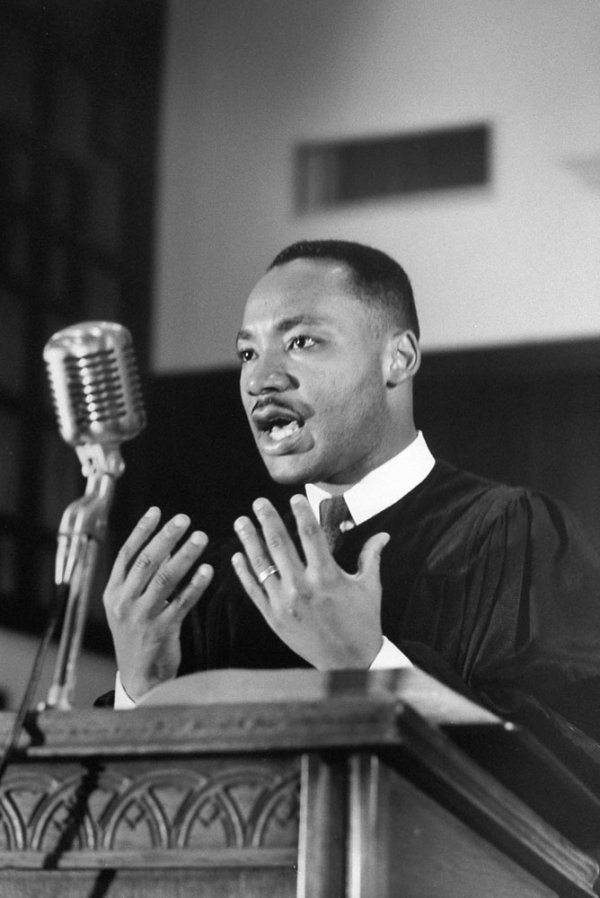
Today in America, we celebrate the life of Dr. Martin Luther King, Jr. Dr. King was a minister, a brilliant writer and student of theology, a leader in the Civil Rights movement of the late 1950s and early 1960s, a noted speaker, and man who arguably made a difference in the world. Dr. King was murdered in 1968, at the age of only 39, leaving a family and a nation devastated by his loss.

Next Monday, we will observe the 51st anniversary of the Supreme Court decision Roe v Wade, in which nine judges effectively legalized abortion in the U.S. for over half a century. Even though this decision has been overturned, many states, using the precedent of Roe v Wade, have changed their state laws to allow for abortion. In many states, it is now legal to abort a child right up to the moment of birth!

What is the value of a single life? Who gets to decide that they have the right to take another person’s life– whether by assassination, capital punishment, abortion, murder, or euthanasia?

It is a question that our society has struggled with for centuries. Who can give life? Who can take life? Who can determine the conditions of another person’s existence? And, for those who live, what is the “value” of their life–to their family, to their neighborhood, to their nation, or to history? Who gets to set the standard of what constitutes a “worthwhile” life or the “quality” of life for someone else? For themselves?

I’ve been reading through the book of Genesis this month, and, according to the Bible, this subject is as old as human life on earth. Cain decided that Abel’s life was expendable, so he killed him– the first murder. The people of Sodom and Gomorrah felt they had the right to enslave and rape anyone they wanted to. Joseph’s brothers plotted to kill him, before selling him into slavery, instead.

The Bible doesn’t hide this history, nor does it sugar-coat the actions of those featured in its pages. But, the Bible offers us a clear picture of WHO gives life, and WHO has the authority to decide what life is worth. God alone has this authority. It is God alone who can create and sustain life. Mankind has the choice– to protect life or destroy it; to treat life with respect or with disdain; to honor the Giver of Life, or to rebel against Him.

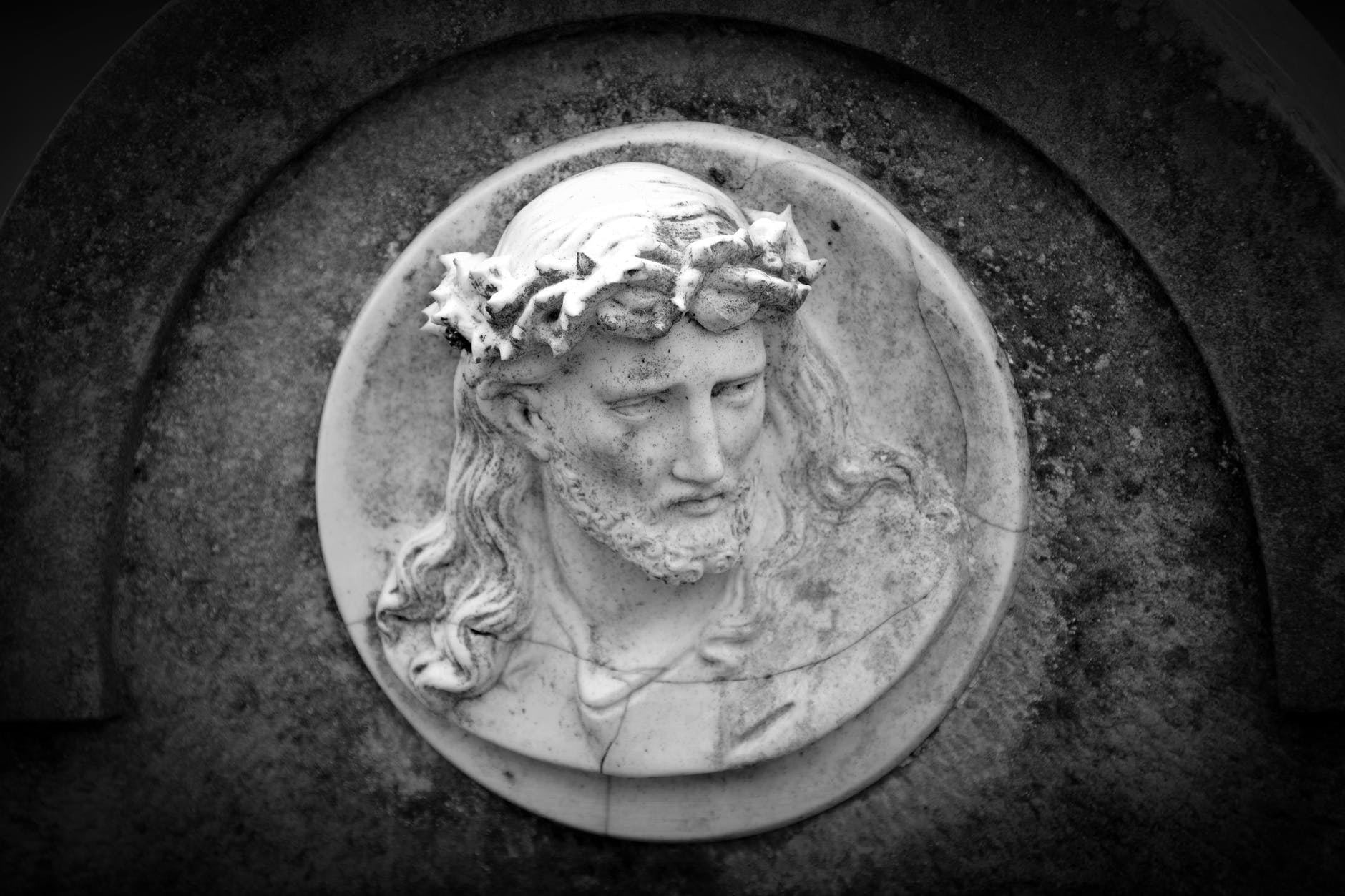
All the atrocities of the Old Testament lead to the ultimate decision on the value of a single life. Jesus lived a simple, ordinary human life. He lived with compassion, with purpose, and with humility. And He was willing to GIVE His life to atone for all the murders, all the abortions, all the slavery, all the injustices in history, so that WE could enjoy abundant, eternal life with Him. By looking to this singular life, and trusting in the power of His death and resurrection, we can choose to honor all life. We can make a difference. We can live with purpose and joy.

Dr. King’s legacy is one of honoring life, and pointing out the evils of those who seek to devalue the lives of others based on the color of their skin. Abortion’s legacy is one of destroying life, and promoting those who devalue the rights of the helpless.

The choice is still before us. How will we determine the value of a single life in the coming week? How will be add value to life on earth? How will we live for more than just the moment?

Praying for Time

When I was a late teen, and into my early twenties, I loved English pop music, including the duo, Wham! Their music was bubbly, upbeat (mostly), and easy to sing along to. I listened along, sang along, watched their videos, and danced along. When the duo broke up, I was eager to follow the rise of singer/songwriter George Michael, whose first two solo albums I bought and listened to, as well. But the tone of his solo music was different. There were danceable, singable tunes, but they were darker and more cynical. And many of the songs were less about enjoying life and more about social commentary, confusion, and even despair. The songs were well-crafted, but they were haunting, rather than enjoyable or uplifting. They spoke of sadness, depression, and world-weariness.

One of the songs that has haunted me for years was from his second album, “Listen Without Prejudice.” In it, he talks about greed, poverty, apathy, and a loss of innocence. It’s called “Praying for Time,” but the tone of the song suggests that time has all but run out.

And yet…

One of the ideas that still shines through the words of the song is that prayer–specifically praying for time–may be the only hope that we can still cling to. And in a time of darkness and hopelessness, prayer can reach beyond “wounded skies” to a God whose Grace extends even to His children who have “slipped out the back door.”

There is something about the idea of time as a gift from God that stays in the soul, long after most hope is gone. I think it is why we are so driven by the concept of time and time “running out” as we hustle through our busy lives. I think it is why we spend time avoiding “down time” and “alone time” and the quiet time we should take to reflect, meditate, and yes, even time to pray. And I think, too, that it is why we recognize that wasted time is a sin– that there is a purpose in our time on Earth that transcends having “fun” or living for our own selfish aims. George Michael often used “spiritual” words and phrases for his songs– often with a cynical twist, pointing out some of the hypocrisy he saw around him (and occasionally, within himself).

These are the days of the open hand
They will not be the last
Look around now
These are the days of the beggars and the choosers

This is the year of the hungry man
Whose place is in the past
Hand in hand with ignorance
And legitimate excuses

The rich declare themselves poor
And most of us are not sure
If we have too much
But we’ll take our chances
‘Cause God’s stopped keeping score

I guess somewhere along the way
He must have let us all out to play
Turned his back and all God’s children
Crept out the back door

And it’s hard to love, there’s so much to hate
Hanging on to hope
When there is no hope to speak of
And the wounded skies above say it’s much, much too late
Well, maybe we should all be praying for time

These are the days of the empty hand
Oh, you hold on to what you can
And charity is a coat you wear twice a year

This is the year of the guilty man
Your television takes a stand
And you find that what was over there is over here

So you scream from behind your door
Say, “What’s mine is mine and not yours”
I may have too much but I’ll take my chances
‘Cause God’s stopped keeping score

And you cling to the things they sold you
Did you cover your eyes when they told you
That he can’t come back
‘Cause he has no children to come back for

It’s hard to love, there’s so much to hate
Hanging on to hope when there is no hope to speak of
And the wounded skies above say it’s much too late
So maybe we should all be praying for time

“Praying for Time” George Michael, Listen Without Prejudice, 1990 (lyrics taken from Lyrics.com)

In an interview, George Michael analyzes his own lyrics:

While he mentions “He” and “God,” it is clearly humanity he blames for the apathy and selfishness, greed and scandal, the “empty hand” and “wounded skies” mentioned in the song. And his repetition of “all God’s Children” and its counterpart, “no children to come back for,” is aimed at US– people who “slipped out the back door,” moving away from God and embracing our own wickedness. WE have entered this time of hopelessness and despair. WE have crafted it in our own ignorance, and then in our own pride and stubbornness. But we can still pray for time– time to repent, time to return, time to reach out to others with compassion and hope. What the song just barely misses is that prayer can open so much more than just time. Prayer can bring renewal, justice, redemption, and eternal hope! God hasn’t stopped “keeping score,” by any means. But He is holding back the wrath and judgment we all deserve, giving us time to seek Him! Most of all, we can pray, not with desperation, but with confidence– even in times of confusion and distress, because we have an Advocate, Jesus Christ, who hears all our prayers– desperate, confused, ashamed, angry, hopeful, offered with no more than a mustard seed’s faith.

George Michael, like all of us, lived in a fallen world. He was looking at the world, and seeing injustice, greed, apathy, corruption, violence, and the ravages of Sin. His own life was plagued with sorrow, tragedy, pain, injustice, drug addiction, betrayal, and the effects of Sin– both his own and others’. I don’t know if he ever found peace and hope in this life. I hope so. His gifted life ended early and tragically. But his song lives on with a warning, and a hint of promise, too.

We SHOULD all be praying for time– time to change. Time to repent, and seek God’s wisdom. Time to reach out to a darkened world with more than despair and dark analysis. To reach out with the Hope of Christ, who brings Redemption, Justice, and MERCY! We should be praying for time to meditate on the Goodness of God, as well as time to see the needs of others. We should be praying for wisdom to share our resources, and to multiply the good we can do– things that only God’s power can really accomplish. We should be praying for connection– restored relationships, and renewed fellowship with the Father. We should be praying for time to pray! Not just a desperate kind of prayer that this song suggests, but a lifelong pursuit of prayer that connects us to the Source of Hope, Joy, Peace, Power, and Love.

This year, while I don’t often listen to George Michael’s music anymore, I will be “praying for time.” And I will be investing more time in prayer! I hope you will join me in the time God has gifted us with this year!

For more analysis of the song and its relation to prayer see the following:

Praying in Anger

Ephesians 4:25-32 English Standard Version (ESV)

25 Therefore, having put away falsehood, let each one of you speak the truth with his neighbor, for we are members one of another. 26 Be angry and do not sin; do not let the sun go down on your anger, 27 and give no opportunity to the devil. 28 Let the thief no longer steal, but rather let him labor, doing honest work with his own hands, so that he may have something to share with anyone in need. 29 Let no corrupting talk come out of your mouths, but only such as is good for building up, as fits the occasion, that it may give grace to those who hear. 30 And do not grieve the Holy Spirit of God, by whom you were sealed for the day of redemption. 31 Let all bitterness and wrath and anger and clamor and slander be put away from you, along with all malice. 32 Be kind to one another, tenderhearted, forgiving one another, as God in Christ forgave you.

I grew up hearing that anger is a sin.  Yet God experiences anger and wrath.  And the Apostle Paul says in this passage that we are to “Be angry and do not sin” (Eph. 4:26a).

Anger is an emotion; feeding on anger, wallowing in it, stewing and screaming and acting out under the control of our anger– that is sin.  That is why Paul goes on to say that we should “not let the sun go down on your anger ” (4:26b).  Anger doesn’t have to be a bad emotion, but it is a bad master.  We need to take control over our anger to resolve it, and let it go.  In Genesis, God spoke to Cain about this very thing–Cain and his brother Abel had brought sacrifices to God; Abel’s sacrifice was pleasing to God, but Cain’s sacrifice did not find God’s favor.  The sacrifices were voluntary– Cain and Abel were not in competition to see who could bring the “best” sacrifice.  God had not ordered them to bring a sacrifice only to find fault with Cain’s efforts or the way he chose to present the sacrifice.  The scriptures don’t even say that God rebuked Cain or pointed out a flaw in his offering.   He simply found favor with Abel’s offering– Abel had brought the best he had; the firstborn of his flocks.  Cain had brought “some” of his crops. 

garlic beside ginger and pepper on brown wooden table

The difference in the sacrifices had nothing to do with the content or the manner of offering, but in the intent to worship God halfheartedly, instead of wholeheartedly.  God saw that Cain was angry (as well as proud and envious of his brother).  Instead of rebuke, God offered grace and wisdom:

man head face portrait

Genesis 4:6-7 New Revised Standard Version (NRSV)

The Lord said to Cain, “Why are you angry, and why has your countenance fallen? If you do well, will you not be accepted? And if you do not do well, sin is lurking at the door; its desire is for you, but you must master it.”

God doesn’t want us to deny our anger or pretend we are never angry.  But He does want us to acknowledge it, and deal with it.  Why am I angry?  What should I do about it?  Anger can motivate us to do the wrong things, but it can also spur us to change our course, and do something good.  Righteous anger can spur us to speak out about injustice, and seek to correct wrongs.  Anger can lead us to our knees, asking God for direction, strength, or His intervention and justice.  King David often prayed angry prayers asking God to strike down the people who were plotting against him, or those who were doing evil or mocking God’s people.

walk human trafficking

I wish I could say that I had mastered this area, but I’m writing as much for my own instruction today as anything else.  Here are some wonderful steps we can and SHOULD take to deal with anger:

  • Pray!  Anger can strangle us, or it can sneak up and suffocate us, but the worst it can do is drive us away from our source of help and hope.  God WANTS us to come to him.  He reached out to Cain in his anger, wanting to draw him near and help him overcome it; He offers us the same help.  God can handle our anger– he can give us the power to let it go, and direct our feelings appropriately.
  • Own it–Angry people tend to deflect responsibility.  Yes, other people can say or do things that make you angry, but they can’t make you say or do sinful things in response to their actions.  You still bear the responsibility for what you do with your anger– even “righteous indignation.”
  • Question it!–This is something I have found helpful.  Just as God asked Cain, ask yourself, “Why am I angry?  Why am I downcast?”  And then, answer them honestly.  Many times, the root of my anger isn’t justified–instead it’s “just a lie”.  I have no right to be angry with someone else when I chose to waste time, cut corners, or neglect to do what was necessary.  I have no right to be angry or outraged because someone else feels differently or sees a different side of an issue.  In fact, if I keep listening instead of exploding, I might find compassion overriding the anger.  I might even learn something new!  Or I might better understand why I feel or think as I do, and be better able to explain it to others, instead of just yelling the same thing over again.
adult anger angry angry face
  • Deal with it–This is a difficult one for me.  I don’t like confrontation.  If someone hurts me, I just want to walk away and lick my wounds.  And we shouldn’t confront others WITH our anger, striking out at them and seeking to hurt them.  But I have found that a lot of anger and hurt that I have harbored is not only unjustified, but is based on misunderstandings and pride.  It takes humility, but it also takes courage to seek out someone to offer an apology you don’t want to give, or to ask for clarification instead of harboring hurt.
women typing on the notebook
  • Don’t spread it!  “Don’t let the sun go down upon your wrath”  is not permission to “vent” to seven (or seven hundred) friends by spreading your hurt and outrage  until you feel calmer.  This is particularly true in the age of Facebook, Twitter, and Instagram.  In the short-term, this may seem right– “they need to know what is happening”– but it is just the opposite.  Anger often leads to rash judgments, and hasty actions that we can’t undo or call back.  If you are not talking with the object of resolving a misunderstanding, apologizing, or offering a positive solution, you are engaging in sin.  The old saying, “If you can’t say something nice about a person, say nothing at all” applies here.  And it applies about situations and circumstances, too.  I am angry about various practices and policies by governments, companies, even churches; what I need to spread is not my anger about them, but awareness of how God can change them, and why we should be seeking His justice, His righteousness, and His grace toward those who have been impacted by them.
  • Repent of any anger-related sin.  Remember, anger itself is an emotion.  God experiences it; we are made in His image, so we experience it, too.  But God’s anger is Holy; ours is often tainted with other feelings and thoughts– pride, envy, greed– or even other human frailties like misunderstanding, exhaustion, hunger and pain. Instead of feeling guilt over the anger, we need to turn away from the sin that overpowers us in our anger.

For more Biblical wisdom about dealing with anger, see the following:

belief bible book business

https://www.biblestudytools.com/topical-verses/anger-bible-verses/

https://www.biblegateway.com/passage/?search=Matthew%205%3A21-26&version=NCV

https://thewisebeliever.com/anger-bible-examples/

What If HE’D Never Been Born?

One of my favorite Christmas movies has always been “It’s a Wonderful Life.” The movie tells the story of a man who finds himself desperate, sad, frustrated, angry, and suicidal on Christmas Eve –sounds like a real winner, huh? But before he gets to that point, Heaven is preparing an angel to come to his rescue. Through the eyes of the angel, the viewer “gets to know” George Bailey– his family, his friends, his struggles and his joys–and gets to see his life in perspective. The angel, Clarence, decides to give George an unusual gift– the chance to see what the world would be like, not just if he were to commit suicide, but what it would be like if he, George Bailey, had never existed. George is astounded and horrified to see the effects of his absence, and he learns to value his life, his family, and his friends as never before.

The dramatic effect of one person’s life cannot be overstated, but this is especially true of the life of Christ! Can we dare to imagine what life would be like today if Jesus had never been born?

Of course, the most obvious and tragic consequence is that there would be no Salvation by Grace. For a more complete discussion on this, there are several other essays and even books, including “What if Jesus Had Never Been Born” by D. James Kennedy and Jerry Newcombe. (Full disclosure: I have not read this book– I just found out about it as I was writing this, but I trust it is a good resource.) And all speculation on this subject is just that– the Bible is clear that it was always God’s plan for Jesus to come, to live, to die, and to defeat death, just as He did, just when He did. Any alternative vision is not from God, but from our own imaginations. But what other “ripples” do we take for granted in our world, that would not have happened (or would have happened very differently) if Jesus had never been born, or had not completed the work of His life, death, and resurrection?

  • There would be no Christmas. Not just the Christian celebration of Christmas, but much of what we call “secular” Christmas. While some cultures might have a local festival for winter solstice, there would be no worldwide celebration such as we know.
  • There would be no “Santa Claus,” no “St. Nick,” no “Father Christmas,” no “Papa Noel”, etc. The model for our modern Santa Claus, St. Nicholas, wouldn’t have been a Christian Bishop in Asia Minor, because there would have been no Christians there, or anywhere else.
  • No Christmas Cartoons– no story about Rudoph the Red-Nosed Reindeer; no singing elves and jolly Mrs. Santa Claus; no Heat Miser and Snow Miser (if you know some of the other Rankin-Bass productions..) Hours of childhood memories erased.
  • No other Christmas stories and movies– no Scrooge and Marley; no MIracle on 34th Street; no “Yes, Virginia, There is a Santa Claus”; no “Santa Clause” (and its successors) no “Christmas Story” or “Christmas Vacation”; not even Hans Gruber falling from the Nakatomi Tower. Millions of DVDs, books, VHS tapes, local theater productions– never existed.
  • We can kiss Frosty the Snowman goodbye, as well. Without the magical snowfall of Christmas, the story never takes shape– literally.
  • No Christmas Carols or Christmas music. I know of at least three local radio stations that are playing Christmas music exclusively right now. They started the day after Thanksgiving, and they will continue through the end of the month. Thousands of Christmas songs– from favorites like “O, Come All Ye Faithful,” and “O, Holy Night,” to annual disasters, like “Last Christmas,” and “Santa, Baby”– all wiped out.
  • No Christmas cards. Millions of cards are sent out each year, connecting family and friends around the world. Except there wouldn’t be any if Christ had never been born.
  • No Christmas Lights.
  • No Christmas shopping. (And while that may seem like a good thing for my personal budget, have you ever looked at what the Christmas season means for most Western economies?) No Christmas wrapping; no Christmas ornaments; no Christmas sweaters or socks; no Christmas candy or cookies…
  • No Salvation Army bell ringers at the stores– no Salvation Army; no reason to ring bells…
  • No Christian charities– not just the Salvation Army, but every other charity that was founded on Christian principles, or for Christian outreach…no downtown rescue missions, no soup kitchens, no international Christian efforts to rescue hurting children or provide relief for families. I by no means want to suggest that ONLY Christians are charitable, or that NO charities would exist without Christ. Charities are a mainstay of most religions, and always have been. The distinction I would make is that more Christian charities have been developed and have thrived in the last 2,000 years, than charities started by other religious and secular organizations, and there is evidence that they do more efficient and more broad-based work than their counterparts. https://www.christianpost.com/news/christian-charities-more-reliable-than-others-according-to-forbes.html
  • No Christian colleges or universities– Are you a fan of Notre Dame Football? Sorry. Notre Dame doesn’t exist. Neither do Harvard, Yale, Princeton, Cambridge, Oxford, Saint Andrews, Georgetown, and several other colleges and universities throughout Europe, North America, and elsewhere. Even universities that are completely secular today were once founded on the idea that education was a Christian virtue. This doesn’t mean that there would be no places of higher learning– there would just be far fewer than we know today.

  • No “Christian” books– and this includes books that introduce Christian concepts, allegories, and allusions. No “Pilgrim’s Progress,” no “Jane Eyre.” no “Lord of the Rings…”
  • No Churches– no cathedrals, no picturesque country chapels, no strip mall fellowships, no megachurches…
  • None of the Christian Memes; Promises; favorite verses… no Beatitudes; no Fruit of the Spirit; no “Golden Rule,” no Romans 8:28 or John 3:16 or Philippians 4:13…
  • No Twenty-First Century! Our calendar is literally based in part on the assumed birth of Christ. And while there are other calendars– Chinese, Aztec, Hebrew, etc., that are numbered differently, most of the world uses the Roman/Julian/Gregorian Calendar, which splits time into B. C. or B.C.E. — literally “Before Christ” or “Before the Christian Era”, and A.D. (Anno Domini– year of our Lord!) or C.E. “Christian Era.”

It paints a pretty bleak picture. Our world, as we know it, would be vastly different if Christ had never been born. That is not to say that the innovations, inventions, or achievements of the past centuries might NOT have happened at all– but they would have happened without the same purpose and effect. Many of the events of the past two millennia were inspired by, undertaken by, and driven by the message of the Christ– His birth, death, resurrection, and promised return! We hear about some of the negative things of the Church– wars and excesses, scandals and failures. But what about the successes– the transformation of violent cultures and conflicts into peaceful resolution, the drive to end slavery, cure illnesses, eradicate hunger–so many of the blessings we enjoy here on earth are the result of work done by those who long to love their neighbors as themselves and to see God’s will done “on earth as it is in Heaven!” The Joy and Generosity of the Christmas season cannot be separated from its central cause. The Wonder, the sense of the Miraculous and Holy, the sense that there is something “More” beyond a crisp winter morning or a day off work or a genial meal with friends–it all MEANS something. It doesn’t just come from nowhere, or a human desire to be kinder this one day each year. The character of George Bailey exemplifies an ordinary life that has meaning and purpose. His sense of purpose has gotten lost in the crush of bills, obligations, disappointments, and injustices. His prayer is one of quiet desperation; he is completely unaware that it is part of a vast chorus of prayers. But God hears it– and God sends Clarence!

There is a reason that George is visited by an Angel on Christmas Eve. Clarence may not be suave and sophisticated; he may not have intellectual arguments that can help George comprehend all of life’s wonder and purpose. But just like the angels at the first Christmas, Clarence comes from Heaven. He is God’s chosen messenger. He brings Heaven’s perspective and truth into a dark world, showing George what IS and HAS BEEN and what CAN BE– all because George was born– because CHRIST was born! It IS a WONDERFUL Life– not because of our circumstances, but because God’s Greatest Gift redefines our circumstances and transforms our perspective!

4-7 But when the time arrived that was set by God the Father, God sent his Son, born among us of a woman, born under the conditions of the law so that he might redeem those of us who have been kidnapped by the law. Thus we have been set free to experience our rightful heritage. You can tell for sure that you are now fully adopted as his own children because God sent the Spirit of his Son into our lives crying out, “Papa! Father!” Doesn’t that privilege of intimate conversation with God make it plain that you are not a slave, but a child? And if you are a child, you’re also an heir, with complete access to the inheritance.

Galatians 4:4-7 (The Message)

George emerges from his nightmare experience to find he is, in fact, “the richest man in town.” Oh, that we would wake up this Christmas morning fully aware of the rich heritage that is ours– because WE were born. Because HE was born! Because we can be BORN AGAIN!

Do Justice

Sometimes, we pray for God to “show us the way,” to help us know how best to please Him. We are faced with choices that seem right or good, but other choices seem equally good. In fact, sometimes, “God’s ways–” His laws and commands– seem awkward, outdated, harsh, even “wrong” in light of circumstances.

Photo by JJ Jordan on Pexels.com

But the prophet Micah points out the God has shown us how to please Him. He even spells out three things God requires of us: to do justice, love mercy, and walk humbly with our God. (Micah 6:8) Later, Jesus confirmed that the two greatest commandments are to “Love the Lord your God with all your heart and with all your soul and with all your mind” and “Love your neighbor as yourself.” (Matthew 22:36-40) I want to explore this in greater detail, beginning with Micah’s first requirement– Do Justice.

On its surface, this seems sensible and self-evident– Justice is good; injustice is bad, and a good God would always want us to be on the side of justice. But this is not a statement of thought or sentiment. God’s requirement is not that we prefer justice, or agree that justice is a good thing, or even denounce injustice. Instead, it is an action statement– DO justice (some versions use the phrase “act justly”). Those of us nodding our heads, or pointing our fingers, or arguing about past injustices miss the requirement entirely. We are to love mercy (more about this in another post), but to do justice– act justly–behave in accordance with justice.

DO. JUSTICE. Tell the truth; honor commitments; pay debts; actively share with the needy around us; actively defend our neighbors against threats; actively confront and seek punishment for those who are doing harm; honor and respect those in authority over us; accept the limits and limitations of our circumstances; obey the law, even when others don’t. There is nothing easy or self-evident about doing justice in a fallen and unjust world.

This is not a “social justice” or social media activity; not a matter of “being on the right side of history” about a specific political agenda, or a moral crusade. It is a personal matter– personal choices to take action toward individuals for the sake of justice. It may involve personal sacrifice of time or money. It may involve confronting family members or close friends who are lying, cheating, or breaking the law, rather than turning a blind eye or excusing their actions. It may mean saying “no” to an opportunity that involves sketchy practices.

We like to think of JUSTICE–in big letters, stretching across decades–as an ideal to which we aspire. We don’t like to see it as a discipline that imposes on us a set of actions and reactions. We want to see others “do justice.” We want to force them to see things “our” way, and to act as we would choose. But if the shoe is on the other foot, we would rather receive mercy than justice. We do not rush to make amends; we do not volunteer to take punishment that we have earned. We are quick to judge and condemn– slow to confess and repent.

Photo by Rosemary Ketchum on Pexels.com

Our current political situation in America is a great example of this. As a Christian– someone who wants to follow Christ’s example and please God in every area of my life– I’ve had to confess to being very unjust in my words and attitudes toward political candidates, media personalities, even neighbors and family members. I am constantly bombarded with photos, news stories, FB posts, memes, and more expressing criticism, sarcasm, innuendo, half-truths, exaggerations, and out-right lies. When I pass them on, comment on them, rejoice in (or disdainfully dismiss) their messages, am I acting justly? Am I doing justice to the people involved when I pass instant judgment or give instant approval? When I impute motives before I even know the full extent of actions taken? When I ignore uncomfortable truths, or insist on “my” truth? Can I do justice if I refuse to seek the truth, refuse to get involved or be inconvenienced? Refuse to change direction to align with God’s truth?

It is easy to point out hypocrisy in others, but if I want to please God– to do justice– I have to begin with me. I have to begin with the small acts I do every day. Am I doing justice to my spouse if I complain about her/his habits? Am I doing justice to my boss if I “call in sick” to go shopping or go to the beach? Am I doing justice when I keep the extra change because the cashier made a mistake at the store? Am I doing justice when I pretend that my stances on abortion or marriage or the minimum wage give me the right to silence, or harass, or destroy my neighbor?

I have to stop just talking about justice, or demanding justice for past wrongs, or making an idol of “Justice”– I need to pray for the wisdom and strength to act justly.

Lord, help me to seek justice. But even more, give me the wisdom to discern what is just, and the power to do it whenever and wherever I have the opportunity. For the glory of Your Name. Amen.

How Firm a Foundation

  1. How firm a foundation, ye saints of the Lord,
    Is laid for your faith in His excellent word!
    What more can He say than to you He hath said—
    To you who for refuge to Jesus have fled?
  2. “Fear not, I am with thee, oh, be not dismayed,
    For I am thy God, and will still give thee aid;
    I’ll strengthen thee, help thee, and cause thee to stand,
    Upheld by My gracious, omnipotent hand.
  3. “When through the deep waters I call thee to go,
    The rivers of sorrow shall not overflow;
    For I will be with thee thy trouble to bless,
    And sanctify to thee thy deepest distress.
  4. “When through fiery trials thy pathway shall lie,
    My grace, all-sufficient, shall be thy supply;
    The flame shall not harm thee; I only design
    Thy dross to consume and thy gold to refine.
  5. “The soul that on Jesus doth lean for repose,
    I will not, I will not, desert to his foes;
    That soul, though all hell should endeavor to shake,
    I’ll never, no never, no never forsake.”
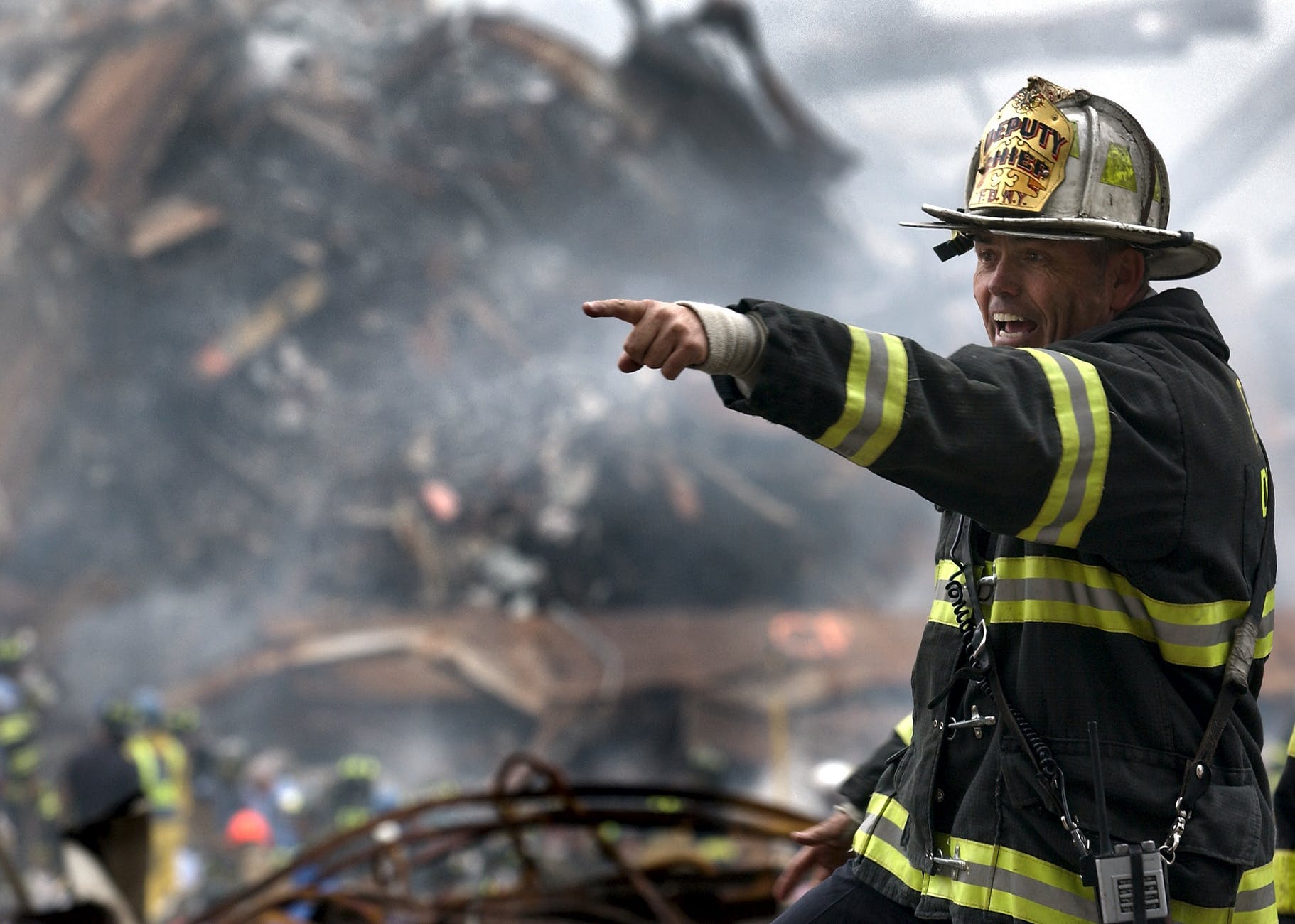
fire fighter wearing black and yellow uniform pointing for something

“How can you believe in a God who lets bad things happen?”
We live in perilous times; dangerous times.  Fires have swept through Canada and Hawaii (and elsewhere); massive heat waves have caused drought and death in many parts of the world; hurricanes have hit California and and the Caribbean, and another threatens Florida even as I write this. Wars rage in Ukraine and elsewhere; crime seems rampant in major cities on every continent. Diseases– even those we considered eradicated or “tamed” are making a comeback. Waste and pollution devastate our oceans, rivers, woodlands, and even the air we breathe. Often, it seems as if God is absent or powerless–sitting on the sidelines and letting bad things happen.  Those of us who claim faith in an omnipotent, loving, and gracious God are mocked and challenged.  How can we believe in the face of such evil, disaster, and injustice?  How can we offer the empty comfort of prayers and assurances?

It can be very difficult to face such challenges– there are no easy answers and “mic-drop” moments for us in this world.  But that doesn’t mean that there are no answers or that our faith is “blind” or without merit.

The Bible is filled with examples of people who followed God in extraordinary circumstances, often in the face of great evil and with little logical expectation of God’s blessing or help.  Abraham traded a wealthy, safe, and honorable life in his native land to live as a stranger and a nomad among foreigners.  Even after God seemed to fulfill the promise of a son, he tested Abraham’s faith, asking him to sacrifice his only son Read the complete story here...  Many people see this story as a horrific example of injustice and cruelty– and if Abraham had been required to go through with the sacrifice, it might seem even more unjust and cruel.  However, there are two points to consider:

  1. God clearly planned to rescue Isaac–there was a ram in the thicket all ready and waiting.  Abraham may not have known God’s purpose in asking such a thing, but he had faith that “God will provide for himself the lamb…”  God may have been “testing” Abraham, but he already knew the outcome.  The “test” was not for God–perhaps not even for Abraham–the test was for Isaac and all who would follow and experience the blessings that came through this amazing act of faith.
  2. The story of Abraham, like so many others, is given to illustrate difficult truths– sometimes about God’s character, or OUR character, or the nature and consequences of Sin.  These stories also often form patterns of allegory, foreshadowing, or illustrations of key principles and events.  Abraham was told to sacrifice his only and very beloved son– a horrible prospect for any father.  But God provided a substitute sacrifice– a lamb– allowing Isaac to live and become the father of many nations.  God’s plan for the salvation of the world was built on the same pattern.  God sent his only and very beloved “son” to be the substitutionary sacrifice for the sins of all mankind– a horrible prospect for a loving Heavenly Father.  And this time, the son willingly gave His life to become the fulfillment of the promise acted out in Abraham’s story.
shallow focus photography of sheep

And, of course, there are hundreds of other stories– throughout the Bible, and throughout history– that demonstrate the blessings that come through radical and even tiny acts of faith in God.

Hebrews, chapter 11 lists several examples.  And a key verse in the chapter points out:

13 These all died in faith, not having received the promises, but having seen them afar off, and were persuaded of them, and embraced them, and confessed that they were strangers and pilgrims on the earth.

Hebrews 11:13 (KJV)

These great examples of faith died without seeing the end results..but the end results are there for US to see!  Faith in humanity– faith in Science– faith in ourselves– these are doomed to end in disappointment.  Not because we don’t believe enough; not because these things are “bad”– but because faith needs an unshakeable, immovable, solid, and eternal foundation.  Our faith in Christ is not a blind faith, an empty faith, or a desperate faith– it is a Faith that is firmly rooted in history, in observable facts, and in revealed truth.  And even in the fiercest storms, the worst of disasters, and the overwhelming flood of hatred and evil in the world, our faith stands firm and sure– not because it is “our faith”, but because it is built on Him who is before and above all things–yesterday, today, and forevermore.

man holding sheep statuette

Our very firm foundation may seem invisible to the world, but that doesn’t change its reality or its power. We pray to the ONE who calms storms, who tears down and builds up kingdoms, and who holds all of eternity, including our future, in His hands. Fires, floods, trials, and terrors cannot overwhelm those who put their trust in Jesus. We may still get wet, singed, singled out, persecuted, and knocked down, but we will never be abandoned or defeated, or forsaken. Even if it seems like God is holding a knife to our neck– remember how the story ends! There is a lamb who has taken our place. God will not put an end to our hope. Even death cannot separate us from His Love and His Purpose for eternity. It’s all there– in His Excellent Word!

…Cry With the Saints

Several years ago, singer and songwriter Billy Joel created some controversy with a song he wrote, called “Only the Good Die Young.”  The song was about a young man trying to convince a young catholic girl to give up her virginity.  Many were offended by some of the lyrics, and by the general tone of the song, which was sacrilegious; sneering at the notion of sexual purity and waiting for marriage.  One of the lines in the song says, “I’d rather laugh with the sinners than cry with the saints..The sinners are much more fun.”

Full lyrics here

It may seem that way to many– Christians (along with many Jews, Muslims, and others who are sincere and spiritually-minded) seem stern and sober in comparison to free-living, fun-loving heathens.  Why should this be so?  Shouldn’t those who are closer to God experience more Joy and happiness than those who do not know Him?  Why are saints and prophets so often shown crying, wailing, and weeping bitter tears?

man wearing gray sweater in selective focus photography
Photo by Segopotso Makhutja on Pexels.com

The author of Ecclesiastes (assumed to be King Solomon) writes:

Ecclesiastes 7:1-6 (Revised Standard Version)

A good name is better than precious ointment;
    and the day of death, than the day of birth.
It is better to go to the house of mourning
    than to go to the house of feasting;
for this is the end of all men,
    and the living will lay it to heart.
Sorrow is better than laughter,
    for by sadness of countenance the heart is made glad.
The heart of the wise is in the house of mourning;
    but the heart of fools is in the house of mirth.
It is better for a man to hear the rebuke of the wise
    than to hear the song of fools.
For as the crackling of thorns under a pot,
    so is the laughter of the fools;
    this also is vanity.

This doesn’t mean that God wants His people to be depressed, hopeless, and constantly weeping.  But God DOES want us to be aware and to see the world as it really is– fallen, chaotic, filled with needless suffering and injustice.  Why?  Because He calls us to think about the consequences of our actions, and also to have compassion for those who are hurting.  It may be more “fun” to ignore the consequences of sin and to “live it up” if you are young and healthy, but it is not at all true that “only the good die young.”  Death comes unexpectedly and randomly– taking both good and evil, both wise and foolish.  The difference is that fools get cut off and caught off-guard.  The consequences of their actions find them unprepared and filled with regret or bitterness and pain– all of which might have been prevented if they had not ignored reality.

silhouette of graves
Photo by Micael Widell on Pexels.com

I think the song DOES have a message to Christians–while we shouldn’t be fools chasing after fleeting pleasures that leave a large wake of pain and regret and filling our lives with empty laughter, we should not “die young” in the way of the Pharisees of old.  Jesus called them “white-washed tombs” for good reason.  Their “goodness” came from self-righteousness and piety.  They shunned sinners, and chased others away with their long lists of rules and disdain for anyone who didn’t keep up appearances.  Such “saints” never cry– they are more likely to crow about their own “goodness” with dry eyes and closed fists.  Jesus attended feasts and parties with the sinners– but his heart was not for the “fun”  they were having.  It was for them– for their lost souls.  Jesus wept!  Jesus wept for the loss of his friend Lazarus; he wept over Jerusalem; he even wept tears of blood in the Garden of Gethsemane!

ancient art black and white close up

The “Good” have many reasons to cry– millions of innocents suffer needlessly every day–abuse, slavery, genocide, abortion, bigotry, war, starvation, murder, theft, addiction, homelessness, disease, natural disasters, man-made disasters, and more fill our world.  People waste time angrily shaking their fists at Heaven or at governments, but so much of the suffering is a direct result of sinful actions on the parts of individuals.  In my own country, in my own lifetime, over 50,000,000 babies have been aborted–without legal consequence, but with a terrible consequence on the soul of our nation.  If we could shed one tear for each life lost it would equal over 660 gallons of water (here’s how I got that number  )– just one tear for each life, and those are only the abortions that have been recorded in the past 45 years in the U.S.  If we were to shed a tear for every broken marriage, every rape, every life lost to addiction, suicide, murder, or war, every violent assault, every broken promise, every lie, or every corrupt deed in our world over the past 50 years, we could fill an ocean!  The power of tears, or of any running/falling water is so great, it could generate electricity to light the nations! ( Here’s an interesting article on the power of a drop of water!)

waterfalls near gray paved road surrounded by green leaf trees during daytime

I would far rather “cry with the saints.”  But more than that, I would rather pray with the saints, and arise from both to work with the saints–the power of tears pales in comparison with the power of God’s mercy and grace!

Why Do the Wicked Prosper?

There is no way I can give a definitive answer to the above question. In a thousand blog posts or three volumes of analysis, I could never cover all the issues this question brings up. I offer the question today for two reasons:

Photo by Wendy van Zyl on Pexels.com
  1. This question is raised in the Bible. Asaph raised it in Psalm 73 https://www.biblegateway.com/passage/?search=Psalm+73&version=ASV; Habakkuk and other prophets also asked it. Solomon pondered it in Ecclesiastes, and Job cried out against it. God is not afraid of such questions, but He doesn’t give glib answers, either. The psalmist received no immediate answer directly from God, but when he entered the sanctuary of the Most High, and considered the eternal destination of the wicked, his attitude changed. His envy, anger, and bitterness melted in a flood of awe and worship. God does not want us to be bitter, angry, or envious of the wicked; nor does He want us to be apathetic toward injustice, abuse, and inequality. There is something profoundly disturbing when we see the wicked prospering at the expense of the righteous and innocent. It should cause us to turn to God and seek His help.
  2. That brings me to the second reason I want to grapple with this topic today. I need to! I have the tendency to want an immediate answer, and to see the wicked suffer– until I am in the presence of a Holy God. There is no wickedness that is outside of God’s justice, or of His grace. God WILL bring complete justice– in HIS time. But His primary goal is to bring redemption, restoration, healing, hope, and salvation– even to the wicked; even to ME. God’s justice is not just reserved for those I deem to be wicked and prosperous. God’s ways are not my ways. What if, in my eagerness to condemn the wicked, I miss God’s plan to change the heart of a Zacchaeus, or an Ebenezer Scrooge, or a sinful King David or arrogant King Nebuchadnezzar? No amount of wickedness can overwhelm God’s love and mercy, or His ability to make “all things work together for good” (Romans 8:28) for those who love Him and are called to serve Him.
Photo by Pixabay on Pexels.com

When tempted to dwell on this question, there are some wonderful alternatives. See some of the links below.

https://billygraham.org/decision-magazine/march-2013/when-the-wicked-flourish/

https://bible.org/seriespage/lesson-7-what-do-when-evil-prevails-malachi-217-36

https://www.desiringgod.org/messages/job-the-revelation-of-god-in-suffering

https://www.ou.org/torah/machshava/the-god-papers/righteous-suffer-wicked-prosper/

https://www.biblestudytools.com/bible-stories/bible-story-of-zacchaeus.html

Lord God, today I pray for eyes that see Your face, even in this broken and fallen world. May I look to see Your patience, Your mercy and Your grace, as well as Your Holiness and Justice. May I be an instrument of all these aspects of Your character as I live in Your grace today. Thank You for Your great mercy toward me, and to the promise of Eternal Life with You. Amen.

Photo by Munmun Singh on Pexels.com

When Prayer is Not Enough…

“Stop praying and DO something!”

“I’m sick of thoughts and prayers…it’s time for action.”

“Prayer doesn’t work!”

Photo by Markus Spiske on Pexels.com

What happens when your prayers don’t seem to make any difference? People around you complain that you are passive, even apathetic about critical needs. “People are dying!” “People are suffering, and you want to stop and pray?!”

YES! Buy why do I continue to advocate for prayer in the face of overwhelming injustice and evil? Shouldn’t I be talking about action? Shouldn’t I be posting plans to end injustice or poverty or war? Shouldn’t I be willing to say that sometimes, prayer just isn’t enough?

Well, firstly, I believe that Prayer is far more powerful than most people know. Prayer IS enough, because GOD IS ENOUGH! I can’t stop gun violence, or human trafficking, or an epidemic. I can’t– not with all the resources in the world; not with all the action I can muster; not with any effort or plan or army of willing human helpers. And neither can anyone else. I can march in protest, I can write and call and badger legislators to change laws or enforce the laws we already have. Such actions might make me feel better– they might even have some immediate effect. But they won’t “fix” the continuing and underlying problem of Sin. Only God can do that, and He WILL do it. He may choose to work through human agency to right some wrongs or change the immediate future, but our world is broken, and God’s ultimate plan is bigger than just a convenient patch for Sin’s consequences.

Photo by Pavel Danilyuk on Pexels.com

However, I will concede that sometimes prayer, by itself, is not nearly “enough.” Prayer must be paired with Faith. I know many people who say that prayer “doesn’t work,” not because they didn’t pray, or weren’t sincere in their desire or their wish for God to act on their behalf, but because they believe in their desire– their wish or their plan– more than they believe in God’s goodness or His ability to bring good out of whatever struggle we are facing.

This is not a simple concept– that God is eternally good even in the midst of evil and horror– it can be painful beyond words. God may choose to allow the sin of drunk driving to take the life of an innocent person in our family, or leave us permanently paralyzed. Or He may allow war to strip us of all that we own– our home and our freedom. How can we possibly view such circumstances as “good?” Why does God allow for violence and injustice? Why does He allow it to continue– seemingly unabated and unchecked? How can God call Himself “Good” while letting evil touch our lives and the lives of millions innocent people? Praying — and continuing to pray– in such circumstances seems like a mockery of our pain and grief. It seems like God is deaf to our cries– indifferent, or even watching smugly from a distance. Why pray to such a God?

But IS this what God is really like? And why do we believe the worst about Him, rather than trust that His wisdom and Love are actually greater than what we can comprehend or experience in the present? Why do we blame God for the evil we see in others? Why do we ignore our own actions or inaction that often contribute to our situation? Why do we believe that God “owes” us a life without sorrow and pain– even as we see others suffering the consequences of sin– sometimes because of our failures? Why do we insist that God always act in accordance with OUR desires, when we often will not act in accordance with His? Why do we “test” God with prayers in our times of trouble, when we will not trouble Him with our prayers in times of peace and plenty? If anyone should have led a life without sorrow or pain, it should have been Jesus. Jesus prayed all the time– He even taught others how to pray (Matthew 6:9-15). He was completely obedient to His Father. Yet God’s own Son faced heartbreak, betrayal, and a painful, unjust death on the Cross. He wept over the death of a close friend– a death He Himself could have prevented (and later reversed)! (John 11) He was in such deep distress in the Garden of Gethsemane that He sweat blood! (Luke 22:44) God’s plan is not for us to live a life free of trouble, but a life of victory OVER despair and doubt!

Seeking “more” than prayer is often seeking “more” than God–as if we can do better on our own. As though we can out-love, out-give, out-do, and over-power the God of creation;the God of the Cross, and the God of the Resurrection and the Life. Deriding prayer is deriding the God to whom we pray– we minimize His power and His compassion while inflating our own. If God doesn’t exist, one might argue that it doesn’t matter– but then, why waste time deriding what doesn’t exist?! Prayer matters because God DOES exist, and because God matters Trusting God means being willing to wait and accept His will; even if we don’t get the answer we want. God’s ways are not our ways, but that doesn’t mean they are inferior or ineffective. God will not “undo” our circumstances, but He will help us through our circumstances. He won’t take away our grief. But He will shape it into something with purpose– if we let Him.

Finally, there are times when prayer must be paired with action. It IS enough to pray for God to act. But when God prompts US to act, and we do not, our prayers are empty words. Faith may lead us to wait, but it won’t lead us to sit idly by when we have the opportunity to help. Faith may lead me to keep taking the next step– even when I can’t see the way forward. Faith may lead me to let go of a dream I thought would be “enough.” It may lead me into the valley of the shadow of death– in my own life, or on behalf of someone else. I can’t take away someone’s grief at the loss of a child– but I can share in it. I can listen and offer friendship, rather than a quick platitude and a few empty words. I can continue to be there when others fade away. I can’t undo the horrors of war– but I can help care for refugees, and I can work to build peace in my neighborhood, even as I pray. I can take the next step in making someone else’s burden just a little lighter, and making the world a little brighter wherever God gives me the chance. And prayer is one way I can focus on the source of strength, wisdom, and compassion to allow me to do my part better.

Photo by Liza Summer on Pexels.com

The next time you hear someone saying that prayer is “not enough,” remember that no human effort will ever be “enough” to do what only God can do! But prayer taps into the power and grace that is “sufficient” for all our greatest needs.

Praying “Around” My Enemies

I didn’t pray for my enemies. I didn’t pray for their health or safety. I didn’t pray for their spiritual well-being. I didn’t pray that God might show me ways to bless them, or encourage them.

Photo by Andrea Piacquadio on Pexels.com

I prayed that they would be stopped. That they would be exposed as frauds and liars. I prayed for “justice” to be done– to them. That they would be humiliated. That they would get all that they deserved.

And perhaps that is what they prayed for me, as well. That I would “see the light”, and change my mind. That I would be punished for my words and actions that didn’t agree with theirs.

I prayed “around” my enemies. I didn’t pray for them. I didn’t lift them up before the throne of grace. I didn’t pray that they would be shown mercy– I certainly didn’t pray to meet them with humility and grace…

Photo by Foss Valentine on Pexels.com

Love is patient, love is kind. It does not envy, it does not boast, it is not proud. It does not dishonor others, it is not self-seeking, it is not easily angered, it keeps no record of wrongs. Love does not delight in evil but rejoices with the truth. It always protects, always trusts, always hopes, always perseveres. Love never fails. But where there are prophecies, they will cease; where there are tongues, they will be stilled; where there is knowledge, it will pass away.

Photo by Victoria Borodinova on Pexels.com
Photo by Pixabay on Pexels.com

God, forgive me for holding bitterness and anger in my heart. I will never meet a human being– “friend” or “enemy” that you didn’t create in Your own image. You have commanded that I am to love my neighbor– even one who disagrees with me; even one who considers me an “enemy.” I cannot delight in evil, or rejoice at injustice; but I must reach out in Love and not Self-Righteousness.

Blog at WordPress.com.

Up ↑