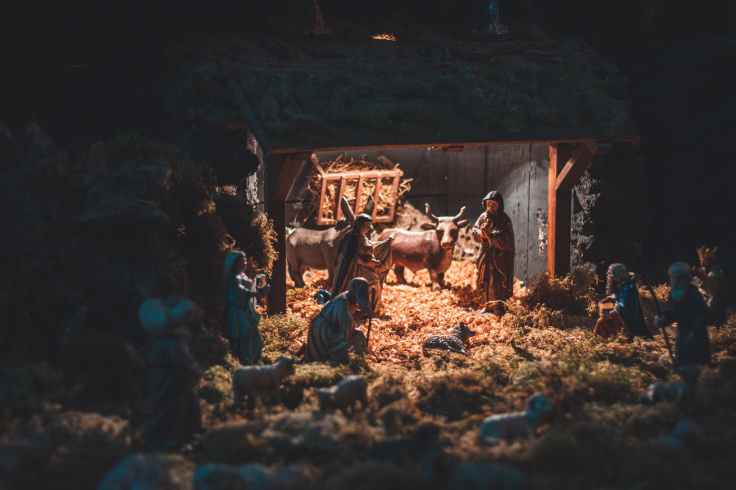
The song above asks, “Mary, did you know?” as it lists many things that Jesus did during his ministry on Earth. But just how much DID Mary know on that night in Bethlehem? From what we read in Luke 1, Mary knew only that this coming Child was sent by God to be the Messiah. But the angel didn’t spell out how that Messiah would be born or how Mary should be a mother to the King of Kings. The angel never promised Mary that Joseph would agree to marry her, or that her family would not disown her. The angel said nothing about a census; no warning that Mary would have to travel to Bethlehem, where there would be no room in any inn, and no safe, clean place to deliver God’s chosen one. Mary had no knowledge of the shepherds who would come from the cold and dirty fields to get a glimpse of her shivering infant. She had no idea that wise men from distant lands would present her with such impractical gifts as frankincense and myrrh, or that she would be forced to take her small son into Egyptian exile.
In fact, while the shepherds were visited by a heavenly host, glorifying and praising God; while the wise men were following an amazing star in the heavens, Mary was seemingly forgotten– giving birth in a cattle shed, tucked away in an unfamiliar, backwater town, without the comforts of her home and family (save Joseph, who was a first-time father himself!), without clean water or extra blankets, without the comforting voice of an angel reminding her that it would all turn out in the end.
I can only imagine how she might have felt. Was she frightened? Confused? She could have been angry or bitter, panicked or forlorn. She was not privy to the wonder of the angels or the star. She could have no idea of the miracles that her Son would do. And, while Simeon hinted at the piercing grief she would know at the crucifixion (see Luke 2:33-34), Mary could have no idea of the grueling death her Son would suffer.
Mary was so young. She knew so little. And yet, Luke tells us that she ” treasured up all these things and pondered them in her heart.” (Luke 2:19 NIV).
This Advent season, I want to take time to ponder; to meditate on the promises of God, on His timing, and His provision. Mary’s journey to Bethlehem was unplanned– by her. But God had planned it from the very beginning. He KNEW there would be no room in the inn. God KNEW all that would happen– the flight to Egypt, the years of Jesus’ ministry, the betrayal and suffering to come. And God KNEW Mary! He knew her questions, He knew her heart, He knew her fears, and her limitations.
It is comforting to know that God KNEW, and that He KNOWS all that is to come in my life. When it feels like I have been forgotten or relegated to a place where there is no room, no resources, no welcome– I can remember that God is there exactly as He was for Mary and Joseph on that night long ago. Just like Mary, I can treasure those incomprehensible moments when God sends a shepherd or a wise man into my path; someone whose presence, though unexpected or even inconvenient, reminds me that God’s plans are far bigger than what I can know or imagine.
One thing Mary DID know was that she could trust God absolutely. May we ponder this truth throughout the season and treasure His promises today.
Children are busily writing letters to Santa and making lists for their parents– “I want…” We’re listening to “Christmas Classics” on the radio– “All I Want for Christmas is My Two Front Teeth.” “All I Want for Christmas is You,” “I’ll be home for Christmas…Please have snow and mistletoe and presents on the tree…” “Christmas, Christmas time is here; time for toys and time for cheer. We’ve been good but we can’t last– Hurry, Christmas. Hurry fast!”
Advent is a time of expectation and hope. But it can also be a time of selfishness and greed. “I want…” “I’m dreaming…” Even if the things we want and wish for are not ‘bad’ things, we can get so caught up in the wanting and wishing, that we forget the deeper meaning and purpose– not just of Christmas, but of life! Life isn’t about getting things– even good or nice things. And Christmas, while it is a season of gifts, is primarily a season of giving.
Turning the radio to a Christian station, I can hear old familiar carols reminding me of the real reason for this season. “O Come, O Come, Emanuel!” “Joy to the World!” “Hark, the Herald Angels Sing–Glory to the Newborn King!” “What Can I Give Him, Poor As I Am?” “Yet In Thy Dark Streets Shineth the Everlasting Light…” “This, this is Christ the King; whom shepherds guard and angels sing.”
Even so, it is tempting to spend time this Advent season thinking and praying about all the things we want– noble things like Peace on Earth, Good Will to Men, and good things like health and happiness for our loved ones, and even selfish things, like a new toaster or a new pair of gloves. But what about what GOD wants this Christmas?
God wants us to enjoy the blessings He sends our way. But He also wants us to be grateful for the blessings we already have; the ones we have enjoyed (and even taken for granted) all year long. He wants us to take time in this busy season to reach out, not just with gifts and cookies and lights and greeting cards, but with compassion, warmth of heart, a willingness to listen, an invitation to share tears as well as joys, and efforts to heal old wounds and make peace right in our own families and neighborhoods. Christmas isn’t just about the baby in the manger– it’s about the Christ of the Cross, and the Return of Christ the Triumphant. And this is Our Advent season– awaiting and preparing for His Return!
There are many good things to “want” this Christmas. But all I really want is to be ready for His Coming– ready to receive His Grace, His Hope, His Joy, and to point others to “Thy Glorious Light!”
It struck me just the other day how similar these two words are in English. To serve is to work for; to perform a duty; to labor on behalf of someone else. A servant performs duties for a master; a worker serves his or her employer; I serve my customers as they visit my shop. To “deserve” is to work in such a way, or to show such qualities as to merit reward (or punishment).
Much of our Christian life here on earth is centered around service. I serve at church; “I serve a risen Savior;” even this blog is a way of serving– sharing the Gospel and what I continue to learn about prayer. Praying for others is a way of serving them.
But much of our culture centers around what we “deserve.” Even our service is often qualified and judged as being more or less worthy than other service. If I serve on a board of directors, it is considered more worthy, more deserving of respect, than if I serve as a janitor, a junior clerk, or a night watchman. If I serve in a public capacity as an elected official or an ambassador, I am considered more deserving than if I serve as a humble citizen. We see some positions as deserving of more money, more power, more respect, and more worth.
But that is NOT the way God sees our service. God gives good gifts, not because we “deserve” them, but because it is His nature to give. God sends the sunshine and the rain to everyone, regardless of whether they have “earned” a sunny day or “deserve” lovely flowers to grow in their garden. Similarly, when God allows for natural disasters, they affect both “good” and “bad” people in a region. Occasionally, God will show His divine favor by sparing a group, as He did with the Israelites in Egypt. The Egyptians were victims of ten plagues, while the Israelites, living in the land of Goshen, were spared. But that wasn’t because the Israelites “deserved” to be spared, nor that every Egyptian was “deserving” of punishment. Rather, the horror of slavery and oppression of the Israelites caused God to show His righteousness and His power to save those who were being unjustly treated. (A lesson our world has yet to fully learn!) And God promised Abraham, Isaac, and Jacob that He would be with their descendants forever, saving them from those who would oppress them. But in daily life around us, innocent people often struggle, while “bad” people seem to prosper. Why doesn’t God give us what we “deserve?”
What we “deserve” in this life is the consequence of our sin and rebellion against God’s holiness–and that is DEATH. A God without any mercy would simply allow for those consequences to take effect without any opportunity to repent or to experience His Blessing. God does NOT give us what we “deserve” here on earth. However, He notices our “service”– our desire and capacity to do good–at every level. He does not give higher value to those who serve in positions of power or authority– in fact, Jesus taught just the opposite:
25 But Jesus called them to him and said, “You know that the rulers of the Gentiles lord it over them, and their great ones exercise authority over them. 26 It shall not be so among you. But whoever would be great among you must be your servant,27 and whoever would be first among you must be your slave, 28 even as the Son of Man came not to be served but to serve, and to give his life as a ransom for many.” Matthew 20:25-28 ESV
Prayer often seems like a humble service– we often pray alone or in small groups. Very few people are praised for being “prayer warriors,” and many pray without anyone even knowing about it. Except God knows. He hears and He delights in our prayers. We don’t pray in order to “earn” God’s favor, or anyone else’s approval. But we pray to a God who gives us far more than we “deserve.” And we serve a God who delights in even the humble acts we do for others. A God who has promised us Eternal life with Him in Heaven! Not as a reward for our service; not based on our worthiness or self-righteousness, but based on the worthiness of Jesus! Heaven is our reward for His great sacrifice. We don’t “deserve” it, but we can rejoice in it, even as we serve quietly and humbly here on earth.
We lost a family member a couple of weeks ago. We were shocked and heartbroken to hear of his loss. To know that we will never get to hear his laughter or watch his eyes crinkle up over a good joke; never hear him enthuse over history or a great movie; never enjoy the fellowship of being in the same room together again. He never got to retire from his job; never got to walk his daughters down the aisle; never got to enjoy the house he and my sister-in-law planned to build.
BUT
Chris had a wonderful life in many ways. He and his wife have three amazing adult children. He got to enjoy plenty of days loving nature and enjoying a good sunset over Lake Michigan. He harvested many morels each spring. He made music. He helped hundreds of people in hundreds of little ways. He was blessed.
We went to Chris’s funeral last weekend. We helped celebrate his life– his accomplishments and achievements, his vivid personality, his sense of humor– and we celebrated his Faith. Yes, there were tears at the funeral. We will miss Chris in the years to come. But we share his faith and his great hope. We will miss him temporarily. We will grieve for a few years. And then, we will experience a joy that will make us forget the grief! Not only will we see Chris again– to laugh together and share stories and songs– we will be in the presence of our source of Life, and Hope, Joy and Peace! We will be surrounded by the great cloud of witnesses as we live eternally with the One who loves us best!
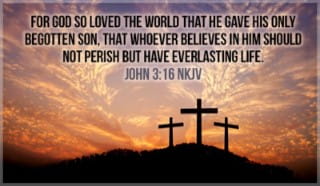
Many years ago, another man died. There was grief, stunned disbelief, and terror. The family, friends, and followers of Jesus Christ mourned. They hid. Their world was dark with despair and anguish. All these years later, we look at paintings and sculptures of Jesus suffering on the cross. But, while we shudder at the horror of all He suffered, we do not look on such pictures with fear or despair. The Cross is not a symbol of Death’s ultimate victory, but rather its ultimate defeat. Jesus didn’t stay dead. His body was buried, but He did not stay there. We celebrate, not the horrors of the Cross, but the limits of its power to steal our joy.
This is where grief meets hope. It is where the past is overwhelmed by the promise of Eternity. Christians grieve– of course we do. We love life, and we grieve to see it end. We love being with friends and family– we feel an emptiness and an ache when someone we love is “missing.” But we do NOT grieve without hope. We acknowledge the brief sting of loss. But Death loses its sting in the light of Christ’s victory. There is no lasting victory in the grave. Our time is short; we are powerless to stop death from taking us; from taking our loved ones. But Eternity beckons! Even our time on earth gives us daily reminders– the sun rises each morning; spring comes after each winter; children grow into parents, and we get to love another generation.
Even when life is hard; when grief looms large and hope seems dim– hope does not disappoint! Because Christ LIVES!
Chris was buried earlier this week– his body was buried– but he LIVES. He is healed and freed of all the pains and frustrations of this earthly life, and because of Christ’s gift of Grace and Redemption, Chris is living all that he once hoped for. Because of Christ’s great gift, many of us will someday join him in singing God’s praises, in laughter, delight, and endless joy!
I have to start this by saying I don’t always feel particularly hopeful as I look around and hear all that is happening. There are a lot of reasons to be discouraged, even depressed. Upheaval, suffering, injustice, disasters, anger, death, and evil surround us at nearly every turn. I can say that my Faith sustains me, and it does, but I still feel beaten down and exhausted by all the chaos and hurt and anger and misunderstanding.
Faith sustains us in times of trouble, but our hearts can still feel heavy. Faith tells us that God is in control, but we can feel powerless in the midst of suffering. What keeps us motivated to look for the best on even the worst of days? What allows us to have joy even as we grieve and strain and suffer? Faith is our anchor, but what renews our strength, and keeps us looking beyond the storm?
In 1 Corinthians 13, the Apostle Paul talks about things that are temporary– possessions, knowledge, gifts, prophecies– and three things that remain: Faith, Hope, and Love. Last time, I wrote about Faith. But Hope is a more difficult and more nebulous concept. The writer of Hebrews defines Faith for us– “the substance of things hoped for; the evidence of things not seen” (Hebrews 11:1). But there is no substance or evidence for Hope. Hope is not a physical anchor; it is not a realization. Neither is it a mere wish, or dream; at best, it is an expectation. Yet Paul says it “remains,” even when other things pass away.
How is this possible– that a Christian should Hope after all else has been lost, abandoned, or destroyed? Isn’t Faith more solid, more important, than Hope? Aren’t knowledge, obedience, and perseverance more important and more tangible? Isn’t hope wispy, fleeting, and conditional? Lately, it sure seems so. I say that I hope we all get through these tough times; that we will come through all this stronger, wiser, more compassionate, more just, more prepared, etc., but what am I really hanging on to? Where is my Hope?
My Hope DOES have substance and a sure foundation–in the life, death, and resurrection of Jesus Christ, and in the sure promises of my Heavenly Father! I may have wispy dreams and half-formed wishes of what I would like to see in my life or in the world around me tomorrow, or next year. I may have dreams and visions of what Peace and Justice and Health look like– and I may never see them materialize in my lifetime. I may have to adjust my vision within the temporary world of possessions, and gifts, prophecies and human systems of government and society. But I can remember the life of Christ; in spite of His circumstances, He remained true to His purpose. In His death, He remained compassionate, humble, and loving toward those who hated Him. In His resurrection, He brought eternal Hope to all who choose to trust Him. I can Hope because He fulfilled God’s promises. He WAS Hope. He gave Hope, and He demonstrated Hope. And He pointed to the Hope of His return and our eternal destiny!
I can be inspired by the dreams and hopes of other Christians throughout the years, even if their dreams have not been realized. I can be inspired by the prophecies of others, even if they don’t match my visions. And I CAN see beyond the darkness of the moment (or the year) to see that people (even I) can change; situations can change; circumstances can change; rhetoric and tone can change for the better. Painful valleys and unexpected upheaval may not be what I would want, but sometimes, it serves to clear out the “sinking sand” where dream houses would otherwise be built.
And Hope is necessary to Prayer– Faith tells us that God hears, even when we can’t see Him or hear His answer. Hope tells us that God cares. He is not aloof in hearing our prayers. He doesn’t answer us out of some worn sense of duty or obligation. He doesn’t just give us His law or even His forgiveness– He gives us restoration and Hope and abundant life! Hope for change in our own lives; hope for progress and healing in our world; hope for victory over sin and evil. Most of all, hope for eternity. God is just and merciful, but He is also gracious and loving beyond all measure. I can cry out when all other hope is gone– His Hope Remains! His Hope is a Solid Rock. His Hope comes with an eternal guarantee.
One of the prayer models I like to use often is based on the acronym ACTS. ACTS stands for Adoration, Confession, Thanksgiving, and Supplication. I like this model because it is well-rounded. It works like this:
ADORATION–I love to begin prayer by remembering and acknowledging God’s worth, His supremacy, His Holiness, and His majesty. It sharpens my focus on the WHO of prayer, rather than the WHAT of my worries or doubts. And it puts everything in the proper perspective. Sometimes, I come to God by praying a Hymn, or praying a Psalm, or remembering the many names of God.
CONFESSION–Confession is important in prayer, and since I want to concentrate on it, I’ll come back to this element below.
THANKSGIVING– Thanksgiving returns me to remembering what God has already done– for me, for others, throughout history, and just yesterday in my life. Instead of prayer being all about my needs, wants, or concerns, prayer should be an honest conversation with God. And that must include gratitude, because God is truly GOOD! If you ever doubt that, think about the first five minutes of your morning. If you awoke, you are alive (thank you, God!). If you heard your alarm, opened your eyes and saw anything, if you were lying on a bed, in a shelter with a roof, if you were able to sleep through the night without the terrors of war, slavery, starvation, torture, or chronic agonizing pain, you have much for which to be grateful. If you were able to get out of bed on your own, able to eat breakfast, get dressed, and you have a job to go to or a purpose to fulfill in this day, you are among the blessed. To withhold praise and thanksgiving is to miss one of the privileges of life.
SUPPLICATION–Yes, we bring requests to God. And He already knows what we need, what we desire, and what He has planned for us. So supplication is not about making God aware of our needs. But it is another act of acknowledging that God hears and responds to us. Because that’s the kind of God He IS! And because we have spent time Adoring, Confessing (to), and Thanking God, we know that we can present our requests without fear or doubt.
Most of us are fine with Adoring, Thanking, and Saying our requests, but Confession can be tricky– especially in our culture. What are the elements of Confession that trip us up? Mostly, I think, it’s a misunderstanding of what confession is (within the element of prayer) and what it is NOT.
Confession is defined as admitting to guilt, or to a crime or sin or wrongful act. But, even more basically, confession is an admission that we are not the ultimate authority over our lives or the lives of others. As such, we must confess before we can accept God’s atonement for our Sin. If we do not confess our need for God, we cannot accept, understand, or appreciate the depth and nature of His sacrificial Love for us. So when we pray, we must confess, not only God’s Glory in the heavens and the Earth, but His Sovereignty in our lives; His authority over our emotions, our thoughts, and our actions. King David gave us many great examples of confession in his Psalms– and they can be terrific models to use in our own prayers. (See Psalm 6, Psalm 32, Psalm 38, Psalm 51, and others.)
Confession in prayer is not primarily a list of our petty missteps– though we should be willing and able to name them, rather than denying what we’ve said and done–but a daily admission of God’s right to determine how we conduct our thoughts, our habits, our priorities, and our relationships, and acknowledging that God is Merciful, Gracious and Loving– beyond all our failures, mistakes, and even past rebellion. Confession shouldn’t focus so much on what we’ve done, as on how God is able to free us from guilt and shame, and how we intend to move on away from the past. We confess that our ways are not Holy, and in doing so, we underscore that God’s ways ARE Holy, perfect, wise, and good. God already knows our thoughts and actions, but WE need to be reminded of our goal– to run the good race (see Hebrews 12:1, and 1 Timothy 6:12) to follow Christ; to become more like God each day!
Confession is primary to the Christian Life– we confess that ONLY by the work of Jesus (the cross and resurrection) can we be reconciled to God. We cannot pray openly to God if we don’t believe–and confess– that this is true. God is not fooled by sweet talk or glib arguments. We cannot believe that Jesus’ atoning death and resurrection saved us if we don’t believe that it was necessary and good for Him to do so. And besides, confession is good for the soul!
“If we confess our sins, he is faithful and just to forgive us our sins and to cleanse us from all unrighteousness.”
1 John 1:9 (KJV)
Confession has a negative reputation in many Christian circles, and it is misunderstood in others. Just listing our sins or admitting we did something wrong doesn’t have any value without the positive confession that Jesus is “the way, the truth, and the life.” (see John 14:6) In fact, a better definition of Christian confession is this– agreeing with God about who I am (a sinner/imperfect/unable to attain Holiness on my own), and who HE is (perfect/Holy/Sovereign/the One who Loves me absolutely)
When we pray today, I hope we will confess– positively, profoundly, willingly, and whole-heartedly. I hope we will humbly and honestly confess any actions or habits that are interfering with our Christian walk. And I hope we will joyfully confess that Jesus is LORD; that we are trusting in Him to guide us, intercede for us, and give us the power to live more abundantly in this life, and throughout eternity. What a great way to pray!
I love solving things–puzzles, mysteries, codes–I love finding the answer. It’s very satisfying. And I love reading mystery stories–Agatha Christie, Georges Simenon, Dorothy Sayers… But I have very mixed feelings about Sherlock Holmes. Always have had. I loved the intricacy of the mysteries themselves. They seemed impossible; unsolvable. Yet somehow, Holmes always knew the answer. And then, as he calmly explained how “elementary” it was, he would throw out details that no one else could possibly know without three doctorate degrees and a photographic memory.
I recently watched a series of TV episodes about Sherlock Holmes, and it struck me again. However, in our modern age, it is not so very impossible to become an expert on esoteric topics in almost no time. We have the internet, where vast amounts of information is available at the tip of our fingers. We can find facts about nearly everything, everywhere, at any point in history. We can virtually track people, visit places, experience adventures, and yes, even solve mysteries– all without leaving our couch. And while there are numerous dangers of relying on information found in cyberspace, there is no denying the easy availability of it.
One of the things I like about most mysteries is that they show the triumph of good over evil. Mysteries tend to show us, not only the impact of evil in the loss of life or property, the suffering of victims, and the need for vigilance, but the longing for order and knowledge and safety that we hope someone can “solve.” A good mystery story ties up all the “loose ends” and answers all the burning questions– “Who did it?” “How?” “Why?” By the end of the story, we feel victorious and safe and satisfied.
But reading mysteries or solving puzzles can give us a false sense of safety and knowledge. In real life, there are many unsolved puzzles, unanwered questions, and “cold” case crimes with no resolution. We are left asking “Why?” and “How?” about many of the things that have happened in our lives. And the answers are not “elementary”– even for the most intelligent among us.
As an adult, I read (and watch) the Sherlock Holmes mysteries with a different mindset. I know, from past experience, that Sherlock Holmes will always outwit the criminal. And I will probably learn some little-known fact– likely one that I never needed to know–that may be astonishing. But I am more interested in the character of Sherlock Holmes himself, now. Likewise with many of the other detectives I enjoy reading about. Because mysteries involve the triumph of good over evil, they attract writers who study the ongoing fight between the two. Mysteries often involve complex machinations, intricate plots, many-layered characters, and misleading information.
And the detectives are often equally complex and many-layered. Their startling intellect and deductive skills leave us in awe. Yet, they also have human frailties that lead them to overlook key clues or lead them to take risks beyond what we would consider wise. And many of them wrestle with the concept of good and evil–they are often tempted to take the law into their own hands, or to do something illegal in order to bring a criminal to justice. Thus, the reader is left with another mysterious question– just what is “Good” or “Evil?” Are there times when, in order to do “right” we may need to do something that others consider “wrong?” Can two “wrongs” make a “right?”
Some of the best detective characters are almost god-like in their ability to ferret out evil. But they are constrained in their ability to defeat evil. They are, in the end, human. Even Sherlock Holmes, with his arrogant assumptions and dizzying deductions, cannot wipe out evil; cannot keep it from touching and even ruining lives. In fact, as Sherlock Holmes (and others) discovers, intelligence is often a key ingredient of evil. “Stupid” criminals are easy to catch. The great detectives are needed to find the brilliant masterminds of evil; the ones who would otherwise go undetected and unstopped.
The man who created Sherlock Holmes, Sir Arthur Conan Doyle, was an agnostic and, in later life, became a spiritualist. He wrestled with the concepts of good and evil and particularly with the concept of how a “good” God could allow evil to exist. He was skeptical of the existence of the Biblical God, but instead believed in the continuing existence of the human spirit after death. He believed that the battle between good and evil was left to mankind to solve. He, like his famous character’s sidekick, Watson, was a medical doctor. He was a man who worshipped science– a man who valued facts above all. In fact, the stories of Sherlock Holmes offer us what seems to be a triumph, not just of good over evil, but of facts over faith.
Today, we celebrate the triumph of faith and facts over skepticism and arrogance. Jesus, unlike Sherlock Holmes, did not come to the earth to “solve the puzzle of evil” by bringing individual human criminals to justice. He did not brag about His great intellect, though He dazzled the Jewish Priests of His day with His knowledge and understanding of Scripture. Jesus had no fixed address. He did not write treatises or analyze dust samples– He created nature; He had no need for further study! His disciples did not write about Jesus merely because He did miracles. They did not write about Him in order to become rich or famous. Instead, they were martyred and exiled. Jesus did not put an end to the corruption of the priesthood under the Pharisees and Sadducees. He did not break the yoke of the powerful Roman Empire. He died on a wooden cross, hung between two criminals, after being convicted in an illegal trial, and a farce of an appeal to Pilate. He was flogged, taunted, pierced, and buried in a borrowed tomb. He was, by all appearances, defeated by evil and death. He lost– by human standards and appearances.
But faith tells us that God is Good; that Jesus is God; that Good triumphs over evil. And the facts bear out our faith. Yes, Jesus died. It was recorded, affirmed, and witnessed. But that wasn’t the end of the story. He rose again. There is no body in the tomb. There are witnesses to His post-crucifixion appearances. There were witnesses of his ascent into Heaven. His disciples died for their testimony and continued faith in the face of persecution, torture, and threats. And believers over the past two millennia have lived and died in the faith. We are witnesses of His power to redeem, to restore, and renew lives.
The events of Good Friday and Easter present the ultimate mystery. Jesus, Son of God, Messiah– eternal, all-powerful, all-Good– became a sacrifice for us. He allowed Himself to be an innocent victim of Evil for our Good. And in doing so, He didn’t just “solve” a puzzle– He defeated the power of Evil once for all! We don’t have to know more than the enemy. We don’t have to chase down and outwit death. We don’t have to be terrorized by the threat of evil, the weight of our guilt, or the power of the grave. All we have to do to defeat the evil in our lives is to trust in the work of the Risen Savior and follow Him.
16 Shadrach, Meshach and Abednego replied to him, “King Nebuchadnezzar, we do not need to defend ourselves before you in this matter. 17 If we are thrown into the blazing furnace, the God we serve is able to deliver us from it, and he will deliver us[c] from Your Majesty’s hand. 18 But even if he does not, we want you to know, Your Majesty, that we will not serve your gods or worship the image of gold you have set up.”
Daniel 3:16-18 (NIV)
I hear a lot of American Christians complaining about the “dark days” in which we live. And indeed, they are dark. There is great evil in the world– wars, famines, injustices, hatred, division, greed, and immorality. But, along with complaints, I hear a note of whining. Isn’t God supposed to deliver us from just such evil? Isn’t He supposed to clear the way for us to love one another in peace and harmony? Surely, it can’t be His will for us to be laughed at, spit upon, misunderstood, and treated with contempt?!
The ancient nation of Israel was conquered and sent into exile. Israelites who had abandoned their faith, as well as those who had steadfastly served the Lord, were ripped from their homeland and marched to Babylon. Worship in the Temple of Jerusalem ceased. The Temple itself had been destroyed. There were no tabernacles, no festivals– none of the systems and structures of worship left available to God’s people. Yet some still worshipped– in homes, isolated from their fellow Jews, or in secret groups. They were not surrounded by reminders of when “their” religious beliefs were considered the cultural norm. Nor did they live in a culture that practiced religious “toleration” as we understand it today.
In the book of Daniel, the commitment of s handful of exiles is detailed as it comes in conflict with the oppressive control of the Babylonian (and later the Persian) Empire. Daniel and his three friends are challenged by the pressure to compromise and adapt to their surroundings. They are tempted and bribed by the promise of power in the court– if they can compete with other Babylonians. But they secretly hold fast to their “old” diet, and religious practices. They refuse to eat the rich food of Babylon– or bow to its gods.
In Chapter 3 of Daniel, the three friends, Shadrach, Meshach, and Abednego, refuse to bow to a golden statue of Nebudchadnezzar, the megalomaniac for whom they worked. Even though he had appointed them to high offices, he refused to “coddle” them in their worship of a foreign god. He demanded that they bow to his statue– something God had commanded them NOT to do.
It might have been easy enough to secretly meet in homes and celebrate Passover without alerting those around them. It would have been possible for them to hide scrolls containing the ancient words of their historians and prophets, to be read or studied. But they were being asked to publicly bow to a statue of their King– to acknowledge him as a “god.” And they refused. As court officials, their refusal was not just a minor snub, but a scandalous insult. Yet they stood firm.
Shocked and angered, Nebuchadnezzar, a notoriously cruel and impulsive king, gave them a generous “second chance” to save their careers and lives by obeying his orders. Amazingly, the three did not even spend a moment considering their options. They answered, boldly, courageously, and graciously, that they would not bow down to the statue. And God rescued them from the fiery furnace, so that not even their hair was singed by the flames– even though their captors were killed in the very act of pushing them into the furnace! God not only rescued them– He appeared WITH them in the midst of the flames. This so astonished Nebuchadnezzar, that he ordered them released and proclaimed that no one should say anything against the God of Shadrach, Meshach, and Abednego–an incredible act of religious toleration for that culture and time.
The story of The Fiery Furnace is well-known. I’ve used it before in my posts. But today, I’d like to focus on just one little phrase that stood out to me this week. When brought before Nebuchadnezzar the first time, the three men said, “we do not need to defend ourselves before you in this matter…” (v. 16).
How tempting it might have been to have defended their refusal– to give Nebuchadnezzar a lecture on God’s Law and His past miracles. But they refused to explain or defend their actions. They merely gave testimony of their faith that God COULD save them, and that, “even if He does not..” they were willing to die rather than dishonor Him. And Nebuchadnezzar SAW the proof of their faith in a way that their words and arguments could not have accomplished!
Most of the time, when I hear Christians talking about this story, they focus on the miraculous deliverance of the three men from the flames. The lesson is that God will be with us, no matter what. He can deliver us FROM the flames, but often, He chooses to deliver us THROUGH the flames. And that is a wonderful lesson and a true promise.
But that deliverance should not overshadow the quiet dedication of the three men. Before God joined them in the fire, they were already committed to dying in silence to obey God rather than their earthly king. They stood to lose everything– their lives, their legacy of faith, their service, their families (who might have been left destitute or even subject to punishment)– all of it was riding on their willingness to suffer injustice and torture. We know that God “showed up”– literally– in their defense. And they certainly knew that God COULD save them. But they also acknowledged that “if He does not..” they were still willing to die. And they were willing to do so, not acknowledged as martyred heroes, but as convicted criminals.
Centuries later, Jesus Christ would appear before Pontius Pilate, who asked Him to give a defense. Astonished at Jesus’ refusal to argue and plead for His life, Pilate came to the conclusion that “I find no fault in Him.” (John 19:4) Jesus willingly accepted an unjust sentence of Death, offering no argument or defense, except the Truth. No one came to His rescue. And God did NOT spare His life! The Son of God died as a criminal on a Roman cross, betrayed by Jewish leaders. Yet, Jesus’ obedience; His willingness to die brought US life, and forgiveness and peace!
There are millions of believers in Christ today who must be prepared to face a “fiery furnace” moment–maybe it involves death or torture. Perhaps it only involves being teased or despised by a neighbor or a classmate at school. And we may pray for deliverance–that is natural. But how often do we give up the chance to argue, and justify our diligence, our “right” to worship “our” way? How ready are we to be seen as foolish, or even rebellious to the culture of the day? We long for God to come to our physical rescue– to join us IN the fire– but are we willing to let Him be our defense? Are we willing to be humble in the face of obvious injustice, and let God speak up on our behalf? And what if He does not?
The Apostle Paul also faced this dilemma. Not only were there Greek and Roman officials who thought him a fool, there were Jews– his own people– who were going around defaming him, denouncing him, and spreading lies and rumors. Paul (never one to let a good argument go unargued!) spent much of his time in letters writing out his defense of the Gospel. But, in his own defense, he downplayed his position and his great knowledge of the scripture. He was not defending himself “in these matters”– he was defending the Truth of the Gospel! He also acknowledged that God could use even detractors and tormentors to spread the Gospel. And he often urged fellow believers to live in peace with their unbelieving neighbors, even those who taunted them!
It is tempting in Western Culture, where Christianity has been normalized, to think that when we defend ourselves, we are defending Christianity. But what if, like Shadrach, Meshach, and Abednego, we let God be our defense– in the flames, in the courtroom of public opinion, in our own families? What if we followed Jesus’ example and remained calm and confident, even under duress? What if we lived humble and quiet lives of integrity, ready to submit even to the flames or the cross, serving even those who would stoke the fires or pound the nails? God might just “show up” in ways we never could have imagined! Courage is often seen as boldness and speaking up in our own defense. But, sometimes, it takes greater courage to stand silent and let our actions– even when they are disparaged and misinterpreted– speak as a testimony of God’s power.
There once was a distinguished scholar and lecturer who was invited to be part of a symposium at a prestigious university. But during his time on stage, the professor realized that he was having a gas attack. Not wanting to embarrass himself by passing gas in front of the rest of the panel (and indeed the entire auditorium full of students) he politely asked to be excused to take a short break as the rest of the panel discussed a minor issue. He proudly excused himself, making it seem as though he was merely bored and wanted to stretch his legs a bit. Exiting the auditorium, he raced to the nearest bathroom and “let it rip,” not realizing that his portable microphone was still “hot.” The entire audience could hear, not only the gas he passed, but the other noises he made– of pain as the gas was passing, and of relief at the end of the attack. As he returned to his seat on stage, he was stunned to see people grinning and pointing, and hear stifled giggles as he rejoined the panel. Even his colleagues were finding it difficult to meet him with a straight face. Finally, the moderator asked, somewhat sarcastically, if the professor felt better after his break, and could be please be sure that his microphone was “turned back on…” As he finally realized what had happened, the professor was mortified, and barely spoke during the rest of the symposium. He left in a hurry, and it was many years before he agreed to visit that university again.
We may laugh at the downfall of the proud professor, but how often do we try to “pass gas” discreetly, pretending that we are “above” petty embarrassments and minor setbacks. As Christians, it is especially tempting to pretend that we “have it all together;” that because we follow Christ, we never struggle with pain, or niggling doubts, or unanswered questions. We sit in judgment on our neighbors because we do not stumble over the same sins that we see in them.
The world is watching. They pay close attention, not only to the sins we avoid, but to the sins we push aside or try to explain away. Sins like pride and gossip; sins like “bending the rules” and “fibbing.” It’s not that they don’t know about their own sins. In many cases, they are trapped in a cycle of guilt about their own sins, and their inability to escape the cycle on their own. Or they live in a web of lies about their lifestyles and habits– “I’m no worse than Him!” “God understands my weakness. He can’t condemn me for being the way He made me!” “God and I have a bargain. I don’t do X, and he’s ok that I do Y instead…”
But are we any “better?” “I don’t gossip. I ‘share’ prayer concerns.” “I’m a work in progress. God isn’t finished with me yet!” “King David told lies, and he was a ‘man after God’s own heart’!” “I’m not cheating on my taxes. You should hear my neighbor talk about what he’s done!” “I know I need to lose weight, but, well, there’s just more of me to love!” We are just as ready to find excuses for doing things we know to be wrong, unhealthy, unloving, and sinful, as our neighbor or our “enemy.”
Even more, we are tempted to pretend that we “have all the answers.” After all, if we trust God, how can we still have questions about pain or suffering or grief? We feel that admitting our weaknesses will expose us to ridicule, and that it may hurt our testimony.
That doesn’t mean that we should condone the sins of others, or that we should carry a load of shame over our own lapses. The point is that Jesus calls us to walk humbly and bring ALL our burdens to Him in prayer. Do I still struggle with my tongue–am I still spouting sarcastic retorts make me look smart, while putting others down? I need to submit that habit to the Lord. Does it bother me that my brother smokes or looks at porn? I should not condone such behavior, but it’s not my place to “make him” change his behavior. I should pray about it, and let him know I care about what these habits may be doing to his health and relationships. God doesn’t “hate” my neighbor who can’t seem to hold down a job, nags her husband and kids, and uses foul language– and neither should I! I shouldn’t encourage her bad behavior, but I should be willing to listen to her, show her compassion as someone Christ died to save, and offer her the same friendly helping hand I would be willing to give my other neighbors.
And I should be honest about my own limitations. God has saved me. I am His. But he didn’t save me because I had “cleaned up my act.” And he doesn’t reject me because I still don’t know all the answers or do all the “right” things. Instead, He guides me to be more like Him as I faithfully follow His ways, including confessing when I mess up. God is big enough to save me and re-shape my future in ways I can’t even imagine. I didn’t “win” my salvation. It is a gift– one that keeps on giving!
Being a Christian isn’t about acting “better” than those around us– though we should be walking in Jesus’ footsteps and living more like Him each day. It can be difficult, as the rest of the world may hold us to a higher standard. We will be judged more harshly than our neighbors who do not attempt to follow Christ. We will be accused of holding judgmental attitudes, even when we don’t display them. And we will find our standards and morals being maligned as “old-fashioned” or “snobbish” or even “hateful.” Not because they are any of those things, but because God’s standards (and anyone who agrees with them) offend those who rebel against them. And we still live in a fallen world, just like everyone else. We still wrestle with temptations, we still experience the consequences of sin– our own and others’–that make us sick, or weak, or poor, or otherwise look like “failure” to those around us. And it does no good to pretend that life isn’t sometimes difficult and painful–we’re not fooling anybody!
Instead, being a Christian is about “becoming” better than we can be without God’s Spirit living, moving, and acting THROUGH us. And a big part of that process involves “passing gas.” We need to let go of the sin and the “bad gas” that still builds up inside of us– pride, shame, stubbornness, laziness, envy, criticism, apathy, anger, bitterness, hatred, and so much more. And we need to acknowledge that our Salvation– now and through eternity– only comes through the finished work of Jesus Christ, not our own efforts. This process is called “Sanctification.” We are “saved” by Grace through Faith (see Ephesians 2:8-9). We cannot boast about having been saved. But we testify about our salvation by a changed nature, led by God’s spirit– a “new” compassion for those around us; a new delight in following God’s standards; a new humility about our own limitations, and a new joy for the way God can work through even our weaknesses to give us victory!
Ironically, passing gas is a necessary part of our bodily processes. If we don’t get rid of the “bad” gas, it will lead to bloating and actually poison us! Similarly, if we don’t acknowledge areas where we need to confess, continue in obedience, and submit our will to the Holy Spirit’s promptings, we will become bloated with our own self-importance, and poisoned by our self-deceptions.
So today, as I pass gas– as I surely will at some point– I hope that I will be convicted, and even amused, at how God uses the lowly things of this world for our benefit, and His Glory!
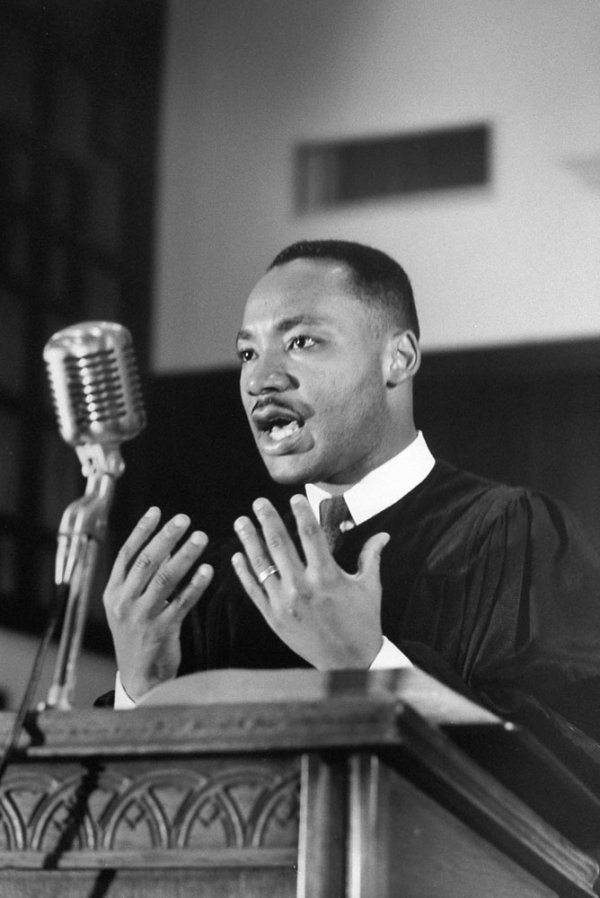
Today in America, we celebrate the life of Dr. Martin Luther King, Jr. Dr. King was a minister, a brilliant writer and student of theology, a leader in the Civil Rights movement of the late 1950s and early 1960s, a noted speaker, and man who arguably made a difference in the world. Dr. King was murdered in 1968, at the age of only 39, leaving a family and a nation devastated by his loss.
Next Monday, we will observe the 51st anniversary of the Supreme Court decision Roe v Wade, in which nine judges effectively legalized abortion in the U.S. for over half a century. Even though this decision has been overturned, many states, using the precedent of Roe v Wade, have changed their state laws to allow for abortion. In many states, it is now legal to abort a child right up to the moment of birth!
What is the value of a single life? Who gets to decide that they have the right to take another person’s life– whether by assassination, capital punishment, abortion, murder, or euthanasia?
It is a question that our society has struggled with for centuries. Who can give life? Who can take life? Who can determine the conditions of another person’s existence? And, for those who live, what is the “value” of their life–to their family, to their neighborhood, to their nation, or to history? Who gets to set the standard of what constitutes a “worthwhile” life or the “quality” of life for someone else? For themselves?
I’ve been reading through the book of Genesis this month, and, according to the Bible, this subject is as old as human life on earth. Cain decided that Abel’s life was expendable, so he killed him– the first murder. The people of Sodom and Gomorrah felt they had the right to enslave and rape anyone they wanted to. Joseph’s brothers plotted to kill him, before selling him into slavery, instead.
The Bible doesn’t hide this history, nor does it sugar-coat the actions of those featured in its pages. But, the Bible offers us a clear picture of WHO gives life, and WHO has the authority to decide what life is worth. God alone has this authority. It is God alone who can create and sustain life. Mankind has the choice– to protect life or destroy it; to treat life with respect or with disdain; to honor the Giver of Life, or to rebel against Him.
All the atrocities of the Old Testament lead to the ultimate decision on the value of a single life. Jesus lived a simple, ordinary human life. He lived with compassion, with purpose, and with humility. And He was willing to GIVE His life to atone for all the murders, all the abortions, all the slavery, all the injustices in history, so that WE could enjoy abundant, eternal life with Him. By looking to this singular life, and trusting in the power of His death and resurrection, we can choose to honor all life. We can make a difference. We can live with purpose and joy.
Dr. King’s legacy is one of honoring life, and pointing out the evils of those who seek to devalue the lives of others based on the color of their skin. Abortion’s legacy is one of destroying life, and promoting those who devalue the rights of the helpless.
The choice is still before us. How will we determine the value of a single life in the coming week? How will be add value to life on earth? How will we live for more than just the moment?













































 Pursuing Prayer