Unwelcome or Uncomfortable?

I really enjoy going to church. I love our church family. I love the sanctuary. I love singing and worship. I love the teaching from the Bible each week. I always feel welcome and comfortable and inspired. Well…almost always.

Have you ever visited a new or unfamiliar group? It need not be a church– any group that is already established, where you are visiting for the first time? It can be a very uncomfortable experience, even if the other members make an effort to be welcoming. There may be group dynamics with which you are unfamiliar; maybe there are rituals or responses that are new to you, as well. Where should you sit? Are you taking “someone else’s” spot? Are you expected to participate? At what level? Should you introduce yourself, or will you be asked to do so at some point? Will others introduce themselves?

Photo by cottonbro on Pexels.com

I was thinking about all this in relation to church because of Easter service last week. As we entered, several people greeted us with “He is Risen!”, to which we responded, “He is Risen, Indeed!” But not everyone responded– some were confused. As the service started, a husband and wife introduced this phrase as a tradition, explaining the call and the expected response. They welcomed any newcomers, then they invited us to say it as a congregation. This helped make it a more comfortable experience for any visitors.

Photo by Luis Quintero on Pexels.com

I have visited many churches over the years, and some congregations work hard to make everyone feel welcome, and even comfortable. But there is a difference between welcome and comfort. I have visited some churches where I feel welcome, but not very comfortable. The people are nice, the music is upbeat, but there is a restlessness– sometimes inside my own conscience–that makes me squirm. This can be a good thing– a movement of the Holy Spirit. But it can also be a warning that something is “off” in the worship– the focus is not on God, or the message is not true to Scripture, or there is a tension between members of the group that needs to be resolved.

I have also visited churches where I felt comfortable enough, but I did not feel welcome. I knew all the right phrases to say or the words to all the songs and hymns; the seating was soft, and the room was neither too hot nor too chilly. But I felt closed out by the other worshippers. They did not notice that I was there, and they (probably) never noticed that I did not return. No one introduced themselves or made an effort to reach out, nor did they respond when I tried to reach out to them.

How does any of this relate to prayer? Prayer can sometimes be uncomfortable– confession, supplication, confusion, and even doubt. God is not in the business of making us comfortable at the expense of our own good. Sometimes we need to be made uncomfortable in order to take needed steps to change or move ahead. Sometimes, we need to recognize our discomfort as a warning to look around and reevaluate. And sometimes, we need to be patient in our discomfort, as it is only temporary, and stretches our Faith.

But we should never feel unwelcome in the presence of God. God longs to meet with us, even in our discomfort– even at our worst! Jesus modeled this attitude throughout His ministry. He made many people uncomfortable (particularly the Pharisees!), but all were welcome to come, to listen, and to speak to Him. He took time to talk to people that were often seen as outcasts, but He was just as likely to talk to people who thought of themselves as very important. Jesus SAW people. He acknowledged them, and He valued them. As followers of Jesus, we can feel welcome, AND comforted when we come into His presence.

Photo by Kampus Production on Pexels.com

But even more, we should follow the example of Christ when reaching out to others. We are Christ’s ambassadors, and if we make people feel unwelcome and unwanted, they may never understand how wide and deep and immense God’s love for them really is. At the same time, we need to be reminded that others may still feel uncomfortable for their own reasons. We should make every effort to be welcoming, but we should allow for the Holy Spirit’s work as well. We should not push people away, but we should be prepared that some will choose to walk away from uncomfortable truth.

For Righteousness’ Sake

Blessed are those who are persecuted for righteousness’ sake,
For theirs is the kingdom of heaven.

Matthew 5:10 (NKJV)
Photo by Meruyert Gonullu on Pexels.com

Yesterday was Easter (in parts of the world)–the celebration of Christ’s resurrection and victory over Sin and Death. We have much to celebrate. But we also have a mission. We have the assurance of eternity in Heaven, but in THIS world, Jesus warned us, “you will have trouble.” (John 16:33). We will be misunderstood, mocked, and persecuted. We will have to face the temporary consequences of living in a fallen world– anger, greed, abuse, violence, betrayal–even bad weather and natural disasters!

In giving the Beatitudes, Jesus turned common expectations upside-down. Blessed are the poor in spirit; blessed are the meek; blessed are those who are persecuted for righteousness’ sake… We don’t consider poverty, powerlessness, suffering and persecution blessings to be desired. Yet Jesus, the One we follow, gladly endured all of these for our sake! Notice that the “blessing” is the same here as in the first of the Beatitudes– “for theirs is the kingdom of heaven.” The Kingdom of Heaven is not reserved for those who are victorious in their own power or through force of will or extraordinary effort. But it is reserved for those who persevere in the face of evil–those who lean, and those who rest, and those who stand IN THE POWER of God.

Notice, too, that we are blessed if we are persecuted “for righteousness’ sake.” There is no blessing for suffering due to our own stubbornness or foolishness. There is no blessing for those who are persecuted for their own pride and judgmental nature and unforgiveness toward themselves or others. (see 1 Peter 3) https://www.biblegateway.com/passage/?search=1+Peter+3%3A8-17&version=CEV

Photo by MART PRODUCTION on Pexels.com

We live in a culture that celebrates “victimhood.” Those who suffer injustice– even perceived of implied injustice–are considered to have a special status. Those who claim to have been offended or hurt by individuals or groups often demand recognition for their “bravery” or retribution for their suffering. This happens even among certain Christians, who claim to be “persecuted,” when they are merely suffering the consequences of their own hubris and self-righteous posturing. This is a monstrous injustice to fellow Christians who are truly suffering persecution “for righteousness’ sake.”

Photo by Cameron Casey on Pexels.com

My prayer today is that I will emulate the example of Christ– that I will serve, humbly, willingly, sacrificially, enduring any persecution that comes as a result, and lifting up fellow Christians who are suffering, as well as their persecutors! For righteousness’ sake– for the sake of the Kingdom of Heaven.

Blessed Are the Peacemakers..

“Blessed are the peacemakers, for they shall be called the children of God.” (Matthew 5:9)

Matthew 5:9

We live in a time of conflict. Wars, protests, upheaval, domestic violence, gangs, shootings, and more leave us praying for peace.

Photo by Alotrobo on Pexels.com
Photo by Francesco Paggiaro on Pexels.com

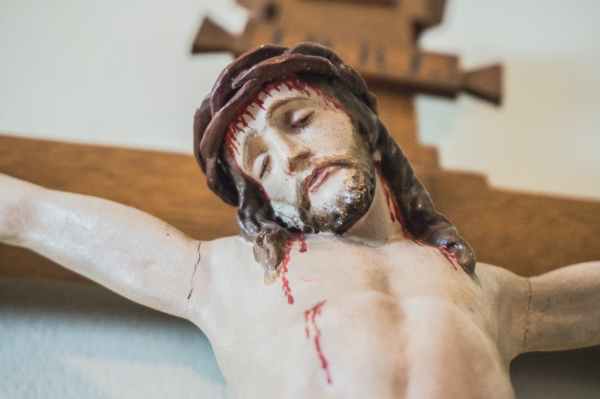
Today is a reminder of violence. “Good Friday” is filled with reminders of torture, injustice, and brutal death on a cross. There is almost nothing about this day that suggests “Peace.” And yet, it is because of this day, and this cruel and violent death, that WE can have peace with God. Jesus made peace for us by suffering at the hands of corrupt and brutal men. He could have fought back. He could have called down legions of angels to avenge each cut and bruise He suffered. With a breath or a single word, He could have slain the entire Roman Empire, freed the nation of Israel, and claimed victory and “peace.” He could have avoided the violence of beatings and death. He could have appealed to Pilate, who already was inclined to release Him. He could have argued with the Sanhedrin, or said whatever they required to secure His pardon and avoid the cross. He could have run away in the Garden, and stayed hidden and given up His ministry for safety and “peace.” But He didn’t. He didn’t fight back, He didn’t argue, He didn’t plead. He healed the ear of one of His arresting officers. He welcomed one of the thieves crucified next to Him into the Kingdom of God. He made provision for His mother’s well-being. He forgave those who accused Him and crucified Him–even from the Cross!

Photo by Liza Summer on Pexels.com

Jesus said that those who make peace will be called the children of God. Not those who seek peace– those who make peace. There is a difference. We tend to seek peace through avoidance. We isolate, insulate, hibernate and alienate, all in attempting to find peace. We avoid conflict. We avoid attachments that might cause us heartbreak or betrayal. Even in our prayers (and I’m speaking from personal experience), we ask for peace without pain or involvement. We want God to shower us with peace and protection, but we don’t ask for the courage or the strength to “make” peace.

Photo by RODNAE Productions on Pexels.com

Making peace involves reaching out, taking risks, being willing to suffer misunderstanding, conflict, and injustice. It means that we will “take up our cross” and be willing to die to our own comfort and safety for the sake of Christ. That does not mean that we are to be combative, aggressive, abusive, or contemptuous. But, like Jesus, we are to stand firm, even as we offer open arms to those who disagree with us, mock us, even persecute us. True peace is a gift–first from God, and passed on to others who do not deserve it. It is a gift of Grace and Love. The Children of God should be makers of peace, not avoiders of conflict. We need to meet violence and aggression with strength of purpose and positive action. And that should be reflected in our prayer life as well.

Photo by Luis Quintero on Pexels.com

How can I make peace today through prayer and service? What cross can I bear for the sake of Christ, and the Cross He bore for me?

Blessed Are the Pure in Heart..

“Blessed are the pure in heart, for they shall see God.” (Matthew 5:8)

“Create in me a pure heart, O God, and renew a steadfast spirit within me.” (Psalm 51:10)

Photo by Min An on Pexels.com

I’ve been looking through the Beatitudes and how they relate to prayer. Jesus said that the pure in heart are blessed, for they shall “see God.” Have you ever spoken to someone who wasn’t looking at you? They looked past you, or around you, or down at their device, but they didn’t attempt to make or maintain eye contact. It can be disconcerting, and even rude. And yet, there are times when, with our divided hearts, we come into prayer without really looking for, or at, God.

Photo by RODNAE Productions on Pexels.com

At other times, our hearts cloud our vision, giving us a distorted view of God. We harbor sin or guilt, and we see God as unforgiving or unfair. We are holding on to our own will, and we see God as restrictive or demanding.

Photo by Andrea Piacquadio on Pexels.com

The pure in heart see God as He really is– Glorious, Merciful, Wise, and Just. They see evidence of His lovingkindness and faithfulness all around them. They see themselves through His eyes– beloved and forgiven–and they see others through the eyes of Grace.

This is not our natural state. We are NOT pure in heart. We are self-centered, self-absorbed, and self-conscious. King David recognized this profoundly when he was caught in his great sin of adultery and murder. In his own lust and selfishness, he had seduced the wife of another man, and when she became pregnant, David arranged to cover up the first sin–by having the man murdered. David was not a notorious scoundrel. He was even called, “a man after God’s own heart.” But when he was confronted with his guilt, David “saw” himself as he really was– not a victim of circumstance, or a martyr to passion, or a king who was above the law, but a man who had committed evil against others, and against a Holy and Sovereign God.

Photo by Nicola Barts on Pexels.com

David’s prayer was in line with his vision. Not only did he see himself as he really was; he saw God as HE really is: Holy and Just, but willing and able to restore David’s purity of heart. David’s God is the same today as He ever was. He longs to make us clean; to restore to us the joy of our salvation (see Psalm 51:12), and give us the power to pursue our purpose and leave our past sins behind.

Photo by Edu Carvalho on Pexels.com

When we desire to “see God,” we must desire this cleansing and restoration of purity. We can pray without it, but we cannot look at a Holy God with an unclean spirit. All we can do is look elsewhere– talking to the wall or the floor. God still hears us, but he wants to have a real conversation; one full of intimacy and understanding.

So, today, will I make “eye contact” during my prayer time?

Blessed Are the Merciful

“Blessed are the merciful, for they will be shown mercy” (Matthew 5:7).

Am I merciful when I pray? That’s not a question I normally ask, but I’m looking at the Beatitudes, and how they relate to my pursuit of prayer. I pray for justice; I pray for healing; I pray to be more Christlike, but do I specifically pray about mercy? Certainly, I thank God for HIS mercy toward me, and I hope I show mercy to others, but does it enter my prayer life?

Photo by Michelle Leman on Pexels.com

It’s easy to pray for mercy for ourselves, when we know we deserve justice (and punishment). It’s easy to ask for mercy for our loved ones. But do I pray to become more merciful? Do I pray for a greater love of Mercy? In Micah 6:8, we are told that God requires three things– to do justice, to love mercy, and to walk humbly with Him. Often, it is easier to love justice, do mercy (when it suits us) and walk in our own way, asking God to follow US as we go through the day– bless me, bless my work, bless my travels, etc..

Mercy requires a knowledge of justice and a humble acceptance of God’s sovereignty. Justice is NOT whatever we think is “fair” or “equitable” in a certain set of circumstances. Justice is defined by God, and the only way to “do justice” is to obey His will. We will not “love mercy” until we experience it at God’s hands.

That’s really what this Holy Week is all about–God’s justice, God’s Mercy, and His Victory and Lordship. As we go through this week, in preparation for Easter, it is vital to meditate on what Jesus DID for justice to be satisfied, the depth of His Love that caused Him to suffer and die to provide, not just mercy, but Unspeakable Grace, and the humility He demonstrated in His time on earth– serving, sacrificing, even dying the painful and humiliating death on a cross–all for me; all for you.

Photo by RFA on Pexels.com

And we must be careful about making Mercy all about us and all about the here and now. We live in a culture of “instant gratification.” We want God’s mercy to “fix” the immediate problems we see around us. Those who are merciful WILL be shown mercy– but we may not see instant ease and comfort in a situation where others hold a grudge, or where the natural consequences of our sin still exist. We have been justified before God– He will not count those sins against us–but we still live in the fallen world where sin leads to death and destruction. God will redeem all things in His time, and we can trust that His mercy will triumph over even the worst of circumstances, but we may still have to endure suffering for a season.

Photo by Inzmam Khan on Pexels.com

When we come to God in prayer, we have no right to withhold mercy– either from those who may have offended us, or from ourselves for things we did in the past. Mercy is a gift– one we cannot give without having received it, and one we cannot hold on to without sharing it freely. When we pray for our enemies, we must pray with a heart of mercy– not because they deserve it, but because God’s sovereignty demands it.

Photo by Daniel Maforte on Pexels.com

Blessed Are Those Who Hunger…

“Blessed are those who hunger and thirst after righteousness, for they will be filled.”(Matthew 5:6) I’m looking at the Beatitudes and how they can relate to our prayer life. Today, I’m looking at the fourth in the series, shown above.

Photo by Adrienn on Pexels.com

I recently found out that I am diabetic. I’m trying to lose weight and eat in ways that will help manage my body’s response to carbohydrates. And I find that when I feel hungry, I seem to crave all the wrong things! I miss pasta and chocolate and a large sized Coca Cola from the drive-thru. I don’t normally crave steamed cauliflower or unsalted nuts when I’m hungry. There’s nothing inherently wrong or “evil” about pasta, or chocolate chip cookies, or even sugary drinks. But they can crowd out the nutrients that my body needs, making me bloated and yet feeling like I didn’t get “enough” to eat. I don’t crave the nutrients– I crave the taste. I don’t hunger for the fuel my body needs; instead, I hunger for the flavors I want, or the quick burst of energy I feel from sugar and carbs.

Photo by Andres Ayrton on Pexels.com

And the same can be said for Righteousness. Most of us do not truly hunger or thirst for righteousness on our own. We crave comfort, or affirmation, or control of our circumstances. Even in our prayer life– even as we say the words, “Thy will be done”– we are usually asking for our own wishes or desires to be fulfilled. “Help me get this job.” “Change my neighbor’s attitude.” “Fix the problem…” We want to BE righteous, but our appetite leads us to compromise and complacency. The end result is that we feel unfulfilled, even resentful and restless.

Photo by Teona Swift on Pexels.com
Photo by ROMAN ODINTSOV on Pexels.com

Jesus promises that those who hunger and thirst after righteousness will be filled. We will not be left with the gnawing feelings of guilt and shame and regret, or left feeling unfulfilled and dissatisfied. What kind of diet will lead to this “filled” feeling? Chewing on God’s Word! Have you ever noticed how often in the Bible God uses food imagery in relation to His Word? “Taste and see that the Lord is good” (Psalm 34:8). “How sweet are Thy words unto my taste! Yea, sweeter than honey to my mouth” (Psalm 119:103) “Man shall not live by bread alone, but by every word that proceedeth out of the mouth of God” (Matthew 4:4b). And there are dozens of other examples throughout both Testaments.

Photo by cottonbro on Pexels.com

When I come to prayer wanting more of God and less of my own “cravings,” it changes my perspective– and my appetite. My desire is no longer for convenience or temporary comfort, but to be closer to God– to enter into His Righteousness. My other desires start to change to align with His will. Instead of praying to get a particular job, I begin to pray that God will lead me to do my best at whatever job I have (or that I will eventually get). Instead of wanting my neighbor to change, I will begin to look for ways God wants me to change my response to my neighbor. Instead of just wanting to lose weight, I will begin praying about ways I can honor God in the way I eat (and exercise and take care of my body).

So I need to ask, “What am I really hungry for today?”

Blessed Are Those Who Mourn

I’ve been exploring the Beatitudes (Matthew 5:1-12) and how I think they relate to prayer. Today, I want to look at the second one: “Blessed are those who mourn, for they shall be comforted” (v. 4).

Photo by RODNAE Productions on Pexels.com

I know a lot of people who are mourning. I know people who have lost loved ones to COVID, to suicide, to cancer, etc. I know those who are mourning the loss of a job or a house. I know those who are mourning the loss of health– either their own or that of a loved one. And I have been a mourner. I know those moments when the grief hits unexpectedly– a song comes on the radio, or a certain photo pops up in my Facebook memories; even the smell of freshly cut grass or the taste of popcorn can remind me of loved ones lost, and bring a tear to my eye.

Photo by cottonbro on Pexels.com

I also know the mourning that comes from regret– the painful consequences of ill-chosen words or reckless actions– even missed opportunities. Mourning is painful. It is uncomfortable. The world around us is made uncomfortable by our mourning. People spend billions of dollars and spend countless hours trying to avoid mourning; trying to deny, placate, drown, or forget their grief and sadness. We take pills, we binge watch entertaining programs, we run away, we distract, we seek to mask our feelings, suppress them, or eradicate them.

Photo by Andrew Neel on Pexels.com

Jesus calls on us to mourn. He wants us to bring all the ugliness of our grief and shame and give it to Him. He will not ask us to cover it up, or hide from it, or “get rid of it.” He will not tell us to “get over it” or “put it behind us.” Instead, He will comfort us. That doesn’t mean we will never again feel grief or shame or sadness in this life. But our mourning will be transformed into Joy. Joy is not the absence of, nor a denial of grief. It is the triumph of life over death; of hope over despair; of purpose over futility. We are not commanded to be “shiny, happy” problem-free people. Nor are we to let mourning and grief overwhelm us or turn us sour and despondent. Instead, we are to share our grief– and to share in the grief of others–just as we can then share in the comfort we have found!

Photo by Pixabay on Pexels.com

In the same way that the “poor in spirit” can embrace all the riches and glory of the Kingdom of Heaven, those who mourn can receive from God the kind of Peace that “passes all understanding” (Philippians 4:7), and the joy the “comes in the morning” (Psalm 30:5) God does not want us to be forever depressed or wallow in our despair–but He also does not want us to pretend that we are invincible, or untouched by sorrow. Jesus wept. Jesus felt sadness and frustration during His earthly ministry. He was tired, He was misunderstood, He was betrayed. He suffered losses. And He grieved over broken relationships and the horrible consequences of Sin in the lives of those around Him.


Photo by Ivan Samkov on Pexels.com

Those who do NOT mourn– who do not feel sorrow or regret or loss– will never know the healing power of God’s consuming comfort. They will never know the full measure of Grace. They will never cry out for it, never be surprised by the light in the darkness, never feel the joy of being held and cradled by compassion. And they miss out on the true Joy that comes from being comforted and being able to comfort others.

Photo by Design Killer on Pexels.com

So the question I have to ask myself today is– what have I mourned lately? When was the last time I collapsed under the weight of my own grief or shame, only to find myself upheld and wrapped in the arms of the Lover of my Soul? When was the last time I extended comfort to someone else by mourning with them?

Blessed Are the Poor In Spirit

I want to spend some time this month exploring the Beatitudes and how they relate to our prayer life. Today I want to look at Matthew 5:3: “Blessed are the poor in spirit, for theirs is the kingdom of Heaven.”

How do I approach God’s throne of Grace? Do I come with a list of what I want, and what I’ve accomplished for God? Do I come reluctantly, grudgingly, holding back some part of who I am or who I have been? Do I come flaunting my self-righteousness? Or do I come empty of all but my desire to be in the Presence of my Maker?

Photo by Pixabay on Pexels.com

Many people have interpreted (and misinterpreted) this phrase. Jesus does not insist that we be financially destitute, or drained of all enthusiasm or emotion. But He does require that we come recognizing our need of Him. We may not be physically needy in the moment– we may be well-fed, comfortable, or even wealthy by human standards. But we are all in need of God’s presence and His provision. On my own, I may believe that I have earned all that I seem to possess, but I cannot supply the air that I breathe, or guarantee that my health will remain perfect, or that I will be able to keep what I think I own, or force others to accept or respect me. “Man supposes, but God disposes” is an old phrase, but an accurate one.

Photo by cottonbro on Pexels.com

When I approach God in prayer, no matter how rich or poor I may seem, I am dependent on God for everything. And this is true for every one of us. So I don’t approach God as someone “needier” or “less needy” than my neighbor. And I don’t approach God with any power to bargain or demand, or even to request– except that God has invited me and sought me out in His Love and Mercy!

And this is the rest of the Beatitude– “for theirs is the kingdom of Heaven.” God has opened up Heaven and invited me to walk with Him, to learn from Him, to receive His blessings, and to live with Him throughout eternity. His riches! His Glory! His Presence! Every time I pray, I trade my poverty for God’s bounty. I trade my confession for His forgiveness. I trade my helplessness for His Wisdom and Power to triumph over adversity and confusion, grief and doubt, sickness and lack.

It is when I come to Christ believing that I possess or control all that I suppose to be “mine,” that I lose the Blessing of His sufficiency and His perfection.

“Thank you, God of Mercy, and Ruler of All, for the privilege of coming to you. I come empty and spent–show me where I am holding on to something less than You, or trying to claim Your wealth as my own. Teach me to rest in the sufficiency of Your kingdom, even as I continue to serve you here on earth.”

A Lenten Prayer

Father,
I gave up nothing for Lent this year.

I went on a “weight-loss” plan because my doctor said I should.
Even so, I didn’t give up meat or chocolate,
Or sweets, or even television, like some others did.

I didn’t give up shopping.
I didn’t give up social media.
I didn’t give up…anything for this short season.

Photo by Kindel Media on Pexels.com

But today I acknowledge that Lent isn’t really about
What I have or haven’t given up.
It’s about what YOU gave up.
You gave it all:
Your Glory;
Your Power;
Your Majesty.
You became a simple man.
A servant of men.
A man without a home;
Without prestige;
Without a title.

Photo by RFA on Pexels.com

You were betrayed;
Falsely accused,
Corruptly tried,
Shamefully condemned,
Brutally beaten,
Crucified.
So that I might gain eternal life.

You do not judge me for what I haven’t given up for a season.
You do not withhold your love and forgiveness;
Waiting for me to learn the disciplines of Lent.
You ask for more than that– and less.
You ask me to follow you–to leave it all behind.
You ask me to give up my life– only to find it again in You.

Photo by John Ray Ebora on Pexels.com

Let me reflect today on what more I need to give up:
My pride.
My apathy.
My selfishness with time and money.
My need to have my own way;
My own comforts.


May I be free to serve you;
To serve others.
May I be ready to give up whatever is
Keeping me in thrall;
Keeping me enslaved;
Keeping me from serving you with abandon.

Show me how to let go
Of all but You–
That You may be my All.

A Few Thoughts About Manna

I’ve already posted recently about Ash Wednesday (see the post from Feb. 15), so it may seem strange on a day of fasting and ashes to be writing about food. And manna doesn’t seem to have much of a connection to prayer– bear with me…

Photo by Karolina Grabowska on Pexels.com
  • Manna was, quite literally, “daily bread.” God sent manna each day for the children of Israel as they wandered and camped in the wilderness on their journey to the Promised Land. It appeared overnight, much like dew, and evaporated in the heat of the day. Yet the small “grains” could be gathered and made into nourishment for the thousands of Israelites who had no other source of bread. Manna and the bread made from it were only good for a day (except on Friday, when twice as much would fall so no work needed to be done on the Sabbath). God provides for our needs daily– we don’t have to worry and fret. Jesus returned to this theme often, including the Sermon on the Mount and The Lord’s Prayer.
  • Manna was uniquely suited for the Israelites in their situation. Manna did not require time to grow, harvest, or prepare. It did not require storage space, as it was collected and used up daily. It did not require yeast, salt, or sugar to be added to it–God designed it to be simple, sufficient, sustaining, and even sweet!
Photo by Liza Summer on Pexels.com
  • Manna was provided even after the Israelites complained and accused Moses (and God!) of leading them into the wilderness to die. God will not withhold punishment (see what happened in Numbers 11 when the Israelites complained about the manna!), but He will provide for our needs out of His love for us, not as a condition of our righteous behavior. All the people had access to manna, even those who complained or were defiant. If someone went hungry, it was not because God refused to provide– but because they chose not to avail themselves of His gift, or because they refused to accept the nature of the gift.
  • Manna was consistent. God didn’t send manna one week and raisins the next; God is faithful and unchanging–the manna wasn’t just a nutritional provision, it was a reflection of God’s nature! God gives good gifts; it is our selfish nature that often takes His goodness for granted, and asks for what we do not need.
  • Once the Israelites reached the Promised Land, the manna stopped. God’s gifts meet our needs– in His way, and in His time. God does not give gifts blindly or absent-mindedly. God knew exactly how much manna to send each day, and exactly when the manna would no longer be needed. He was watching closely the whole time– every step of the journey.
Photo by Arina Krasnikova on Pexels.com

So today, whether or not you are fasting, you can rejoice in the knowledge that God has seen every step of YOUR journey. He will provide for our every need, including the need for forgiveness, courage, physical nourishment, and spiritual growth. All we need to do is look for it, gather it, and use it!

Blog at WordPress.com.

Up ↑