God of the Impossible

35 On that day, when evening had come, he said to them, “Let us go across to the other side.” 36 And leaving the crowd, they took him with them in the boat, just as he was. And other boats were with him. 37 And a great windstorm arose, and the waves were breaking into the boat, so that the boat was already filling. 38 But he was in the stern, asleep on the cushion. And they woke him and said to him, “Teacher, do you not care that we are perishing?” 39 And he awoke and rebuked the wind and said to the sea, “Peace! Be still!” And the wind ceased, and there was a great calm. 40 He said to them, “Why are you so afraid? Have you still no faith?” 41 And they were filled with great fear and said to one another, “Who then is this, that even the wind and the sea obey him?”

Mark 4:35-41 ESV

I’ve been reading through the Gospels this month, and one of the phrases that has stood out for me this year is “ye of little faith.”(or “you have so little faith!) Jesus uses this phrase to chastise His disciples, as well as the crowds– they claim to want miracles, yet when Jesus does miracles, they seem astonished almost to the point of fear. Or they attempt to “explain them away.”

Photo by Andrea Piacquadio on Pexels.com

We live in a world of possibilities– when we are young, we see possibilities everywhere. “When I grow up…” we imagine ourselves as astronauts, or world leaders, or Olympic champions. As we grow older, our world of possibilities grows narrower. We become cynical (or more aware of our own limitations!) and, while we long to see miracles, we neither expect them nor ask for them. We know some difficult or unexpected things are still possible, but we tend to see more “impossibilities.” “My health will never get better.” “My boss will never listen to me.” “I can’t…”

Photo by Andrea Piacquadio on Pexels.com

One of the biggest roadblocks to becoming a Christian (and to continue to grow in faith) is to accept that NOTHING is impossible for God. We set limits on God’s ability, His willingness, His goodness–we expect to be disappointed, disillusioned, and disheartened. And it becomes a self-fulfilling prophecy– we end up disappointed, disillusioned, and disheartened in others, in ourselves…

Photo by Dimitry Zub on Pexels.com

Yet, God has given us an entire book filled with miracles and impossible events that are meant to show us that He is the God of the Impossible; the God of Miracles. From the beginning, God has demonstrated His willingness to make a way when there seems to be no way. From Noah and the Flood, to Abraham becoming the Father of many nations, to bringing Joseph from a pit to becoming the second-most powerful man in Egypt, to the story of Moses leading the Israelites out of slavery…the stories abound. Whether sending food from heaven, water from a rock, or fire from the sky, God’s power is on display throughout the Old Testament. The crowds following Jesus grew up hearing these stories. But after four hundred years of silence, they seemed to remember what God COULD do, but doubt what God WOULD do for those who call on Him.

Jesus walked on water, healed the sick, turned water into wine, cast out demons, raised the dead, and much more. And still the people wanted “proof.” But we are not so very different. Not only do we have all the stories of the Old Testament; we have all the stories of Jesus’ miracles. Yet we still wonder whether God will hear and/or answer our prayers. And it doesn’t take 400 years of silence to cause us to doubt. Sometimes it is four hours, or four days, or four months of seeming silence.

Photo by Skyler Ewing on Pexels.com

Nothing is impossible with God. There are some things that are not productive; some things that are not part of His plan. Imagine Shadrach, Meshach and Abednego praying that God would not allow them to go into the fiery furnace? That wasn’t the plan. Instead, God chose to do the unexpected, the unthinkable–the impossible. He rescued them IN the fire– caused them to come through without being singed. Imagine those who prayed that Lazarus would recover from his illness. That wasn’t the plan. Instead, Jesus did the impossible– raising Lazarus after four days; after the funeral, after the burial, after all possible hope was gone.

God excels in the impossible. He delights in it. What impossible situation are you facing today? God may not choose to remove the situation. But He can take an impossible situation and turn it into a miraculous victory. Not because we demand “proof” of His divinity or power. But because His plans are bigger and better than what we can comprehend.

Photo by Anna Shvets on Pexels.com

I’ve shared a bit about one of my current struggles. My Mom is in her 88th year, and her health is failing. She is very independent and lives alone. My siblings and I are being “stretched” in trying to help Mom navigate several decisions and several changing conditions. God has not taken away her health issues, or conveniently provided an easy transition or simple answers to our questions. But He has been “with us in the fire.” That doesn’t mean that I understand all that Mom is going through, or how best to help her from moment to moment. And I’m not asking God to provide a dramatic “rescue” for Mom as she navigates this part of her journey. But I trust that God has already seen the end from the beginning– none of the “setbacks” or “unexpected events” we face can take God by surprise or leave Him unprepared to use them for His glory and our ultimate good.

Plenty of Room…

14 1-4 “Don’t let this rattle you. You trust God, don’t you? Trust me. There is plenty of room for you in my Father’s home. If that weren’t so, would I have told you that I’m on my way to get a room ready for you? And if I’m on my way to get your room ready, I’ll come back and get you so you can live where I live. And you already know the road I’m taking.” Thomas said, “Master, we have no idea where you’re going. How do you expect us to know the road?” 6-7 Jesus said, “I am the Road, also the Truth, also the Life. No one gets to the Father apart from me. If you really knew me, you would know my Father as well. From now on, you do know him. You’ve even seen him!”

John 14:1-6 “The Message”

My mother is fast approaching that time in life where she may no longer be able to live independently. Her health issues and failing eyesight mean she can no longer drive, and her house in the country, while familiar to her, causes her anxiety– What if the furnace breaks down in the winter? What if her pipes freeze? What if she can’t get back and forth to her mailbox, or falls down in the bathroom?

Photo by Anna Shvets on Pexels.com

My siblings and I are facing questions, too. Are any of us able to provide room for Mom to stay with us? Can we provide proper care? Can any of us “be there” when she needs us? Where can she go, if she can’t stay in her own home? How will she manage if she has to go “into care” somewhere? Will they provide for her needs?

Photo by cottonbro on Pexels.com

These are questions that plague us during our lifetime. I remember looking for housing after I left college and got my first job. Where would I stay? Could I afford rent? Would it be safe? Noisy? What about maintenance and utilities? When I got another job– Could I find another place close to my new job? How would I get moved? Would I be able to fit my furniture into the new space? Would I need to buy new appliances? Would the neighbors be friendly?

Photo by Nithin PA on Pexels.com

One day, we will “move” to our eternal home. If we have trusted Christ’s promises, we don’t have to worry about any of those questions. Our new and everlasting home has been prepared especially for us by our Loving Father. There is plenty of room, and it is rent-free! We don’t have to worry about the location, the safety, or the utility of our Heavenly home– it comes with an eternal guarantee.

Photo by Pixabay on Pexels.com

Jesus gave this promise to His disciples during the “Last Supper.” Preparations had been made for them to eat the Passover meal in an “upper room.” Jesus didn’t own a house; He had no apartment or condo or even a hut where He could invite His friends or family to join Him for a meal. “Foxes have holes, and birds of the air have nests, but the Son of Man has nowhere to lay his head.” (Matthew 8:20 ESV) This is the same Jesus who was born in a stable “because there was no room in the inn.” (Luke 2:7) This is the same Jesus who was “in the beginning” creating the whole of the universe.

Photo by Pixabay on Pexels.com

We can trust the promise of Jesus– there is “plenty of room” in God’s Kingdom. There is room for all who come to the Father’s house. No one will have to wonder or worry about heat or light or plumbing. No one will have to wonder about food or clothing, mobility issues or health concerns. No one will have to worry about the neighbors or the neighborhood. All we have to do is follow the “road” laid out by Jesus Christ.

Photo by Pixabay on Pexels.com

Jesus came into a world that had “no room” for Him– a world that rejected Him– so that we could have plenty of room with Him, forever.

Even though we may have decisions to make about finding a temporary “place” for Mom, we can be very sure that God’s already prepared a place for her– better than anything we can plan for or imagine! 

Cleanliness or Brokenness?

“Cleanliness is next to Godliness.” If you grew up hearing this old maxim (as I did), it may seem like something very wise–even Biblical. After all, so many of the chapters in Leviticus talk about ritual washing and being clean (or unclean). God’s people should be clean and tidy, organized and pure. But if you continue reading through the Old Testament, God becomes very angry with His people. Sure, they are following the letter of His law. They are bringing sacrifices, making sure that they wash everything properly and measure out the right amounts of incense. In Jesus’ day, the Pharisees even tithed their spices! Yet, Jesus called the Pharisees a “brood of vipers,” (Matthew 12:34) and “whitewashed tombs, which look beautiful on the outside but on the inside are full of the bones of the dead and everything unclean.” (Matthew 23:27b NIV)

Photo by Ron Lach on Pexels.com

We spend so much time worrying about appearances. But just because our lives look “clean” and “tidy” doesn’t mean that we are close to God. God isn’t impressed by our outward observance of His laws or by our neat appearance. Jesus did not reach out to the clean and tidy Pharisees; He went out of His way to speak to lepers and tax collectors and others who were considered “dirty” and tainted.

Photo by ding lei on Pexels.com

That doesn’t give us a pass to be slovenly or careless about hygiene! But it does mean that we should care less about what others see, and more about what God sees–on the inside. God wants to see hearts that are humble and willing to serve. He doesn’t want clean hands that are unwilling to reach out in love; He doesn’t want spotless houses or cars filled with complaining, gossip, and anger. God hasn’t asked us to “tidy up” our lives or “get our act together” to impress our neighbors. He asks us to repent of our uncleanness; to be broken in spirit, so that we will submit to His yoke and follow Him. HE will provide the cleaning we need, through the power of His “once-for-all” sacrifice!

Photo by Pixabay on Pexels.com

In other words, “Brokenness is next to Godliness; and Godliness leads to Perfect cleanliness.” Our sins cannot be covered up or cleaned up by our efforts; they can only be washed away by the Blood of the Lamb. Only through Him can we become truly clean.

When we come before God in prayer, let us come, not just with clean hands, but with hearts that are open and tender, willing to listen to His words of wisdom, and follow in His footsteps.

Ceaseless Praise

Have you ever thought that right now, somewhere in the world, someone is singing praises to God? Someone is praying somewhere in the world at every moment of every day. There is not a solitary silent moment in the universe, where God is not receiving the worship He deserves. In fact, Jesus told some angry Pharisees, when they asked Him to rebuke the people of Jerusalem, that if they (the people who were shouting praises) were to be silent, the very rocks would cry out! (See Luke 19: 37-40)

Photo by Joshua Brits on Pexels.com

In fact, “the whole earth is full of His Glory” (Isaiah 6:3). From the smallest insect to the giant creatures in the seas; from the smallest of dust motes to the stars in the galaxies, all of creation sings, shouts, shines, and testifies to the Majesty of God.

Photo by Petr Ganaj on Pexels.com

We don’t hear this constant praise. Nor do we smell the aroma of constant prayers that rise up “like incense” to the throne of Heaven. But our prayer should be that Jesus would be as close as our every thought, word, and action throughout the day; that in everything we think, say, and do, we would be participating in the eternal and glorious worship of the One who is worthy. And that our prayers and praise would blend in harmony with all the others in the great “Song of the Redeemed.”

Photo by cottonbro on Pexels.com

Prayer and praise should not be a single activity undertaken for a minute or even an hour a day. It should be as natural as breathing or blinking. And while we are in the flesh, and may not physically “pray without ceasing,” (1 Thessalonians 5:17) we can ask God to “take our moments and our days–let them flow in ceaseless praise!”

Photo by MART PRODUCTION on Pexels.com

Praying with Confidence

What does it mean to pray with confidence?

Does it mean that we pray with the sure knowledge that God will give us whatever we ask for?

Photo by Andrea Piacquadio on Pexels.com

22 Then Jesus said to the disciples, “Have faith in God. 23 I tell you the truth, you can say to this mountain, ‘May you be lifted up and thrown into the sea,’ and it will happen. But you must really believe it will happen and have no doubt in your heart. 24 I tell you, you can pray for anything, and if you believe that you’ve received it, it will be yours.

Mark 11:22-24 (New Living Translation)
Photo by Pixabay on Pexels.com

This is a difficult concept– and one I don’t fully understand. But I do believe the following:

  • “Confidence” means: “A trusting, or reliance; an assurance of mind or firm belief in the integrity, stability or veracity of another, or in the truth and reality of a fact.” (from studylight.org) Our trust is not in the power or our own words or in our worth, but in the power of God’s will to act justly, righteously, and in His sovereignty. I cannot ask God to act against His will and have confidence that He will give me what I ask for. Even if I ask for a miracle– like moving the mountain into the sea–I must trust that God will do it because it is part of His plan; not because God must obey my whims.
  • The more I learn of God’s power and love– by seeking Him, following Him, and experiencing His Grace–the more I will ask in confidence and assurance.
  • The more I seek my own will and ignore God’s wisdom, the more I will ask in arrogance and/or doubt.
  • Confidence will change the tone of our prayers from beseeching to believing–instead of asking for an outcome we don’t really expect, we will ask expecting that God already knows the outcome that is best.
  • Confidence doesn’t need immediate results. That mountain may not be moved in an instant. That doesn’t mean that it won’t be picked up and thrown into the sea–perhaps in our lifetime; perhaps in a year; perhaps in a thousand years. We sometimes trust in God’s power and willingness, but we forget to trust His timing.
Photo by Michelle Leman on Pexels.com

We can pray in confidence. In fact, we must learn to pray with confidence! And we can be confident that it will happen!

Photo by Ian Panelo on Pexels.com

3-6 Every time you cross my mind, I break out in exclamations of thanks to God. Each exclamation is a trigger to prayer. I find myself praying for you with a glad heart. I am so pleased that you have continued on in this with us, believing and proclaiming God’s Message, from the day you heard it right up to the present. There has never been the slightest doubt in my mind that the God who started this great work in you would keep at it and bring it to a flourishing finish on the very day Christ Jesus appears.

Philippians 1:3-6 (The Message)
Photo by Alyona P on Pexels.com

No Particular Place to Go..

Back in 1964, singer Chuck Berry released a song called “No Particular Place to Go.” It was a catchy tune about a couple driving along on a date and having trouble with a new feature in the car– the safety belt– which ends up ruining their plans for a romantic stroll.

This may seem to have nothing whatsoever to do with prayer or Christian living, but stick with me…

Photo by Anna Shvets on Pexels.com

The writer of Proverbs includes a unique chapter https://www.biblegateway.com/passage/?search=Proverbs+9&version=NIV in which Wisdom and Folly–both women–call out to passersby inviting them to visit. Both say the same thing: “Let all who are simple come to my house.” But Wisdom has built her house, prepared the food and wine, and even sent out servants to help. Folly lounges outside her door, offering “stolen” water and “food eaten in secret–though she has done nothing to prepare for visitors, and so has nothing real to offer.

Photo by KoolShooters on Pexels.com

Both women call out, both women extend an invitation–the people are not looking for them; they are just passing by. And most of them have “no particular place to go.” And isn’t that the way with us sometimes? We don’t intend to fall into foolish habits, or get caught up in addictions. Nor do we look for wisdom in our fellowship over a meal, or in spending time at someone’s house. We can be very intentional in our actions, but fall victim to our interactions.

Photo by Julia Larson on Pexels.com

Spending time with people of wisdom– people who will pray with us and for us–is so important. Preparing our hearts for fellowship with others, and for time spent with God is not something we should leave for chance. Just as we take time to “map out” our goals for work or health or finances, we should take care to map out our relationships.

Photo by Mary Taylor on Pexels.com

That doesn’t mean we avoid reaching out to others, and inviting them to enjoy fellowship, or that we must turn down all invitations from others. But we must be careful not to be drawn into folly. Jesus ate with sinners– but He didn’t carouse with them. He spent most of His time with those who wanted to share His love for the Father, and those who wanted to learn wisdom.

Folly never has a “particular place to go.” She wanders aimlessly. She doesn’t see the danger ahead, and she doesn’t look for a better road. Folly drives off recklessly without fastening her safety belt. Folly scrolls through lies and ads and half-truths on the internet. She gets pulled into relationships that are unhealthy and activities that are unproductive. And she wakes up dazed and confused and unfulfilled.

Photo by MART PRODUCTION on Pexels.com

Wisdom walks in the way of insight– well-marked paths that lead to a clear destination. Wisdom seeks traveling companions who share the same destination. Wisdom pursues the truth, in person and on-line. Wisdom drives defensively and wears a safety belt (and knows how to operate it!) Wisdom seeks shelter that is safe, where she can be well-fed and find rest. She wakes up refreshed and ready to continue the journey.

Photo by Pixabay on Pexels.com

The fear of the Lord is the beginning of wisdom,
    and knowledge of the Holy One is understanding.
 For through wisdom your days will be many,
    and years will be added to your life.
 If you are wise, your wisdom will reward you;
    if you are a mocker, you alone will suffer.

Proverbs 9:10-12 (NIV)

And You Will Find Rest For Your Souls

Come to me, all who labor and are heavy laden, and I will give you rest. 29 Take my yoke upon you, and learn from me, for I am gentle and lowly in heart, and you will find rest for your souls. 30 For my yoke is easy, and my burden is light

Matthew 11:28-30 (ESV)

Sometimes, the commands of the Bible are counter-intuitive. In Matthew 11, Jesus tells those who are weary from their labors to come to Him. But He continues by telling them to take on a yoke and learn from Him, to find rest for their souls. This doesn’t seem like a restful offer. The image is of an ox or beast of burden being forced to wear a yoke and do more work. How could that be restful? Jesus finishes the image by saying that His yoke is easy and His burden is light. While that may seem better than a heavy yoke, it still implies work, NOT rest.

There is a lot to unpack in these few verses, but here are some thoughts about rest on this Labor Day:

  1. In order to take on Jesus’ yoke, we must be freed from the yoke we already bear– the very one that has left us weary and “heavy laden.” We can’t throw it off ourselves. We must come to Jesus. And we must understand that Jesus offers rest, not laziness, complacence or inactivity.
  2. Jesus refers to “my yoke” and calls for us to “learn from me”– indicating that whatever work we do, He is our partner and teacher. We are not being asked to work alone or under a weight we cannot bear. This is not an image of a single ox pulling heavy weights, but of a team, sharing the load in companionship.
  3. Jesus doesn’t offer us a permanent vacation from work, but “rest for your souls.” Rest from guilt, worry, grief, anger, loneliness, injustice, and more– when we come to Him and lay down our old burdens to take us His new yoke.
  4. “My yoke is easy, and my burden is light.” Jesus isn’t calling us away from work; He IS calling us to meaningful and fruitful work– the kind that brings reward and fulfillment. We don’t need a heavy yoke and a hard taskmaster when we are eager and enthusiastic to see the results of our labors. But we DO need periods of rest. I hope that you enjoy a restful day, and a renewed enthusiasm for the work that lies ahead.
Photo by Andrea Piacquadio on Pexels.com

 My dear brothers and sisters, remain strong in the faith. Don’t let anything move you. Always give yourselves completely to the work of the Lord. Because you belong to the Lord, you know that your work is not worthless.

1 Corinthians 15:58 (NIRV)
Photo by Te lensFix on Pexels.com

Enjoy times of rest and refreshment, knowing that they are a reward for your work. Enjoy times of work, knowing they are not in vain. For while our work here and now can be filled with struggles, stress, and frustration, we know that Jesus came to redeem every aspect of our fallen world– even the work!

Photo by Sora Shimazaki on Pexels.com

Thank you, Lord, for giving us rest. Rest for our bodies, and rest for our souls. May we find refreshment and renewed strength to stand firm, and to work with enthusiasm, knowing that You not only see what we do, but share in it.

Armchair Olympians

24 Don’t you know that the runners in a stadium all race, but only one receives the prize? Run in such a way to win the prize. 25 Now everyone who competes exercises self-control in everything. They do it to receive a perishable crown, but we an imperishable crown. 26 So I do not run like one who runs aimlessly or box like one beating the air. 27 Instead, I discipline my body and bring it under strict control, so that after preaching to others, I myself will not be disqualified.

1 Corinthians 9:24-27 CSB

I must confess, I haven’t been watching much of the Olympic games currently taking place in Tokyo. Over the years, I’ve spent hours glued to the television, watching the competitions, gobbling up the emotional stories of various athletes and their struggles to qualify and chase their dreams. In fact, I used to get so involved in watching the Olympics, that I would fall behind in my housework, social obligations, and sleep! It can be very inspiring to watch as various athletes from around the world challenge themselves (and their competitors) to go faster, reach farther, and climb higher. And many of the stories and names have stayed with me over the years.

Photo by Guduru Ajay bhargav on Pexels.com

There is nothing wrong with watching sports, and cheering on those who have worked so hard. And I love the pageantry and good will of the Olympic games, where I find myself cheering for athletes and sports I would never know otherwise–those who have overcome tragedy and incredible obstacles just to participate; those whose achievements have set new standards and inspired others to greater heights. But as Christians, we should consider our OWN level of achievement. Not in a competitive sense, and not in the sense of “earning” God’s salvation or approval, but in the sense of growth and development of self-discipline.

Photo by Leon Ardho on Pexels.com

We admire athletes, not only for their natural abilities, but for their discipline and spirit. They train for years, undergoing rigorous drills, keeping tight schedules, pushing their bodies– often to the point of injury–to get a little more speed or distance or strength. They prepare for the stress of competition and the pressure of expectation. They learn to leave behind the failures and the victories of yesterday as they get ready for tomorrow. We watch them, and we talk about being inspired. But inspired to do what? I have never developed the level of self-discipline to rise every day at 6 a.m. to run or stretch, let alone train for a race or a swimming meet. I briefly flirted with becoming a gymnast after watching Nadia Comaneci score a perfect 10.0 in the Montreal Olympics of 1976, but I quit after only one weekend!

Photo by Anastasiya Gepp on Pexels.com

The Apostle Paul calls us to follow his example and “run the race” as we live for Christ–we are to develop our character and practice spiritual discipline in the same way that an athlete develops her body and practices physical and mental discipline. And our motivation is not a gold medal or a world record that will eventually be broken, but eternal victory over Sin and Death!

Photo by RUN 4 FFWPU on Pexels.com

I’m ashamed to say that I have not always followed this example. I’ve been an “armchair Olympian”– content to watch others do the hard work, and enjoy the vicarious feeling of victory when they cross the finish line. I cheer for those Christians who are called to foreign missions–I’ve even traveled on “short term” mission trips– but I don’t always see my everyday life as a “mission.” But that’s exactly what it is. Jesus didn’t watch the disciples heal the sick or preach about the Kingdom of God as He sat on the sidelines. And He certainly didn’t spend time analyzing and dissecting the “performances” of the prophets and patriarchs of old. He didn’t even tell the disciples to analyze His miracles or study His sermons. He simply said, “Follow Me!” “Walk with Me.” Christianity is not passively cultivating a feeling of victory in Jesus. It is living victoriously THROUGH Jesus.

Photo by Andrea Piacquadio on Pexels.com

Our character won’t be changed by sitting on the couch or in an armchair, watching others do the hard training and running their race. Cheering from the sidelines isn’t going to increase our patience, or develop our faith, or make us more Christlike. Listening to Christian Radio or watching sermons on television won’t automatically translate into a life of integrity and peace. Even reading the Bible, or keeping a prayer journal, or writing a blog about spiritual things won’t teach us humility, gentleness, or love for others. We need to make the effort. And we need to seek the wisdom and discipline of the Holy Spirit– our “coach”– as we follow the example of Christ. It starts with small decisions– daily habits–and learning to be consistent. It also takes a willingness to repent and get back on track when we fail. And we will fail in our own efforts!

Photo by Ric Rodrigues on Pexels.com

We can admire earthly athletes. But we shouldn’t worship them. And we shouldn’t let them become idols that substitute for the kind of work WE need to be doing to learn discipline and faithfulness. I want to reach the finish line, knowing that I’ve run my best race for the King!

Photo by Pixabay on Pexels.com

Lord, Lord!

21 Not every one that saith unto me, Lord, Lord, shall enter into the kingdom of heaven; but he that doeth the will of my Father who is in heaven. 22 Many will say to me in that day, Lord, Lord, did we not prophesy by thy name, and by thy name cast out demons, and by thy name do many mighty works? 23 And then will I profess unto them, I never knew you: depart from me, ye that work iniquity.

Matthew 7:21-23
Photo by Pixabay on Pexels.com

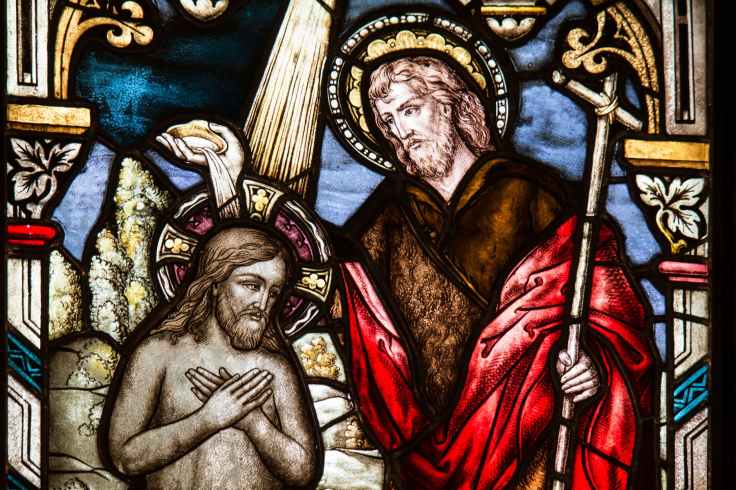
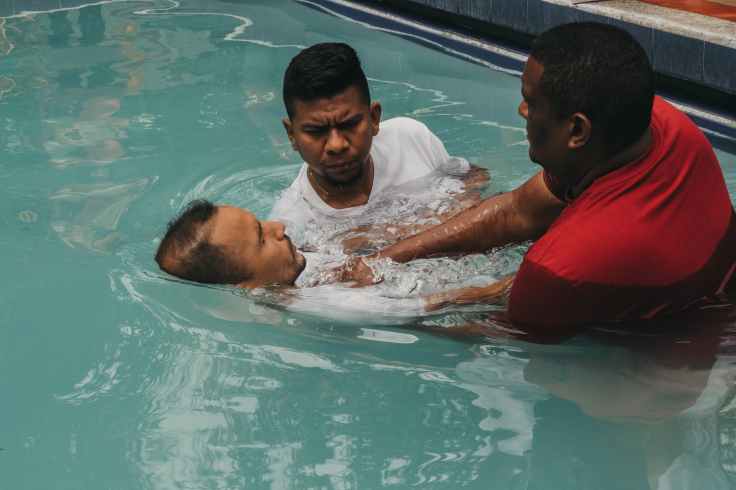
In just the past three weeks, three of my family members and one of my friends have made the decision to be baptized as a public declaration of their decision to live for Christ. All of them (and the others who were baptized at the same times) were baptized by immersion, signifying that they have, spiritually, died to self, been buried, and are raised with Christ to eternal life. This is not a step to be taken lightly, and I have confidence that all four (and more) of those I know are serious in their passion to follow the Lord.

Photo by Ali Arapou011flu on Pexels.com

When I write about prayer as a pursuit, I hope to convey that prayer is part of a larger pursuit of seeking God. And seeking God must include acknowledging Him as Lord above all– especially self. Jesus warned about people who claim to follow Him in word, but do not obey Him. It is, unfortunately, very easy to “speak Christian-ese”: to sound righteous and reverent when we are around others who claim to believe, but justify behaviors that may or may not stem from selfish motives.

There are obvious examples of hypocrisy in our world, but in His famous “Sermon on the Mount,” Jesus warns that many who seem to be doing good deeds, and “talking the talk” will not be part of God’s eternal kingdom. We are not to be seduced into thinking that God will be impressed by charitable giving, memorizing Scripture, or working on the Mission field if we are not willing to repent of our “secret” sins and false attitudes. And it is not for us to point fingers at “other” hypocrites– it is for us to humbly assess whether or not we are truly acting in obedience and submission to our Lord, or satisfying our own selfish desires and hoping for God’s stamp of approval.

Prayer should be a two-way communication. We pray to God, but we also listen for God’s guidance, wisdom, conviction, and encouragement. And we must act in obedience, and confess our disobedience if we want to “keep the slate clean” and keep a close relationship. When we refuse, we are just giving God lip service, and using His name to impress others and deceive ourselves. Others may judge us on appearances, but God sees what is in our heart. And “in that day” (v. 22), He will not let imposters through the gates of Heaven.

Photo by Foss Valentine on Pexels.com

The Good News is that Jesus doesn’t leave us hanging in verse 23. He goes on to say, “Therefore everyone who hears these words of mine and puts them into practice is like a wise man who built his house upon the rock..” (Matthew 7:24) Jesus is our Lord, but also our Savior and our Advocate. When we call on Him AS our true Lord, He is faithful and just to forgive our sins (1 John 1:9), and His divine power has given us everything we need for life and godliness (2 Peter 1:3a)

Photo by Transformation Films on Pexels.com

The act of Baptism alone does not have the power to save us. The practice of prayer alone has no saving power. But the pursuit of a relationship with Christ depends on such acts of obedience, humility, and trust. And the other good deeds that come from that relationship will not only help others, but will please God and strengthen that relationship. Instead of hearing, “I never knew you,” we can hear, “well done!” Not because of what we’ve done, but because of the partnership we’ve developed in God’s work.

Photo by Artem Beliaikin on Pexels.com

May God bless all those who have recently taken the step of Baptism. And may we all continue to pursue that relationship of dying to self, being buried with Him, and rising to new life in Christ!

His Eye is on the Sparrow

We had an unexpected visitor to our store the other day…a sparrow somehow managed to get inside our store over the weekend, after we closed on Saturday. We assume it found its way in through a small vent, in an attempt to get out of the heavy rain, and couldn’t find its way back out. We don’t know how long it was trapped inside, but by the time my husband found him, its leg was caught, and it was unable to fly away. It was scared, dehydrated, and weak. My husband gently and carefully extracted its leg, and I got a small dish of water. The sparrow was listless, and its breathing was shallow. We feared the worst. Putting small drops of water on his fingertips and holding it up to the bird’s beak, David finally got it to drink some water. After several attempts, the bird started perking up, and finally flapped its wings and flew off!

Photo by Zeynep Tuu011fu00e7e on Pexels.com

I was reminded of Jesus’s words in Matthew 10: 29-31–Are not two sparrows sold for a cent? And yet not one of them will fall to the ground apart from your Father. But the very hairs of your head are all numbered. So do not fear; you are more valuable than many sparrows.

Source: https://bible.knowing-jesus.com/topics/Sparrows

Sometimes, we pray for guidance, or protection, or safety when we know we will be facing certain trials or long journeys. And we should acknowledge known dangers and our continual dependence on God. But how many times does God guide and protect us without our awareness!? How many times do we, like this little sparrow, find ourselves in an unfamiliar or dangerous situation and wonder whether anyone even knows where we are? We struggle, only to find ourselves caught– helpless and without much hope. God’s eyes are always on us– wherever we are, whatever our circumstances. His love is unchanging and sure. And sometimes, He sends help in the most unlikely ways and times. Sometimes, He chooses to work through US to help the most unlikely candidates– even a sparrow!

Photo by Pixabay on Pexels.com

God gave us the opportunity to save this little sparrow– and He gives us opportunities throughout each day to help those around us– to encourage, give, protect, defend, support, and even “save” them as the arms, hands, feet, and voice of God in the world. Similarly, He sends others to cheer us, to warn us, to come alongside us, and to “save” us when it seems like all hope is lost.

Photo by Anna Shvets on Pexels.com

Lord, for today, I pray that you will open my eyes to the “sparrow” moments– whether I am the one offering help, or the one who needs to accept it. May I see my worth, not in my circumstances, but in my relationship to you. May I see others as precious and worthy of care, respect, and love. Thank you for sending a little sparrow to remind me how much you love us all.

Blog at WordPress.com.

Up ↑