The Door Will Be Opened…

Ask, Seek, Knock

“Ask and it will be given to you; seek and you will find; knock and the door will be opened to you. For everyone who asks receives; the one who seeks finds; and to the one who knocks, the door will be opened.

“Which of you, if your son asks for bread, will give him a stone? 10 Or if he asks for a fish, will give him a snake? 11 If you, then, though you are evil, know how to give good gifts to your children, how much more will your Father in heaven give good gifts to those who ask him! 12 So in everything, do to others what you would have them do to you, for this sums up the Law and the Prophets.

(Matthew 7:7-12 NIV via biblegateway.com)

Photo by Curtis Adams on Pexels.com

A couple of years ago, I took on a part-time, temporary job with the Census Bureau in which I had to make visits to various households and ask to conduct an interview. I knocked on a lot of doors. Few of them were ever opened. Many of the houses were unoccupied– either the family wasn’t at home, or the home was vacant or even abandoned. At others, there were clearly people at home, but they wouldn’t come to the door. At still others, a person would come to the door, or respond via intercom or speaker, but they would not open up or consent to do the interview. This occurred during the height of the pandemic, so some of the fear and evasion was expected. But even though I was wearing a mask and promised to practice social distancing; even though the interview was less than 10 minutes, and would help their community and country, they would not speak to me or let me step up to or across the threshold. *(For the record, I was not required to actually enter anyone’s home to conduct an interview; most took place across the threshold or through a screen door or even out on the front steps.) A select few, however, were gracious and welcoming. They opened the door, invited me in, offered me a seat, and refreshed my spirit. I knocked on the doors of the wealthy, and those in extreme poverty. I knocked on fancy doors with cyber-security, and doors that were hanging off their hinges. I knocked on the doors of large families, and lonely widows. I knocked on the doors of the dying, and the doors of families with newborns. I knocked on the doors of mobile homes, and lake cottages, and apartments, and old farm houses. Some of the kindest people I found were in so-called “bad” neighborhoods. Some of the people who were the most gracious were those who were in the most pain, and had the least to gain by being kind. Those who were threatening and rude were quick to point out that their time was more valuable than mine– that they were too important, or too comfortable, or too busy to answer a few simple questions. In a couple of cases, I had to leave because I was threatened with harm or faced verbal abuse.

Photo by Jermaine Ulinwa on Pexels.com

My job required me to knock on a lot of doors! And throughout our lives, we will have to “knock” on doors– seek out opportunities, ask for needed help, go to places outside our comfort zone– and many of the doors will remain closed. Others will require that we knock several times, or even return another day to knock and seek entrance. But God will never turn away those who knock at His door. God will never tell us we must stand outside or come back at a more convenient time. He will never have a sign that says “No Trespassing,” or “Keep Out!” In fact the only thing keeping us from entering His Courts is our own refusal to accept His invitation; our own pride or guilty conscience, or resentment and rebellion; our own reluctance to approach the door, let alone knock. We don’t need an appointment, or an official summons to “Come!” The invitation is always open, and the door is not locked.

Photo by Meruyert Gonullu on Pexels.com

God is not “too busy”, and our questions, requests, and praises are not “too small” to get His attention. God is gracious. God is available. God is accessible. And God’s opened door is so much more than an entry to someone’s hallway or front room or kitchen. God opens the doors to His very throne room! He invites us to “Enter His gates with thanksgiving and His courts with praise”! (Psalm 100) He invites us to the wedding feast of the Lamb (Revelations), and to everlasting life (John 3:16).

Photo by Augustinus Martinus Noppu00e9 on Pexels.com

Jesus also “knocks” at the door of our hearts, asking to “come in.” (Revelation 3:20) What does He find? Are we “away from home”– so busy chasing after foolish things that we don’t even inhabit our own hearts? Are we ignoring Him, hoping He’ll go away? Are we telling Him to come back another time, or coming up with excuses why we don’t need to speak with Him? Do we try to chase Him away with our anger or bitterness? Or do we open the door, invite Him in, and offer Him a seat?

Jesus urged His listeners on the Mount to Ask, Seek, and Knock. And then, He challenged them to “do to others what you would have them do to you.” How are we treating those who “knock” at our door? Those who need a friend, or a listening ear? Those who need to hear the truth, and the hope that is in us? Trust me– how we answer that “knock” at our door will leave an impression. It will testify to our true nature.

Photo by Pixabay on Pexels.com

God doesn’t just hear us knocking, He opens the door and gives us all we need for life and godliness (2 Peter 1:3). What are we giving to those who knock on our door?

You’ll Never Pray Alone!

I attend a mid-week prayer meeting. Sometimes we have a dozen or two in attendance. The other day, we had just five. But God shows up every week! There is a mystical, spiritual quality in communal prayer– voices raised in praise, thanksgiving, and intercession; voices raised in agreement, in harmony, and in support. We spend nearly an hour in prayer; some stay after to pray longer, some stay silent for most or all of the hour, just listening and giving spiritual support by their presence. We also spend some time reading scripture, sharing updates on missionaries and community outreach programs, or updates on requests from previous weeks. And, in listening to others pray, we can “hear” their hearts and get to know them a little better. But this is not meant as a social hour. We are there for one purpose– to pray. It is a commitment to pray faithfully, to pray consistently, and to pray humbly and gratefully.

Photo by Tima Miroshnichenko on Pexels.com

We are blessed to have the opportunity to gather publicly and freely to pray. But what about those who cannot? Not everyone has the freedom in their weekly schedule to attend our prayer meeting (or other meetings that might be scheduled throughout the community). Not everyone lives in an area where public prayer is safe and encouraged. Some people are shut in. Some face persecution for their faith– public gatherings increase the risk of violence and arrest.

Photo by SHVETS production on Pexels.com

Most prayers happen in seclusion and isolation. And sometimes, this can lead us to believe that personal prayer is a small thing. One silent prayer in a room somewhere in Michigan may seem tiny and frail. It can seem puny and ineffective. And praying in isolation or under threat can feel even smaller and lonelier. We trust that God hears us, but we can feel so weak, so ineffectual. We long for support and communion. Praying in a group “feels” stronger, and more “important,” surrounded by fellow believers and hearing the voices chiming in with praise and heartfelt requests.

I value and appreciate meeting and praying with other believers, but most of my prayers are personal– said in silence in my own home. I pray by myself, often with my Prayer Journal in front of me; sometimes, just lying in bed, or sitting at my workspace. Yet, I never pray alone! Jesus, in The Lord’s Prayer, taught His disciples to pray to “Our Father.” But He must have known that they would also pray personal prayers. He did not teach them to say “My Father,” or “My God.” Surely, when we are alone, we can use those terms (as Jesus Himself did in the Garden of Gethsemane). But I think Jesus was acknowledging that God “inhabits the praise of His people” (Psalm 22:3)– and that when we pray, we are mystically and spiritually joined with God– Father, Son, and Spirit– and also with the family of other believers. And their prayers join with ours. When I pray, alone in a darkened room or closet, I may be physically separated from believers in Pakistan or Colombia, but I am spiritually linked with them (and they with me) in ways I don’t fully comprehend. I can’t hear their prayers; I can’t understand their language, and I don’t know their needs. Nor do they know mine. But God knows them all, and knits them all together in ways that bring Glory and Honor to Him! Praying with our Wednesday group (or any time I pray with other believers) helps me better feel this connection, but it goes beyond what we experience in corporate prayer. None of my “puny” prayers is lost in the fugue of a hundred thousand other prayers prayed in that moment– instead, they blend in with other silent cries and unspoken expressions of praise from all over the globe. They rise up like the notes of a never-ending symphony!

Photo by cottonbro on Pexels.com

Prayer is so much more powerful and deeper than we imagine! Today, let’s pray–together–knowing that whatever our situation or circumstance, we will never pray alone!

The Now and the “Not Yet.”

As followers of Christ and believers in an Eternal God, we live in the “here and now,” but we also live in something called the “not yet.” Our life here is finite, but our life in the “not yet” is eternal.

Most of what we pray for belongs in the “here and now.” We pray about what we see and know. We may pray for an upcoming surgery, or a looming job loss, or give thanks for something that happened in the recent past, but most of our prayers do not venture into the eternal future.

Photo by James Wheeler on Pexels.com

Yet, God speaks to us of things to come. No, He doesn’t always reveal details or give us a calendar of times and dates; but He does remind us that what we see is not the whole picture. And we need to remember this when we pray and when we look around us.

Much of the Old Testament, plus parts of the New Testament, are given over to prophecy– visions, promises, warnings about the future. Many of the prophecies have already been fulfilled– in detail. Some of the prophets prayed for revival in Israel and Judah; others prayed for the coming of the Messiah. Their prayers were answered– but not always in their lifetime, and not always in a way they understood. The Apostles, writing to Jesus’ followers looked forward to His return– but they never saw it in their lifetime.

Now faith is confidence in what we hope for and assurance about what we do not see…And without faith it is impossible to please God, because anyone who comes to him must believe that he exists and that he rewards those who earnestly seek him.

Hebrews 11:1, 6 (NIV)

Following Christ involves living in both the “now” of immediate life, and the “not yet” of our faith. We can have confidence in what was, what is, and what is to come. And we must learn patience, and stand firm in God’s promises, as well as living “in the moment” of service and obedience,. We cannot sit back and wait for life to come to us; neither can we live such short-sighted lives that we waste our energy chasing after constant gratification and emotional peaks. Sometimes, the very circumstances we are praying for God to “change” or take away are the circumstances He will use to teach us, grow us, and bless us!

Prayer is not just about us and our immediate needs. Today, spend some time praying with an eternal mindset–that God’s will would be done, in His time and His way. And then, trust that whatever is going on in the “here and now,” it is all part of God’s perfect plan. One that we will understand more fully in the “not yet.”

Photo by Drew Rae on Pexels.com

“What Must I Do?”

18 And a ruler asked him, “Good Teacher, what must I do to inherit eternal life?” 19 And Jesus said to him, “Why do you call me good? No one is good except God alone. 20 You know the commandments: ‘Do not commit adultery, Do not murder, Do not steal, Do not bear false witness, Honor your father and mother.’” 21 And he said, “All these I have kept from my youth.” 22 When Jesus heard this, he said to him, “One thing you still lack. Sell all that you have and distribute to the poor, and you will have treasure in heaven; and come, follow me.” 23 But when he heard these things, he became very sad, for he was extremely rich. 24 Jesus, seeing that he had become sad, said, “How difficult it is for those who have wealth to enter the kingdom of God! 25 For it is easier for a camel to go through the eye of a needle than for a rich person to enter the kingdom of God.” 26 Those who heard it said, “Then who can be saved?” 27 But he said, “What is impossible with man is possible with God.” 

Luke 18:18-27 ESV via biblegateway.com

I love that Jesus didn’t just give pithy answers to questions, but often went in roundabout ways to explore the motives behind them. I also love how He would use others’ questions, mixed with parables, metaphors, or other figurative language to stimulate further thought. And His parables and word pictures, while short and simple, have layers of meaning that cause us to ponder deeper issues.

The “Rich Young Ruler” in the above story came to Jesus with a question. “What must I do to inherit eternal life?” Instead of answering the question, Jesus seems to get distracted by the young man’s greeting. “Why do you call me ‘Good?'” Did the young man really think that Jesus was better, or wiser, or more righteous than the religious leaders of the day? Or was he trying to flatter Jesus? Or did he think that Jesus would see him as an equal (or even superior) when he found out how righteous the ruler was? Jesus got to the heart of the greeting– “No one is good except God alone.” And therein lies the true answer to the ruler’s question, as well. There is nothing anyone can do to be “Good” enough to inherit eternal life.

Photo by Anna Tarazevich on Pexels.com

Jesus could have said this, but would the young ruler have accepted this answer? Probably not. His question betrays an assumption that he WAS good enough– that he had already done all that was required and that Jesus would surely be impressed and announce to the crowd that here was an example of someone who was worthy of eternal life. Instead, Jesus led the man through his pride by naming a few of the commandments– the very ones the ruler was so sure of. Indeed, this seemed to be exactly what the ruler was hoping to hear– proof that he had “passed the test.” Ironically, he was addressing Jesus as “Good teacher, ” but seemed to miss that fact that he was also addressing the only One who is truly Good! Jesus–God in the flesh — the very one whose death would guarantee that anyone would “inherit” eternal life. This young ruler doesn’t want Jesus to be his “Lord” and “Savior,” he just wants Jesus’s opinion.

Photo by Bryan Catota on Pexels.com

But then, Jesus pulled the rug out from under this man’s assumptions. “One thing you still lack.” One thing…I’m sure the young ruler thought it would be a fine point in the laws or traditions he know so well– some minor point that could be cleared up with a gift or a small offering. I find this a fascinating statement, because it is followed by “sell all you have and distribute to the poor…” It seems like such an oxymoronic statement. You lack one thing, therefore, you must give away all that you have. How is that possible? Because the “one thing” the rich man lacked was not an object; not something he could check off a list of “things I can do to impress the religious leaders.” This man lacked humility; he lacked a self-awareness of his own need. And he lacked the understanding of what it means to “inherit” eternal life. No one “earns” an inheritance. Even someone who is rewarded with an inheritance must trust in the goodwill of the person writing the will, and will only inherit under the terms of the will. Jesus’s “terms” were not that the man had to become destitute or spend the rest of this life as a beggar. But faced with the choice of his comfortable life in the here and now, or eternal and abundant life in heaven on God’s terms, this man chose earthly wealth and spiritual poverty.
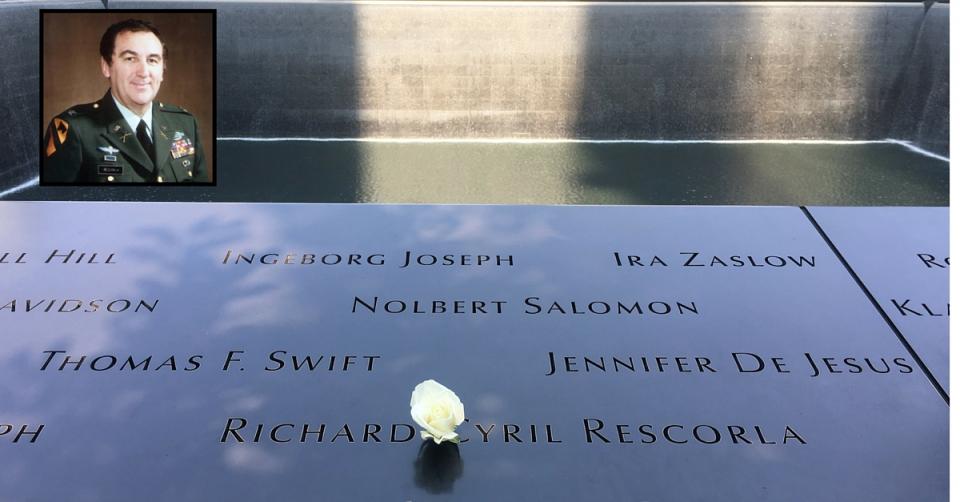
Photo by HASSAN YAR JANJUA on Pexels.com

Almost lost at the end of Jesus’s surprising answer are the last two phrases, “and you will have treasure in heaven; and come, follow me.” This man wanted eternal life as an extension of his comfortable life on earth. He did NOT want eternal life enough to sacrifice his present comforts or his preconceived notions of “goodness.” He did not want to follow Christ– he only wanted to consult with Him.

Photo by Anna Shvets on Pexels.com

I find it uncomfortable to hear about the young ruler’s rejection of Christ. I understand the initial shock of the disciples as Jesus uses the illustration of a camel going through the eye of a needle to compare with a “rich” person coming into the kingdom of God. Wasn’t Abraham wealthy? Wasn’t Solomon rich? What about King David? If riches make it impossible to follow Christ, who can gain eternal life? Thankfully, Jesus redirects the focus– it’s not about the riches; and it’s not about what we “do”– it is God’s “Good” pleasure to give eternal life to those who choose to “follow” Him.

Photo by Tima Miroshnichenko on Pexels.com

“Good Teacher and Lord, help me to remember this lesson as I come before you in prayer. You have not asked me to ‘earn’ my inheritance. It is your gift to answer my prayers as you see fit; to be the Lord of my life; to be merciful and gracious to me; to prepare a place for me to live with You for eternity. What you ask of me is that I ‘follow’ you– that I listen to your call; that I accept Your “terms” of inheritance; that I share Your Grace and Mercy with those around me.”

Flee!

As we bid goodbye to September and enter October, we are entering the season of Halloween and horror movies. I’m not too fond of this cultural phenomenon–I don’t like horror movies, and, while I don’t mind handing out candy to kids dressed up in clever costumes, I’m not thrilled about kids and adults “celebrating” witches, vampires, zombies, etc..

Photo by Yaroslav Shuraev on Pexels.com

While I don’t watch horror movies, or read horror novels, I have noted what others have told me about them. One of the strangest phenomena they report is the seeming inability of innocent people to escape the horror stalking them. This is sometimes part of the horror and the plot, but often, the “victim” has many chances of running away– but never does! (Or they wait until it is too late.) In fact, movie-goers often report the audience will sometimes yell at the characters to, “Run!” But they simply stand, fascinated or paralyzed by fear, waiting for their doom to catch up to them. Of course, this adds to the suspense of a fictional scenario, but it sets a terrible example for real life.

Photo by Trinity Kubassek on Pexels.com

Recently, I heard an interesting and disturbing parallel in reports about real “victims” from a public safety official. He said that in various crime scenes, like those involving a violent confrontation or an active shooter, many people who could reach safety, don’t. This is because they continue to watch the horror unfolding around them. They do nothing to stop it; nothing to avoid it; nothing to protect themselves. In fact, some of them take out their phones and start filming it–creating their own “real-life” horror movie. Instead of taking common sense precautions, they seem more interested in watching the “story” unfold, as if it had no power to touch them. Normally compassionate people will watch someone else being bullied, tortured, harassed, and even killed without calling for help or protecting themselves or others who could be pulled into the violence.

Photo by cottonbro on Pexels.com

There is nothing “entertaining” about violence and evil. There may be something instructive about watching evil being defeated, or violence being stopped, but there is greater wisdom in avoiding evil and violence in the first place. Evil should not make us curious– it should repulse us, and make us want to flee. Seeing a rattlesnake coiled and hissing should not cause us to reach out and try to pet it! Watching someone waving a loaded gun around should not cause us to whip out our phone and record it for later viewing.

Photo by Daniel Reche on Pexels.com

As Christians, we are warned to “flee from temptation” in the same way we are urged to flee from danger and horror. When we know something is evil, harmful, unwholesome, corrupt, poisonous, and unholy, we are to have nothing to do with it. This is not because we feel powerless in the face of evil. God is with us in any situation. But we are to stay away from situations and relationships that threaten our ability to do what we know to be honest, compassionate, and “right.” Jesus warned His disciples to “watch and pray, that you may not enter into temptation. The spirit indeed is willing, but the flesh is weak.” (Matthew 26:41 ESV) And in The Lord’s Prayer, He prayed that we would not be led into temptation, but delivered from evil. (Matthew 6:13) Jesus wasn’t saying that we should live in perpetual fear; rather that we should make it a priority to avoid ANYTHING that would draw us away from the goodness and mercy of God. Even in our prayers, we should ask God to keep us on the path of righteousness and keep us away from temptation and failure. Common sense alone will not keep us from dangerous behaviors like flirting with sin or dabbling in danger. God will provide a way out (1 Corinthians 10:13), but how much better to avoid the need for constant rescue!

Photo by Guy Kawasaki on Pexels.com

As this season approaches, I pray that God would keep me far from the path of evil. I don’t want to be like the “victim” in a horror film, paralyzed by fear or fascination, while sin and death come stalking. Nor do I want to be the bystander, filming someone else’s pain and torture instead of seeking help and protection. The spirit indeed is willing– willing to fight against evil; willing to grapple with it; willing to learn more about it; willing even to flirt with it. But the flesh is weak and vulnerable to deception, traps, and failure.

We are not to follow after the empty promises of temptation–“thrills and chills,” titillation, “secret” knowledge, “spine tingles,” etc.. Instead, we are to seek the sure promises of a Loving God– His guiding presence, His joy, His eternal Love, and His abundant Life.

Photo by Patricia McCarty on Pexels.com

Flee temptation; Run to Jesus!

The Greatest of These…

5-9 So don’t lose a minute in building on what you’ve been given, complementing your basic faith with good character, spiritual understanding, alert discipline, passionate patience, reverent wonder, warm friendliness, and generous love, each dimension fitting into and developing the others. With these qualities active and growing in your lives, no grass will grow under your feet, no day will pass without its reward as you mature in your experience of our Master Jesus. Without these qualities you can’t see what’s right before you, oblivious that your old sinful life has been wiped off the books.

2 Peter 1:5-9 (The Message)
Photo by Pixabay on Pexels.com

Love is patient, love is kind. It does not envy, it does not boast, it is not proud. It does not dishonor others, it is not self-seeking, it is not easily angered, it keeps no record of wrongs. Love does not delight in evil but rejoices with the truth. It always protects, always trusts, always hopes, always perseveres…
13 And now these three remain: faith, hope and love. But the greatest of these is love.

1 Corinthians 13:4-8;13 (NIV)
Photo by Pixabay on Pexels.com

In 2 Peter, the Apostle gives us a list of character traits that we should develop as believers in and followers of Christ. The last two seem similar, but there is a reason both are there, and both at the end. As we follow in Christ’s footsteps, we should develop traits that mark growth in our relationship with God– faith, patience, hope, etc. But we should also show growth in our relationships with other people. We should interact with others as God interacts with us– we should show compassion, forgiveness, concern, generosity, and selfless Love for others. “Brotherly kindness” is what we should be ready to show to everyone– neighbors, strangers, and even enemies, included. “Generous Love” is not just a feeling of deep affection or even good will. The Love we should develop is selfless and giving beyond what we can offer in our own hearts. It is the culmination of all the other characteristics we are developing as we seek to become more Christlike.

Photo by Inna Lesyk on Pexels.com

“We love Him, because He first Loved us.” 1 John 4:19– It is Christ’s example of Love, coming from Himself (Father, Son, and Spirit) that teaches us what Love really is, and causes us to be able to love in truth and fullness. Christ came to serve–He did not live for His own whims and gratifications. He gave audaciously, loved lavishly, forgave freely, and lived humbly. The Apostle Paul underlines what Peter says in his letter to the Corinthians, chapter 13. We should learn to have faith and hope, but in the end, Love is the greatest characteristic we can develop.

Photo by Pixabay on Pexels.com

My one-time choir director once asked us to do this exercise: Write out 1 Corinthians 13: 4-8. Now substitute the word “Jesus” for each instance of the word, “Love.” Because God is Love (1 John 4:8) this is a valid substitution. “Jesus is patient. Jesus is kind. He does not envy,” etc… Think about how Jesus demonstrated what Love is as He interacted with His disciples– including Peter’s denial and Judas’s betrayal– and with those in the crowds. This is our model, and our assignment– this is how we should Love. Now comes the real test…substitute Your name to see how closely your life and actions resemble those of Our Savior. Can you say that your are patient and kind? That you don’t hold grudges or become easily angered? That you always hope? Always persevere? Of course, there will be instances when we don’t live up to Christ’s example– but are we becoming more Christlike? Are we growing in Love? Type this passage out three times– in its original text, with Jesus’s name, and with your name. Print it out and hang it somewhere where you will be reminded, convicted, and encouraged to live out Christ’s Love. If someone else reads it, they should be challenged, as well.

Photo by Luis Quintero on Pexels.com

Bringing this Bible Study back around to prayer– are we praying through these characteristics? Do we come with faith, obedience, understanding and discipline, patience, wonder, compassion and love? Do we expect God to do OUR will, or are we eager to see His will be done? Do we believe that God rewards those who earnestly seek Him (Hebrews 11:6)? Do we rejoice in the truth, and always hope, even in the moments of pain and injustice? Our prayer life will follow our growth in all these areas. I pray that we are all growing more like Christ each day. Let today be the next step in that growth– turn from yesterday, let God take care of tomorrow, and grow in this moment.

Brotherly Kindness

5-9 So don’t lose a minute in building on what you’ve been given, complementing your basic faith with good character, spiritual understanding, alert discipline, passionate patience, reverent wonder, warm friendliness, and generous love, each dimension fitting into and developing the others. With these qualities active and growing in your lives, no grass will grow under your feet, no day will pass without its reward as you mature in your experience of our Master Jesus. Without these qualities you can’t see what’s right before you, oblivious that your old sinful life has been wiped off the books.

2 Peter 1:5-9 (The Message)
Photo by Daka on Pexels.com

I’ve been taking some time to contemplate the encouragement given by the Apostle Peter in this passage. Today, I’m looking at the phrase “warm friendliness.” It is also translated as brotherly affection, or brotherly kindness. If we want to pursue Godliness (of which the pursuit of prayer is an essential part) we must look at these characteristics, and put them into practice. Last time, I looked at reverent wonder, which would seem like the acme of such a list…after all, what could be better or more important in following Christ than to live in constant awe of God’s Holiness, Majesty, and Power? Peter answers this question with the last two characteristics– brotherly kindness/warm(th)/friendliness, and generous/selfless love.

Photo by RODNAE Productions on Pexels.com

We cannot claim to follow Christ and fail to follow His example in our interactions with others. Jesus Christ was a friend of the friendless. He radiated kindness and integrity and brotherhood– even to those who despised Him. Kindness and friendship, on the surface, don’t seem to be characteristics that require faith, spiritual understanding, or deep reverence. We can be kind to animals, we can have a lot of friends, and not be a Christian– or even be particularly spiritual. But this passage is talking about a different level of warmth and friendship. It doesn’t just happen because we like interact with someone who is likable, or worthy of warmth and friendship. It comes because we have had an encounter with the author of warmth and friendship– and Love. Jesus drew others to himself by His gentle warmth, His generous spirit, His genuine good will and compassion. Those who disliked Him were often upset at His treatment of the lowly, the marginalized, the “others.” Didn’t Jesus realize how sinful or despicable they were? Didn’t He care that they had leprosy, or that they were “unclean?” But that was the point…Jesus DID know. He knew them better and more intimately than anyone. And He wanted them to know that they were loved; they were worth dying for! Not because they were “clean” or “righteous;” simply because they were created in His image and the objects of His eternal passionate love.

Once we have matured and developed the fundamental characteristics of faith and patience, understanding and reverence, it should become more natural for us to radiate kindness, gentleness, warmth, loyalty, integrity, and friendship toward others. That is not to say that we become people-pleasers, or compromise our Spiritual Understanding and Faith. Instead, it means that we speak the truth in love; that we forgive easily; that we are eager to show compassion, strength, wisdom, and encouragement–especially where they may be in short supply.

Photo by Liza Summer on Pexels.com

This world needs more warm friendship and brotherly kindness– more positive encouragement and less cold criticism; more open arms and fewer closed fists; more hope and less despair; more earnest help, and fewer patronizing handouts; more honest conversations, and fewer dismissive “easy answers.”

We know the source of the greatest warmth, friendship, help, and hope in the universe! Let’s not “lose a minute” in making it part of our day, today! Pray for your neighbors, your co-workers, your families, your enemies, and all those who need a friend. Reach out to someone with hope and affection–be the arms and hands (and feet and smile) of God to someone today. It’s the next logical expression of the awe and reverence we owe to our Creator and Savior– to embrace those He Loves so dearly!

Be Ready!

5-9 So don’t lose a minute in building on what you’ve been given, complementing your basic faith with good character, spiritual understanding, alert discipline, passionate patience, reverent wonder, warm friendliness, and generous love, each dimension fitting into and developing the others. With these qualities active and growing in your lives, no grass will grow under your feet, no day will pass without its reward as you mature in your experience of our Master Jesus. Without these qualities you can’t see what’s right before you, oblivious that your old sinful life has been wiped off the books.

2 Peter 1:5-9 (The Message–emphasis added)
Photo by Syed Qaarif Andrabi on Pexels.com

Do you plan for emergencies? Most people have some basic idea or plan for expected circumstances; a first-aid kit for home accidents; a small store of food or water; perhaps a generator in case of a power outage… But how many of us have a plan for the unexpected? Not just a vague idea of “what if…” but a plan. Some people have a stock of toilet paper and bottled water for their house or apartment, but no plan for what to do if they need to evacuate or relocate due to a flood or hurricane, or if they lose electricity for more than three days due to a storm, or if their building should catch fire.

Photo by Roger Brown on Pexels.com

On September 11, 2001, when airplanes flew into the Twin Towers in New York City, several thousand people had to be quickly evacuated from the burning buildings. There were some plans in place; most had been misplaced or forgotten. And the chaos and confusion led to mixed messages– “stay put and wait for help…”,” don’t use the elevators…”,”get out as quickly as possible…”,” the stairways are unsafe…” But the vice president for corporate security at Dean Witter/Morgan Stanley, Richard Cyril Rescorla, was prepared for the worst. He had been planning and rehearsing for years after the failed attacks in 1993. He quickly implemented his detailed plans, ushering hundreds out of offices and into the stairwells, where they descended to safety in spite of the smoke and panic. He went back several times, checking to see who else needed help and guidance. Regardless of where they worked or who they were, Rescorla came with calm reassurance and authority, sending them into the path of rescue workers who could then offer greater assistance. Rescorla himself never made it safety– as he kept going up to get others out, he became trapped and perished when the towers fell. However, his years of planning, and his dedicated efforts on that fateful day saved the lives of hundreds, if not thousands of people. (See more here: https://www.911memorial.org/connect/blog/recognizing-war-hero-who-led-wtc-survivors-safety-911 )

We may not be called on to face another disastrous day like 9/11, but we are called to be alert and ready as we follow Christ. Those who followed Christ during His earthly ministry were called disciples. The name comes from the same root as discipline. They literally “walked” with Christ. They went where He went; they ate what He ate; they slept where He slept; they did whatever He asked them to do. If we seek to follow Christ, we must be ready to live lives of alert discipline. This comes after we take our first steps of Faith, and build on our character and understanding of God’s will. Our actions should not just be spontaneously “good” in the short-term, but patterned on the need to be prepared for the kind of challenges and trials we should expect to face. Just as Jesus was prepared for those who came to challenge Him with trick questions and false accusations, we need to be prepared to be challenged, rejected, and subjected to persecution. And we need to be prepared to respond, not with haughty complacency, outraged panic, or defensive tantrums, but with calm confidence and compassion.

The Apostle Peter, earlier in his letters, urges believers to be ready to give an answer (or a reason) for the hope that they have in Christ. (1 Peter 3:15) And this should not be a knee-jerk reaction to being challenged, or a snide commentary on doctrinal matters. We should be ready to be witnesses for the Majesty, Power, Grace, and Love of God as it has been experienced in our life and the lives of those around us. God never asked us to be His defense lawyers. He asks us to be faithful witnesses–not just of the facts about Him, but about our relationship WITH Him.

Photo by Andrea Piacquadio on Pexels.com

We also need to be prepared to be relocated or evacuated from lives of comfort, complacency, and expectation, in order to GO into the world and spread the Gospel. We will not all be called to be “missionaries” in the traditional understanding of the word, but we ARE all called to be on mission– to be ready to share our hope, our resources, our time, and our love– with others, near and far.

Photo by Porapak Apichodilok on Pexels.com

Today, I pray that God would continue to teach me as I live in obedience…that I would be alert and ready to speak, to walk, and to serve where and when and how HE sends. May I be ready to usher many others to safety as I share and live out the Gospel of Christ!

Spiritual Understanding

5-9 So don’t lose a minute in building on what you’ve been given, complementing your basic faith with good character, spiritual understanding, alert discipline, passionate patience, reverent wonder, warm friendliness, and generous love, each dimension fitting into and developing the others. With these qualities active and growing in your lives, no grass will grow under your feet, no day will pass without its reward as you mature in your experience of our Master Jesus. Without these qualities you can’t see what’s right before you, oblivious that your old sinful life has been wiped off the books.

2 Peter 1:5-9 (The Message– emphasis added)
Photo by Tobias Bju00f8rkli on Pexels.com

“For my thoughts are not your thoughts,
and your ways are not my ways.”
This is the Lord’s declaration.
“For as heaven is higher than earth,
so my ways are higher than your ways,
and my thoughts than your thoughts.

Isaiah 55:8-9 (Christian Standard Bible)

I do not understand God’s ways. If I try to work it out with human understanding, I will never make sense of how God works. I don’t have His wisdom or omniscience; I don’t have His eternal perspective or omnipotence. God will never answer all of my questions; He will never reveal all of His plans or reasoning to me. He calls me to walk in Faith, not by sight (2 Corinthians 5:7) This is a stumbling block to many. It is especially frustrating for those who think they already DO know (almost) everything, and believe that they should be able to speak to God as a peer, even to be able to consult Him! I knew of a man (a convicted felon) who refused to repent of his actions. He admitted that he had done wrong, and that his prison sentence was deserved, but when challenged with how he would answer before God, he simply said–“God and I will come to an understanding.” He simply felt that if he explained “his side of the story,” God would change his immutable commandments and make an exception.

Photo by Armin Rimoldi on Pexels.com

God doesn’t need anyone to “explain” anything to Him. Nor does He “owe” any of His creation an explanation for His actions or seeming inactions. I will never understand why certain injustices are allowed to happen, and seem to go unpunished in my lifetime. I don’t understand God’s timing in my life– why my father died when he did, or why I had to wait so long to be married. But I am learning to trust that God knows every injustice, every need, every situation we face, and that He WILL make all things “right” in HIS time and in His perfect way.

Photo by Munmun Singh on Pexels.com

Spiritual Understanding has to come from the Spirit. It cannot come through our own wisdom or learning. It has to be built, not just on Faith, but on acting in Faith and walking humbly in conformity to our Good Shepherd’s example. We must become, not just “fans” of Christ, or even just students of Christ, but disciples of Christ, if we want to begin to have greater understanding. Like the apprentice, who must learn by doing, so we must learn through practice of God’s Word. We must also ASK for wisdom and understanding. (James 1:5) They are gifts, just like Salvation. We don’t earn understanding; we are granted it as we walk in obedience and faith.

Photo by Keenan Constance on Pexels.com

Today, my prayer is that I would receive insight as I learn to trust, and I would trust that God will give the wisdom I need for the day ahead– no more or less, and not a moment too late or too soon. And experience confirms that He is faithful to do just that!

Running the Race

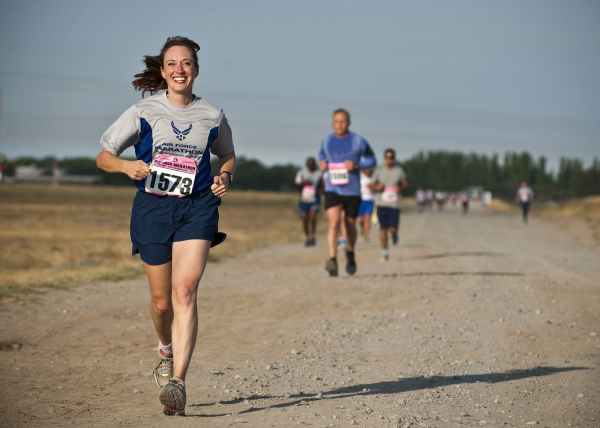
I am NOT a runner. If you ever see me running, I’ve either just encountered a snake, or there’s a wild animal chasing me. So I don’t know a lot about running a marathon, or even a 5-or 10-K race. Even in my daily life as a Christian, I prefer to use the term “Christian Walk!” But the Bible uses the imagery of a race to describe the Christian life. In our pursuit of Christ-likeness, including our pursuit of prayer, we need to think like a runner.

Photo by RUN 4 FFWPU on Pexels.com

For those of us who don’t run, this may pose a bit of a challenge, but the Bible gives us clear principles that provide good guidance.

  • Keep moving forward: “12-14 I’m not saying that I have this all together, that I have it made. But I am well on my way, reaching out for Christ, who has so wondrously reached out for me. Friends, don’t get me wrong: By no means do I count myself an expert in all of this, but I’ve got my eye on the goal, where God is beckoning us onward—to Jesus. I’m off and running, and I’m not turning back.” (Philippians 3:12-14 The Message) Runners don’t worry about what is behind them. They are focused on the goal– reaching the finish line. We need to stop focusing on our past, or the anxieties about the road ahead, and keep our focus on the ultimate goal.
Photo by RUN 4 FFWPU on Pexels.com
  • Travel light/Get rid of the baggage: “Therefore, since we are surrounded by such a great cloud of witnesses, let us throw off everything that hinders and the sin that so easily entangles. And let us run with perseverance the race marked out for us..” (Hebrews 12:1 NIV) What is weighing me down, that I need to let go of, if I want to keep running with endurance? I wrote earlier this month about the expectations attached to the “model” woman in Proverbs 31. Expectations, guilt, unforgiveness, shame, wanting to please other people, even our own self-talk can weigh us down, slow us down, and wear us out. It’s time to let go!
Photo by RUN 4 FFWPU on Pexels.com
  • Run with the pack: Running alone can be good for meditation, but we need the challenge and the encouragement of others if we want to train and grow stronger. Reconsider the passage I quoted above in its larger context: “Therefore, since we are surrounded by such a great cloud of witnesses, let us throw off everything that hinders and the sin that so easily entangles. And let us run with perseverance the race marked out for us, fixing our eyes on Jesus, the pioneer and perfecter of faith. For the joy set before him he endured the cross, scorning its shame, and sat down at the right hand of the throne of God. 3 Consider him who endured such opposition from sinners, so that you will not grow weary and lose heart. (Hebrews 12:1-3 NIV–emphasis added) We need to surround ourselves with companions, role models, teachers, friends, and others who can encourage, sharpen, comfort, and help us in our pursuit. And we need to remember that NO challenge or opposition we face is unknown to Christ. He is our ultimate role model, and, along with the Holy Spirit, our greatest coach!
  • Run/train with purpose: “25 Everyone who competes in the games goes into strict training. They do it to get a crown that will not last, but we do it to get a crown that will last forever. 26 Therefore I do not run like someone running aimlessly; I do not fight like a boxer beating the air.” (1 Corinthians 9:25-26 NIV) I know many people who “know” a lot about the Bible; they’ve grown up in the church or attended seminary; they’ve memorized scripture or studied theology– only to leave the church and their faith. I know many others who have a “faith” that bears little resemblance to the Bible’s teaching– it is based mostly on their “feelings” about God and a “truth” that is relative to their circumstances and changing emotions. Pursuing the Christian life involves discipline– being a disciple–and that involves all areas of life– studying the Bible, and putting it into practice. It’s not enough to “know” about doctrine or to “feel” like a Christian. We must pursue Christ-likeness in our words, prayers, habits, relationships, etc..
Photo by RUN 4 FFWPU on Pexels.com
  • Don’t run on “no fuel.” “29 He gives power to the weak, And to those who have no might He increases strength. 30 Even the youths shall faint and be weary, And the young men shall utterly fall, 31 But those who wait on the Lord Shall renew their strength; They shall mount up with wings like eagles, They shall run and not be weary, They shall walk and not faint.” (Isaiah 40:29-31 NKJV). It is tempting to run on an empty stomach (see traveling light above), or to start running without stretching or warming up. Anything we do in our own wisdom and power– even “good” things like prayer and Bible study, can leave us empty and worn out. We need to come back to our source of wisdom and power–(See Hebrews 12: 2-3 again!)
Photo by RUN 4 FFWPU on Pexels.com

Running a race isn’t easy. Walking through life is a challenge, too. Pursuing Christ-likeness in our habits, including our prayer life, takes dedication, discipline, guidance, and endurance. But God is faithful to provide all that we need to finish the race and gain the prize!

Blog at WordPress.com.

Up ↑