A New Command

34 “A new command I give you: Love one another. As I have loved you, so you must love one another. 35 By this everyone will know that you are my disciples, if you love one another.”

John 13:34-35 (NIV) taken from http://www.biblegateway.com
Photo by Vural Yavas on Pexels.com

Jesus was about to be tried and condemned to die. He was giving His disciples last instructions and reminders. But in the midst of it all, He gave this “new” command. I’ve read this passage dozens of times, and yet it struck me, possibly because we have just started a new year, that Jesus calls this a new command. Love one another. As if this was a revolutionary concept; as if it had never been spoken before.

Photo by Eduardo Braga on Pexels.com

So I began to search. ” You shall love the LORD your God with all your heart and with all your soul and with all your might. ” (Deuteronomy 6:5 ESV) “Do not take revenge on others or continue to hate them, but love your neighbors as you love yourself. I am the Lord.” (Leviticus 19:18) “So show your love for the alien, for you were aliens in the land of Egypt. ” (Deuteronomy 10:19)

Throughout the Old Testament, the Israelites are commanded to love God and to love their neighbors, especially to those who might otherwise know only hatred or injustice– enemies, conquered peoples, resident aliens, widows, orphans, etc.. Most often, the commands are given in negative terms– how NOT to treat others. “Thou shalt not steal; thou shalt not kill; thou shalt not commit adultery; thou shalt not bear false witness…”

Photo by Pixabay on Pexels.com

There is nothing completely new about Jesus’ command in John 13, but it IS new– it is a positive command to show love for one another. And Jesus goes further– “As I have loved you, so you must love one another.” This goes beyond simply seeing that others are treated fairly within the broader society. Jesus washed feet. He went out of his way to speak to those who were despised and marginalized– tax collectors, prostitutes, lepers. He didn’t write a check to a non-profit charity and pat himself on the back. He didn’t share a political cartoon about Pharisees or the Roman Emperor with his followers or join the Jerusalem March for Jewish Rights–he challenged the Pharisees face-to-face about their unjust practices and healed the family members of Roman officials. He gave His life– not just on the cross, but in serving others’ needs throughout His earthly life.

Love One Another. It isn’t a suggestion. It is a command–one Jesus gave directly to His disciples. It is not a new command to the Church; but it is one we have not obeyed fully. We love those Christians in our small group at church, or those who share our politics, or those who look and talk just like us. Or we “love” those Christians who are struggling thousands of miles away– from our safe and comfortable lives thousands of miles away.

Photo by Oleksandr Pidvalnyi on Pexels.com

I find myself often reading this command, but trying to obey it the same way I look at the Ten Commandments– obedience by omission; obedience in the negative. “Thou shalt not offend. Thou shalt not intrude. Thou shalt not condescend.” But that’s where I stop. I don’t wash feet. I don’t visit the sick or disgraced. Sometimes I send a check or donate a box of unwanted items.

Photo by rawpixel.com on Pexels.com

What would this new year look like if I followed this command more fully? What if, instead of just showing love to those I already like, or when it’s convenient, I reached out across town or across the globe to share my time, my heart, my resources, my skills, with those who need them most? What if I obeyed Jesus’ command to love those around me as Jesus has already loved me?

What if I dared to pray that God would bless others through me, instead of just asking that everyone would “be blessed.”

Photo by Kamille Sampaio on Pexels.com

In this new year, God, let this be a new command– one that I follow with my whole heart– that I should love others as You have loved me!

This Little Light of Mine…

John 1:4-5 American Standard Version (ASV)
 4 In him was life; and the life was the light of men. And the light shineth in the darkness; and the darkness [a]apprehended it not.

Footnotes:John 1:5 Or, overcame.

via http://www.biblegateway.com
Photo by Pixabay on Pexels.com

I love words. But sometimes, it can be frustrating to find just the right word to express a complex idea. I’m sure the Apostle John felt the struggle as he began writing his Gospel account of the life of Christ. How can mere words describe the arrival of GOD– creator and ruler of the universe– into a darkened and sin-filled world, come to live among and serve the very lost souls He would die to save? John, of all the Gospel writers, uses the most visual metaphors to describe the Advent of Jesus (many of which he heard from the lips of Christ Himself)– He was the “Light of the World”, the “Bread of Life”, the “Living Water,” the “Way, the Truth, and the Life,” and the “Good Shepherd.”

But right away, the phrase John uses to talk about the “Light of the Life” causes modern English scholars confusion. John says that the light “shineth”, or “shines” in the darkness and the darkness “comprehended” (or apprehended, or understood, or overcame) it not. The phrase is simply too big for one word, or idea. The Greek word comes closer to expressing a dual idea, but even it can’t wrap up the totality of such an event.

Photo by Luck Galindo on Pexels.com

Consider–This Jesus, one with God from the beginning, and the “Word” of creation, spoke light into existence. Where there was darkness, He exploded– light upon light– stars and galaxies of light! Even on the darkest night we will ever know, there are millions of lights spread out across the vastness of space, including our own sun, even unseen on the other side of the planet. Darkness can never “comprehend”, let alone “overcome” the existence of light in our world.

Moreover, when we see physical light piercing the darkness, we are aware of it, but we rarely comprehend, or understand it. Whether we are blinded by a flash of light, or compelled to seek out a single hint of light in a darkened tunnel, it is not obvious at first glance (and sometimes even after diligent study) the source or scope of the light. It may be a candle, or a set of glaring headlights, or the glint of reflected light in a mirror. It could be a distant star, a satellite, or a street light shrouded in fog.

Photo by Miguel Á. Padriñán on Pexels.com

But in a spiritual sense, it is even more true that “Light has come into the world” (John 3:19), and it “shines” in the darkness, and the darkness has not understood, or apprehended, or overcome it. Jesus came as an infant to His own chosen people, people who were longing for the advent of their Messiah. But few of them recognized Him. They didn’t understand– even Jesus’ closest friends didn’t “get it” at first. And some of them tried their best to “overcome” and “apprehend” the Gospel message– zealous religious leaders like Saul tried to stop the “light” of Jesus’ message and all those who trusted in it. Saul had to be “blinded” by a light on his way to Damascus, so that he could finally “see” Christ (Acts 9).

And the light is still shining in the darkness– as followers of Christ, we are to reflect God’s love and grace to those around us. Many of them will not comprehend; many will try to overcome or even destroy the message we bring. Our light may seem small and insignificant. It may seem like we are surrounded by the vast darkness of space, or shrouded in fog. But the light of Christ cannot be extinguished, or rationalized out of existence, or contained. All the words ever spoken, written, or thought throughout all the ages of mankind cannot compare to the power of God’s “Word”, who spoke worlds into being in an instant, and yet entered His own creation with a soft cry of an infant in the middle of a dark night so long ago.

Photo by 3Motional Studio on Pexels.com

This is the “little light of mine”, and of yours if you are a follower of Christ. It pierces through the darkness of despair, hatred, addiction, injustice, greed, oppression, malice, rebellion, war, grief, loss, disease, and sin.

This season, as we anticipate the Advent, let us remember the greatness of the tiniest of lights, and the triumph of that light over the vast darkness. It is easy to get distracted by the twinkling of a thousand artificial and commercial lights this season, or blinded by the soot and smog and clouds of gloom and pain that surrounds us. It’s so important that we keep shining; continue reflecting the true light that only comes from the “Light of the World”

Photo by Lennart Wittstock on Pexels.com

“This little Light of mine–I’m gonna let it shine!
This little Light of mine– I’m gonna let it shine,
Let it shine, Let it shine!”

There my Burdened Soul Found Liberty

Prayer is often about burdens– the burden of need; the burden of sin and guilt; the burden of worry and distress. We bring our burdens to God, to the “throne of Grace;” we bring them “in Jesus’ Name,”, and we bring them to “Our Father.” But how often do we bring them to “Calvary?”

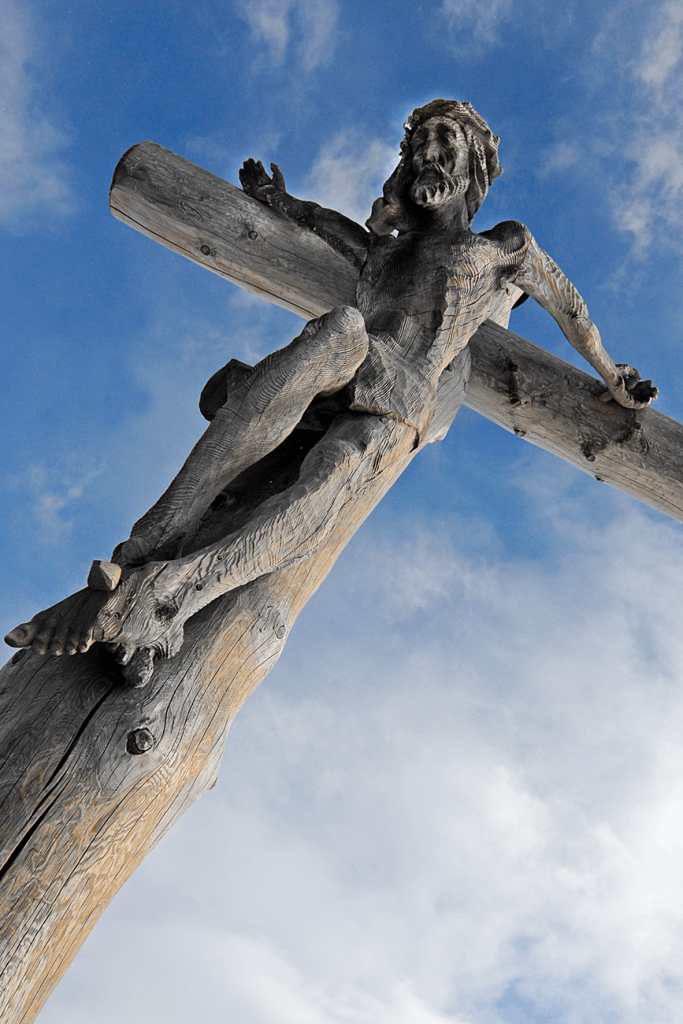
Not the victorious empty cross on the hillside with a beautiful sunset in the background, but the bloody, hot, dry and dreadful Calvary of the crucifixion? How often do we make the pilgrimage to that rocky outcropping with the smell of blood and sweat and death and agony? How often do we cry out to the one who was lifted up, struggling to breathe, pierced, wounded, broken and humiliated? When do we reach out to touch the scars and bruises he received in our place?

Photo by Pixabay on Pexels.com

It is at Calvary that we get the real story of Grace, Mercy, and forgiveness–the real cost of victory and peace. It is at Calvary that we see the full extent of God’s Holiness married to the full extent of His Love. Holiness demands justice; Love demands intimacy– together, they require sacrifice.

And it is at Calvary that we find, in the darkest and most hopeless of moments– God forsaking Himself, giving all He IS to bring justice and reconciliation for all we’ve done–that we trade our burdened souls, our worries, our despair for God’s embrace. Arms stretched so wide they are pulled from their sockets; blood spilled from head to toe; breathless and exposed in His passion for your soul and mine–that’s what God offers at Calvary.

Photo by Pixabay on Pexels.com

Why do I pray? I am ambushed and overwhelmed and enraptured by such a love. God had no need to suffer even a moment’s discomfort. He owed nothing to His rebellious creation; no mercy, no explanation, no hints as to His character (or ours). The creator of galaxies had no need to lift a finger to save one puny planet or any of its inhabitants from His own right to un-create them and blot out even their memory. Instead, He showed the greatest act of Love across all of space and time–to me!– At Calvary!

Photo by Pixabay on Pexels.com

Jesus Calls Us

I was at worship yesterday. We sang some wonderful hymns and songs of worship. Still, I miss some of the “old” hymns we used to sing in the small country church of my youth. This was one of them:

In case the video does not show up, here are the words:
Jesus calls us: o’er the tumult of our life’s wild, restless sea,
Day by day His sweet voice soundeth, saying, “Christian, follow Me.”
Jesus calls us from the worship of the vain world’s golden store,
From each idol that would keep us, saying, “Christian, love Me more.”
In our joys and in our sorrows, days of toil and hours of ease,
Still He calls, in cares and pleasures, “Christian, love Me more than these.”
Jesus calls us: by Thy mercies, Saviour, may we hear Thy call,
Give our hearts to Thine obedience, serve and love Thee best of all. Amen.

Photo by Victor Freitas on Pexels.com

Prayer is never just a one-way communication. We may not “hear” from God in an audible voice, but He calls us into communion with Him daily. He wants to hear from us; He wants to speak to us–through His word, through our experiences, through friends and neighbors and even chance encounters. We may not have a deep spiritual burden to bring before the throne of grace– does that keep us from needing to share a quiet moment with the lover of our soul?

Suppose the only time you ever spoke to your spouse was when you desperately needed her/his help? What would that say about your relationship? The same holds with our spiritual walk. God wants to speak to us; to have us notice the beauty of the sunrise, or the grace of moonlight in the mist. He wants to bring us hope and comfort in the stories and psalms of scripture. He wants us to share our nagging worries and our minor triumphs– not because He doesn’t know or cannot see–because He wants to share in our struggles and our joys, our deep grieving and our small amusements.

He wants all of this because of His great love for each of us. If we could just see His eyes light up with love when we walk into a room…and if we could hear the love in His voice– we would be undone. Someday, we will be– undone, and remade, and able to catch His eye without shattering in the light of that love.

But for now– He is calling…

Love Lifted Me

I love you, Lord, my strength.
The Lord is my rock, my fortress and my deliverer;
    my God is my rock, in whom I take refuge,
    my shield and the horn of my salvation, my stronghold.
I called to the Lord, who is worthy of praise,
    and I have been saved from my enemies.
The cords of death entangled me;
    the torrents of destruction overwhelmed me.
The cords of the grave coiled around me;
    the snares of death confronted me.
In my distress I called to the Lord;
    I cried to my God for help.
From his temple he heard my voice;
    my cry came before him, into his ears.
The earth trembled and quaked,
    and the foundations of the mountains shook;
    they trembled because he was angry.
Smoke rose from his nostrils;
    consuming fire came from his mouth,
    burning coals blazed out of it.
He parted the heavens and came down;
    dark clouds were under his feet.
10 He mounted the cherubim and flew;
    he soared on the wings of the wind.
11 He made darkness his covering, his canopy around him—
    the dark rain clouds of the sky.
12 Out of the brightness of his presence clouds advanced,
    with hailstones and bolts of lightning.
13 The Lord thundered from heaven;
    the voice of the Most High resounded.
14 He shot his arrows and scattered the enemy,
    with great bolts of lightning he routed them.
15 The valleys of the sea were exposed
    and the foundations of the earth laid bare
at your rebuke, Lord,
    at the blast of breath from your nostrils.
16 He reached down from on high and took hold of me;
    he drew me out of deep waters.
17 He rescued me from my powerful enemy,
    from my foes, who were too strong for me.
18 They confronted me in the day of my disaster,
    but the Lord was my support.
19 He brought me out into a spacious place;
    he rescued me because he delighted in me
.

Psalm 18:1-19 NIV (taken from biblegateway.com)
Photo by Victor Freitas on Pexels.com

I grew up hearing hymns– lots of them. My mother and grandmother and aunt all played the piano or organ for church, and often practiced during the week. My father led the congregational singing sometimes, and my grandfather taught himself to play many musical instruments, and used hymns to become familiar with the chords, notes, and fingerings of the instrument du jour. The congregation at our small church sang with more gusto than musical talent, but we sang during the Sunday morning service, the Sunday evening service, the Wednesday evening service, and at any special occasion.

Photo by Pixabay on Pexels.com

Two things happened as a result of this: one not-so-good, and one very good thing. The not-so-good thing was that I became somewhat inured to the songs and lyrics– I knew what the songs said, but I didn’t really understand or internalize the truths they contained. However, the very good thing was that the hymns stuck in my memory– years later they came back like the best of friends to comfort me, challenge me, and remind me of sacred realities in the midst of mundane frustrations and worldly confusions.

This old hymn, neglected, out-dated, and seldom sung in our current services, was my lullaby growing up. My mother would sing it over and over as she rocked me to sleep, often running out of verses and words and just humming or filling in with “la, la la, la,” until she reached the chorus.
“Love lifted me. Love lifted me. When nothing else could help, Love lifted me.”

As a young child, I experienced the loving arms of my dear mother lifting me to her lap and rocking me for what seemed like hours until I drifted off to sleep. As a teen, I scoffed at the lyrics a bit–what need had I to be lifted and helped, when I was invincible and young and ready to conquer the world. As an adult, this old hymn came back with power and comfort when my own efforts and life’s stormy circumstances left me with little hope and lots of confusion, doubt, and regret. It reminds me that help and hope can be found even in the raging storms of grief, depression, oppression, and pain. “When nothing else could help…” God could, and did! He can and will!

Photo by Pixabay on Pexels.com

“Love lifted me”–such a simple phrase, and by itself not a solid foundation for hope and victory. In fact, there are many popular songs that speak of love lifting a person up, making one feel buoyant and hopeful, joyful or young. But this song speaks of a different and everlasting, all-powerful love– the Love of Christ. And it doesn’t just lift us up from one pleasant place to another. It reaches down into the depths of sin, despair, and even death to lift us up beyond all hope, beyond any strength or effort we could generate or receive from any other source. And this great Love reaches down to lift me–even me! It does not belong only to the elite, the wealthy, the beautiful people, the gifted or the powerful. In fact, this love is especially close and available to those who have done nothing to deserve it; those who have been bypassed and ignored and left to drown in their own shame and sorrow.

Photo by Edward Eyer on Pexels.com

Love. Lifted. Me! My prayer is that this same Love will surround you today, lifting you up, and helping you, just as it helps me and brings me life and hope, to the Glory of Christ our Savior.

Weak, Weary, and Worn

It is not popular to write about weakness. We all have moments when we feel weak, overwhelmed, defeated, and depressed. Sometimes, we are just physically exhausted, and emotionally drained by the piling up of little stresses and routine tasks. Sometimes, we are overwhelmed by loss or grief, guilt, or worry about situations beyond our control.

Photo by Ken Ozuna on Pexels.com

We want such feelings and situations to go away, to be replaced by peace, comfort, and contentment. And while well-meaning people tell us that “this too shall pass,” or “God has a plan,” or “you will get through this– I’m here for you,” we are still weak, weary, and worn down by the struggles of the day.

Jesus gave some incredible and inexplicable advice to people who would follow him. He said, “Come to me, all of you who are weary and burdened, and I will give you rest. Take up my yoke and learn from me, because I am lowly and humble in heart, and you will find rest for your souls.” (Matthew 11: 28-29 from the Christian Standard Bible via biblegateway.com)

The first part of his advice offers great comfort– “come to me…and I will give you rest.” But then, without even a breath, Jesus tells us to take up his yoke! A yoke does not seem to offer rest– I want the burden to be GONE–I don’t want to put on a yoke like an ox or a plow horse. How could this be comforting or restful?

But this is the promise of God– not to make all our burdens disappear (though he often chooses to give us total relief from a particular burden)–instead, He asks us to put on his yoke. He will share the burden with us, and He will teach us how to make the load bearable, even lighter, by following Him.

Photo by rawpixel.com on Pexels.com

And, though we have moments of exhaustion and setbacks, God’s purpose is not for us to give up or be defeated by our circumstances, but to be victorious over them, and turn to Him. In order to “take up (his) yoke” we must take the burden off our own shoulders and give it to Him. He will distribute the load, direct our path, and set the pace. And not only that, He will take our hand and speak words of wisdom and peace as we carry the load together. And THAT is truly comforting!

P.S. I Love You

There are at least two great songs and one movie with the title, “P.S. I Love You.” The idea comes from a letter– one in which the writer wants to make sure that “I Love You” are the last three words on the page– the lasting impression for the letter’s recipient.

The Bible is many things– a history, a book of laws, a narrative of God’s dealings with humankind–but it is also a love letter. Scattered throughout the lists of generations, the poetry, the prophecies, the gospels, and yes, the letters to churches, are expressions of love. God begins by creating a beautiful garden, creating Adam in his own likeness, and creating a suitable helper from Adam’s side. He gives them everything they need to live and enjoy everything around them–He even comes to walk and talk with them!

Photo by Pixabay on Pexels.com

God rescues the nation of Israel from slavery and cruelty in Egypt, and guides them in the wilderness for 40 years–providing food and water, even preserving their clothing and shoes, so they have no lack!

God punishes the rebellious nation, sending them into exile– but He gives them promises, and even in the worst of their punishment, He speaks words of love and healing and reconciliation.

Photo by Pixabay on Pexels.com

God sends the ultimate Word of Love in His Son– who loves, heals, forgives, and serves, even to the point of dying! And in the death and resurrection of Jesus, this love is extended to everyone who will accept Him.

Finally, God promises an end to death and rebellion–eternal reconciliation and life with Him who loves us best. His love letter ends with a glorious P.S.:

22 Then the angel showed me the river of the water of life, as clear as crystal, flowing from the throne of God and of the Lamb down the middle of the great street of the city. On each side of the river stood the tree of life, bearing twelve crops of fruit, yielding its fruit every month. And the leaves of the tree are for the healing of the nations. No longer will there be any curse. The throne of God and of the Lamb will be in the city, and his servants will serve him. They will see his face, and his name will be on their foreheads. There will be no more night. They will not need the light of a lamp or the light of the sun, for the Lord God will give them light. And they will reign for ever and ever… 16 “I, Jesus, have sent my angel to give you this testimony for the churches. I am the Root and the Offspring of David, and the bright Morning Star.” 17 The Spirit and the bride say, “Come!” And let the one who hears say, “Come!” Let the one who is thirsty come; and let the one who wishes take the free gift of the water of life… 20 He who testifies to these things says, “Yes, I am coming soon.” Amen. Come, Lord Jesus. 21 The grace of the Lord Jesus be with God’s people. Amen.
(Revelation 22:1-5; 16-17; 20-21.)

https://www.biblegateway.com/passage/?search=Revelation+22&version=NIV
Photo by Pixabay on Pexels.com

Even when God sends punishment, or stays silent in the face of our immediate questions, He never stops saying “I Love You.” I. LOVE. YOU!

Lord, may I take time today to read your love letter. May I savor Your words and may I take the time to read Your Post Script– and respond to Your Eternal and Fathomless Love! Amen!

Troubled Waters

I love reading the 23rd Psalm (among many others). I love the picture of the Lord as my shepherd– the green pastures, the still waters, the anointing oil, dwelling in the house of the Lord forever. It is comforting. But there is also the part about walking in the valley of the shadow of death, fearing no evil, and sitting in the presence of my enemies–I tend to gloss over those parts.

The truth is, much of our life is spent somewhere in between. We journey through hills and valleys, in sunshine and shadow, and there are times of green pastures and still waters, but sometimes we are in a dry season or wading through troubled waters. We face stress, chaos, unexpected obstacles, and swirling doubts.

Photo by Alexander Dummer on Pexels.com

Jesus was no stranger to troubled waters. In His life on earth, He faced stormy seas– at least once in the bottom of a wave-tossed boat, and again when He walked on water to reach His disciples late at night. (Matthew 14:22-33; Mark 4:35-41, etc.) In each case, Jesus could have stilled the waters sooner, or forbidden the winds and waves to cause any trouble. This is often what we pray for– for God to keep us away from the shadow of death, from the stormy seas, from the trials and hardships we wish to avoid.

Photo by Muhammad Dompil on Pexels.com

Often, God answers those prayers by keeping us from trouble and hardship. Sometimes, He sends friends, counselors, and sweet reminders from His word to build a bridge over rapids or whirlpools or provide light and song on our journey. Other times, He answers our prayers by staying with us through even the darkest and loneliest of valleys, through the raging storms, the unanswered questions, and the waves of doubt. Sometimes we can look back and see how and why God chose to take us by the narrow winding path or through the churning waves. But even when He is silent, He is still there– reaching out to lift us when we fall, or carry us when we can’t go on.

Photo by Sebastian Voortman on Pexels.com

Lord, help me to follow you, even when the way seems dark or the storms rage. Help me to look up from the troubled waters and see you–ready to swim alongside, or lift me up and bring me to safety. Help me to help build bridges and throw life-lines when needed. And help me to remember that you have promised seasons of still waters and green pastures, as well. Whatever comes this day, may I listen for the voice of the Good Shepherd and Savior. In Jesus’ name, Amen.

Have You Any Room?

I had no idea what to write tonight, so I started thumbing through an old hymnal. A song title caught my eye– just a glance, and I turned the page, but it wouldn’t leave my mind. “Have You Any Room for Jesus?” it read. It’s an old hymn; one I don’t know, and have never sung. But there it was, and I had to turn back through the pages and look again. It’s not the sort of song we sing in our modern worship services– it’s an invitational hymn, meant for evangelistic meetings– it has little appeal to those who already consider themselves “saved”, and little appeal to those who see worship as a constant celebration, without any “awkward” conviction, confession, or heart-prodding that might make us sober and thoughtful.

And as I read it, I was struck by the absence. The words are “old-fashioned,” “melodramatic,” “quaint.” They are plaintive and urgent, and they are foreign to our modern churches.

Have you any room for Jesus,
He who bore your load of sin?
As He knocks and asks admission,
Sinner, will you let Him in?

Room for pleasure, room for business–
But for Christ, the Crucified,
Not a place that He can enter
In the heart for which He died?

Room for Jesus, King of Glory!
Hasten now; His Word obey.
Swing the heart’s door widely open;
Bid Him enter while you may
.

Sing to the Lord Hymnal– publisher and copyright unknown

We tend to be very critical of such sentiments–we don’t want to be addressed as “Sinner.” We shy away from the image of Christ knocking at the door, waiting for us to invite Him in. We want the aftermath– Jesus sitting with us in the “room” HE has prepared for us in Heaven. Without the knocking, and the waiting, and the mundane obedience. I say this critically (and after my last post, too!), but I say it with conviction of my own shortcomings in this area.

When I was a young girl, our family had a print hanging on the wall in our house. It was a common sight in many homes, as I recall, the image of Jesus standing at the door of a small house or cottage, and lifting His hand to the knocker. But that print has been criticized– the “Jesus” is “too white.” The door is not “consistent with doors Jesus would have seen in his earthly life.” The entire scenario is inconsistent with the image of Jesus that modern culture presents– Jesus “hanging out” with rough and tumble commoners at the park or marketplace, or marching in the streets seeking justice for the poor and marginalized, or “Super” Jesus riding on the clouds coming to reward the faithful and punish the wicked.

Photo by Josh Sorenson on Pexels.com

We don’t preach a gentle Jesus who knocks at the door and “asks admission.” We don’t give altar calls and urge people to “bid Him enter while you may.” We wear Jesus jewelry, and play contemporary Christian music as we drive around in cars with “Christian” messages stuck to the bumper, and boast about all the “amazing” things God has done for US. Jesus is “cool”– He doesn’t have to knock on our door and ask for admission.

Photo by Pixabay on Pexels.com

But this is exactly how He came when He was here for His earthly mission. He was born in a stable because there “was no room” (Luke 2:7) in any of the inns at Bethlehem. He had no home of his own; “nowhere to lay his head” (Matthew 8:20). He asked for water from the woman at the well (John 4), and He invited Himself to the home of Zacchaeus (Luke 19: 1-10). And it is Jesus himself who offers the invitation in Revelation: “Behold, I stand at the door and knock..” (Revelation 3:20).

Why, then, have so many of us stopped singing songs like this? When did we stop recognizing ourselves and those around us as “sinners” who need to “swing the heart’s door widely open”? And not just once; we should be heeding the call to make “room” in our hearts and lives daily to meet with the One who bore our “load of sin.”

Lord Jesus, may I answer Your gentle knock– may I clear out the boxes of business and packages of pleasures that clutter my daily life and crowd out my time with You. May I invite You in–to talk with You, listen to You, learn from You, and enjoy Your presence every day! And help me make room to invite others to know the peace, fellowship, and salvation that You offer.

He Knows My Name

The Bible is full of names. Some we know well– Adam, Eve, Abraham and Sarah, Joseph, David, Moses, Mary and Joseph, Jesus, John, Peter, Paul, Mary Magdalene. Others are less familiar–Nimrod, Eli, Darius, Deborah, Ezekiel, Jezebel. Some are just unbelievable– Keren-Happuch, Maher-shalal-hash-baz, Basemath, Abishag, Shammuah, Pallu…you get the idea.

Photo by Min An on Pexels.com

But sometimes, the Bible seems to get carried away with names. Take the lists of genealogies and “begats” found in Genesis, Matthew, and Luke. Endless names of fathers and sons, tribes, and descents. They can be boring to read; even mind-numbing. But there is also important information included in these lists, if you just take the time to look closely. https://christinprophecy.org/articles/those-boring-begats/

Similarly, in places like Exodus and Leviticus, 1 Samuel, 1 Chronicles, Ezra, and Nehemiah, and elsewhere, there are extensive lists of those who were leaders of clans and families, workers who helped build (or rebuild) the temple and walls of Jerusalem, those who served in the tabernacle, and those who were among the heroes of King David’s army. In the New Testament, there are lists of people in Paul’s letters– greetings, rebukes, side-notes and requests meant for various people who are never mentioned again. Why include what amounts to a post-script in Holy Scripture?

Photo by Pixabay on Pexels.com

It turns out that many of these names give us valuable clues about development of the nation of Israel– how the tribes settled and spread out; how they interacted with each other and with the surrounding nations. The names in Ezra and Nehemiah help us connect the returning exiles with their ancestors (and confirm the extent of the destruction of entire clans and families in the fall of Jerusalem). The names in the New Testament show a picture of the early Church– how it spread, who joined the early believers, and where they came from.

What does all this mean to us hundreds of years later? It show us:

  • God’s plans are detailed and inclusive–The Biblical writers did not have to include so many names– they could simply have condensed the story to say that Abraham had hundreds of descendants; that the tabernacle was built; that many people returned to Jerusalem to rebuild the temple and walls, and that the early Church grew rapidly. But God wanted names included (even the strange ones) so generations of readers would see the scope and detail of God’s unfolding plan. These were real people– individuals–cherished by God and worth including in the Biblical narrative.
  • The Bible is more than a series of mythical adventures or allegories. Many of the names (of people and places) in the Bible have been confirmed in historical and archaeological records– even those that were thought to be “wrong.”
  • God’s plans are universal. The Bible lists include names from various nations and cultures– Jewish names, Egyptian, Ethiopian, and Babylonian, Roman and Greek names, the names of tribes and clans that spread throughout the Earth. God knew them all. God watches over us all.
Photo by malcolm garret on Pexels.com
  • Each of us has an important role to play in the ongoing story of God’s grace. Our names may not all end up in the pages of Scripture, but our names can be in the Lamb’s Book of Life. God knows the name of every person who has ever existed! He doesn’t call us by the name of our younger sister, or get confused by our nickname or birth/adopted name– He knows us intimately like no one else ever will!
  • Names are important. None is more important than the Name that is above all Names– Jesus. Messiah, Christ, Savior, Immanuel. His is the Name that saves. Let’s call on Him today!

Blog at WordPress.com.

Up ↑