“Do This in Remembrance of ME” Remember My Creation. Remember My Life. Remember My Humble service. Remember My Death and Resurrection. Remember My Victory. Remember I am Coming Soon!
I worked for many years at a public library doing pre-school story time programs. One of the favorite songs among the children was “Head and Shoulders, Knees and Toes.” Children love rhymes, music, and movement, and this song involved all three. Children stood, ready to stretch and bend, point, and sing: “Head and shoulders, knees and toes, knees and toes.” Their hands flew from one body part to another as we sang, faster and faster. “Eyes and ears and mouth and nose; head and shoulders, knees and toes, knees and toes.” Faster and faster, louder and louder, the excitement growing, until the song ended in a breathless shout, “Knees and toes”!
Another favorite was the “Hokey Pokey”, in which we formed a circle and took turns “putting in” and “putting out” various limbs and body parts, “turning (ourselves) about” and clapping. We “put in” our right arms, our left legs, our heads, and “our whole selves.” From the earliest of ages, we become aware of the various parts of our bodies, their names and functions, and how they work together.
As God’s people, we are to be the “Body of Christ” (1 Corinthians 12:12-14) and our bodies are to be His temple(1 Corinthians 6:19). It is important that we recognize how every part of our body needs to be consecrated and ready to serve, to worship, and to reflect God’s Glory.
This is not a new concept. In fact, much of the book of Leviticus is given over to consecrating every aspect of the worship of God by His children. There are detailed instructions for the priests– how and when to enter the Tabernacle; what to wear, what kind of offerings to bring and how to prepare for service. One set of details involves the installation ceremony for the priests. They were to wash from head to toe, before putting on the sacred garments. They were to offer a blood sacrifice, and some of the blood was to be placed or smeared in three places– the lobe of the right ear, the thumb of the right hand, and the big toe of the right foot (Leviticus 14:28).
Scholars through the years have given us many reasons for these detailed instructions (see this link for a terrific overview) https://www.myjewishlearning.com/article/ears-thumbs-and-toes/, and most of them bring out the idea that God wants us to worship and be consecrated “from head to toe.” God has authority over how we choose to use our ears, hands, and feet– He wants purity in our words and deeds. He wants us to listen to Him, obey Him, and follow Him.
The smearing of blood in these three areas also demonstrates a need for atonement– only blood can cover or atone for our lack of attentiveness, our lack of obedience, and our open rebellion against God’s authority. The blood of the ritual sacrifices in Leviticus are a foreshadowing of the ultimate atonement we receive from the sacrifice of the Only True Lamb, Jesus Christ. Christ takes away our sin, and consecrates us to His service and worship– from head to toe!
And, unlike the Hokey Pokey, THAT’S what it’s all about! God gives us His life and purity, His Grace and forgiveness, His divine purpose and eternal Glory when we “put our whole selves” in His hands, and He “turns us all about,” to become more than conquerors (Romans 8:37), a royal priesthood (1 Peter 2:9), and the sheep of His pasture. (Psalm 100:3)
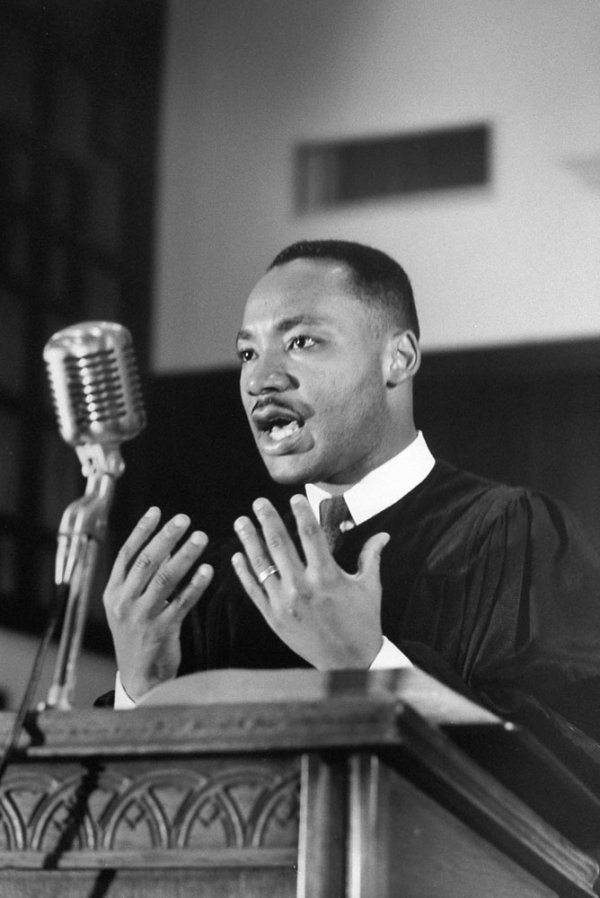
Last week in America, we marked two important dates. We celebrated the birth of a great hero, patriot, and statesman, Martin Luther King, Jr. And we marked the 47th anniversary of the Supreme Court decision, Roe v. Wade, which effectively legalized abortion across the land.
The life of Dr. King was marked by hardship, oppression, violence, and assassination at the age of 39. Dr. King was a brilliant student and gifted speaker. He led peaceful protests and civil rights marches calling for justice and equality under the law for all people. More than 50 years after his death, there are still issues of racial discrimination and racial tensions in this country. The disproportionate loss of life and liberty among blacks in urban areas has led to a new round of protests, some of which go under the name of “Black Lives Matter.” There is a feeling that, especially with the police and government officials, black lives don’t matter– that black lives are devalued and dismissed as less deserving of respect and protection.
In light of this, there has been “push back” from those who argue that “ALL Lives Matter”, or that “Blue Lives Matter” (blue for police who have become victims of mob violence and angry crowds who feel that the police are responsible for racism and corruption). The argument is that groups like “Black Lives Matter” are not so much about bringing awareness or promoting justice, but are meant to divide us as a nation and exact revenge for past offenses, slights, and perceived slights.
There is speculation about what might have happened if Dr. King had not died when he did. Would he have continued leading non-violent protests? Would the Civil Rights movement of the sixties gained more momentum under Dr. King’s leadership? Would our nation have achieved a new dawn of equality, freedom, and unity, greater and stronger than what we have seen in the last five decades? Would Dr. King be pleased with the progress we have made, or ashamed? Did his life make a difference? Yes. But was it “enough” of a difference? Does it matter to a young person of color growing up in Baltimore or Chicago that Dr. King spoke out, marched, and died for a dream that seems frozen in time and unfulfilled?
Just two days after our nation wrestled with that uncomfortable memory, we marked one even more controversial. In 1973, our Supreme Court ruled that no state could prohibit abortion. The decision also limited the ability of states to restrict abortion. Since that decision, an estimated 60 million Americans http://www.numberofabortions.com/ (not to mention infants around the world) have been denied the right by legal practice to be born. This is roughly equal to the number of people killed in World War II, though estimates of both numbers vary by source (https://www.nationalww2museum.org/students-teachers/student-resources/research-starters/research-starters-worldwide-deaths-world-war)
In looking at abortion, we see millions of lives who were determined NOT to matter. They didn’t deserve respect, protection, liberty, education, dreams, food, shelter…not even breath and a heartbeat!
Oh God– let us see life as YOU see it. Every life matters infinitely to You. You have created all life–unique, precious, priceless, glorious, fragile, and yet eternal. You walked among people, healed the sick and broken, reached out to the outcast and isolated, welcomed children, and brought the dead back to life. In Christ, you took on human life– breathed the air, knew joy and pain, weariness, hunger, and strife.
One life– every life– matters. It matters, not because we are important to the world, but because we are precious in the eyes of our creator. We celebrate the life of Dr. King, because we was considered important in the history of our nation. But God celebrated Dr. King’s life from the moment of his conception. God knit him together in his mother’s womb, just as He does for each of us. God knew the moment of Dr. King’s birth. He saw every tear, heard every laugh, felt every bruise that Dr. King experienced. And God knew the moment of Dr. King’s assassination. He knew the shock and horror it would be for his family. He knew that years later, we would quote Dr. King’s words and even argue about his relevance and impact. But Dr. King’s life mattered to God even if it had been a life of obscurity or failure.
Similarly, and incredibly, every one of those 60 million lives that have been lost to abortion “mattered” to God. He knew and loved them from the moment of conception. And He knew– He KNEW– that they would be aborted; thrown away and discarded by those who should have loved and protected them. And He LOVES those who killed them– their lives “matter” to God as well. Dr. King’s dream was that his children would be judged by the content of their character. God will judge us one day on that basis; but He offers to judge us by the content of HIS character, if we will trust Him to forgive us for the past, and transform us as we live for Him.
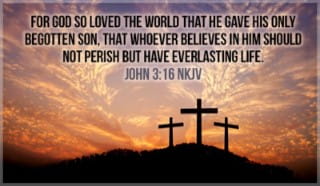
Your life matters to God. It has worth and meaning. You are infinitely precious– so much so that God sent His only son to live and to die for your sake. What an incredible love He has for you! What an incredible love He has for every person you will encounter today!
I see a lot of articles, posts, and religious sites as I wander around the internet. And there has been a lot written and shared lately about the word Christian getting a “bad rap.” Many writers and church goers are no longer comfortable calling themselves Christians. They don’t want to be identified with “bad” Christians– hypocrites, political extremists, etc., who loudly and proudly use the label while treating others with contempt, and generally acting like bullies and/or clowns. The growing trend is to use the term “Christ-follower” to describe a lifestyle that seeks to mirror that of Jesus Christ during His life on earth.
Proponents of this practice point out that Jesus never called His followers “Christians.” Instead, He consistently invited people to “Follow me.” The term “Christian” is associated with the earliest Gentile churches and with the scattering of the persecuted church across Judea, Samaria, and Asia Minor. The term originated in Antioch a few years after Jesus’ resurrection:
19 Now those who were scattered after the persecution that arose over Stephen traveled as far as Phoenicia, Cyprus, and Antioch, preaching the word to no one but the Jews only. 20 But some of them were men from Cyprus and Cyrene, who, when they had come to Antioch, spoke to the Hellenists, preaching the Lord Jesus. 21 And the hand of the Lord was with them, and a great number believed and turned to the Lord. 22 Then news of these things came to the ears of the church in Jerusalem, and they sent out Barnabas to go as far as Antioch. 23 When he came and had seen the grace of God, he was glad, and encouraged them all that with purpose of heart they should continue with the Lord. 24 For he was a good man, full of the Holy Spirit and of faith. And a great many people were added to the Lord. 25 Then Barnabas departed for Tarsus to seek Saul. 26 And when he had found him, he brought him to Antioch. So it was that for a whole year they assembled with the church and taught a great many people. And the disciples were first called Christians in Antioch. (emphasis added)
Christian was not a positive or honorable label for the early followers of Jesus Christ. There are still many places in the world where the label “Christian” invites arrests, beatings, and death threats. There are places where the name “Christian” invites scorn and derision. What has changed (or seems to have changed) in the intervening years is that we see and hear of more and more places in the world where the label “Christian” brings up images of sneering protesters condemning gays or smug white faces spouting self-righteous phrases to justify greed, racism, and/or injustice. “Christians” are not just unwanted or misunderstood by others–Christians are unwanted by their own; misunderstood and misrepresented, at odds and at war with one another.
So what can be gained by followers of Jesus Christ in re-branding themselves as “Christ-followers?” After all, it’s just a name. In the 1960s, many Christians were condescendingly labeled “Jesus Freaks.” Jesus Freaks were viewed much like Hippies. They spoke of Peace and Love and Acceptance. They taught about kindness and unity. They were often young, and generally disillusioned with the older generation and its way of life. They acted a lot like Hippies; they just didn’t do as much experimenting with drugs and free sex. Much like the early Christians, they were labeled by those who dismissed their message and their way of life. They rejected traditional or mainstream Christianity, and were dismissed by many who called themselves Christians. Some were openly critical of previous generations of Christians. Many of those who wish to be called “Christ-followers” now are the descendants (or remnants) of the Jesus Freaks of the 60s. The mind set is very similar– disillusionment with others who have misused or abused the name of Christ, and a desire to “rescue” the reputation of the church.
There have been other groups across the centuries who have tried to re-brand and re-label their devotion to Jesus– God-fearers, Disciples, Reformers, Witnesses, Saints, Fellowships, etc.. And there is no command in Scripture that we must all call ourselves by a particular label.
But is seems odd to me that the very label, “Christian,” that came about because of persecution, that came about as a derisive, sneering, condescending term, was embraced by those it sought to shame and intimidate. Why didn’t the original “Christians” re-brand themselves to make their cause less offensive? Why has this term, “Christian,” endured over the centuries?
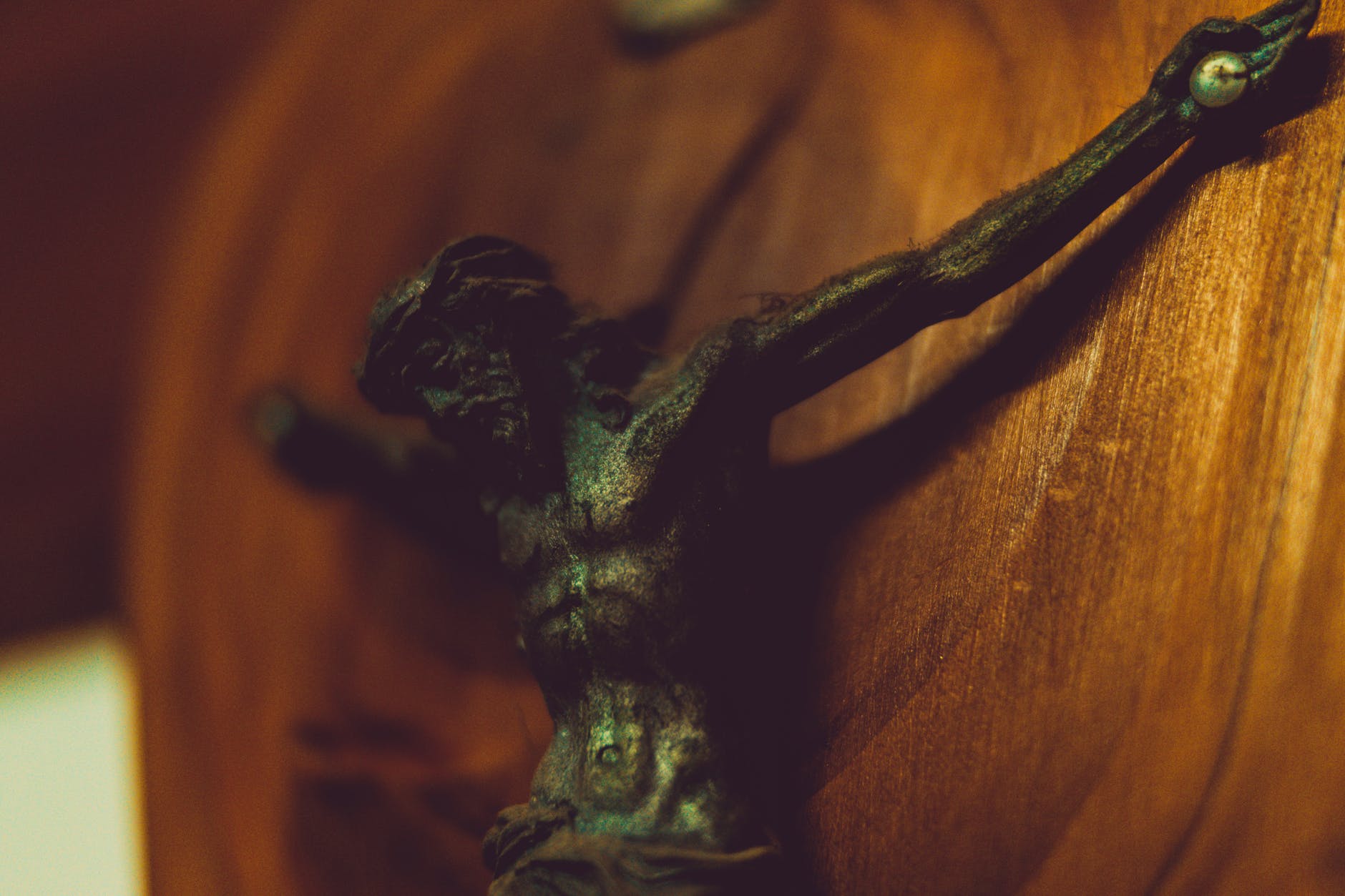
“Christians” bear the name of Christ, whatever other name they give themselves. When I say I am a Christian, I know that there are people who will compare me to others who make this claim. But I am not just a member of a group that likes the idea of Christ; I’m not just a Facebook follower of Christ, or a fan of Christ, or a student of Christ. Christ is my Lord; my life; my identity. Christ– Jesus the Christ, the Messiah. Not Joe Smith down the road who also attends my church, or a famous evangelist or Bible teacher, or even one of the Apostles, or Saints. Jesus– son of Mary and Joseph; Son of God and Son of Man. This same Christ was arrested, given a sham trial, condemned to be crucified like a common criminal, and hung, naked and tortured before a mocking crowd. He was humiliated, misunderstood, and abandoned by those who claimed to care the most. THAT is the name I willingly bear.
“Christian” is a label. I can label myself in any number of different ways– “Woman,” “American,” “Caucasian,” “College graduate.” But there are many others who can use those same labels. They may define what I am, but they don’t define who I am. I may be appalled (and I am, sometimes) at things other women do, at things other Americans say, at the history of Caucasians and their interactions with indigenous peoples in other parts of the world, at the snobbery of other college graduates…But I don’t say, “I’m no longer going be an American; I want to be known as a resident of the United States, but I have my own system of government and culture and language independent of those living in Missouri or Idaho or Chicago– they don’t represent who I am.” Of course they don’t represent who I am–they never did. We all, collectively, are Americans AND residents of the United States. I can’t decline to be a woman because I don’t like the way other women behave or speak. And I can’t choose to be “other than” a Christian…all I can do is give it another label.
Finally, who I am is not found in a name or title or label. It is the sum total of my character and the way I live my life. Jesus didn’t tell His disciples that they would be known by any particular name, but He did say they would be known and identified by their love: 34 A new commandment I give to you, that you love one another; as I have loved you, that you also love one another. 35 By this all will know that you are My disciples, if you have love for one another.” (John 13:34-35 NKJV). That doesn’t mean I have to approve of everything other “Christians” do– in fact, if they use the name Christian and do not have love for others, they prove they are liars– but it means that I must do everything in the name of Christ. I am a Christian first, before I am a woman or an American or any other label. That means that I am the co-heir and sister to a young man in India who has been rejected by his family and expelled from his school for being a Christian. I am an ambassador of Christ to the woman I meet in the grocery store whose children are taxing her patience and whose cart is blocking the aisle I want to enter. I am an example of Christ’s love to the young couple who have been victimized by other “Christians” because they are “different.” And I am a Christian in a world of “fake” Christians, and confused Christians, and faulty and very human Christians just like me, who need correction, mercy, justice, and wisdom to follow Christ, to die to self, and to bear the honor of His name. Ultimately, I can call myself a Christian, a Christ-follower, a Jesus Freak–any other label I want. Whether I AM a Christian or not will be determined by how I live, not what I call myself.
34 “A new command I give you: Love one another. As I have loved you, so you must love one another. 35 By this everyone will know that you are my disciples, if you love one another.”
Jesus was about to be tried and condemned to die. He was giving His disciples last instructions and reminders. But in the midst of it all, He gave this “new” command. I’ve read this passage dozens of times, and yet it struck me, possibly because we have just started a new year, that Jesus calls this a new command. Love one another. As if this was a revolutionary concept; as if it had never been spoken before.
So I began to search. ” You shall love the LORD your God with all your heart and with all your soul and with all your might. ” (Deuteronomy 6:5 ESV) “Do not take revenge on others or continue to hate them, but love your neighbors as you love yourself. I am the Lord.” (Leviticus 19:18) “So show your love for the alien, for you were aliens in the land of Egypt. ” (Deuteronomy 10:19)
Throughout the Old Testament, the Israelites are commanded to love God and to love their neighbors, especially to those who might otherwise know only hatred or injustice– enemies, conquered peoples, resident aliens, widows, orphans, etc.. Most often, the commands are given in negative terms– how NOT to treat others. “Thou shalt not steal; thou shalt not kill; thou shalt not commit adultery; thou shalt not bear false witness…”
There is nothing completely new about Jesus’ command in John 13, but it IS new– it is a positive command to show love for one another. And Jesus goes further– “As I have loved you, so you must love one another.” This goes beyond simply seeing that others are treated fairly within the broader society. Jesus washed feet. He went out of his way to speak to those who were despised and marginalized– tax collectors, prostitutes, lepers. He didn’t write a check to a non-profit charity and pat himself on the back. He didn’t share a political cartoon about Pharisees or the Roman Emperor with his followers or join the Jerusalem March for Jewish Rights–he challenged the Pharisees face-to-face about their unjust practices and healed the family members of Roman officials. He gave His life– not just on the cross, but in serving others’ needs throughout His earthly life.
Love One Another. It isn’t a suggestion. It is a command–one Jesus gave directly to His disciples. It is not a new command to the Church; but it is one we have not obeyed fully. We love those Christians in our small group at church, or those who share our politics, or those who look and talk just like us. Or we “love” those Christians who are struggling thousands of miles away– from our safe and comfortable lives thousands of miles away.
I find myself often reading this command, but trying to obey it the same way I look at the Ten Commandments– obedience by omission; obedience in the negative. “Thou shalt not offend. Thou shalt not intrude. Thou shalt not condescend.” But that’s where I stop. I don’t wash feet. I don’t visit the sick or disgraced. Sometimes I send a check or donate a box of unwanted items.
What would this new year look like if I followed this command more fully? What if, instead of just showing love to those I already like, or when it’s convenient, I reached out across town or across the globe to share my time, my heart, my resources, my skills, with those who need them most? What if I obeyed Jesus’ command to love those around me as Jesus has already loved me?
What if I dared to pray that God would bless others through me, instead of just asking that everyone would “be blessed.”
John 1:4-5 American Standard Version (ASV) 4 In him was life; and the life was the light of men. 5 And the light shineth in the darkness; and the darkness [a]apprehended it not.
I love words. But sometimes, it can be frustrating to find just the right word to express a complex idea. I’m sure the Apostle John felt the struggle as he began writing his Gospel account of the life of Christ. How can mere words describe the arrival of GOD– creator and ruler of the universe– into a darkened and sin-filled world, come to live among and serve the very lost souls He would die to save? John, of all the Gospel writers, uses the most visual metaphors to describe the Advent of Jesus (many of which he heard from the lips of Christ Himself)– He was the “Light of the World”, the “Bread of Life”, the “Living Water,” the “Way, the Truth, and the Life,” and the “Good Shepherd.”
But right away, the phrase John uses to talk about the “Light of the Life” causes modern English scholars confusion. John says that the light “shineth”, or “shines” in the darkness and the darkness “comprehended” (or apprehended, or understood, or overcame) it not. The phrase is simply too big for one word, or idea. The Greek word comes closer to expressing a dual idea, but even it can’t wrap up the totality of such an event.
Consider–This Jesus, one with God from the beginning, and the “Word” of creation, spoke light into existence. Where there was darkness, He exploded– light upon light– stars and galaxies of light! Even on the darkest night we will ever know, there are millions of lights spread out across the vastness of space, including our own sun, even unseen on the other side of the planet. Darkness can never “comprehend”, let alone “overcome” the existence of light in our world.
Moreover, when we see physical light piercing the darkness, we are aware of it, but we rarely comprehend, or understand it. Whether we are blinded by a flash of light, or compelled to seek out a single hint of light in a darkened tunnel, it is not obvious at first glance (and sometimes even after diligent study) the source or scope of the light. It may be a candle, or a set of glaring headlights, or the glint of reflected light in a mirror. It could be a distant star, a satellite, or a street light shrouded in fog.
But in a spiritual sense, it is even more true that “Light has come into the world” (John 3:19), and it “shines” in the darkness, and the darkness has not understood, or apprehended, or overcome it. Jesus came as an infant to His own chosen people, people who were longing for the advent of their Messiah. But few of them recognized Him. They didn’t understand– even Jesus’ closest friends didn’t “get it” at first. And some of them tried their best to “overcome” and “apprehend” the Gospel message– zealous religious leaders like Saul tried to stop the “light” of Jesus’ message and all those who trusted in it. Saul had to be “blinded” by a light on his way to Damascus, so that he could finally “see” Christ (Acts 9).
And the light is still shining in the darkness– as followers of Christ, we are to reflect God’s love and grace to those around us. Many of them will not comprehend; many will try to overcome or even destroy the message we bring. Our light may seem small and insignificant. It may seem like we are surrounded by the vast darkness of space, or shrouded in fog. But the light of Christ cannot be extinguished, or rationalized out of existence, or contained. All the words ever spoken, written, or thought throughout all the ages of mankind cannot compare to the power of God’s “Word”, who spoke worlds into being in an instant, and yet entered His own creation with a soft cry of an infant in the middle of a dark night so long ago.
This is the “little light of mine”, and of yours if you are a follower of Christ. It pierces through the darkness of despair, hatred, addiction, injustice, greed, oppression, malice, rebellion, war, grief, loss, disease, and sin.
This season, as we anticipate the Advent, let us remember the greatness of the tiniest of lights, and the triumph of that light over the vast darkness. It is easy to get distracted by the twinkling of a thousand artificial and commercial lights this season, or blinded by the soot and smog and clouds of gloom and pain that surrounds us. It’s so important that we keep shining; continue reflecting the true light that only comes from the “Light of the World”
It is not popular to write about weakness. We all have moments when we feel weak, overwhelmed, defeated, and depressed. Sometimes, we are just physically exhausted, and emotionally drained by the piling up of little stresses and routine tasks. Sometimes, we are overwhelmed by loss or grief, guilt, or worry about situations beyond our control.
We want such feelings and situations to go away, to be replaced by peace, comfort, and contentment. And while well-meaning people tell us that “this too shall pass,” or “God has a plan,” or “you will get through this– I’m here for you,” we are still weak, weary, and worn down by the struggles of the day.
Jesus gave some incredible and inexplicable advice to people who would follow him. He said, “Come to me, all of you who are weary and burdened, and I will give you rest. Take up my yoke and learn from me, because I am lowly and humble in heart, and you will find rest for your souls.” (Matthew 11: 28-29 from the Christian Standard Bible via biblegateway.com)
The first part of his advice offers great comfort– “come to me…and I will give you rest.” But then, without even a breath, Jesus tells us to take up his yoke! A yoke does not seem to offer rest– I want the burden to be GONE–I don’t want to put on a yoke like an ox or a plow horse. How could this be comforting or restful?
But this is the promise of God– not to make all our burdens disappear (though he often chooses to give us total relief from a particular burden)–instead, He asks us to put on his yoke. He will share the burden with us, and He will teach us how to make the load bearable, even lighter, by following Him.
And, though we have moments of exhaustion and setbacks, God’s purpose is not for us to give up or be defeated by our circumstances, but to be victorious over them, and turn to Him. In order to “take up (his) yoke” we must take the burden off our own shoulders and give it to Him. He will distribute the load, direct our path, and set the pace. And not only that, He will take our hand and speak words of wisdom and peace as we carry the load together. And THAT is truly comforting!
I love reading the 23rd Psalm (among many others). I love the picture of the Lord as my shepherd– the green pastures, the still waters, the anointing oil, dwelling in the house of the Lord forever. It is comforting. But there is also the part about walking in the valley of the shadow of death, fearing no evil, and sitting in the presence of my enemies–I tend to gloss over those parts.
The truth is, much of our life is spent somewhere in between. We journey through hills and valleys, in sunshine and shadow, and there are times of green pastures and still waters, but sometimes we are in a dry season or wading through troubled waters. We face stress, chaos, unexpected obstacles, and swirling doubts.
Jesus was no stranger to troubled waters. In His life on earth, He faced stormy seas– at least once in the bottom of a wave-tossed boat, and again when He walked on water to reach His disciples late at night. (Matthew 14:22-33; Mark 4:35-41, etc.) In each case, Jesus could have stilled the waters sooner, or forbidden the winds and waves to cause any trouble. This is often what we pray for– for God to keep us away from the shadow of death, from the stormy seas, from the trials and hardships we wish to avoid.
Often, God answers those prayers by keeping us from trouble and hardship. Sometimes, He sends friends, counselors, and sweet reminders from His word to build a bridge over rapids or whirlpools or provide light and song on our journey. Other times, He answers our prayers by staying with us through even the darkest and loneliest of valleys, through the raging storms, the unanswered questions, and the waves of doubt. Sometimes we can look back and see how and why God chose to take us by the narrow winding path or through the churning waves. But even when He is silent, He is still there– reaching out to lift us when we fall, or carry us when we can’t go on.
Lord, help me to follow you, even when the way seems dark or the storms rage. Help me to look up from the troubled waters and see you–ready to swim alongside, or lift me up and bring me to safety. Help me to help build bridges and throw life-lines when needed. And help me to remember that you have promised seasons of still waters and green pastures, as well. Whatever comes this day, may I listen for the voice of the Good Shepherd and Savior. In Jesus’ name, Amen.
I had no idea what to write tonight, so I started thumbing through an old hymnal. A song title caught my eye– just a glance, and I turned the page, but it wouldn’t leave my mind. “Have You Any Room for Jesus?” it read. It’s an old hymn; one I don’t know, and have never sung. But there it was, and I had to turn back through the pages and look again. It’s not the sort of song we sing in our modern worship services– it’s an invitational hymn, meant for evangelistic meetings– it has little appeal to those who already consider themselves “saved”, and little appeal to those who see worship as a constant celebration, without any “awkward” conviction, confession, or heart-prodding that might make us sober and thoughtful.
And as I read it, I was struck by the absence. The words are “old-fashioned,” “melodramatic,” “quaint.” They are plaintive and urgent, and they are foreign to our modern churches.
Have you any room for Jesus, He who bore your load of sin? As He knocks and asks admission, Sinner, will you let Him in?
Room for pleasure, room for business– But for Christ, the Crucified, Not a place that He can enter In the heart for which He died?
Room for Jesus, King of Glory! Hasten now; His Word obey. Swing the heart’s door widely open; Bid Him enter while you may.
Sing to the Lord Hymnal– publisher and copyright unknown
We tend to be very critical of such sentiments–we don’t want to be addressed as “Sinner.” We shy away from the image of Christ knocking at the door, waiting for us to invite Him in. We want the aftermath– Jesus sitting with us in the “room” HE has prepared for us in Heaven. Without the knocking, and the waiting, and the mundane obedience. I say this critically (and after my last post, too!), but I say it with conviction of my own shortcomings in this area.
When I was a young girl, our family had a print hanging on the wall in our house. It was a common sight in many homes, as I recall, the image of Jesus standing at the door of a small house or cottage, and lifting His hand to the knocker. But that print has been criticized– the “Jesus” is “too white.” The door is not “consistent with doors Jesus would have seen in his earthly life.” The entire scenario is inconsistent with the image of Jesus that modern culture presents– Jesus “hanging out” with rough and tumble commoners at the park or marketplace, or marching in the streets seeking justice for the poor and marginalized, or “Super” Jesus riding on the clouds coming to reward the faithful and punish the wicked.
We don’t preach a gentle Jesus who knocks at the door and “asks admission.” We don’t give altar calls and urge people to “bid Him enter while you may.” We wear Jesus jewelry, and play contemporary Christian music as we drive around in cars with “Christian” messages stuck to the bumper, and boast about all the “amazing” things God has done for US. Jesus is “cool”– He doesn’t have to knock on our door and ask for admission.
But this is exactly how He came when He was here for His earthly mission. He was born in a stable because there “was no room” (Luke 2:7) in any of the inns at Bethlehem. He had no home of his own; “nowhere to lay his head” (Matthew 8:20). He asked for water from the woman at the well (John 4), and He invited Himself to the home of Zacchaeus (Luke 19: 1-10). And it is Jesus himself who offers the invitation in Revelation: “Behold, I stand at the door and knock..” (Revelation 3:20).
Why, then, have so many of us stopped singing songs like this? When did we stop recognizing ourselves and those around us as “sinners” who need to “swing the heart’s door widely open”? And not just once; we should be heeding the call to make “room” in our hearts and lives daily to meet with the One who bore our “load of sin.”
Lord Jesus, may I answer Your gentle knock– may I clear out the boxes of business and packages of pleasures that clutter my daily life and crowd out my time with You. May I invite You in–to talk with You, listen to You, learn from You, and enjoy Your presence every day! And help me make room to invite others to know the peace, fellowship, and salvation that You offer.
The Bible is full of names. Some we know well– Adam, Eve, Abraham and Sarah, Joseph, David, Moses, Mary and Joseph, Jesus, John, Peter, Paul, Mary Magdalene. Others are less familiar–Nimrod, Eli, Darius, Deborah, Ezekiel, Jezebel. Some are just unbelievable– Keren-Happuch, Maher-shalal-hash-baz, Basemath, Abishag, Shammuah, Pallu…you get the idea.
But sometimes, the Bible seems to get carried away with names. Take the lists of genealogies and “begats” found in Genesis, Matthew, and Luke. Endless names of fathers and sons, tribes, and descents. They can be boring to read; even mind-numbing. But there is also important information included in these lists, if you just take the time to look closely. https://christinprophecy.org/articles/those-boring-begats/
Similarly, in places like Exodus and Leviticus, 1 Samuel, 1 Chronicles, Ezra, and Nehemiah, and elsewhere, there are extensive lists of those who were leaders of clans and families, workers who helped build (or rebuild) the temple and walls of Jerusalem, those who served in the tabernacle, and those who were among the heroes of King David’s army. In the New Testament, there are lists of people in Paul’s letters– greetings, rebukes, side-notes and requests meant for various people who are never mentioned again. Why include what amounts to a post-script in Holy Scripture?
It turns out that many of these names give us valuable clues about development of the nation of Israel– how the tribes settled and spread out; how they interacted with each other and with the surrounding nations. The names in Ezra and Nehemiah help us connect the returning exiles with their ancestors (and confirm the extent of the destruction of entire clans and families in the fall of Jerusalem). The names in the New Testament show a picture of the early Church– how it spread, who joined the early believers, and where they came from.
What does all this mean to us hundreds of years later? It show us:
God’s plans are detailed and inclusive–The Biblical writers did not have to include so many names– they could simply have condensed the story to say that Abraham had hundreds of descendants; that the tabernacle was built; that many people returned to Jerusalem to rebuild the temple and walls, and that the early Church grew rapidly. But God wanted names included (even the strange ones) so generations of readers would see the scope and detail of God’s unfolding plan. These were real people– individuals–cherished by God and worth including in the Biblical narrative.
The Bible is more than a series of mythical adventures or allegories. Many of the names (of people and places) in the Bible have been confirmed in historical and archaeological records– even those that were thought to be “wrong.”
God’s plans are universal. The Bible lists include names from various nations and cultures– Jewish names, Egyptian, Ethiopian, and Babylonian, Roman and Greek names, the names of tribes and clans that spread throughout the Earth. God knew them all. God watches over us all.
Each of us has an important role to play in the ongoing story of God’s grace. Our names may not all end up in the pages of Scripture, but our names can be in the Lamb’s Book of Life. God knows the name of every person who has ever existed! He doesn’t call us by the name of our younger sister, or get confused by our nickname or birth/adopted name– He knows us intimately like no one else ever will!
Names are important. None is more important than the Name that is above all Names– Jesus. Messiah, Christ, Savior, Immanuel. His is the Name that saves. Let’s call on Him today!