God’s ways are not our ways. God often turns our expectations on their heads– choosing Abraham and Sarah to become parents at an advanced age; choosing Moses, reluctant, disgraced, and hot-tempered, to shepherd close to a million refugees across the wilderness; choosing David, young and poorly armed to defeat the mighty giant, Goliath; choosing to send His Messiah as an infant, the son of a teenage girl stranded miles from home in a cattle shed…
Not only that, but God chooses to include cryptic and seemingly random details in many of the stories we read in the Bible. When Abraham and Sarah received news that they would become parents, Sarah laughed. Such a small detail, but God called attention to it, even giving the name Isaac (Laughter) to this promised son. When God called Moses, He didn’t just include the details of the burning bush and the miraculous signs, He chose to include Moses’s excuses and objections, and a curious command to Moses to remove his shoes.

Recently, I found a short discussion about the “five smooth stones” David used to defeat Goliath. https://www.biblegateway.com/passage/?search=1+Samuel+17%3A26-50&version=MSG Some teachers spend time talking about the number of stones– why five? Did David doubt God’s power and provision? Can we attach significance or apply principles to each stone? But someone commented (I’m sorry, I lost the reference, or I would attach a link) on the fact that the stones were smooth–I’d never really noticed that detail before. David chose five smooth stones from the brook, not five heavy rocks, not sharp-edged stones of flint, not round balls made of iron– five smooth stones. The smooth stones in the brook may seem like a strange choice to us if we are not used to using a sling, but to David, such stones meant greater accuracy and speed. Five such stones would have been about a handful– easy to carry, load, and fire in rapid succession, if necessary.
I would like to suggest that there are some principles here that apply to both prayer and Christian living, especially involving how we can pray for and interact with the “giants” and “enemies” in our lives:
- First, understand the reality of the “Giant”—Goliath was huge; bigger than any single warrior in Israel. But he wasn’t bigger than God. Goliath was also hampered by his heavy armor, his size, and his arrogance. David was offered armor and weapons similar to Goliath’s, but David’s greatest weapon was his understanding that Goliath was no match for the God of Angel Armies! We often make the mistake of magnifying our enemies. We see their size, their shining armor, and heavy weaponry. We forget that God is the maker of smooth stones!

- Second, actions really do speak louder than words. Goliath inspired fear; he taunted the army of Israel. Yet he never landed a blow against David. Goliath scoffed, bullied, and talked a good game, but David paired his words with action. Goliath demanded that David (or any other warrior) “Come down to me..” He had a javelin and a spear, but he never used either one. I find it interesting that many “enemies” of the Church behave the same way. They want to challenge the followers of Christ in debates; they publish books and articles filled with arrogant words, accusations, and complex arguments. It is tempting to respond in kind– to get into a war of words; to match their arrogance with our self-righteous assertions. What if we fought their words with action, instead of spending so much of our time answering and defending ourselves against empty arguments and accusations. We will not “win” any culture wars; we will not “win” the hearts and minds of the next generation; we will not “defend” morality by using bigger, better, or more persuasive words, or by having better armor and sharper weapons than our enemies. We need smooth stones from the brook–small acts of kindness and humility and grace that defy all the logic and brute force of those who trust in their own understanding.

- Third, accuracy is better than power. Goliath had one spear–and it was impressive–” His spear shaft was like a weaver’s rod, and its iron point weighed six hundred shekels.” (verse 7). Still, Goliath had a javelin, a sword, and several pounds of armor. David had no armor, one shepherd’s staff, and his sling and five smooth stones. But he only used one stone! It was accurate and true; it was sufficient, and it won the battle! Sin likes to flaunt it’s power–shiny armor, impressive weapons.. But if we are “true”–if we hold fast to the truth and follow the words and example of Jesus Christ–if we are faithful in our everyday walk with Christ, it is sufficient.
There is an amazing climax in the movie, Star Wars (episode 4, A New Hope), where the young Luke Skywalker is sent with a group of fighters on a seemingly impossible task– destroy the “indestructible” Death Star! There is only one weakness–one small target. Luke’s small fighter plane is old and outdated; he and his fellow soldiers are under attack, and the pressure is on. But Luke’s accurate shot leads to victory. It is a modern retelling of the story of David and Goliath (with several space-age gadgets and extra plot twists).
How many of our interactions with others get “sidetracked” by anger, envy, bitterness, and pride, to the point that we no longer reflect Christ accurately? How often do we consistently pray to stay “true” to God’s word, rather than praying for more powerful opportunities or platforms?

- Fourth, know your strengths and weaknesses (and those of your enemy). David knew that his strength was, first and foremost, in God. And David’s passion for God’s honor gave him focus and commitment beyond all that was found among the skilled soldiers of either side. He knew that fancy weapons and armor could not improve his skill with the sling, and that his skill had been tested in battle before.
But David also knew better than to aim the stone at Goliaths’s breastplate, shield, or greaves. Goliath’s weakness was in his head! His first weakness was in thinking that his power was enough to defy the God of Israel’s army. But he also left his head unprotected from attack. Some scholars have even suggested that Goliath may have had very poor eyesight– that he was a fierce warrior in hand-to-hand combat, but literally could not see the stone coming at his forehead. Perhaps all his blustering and taunting was, in part, to distract from his very real vulnerability.
I am reminded that this is also true of many of the “giants” we face. Their weakness is in their head and in their vision–they trust in their own understanding and in human arguments, or in their “vision” of who God is, or “isn’t”, or “should be”. They rely on what they can comprehend and control. They wave their swords and rattle their shields; they have gleaming armor and they “talk a good game”. They have locked away their hearts and bodies, often hiding painful scars and deep hurts.
Goliath was a giant–but he wasn’t a god. He was once a little boy (or maybe never a “little” boy, but a young boy..). David was a young man (probably in his mid-to-late teens), who was a simple shepherd.
How do we see ourselves? How do we see others around us? Do we know our weaknesses? Do we see the vulnerability in those who would threaten us?
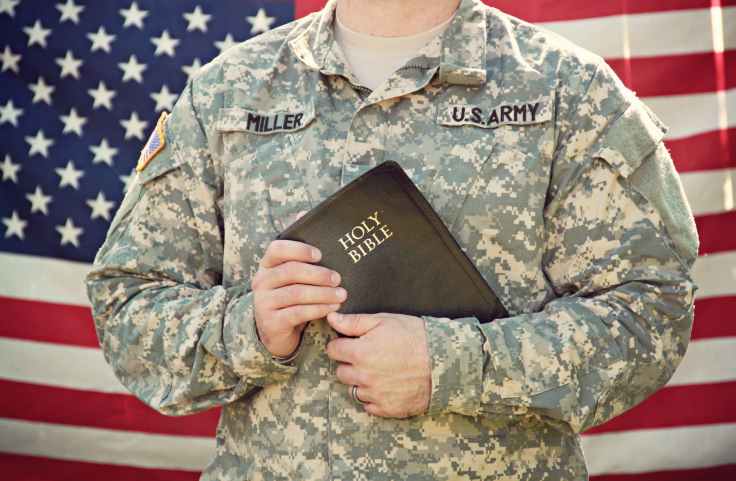
- Last, God’s “weapons” are not like those of the world. Five smooth stones do not look like weapons. In fact, five smooth stones from the brook may have looked charming and harmless and even comforting in David’s hand. Four of those stones may have gone back into the brook, to be polished some more by the current, or carried out to the sea.
Christ’s followers have armor and weapons, but they are spiritual in nature. We are to put on the “whole armor of God” (https://www.biblegateway.com/passage/?search=Ephesians+6%3A11-18&version=ESV, including the “sword of the Spirit”, which is the word of God. Truth, Righteousness, Peace, Good News, Faith, Salvation– This is how we prepare for battle! And we are to pray at all times! Imagine dropping the weapons of sarcasm and self-righteous posturing, and picking up a smooth stone of grace!
God calls us to use unconventional “weapons”– not to kill or destroy those around us, but to demolish lies, tear down walls of hatred, and defend the helpless. Has God placed you in a situation where you need to pick up “five smooth stones” today?