A young man walked into a local superstore. He was nondescript: late twenties or early thirties, dark hair, light brown skin, deep brown eyes, clean cut, quiet and friendly-looking. He was alone.
He came in by the pharmacy, and started down the first aisle. He saw a woman staring at a box– a home pregnancy test. She looked fearful, tired, and sad. He started to reach out to put a hand on her shoulder.
“Hey! Where’s your mask?! You can’t be in here without a mask– state mandate. What are you? Some kind of COVID-denying homicidal maniac? Hater! Get out of here!” This from another lady at the end of the aisle. The sad woman disappeared around the corner. Without a word, the man pulled a mask from his pocket and slipped it over his mouth and nose. He continued down the aisle. “I hope you get COVID and die!”– a parting shot from the second woman.
The man turned a corner and approached the brightly-colored Easter display area– candy, plastic eggs, plush bunnies, baskets filled with small toys, and lots of plastic grass. One area boasted crosses–wooden crosses on stakes to put in the yard, filigree crosses to hang on the wall, pewter crosses on chains of various lengths for necklaces, bracelets, key rings… A few wall hangings and lawn banners with sunrises, lilies, cute little chicks, and old country churches. More candy. The larger bags were on sale. To the right, there were adorable clothes for the kids– suits for the little boys, frilly dresses and bonnets for the little girls. Most were 20% off. There were “dress-up” costumes, too–rabbit ears and and flower hats and fairy wings. There was even a chicken outfit with feathers. Off to the end, there were deeply discounted Halloween costumes for 70% off–zombies and vampires, witches and skeletons. A special end-cap held yet more candy.
As the man left the area, he shook his head. He wandered over to the Home Decor and craft area in a fog. There he found framed art. “God Bless America!” “Life is Better at the Lake” “Love Never Fails” “Sleep, Drink, Fish, Repeat” “Faith, Family, Freedom” “These Boots Were Made For Walkin'”, plus several with pictures–Wonder Woman, Harley-Davidson, Captain Morgan, Elvis Presley, and Marilyn Monroe.
He kept going. There were books and magazines–best-sellers, romance series, biographies, horror and self-help books. Magazines filled with gossip and gaming, guns and glamour, gardening, goddesses, and gigabytes. Just for Easter, there was a special display of leather-bound Bibles, next to the Spring Gardening guides and photographic histories of favorite Major League Baseball teams.
The man bypassed the mesmerizing glow of wide-screen TVs and computers, strolled past the sporting goods and garden center, and turned away from the auto and hardware sections. He spent a couple of minutes glancing at the furniture– prefab and chipboard dressers and bookshelves, patio tables made of plastic or resin or metal tubing; floor-model chairs and lamps already scratched and discounted.
As he approached the grocery area, his eyes widened–aisle after aisle of canned goods, packaged dinners, bags of cookies and flavored popcorn, rows of olives and pickles and hot peppers, an entire section for bread and rolls. And the meats! Large banners announced special prices this week on ham and lamb, rolls, potatoes, and special Easter cakes.
As He left the superstore, there was a bench just outside. The man sat down, sank His head into His nail-scarred hands, and shed a tear.
As I edit this, the sun is shining and melting the last of an early spring snow. It’s been a mostly pleasant day, and I’m writing this in anticipation of a pleasant week ahead. This will post on Monday morning– a brand new week, hopefully filled with new opportunities and adventures. Of course, not every day is like this. Some days are dreary, full of stress and anxiety, and filled with challenges and even tragedies. But I have been thinking about a song I learned in childhood, one that has blessed me over the years and helped me on many a dreary day, as well as on days like today.
“I have a song that Jesus gave me, It was sent from heav’n above; There never was a sweeter melody, ‘Tis a melody of love.
I love the Christ who died on Calv’ry, For He washed my sins away; He put within my heart a melody, And I know it’s there to stay.
In my heart there rings a melody, There rings a melody with heaven’s harmony; In my heart there rings a melody, There rings a melody of love.
‘Twill be my endless theme in glory, With the angels I will sing; ‘Twill be a song with glorious harmony, When the courts of heaven ring.
On days like today, it is easy to sing a happy tune– sunlight, shimmering snow and icicles, viewed from my nice cozy perch by the window–but the joyful song that Jesus brings rings through good days and bad; sorrow and stress; triumphs and failures. It is eternal and filled with the limitless Love of God. It is a song of peace that passes all understanding, and a confidence that sees beyond circumstances.
Sometimes, when life seems devoid of light and peace, it has less to do with our actual circumstances, and more to do with our unwillingness to look up from them. Throughout the Old Testament (and even in the New Testament) people would create songs as part of their worship–some songs celebrated God’s provision and protection; others spoke of His character and His faithfulness. But these songs weren’t just for celebration and services of worship– they were used to remind us in good times and bad, that God’s love never changes. The same God who brings victory and miracles will be with us in times of despair. The same God who sees us in our most desperate hour of need is there with us when we are enjoying a beautiful sunset.
Today, I pray that we would take a few moments, find a song or a Psalm, and just sing a prayer to our maker. It doesn’t have to be a peppy song of praise– it may even be a song of yearning or anguish– but let it be a song that rises above our day and finds the ear of the One who loves us better than anyone else. It doesn’t matter if you can’t carry a tune; God listens to the heart! Sing the song that Jesus gives to you today. Your heart will be blessed. And it will bless the very heart of your Maker, as well.
16 Shadrach, Meshach and Abednego replied to him, “King Nebuchadnezzar, we do not need to defend ourselves before you in this matter. 17 If we are thrown into the blazing furnace, the God we serve is able to deliver us from it, and he will deliver us[c] from Your Majesty’s hand. 18 But even if he does not, we want you to know, Your Majesty, that we will not serve your gods or worship the image of gold you have set up.”
Daniel 3:16-18 (NIV)
I hear a lot of American Christians complaining about the “dark days” in which we live. And indeed, they are dark. There is great evil in the world– wars, famines, injustices, hatred, division, greed, and immorality. But, along with complaints, I hear a note of whining. Isn’t God supposed to deliver us from just such evil? Isn’t He supposed to clear the way for us to love one another in peace and harmony? Surely, it can’t be His will for us to be laughed at, spit upon, misunderstood, and treated with contempt?!
The ancient nation of Israel was conquered and sent into exile. Israelites who had abandoned their faith, as well as those who had steadfastly served the Lord, were ripped from their homeland and marched to Babylon. Worship in the Temple of Jerusalem ceased. The Temple itself had been destroyed. There were no tabernacles, no festivals– none of the systems and structures of worship left available to God’s people. Yet some still worshipped– in homes, isolated from their fellow Jews, or in secret groups. They were not surrounded by reminders of when “their” religious beliefs were considered the cultural norm. Nor did they live in a culture that practiced religious “toleration” as we understand it today.
In the book of Daniel, the commitment of s handful of exiles is detailed as it comes in conflict with the oppressive control of the Babylonian (and later the Persian) Empire. Daniel and his three friends are challenged by the pressure to compromise and adapt to their surroundings. They are tempted and bribed by the promise of power in the court– if they can compete with other Babylonians. But they secretly hold fast to their “old” diet, and religious practices. They refuse to eat the rich food of Babylon– or bow to its gods.
In Chapter 3 of Daniel, the three friends, Shadrach, Meshach, and Abednego, refuse to bow to a golden statue of Nebudchadnezzar, the megalomaniac for whom they worked. Even though he had appointed them to high offices, he refused to “coddle” them in their worship of a foreign god. He demanded that they bow to his statue– something God had commanded them NOT to do.
It might have been easy enough to secretly meet in homes and celebrate Passover without alerting those around them. It would have been possible for them to hide scrolls containing the ancient words of their historians and prophets, to be read or studied. But they were being asked to publicly bow to a statue of their King– to acknowledge him as a “god.” And they refused. As court officials, their refusal was not just a minor snub, but a scandalous insult. Yet they stood firm.
Shocked and angered, Nebuchadnezzar, a notoriously cruel and impulsive king, gave them a generous “second chance” to save their careers and lives by obeying his orders. Amazingly, the three did not even spend a moment considering their options. They answered, boldly, courageously, and graciously, that they would not bow down to the statue. And God rescued them from the fiery furnace, so that not even their hair was singed by the flames– even though their captors were killed in the very act of pushing them into the furnace! God not only rescued them– He appeared WITH them in the midst of the flames. This so astonished Nebuchadnezzar, that he ordered them released and proclaimed that no one should say anything against the God of Shadrach, Meshach, and Abednego–an incredible act of religious toleration for that culture and time.
The story of The Fiery Furnace is well-known. I’ve used it before in my posts. But today, I’d like to focus on just one little phrase that stood out to me this week. When brought before Nebuchadnezzar the first time, the three men said, “we do not need to defend ourselves before you in this matter…” (v. 16).
How tempting it might have been to have defended their refusal– to give Nebuchadnezzar a lecture on God’s Law and His past miracles. But they refused to explain or defend their actions. They merely gave testimony of their faith that God COULD save them, and that, “even if He does not..” they were willing to die rather than dishonor Him. And Nebuchadnezzar SAW the proof of their faith in a way that their words and arguments could not have accomplished!
Most of the time, when I hear Christians talking about this story, they focus on the miraculous deliverance of the three men from the flames. The lesson is that God will be with us, no matter what. He can deliver us FROM the flames, but often, He chooses to deliver us THROUGH the flames. And that is a wonderful lesson and a true promise.
But that deliverance should not overshadow the quiet dedication of the three men. Before God joined them in the fire, they were already committed to dying in silence to obey God rather than their earthly king. They stood to lose everything– their lives, their legacy of faith, their service, their families (who might have been left destitute or even subject to punishment)– all of it was riding on their willingness to suffer injustice and torture. We know that God “showed up”– literally– in their defense. And they certainly knew that God COULD save them. But they also acknowledged that “if He does not..” they were still willing to die. And they were willing to do so, not acknowledged as martyred heroes, but as convicted criminals.
Centuries later, Jesus Christ would appear before Pontius Pilate, who asked Him to give a defense. Astonished at Jesus’ refusal to argue and plead for His life, Pilate came to the conclusion that “I find no fault in Him.” (John 19:4) Jesus willingly accepted an unjust sentence of Death, offering no argument or defense, except the Truth. No one came to His rescue. And God did NOT spare His life! The Son of God died as a criminal on a Roman cross, betrayed by Jewish leaders. Yet, Jesus’ obedience; His willingness to die brought US life, and forgiveness and peace!
There are millions of believers in Christ today who must be prepared to face a “fiery furnace” moment–maybe it involves death or torture. Perhaps it only involves being teased or despised by a neighbor or a classmate at school. And we may pray for deliverance–that is natural. But how often do we give up the chance to argue, and justify our diligence, our “right” to worship “our” way? How ready are we to be seen as foolish, or even rebellious to the culture of the day? We long for God to come to our physical rescue– to join us IN the fire– but are we willing to let Him be our defense? Are we willing to be humble in the face of obvious injustice, and let God speak up on our behalf? And what if He does not?
The Apostle Paul also faced this dilemma. Not only were there Greek and Roman officials who thought him a fool, there were Jews– his own people– who were going around defaming him, denouncing him, and spreading lies and rumors. Paul (never one to let a good argument go unargued!) spent much of his time in letters writing out his defense of the Gospel. But, in his own defense, he downplayed his position and his great knowledge of the scripture. He was not defending himself “in these matters”– he was defending the Truth of the Gospel! He also acknowledged that God could use even detractors and tormentors to spread the Gospel. And he often urged fellow believers to live in peace with their unbelieving neighbors, even those who taunted them!
It is tempting in Western Culture, where Christianity has been normalized, to think that when we defend ourselves, we are defending Christianity. But what if, like Shadrach, Meshach, and Abednego, we let God be our defense– in the flames, in the courtroom of public opinion, in our own families? What if we followed Jesus’ example and remained calm and confident, even under duress? What if we lived humble and quiet lives of integrity, ready to submit even to the flames or the cross, serving even those who would stoke the fires or pound the nails? God might just “show up” in ways we never could have imagined! Courage is often seen as boldness and speaking up in our own defense. But, sometimes, it takes greater courage to stand silent and let our actions– even when they are disparaged and misinterpreted– speak as a testimony of God’s power.
“Look at the proud! They trust in themselves, and their lives are crooked, but the righteous will live by their faith.”
Habakkuk 2:4
Is it rational to believe in God? About three and a half centuries ago, the French philosopher, Blaise Pascal, drew up what is now known as “Pascal’s Wager.” In it, he gives a “rational” justification for belief in God (theism). In it, he posits that if God doesn’t exist, it doesn’t matter whether or not we believe that He does. But if God is real, the consequences of our belief or denial are crucial. If the God of the Bible exists (along with heaven and hell, sin and salvation), the failure to believe will lead us to lose everything; the decision to believe will lead us to gain everything…there is no in between.
I’m not a big fan of Pascal’s Wager. Not because it’s bad logic, per se, but because it depends on belief, but not faith.
What’s the difference? Belief says that God exists–that He is supreme, that He controls our destiny, and that He must be obeyed. It will produce a life of theistic obedience to God’s Law, including a life of “good” works, moral conduct, and “right” thinking. But it will not produce a Godly character. It will not be a life of righteousness.
Faith, on the other hand, believes that God not only exists, but that He rewards those who earnestly seek Him (Hebrews 11:6) and that He so loved the world, that He gave His only Son (John 3:16) to save us from Sin and Death (1 Corinthians 15:56-7). It is not our belief in God’s existence that saves us and gives us life; rather it is Faith by His Grace! (Ephesians 2:8-9) in the nature and character of God– in the atoning work of Jesus as revelation and proof of His character– that saves us from Sin and Death.
Pascal’s Wager is a way of thinking about God. It can lead someone to believe, which can produce a life of Faith. But it can also produce a kind of life that is ruled by grudging obedience, resentment, and pride in one’s own powers of self-control and understanding. Faith lives in dependence and humility, and joyous gratitude for God’s gifts.
The prophet Habakkuk, who first wrote the phrase, “the righteous will live by faith,” learned this lesson in dramatic fashion. He “believed” in God– in His righteousness and justice. He spoke to God about the wickedness he saw all around him, among his own people. God gave him a difficult answer: Justice was coming in the form of an invasion by the Babylonians– a group known for their wickedness and cruelty and lack of justice! God’s answer was shocking and counter-intuitive. But Habakkuk chose to believe and put his faith in God’s Eternal Character, as God revealed the “rest of the story.” Israel would suffer; justice would be cruel–but God’s glory and His salvation would triumph. Habakkuk’s response was a song of praise. Regardless of his circumstances, Habakkuk would wait and rejoice, knowing that God’s ways are perfect.
It’s not difficult to say we believe in God. But are we living in Faith? I find it easy to let circumstances–especially injustice and wickedness–overwhelm me and rob me of peace and joy. But I find it comforting to know that my momentary doubts cannot stop God’s promises, His Mercy, or His power to help me live by Faith. That’s due to His righteousness, not mine, but through Christ, I can trust in it, walk in it, and live in it!
“Times are tough!” I hear many people complaining about the economy lately. And they have good reason– gas prices, food prices, housing prices, taxes– everything is getting more expensive, and wages or other sources of income just aren’t keeping up.
While we may worry about the current economic conditions, we need to step back and look at a different economy– God’s economy.
This weekend, I wrote out checks and paid bills. I even put some money in the offering at church. But God doesn’t look at the amount of money I paid or gave away, how much I spent or saved, earned or invested. He’s aware, of course, of such things, but God looks at a different “bottom line.” God cares how I spend or save money, whether it’s pennies or thousands of dollars. But He also cares how I spend my time and energy. And my life is “richer” than just the money in my bank account or the things in my house.
God doesn’t give us everything we want– He loves us too much for that. Life isn’t about having the most “toys;” it isn’t about having the easiest or most entertaining experiences. It isn’t about “winning” and having “more.”
I have noticed that the happiest people are often those who have had to struggle the hardest. In God’s economy, it is His pleasure to give more than we can ask or imagine– but often in ways we would never expect. (see Ephesians 3:20-21) In God’s economy, I am rich. Not because of anything that I have done, or earned, or because I was born to a wealthy family or because I won the lottery. I am rich because of what God has done. And if I am tempted to doubt that, I can begin listing all the blessings of God– and I will run out of space and time!
God has given me life. I didn’t choose to be born. I did not have the power to create myself. But God made me unique among all the people who have ever lived. He gave me a body, a mind, a soul, and a spirit. He gave me thoughts and dreams and opportunities to grow and enjoy life.
God gives me hope and purpose and a reason to live. Life can be difficult. It can be painful. It can be tempting to see only the darkness, the grief, the regrets. But it can be beautiful. It can be almost painfully beautiful, sometimes. What a gift. And what a gift God offers in each new day. A new chance to hope. A new chance to strive. A new chance to make a difference.
God has given me family and friends. And sometimes, that can be a struggle! We aren’t perfect, and we don’t always see eye to eye. We step on the toes or we step on the feelings of others. But we also make each other laugh. We make each other stronger. We help each other grow. We enrich the lives of others, and others enrich our lives in return.
God has given me His word– His promises; His love-letter; His wisdom; His counsel; His power to shape my story. And yours! The Bible is not just a collection of stories or words. It is Truth. It is Grace. It is how we can KNOW the riches God has for each of us.
God has given me His Salvation. No matter what today brings; no matter what has happened in my past– whether things I have done, or things that have been done to me–God sees me as His child. And if I believe in Him; if I trust Him to be who He says He is– my Father, my Savior, my Lord–He will throw my past and my guilt “as far as the east is from the west”(see Psalm 103:12). I am debt-free! And I will inherit all that God will share with His children throughout eternity!
And God has given my His Presence. I am never alone. I am never forsaken or forgotten. NEVER. (Hebrews 13:5) If I am sitting in despair on an ash heap, seeing no hope and no future, God is sitting there with me, waiting for me to see Him, and accept that He is more than “enough” to get me through.
And with such riches, I can follow God’s lead and be generous in return. I don’t have the power to give life, but I can celebrate it, advocate for it, protect it, and remind others of its beauty and promise.
I can encourage others– with acts of service, with a smile, by faithfully lifting them up in prayer. What if we thought about hugs as endowments? What if, in God’s economy, every hug you give is worth $2,000? What if every prayer is like investing in a bank account? What if your smile is worth a fortune to someone today? I can be a friend to someone who feels unseen or unheard. I can share a conversation with someone who feels lonely. I can share a burden for someone who just needs a helping hand.
I can share God’s promises. I can share His wisdom. I can share His compassion. I can share His Mercy and Grace with those who least expect or “deserve” it. I can share my hope and my joy. I can help someone look up and look beyond a bad day. And where there is suffering and pain– I can share that, too, knowing it is part of God’s good economy. And maybe, as I offer my presence, I can help someone else see the presence of God sitting there with us both!
You may not feel very rich today. And in this world’s economy, you may be in great need. God may not shower you with cash or assets in the present moment. But God has promised to give you everything you truly need for life and Godliness (2 Peter 1:3-4)
15 When they had finished eating, Jesus said to Simon Peter, “Simon son of John, do you love me more than these?” “Yes, Lord,” he said, “you know that I love you.” Jesus said, “Feed my lambs.” 16 Again Jesus said, “Simon son of John, do you love me?” He answered, “Yes, Lord, you know that I love you.” Jesus said, “Take care of my sheep.” 17 The third time he said to him, “Simon son of John, do you love me?” Peter was hurt because Jesus asked him the third time, “Do you love me?” He said, “Lord, you know all things; you know that I love you.” Jesus said, “Feed my sheep. 18 Very truly I tell you, when you were younger you dressed yourself and went where you wanted; but when you are old you will stretch out your hands, and someone else will dress you and lead you where you do not want to go.” 19 Jesus said this to indicate the kind of death by which Peter would glorify God. Then he said to him, “Follow me!”
Today is Valentine’s Day, and many people will be saying, “I love you,” or asking, “Do you love me?” And many others will reply, “Yes, I love you,” or “I love you, too!” Cards and gifts may be exchanged; some couples will dine out or have romantic candlelit dinners at home. It is a day to celebrate love. There are thousands of poems and songs about love– ooey, gooey, gushy love; unrequited love; first love; true and lasting love; even “puppy” love.
But Valentine’s Day can also be a painful reminder– of lost love, betrayal, and loneliness. The story of Peter’s betrayal and reinstatement is not a “Valentine” story of romantic love, but it carries some lessons for today about love in general, and the Love of Christ in particular.
Love is a choice– freely given and freely accepted (apologies to Elvis Presley and others who have sung about not being able to help falling in love…) When Jesus first called Peter (and in the above passage as well) He simply asked Peter to “Follow me.” He made no demands, offered no bribes, used no intimidation. There is no long list of requirements or expectations; no bargaining; no “quid pro quo.” That said, Love is not a light-hearted or whimsical thing. Peter’s choice to love Christ, and to follow him cost him his life. Christ’s choice to love us led Him to humble Himself to death, even death on the cross (Philippians 2:8). Jesus could have escaped this fate several times over– He CHOSE to die for each of us!
Love is more than just a feeling. “Follow me” demands an action and a commitment. There are many today who “love” the idea of Jesus; they love the parables, or the gospel story; they are in love with “love.” But the idea that “Love” is all you need (apologies to the Beatles) misses the mark. Feelings change; feelings are transitory and often dependent on circumstances. Love chooses to follow– even when the going gets rough; even when it is not convenient, even when it involves sacrifice.
Loving someone involves taking the risk of being hurt, denied, or betrayed. There is no Biblical passage describing the amount of hurt Jesus must have felt when Peter denied Him three times, or when Judas betrayed Him. The Biblical account tells us that Jesus already knew and predicted these two events, but how agonizing–every bit as painful as the nails in His hands and feet! Jesus loved those who spit at Him, abandoned Him, condemned Him, and persecuted Him. And we also see Peter in this passage being hurt at Jesus’ questioning him a third time; Peter was shocked and hurt when Jesus predicted his denial, and when Jesus said to him, “Get behind me, Satan.”(Matthew 16:23) Love is never free from risk– especially the imperfect love we have as humans.
Love leads to restoration and forgiveness. Peter’s denial of Christ could have haunted him for the rest of his life. Had Jesus said nothing; done nothing to address this hurt, it would not have changed the fact that Peter was forgiven. But in publicly restoring Peter, Jesus made it clear that it was “all good” between them– Peter wasn’t just conditionally forgiven, he was completely restored!
Love is stronger than death! It is stronger than sin, or betrayal, denial, or hurt. Love is eternal and limitless, everlasting, and enduring. God IS Love and to know God is to know love. To speak to God and to hear His voice and read His Word is to converse with Love. Whether in the presence of saints on a mountaintop, in the midst of a raging storm, or on a quiet beach– Love is closer than our next breath, and more powerful than our deepest fear. Love never fails (1 Corinthians 13: 8)
Social media is a dangerous place these days. Everyone is an expert on something– pain, medicine, race relations, politics, religion… I’m an expert, too. I am an expert in my own opinion! I know all I ever need to know about how I feel, what I’ve experienced, how I would solve all the world’s problems, and what everyone else should know, do, and think.
And when I pray, I am an expert in what I want, and what God should do–right?
Turns out, the Bible disagrees with me. Prayer is not about telling God what I think He should do. And one of the things He doesn’t want me to do is go about telling everyone how much I know and how right I am about everything.
I know– it flies in the face of common thought and practice. But my words are not to be about how good I am, how smart I am, how righteous I am, how “woke” I am, or how tolerant I am. My words shouldn’t be all about ME. When I do speak (or write), it should be for one of four reasons:
To praise– to bring honor and glory to God for who He is and all that He has done. To rehearse and proclaim His good deeds and righteous acts so that others may hear and praise Him, too.
To encourage, build up, edify, or heal others. Words have the power to bring hope, energy, confidence, light, and love. They also have the power to destroy, devalue, and discourage. Finally, words have the power to suck energy, waste time, and bring confusion and chaos. When I speak carelessly, selfishly, or foolishly, it does nothing to build up others. (And it probably doesn’t do me much good, either!)
To speak truth and stand up for righteousness–not in an arrogant way, and not to win “points”, but to honestly and firmly defend what I know to be true. I must realize that there will be others who will stand in opposition to the truth and refuse to hear what I say. Others will misconstrue and misrepresent the truth. It is NOT for me to make them believe– only to stand up and give voice to the truth when I see it under attack.
To express unique and creative thoughts, which is part of praising my maker. Everyone has SOMETHING to say– something that expresses their inner thoughts and unique perspectives. That should cause me to take great joy. And it should cause me to take the same joy in helping others find their voice and share their stories and ideas. Not because I’m “right” about the world, or because they are “right” in their ideas. But because God gave each of us a voice. I can listen and not agree; they can do the same. But sometimes, in the act of listening, we do more to come to understanding and agreement than we ever do by speaking. And in being allowed to speak freely, we might listen to ourselves more carefully, too.
Jesus spoke wonderful parables, deep and thoughtful prayers, piercing sermons, and tender words of encouragement and love. But He also listened–not only to the critics and enemies, but to those who hid in the shadows; those who were outcast and oppressed; those whose voices were drowned out by the crowds. He was RIGHT! More than anyone ever, He had the right to be heard…He chose to listen as well as speak. Jesus was more interested in being Himself than being “right.” More interested in showing love than showing off. More interested in understanding than overpowering. Jesus spoke–but He also laughed, and wept, and lived, and listened.
I heard a riddle a few years ago, that went something like this: ”What kind of car would Jesus drive? A Honda–it says in the Bible that Jesus and his disciples were all in one Accord!”
While that pun may raise some groans, it also hints at a valid principle. Those who follow Christ should be “in one accord.” Whether we are riding together in a car, or sitting together in a service, or serving together on the mission field, we should be of one mind. But what does that actually mean in a practical sense? How does it relate to a pursuit of prayer?
To be “in accord” is to be unified, in agreement, in consensus, in harmony, with all the others of a group. It is the act of blending together for a single purpose– to match up with others in a single focus–to unite in one glorious expression. Think of a harmonic musical chord– three or more single notes being played together to make a fuller, richer, more complete burst of sound. The notes must act together– they must be in harmony within the scale, and they must be played at the same time. There is even such a concept in music of “resolving” a chord– first playing a chord in a minor key, then changing one or more of the notes to form a similar chord in a major key. The human ear is drawn to chords that “resolve”– music that ends on a “positive note.”
In human relationships, we also like resolution and harmony. As Christians, we are strongly encouraged to live in harmony and unity, living for others, so that we may “glorify the God and Father of our Lord Jesus Christ with one mind and one voice.” (Romans 15:6 CSB) We are not to insist on having things “our way,” to resist those who offer Godly correction, or to be part of creating divisions. Instead, we are to refrain from selfish ambition, to remain faithful to Christ’s teachings, and to “resolve” conflict whenever possible.
Likewise in prayer. We should echo the prayers of others, as we seek God’s will to triumph over situations and circumstances. That doesn’t mean that we all have to intone the same rote words whenever we are together. But it does mean that we should support each other in prayer, just as we would in speaking to each other and about each other.
And that involves seriously evaluating how we speak and act and think about our fellow Christians. If we gossip or spread complaints about our Brothers and Sisters in Christ, we are NOT in accord, and our prayers cannot be in harmony with theirs. If we are waiting for others to see things “our way,” we should be very careful about how we pray– it may be that WE are the ones who need to reconsider, or it may be that we need to listen before we presume to judge. Being “in one accord” involves humility, kindness, gentleness, and a willingness to accept (and sometimes to give) difficult Godly correction. The goal is not for others to see things “my way,” but for all of us to see things God’s way!
And when that happens, our prayers will be like a symphony, built of gloriously harmonious chords. Just imagine how delightful it is to pray “in one accord,” knowing that our prayers not only reach heaven, but fill it with music!
The other day, as I was doing a Bible study on the Women of the Bible (Spangler and Syswerda, Zondervan Press, 2007), I was reading about Lot’s wife. The story is found in Genesis 19. Lot and his family were living in the wicked city of Sodom, which the Lord was getting ready to destroy. Abraham, knowing his nephew and family could face destruction, had pleaded with the Lord. God had promised that if He found even 10 righteous people in the city, He would not destroy it. But the men of the city came in a mob and tried to rape the angels of God. Only Lot tried to prevent this crime, and even offered his daughters as a substitute for the angels! No other righteous people were found. The doom of Sodom was at hand.
The Angels led Lot, his wife, and his two daughters out of the city toward the small town of Zoar. In fact, they had to take them by the hands and physically drag them away from the coming disaster. They warned the entire family to flee– take nothing with them, and don’t look back! But Lot’s wife did look back, and she was turned into a pillar of salt. In one split-second of weakness, she lost her life and her future, and left her family to unravel (see later chapters in Genesis).
I remember hearing this story as a child, and one question has always nagged at me. Why a pillar of salt?
Have you ever wondered about it? What is it about the destruction of Sodom and Gomorrah that would cause anyone to become a pillar of salt? God never does anything without a reason or a lesson to learn. So what can we learn from this?
Interestingly, the authors of the Bible study spent an entire lesson on “Salt.” They told of its importance in the Ancient World, its abundance in the Middle East, and how Jesus spoke of His disciples being the “Salt of the Earth.” (see Matthew 5:13). We are commanded to have qualities similar to salt– to cleanse, purify, and season the world around us.
And then, yesterday, we experienced some freakish winter weather. It rained. And it sleeted. And it rained some more. And the temperature hovered just at the freezing point, causing a layer of ice to form over the roads, sidewalks, trees, power lines, cars, etc. Ice was everywhere, and I was out spreading –you guessed it– salt. Salt melts the ice that covers walkways and roads, making it safer to walk or drive.
But here’s the thing about salt. It only works when it is spread around and used. It does no good to put a pillar of salt in the middle of a highway, or on the kitchen table. A pillar of salt can make an interesting decoration, but it’s real worth is in its usefulness, and in its interaction with other elements. We don’t eat salt by itself. We use it to flavor other foods– we sprinkle it, we rub it in, we dissolve it– we don’t appreciate salt unless it works WITH something else. We use it WITH ice, to melt it off of the sidewalk. We use it ON raw meat to cure it and preserve it. We use it IN water to clean or soften items.
Lot’s wife was a pillar of salt. She had worth and value; she had a family that was being preserved to be a witness of God’s Grace and Redemption. But she turned away from God’s protection and His provision. Her value was trapped by her moment of rebellion, or curiosity– whatever caused her to look back.
How are we being salt in the world today? Are we being used to season the world around us? To help spread health, and purity, and life? Are we helping to melt icy hearts and soften hard hearts we meet? Are we willing to be spilled and spread and rubbed in to situations not of our choosing? Or are we standing as pillars of useless potential?
I pray that I will learn from the story of Lot’s wife. A new lesson. A new sense of purpose today. I hope you will be encouraged, as well. Let’s go out and “shake” things up in our world today!
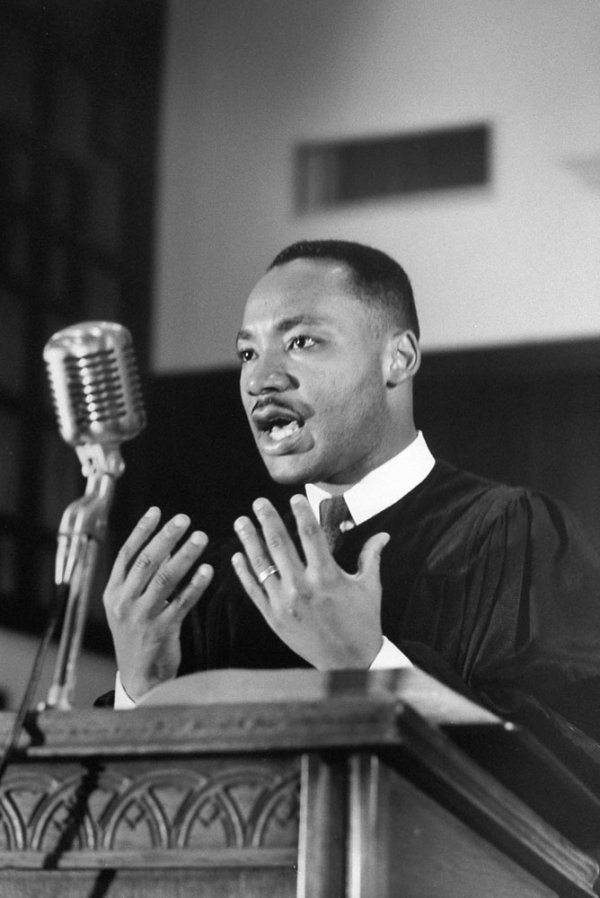
Today in America, we celebrate the life of Dr. Martin Luther King, Jr. Dr. King was a minister, a brilliant writer and student of theology, a leader in the Civil Rights movement of the late 1950s and early 1960s, a noted speaker, and man who arguably made a difference in the world. Dr. King was murdered in 1968, at the age of only 39, leaving a family and a nation devastated by his loss.
Next Monday, we will observe the 51st anniversary of the Supreme Court decision Roe v Wade, in which nine judges effectively legalized abortion in the U.S. for over half a century. Even though this decision has been overturned, many states, using the precedent of Roe v Wade, have changed their state laws to allow for abortion. In many states, it is now legal to abort a child right up to the moment of birth!
What is the value of a single life? Who gets to decide that they have the right to take another person’s life– whether by assassination, capital punishment, abortion, murder, or euthanasia?
It is a question that our society has struggled with for centuries. Who can give life? Who can take life? Who can determine the conditions of another person’s existence? And, for those who live, what is the “value” of their life–to their family, to their neighborhood, to their nation, or to history? Who gets to set the standard of what constitutes a “worthwhile” life or the “quality” of life for someone else? For themselves?
I’ve been reading through the book of Genesis this month, and, according to the Bible, this subject is as old as human life on earth. Cain decided that Abel’s life was expendable, so he killed him– the first murder. The people of Sodom and Gomorrah felt they had the right to enslave and rape anyone they wanted to. Joseph’s brothers plotted to kill him, before selling him into slavery, instead.
The Bible doesn’t hide this history, nor does it sugar-coat the actions of those featured in its pages. But, the Bible offers us a clear picture of WHO gives life, and WHO has the authority to decide what life is worth. God alone has this authority. It is God alone who can create and sustain life. Mankind has the choice– to protect life or destroy it; to treat life with respect or with disdain; to honor the Giver of Life, or to rebel against Him.
All the atrocities of the Old Testament lead to the ultimate decision on the value of a single life. Jesus lived a simple, ordinary human life. He lived with compassion, with purpose, and with humility. And He was willing to GIVE His life to atone for all the murders, all the abortions, all the slavery, all the injustices in history, so that WE could enjoy abundant, eternal life with Him. By looking to this singular life, and trusting in the power of His death and resurrection, we can choose to honor all life. We can make a difference. We can live with purpose and joy.
Dr. King’s legacy is one of honoring life, and pointing out the evils of those who seek to devalue the lives of others based on the color of their skin. Abortion’s legacy is one of destroying life, and promoting those who devalue the rights of the helpless.
The choice is still before us. How will we determine the value of a single life in the coming week? How will be add value to life on earth? How will we live for more than just the moment?

































 Pursuing Prayer