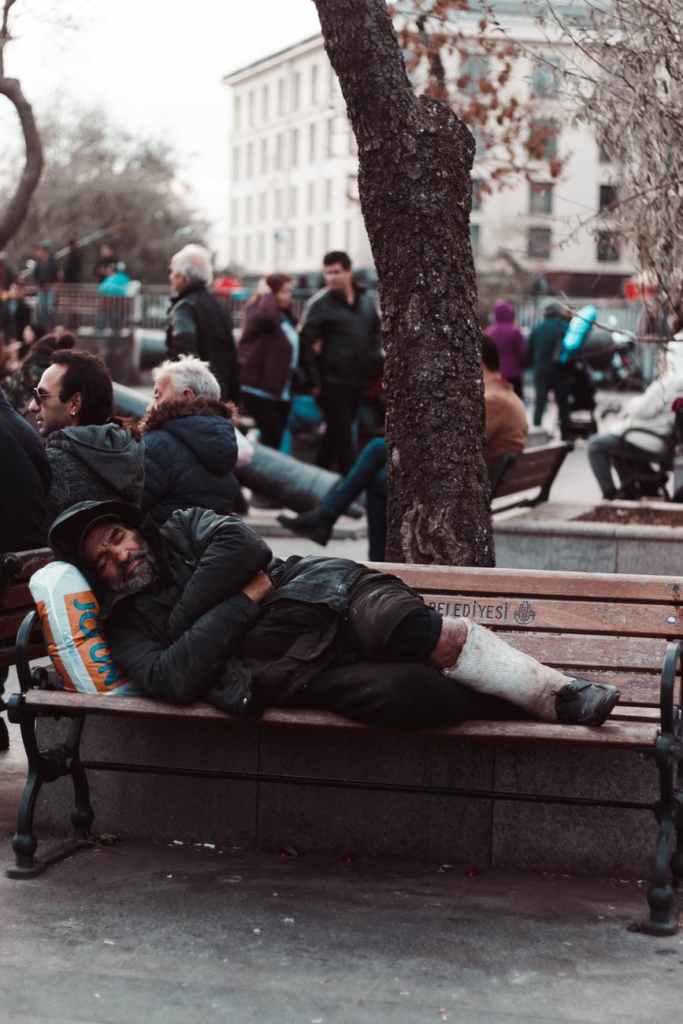
Father,, Today is a dreary day. It is not warm or sunny; it is not filled with joy or peace. The house is a mess. I’m not even dressed. I feel emptied and drained.
Even though I can’t see Your glory in my surroundings, I know You can see The glory of eternity. You see the brighter days ahead. You are already there, Celebrating.
You have not journeyed here to Listen to my prayer… Because You have always been here Right beside me. You are not put off by my Dirt or disheveled appearance; You are not unaware of my sadness– You know my thoughts before I think them! You know my emotions better than I know myself!
Today is a dreary day, But it is just a speck in the fullness of Your Eternal Light. Shine into my darkness Dispel the dreariness around me. Help me to reflect, not the clouds, But the Son!
Thank you, Lord. Even on a dreary day, In Your presence, there is fullness of Joy– Not the giddiness of a sunny springtime, But the glow of a hearth-fire, Sustaining me.
So my praise today may not explode In bright colors and exclamations. But it will be a steady and steadying Ember–warm enough to survive Ready for You to Ignite tomorrow’s fresh flame!
God is interested in the little things. We praise Him for his glory, majesty, and power–rightly so–but He is also the God of atoms, and quiet moments, and insect wings and snowflakes.
God celebrates with us in our smallest victories–biting our tongue instead of bragging, shaving a minute off our 5K run, not burning the dinner rolls, remembering to put gas in the car for my spouse. He also sees our smallest sins–when no one else is looking; when no one else knows our motives or inner struggle– God sees every detail, every motive. God hears our prayers– not just our big urgent prayers, but our whispered secret prayers; our quick cries for help; our relieved sighs of gratitude; our shameful confessions.
God often uses yeast as a metaphor for sin–just a tiny bit can ruin everything. One tiny act– a fib, passing along a rumor, snubbing a neighbor at the store, watching “soft” porn on TV, hanging out with the “fun” crowd and taking dangerous risks, gambling “for fun” with money you promise to pay back later, drinking a little too much just a little too often, spending more time with that co-worker who “understands” your marital woes better than anyone…Most of us don’t set out to become addicts, thieves, adulterers, bullies, sexual predators, rage-aholics, embezzlers, or compulsive liars. But Jesus warns us that big sins start small: “murder” really starts with disdain and anger and hate (Matthew 5:21-22); adultery begins with lust; and the love of money (greed) is the root of all kinds of evil (1 Timothy 6:10). Selfishness, pride, envy, rebellion– they lurk in little lies and delayed obedience and easy justification we allow in our daily lives.
But God is not only watching us under a microscope, waiting to catch us in some small act of sin. In fact, that is not His primary desire in watching us. God is searching eagerly for signs of obedience, faith, goodness, love, and kindness.
Jesus used parables about small things– a lost coin, a mustard seed, a pearl, a speck of dust, the eye of a needle, a narrow door/gate, a lily of the field– to illustrate joy, faith, self-control, obedience, trust, and even the kingdom of God. Small things are important, sometimes even glorious, in God’s eyes. Even some of Jesus’ miracles started with small, humble, simple things– water, five loaves and two fish, a few quiet words, a few tears.
Today, I want to pray that I will see God moving– not just in grand gestures and eloquent sermons (though I love to see Him move in those ways, too!)–but in the small moments. I pray that I will be sensitive, not to the world’s crushing words of hatred and deception, but to the still small voice of encouragement; to the hopeful smile of a stranger; to the rushing wind that lifts dust mites to glory in the sun; to the unshed tears of a widowed friend. I want to plant the mustard seed of faith and watch how God will grow it. I want to be that cheerful giver of my last coins in gratitude for the riches of Grace that cost me nothing but cost my Savior everything.
(Please note: This is a re-post from a couple of years ago..)
Growing up in the age before digital cameras, I remember waiting for photos to be developed from a roll of film. We would drop off a roll at the pharmacy or photo shop, and pick up a package containing the prints and several strips of negatives from the original roll of film.
I was fascinated by these negatives–images with the exact opposite of the prints– dark was light, light was dark, and everything seemed topsy-turvy. Sometimes things seemed creepy and even somewhat sinister–people with white hair and white pupils shining out of dark eyes; icy trees against a dark sky.
Of course, the negatives were not the prints, nor were they intended to be the finished product. The negatives were included so that new prints could be made at a later time. We didn’t put the negatives in our photo album; we hid them away in a dark place, out of sight and far from the light. Most of them eventually got ruined or degraded over time, while the photos they produced were preserved and cherished.
Life holds a lot of “negatives”– negative experiences, negative emotions, negative thoughts, bad memories, scars–we all have them. But we are given the opportunity to produce something positive out of even the most negative of circumstances. It’s what God does– His light shines in the darkness and changes our view.
But we need to be exposed to the truth, and developed by faith, just like film. And we need to come back into the light, not as a negative, but as a faithful image of what (and who) God intends us to be.
The world is full of negatives– distorted images and situations caused by exposure to sin, pain, grief, anger, bitterness, and hatred. We can dwell on such images, and fill our days staring at the negatives, never seeing the reality of what God has done all around us. Or we can allow God to develop the negatives in our life and create albums of God’s Grace–filling our eyes and minds with the truth and beauty that comes only from our Loving Father.
Philippians 4:6-8 NIV
Donot be anxious about anything, but in every situation, by prayer and petition, with thanksgiving, present your requests to God. And the peace of God, which transcends all understanding, will guard your hearts and your minds in Christ Jesus. Finally, brothers and sisters, whatever is true, whatever is noble, whatever is right, whatever is pure, whatever is lovely, whatever is admirable—if anything is excellent or praiseworthy—think about such things. (taken from bible.com)
Someday, God will finish destroying all the “negatives” in this fallen world, and reveal His full Glory. What a sight that will be!
I’ve been looking through the Beatitudes and how they relate to prayer. Jesus said that the pure in heart are blessed, for they shall “see God.” Have you ever spoken to someone who wasn’t looking at you? They looked past you, or around you, or down at their device, but they didn’t attempt to make or maintain eye contact. It can be disconcerting, and even rude. And yet, there are times when, with our divided hearts, we come into prayer without really looking for, or at, God.
At other times, our hearts cloud our vision, giving us a distorted view of God. We harbor sin or guilt, and we see God as unforgiving or unfair. We are holding on to our own will, and we see God as restrictive or demanding.
The pure in heart see God as He really is– Glorious, Merciful, Wise, and Just. They see evidence of His lovingkindness and faithfulness all around them. They see themselves through His eyes– beloved and forgiven–and they see others through the eyes of Grace.
This is not our natural state. We are NOT pure in heart. We are self-centered, self-absorbed, and self-conscious. King David recognized this profoundly when he was caught in his great sin of adultery and murder. In his own lust and selfishness, he had seduced the wife of another man, and when she became pregnant, David arranged to cover up the first sin–by having the man murdered. David was not a notorious scoundrel. He was even called, “a man after God’s own heart.” But when he was confronted with his guilt, David “saw” himself as he really was– not a victim of circumstance, or a martyr to passion, or a king who was above the law, but a man who had committed evil against others, and against a Holy and Sovereign God.
David’s prayer was in line with his vision. Not only did he see himself as he really was; he saw God as HE really is: Holy and Just, but willing and able to restore David’s purity of heart. David’s God is the same today as He ever was. He longs to make us clean; to restore to us the joy of our salvation (see Psalm 51:12), and give us the power to pursue our purpose and leave our past sins behind.
When we desire to “see God,” we must desire this cleansing and restoration of purity. We can pray without it, but we cannot look at a Holy God with an unclean spirit. All we can do is look elsewhere– talking to the wall or the floor. God still hears us, but he wants to have a real conversation; one full of intimacy and understanding.
So, today, will I make “eye contact” during my prayer time?
I’ve been looking at the Beatitudes lately, and how they relate to prayer. Today I am focusing on “Blessed are the meek, for they shall inherit the earth.” (Matthew 5:5) Does this verse suggest that we should be meek or timid about prayer? Is God offended when we plead with Him or pour out our frustrations about pain or injustice? Doesn’t this contradict the writer of Hebrews, who says that we should “boldly approach the throne of grace” (Hebrews 4:16)?
God invites us to have a relationship with Him. Good relationships cannot survive in an atmosphere of fear. But they must involve respect. There is a tendency in the Church today to look at prayer as a casual conversation with God, where God is our “pal,” someone we hang out with and chat with like a best friend. But even our close relationship with God as “Father” demands the same kind of respect we should give to an earthly father or an elder. God is not “one of the gang,” or “the man upstairs.” He is God Almighty, and Lord of All Creation.
Like any Good Father, God wants to hear from us– all that is on our minds and hearts. But we must remember who God is– and who we are. We are His children, not His “crew.” In The Lord’s Prayer, Jesus began by addressing His Father, and establishing His place– “Our Father, which art in Heaven, Hallowed be Thy Name.” (Matthew 6:9 or Luke 11:2) The meek person comes before God gladly, with awe and gratitude, eager to honor Him before all else.
And the second part of the Beatitude is also key in how we pray. “Blessed are the meek, for they shall inherit the earth.” Many times, we focus on the inheritance itself– “the earth.” But what about the act of inheriting? The meek will not conquer the earth. The meek will not purchase the earth. The meek will not gain the earth, or win it, or demand it. Instead, the meek wait patiently for their inheritance. How would our prayers change if we took this to heart? God will give us all that we require– in His time, in His wisdom, for His purpose, and with His delight! The whole earth belongs to God– and He desires to share it with us! There is never a reason NOT to be meek, humble, grateful, or reverent before our Father. There is never a reason to be demanding, rude, dismissive, or grumbling when we pray.

This can be a very freeing realization. No matter how chaotic, frightening, or painful our situation, God IS in control. Wars rage, disease stalks, famine strikes, yet God has promised to give us access to all of His riches, including a peace that passes understanding and unspeakable joy! They are a guaranteed inheritance from our great Father– His lavish Grace and everlasting Love poured out on us.

I’ve been exploring the Beatitudes (Matthew 5:1-12) and how I think they relate to prayer. Today, I want to look at the second one: “Blessed are those who mourn, for they shall be comforted” (v. 4).
I know a lot of people who are mourning. I know people who have lost loved ones to COVID, to suicide, to cancer, etc. I know those who are mourning the loss of a job or a house. I know those who are mourning the loss of health– either their own or that of a loved one. And I have been a mourner. I know those moments when the grief hits unexpectedly– a song comes on the radio, or a certain photo pops up in my Facebook memories; even the smell of freshly cut grass or the taste of popcorn can remind me of loved ones lost, and bring a tear to my eye.
I also know the mourning that comes from regret– the painful consequences of ill-chosen words or reckless actions– even missed opportunities. Mourning is painful. It is uncomfortable. The world around us is made uncomfortable by our mourning. People spend billions of dollars and spend countless hours trying to avoid mourning; trying to deny, placate, drown, or forget their grief and sadness. We take pills, we binge watch entertaining programs, we run away, we distract, we seek to mask our feelings, suppress them, or eradicate them.
Jesus calls on us to mourn. He wants us to bring all the ugliness of our grief and shame and give it to Him. He will not ask us to cover it up, or hide from it, or “get rid of it.” He will not tell us to “get over it” or “put it behind us.” Instead, He will comfort us. That doesn’t mean we will never again feel grief or shame or sadness in this life. But our mourning will be transformed into Joy. Joy is not the absence of, nor a denial of grief. It is the triumph of life over death; of hope over despair; of purpose over futility. We are not commanded to be “shiny, happy” problem-free people. Nor are we to let mourning and grief overwhelm us or turn us sour and despondent. Instead, we are to share our grief– and to share in the grief of others–just as we can then share in the comfort we have found!
In the same way that the “poor in spirit” can embrace all the riches and glory of the Kingdom of Heaven, those who mourn can receive from God the kind of Peace that “passes all understanding” (Philippians 4:7), and the joy the “comes in the morning” (Psalm 30:5) God does not want us to be forever depressed or wallow in our despair–but He also does not want us to pretend that we are invincible, or untouched by sorrow. Jesus wept. Jesus felt sadness and frustration during His earthly ministry. He was tired, He was misunderstood, He was betrayed. He suffered losses. And He grieved over broken relationships and the horrible consequences of Sin in the lives of those around Him.
Those who do NOT mourn– who do not feel sorrow or regret or loss– will never know the healing power of God’s consuming comfort. They will never know the full measure of Grace. They will never cry out for it, never be surprised by the light in the darkness, never feel the joy of being held and cradled by compassion. And they miss out on the true Joy that comes from being comforted and being able to comfort others.
So the question I have to ask myself today is– what have I mourned lately? When was the last time I collapsed under the weight of my own grief or shame, only to find myself upheld and wrapped in the arms of the Lover of my Soul? When was the last time I extended comfort to someone else by mourning with them?
St. Francis was allowed to visit a 21st century university, which housed a chapel bearing his name. He was both honored and confused by the opportunity. Walking about the campus, he was amazed at the number and variety of students rushing to and fro; they were not looking at the grounds or the sidewalks or at each other– they were focused on their devices. It was a noisy campus, full of the sounds of buses and other traffic, music and podcasts playing, people arguing… Finally, St. Francis arrived at “his” chapel. It was a beautiful building, quiet and simple in its design. It was empty, except for a single student, saying her prayers. At the entrance, there was a plaque with a well-known prayer:
Lord, make me an instrument of Your peace;Â Where there is hatred, let me sow love;Â Where there is injury, pardon;Â Where there is doubt, faith;Â Where there is despair, hope;Â Where there is darkness, light;Â And where there is sadness, joy.Â
O Divine Master, Grant that I may not so much seek To be consoled as to console; To be understood, as to understand; To be loved, as to love; For it is in giving that we receive, It is in pardoning that we are pardoned, And it is in dying that we are born to Eternal Life. Amen.
Francis took a seat, absorbing the peaceful stillness, yet wondering at his assignment. Why had he been sent here? Why this moment in time? Taking his cue from the student, he also spent some time in prayer. Then he walked back outside.
He was struck again by the students– they were everywhere, but they were isolated. No one noticed him or stopped to speak. He tried to talk to someone–anyone–but they were all busy and not inclined to pause or interact. He noticed a coffee house across the street. Carefully avoiding speeding buses and weaving bikes, he crossed and entered the shop. It was a little quieter than the commons, but most of the customers were sipping their drinks and staring at screens–personal devices or the huge screen above the counter, streaming the latest news. War, scandal, protests, mud-slinging politicians, all made their appearance, only to be replaced by a commercial break and the next headline. No one stopped in horror at the litany of injustice, death, greed, or duplicity. They simply sipped their lattes and went back to scrolling through their Instagram accounts.
The door opened to admit the student he had seen earlier in the chapel. She glanced up at the big screen, shook her head, and ordered a coffee. She found a table, and sat down. The coffee house was busy; it was the last empty table. She smiled as another student came in. She invited the other student to sit with her. She started a conversation. At first, the other student was jumpy and disinclined to talk. But soon, the two students were chatting. The sound of it attracted attention. Some customers were bothered by the new noise; others were intrigued by the sound of real conversation– even laughter! Two other students brought their chairs and drinks over and joined the conversation. They spoke of missing their families, of struggling with certain classes, and enjoying others. They spoke of future plans, and the obstacles that stood in the way. They spoke of fears for the future, as well. Francis noticed that one student listened from a distance, but did not join the others. He seemed weary and despondent. Francis walked over and asked if he could just sit at his table for awhile. The young man was startled, but said, “Suit yourself.”
Francis sat in silence, his head bowed. Finally, the young man spoke quietly. “I saw you watching that girl. Just a word of warning– she’s a nut job. She comes in here about once a week, talking nonsense. She’s not even a student here.”
“And yet, I saw you were also watching her. She intrigues you.”
“I don’t know how she does it. She comes in here, talking about love and joy and faith, and people listen to her. They eat that stuff up. Don’t they know it’s all garbage? Look at the news! But she comes in, all smiling and happy– she’s crazy.”
“But she still intrigues you. Could it be that she is at peace, and you are not?”
“Peace?! Peace is nothing but an illusion. Power is what counts. Action. Look at her– she’s not doing anything to make the world better, and yet she acts like she’s got all the answers. It’s sickening!”
“Why do you keep watching her?”
“I don’t even know. She’s so stupid. She’s all wrong, and she acts like everything is fine.”
“Have you spoken to her? How do you know what she thinks and feels?”
“I’ve told you. She’s crazy. I don’t want to talk to someone like that.”
“Are you afraid?”
“Afraid of what?”
“That she’s not as crazy as you think. That she might laugh at your thoughts, the way you laugh at hers. That she won’t talk to you, like she talks to the others… Maybe you’re afraid of what you would say.”
“What do you mean?”
“What would you say to her if she spoke to you? Would you listen, or would you argue? Would you wipe the smile off her face and take away her joy and faith? Would you make the world a better place by winning your argument with her?”
The young man was at a loss for words. He suddenly noticed that other conversation had stopped. People were looking at him– even the young woman he had been talking about. His face turned red, and he jumped out of his seat and dashed out of the coffee house. The group dispersed, and Francis was left alone with the young woman.
“He may be right, you know,” she said with a wry smile. I don’t think I do enough to make the world a better place. I just sit and talk with people, and listen, and pray. It’s not much. Not enough to make a real difference.”
Francis put a hand on her shoulder and shook his head. “It is enough in God’s economy to be available. To be humble and willing and faithful. Keep up the good work. And may God bless you.”
Christmas Eve–people around the world will be celebrating the birth of Jesus Christ. Some will meet for evening and midnight candlelight services tonight. Others will begin celebrating tomorrow morning. Some will celebrate with great solemnity; others with great festivity; some, like the monks chorus above, with laughter and frivolity. Even amid continuing pandemic travel and gathering restrictions, families and individuals will celebrate with music, gift-giving, phone calls, small gatherings, reading Bible passages about Jesus’ birth, feasting, sharing memories, and praying. There are only a few occasions throughout the year that can be said to be nearly universal, but Christmas comes close. Even where it is not celebrated as a cultural phenomenon, complete with tinsel and trees, lights and decorations, it is celebrated by the faithful who thrill with joy at the reminder that God Himself chose to come live with people He created– that He came to share in their day-to-day triumphs and struggles; so much so that He chose to share in our fate: Death. GOD cried out in hunger. GOD shivered with cold, and felt exhaustion. GOD suffered shame and misunderstanding and abandonment. GOD felt agony and struggled to breathe as blood and sweat ran down His brow and into His eyes. And by His coming, and suffering, and dying, HE brought us life and hope, eternal joy and peace! It is the very greatest reason to celebrate– bigger than national holidays or seasonal festivals; bigger than cultural differences and vast distances; bigger than mere tradition or historical remembrance.
For many, this Christmas will be bittersweet– we have suffered greatly; some of us are still reeling from loss and grief. Others are living with fear and confusion about the future. In many ways, our situation is not so different from that first Christmas in Bethlehem. We feel “taxed” by events and circumstances. The world seems dark and dreary and cold. More than ever, we need to listen for the song of the Angels– for “good news of great joy, which shall be to all people.”
And, maybe more than ever in our lifetime, we need to be like the shepherds–eager to seek out the gift of the newborn Savior; Eager to embrace the wonder of Emmanuel; eager to share the hope we find at the manger. Hallelujah! Unto US a child is given; unto US a son is born! (Isaiah 9:6)
I’ve been writing a lot about Advent and Christmas lately, rather than focusing on Pursuing Prayer. But they are part of the same whole. I pursue a life of prayer precisely because Jesus came in the flesh and lived and died and rose again. I believe in the power of prayer because Jesus modeled how to pray– even as He faced betrayal and death. I believe in the gift of prayer because Jesus prayed for me long before I was ever born (see John 17). I pursue prayer with confidence because Jesus keeps His promises.
I suffer from seasonal depression. In spite of the joy I know I should feel during this season; in spite of all the reasons I have to BE joyful, I have been in a funk. I’ve been physically ill, but even more, I’ve been mentally drained and emotionally overwhelmed for over a week. I’ve missed posting a couple of days recently, because I feel hypocritical writing about Christmas.
But I choose to write tonight about the enduring power of prayer. There are people praying for me, not because I’ve said anything about my condition, but because they are faithful in praying for people, and I happen to be one of them. The clouds are beginning to lift and I’m finding it easier to feel what I already know– that God is in control; that He cares; that He has a purpose beyond the sadness. It’s why I’m so passionate about praying and keeping a prayer log or prayer journal. I am one of those who pray for others, and I am one of those who are being prayed for–we lift each other up, even when–especially when–we don’t fully understand why.
Some may ask, “How can you say that prayer works if you are depressed? Doesn’t that just prove that prayer isn’t working?” Some people mock the power of prayer in the face of “bad” circumstances. The recent school shooting in my home state of Michigan, or the recent spate of tornadoes in Kentucky and other states are prime examples. Sincere people of faith are being mocked for saying that their “thoughts and prayers” are with the people who are suffering. Mockers say that thoughts and prayers are meaningless–otherwise, prayers should have prevented the events in question from ever happening. In the aftermath, only actions are of value.
In the face of disaster, distress, or depression, prayers may seem small and even meaningless. Most prayers don’t pack the power of a tornado, nor elicit such an immediate and dramatic response. My depression didn’t suddenly disappear the moment someone began praying for me; those whose homes and lives have been turned upside-down in the past days and weeks didn’t wake up this morning to find that it was just a bad dream. And prayer should be accompanied by thoughtful and compassionate action. But prayer heals– and healing takes time. God chooses to use the prayers of others to seep into our lives; to fortify us and draw us together. Actions may change the circumstances, but prayer changes the person. Prayer reaches beyond the circumstances and the limitations of our human nature.
So today, I will pray. Through the “funk,” through the pain, through the confusion and chaos of a troubled world, I will choose to pray. For those individuals listed in my journal; for those whose needs are posted online or made known to me some other way; for those whose names and faces come to mind throughout the day. Because it is God’s way. Because others are faithfully doing the same. Because, in the end, it brings joy and peace. Even when–especially when– things seem so bleak.
We’re coming up to Thanksgiving in the U.S. next week. Many families will sit down to sumptuous meals–turkey with dressing/stuffing (depending on what region you live in), pumpkin pies, sweet potatoes, corn, beans, rolls or muffins, salads, mac and cheese, casseroles, cranberry sauce, and more. Some will settle in front of big screen televisions to watch American football, and parades crowded with giant balloons and marching bands. Some will have modest gatherings with family and friends.
And the following day– Black Friday– they will rush to malls and giant box stores to take advantage of the spectacular sales. People will buy hundreds of dollars worth of Christmas gifts, all with the satisfaction that they might have spent a lot more if they had not braved the crowds and the 4 a.m. opening times (some will begin shopping on Thanksgiving Day for the “head start.” Others will stay comfortably and safely indoors and spend their money shopping on-line).
All of this costs money, of course. But for many Americans, it is not a real pinch to celebrate Thanksgiving. And we will say “Thanks,” and count our many blessings. We will also give. Charities and organizations are already taking donations. We can give $10 at the store to help buy meals for the hungry. We can buy small gifts to be sent overseas or to be given to the children of those in prison, or those who are homeless. We can buy coats (or hats or mittens, etc.) for those who have none. These efforts cost some money, too.
But how much of these efforts comes from true “thankfulness” and how much from other sources– pride or guilt or a sense of duty? For what am I truly grateful at Thanksgiving? Thankful that I have so much? Thankful that I have the power to help others? Thankful that I have the day off to go shopping?
It is easy for some of us to be thankful and generous–in our own eyes. I can give with the click of a button, and money I barely know I have is taken from my bank account and deposited in the account of a charity I may know very little about. I never have to see the people who are helped, and I never have to see what they have suffered or how my gift makes a difference. In fact, I don’t really have to see whether my gift even arrives where I imagine or does what the charity has promised. Some organizations are more transparent than others, and more reputable or honest than others, but I can feel good just by giving. In some cases, I can “make a difference” without any cost at all– just “like” a certain site, or fill out a survey. I can “give” without even giving!
In recent years, however, I have been surprised by those who have tried to make me feel bad about giving. They are not angry because I have not given, or have given very little, or given to dishonest charities. No. One lady was outraged that I should give to an organization that sends toys, hygiene items, and school supplies to needy children in countries around the world. What caused her outrage? Three things–the toys were “too American”–the instructions were printed in English, or they were “frivolous” toys like jump ropes and “matchbox” sized cars and trucks. Also, some of the boxes and wrapping were printed with cartoon-like children, which she felt were “racist” in their depiction. Finally, the spokesperson for the organization had been portrayed by the media as narrow-minded and “hateful” toward the issue of gay marriage. Her solution: she was never going to give to such an organization. She was urging people to give to groups that were providing livestock, instead. Here, she felt, was a useful gift. Chickens, goats, cows–these were gifts that would truly make a difference. And such gifts can and do make a difference– in rural areas, where there is space and enough grass or other food to sustain such animals. Her gift will have little impact on a child living in Nairobi, or Tegucigalpa, or Kosovo. I am glad she has the means and the desire to give and to help. And the organizations who provide such gifts are worthy–I mean no disrespect to any of them. But giving should be a joyous outpouring of love and thankfulness, of compassion and humility. If that means helping a rural community get milk and meat, that’s wonderful. If it means sending a stuffed animal, some silly socks, and some soap and washcloths to Lebanon, that’s great, too. Even if I don’t like the wrapping paper…
My point is that a lot of our “giving” has become more about virtue signaling than joyously sharing with others to meet their needs. It costs a lot more in money to send a goat to Peru. But it may cost a lot more in time and energy to spend a day serving meals at a homeless shelter, or volunteer to rebuild in a community hit by a tornado or hurricane. And even though there may be a monetary cost to some of our gifts, in some ways, our “giving” costs us nothing. Not just little or nothing in dollars and cents, but little in emotion or thought or effort. There is nothing personal, or heartfelt, or sacrificial about some of our giving.
During the reign of King David, there are many instances of celebration and thanksgiving. But there are also stories of heartbreak, loss, and repentance. In one of these incidents, King David angered God by taking a census. His conscience caused him to ask God’s forgiveness and ask what could be done to take away the guilt. God sent the prophet Gad to give David three choices, but David left it in God’s hands. God sent a vicious plague that swept toward Jerusalem. When the angel of death reached the threshing floor of a man named Araunah the Jebusite, God told him to stop. David could actually see where God had stopped the plague, and immediately went to buy the threshing floor, so he could build an alter and sacrifice to the Lord in repentance and in thanksgiving for God’s mercy.
King David had plenty of money. He also had authority, and the respect of his people. Araunah offered to give David not only the field, but the oxen to make the sacrifice. As the king, David could have taken the land and oxen– he could even have demanded them of Araunah. But David paid for it all, saying that he would not give to God that which had cost him nothing.
In this season of giving, it can be tempting to measure the value of our gift by the monetary cost, or by the value WE receive from giving. But true giving should involve a willing and joyful sacrifice of our pride and our time. Sometimes, this may mean NOT giving a toy or a goat–it may mean giving an apology, or a second chance, or being willing to give up a turkey dinner or a shopping trip, in order to visit a shut-in, or spend some much needed time on our knees.
Having said that, there are plenty of things we can give that cost us “nothing”–smiles, a warm welcome, a listening ear, reaching out for reconciliation, and most of all, a heart-felt “Thank You.” Sometimes, these gestures cost us nothing– sometimes, they are a sacrifice. But they are gifts that really make a difference.