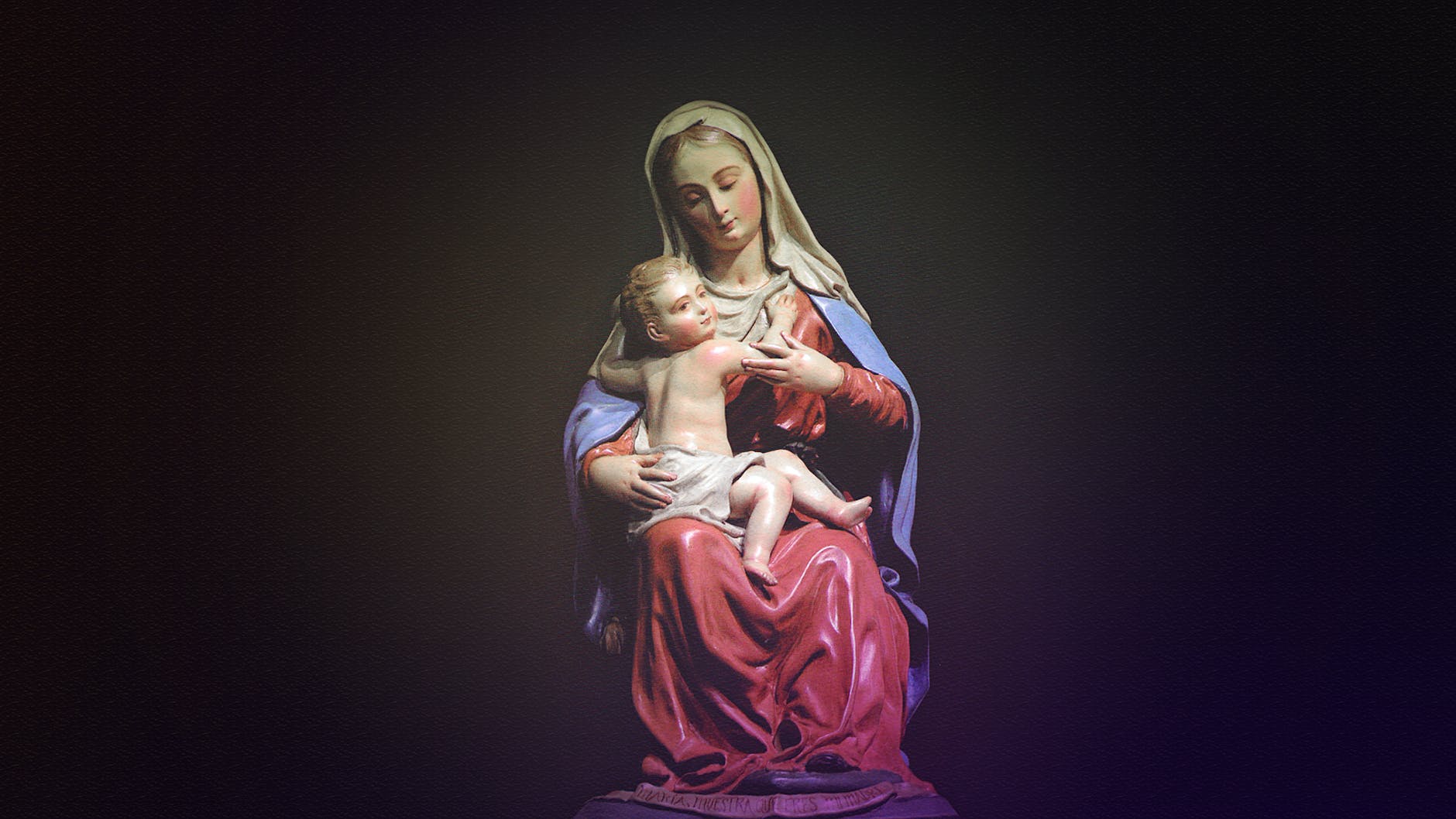
The hymn is a contrast of weary longing and hopeful prophecy. The promised Messiah has not yet arrived, but his coming is sure, and cause for great rejoicing.
The hymn is also a prayer– pleading for the coming of Messiah, even as it comforts with the reminder that he WILL come. And it reminds us of the power of prayer– not just the power of approaching Almighty God, but the power of acknowledging our longings, our needs, and our dependence on God. Even in our darkest hours, even in captivity and oppression, we can have hope in God’s timing and wisdom. He DOES see our struggle; he DOES care, and he WILL send hope and rescue.
But the song also points out a pitfall–in the first verse, the prayer is for Emmanuel to rescue Israel from Roman Occupation; to end its immediate plight of being politically and economically oppressed. There were many people who saw Messiah, heard him speak, even felt his touch, who rejected him because he did not do what they were expecting. There are many today who cannot believe in Jesus Christ because he doesn’t take away their current circumstances of pain and suffering.
In their narrow focus, people miss the greater miracle of what Messiah is all about. Jesus did not come to free us from temporary troubles and trials; to make us comfortably apathetic or arrogantly victorious over personal poverty or sickness. He came to free us to be able to endure and/or overcome our circumstances; to offer hope where there seems to be no hope. He came to show us that our circumstances don’t define us or cut us off from God’s love; that our past is not more powerful than His forgiveness and power to heal; that even suffering and oppression can be endured with joy, even as we work together to overcome them.
This year, as I ponder this hymn, I am both discouraged, and emboldened. I am discouraged, because I hear voices calling out for many things, but few of them are calling for a Messiah. We live in a world that desperately wants what Christ offers– peace, unity, forgiveness, eternal life– but without a Savior. We want to save ourselves, and we want to do it casually, heroically, and without acknowledging our helplessness. We read books, seek out gurus and life coaches, haunt the internet, all searching for answers that only God can provide. We long to see an end to injustice and oppression– or whatever seem unfair or difficult to us or those we champion– but we don’t want to submit to the example of a humble Christ who serves others. But I am emboldened to pray that more of us would desire more than the “quick fix” or the “feel good” solutions of the world. I pray that we would earnestly desire that this Advent Season would be a time of yearning for MORE of Christ; more of His Joy; more of His Love for others; more of His Hope to spread around us. I want us to Rejoice– not in the bright lights and decorations, or even the beautiful melodies of Christmas carols– but in the real gift of Christmas! Emmanuel!
This season, as we sing this hymn, I pray that we would see the continuation of its message. Emmanuel HAS come– Jesus not only came and won the victory over sin and death on Calvary; he has commissioned US to be the bearers of the Good News. There are dark places in the world praying for hope and rescue to COME. Will we share the love of Christ in our own neighborhoods? When we bear the name of Christ, we should be on mission to rescue those who are captives, not of Rome, but of Sin and the tyranny of Death. So that we all can know the reason to Rejoice! Rejoice!
Our family had a funeral this week. One of my mom’s cousins passed away. We are a close family– distance-wise, as well as emotionally close. So the funeral was huge…hundreds of people coming to pay their last respects. And most of us spouting the same old phrases and platitudes: “So sorry for your loss.” “She will be greatly missed.” “At least she’s not in pain anymore.” “It’s so hard to lose a loved one.”
Except– she’s not lost! She hasn’t gone missing. She died. And, because she is a believer, she is HOME! Yes, WE experience a sense of loss. We grieve and mourn her absence from us. And the pain and grief is very real. I still find myself grieving the “loss” of my dad after 25 years, and the more recent death of my mom earlier this year. But sorrow and grieving for us as Christians is tempered with hope, comfort, peace, and even joy and amazement. Linda, Mom, Dad, Grandma and Grandpa, and so many other precious believers are not Lost. They are not the victims of Death. In fact, as part of the funeral service, we were reminded of the words of the Apostle Paul in 1 Corinthians:
54 When the perishable has been clothed with the imperishable, and the mortal with immortality, then the saying that is written will come true: “Death has been swallowed up in victory.” 55 “Where, O death, is your victory? Where, O death, is your sting?” 56 The sting of death is sin, and the power of sin is the law. 57 But thanks be to God! He gives us the victory through our Lord Jesus Christ. 58 Therefore, my dear brothers and sisters, stand firm. Let nothing move you. Always give yourselves fully to the work of the Lord, because you know that your labor in the Lord is not in vain.
1 Corinthians 15:54-58
Yet Death does claim victims, and there are people who are “Lost,” who will be “greatly missed.” They are the ones who have died without hope, without peace, and without eternal life. In fact, many of them are still walking around– the living dead– the unsaved. I shed far more tears over those who are forever lost– those who will not accept the free gift of eternal life– than I will for those loved ones who have died in Christ. God welcomes us to be “found” in Him. He went to great lengths to defeat the power of Death, to bring true justice, and to shower us with Grace beyond our wildest imaginings. It is His gift to anyone who will trust Him. Yes, we will still taste death– and suffer pain and injustice, heartbreak and grief in this life. But these are the shadows. What comes after is the Light!
We shed some tears at the funeral this week, but we also laughed, hugged, sang, and said, “AMEN!” Linda ran the race, and she did not die (or live) in vain. She left a legacy of love and kindness that was celebrated this week. Heaven “gained” a loved one. And, while it hurts us not to be able to see her or laugh or sing with her right now, we know we will be reunited. And she is reunited with loved ones who have passed on before. But most of all, she is united with her Creator, her Redeemer, the Lover of her Soul, and her Lord. And ten thousand years from now, Linda will still be singing His praises!
“An old Cherokee man told his grandson, ‘..My boy, there is a great battle between two wolves that live inside us all. One is evil–it is anger, jealousy, greed, lies, resentment, regret, and arrogance. The other is good– it is joy, love, peace, hope, kindness, humility, empathy, and truth.’ The boy thought for awhile, and then he asked, ‘ Grandfather, which wolf wins the great battle?’ The wise old man replied quietly, ‘The one you feed.'”
The Story of the Two Wolves– a Cherokee legend
“Don’t store up treasures here on earth, where moths eat them and rust destroys them, and where thieves break in and steal. 20 Store your treasures in heaven, where moths and rust cannot destroy, and thieves do not break in and steal. 21 Wherever your treasure is, there the desires of your heart will also be. 22 “Your eye is like a lamp that provides light for your body. When your eye is healthy, your whole body is filled with light. 23 But when your eye is unhealthy, your whole body is filled with darkness. And if the light you think you have is actually darkness, how deep that darkness is! 24 “No one can serve two masters. For you will hate one and love the other; you will be devoted to one and despise the other. You cannot serve God and be enslaved to money. 25 “That is why I tell you not to worry about everyday life—whether you have enough food and drink, or enough clothes to wear. Isn’t life more than food, and your body more than clothing? 26 Look at the birds. They don’t plant or harvest or store food in barns, for your heavenly Father feeds them. And aren’t you far more valuable to him than they are? 27 Can all your worries add a single moment to your life?28 “And why worry about your clothing? Look at the lilies of the field and how they grow. They don’t work or make their clothing, 29 yet Solomon in all his glory was not dressed as beautifully as they are. 30 And if God cares so wonderfully for wildflowers that are here today and thrown into the fire tomorrow, he will certainly care for you. Why do you have so little faith? 31 “So don’t worry about these things, saying, ‘What will we eat? What will we drink? What will we wear?’ 32 These things dominate the thoughts of unbelievers, but your heavenly Father already knows all your needs. 33 Seek the Kingdom of God above all else, and live righteously, and he will give you everything you need.
Matthew 6:19-33 NLT
Just a short while ago, I published a blog entry called, “You Are Not What You Eat.” But sometimes, you DO become what you consume. I’m not talking literally about food, but figuratively you become what you read, and listen to, and spend time and money on– what you consume can end up consuming You!
“Watch your thoughts, they become your words; watch your words, they become your actions; watch your actions, they become your habits; watch your habits, they become your character; watch your character, it becomes your destiny.”
― Lao Tzu
Just like the two wolves in the Cherokee legend, there are two forces at work inside us. The Bible calls them “flesh” and “spirit.” The Apostle Paul also writes about this great battle:
15 For I do not understand my own actions. For I do not do what I want, but I do the very thing I hate. 16 Now if I do what I do not want, I agree with the law, that it is good. 17 So now it is no longer I who do it, but sin that dwells within me. 18 For I know that nothing good dwells in me, that is, in my flesh. For I have the desire to do what is right, but not the ability to carry it out. 19 For I do not do the good I want, but the evil I do not want is what I keep on doing. 20 Now if I do what I do not want, it is no longer I who do it, but sin that dwells within me.
Romans 7:15-20 ESV
We all start with “good intentions.” We want to be known as a “good person.” We want to have healthy relationships. We want the trust and respect of others. But Sin works in us against our own good intentions. We get hurt, so we lash out in anger. We see others achieving success or enjoying benefits we think we should have, and we become envious or resentful. We allow fear, greed, or bitterness to overpower us. We lie, or we isolate ourselves from others. We give up in despair, or reject the help and advice of those who want what’s best for us. We rely on our own resources and “will power” to achieve success, even to lose weight– but we always seem to fall short! We compare ourselves to others– sometimes ending in arrogance and apathy, sometimes ending in shame and humiliation.
But the battleground is not always so obvious as arrogance or despair, hurting others or being victimized. Who are we feeding in those moments of relaxation and ease? Are we scrolling through websites that waste our valuable time or encourage us to devalue others around us? Are we listening to music that encourages us to anger and pleasing ourselves at any expense? Are we reading books or watching movies that honor God? Are we spending money in ways that please Him? Are we spending our “down” time on our knees? Who are we feeding when times are tough? Are we spending time worrying or scurrying around trying to “make things happen” a certain way? Are we grateful, or fearful? Are we terrified or trusting? Our small choices in things that don’t seem to matter can start to change the way we think, and speak, act, and live.
There IS a great battle. But there are also tiny battles in the little moments of our day: opportunities to inch closer to God or to lose ground to the distractions and temptations of the world. And on our own, we will lose the battle, for the “flesh” will conspire to steal even the “good” food we think we are feeding ourselves. Thankfully, Christ came to feed the “good wolf.” In following Christ; in developing a relationship with Him, we allow His Spirit to nourish us. He is the “bread of life.” He is the “living water.” He alone provides the power to win the battle. Paul follows up in Romans by saying:
Likewise the Spirit helps us in our weakness. For we do not know what to pray for as we ought, but the Spirit himself intercedes for us with groanings too deep for words. 27 And he who searches hearts knows what is the mind of the Spirit, because the Spirit intercedes for the saints according to the will of God. 28 And we know that for those who love God all things work together for good, for those who are called according to his purpose. 29 For those whom he foreknew he also predestined to be conformed to the image of his Son, in order that he might be the firstborn among many brothers. 30 And those whom he predestined he also called, and those whom he called he also justified, and those whom he justified he also glorified.
Romans 8 26-30 ESV
So who are we feeding today? Or rather, who is feeding us? What are we consuming, and is it consuming us in turn? I hope we are feeding on God’s Word today, and walking with Him in each moment– whether in quiet reflection or in desperate need. May we be nourished and satisfied as we walk forward with Him!
“Life is so unnerving for a servant who’s not serving– He’s not whole without a soul to wait upon…” (Be Our Guest from Disney’s Beauty and the Beast)
Philippians 2:3-8King James Version (KJV)
3 Let nothing be done through strife or vainglory; but in lowliness of mind let each esteem other better than themselves. 4 Look not every man on his own things, but every man also on the things of others. 5 Let this mind be in you, which was also in Christ Jesus: 6 Who, being in the form of God, thought it not robbery to be equal with God: 7 But made himself of no reputation, and took upon him the form of a servant, and was made in the likeness of men: 8 And being found in fashion as a man, he humbled himself, and became obedient unto death, even the death of the cross.
1 Peter 2:13-19Revised Standard Version (RSV)
13 Be subject for the Lord’s sake to every human institution,[a] whether it be to the emperor as supreme, 14 or to governors as sent by him to punish those who do wrong and to praise those who do right. 15 For it is God’s will that by doing right you should put to silence the ignorance of foolish men. 16 Live as free men, yet without using your freedom as a pretext for evil; but live as servants of God. 17 Honor all men. Love the brotherhood. Fear God. Honor the emperor.
The English word serve has at least seven different definitions, according to Merriam-Webster dictionary see here, and that’s just the intransitive verb form! The concept of service and serving is often misunderstood and denigrated. Our culture (especially American culture) in general has a low opinion of servants. Value is placed on independence– neither needing service nor being required to give it to others. But service is much broader then “servitude”, and good service requires that we place our value on interdependence, rather than independence.
Thanksgiving will be here in a matter of weeks, and we may think of “service” in terms of richly laid tables, fancy linens, home-cooked specialties, traditional recipes, even time spent clearing up the dishes. We want to think of service as something noble, or even honorable. We want our service to be noticed and appreciated!
I would like to “serve” like Serena Williams–slamming my passion at the speed of a bullet train and earning trophies. (And this is not meant to be disrespectful– I am a great admirer of Serena’s talent and drive, and I think there is much to learn from her perseverance and excellence.) But tennis, while fun to watch and good for exercise, does not teach good “service”. No one “serves” in tennis in order to benefit their opponent.
At other times, I want to “serve” like a CEO or a leader– guiding a company, a city, or a nation to greater success, world power, and huge profits. I might even help hundreds of people by creating more jobs and increasing their wealth, or making neighborhoods safer. It might be difficult, and stressful; it might even be cut-throat and dangerous. And I might work long hours to enjoy the benefits– a large salary, my name on plaques, a great retirement package, prestige, power, fame… And I might enjoy the excitement and competition. I might be a leader and a change-maker who benefits millions of people while helping myself and my company or my neighborhood. But in the end, this is not the kind of service that has everlasting consequences, or “soul” benefits. When I die, my power and influence may stretch for another generation, but my soul may be untouched by the actual plights of those around me, and I might gain the “whole world” only to lose what is most important– a soul in touch with God!
I enjoy serving customers at work– helping them find something they want or need, or answering questions. But that’s my job. I get a certain gratification, and a paycheck, that help motivate such service. And, my customers come to me. I don’t have to go out of my store, or even my “comfort zone” to help those who cannot pay for my products or services, or sacrifice my “days off” to help someone at their convenience, and not at mine.
I honor those who have served in the military; those who work in service industries, or provide emergency services. Many have served selflessly and given their lives, willingly, in combat or rescue missions. For every story of someone who has abused their office, or fled in the face of personal danger, there are many more stories of courage, compassion, and sacrifice. Such service should also “serve” as an example to all of us. But even military service, as noble as it is, can be done out of duty or pride, not out of love and compassion.
I don’t normally recommend Disney as a source of moral instruction, but just in the short two lines of lyrics above there is a great example of a servant’s heart. A good servant isn’t reluctantly or resentfully dragged into service. (Oh, there are days or circumstances that are trying and tiring, but that’s the exception, not the norm.) S/he is eager to serve, and even restless when unable to be of service. A good servant is also personal. Their service is not given by rote, but with attention to the individual “soul” they are serving. It’s hyperbole, of course, but the verve and giddiness found in the singing and dancing dishes of a Disney movie should be reflective of the kind of service we provide at work, at home, and at church– “Be our Guest!”
Good service requires a lot, but I think there are three indispensable ingredients–obedience, humility, and love.
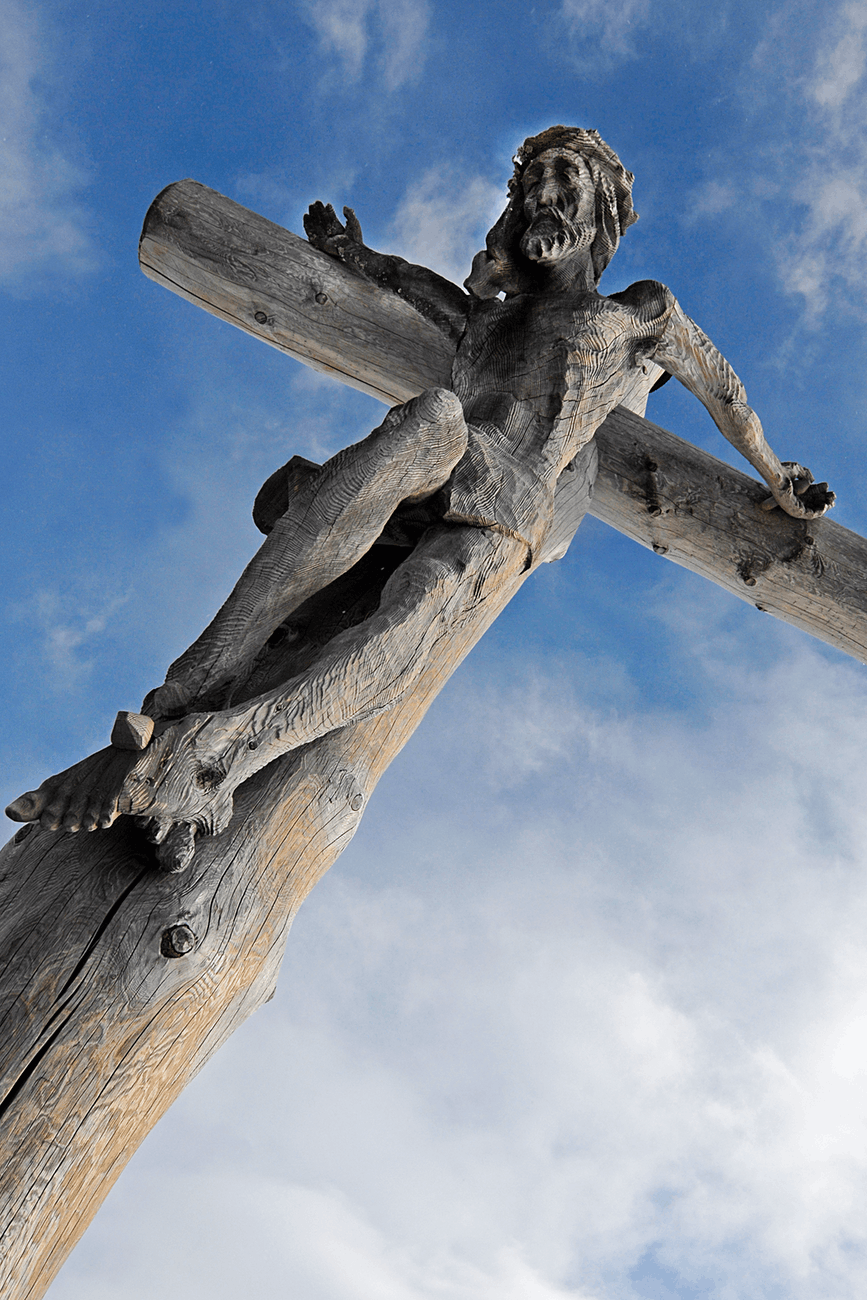
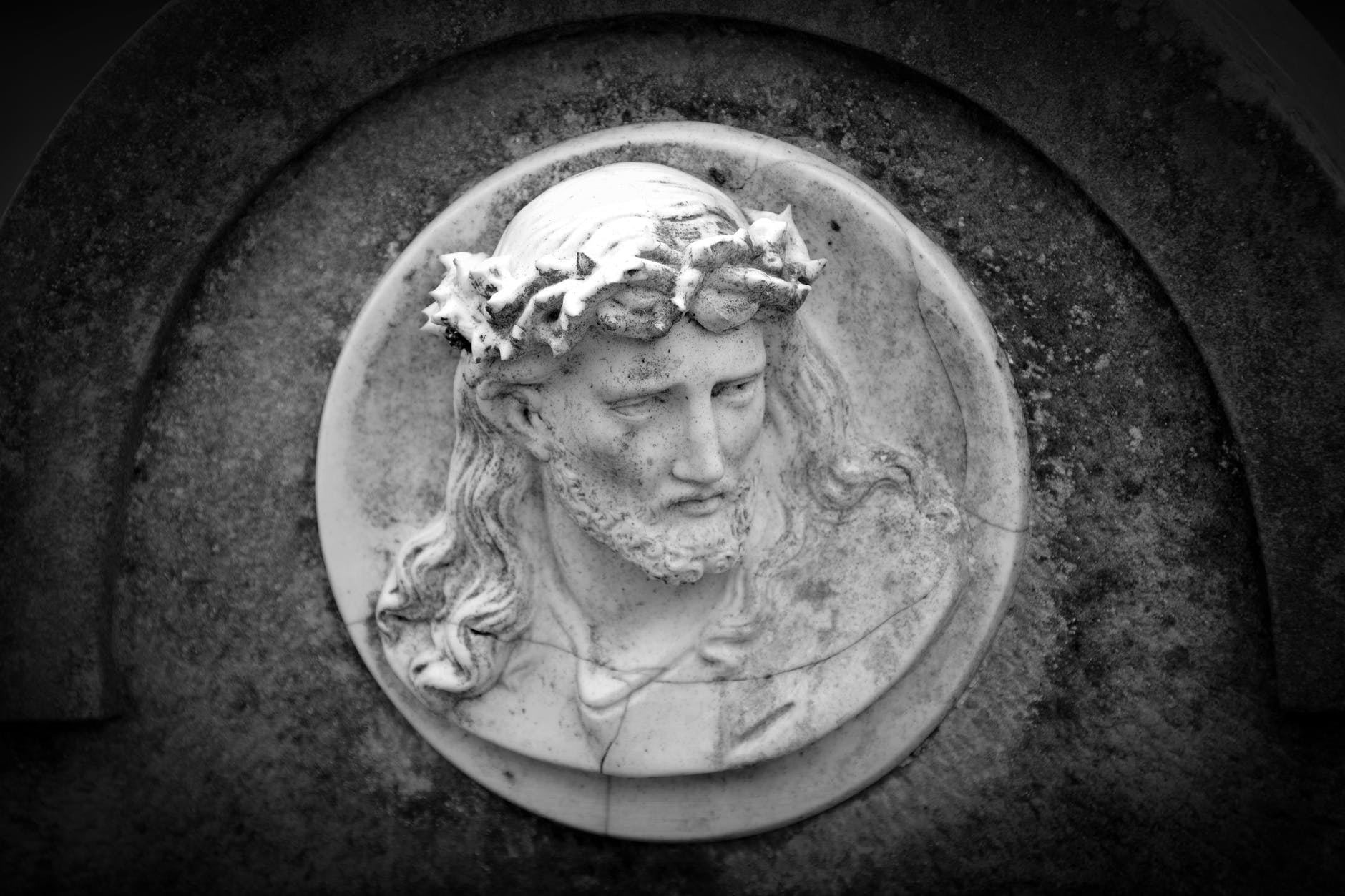
As followers of Jesus, we should look to His example. Paul reminds us that Jesus did not seek fame or attention or demand respect or recognition during His time on Earth. Instead, He gave up all the glory of Heaven to become a man– and not just a man, but a helpless baby born in obscurity and growing up without entitlements and comforts; the child of a working-class family in a small town under foreign occupation. He lived as a homeless itinerant teacher, and died as a common criminal under shameful circumstances– naked and bloody, displayed in public, to be mocked and used as a warning for others. But Jesus wasn’t a doormat–he was humble, he was meek–he CHOSE to submit to the pain and humiliation and even the injustice of a rigged trial and a death sentence by mob rule. He had opportunities to grab the glory, to turn the tide, to escape his unfair fate, and/or to become a great political or military leader. He didn’t take those opportunities– instead, he was obedient to the Father. He showed love and compassion even to those who mocked him, betrayed him, and murdered him.
It’s frightening to serve with that kind of abandon. It’s not humanly possible to let go of one’s life with joy for the sake of those who have taken it from you. My human desire is to grab hold of life and get as much out of it as I can. Even when my intention is not to hurt anyone else, it is not in my nature to put someone else’s needs and comforts ahead of my own. But it needs to become part of my nature.
God wants me to learn to serve from the pure joy of service– pouring myself out with abandon to help others succeed– rejoicing with them when they reach their goals; grieving with them in their loss. And, like Jesus, God wants me to do it, not in my own limited strength and wisdom, but in obedience to His will– not becoming a dupe or a doormat to anyone who wants to step on me, but discerning what is best for others and cheerfully doing what I can to bring it about. Giving faithful, humble, obedient and loving service shows my love for others, and my love for God. It’s a joyful reflection Christ– who He is and all that He has done.
That’s a tall order, and it requires that I take time to ask God and trusted friends– How’s my Serve?
When I was much younger, I was a huge fan of the Monkees. I loved their TV show, and their songs. One of my favorites was called “I’m a Believer!” It’s a catchy tune about instant infatuation– “Then I saw her face; now I’m a believer!”
YouTube video of “I’m a Believer!” (Written by Neil Diamond; performed by The Monkees)
Years after it was a hit song on the radio, it was used in the soundtrack of the movie “Shrek!”, where it found another generation of listeners. The tune is over fifty years old now, but I still think the tune is catchy, and I love to sing along when I get the chance. However, when I hear the phrase “I’m a Believer!” it means something immeasurably more than just a great pop hit..
It can be very easy to fall into the thinking behind this song. We all are looking for something positive to believe in– Love, music, friendship, success, religion. We all want to be believers in “something” beyond the mundane and the present. And we want a belief that will uplift us, sustain us, and make us want to sing along.
But singing about belief and having a real, sustaining Faith are not the same. The singer of the song claims that he wouldn’t leave– couldn’t leave– the object of his affection. Yet most infatuations are temporary. This love hasn’t matured and been tested by hardship and trials. We can feel good about new “love” in the moment, but we can also be disappointed and betrayed by it. Believing in romance and happily-ever-after can make us feel like singing, but the feeling cannot sustain us through grief and pain. Songs and movies may have a sappy, happy ending, but real life is a struggle.
Faith– real faith in a real and Loving God–is different. We may still be inspired to sing and worship, but we will also be inspired to serve and persevere in good times and bad. It brings strength and lasting peace. And it doesn’t depend on seeing God’s face– it is knowing that He is present, even in the darkest moments; knowing that our lives are in His hands, in spite of our circumstances or surroundings. True faith doesn’t even depend on the strength of our will to believe. It will survive momentary doubts and struggles, until there is “no doubt in my mind” that can triumph! And we can rest assured that God will keep HIS promise never to leave us. That’s what brings me hope and joy when I say, “I’m a Believer!”
It’s fun to sing along with The Monkees, or dance along with the characters in Shrek, but genuine Faith sounds more like this:
I met up with an old schoolmate last week, and he asked a question that made me think a lot. He wondered whether our generation– specifically our classmates and friends, were “driven.” His observation was that many of his nieces and nephews seem to have a lot of drive and ambition that he doesn’t remember seeing (or experiencing) in our youth. He noted that few of our friends have gone on to become lawyers or doctors, engineers or CEOs.
I wasn’t sure how to answer his observation. I started, but didn’t complete, a master’s degree. I know several of our friends who are teachers, paralegals, and business owners. Many have what most people would consider at least moderately “successful” lives– happy families, rewarding careers, the respect of others in their communities. And yet very few have distinguished themselves on the national or international front– aside, perhaps, from him! He is a tenured professor, with several published books, and has studied and/or taught at several universities around the world. If HE can’t remember being driven or ambitious, how does he explain his own “success?”
But the observation struck a nerve with me on a personal level. I know that many of my former classmates and long-time friends may find it odd that I have “settled” for the life I live. I own a business, but it is a modest one. I have taught and worked in libraries, but I could have chosen to become a professor or administrator or library director; I could have taken any of a number of more “important” or lucrative positions over the years. But I wasn’t driven to “succeed” in that way. Did I waste my potential? Was I lazy or fearful of success? Did I not have the potential, or did I not have the drive to become “more” than what I am?
Ultimately, I am driven (I hope) by the Holy Spirit. Not to become a “successful” person by the world’s standards, or even by my own ambitions, but to become the person God made me to be– a person who reflects His character and His priorities. I hope that I am becoming a “successful” follower of Christ– no matter what that looks like on the surface to classmates, neighbors, or family. I don’t need to be rich, famous, popular, or “important.” I DO need to be developing Love, Joy, Peace, Patience, Kindness, Goodness, Faithfulness, Gentleness, and Self-Control (Galatians 5:22-23)
This week, as I have been meditating on the idea of “drive” and ambition and “success,” I started thinking about how it relates to prayer. I am driven to become more like Christ, and that includes being driven to live a life of prayer. But what really drives my prayer life? Because my pursuit of prayer and my practice of prayer may be “driven” by something other than pure motives:
Am I driven to pray because I believe that I am “ticking a box?” Have I read the Bible today? Check. Have I prayed some kind of prayer at some point? Check. Have I done a random act of kindness? Check. This is not really a spiritual pursuit of prayer. In fact, it can become idolatry– I can pray because I believe the act of praying makes me “better” or “good enough” to deserve God’s forgiveness or mercy. This drive comes from my own desire to control my growth and behavior. It is not “wrong” to set goals or make lists and stick to them. (After all, we are to be developing discipline and self-control!) But we must be careful not to shift our priorities from God’s discipline to our own lists and habits.
Am I driven to pray when/because others are watching? Am I seeking their approval more than I am seeking God’s face? Am I seeking to be “important” or pious, when God is asking me to be humble and obedient?
Perhaps I am praying out of fear, worry, or doubt. I am driven to pray in the same way that others are driven to consult a horoscope or carry a “lucky charm.” God wants me to trust Him. He knows that I will not always be perfect in Faith, but my prayers should not be double-minded (see James chapter one). I should not be using prayer to “hedge my bets” when faced with adversity. It is good to call out to God if we are frightened or uncertain, but we must develop Faith over fear. And in the end, God also wants us to be joyful in remembering and trusting in His promises
Am I driven by guilt or shame? It is good to confess our sins. But we also have to remember that IF we confess our sins, He is faithful and just to forgive us, and to cleanse us (1 John 1:9). If I am still confessing the same sins over and over, is it because I didn’t really trust God to forgive me, or because I didn’t really want to repent and change my ways– I just wanted a “free pass” to keep sinning, but not feel guilty for the consequences?
Maybe I am driven to pray for others because I think MY prayers can save them, or influence their life. Again, this can become idolatry. We have been given the amazing opportunity to pray for others. God already knows their needs– better than we can! And God can do miracles without any input from us. Yet He chooses to give us the privilege of praying and participating in His work! Again, it is commanded that we pray for one another, but we must remember to Whom we are praying. Our prayers for others are part of a circle– God’s Spirit moves us to compassion and concern– we take that compassion and lift up others before His throne. He knows what is best; He will do what is best. He wants us to participate, not to dictate!
Sometimes, I may be driven to “dictate” a particular outcome in my own life. My own ambition may be to become what I want, rather than what God wants for me. This can be a tricky concept. There are ambitions that God lays on our hearts– they are not wrong, but God’s timing may not match ours. I prayed for years to be married; to “find” the “right” mate, and to “be” the right mate. I even prayed that God would change my heart if my ambition was “wrong.” God’s timing was certainly not my timing. The ambition was not wrong, but my patience and trust needed to be developed.
Perhaps I am NOT driven to pray…maybe I lack the focus or lack the drive in my walk with Christ because I am drifting away from my first Love. I am driven to seek after something other than intimacy with my Creator. Maybe I am so content with my life “as it is” that I am not seeking direction and correction from the Holy Spirit. Perhaps I do not have the compassion and drive to pray for others because I do not see them fully as God sees them. Perhaps I do not trust God fully with the “little” things in my life because I do not see my need for His guidance.
I think it is not a bad thing to wrestle periodically with questions like this. Maybe today is the right time to ask, “Am I driven to pray? What drives me to my knees? What should be driving me there?”
A strange image popped into my head the other day while praying with our Wednesday morning prayer group from church. I was trying to express the amazing paradox that we are being pursued by a God who is omnipresent, while seeking the same omnipresent God. And the image God gave me was one of playing a game– “Peek-a-boo” or “Hide and Seek.” Of course, prayer is not just a game– it is nothing less than communicating with the Sovereign Lord of the Universe! But God delights in our prayers, and He delights in delighting us as we learn and experience new aspects of His Character.
I love to play “Peek-a-Boo” with babies and toddlers. They love the idea of being “discovered” and “finding” someone. There is a moment of supreme joy in finally seeing oneself in the eyes of the beholder– that moment of recognition and reaction to being the focus of someone’s attention–the joy of intimate connection, “I SEE YOU!” But the game only brings joy if both of us are present and interacting. It brings no joy to a baby to see me staring off into space, or glued to my cell phone. The baby might be intrigued, or even comforted by my nearness, but there is a deeper thrill when she knows that my eyes will shine as they are revealed– looking directly at her! And I get great joy from seeing the baby’s delight.
The same is true of “Hide and Seek.” Yes, the idea is to hide from sight–for awhile. But what fun is it to hide and never be found? What fun to search for someone who has gone away and has no desire to be discovered again? The joy of the game is in that moment of discovery and being discovered– even though we know the other person is somewhere close by, there is that moment of re-connection that brings a jolt of delight. AHA!! I have found you! AHA! You searched for me and found me!
This is the great tragedy of Sin. Sin causes us to want to hide and NOT be found. (See Genesis 3:8-10). We live in shame and fear, dreading the thought of God finding the “real” us, the secrets we carry, and the ugliness of our hearts. We are frightened by the thought that God is omnipresent– that He sees us; that He sees THROUGH us! We do not want to “Face” God’s justice, and see disappointment and anger in His face. Instead, we want to run away, to cover our eyes, if He will not cover His.
Conversely, this is the great joy of being a Christian. We don’t hide from God’s presence; instead, we turn to Him in delight and recognition. We pray to BE found and to be seen! Finding God, and being found BY Him, involves no fear, no condemnation (Romans 8:1), and no shame. God sees us– all our secrets and shame– through the blood of Christ’s redemption. We are “Born” again– like babies, we can revel in the connection with Our Loving Father. Like a child waiting for the “boo” in Peek-a-Boo, we anticipate the day when we will see Him face-to-face in all His Glory; in the meantime, each glimpse of His Grace, each revelation of His Faithfulness, builds our Hope and our Joy, excites our anticipation, and makes our Heart yearn for the future.
God is omnipresent. His spirit is all around us all the time. As Christians, His Spirit is indwelling– He is not just all around us, but He lives and works IN us and THROUGH us! And yet, God delights in those moments when we turn away from the world around us to focus on just Him. In the same way, even though God is everywhere, He seeks after us and pursues us with a passion and devotion that knows no limits– “Here I am!” “I SEE YOU!” “You are the one who makes my eyes shine!” “I LOVE YOU!”
Today, as you turn away from the world to focus on the Lover of Your Soul, may you find that incredible delight in recognizing His Presence for what it is– Divine, Eternal, Limitless, and Loving.
(In honor of my grand-niece’s 16th birthday, I am re-posting this entry from last year. I have changed her name to honor her privacy, and I have updated her age in the text,)
Yesterday was July 11. In certain parts of America, it is known as “Slurpee” Day. “Slurpee” is a brand name for a slushy drink sold at 7-Eleven convenience stores around the country. And since we write our dates with the month, followed by the day, July 11th is also “7/11.” Many 7-Eleven stores offer specials on their “Slurpee” drinks all day. And on a hot July day, that’s a great deal!
But July 11th is also the birthday of a very special person in my life. I can still remember the day she was born, and seeing her for the first time. She was beautiful (and still is). She had a full head of thick auburn hair, and seemed delighted to be alive and in the world– and we were all delighted to greet her! I remember commenting that she was a “Slurpee” baby– being born on “Slurpee” day. But shortly after she was born, it became clear that all was not “right” for “Chelsea” (not her real name). Chelsea did not respond to sights and sounds like other babies. And she started having violent seizures. Doctors soon determined that Chelsea had experienced several small strokes when she was in the womb. They also determined that such strokes would continue, and her chances of survival were slim. Immediate brain surgery would be necessary. At one point, the prognosis was very grim– even with surgery, she might be blind, deaf, and unable to control the movement in her limbs–essentially, she would be a vegetable if she survived at all. The first year of her life was a roller-coaster of surgeries and hospital stays, followed by extensive therapy and treatment that continues to this day. But she survived!
So every July 11, Chelsea, and her friends and family, celebrate, not just her birthday, but her life— her survival, her triumph, and her continuing struggle. Chelsea is 16 this year! She cannot walk on her own, and she has trouble talking and using one arm. But she excels at school–she loves reading and music (Yes, she can see and hear!) and she loves anything having to do with animals, especially dogs and horses! She loves jokes and riddles, and loves to listen to her Daddy play the guitar, or watch the dog play in the yard, or spend time with horses at the therapy riding center. She even loves cool treats– not necessarily “Slurpees,” but sweet drinks and yogurt parfaits! Her life is not easy. Her parents still have to help her dress and eat, even though she is almost fully grown. She has to use adaptive technology to write and do her schoolwork (and what an incredible blessing that it exists!) She spends most of her days in a motorized chair. And, like most teenagers, she has “moody” days and gets frustrated–her physical limitations add to that frustration. But she loves life, and she inspires those around her to embrace the positive. She is as welcome as an ice-cold Slurpee on a hot July day– sweet, refreshing, and colorful!
I am writing about “Chelsea” today, because I love her– she is my grand-niece, and my favorite “Slurpee” kid! But I’m also writing because there are many other “Slurpee” children like her who are not alive today, or who are made to feel unwanted and “less than” other children. Chelsea’s health issues were not detected until after she was born. Had they “discovered” the damage she sustained in the womb, chances are very great that her mother would have been encouraged or even pressured to have an abortion. The early prognosis was so horrific, and the struggle so difficult, that it would have been seen as the “most humane” option. Her “quality of life” would have been weighed in the balance, and her right to experience life– even at it’s most difficult moments– would have been invalidated by those who claimed to “have her best interests at heart.” Her parents could have made the choice to put her in an institution, or give up on her chances to live a purposeful and fulfilling life. Instead, they made numerous personal sacrifices, and have advocated for Chelsea’s well-being. And, if you ask them, it was worth it all!
I’m not here to judge those parents who have had to face this horrible choice, or those who have determined that they could not provide the care needed to raise a child with “special needs.” The needs are very real, very difficult, very expensive, and sometimes heart-rending. Most people I know have never had to face such challenges. And even my nephew and his wife were not called on to decide on Chelsea’s fate until after they had grown to love her for the baby she was. And there are days when they feel overwhelmed by the responsibility to care for a child beyond what they had ever planned. But I have also known Chelsea, and other wonderful children with extreme needs, who make the world a better, richer, more empathetic, and more joyful place– not because they are “special needs”, but because they are uniquely SPECIAL individuals! I also know of parents who have opened their homes and arms to foster and adopt children with special needs. Their courage, love, and sacrifice have made it possible for thousands of lives to reach their incredible potential.
God made each one of us to reflect His image in our own, unique way. And each individual has the power to shape the world around them for the better. My prayer today is that Chelsea, and all children who are marginalized because their lives are somehow deemed “less” than someone else’s, will find strength, hope, laughter, and respect. And that those of us who have had a “normal” childhood and family experience would embrace the joy that comes from LIFE itself, and praise the one who gives it– precious, abundant, joyful, and eternal life!
I was reminded today of an old hymn; one that I heard as a child and did not understand at all. Have you ever heard a new song, and completely mis-heard the lyrics? As a young child, I often heard hymns sung that were familiar to the adults but “new” to me. This was one of them. I paid little attention to the first verse, but the chorus!?! I was convinced the congregation was singing, “Wienies (the word my grandparents sometimes used for hot dogs)! Wienies! Wienies on the everlasting arms…” It sounded like a righteous chorus of hot dog vendors at a baseball game. What could hot dogs possibly have to do with living for Christ? I giggled and snorted, and my grandmother, who was standing next to me, quietly leaned over and asked what I found so funny. When I explained it to her, she too began to giggle a little, and we shared a (quieter) giggle and smiles throughout the rest of the hymn. (Sacrilegious, I know, but it seemed very funny to a five-year-old.) Later, my grandmother lovingly explained the hymn–turning a “silly” song into a wonderful testament of God’s tender, loving care that touches me to this day.
There is another old hymn, known as “The Solid Rock” or “On Christ the Solid Rock I Stand. ” One of the lines of the hymn states, “I dare not trust the sweetest frame, but wholly lean on Jesus’ Name.” Jesus IS the solid rock, the everlasting arms, and the “frame” on which we can both stand and rest secure. He is also our anchor in any storm (see “My Anchor Holds” https://wordpress.com/post/pursuingprayer.blog/5828)
There is a curious story in the Bible about the Apostle Paul and a young man named Eutychus. https://www.gotquestions.org/Eutychus-in-the-Bible.html. The story is found in Acts 20:7-12 https://biblia.com/bible/esv/acts/20/7-12, and involves a young man listening to the Apostle Paul. As Paul talks on into the night, the young man, sitting in the third story window, falls asleep, falls out of the window, and plummets to his death. Luke, who authored the the gospel which bears his name and the book of Acts, was a doctor, and an eyewitness of this event. He clearly states that Eutychus died from his fall. But Paul runs outside and immediately brings Eutychus back to life, returning inside to finish his talk and eat with the crowd– who are amazed and relieved to find their friend alive and well. The Bible doesn’t say what they had to eat– certainly NOT hot dogs– nor does Luke spend time giving details of the aftermath of such a miracle. Paul simply picks up the limp form in his arms, lets everyone know that the young man is alive, and they all return upstairs and pick up where they left off: “breaking bread” and talking!
Luke’s story doesn’t say whether or not Eutychus was alone in the third story window, or leaning against a wide window frame or perched precariously before he fell into “a deep sleep.” I have always imagined him perched comfortably leaning against the side of a wide and open window frame, one leg drawn up and the other dangling as he listened to Paul speak. As the night wore on, he may have slouched a bit, or even turned to lean his whole back against the frame, pulling both legs up onto the wide ledge. I imagine there were others sitting close by. There may even have been others leaning against the window frames! But as they were engrossed in Paul’s message, and whatever questions were being asked and answered, Eutychus drifted into sleep and lost his balance. My mental picture may be completely wrong, but I don’t think of him hugging a narrow space and sitting tense or afraid and clinging to the window frame before sleep claimed him. I imagine that he felt safe and secure in his position, never expecting to fall to his death; never expecting to become famous for falling asleep during one of Paul’s sermons!
I don’t recommend to anyone that they trust themselves to a window frame, a third story balcony, a too-comfortable seat at the theater, or to hot dogs eaten in bleacher seats at the baseball game. God doesn’t call us to get comfortable! Even if we are listening, and trying to follow Jesus, we may still fall– literally, like Eutychus, or figuratively. We may misunderstand, or get confused or weary and lose our focus. We may put ourselves at risk by leaning on the wrong frame. I believe that the story of Eutychus has several lessons for us.
First, we should be on guard. Eutychus wasn’t doing anything especially risky or unusual at the time of his death. It would have been common for people to sit where they could see and hear a speaker– not unlike sitting in bleachers at a baseball game!–and most houses were constructed so that windows were open. We often do things that seem natural and even good, but we, too, can “fall asleep” in complacency, routine, tradition, and other things that can lead to a “fall.”
Second, we should be slow to condemn. Again, Eutychus wasn’t doing anything that “deserved” death. There was nothing overtly sinful about his situation, nor does the Biblical account suggest any reason to judge Eutychus: this was an accident that might have happened to anyone. There is something cold and un-Christlike that sometimes arises in modern Christian culture. Many of us are quick to see any misfortune as “proof” of something lacking in others. Lacking in Faith; lacking in commitment or obedience; lacking in knowledge; lacking in God’s favor. Such an attitude shows a lack of compassion and a lack of humility! Eutychus is one of US! His death would have been a tragedy– his resurrection was a source of joy. We don’t know WHY Eutychus fell– but we know that God intended for him to be saved. And isn’t that where our focus should always be?
Lastly, the story of Eutychus reminds us of Paul’s marvelous words to the Roman believers:
35 Who shall separate us from the love of Christ? Shall tribulation, or distress, or persecution, or famine, or nakedness, or danger, or sword? 36 As it is written, “For your sake we are being killed all the day long; we are regarded as sheep to be slaughtered.” 37 No, in all these things we are more than conquerors through him who loved us. 38 For I am sure that neither death nor life, nor angels nor rulers, nor things present nor things to come, nor powers, 39 nor height nor depth, nor anything else in all creation, will be able to separate us from the love of God in Christ Jesus our Lord.
Romans 8:35-39 ESV
God could have kept Eutychus from falling from that third story window, but I believe He meant for that story to come down through the ages. It is not just a miracle, and a testament to the power of God and given to the Apostle Paul. It is a great reminder that even when we are trying to listen and follow God, we can still end up trusting in the wrong things and “falling asleep”. But no matter how far we fall, or how broken or “dead” we may seem to be, God sees us, cares for us, and wants to give us new life! Nothing– not even death– can separate us from God’s loving care or His ability to give us restoration and renewed life! We can rest “safe and secure from all alarms” when we remain in (or return to) the reassuring, everlasting arms of our Savior.
Some days, I feel like Eutychus– lying broken and useless three stories below where I began. Other times, I feel like a confused hot dog vendor, calling out to God for “Wienies”, when I really need Wisdom and Grace. Still other times, I feel like one of the crowd– wondering why Eutychus fell, instead of wondering at God’s miraculous ways. But God is faithful to bring me back time after time, wrapping me in his amazing “Everlasting Arms”:
The month of June is “Anniversary Month” in much of my family. My parents and one set of grandparents were all married on June 1st. My brother and sister both celebrate anniversaries next week, as does my one of my brothers-in-law. Marriage is in trouble in our society– many marriages are ending in divorce, while others are choosing to wait longer before making a commitment or choosing not to marry at all.
We tend to celebrate marriage as being all about feelings of love, but marriage is really about making and keeping promises. Two people stand before witnesses and take sacred oaths to be faithful, to love, honor, and cherish (and yipes! sometimes even to obey) one another for the rest of their lives. And most people who take such oaths do so with honest intent. Why, then, does it seem to be failing so often?
One of the reasons has to do with expectations. We expect the same giddy feelings of delight we have during courtship to carry us dreamily into the future. And we expect that the way we act during courtship will be the norm– the “happily ever after” fairy-tale life of story books and romance novels. We expect that we will always be the same as we are now: young, carefree, beautiful/handsome, and eager to please and be pleased by the boy/girl of our dreams… This is unrealistic. And even when we say we know better, we hang on to unrealistic expectations for our relationships, just as we do for other situations and circumstances. Even our “soulmates” can disappoint us, fail to understand us, suffer failures and setbacks, battle depression or addiction, lose their youth and good health, and even question their feelings for us.
Another related issue is that we usually take vows when we are young and our future looks bright. Circumstances can change; plans can fail. War, disease, financial ruin, the loss or miscarriage of a child or children, forced changes in living arrangements or work schedules– all can put enormous stress on a marriage.
But not all marriages crumble under the weight of unusual or unexpected circumstances. Some seem to erode slowly, even under “good” circumstances. Why?
One reason I’ve seen as I look around is a seeming inability to make and keep small promises. We make big, broad promises at a wedding– “for better or worse, richer or poorer, in sickness and in health..” “’til death us do part…” But we don’t promise to forgive him when he leaves the toilet seat up for the fifth time this week, or wait for her while she tries on every one of the six outfits she can’t decide on for the upcoming class reunion. We don’t promise to compromise on which family we will visit for Christmas each year, or what color we will have in the dining room. We think of marriage as a series of negotiations (which it IS), but ones in which one of us “wins” and the other “loses.” And if we consider that we are the “loser” in enough negotiations, we feel entitled to “break” our little promises.
Almost two years ago, my husband suffered an injury at work. He “punctured” his leg–the injury wasn’t huge, but it was deep, and on the back side of the leg, where he couldn’t see it. He knew it hurt, but thought it would heal up. Instead, it became infected. We had to go to the local wound clinic for several months, but between visits, I had to change the dressings, wash the wound, apply the various antibiotics and salves, redress the wound, etc.. David was still working full time, so the dressings would sometimes get sweaty and dirty on top of everything else. I promised to be faithful “in sickness and in health”– and that included washing out the pus-filled wound and caring for the pus-soaked dressings; it included wrapping his leg every other night for weeks. We went through hundreds of yards of gauze and anti-stick dressings, tubes of several different antibiotic salves, special compression socks, etc. Hundreds of dollars and hours later, his leg is slowly getting back to “normal.” During this same period, I was diagnosed with type 2 Diabetes. David has had to be patient with me as I learn to eat (and cook) differently. He has had to help me with glucose testing, dealing with low-sugar episodes, and put up with mood swings (even more than normal!).
And our health odyssey could be much worse– what about those who have to deal with cancer or dementia? But I think sometimes we minimize the commitment needed for the smaller, chronic conditions. The stress may be smaller, but it piles up, just the same. Our promises need to hold in the daily crises– big and small. And our promises need to hold when there is no crisis– and no adventure, either. Many marriages fall victim to “smooth sailing.” Things settle into a routine, and promises that were made to sustain the marriage in the face of “richer or poorer” fall apart in the settled comfort of middle class complacency. Vows take for “better or worse” fall apart in the “blah” and boredom of “good enough.”
Marriage is designed to be a picture of our relationship with Christ. As Christians, we are the “bride” of Christ! But we may need to review our vows and our commitment. Christ is eternally faithful; are we? In our flesh and our frail humanity, we cannot remain faithful on our own. But where are we? Have we lost our first love? Are we committed to Christ even in the midst of chronic illness or small setbacks? Are we flirting with the world because we have become “bored” with our Christian Walk? Has our joy been eroded by our failure to share our little stresses and secret sins with the Lover of our Soul?
Often, when we take a moment to remember our wedding day, we are reminded of the commitments we made, and the joy we felt on that special day. It can be bittersweet, if we have let circumstances or feelings pull us away from the one we love (or if they have moved away from their commitment). But it can be a wake-up call, as well, reminding us that promises made and promises kept are what leads to long-term joy and security. It can be helpful to take a few moments (or more) every once in awhile to remember when we came to Christ, and be reminded of the commitment we made– and the promises He has kept!