Making the Most of Every Opportunity

4-5 Celebrate God all day, every day. I mean, revel in him! Make it as clear as you can to all you meet that you’re on their side, working with them and not against them. Help them see that the Master is about to arrive. He could show up any minute!
6-7 Don’t fret or worry. Instead of worrying, pray. Let petitions and praises shape your worries into prayers, letting God know your concerns. Before you know it, a sense of God’s wholeness, everything coming together for good, will come and settle you down. It’s wonderful what happens when Christ displaces worry at the center of your life.
8-9 Summing it all up, friends, I’d say you’ll do best by filling your minds and meditating on things true, noble, reputable, authentic, compelling, gracious—the best, not the worst; the beautiful, not the ugly; things to praise, not things to curse. Put into practice what you learned from me, what you heard and saw and realized. Do that, and God, who makes everything work together, will work you into his most excellent harmonies.
10-14 I’m glad in God, far happier than you would ever guess—happy that you’re again showing such strong concern for me. Not that you ever quit praying and thinking about me. You just had no chance to show it. Actually, I don’t have a sense of needing anything personally. I’ve learned by now to be quite content whatever my circumstances. I’m just as happy with little as with much, with much as with little. I’ve found the recipe for being happy whether full or hungry, hands full or hands empty. Whatever I have, wherever I am, I can make it through anything in the One who makes me who I am. I don’t mean that your help didn’t mean a lot to me—it did. It was a beautiful thing that you came alongside me in my troubles.
Philippians 4:4-22 (The Message)

I have been blessed with the opportunity to do a couple of short-term mission trips. I am not a “Missionary” in the traditional sense. I have not left friends and family behind to move to a new culture or live among strangers for years to spread the gospel. I basically took some working vacations, met dozens of wonderful new friends, learned about the work they are doing in their community, and joined in helping them with a couple of small projects (painting, sorting donated clothes and shoes, working in the school, helping organize a library, putting together scrapbooks, etc.) I was able to go back and visit five times over a dozen years and watch as the children grew up, the school added on, the staff changed, and the mission work focus became broader and more community-focused.

Two things about visiting the mission field– you meet amazing people and you hear amazing stories. Some people will become life-long friends. Some people teach you and touch you in unexpected ways, even if they cross your path only on a single day. Some stories make you re-evaluate all the things you take for granted. Some stories leave you laughing or crying along with your new friends. Some just leave you speechless.

One such story happened on my first visit. We went on a “field trip” to see a developing community not too far from the border between the Dominican Republic and Haiti. Hundreds of Haitian refugees had flooded into the D.R., and at least two mission groups from the U.S. and Canada were working to provide housing, healthcare, and schooling for homeless families. Several teams of workers had already started building small cinder-block houses, a couple of bath houses/bathroom facilities, etc. in an area that used to be a sugar cane field. The houses were serviceable, and had basic electricity and running water. However, the water was only good for washing, not for drinking. The houses were close together, with very small plots for gardening, but the land was rocky and dusty. There was a centralized “administration” building, with a small clinic and other basic community services, a small elementary school, and a small chapel. Most of the homes had an electric light bulb hanging from the ceiling, but no other appliances. Meals were still cooked over a small open fire in the main room of the house. Cots or bed rolls took up most of the other room. The bathrooms were in the communal bath houses.
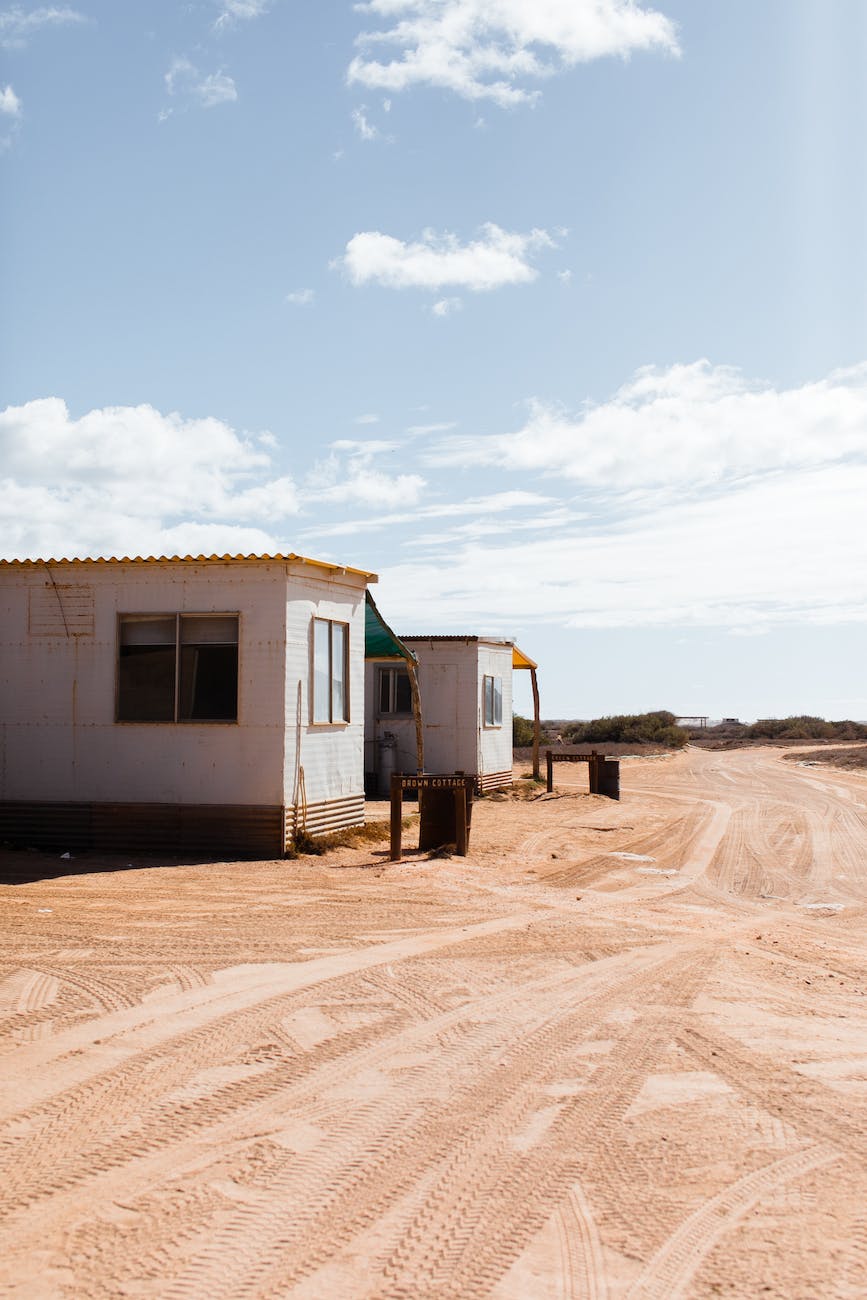
Not the actual location, but this is not too different from what the first houses were like– very basic.

I set the scene above so the circumstances are clear. These families were happy to be alive, and to have any shelter at all, but they were not living in luxury, nor were they moping and in despair about their condition. Part of our visit was to bring awareness to what efforts were already underway, and what needs were still outstanding. Medicine was scarce; many of the families had at least one person who was HIV positive, and many of the others had issues resulting from malnutrition and untreated childhood diseases. Jobs were hard to come by– the sugar cane plantations and rum factories had a history of exploiting their workers, and very few other jobs were open to Haitians who either didn’t speak the language or had no work permit/official identification. The mission organizations were not set up to provide jobs, income, or food and water. They were surviving on donations, which were sporadic and usually consisted of non-perishable items like clothes and hygiene items (toothpaste and soap).

Into this scene, the mission had received a princely donation of several hundred pairs of flip-flops. One of the bigger department store chains in the states and an overstock of black and white flip-flops– different sizes, but all the same style and colors. There were enough that everyone in the community could have a new pair of shoes! However, after the shoes were distributed, the administrators noticed that people were still going around barefoot. Very few of the people were wearing the new shoes. Finally someone asked if there was a problem with the shoes.

The answer they received is the heart of the story, and a lesson I have never forgotten. The people were very grateful for the shoes. But their greater need wasn’t for shoes. God had heard their prayers and supplied their need. Several enterprising members of the community had bundled dozens of pairs of flip-flops, carried them nearly eight miles into the nearest beach-front town, and found a spot along the beach where they sold the shoes to foreign tourists. Other groups did the same thing. Using the money from the sale of the flip-flops, they bought bottled water and produce at other roadside stands, carried them back to the community. This way, such items would be readily available while they waited for crops to grow in their gardens or a closer source of drinking water could be found.

On a later trip, we visited this community again. There were flowers, gardens, and two or three “colmados” (Dominican-style corner markets), which had grown out of two or three houses being torn down and reassembled. The community was flourishing. The “administration” center was still used mostly as a clinic and community meeting center, but some of the community members were administrators there. The school and church had grown, and there was now an arts and crafts center; community members were making candles, necklaces, wood carvings, and other items for sale at the beach, where they now had an established booth. God had used hundreds of unwanted, discarded shoes to supply an opportunity for people to work together and build a thriving community. There are still issues– health issues, domestic issues, economic issues– plaguing this settlement. But it is now “home” to hundreds of families who once had nowhere to go, and it is a beacon to surrounding communities, giving hope to hundreds more in the area. And, while some of the community members still go barefoot, most have shoes– shoes they chose and bought and paid for with their own money!

I’ve told this story before, because it is such a strong lesson in looking for and making use of every opportunity. God’s gifts are never wasted on us IF we choose to see them as gifts. Even our abundance– our “leftovers” and “overstocks” can benefit others in ways we might never imagine. And our efforts– even small ones taken in the midst of struggles– will pay dividends when we trust in God to supply our true needs.

Two or More

10 If one falls, the other pulls him up; but if a man falls when he is alone, he’s in trouble.11 Also, on a cold night, two under the same blanket gain warmth from each other, but how can one be warm alone? 12 And one standing alone can be attacked and defeated, but two can stand back-to-back and conquer; three is even better, for a triple-braided cord is not easily broken.

Ecclesiastes 4:10-12

At least once each month this year, I want to write about practical ways to develop our Pursuit of Prayer. Today, I want to focus on seeking out a partner or prayer group.

There are many benefits of adding corporate or communal prayer to our lives. Most of our prayers will take place between just ourselves and God. We may pray during our quiet time, early in the morning, or just before bedtime. Our prayers may be short or long; full of joy or sorrow; silent or even mumbled. But when we pray with at least one other person, the following should happen:

  • We should be more focused. It may sound shallow or presumptuous, but praying aloud in front of a “human” audience has a tendency to keep us focused on the words we use and the thoughts we are sharing. And, while we can fall victim to the temptation to show off our eloquence, or say what we think others want to hear, we can also be sharpened by the reality that God AND others are listening! Have you ever “caught” yourself praying without really “hearing” your own thoughts? Sometimes, prayers can become rote or stale. We can pray on “automatic pilot”– repeating requests or phrases without really meaning them. Praying aloud in front of others won’t necessarily stop that from happening, but it should make us more focused.
  • We should learn from the prayers of others. Listening to others pray gives us insight into THEIR thoughts and hearts. It can also give us insight into how others communicate with the Father. Sometimes others have knowledge of issues and requests of which I am unaware or unburdened. Sometimes, they have a different way of relating to the Father– not “better,” but different in perspective or experience. I have been startled, convicted, encouraged, and emboldened by listening to the prayers of my brothers and sisters in Christ. And there is a “flip-side” to this, namely
  • We should allow others to learn from our prayers. I know many people who feel their prayers are somehow “inferior.” They use simple words, or their words don’t flow smoothly. They are ashamed to pray in public. And yet, thousands have been inspired and humbled by so-called “simple” prayers. They teach faith and humility; trust and caring; and even courage and strength. If everyone’s prayers were the same, or if everyone’s prayers were about their own abilities or eloquence, they would lose much of their power– because prayer is not about US; it is about God working THROUGH us.
  • We can agree in prayer. As one of us prays aloud, the other(s) can pray along silently in agreement. This may seem like a simple truth, or a trivial point, but it is not. Prayer, like the rest of our life, is meant to be done in communion with others–we are not meant to be solitary and self-sufficient. There is exponential power in communal prayer, as we come together in agreement on various issues. It is one of the reasons that so many revival experiences begin with a small group of people who pray fervently. This isn’t just a metaphysical phenomenon. Hearing others pray about the things weighing on my heart encourages me to keep praying when I am alone again. Hearing others pray with the same heart encourages my faith and resolve. Hearing others agree in prayer may even plant a seed that wasn’t there before. Conversely, hearing others pray may cause me to reevaluate my own thinking, or help us better hear faulty thinking and disagreement over certain issues, causing us to seek resolution and truth over long-held but unquestioned beliefs. Praying aloud can help bring us closer toward unity!

  • Our prayers become more powerful. “Where two or three are gathered…” Matthew 18:20 says that where two or three are gathered together in my (Jesus’) name, he will there in the midst of them. This verse is often taken out of context. It does NOT mean that Jesus will ONLY be with groups of two or more. Jesus promises never to leave or forsake ANYONE who puts their trust in Him. Others have taken this promise (along with its preceding verse) to mean that where two or three people pray together, Jesus is obligated to give them whatever they ask for. This is also misleading. Jesus is with us, not to give us a particular outcome or answer, but to guide us into truth and faith. It means that Jesus is with each person, AND with everyone who gathers together in HIS name. His presence is magnified; His power is magnified (if such a thing is possible…) Just as in the passage in Ecclesiastes, the power of a united group– even a small group of two or three PLUS JESUS– cannot be over-emphasized. Remember the story of Shadrach, Meshach, and Abednego? Satan does not worry when Christians gather together to protest or complain. It warms his heart to see a small group of Christians come together to gossip, boast, or argue. But he shudders when Christians meet together in Faith to pray! It is much more difficult for him to distract, distort, and discourage us when we pray together–for each other, with each other, beside each other!
  • We become more accountable. This happens best when we meet regularly for prayer with another/others. It doesn’t have to be daily or even weekly, but when we meet consistently, we challenge one another to be faithful, active, and accountable in our prayers and in our living. I pray more often alone when I pray more often with a friend or group! I pray with more focus and purpose. I pray more intentionally.

If you don’t have a regular prayer partner or prayer group, I encourage you to seek out a friend or a group of people who will meet regularly. Even if it is not a “Prayer” group– it may be a Bible Study group, a group of friends meeting for lunch once a month, or a neighbor who carpools or commutes with you. Make prayer part of your friendship or group on a regular basis.

Praying for Fiji

At least once each month, I want to encourage you with a practical step in pursuing a life of prayer. Today, I want to talk about how you can pray globally.

Photo by Monstera on Pexels.com

What does this mean, and how does it look? Well, it means making a concerted effort to pray for different places, people groups, and issues around the world. How you do that may look very different from how I choose to do it, but I’ll give you a peek into my method. You can tool around until you find what works for you.

I mentioned in a previous post that I once found a commercially-produced “Prayer Journal” on sale at a Christian Bookstore. It was a marvelous book with a world mission focus. Each week, there was a short discussion of a different “at-risk” people group. There was information about the region(s), the population, the average life expectancy, the literacy rate, the estimated percentage of Christians (as well as percentages for other religions) in the area, and more. There were suggestions about how to pray for the people/area, and then space to write notes and other prayer requests. I have never again found such a resource in a bookstore, but I decided to make my own journal.

Photo by Vlada Karpovich on Pexels.com

My journal takes up four notebooks– one for each quarter of the year– roughly ninety-two days in each notebook. Each day has a heading with a geographical location: a continent, a nation, a state or province, a city or town, even major rivers, deserts, and oceans. (In addition, I have space for the names of individuals with birthdays or anniversaries, and a space for urgent and immediate prayer requests for that day. In the front of the journal, I have a list of “Prayer Points” for the various days of the week– you can check out my page on Prayer Points here Proactive Prayer Points. The notebooks can be used from year to year, and have space on the back of every page to record answers.)

I don’t have the marvelous demographic information that was in the earlier journal, but I have an almanac or the internet if I want to dig deeper. In putting the notebooks together, I alphabetized all the names of places I wanted to include, narrowed the list down to 365, and assigned one place to each day of the year. Yesterday, I prayed for Fennville, a small town in Michigan where I used to be a student teacher. Today is Fiji, which comes next alphabetically. So I will be praying for Fiji, along with other people, places, and issues on my list. I may not know a lot about Fiji- I know it is an island republic in the South Pacific. I know that many Fijians are Christian, while others are Muslim or Hindu. But God knows everything about this group of islands– He knows if it is the rainy season there now, or if the people are battling sickness or poverty, or if they are in a season of clear skies and abundance!

So WHY do I recommend praying for Fiji (and all the other nations of the world, as well as major cities and even deserts?) Why Global Prayer?

  • First, it is Biblical, and it is a step in obedience. We are to “go into all the world” to preach the gospel (Mark 16:15). So we should also pray “into all the world”– pray for those who are going to other nations; pray for those who need to hear the Gospel in other nations; pray for those who are going FROM there into all the rest of the world. “For God so loved the WORLD…” (John 3:16). And so should we. Whether we can travel or not; whether we can study all the needs and factors of each nation or area or not, we should remember them in prayer.
  • Second, it will change your prayer life. I believe it makes my prayer life richer and more effective. Once again, it takes my focus off of me and lifts it to the God who holds the whole world in His Hands. I’m not just praying to “my” Father– I’m praying to “Our” Father. He loves me, and He listens to me, but He is big enough, powerful enough, and compassionate enough for the entire world! Once I acknowledge that, it changes the way I approach prayer.

  • It also is a great way to learn about the world and about other people and cultures! Imagine meeting someone from Fiji, and being able to say, “I have prayed for your homeland!” Imagine how much joy it can bring to pray for those places that have special meaning to your family and friends. I haven’t traveled the world, but I have met people from many countries. I’m still waiting to meet someone from Fiji, but if I do, I will have even more joy in praying for it next year on this day!

  • It brings discipline to my prayer life. Sure, I feel an urgency to pray for “hot spots” around the world– wars and famine, political upheaval and natural disasters call to mind certain areas of the world for prayer. But praying for an area without such prompts requires that I have some system in place. And who knows what God’s plans are for any given region on any given day, or what needs may arise that I can’t know about in advance?

So HOW can you pray Globally? I can recommend a few first steps:

  • Make a list. Maybe start with a single week. List seven locations– nations, cities, even continents or oceans (there are seven continents and “seven seas” after all). Perhaps you want to list places both near and far– local towns or villages AND faraway lands–over the course of a month or even a year.
  • Set up a system–you may want to use a notebook, planner, or calendar. Or you may want to set up a database. Your system can be set up weekly, monthly, yearly— whatever will work for you.
  • Be flexible and persistent. It has taken me nearly 20 years to settle on a system that truly works for me. Don’t be afraid to make changes or say “no” to a system just because it works for someone else.
  • Pray about it!
  • Resolve to DO IT. Many years, I spent so much time trying to “perfect” my system that I neglected to do the actual prayer! Please don’t let this happen to you. And don’t let guilt or impossible expectations keep you from your pursuit. Even if you take a step backward, forget a day, stumble through a week– Keep going!
  • Thank God for the opportunity to pray for others. Thank Him for loving the whole world (including you)! Praise Him for being a God who watches over every grain of sand and every drop of water in the oceans, over every bird of the air, and every precious life!
Photo by Porapak Apichodilok on Pexels.com

Imagine what can happen in our world if even a few of us are faithful in praying for all of us?! God is giving YOU an opportunity to be involved in HIS work throughout the world. Will you pray for Fiji today? Who can you pray for tomorrow?

The “Curse” of Proverbs 31

If you are a woman who has grown up “in the church,” you are probably familiar with Proverbs 31. It is the chapter about a virtuous woman. She is the role-model that is held up for young girls and older women alike. And she is, like Mary Poppins, “practically perfect in every way.” She gets up before the sun, stays up late into the night–always busy, always productive; she never slows down. She never has a bad hair day, never loses her temper, never forgets to pack a lunch or fold the laundry. She never nags, never scolds, never pouts, and never has to raise her voice.

Photo by Andrea Piacquadio on Pexels.com

It helps that she has serving girls to do her bidding, and has her own business. She appears to be independently wealthy and active, yet she has time to raise children who “rise up and call her blessed,” and satisfy her husband, who “lacks nothing of value.”

I would love to say that I am just like that woman. Most days, however, I feel nothing like her. I don’t have money to buy a new field. I don’t get up before the sun and my hands are not eager to work. I don’t make and sell linen garments. No one is running around calling me “blessed” or singing my praises… I can never measure up to this woman. I feel cursed.

Photo by Andrea Piacquadio on Pexels.com

But a closer reading of this chapter makes me think again.

While the woman described in this chapter is a model to emulate, she is not the norm. Nor is she the standard to which I must adhere to “earn” my way into God’s good graces. Indeed, God’s Mercy is the richer and His Grace more precious for knowing that I cannot “measure up.”

Instead of using Proverbs 31 to beat myself up for not being perfect (or using it to discourage or intimidate others), I need to learn from it. Here are a few things I’m hanging on to as I read through it this week:

Photo by Luis Quintero on Pexels.com
  • “She brings him (her husband) good, not harm…” (v. 12) What are some ways I can bring good, not harm, into my home and marriage? How can I listen more, nag, less, be more available, and otherwise show love and care? I won’t be perfect, but I can look for ways to improve!
  • “She works with eager hands..” (v. 13) “She sets about her work vigorously…”(v. 17) I may not be spinning wool or flax in the early light; I may not have serving girls to order, but I have hands and work to do throughout the day. How can I do a better job of seeing chores as opportunities, rather than oppression and drudgery? How can I bring a greater sense of purpose to my tasks? I may not have serving girls, but I have appliances–am I “ordering” them properly by taking care of them, instead of just taking them for granted? And am I grateful for their help?
  • “She opens her arms to the poor and extends her hands to the needy…” (v. 20) What can I do to “give” more–donate, volunteer, provide hospitality and encouragement? How can I keep in mind that during various seasons of life the “poor” and “needy” may be in my own home and family–children or grandchildren needing nourishment and discipline; parents needing care and support…How can I be more available to those outside of my home, or during my work hours? Can I send an e-mail or make a call to offer encouragement? Can I share a recipe with a friend, or invite them to come with me shopping or to church? Can I make time to pray with a neighbor? Can I clean out a closet and donate clothes or linens?
  • “She speaks with wisdom, and faithful instruction is on her tongue..” (v. 26) What a challenge!? What is “on my tongue?” Gossip? Criticism? Complaining? Idle chatter? Do I speak too much? Do I remain silent when I could offer needed instruction, encouragement, or correction? Do I speak with gentleness and compassion? With conviction and truth?
Photo by Andrea Piacquadio on Pexels.com
  • “…she does not eat the bread of idleness..”(v27). Ouch! Everyone needs to rest– even the seemingly indefatigable woman of Proverbs 31! But am I becoming “fat” on leisure time? How much time to I waste on distractions and entertainment that could be put to better use?
  • “Charm is deceptive, and beauty is fleeting, but a woman who fears the Lord will be praised..” (v30) I may strive to be an “accomplished” woman– someone who is poised, talented, successful in business and society, with a picture-perfect house and garden, children on the dean’s list or the winning sports team; I can be will-traveled and well-educated, someone who seems to “have it all”–and still NOT be a woman of noble character. God isn’t impressed by my clothes or my achievements; He doesn’t give me credit for being “better” than my next door neighbor, or having the best kitchen on the block; God will not love me any more for being more successful or productive than anyone else. If my house is cluttered, my hair is untame-able, my kids have public melt-downs, and I don’t belong to the “in” club; if my business fails, my car is rusty (or I don’t have one), and my husband and I wear second-hand clothes, God still sees my heart. I can still be a woman who fears, trusts, and serves the Lord– one who is loved, accepted, and even “praised” by the One who matters most!
  • Finally, I can Pray to become a woman/wife of noble character (v.10), striving for good habits, rather than fretting over and wallowing in bad ones. I can trust God’s willingness and ability to transform my life and my attitudes. In fact, I am reminded of a seemingly unrelated portion of scripture from Philippians:

8-9 Summing it all up, friends, I’d say you’ll do best by filling your minds and meditating on things true, noble, reputable, authentic, compelling, gracious—the best, not the worst; the beautiful, not the ugly; things to praise, not things to curse. Put into practice what you learned from me, what you heard and saw and realized. Do that, and God, who makes everything work together, will work you into his most excellent harmonies.

Philippians 4:8-9 (The Message)
Photo by Tima Miroshnichenko on Pexels.com

I need to spend less of my time worrying about getting things “done”, than getting them done God’s way! I don’t need to fear the “curse” of Proverbs 31– failure to measure up to a model– instead, I need to see the opportunity to become a woman after God’s own heart– one who accepts God’s help and wisdom to become the woman HE wants me to be. I pray that God will give me the chance to develop–and help others–today and each new day.

Praying for Bahrain

I have never been to Bahrain. I know very little about Bahrain. All I know is that it is a small country in the Middle East, located on a series of islands in the Persian Gulf. But I prayed for Bahrain the other day. It’s on my prayer calendar/journal. Every day of the year, I have a nation, city, or geographic region (desert, ocean, continent) to pray for. It’s somewhat random, and personal–many of the “cities” are really local small towns or places close to my heart–and it doesn’t make my prayers virtuous or important. My prayers can’t “save” the world, or any corner of it, from natural disaster or political corruption, disease, or any other malady common to our fallen world. So why do it?

Photo by Anna Shvets on Pexels.com

First, because God loves and cares about the whole world. It’s easy for me to focus on my surrounding community; my state; my country. I know the people and language and culture here. But there is nothing exclusive about God’s love. Throughout the Bible, it is clear that our God is a global God. Sure, God “chose” Abraham and the nation of Israel to display His Holiness. But He also raised up other nations and leaders– Pharaoh, Nebuchadnezzar, the Queen of Sheba, Caesar Augustus–and sent prophetic warnings to Babylon, Edom, Assyria, Egypt, and many other nations who neither knew Him nor worshipped Him. I don’t know enough to know how many of the people of Bahrain are Christians, Muslims, Atheists, or any other religion. I don’t know how many of them are suffering from depression, domestic abuse, or disease. But I know that God knows– and cares. Even though I am praying “blind,” I am making an effort to “see” God’s heart for others.

Photo by Monstera on Pexels.com

Second, as I pray for various nations, I become more interested in them. I learn more about them. I recognize them when they are mentioned in the news, or when I hear about people who live or visit there. Again, this doesn’t make me a better person, or my prayers better than anyone else’s–but it helps me be a more informed (and hopefully more compassionate) person than I was yesterday or last year.

Photo by Cameron Casey on Pexels.com

Praying for others reminds me of two important truths: I am very small in the scheme of things– one of more than 8 billion people on the planet! I cannot know them all; I cannot care for them all or influence them, or change their situations. But God can! I serve a God who not only knows all 8 billion individuals; He knows their thoughts, their pasts and their futures–He even knows the number of hairs on each head! The second truth that arises from that is that, small as I am, I am known by God. He cares about ME, just as He cares about each person that breathes. HE can change the small circumstances of my life, and the lives of those I know and love; AND He can raise up kingdoms and break down empires!

Photo by Karolina Grabowska on Pexels.com

Pursuing prayer is about following God. Part of that is learning discipline. God isn’t “grading” me on whether or not I pray for Bahrain, or Belarus, or Boston, or the tiny local town of Baroda. He isn’t going to turn His back on me if I don’t pray for any of these places. And He won’t love me more if I do. But I will get better insight into His character as I learn to pray faithfully, consistently, and compassionately for others– wherever they are.

I Hate Waiting…

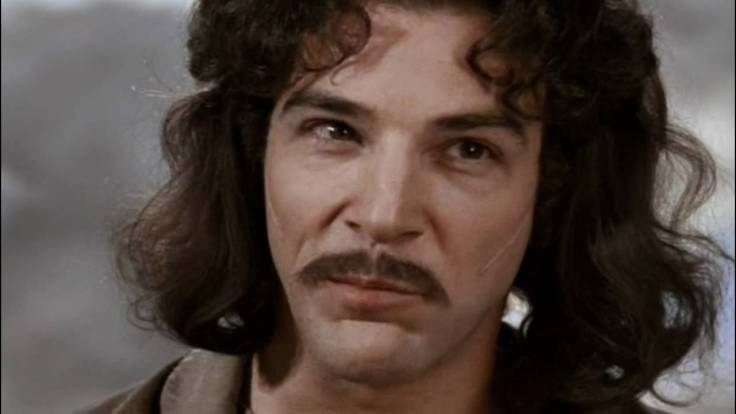
One of my favorite movies is “The Princess Bride.” It’s a quirky movie, based on a novel by William Goldman. It’s part fairy-tale, part satire, part warm and funny love story. In it, one of the characters, Inigo Montoya, is impatiently trying to track down his father’s killer, the vicious Count Rugen. Ironically, to fund his quest for revenge, he takes a job working as a mercenary for Rugen’s mentor, Prince Humperdinck. Part of his job is to kidnap Humperdinck’s fiancee, Princess Buttercup, and kill the mysterious man who is trying to rescue her. When the mysterious masked man climbs the perilous Cliffs of Despair, Inigo waits at the top to challenge him to a duel.

But Inigo is impatient. He calls down to the struggling masked man. “I do not suppose you can hurry things up a bit,” he suggests. He even offers to help the man–“though I do not think you will accept my help, since I am only waiting to kill you..”

Inigo is not cut out to be a vicious mercenary– clearly– because he befriends the masked man before their deadly duel (which doesn’t result in anyone’s death). He even waits–yes, WAITS– for his opponent to get rested and prepared before the duel begins. Inigo may hate to wait, but he has developed the gift of waiting for others when it really counts. (A skill he demonstrates elsewhere in the tale.)

Photo by Ric Rodrigues on Pexels.com

What does any of this have to do with prayer? We are entering a season of Advent. It is a reminder that the whole world waited impatiently for the coming of the Messiah. Centuries of impatience; centuries of expectation, centuries of waiting for a coming Hope.

Photo by Pixabay on Pexels.com

We will spend a few weeks waiting– and it may be made more anxious because of COVID–waiting for presents, or to reunite with family. And we all hate waiting. We are uncomfortable with delayed expectations, and uncertainty in our immediate future. Even with the joyous anticipation that Christmas brings, the period of Advent can be nerve-wracking.

Inigo Montoya spent years anticipating and “waiting” to exact revenge for his father’s death. He hated waiting. But he used that time wisely. In the waiting, he prepared. He studied the art of sword-fighting. He searched far and wide for his quarry. His life revolved around this less-than-holy goal. And, though he “hated” waiting, he waited for decades, never giving up, and finally, achieving his goal. Along the way, he made many mistakes, but he also made friends, and avenged his father’s honor.

Photo by Jeswin Thomas on Pexels.com

This Advent, we “await” the coming of the Christ child. And, as followers of that same Christ, we await His victorious second coming. This is so much better than waiting for revenge. We wait for reconciliation, for restoration, and for renewed life! We have a great hope– the anticipation of Eternal Victory and Joy! How are we preparing? Do we spend our time complaining? Do we give up? Or do we seek diligently, not for a six-fingered man to kill, but for opportunities to spread the Joy and Hope we have found?!

Photo by August de Richelieu on Pexels.com

Getting Ready…

My husband and I recently celebrated our anniversary. We married late– I became a bride at nearly 47 years of age. I spent most of my childhood and adulthood “preparing” to be a bride–I learned how to cook and sew and keep house with the goal of becoming a wife and mother. I saved items in a “hope” chest– collecting dishes and linens, candles, books–items I thought would help fill our home. After several years, I had quite a collection! Even so, when the time came, I found there were several things I still needed to learn, prepare, collect, and even change as David and I began our life together. And it wasn’t just me– David also made a lot of preparations and sacrifices to ensure that we could begin our lives in safety and relative comfort.

And marriage requires learning, and adjusting, and growing after the wedding, too. So even though we are still happily married after seven years, and even though I spent years before preparing to be a wife, I am still learning and we are still growing in our love for each other and for God.

Jesus compares our eternal life to a marriage. He has paid the “bride price”– redeeming us to belong to Him. He has gone ahead to “prepare a place” for us (John 14: 1-4). Our response should be to prepare for our eternal future with Him! In fact, our marriages should be a reflection and a model of Christ’s relationship with His Bride, the Church.

Photo by Bashir Olawoyin on Pexels.com

As we live out our lives, learning and preparing to spend eternity with God, there are (at least) two things to remember:

  • Don’t “go it alone”– God uses the imagery of weddings and marriages for good reason– He wants us to live in communion, unity, and togetherness for eternity. To try to live independently, grow, learn, and act independently, is to work outside of God’s plan. Insisting on the “perfect” mate– one that will never challenge you to grow–or bailing out at the first sign of conflict may be signs of trouble in our relationship with God. That doesn’t mean that we can’t grow or learn outside of earthly marriage– nor does it mean that marriage alone can teach us all God wants us to learn about relationships. But it does mean that relationships should be more than just superficial interactions, and working through relationship struggles can often teach us about God’s steady and enduring love, and help us develop our own capacity to love wisely and well. Heaven has many “rooms” or “mansions”, but it doesn’t have hideaways and solitary confinement!
  • Preparation must be a priority–imagine getting engaged and doing nothing to prepare for a wedding! No date or time, no venue, no dress, no invitations or guests, no menu, no vows?! And worse– no plan for the marriage–no idea where to live, no furniture, no discussions on how to rear children, pay bills, manage the household expenses, plan for the future?! Yet many of us become Christians and do little or nothing to prepare for our future eternal life with Christ! We spend no time reading His word, seeking His face, or learning about His character. And we spend no time investing in relationships with people who will be our neighbors for eternity– or inviting others to join us for the most important wedding in history!

I have wonderful pictures and memories of a wedding day seven years ago–how much more wonderful to prepare for the ultimate wedding day!

Childlike Faith

carefree child enjoyment field
Photo by Pixabay on Pexels.com

I got to spend the day with my granddaughter earlier this week.  She’s three, and has all the energy of a firecracker, and the curiosity of a kitten.  She is learning to discern what things and which people are trustworthy (or not).  Having worked with children from infants to teens over the years, I have seen this progression in others– sometimes with good results, and sometimes ending in disaster.

girls-children-kids-friends-50581.jpeg
Photo by Pixabay on Pexels.com

We hear about “childlike” faith–Jesus spoke of it; even praised it.  Yet we see examples of people whose simple faith puts them in danger from predators, bullies, scam artists, and other perils.  Is this really what Christ wants from us?  No!  Jesus didn’t commend foolishness; he told dozens of parables warning of foolishness and simple-mindedness.  The Apostle Paul also talks of “babies” in the faith needing to grow wiser and stronger.  There is a difference between having the faith of a child, and having the brain of a child.  Jesus doesn’t want us to be ignorant, gullible, or bratty, but He loved the willingness of children to ask questions, seek out answers, and listen with open minds and hearts.

three toddler eating on white table
Photo by Naomi Shi on Pexels.com

Most people become cynical over the years– some far earlier than others.  They trust no one and nothing but themselves, thinking they know best, or frightened to find out what they don’t know.  In many ways, they are as vulnerable (or even more so) as those who trust everyone.

adorable beautiful child cute
Photo by Pixabay on Pexels.com

My granddaughter is still at the stage where she trusts her parents and grandparents to watch out for her, give her good advice, and answer all her many questions.  As she learns new skills, she often “consults” with us; asking our approval, wanting our input–as she meets new people, she will also take many of her cues from us.  Should she be polite, informal, respectful, quiet, reserved, loud, assertive?  She is still learning, but she still trusts us more than, say, her brothers or peers.  There will come a time when she will develop the habit of either following the examples we have set for manners, traditions, habits, and such, or looking to other models.

a man and a woman assisting a girl while jumping
Photo by Agung Pandit Wiguna on Pexels.com

Watching her, I was reminded of two very important questions I need to ask myself?

  • What does she see and hear from me?  Am I trustworthy in the way I talk to (and about!) others?  About her?  Am I giving her solid advice and good examples that will help her develop good habits and relationships?  Am I “present”– not being distracted or half-hearted in responding to her needs?  Am I teaching her wisdom about the dangers she must face in this world?  Or do I pretend they don’t exist or won’t touch her?

photography of child pushing the wagon
Photo by Jennifer Murray on Pexels.com

  • Who am I trusting?  The obvious “right” answer is Jesus Christ, but is that the reality?  Do I lean on my own understanding, or consult with “experts” without asking for God’s wisdom or seeking His approval?  Am I seeking to learn from Him how to navigate the dangers of this world, or pretending they won’t touch me?

close up portrait of human eye
Photo by Skitterphoto on Pexels.com

Having childlike faith is not the same as having a childish faith; it’s not the same as being foolish or ignoring facts.  Smart children ask questions– lots of them!  But they listen to the answers.  Foolish children (and foolish adults) claim to know all the answers, and refuse to listen to advice.

girl in white long sleeve shirt and black skirt sitting on swing during day time
Photo by Skitterphoto on Pexels.com

Blog at WordPress.com.

Up ↑