Souvenirs or Baggage?

My Mom died recently, and my brother and sister and I are cleaning out her estate. This is by no means a small task, as my Mother saved EVERYTHING! All of our elementary school report cards, 4-H Awards programs, class play programs, thousands of photos (mostly unidentified), post cards from all of our vacations (including places we re-visited!), ticket stubs from movies and football games and banquets, our old baby shoes, broken toys, recipes clipped from magazines and old boxes, letters we sent from college, and letters sent to her when she was in high school. She even saved such things that her own mother and grandmother had saved! Souvenirs and memories, all tucked away or piled up throughout her house.

Photo by Tina Nord on Pexels.com

My mom was what is known as a “hoarder.” She was pathological in her collecting bits and pieces of everything that went on all around her. She had clothing she had never worn. She had Christmas gifts she had opened and put back in their wrapping, but never enjoyed. She had books she had never read, DVDs she had never watched, and pots and pans she had never used. She had stacks and bags and boxes of memories she always meant to sort through– someday.

Photo by Ricky Esquivel on Pexels.com

As she grew older, she sometimes would lament that we, as her children, would be burdened with the job of sorting through all her “stuff.” Even so, she wouldn’t let us touch any of it until the last months of her life, when it was obvious that she would never be able to do it herself. And we weren’t to throw anything out– only make an attempt to organize it all!

Photo by Ketut Subiyanto on Pexels.com

Of course, now we are throwing out the majority of what she kept. Much of it was damaged by being stacked and stored in the haphazard way it was. Some was damaged by a leaky roof, or mice. Many of the things that are damaged were once useful, and might have been useful yet if they had not been hoarded and held back. Blankets and towels that might have been passed on were left to be chewed up or rotted. Books and photos are warped or stained.

Photo by Wendelin Jacober on Pexels.com

I loved Mom, and she was a great woman of God– a prayer warrior and evangelist. But she was human. In this part of her life, she missed some great opportunities to bless others with the resources she had. She even missed the opportunity to enjoy many of the things she obsessively stored for “someday.” Moreover, she saved many things that weren’t useful. Old boxes and jars of spoiled food, old bills and advertisements, expired credit cards and driver’s licenses.

I have been reminded of many things as I’ve helped go through Mom’s “things.” There are many wonderful memories that still can be found in all of her souvenirs. I found an old storybook– one of my favorites–about a Mama Bear and her naughty, curious little cub. “Why do you love me?,” the cub asks after getting into trouble yet again. “Because you’re my little bear,” she answers as she cleans the wounds and lovingly carries her cub home. Love transcends mischief. It transcends things like lost opportunities and hoarding tendencies, and the frustrations of life.
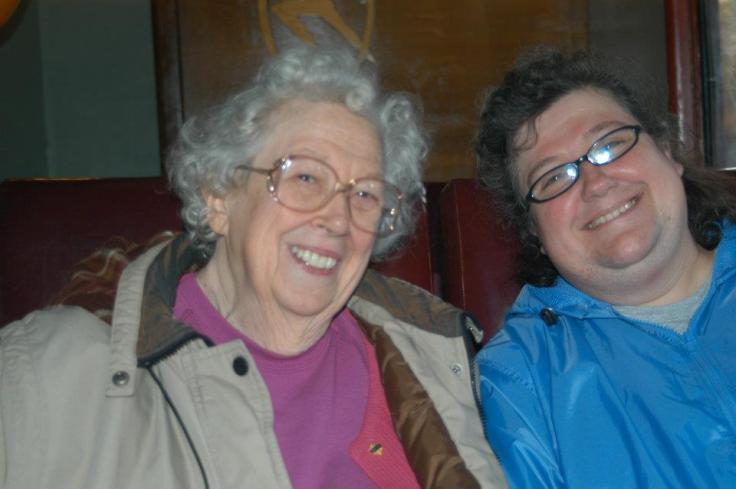
But sometimes we hang on to things, not out of love, but out of pain or desperation. Mom was a child of the Great Depression. Her family had to move a lot when she was younger. She was forced to give away toys and clothes she wanted to keep; forced to leave old friends and make new ones; forced to make things “last” when new things couldn’t be had. She spent many years having to be frugal and careful to make small memories last a lifetime. She became obsessed with collecting “souvenirs” of even the smallest events, even tragic ones, and holding on to what was “good enough,” even if something better was offered.
Photo by Carlo Ju00fcnemann on Pexels.com

Many of Mom’s “souvenirs” have become baggage for those of us who follow. And many of our “souvenirs” will be baggage for those who follow us. Some of our scars will be passed down to our children. Some of our hopes and dreams will be unrealized–unopened and unused gifts that “might have been.” Others objects and experiences will be pleasant reminders of the love that lasts beyond our own lives and limitations. But objects, in themselves, cannot take the place of the actual experiences of joy, love, and peace they are meant to represent.

Photo by Inna Lesyk on Pexels.com

God wants us to hold fast to certain things. Truth. Hope. Love. Faith. But He calls us to let go of other things. Bitterness, resentment, anger, self-pity. I know that in my final days, I will probably find that I am still carrying some baggage. But I hope that I will find more souvenirs– good memories of a life enjoyed, goals accomplished, and relationships that have stood the test of time. Mom had those in abundance. But some were hidden among the baggage–treasured memories of those who loved her, and those whom she loved, surrounded by the baggage of heartache and longing. I pray that those who follow me won’t have to search among the ruins to find my souvenirs, or hunt through piles of souvenirs to find my treasures.

Praying for Fiji

At least once each month, I want to encourage you with a practical step in pursuing a life of prayer. Today, I want to talk about how you can pray globally.

Photo by Monstera on Pexels.com

What does this mean, and how does it look? Well, it means making a concerted effort to pray for different places, people groups, and issues around the world. How you do that may look very different from how I choose to do it, but I’ll give you a peek into my method. You can tool around until you find what works for you.

I mentioned in a previous post that I once found a commercially-produced “Prayer Journal” on sale at a Christian Bookstore. It was a marvelous book with a world mission focus. Each week, there was a short discussion of a different “at-risk” people group. There was information about the region(s), the population, the average life expectancy, the literacy rate, the estimated percentage of Christians (as well as percentages for other religions) in the area, and more. There were suggestions about how to pray for the people/area, and then space to write notes and other prayer requests. I have never again found such a resource in a bookstore, but I decided to make my own journal.

Photo by Vlada Karpovich on Pexels.com

My journal takes up four notebooks– one for each quarter of the year– roughly ninety-two days in each notebook. Each day has a heading with a geographical location: a continent, a nation, a state or province, a city or town, even major rivers, deserts, and oceans. (In addition, I have space for the names of individuals with birthdays or anniversaries, and a space for urgent and immediate prayer requests for that day. In the front of the journal, I have a list of “Prayer Points” for the various days of the week– you can check out my page on Prayer Points here Proactive Prayer Points. The notebooks can be used from year to year, and have space on the back of every page to record answers.)

I don’t have the marvelous demographic information that was in the earlier journal, but I have an almanac or the internet if I want to dig deeper. In putting the notebooks together, I alphabetized all the names of places I wanted to include, narrowed the list down to 365, and assigned one place to each day of the year. Yesterday, I prayed for Fennville, a small town in Michigan where I used to be a student teacher. Today is Fiji, which comes next alphabetically. So I will be praying for Fiji, along with other people, places, and issues on my list. I may not know a lot about Fiji- I know it is an island republic in the South Pacific. I know that many Fijians are Christian, while others are Muslim or Hindu. But God knows everything about this group of islands– He knows if it is the rainy season there now, or if the people are battling sickness or poverty, or if they are in a season of clear skies and abundance!

So WHY do I recommend praying for Fiji (and all the other nations of the world, as well as major cities and even deserts?) Why Global Prayer?

  • First, it is Biblical, and it is a step in obedience. We are to “go into all the world” to preach the gospel (Mark 16:15). So we should also pray “into all the world”– pray for those who are going to other nations; pray for those who need to hear the Gospel in other nations; pray for those who are going FROM there into all the rest of the world. “For God so loved the WORLD…” (John 3:16). And so should we. Whether we can travel or not; whether we can study all the needs and factors of each nation or area or not, we should remember them in prayer.
  • Second, it will change your prayer life. I believe it makes my prayer life richer and more effective. Once again, it takes my focus off of me and lifts it to the God who holds the whole world in His Hands. I’m not just praying to “my” Father– I’m praying to “Our” Father. He loves me, and He listens to me, but He is big enough, powerful enough, and compassionate enough for the entire world! Once I acknowledge that, it changes the way I approach prayer.
  • It also is a great way to learn about the world and about other people and cultures! Imagine meeting someone from Fiji, and being able to say, “I have prayed for your homeland!” Imagine how much joy it can bring to pray for those places that have special meaning to your family and friends. I haven’t traveled the world, but I have met people from many countries. I’m still waiting to meet someone from Fiji, but if I do, I will have even more joy in praying for it next year on this day!
  • It brings discipline to my prayer life. Sure, I feel an urgency to pray for “hot spots” around the world– wars and famine, political upheaval and natural disasters call to mind certain areas of the world for prayer. But praying for an area without such prompts requires that I have some system in place. And who knows what God’s plans are for any given region on any given day, or what needs may arise that I can’t know about in advance?

So HOW can you pray Globally? I can recommend a few first steps:

  • Make a list. Maybe start with a single week. List seven locations– nations, cities, even continents or oceans (there are seven continents and “seven seas” after all). Perhaps you want to list places both near and far– local towns or villages AND faraway lands–over the course of a month or even a year.
  • Set up a system–you may want to use a notebook, planner, or calendar. Or you may want to set up a database. Your system can be set up weekly, monthly, yearly— whatever will work for you.
  • Be flexible and persistent. It has taken me nearly 20 years to settle on a system that truly works for me. Don’t be afraid to make changes or say “no” to a system just because it works for someone else.
  • Pray about it!
  • Resolve to DO IT. Many years, I spent so much time trying to “perfect” my system that I neglected to do the actual prayer! Please don’t let this happen to you. And don’t let guilt or impossible expectations keep you from your pursuit. Even if you take a step backward, forget a day, stumble through a week– Keep going!
  • Thank God for the opportunity to pray for others. Thank Him for loving the whole world (including you)! Praise Him for being a God who watches over every grain of sand and every drop of water in the oceans, over every bird of the air, and every precious life!
Photo by Porapak Apichodilok on Pexels.com

Imagine what can happen in our world if even a few of us are faithful in praying for all of us?! God is giving YOU an opportunity to be involved in HIS work throughout the world. Will you pray for Fiji today? Who can you pray for tomorrow?

Where is the Sting?

This has been a season of death and loss for us, but where is the sting? Mom passed just over a month ago, but where is the gnawing ache of loss?


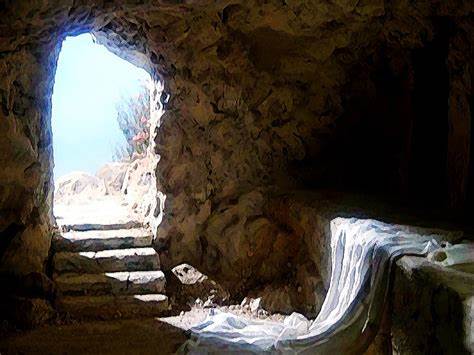
Because of Easter, we remember that Death is swallowed up in victory, and His Divine Power gives us Everything we need for Life! (2 Peter 1:3)
Have we had moments of grieving this past week (and month)– Yes. But we choose to focus on the larger picture. Easter isn’t just a day to celebrate something miraculous in the past or the distant future. It is a very present reality that changes EVERYTHING. Death is not the end. Failure is not the end. Our weakness is not the end. Good Friday was not an end. Easter (and every day since!) is a new beginning. It is the promise of life– not just eternal life in heaven, but abundant Life here and now. There is a purpose to life– to the joy and the pain, the grief and the struggle, the search for answers and the even the questions that remain. There is hope and there is renewal. There is a reason to get up, a reason to fight, a reason to cry, a reason to sing, and a reason to rest. Most of all, there is a reason to LOVE and rejoice in being loved!


YOU are loved! Extravagantly, eternally, without limit or condition. And yes, it seems too good to be true, too simple to accept, maybe even too frightening in its intensity. But it IS true. It IS that simple. It IS that complete and perfect. And it is a free gift for all who will accept it and live in it.
Please let this Easter fill your heart with the Good News that You are loved– to death and back– by your gracious creator. 

One Man’s Junk…

The story is told of an old, worthless-looking violin that came up for auction. No one wanted to bid on it. The auctioneer began with a modest call for three dollars. No bids. Two dollars? Nothing. One dollar? Surely someone would spend just a single dollar. The violin was in working order. It had all its strings and a bow. No one was willing to spend one dollar for an old violin?

Suddenly, an old man came forward and took the violin off the table where it lay. He picked up the bow and began to play a famous violin concerto. In the hands of a master musician, the old violin came to life. Its haunting and soaring music brought the entire room to tears. The old master came to the end of the piece, and there was a hushed silence as he lay the bow and violin back on the table and returned to his seat. Clearing his throat, the auctioneer started a new bid– one thousand dollars. Several people placed a bid. Two thousand? Three? What had been worthless in the eyes of so many just minutes ago suddenly had great value.

That’s a nice story, but it rarely happens that way in real life. I run a resale shop– antiques, collectibles, vintage and retro items, and yes, what most would probably call “junk.” People come in and look around– sometimes they find a piece or two that they like. Sometimes, it’s priced at just a dollar or two; sometimes the price is a little higher. Some people think my prices are too high; others find them on the low side. They think they are getting a real bargain, and they are convinced they will be able to resell the item for much more on-line or elsewhere. They may be right. They may be wrong. Most of them are just doing what I’ve already done– find an item that seems to be undervalued, and sell it to someone else who may value it more highly.

Photo by Rachel Claire on Pexels.com

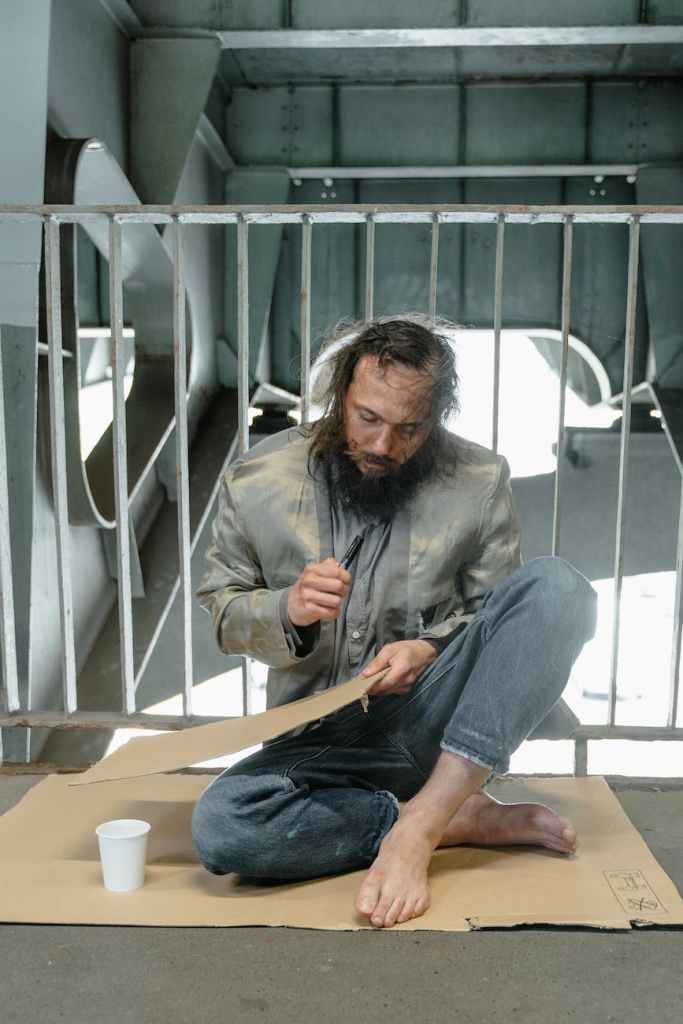
“One man’s junk is another man’s treasure.” That saying applies to many of the objects in my store. But it should never apply to a person. We tend to place a value on someone else based on many superficial factors. We judge people by the way they look– their clothing or their hair or the expression on their face when we first meet. Sometimes we judge them by their skin color or the way they speak– the words they use or if the have an “accent.” We judge some people to be smarter or more important based on who else pays attention to them or how much money they have (or don’t have). We judge their talents and experience based on hearsay or gossip. And we allow others to place their “value” on us. As though some people deserve more attention, more resources, or more love than others.

God sees through all the tarnish, the guilt, the low esteem, and shame that we carry around. Each one of us is equally precious in God’s eyes. There is no “junk” in God’s economy, when it comes to a human life. No matter how dirty, broken, used, misused, patched up, trampled on, or worthless we may seem to others (or to ourselves) we are priceless and cherished by our Heavenly Father.

Jesus sought out the “junk” people of his time– lepers, widows, children, the blind and lame, the sick and weary, diseased, depressed, and demon-possessed. He touched the untouchables, loved the unlovable, and forgave the unforgiveable. Even when He was condemned to die as a criminal, and rejected by His friends and followers, Jesus remembered the Father’s love for others.

In this Holy Week, I pray that I would not lose sight of God’s Amazing Love for us. When we were His enemies– fallen, ruined by Sin–“junk”, Jesus was willing to reach out, to walk with the marginalized and sick, and more than all that, to DIE in order to make us joint heirs and give us the glories of Eternal Life with Him! And when Jesus was taken down off the cross– broken, dead, and “worthless”, God raised Him to Life and gave Him a “Name that is above all names” (Philippians 2).

We pray to a God who cherishes our very thoughts–a God who delights to hear from us! What a powerful thought. What an Amazing Love!

Justice? Or Vengeance?

When violence strikes, I want justice. I want action. I want to make the evil stop.

Just the other day, there was another school shooting in the news. At least six innocent people lost their lives, and another community was ripped apart by grief, shock, and anger.

Photo by cottonbro studio on Pexels.com

But is it really justice that I am seeking? Or is it vengeance?

Justice is permanent. Justice is final. Justice takes time. Vengeance is visceral and immediate. Vengeance is a reaction; a retaliation. Justice, on the other hand, is blind to the emotions of the initial event. Vengeance is driven by emotion. Justice comes through the objective application of the law.

Justice is God’s business. I do NOT understand why or how God allows evil to happen in the first place. It hurts. It doesn’t make sense. It is destructive. But it is the nature of Sin. And Sin infects the entire world. We cannot escape from it. We cannot deny its existence. We cannot put an end to it. We can only follow the arduous and imperfect justice systems that are in place for our community or our country. We cannot achieve perfect justice. But God can. And He has promised to do so– in His time, and in His way. This can be comforting, but it can also be frustrating.

Vengeance is also God’s business. God has emotions, just like we do. But His are always under perfect control. God’s wrath is frightening in its power, and paralyzing in its purpose.

Beloved, never avenge yourselves, but leave it to the wrath of God, for it is written, “Vengeance is mine, I will repay, says the Lord.”

Romans 12:19 (ESV)
Photo by Pixabay on Pexels.com

As imperfect as our systems of justice may be, they are still systems, with order and time to look at the total situation. Vengeance doesn’t stop to count the cost. It doesn’t stop to listen to the full story. It seethes and coils like a rattlesnake, waiting to inject venom into the first victim to cross its path. Human vengeance never leads to peace.

Also, vengeance is limited to the strength and resources of the avenger. If a shooter takes the life of my loved one, my vengeance is limited to the actions I can take. I may kill the shooter; I may take the life of their family members; but I cannot bring my loved one back, nor can I guarantee that the killer will suffer the same amount or the same way I do. Vengeance never looks forward, and it never offers a solution to move forward. It lives in bitterness and anger and discontent.

Photo by Andrea Piacquadio on Pexels.com

As followers of Christ, we are asked to take a stance that seems impossible from a human standpoint. We are asked to keep our hands clean, to keep our minds at peace, and to give our grief, our anger, and our craving for vengeance over to God with no reservation and no option to set the limits or timelines.

To the world around us, this seems weak and even unjust. What if the evildoer “gets away” with her/his crime? What if the victim never gets “justice” in their (or our) lifetime? What if we never “see” justice done? What if God “fails” to avenge us or our loved one? What does the Christian “do” in the face of evil? Nothing?! Fall on our knees and pray?! Offer lukewarm assurances and empty promises?

Photo by Pete Johnson on Pexels.com

The problem with evil– especially shocking violent events– is that we can’t see beyond the immediate shock and pain. That doesn’t mean that there IS no pain or shock or anger or frustration if we choose not to react with vengeance. The pain is still very real, and overwhelming. But we choose to make room for faith that sees the larger picture. Faith makes room to see not just justice, but mercy. It allows us to see the overall tragedy of Sin, beyond our immediate tragedy of an individual act. Faith sees beyond our helplessness to God’s Sovereignty. It sees beyond the present pain to future healing.

Photo by Gvexx on Pexels.com

I pray for the families of the victims in this latest shooting– and for all those who have experienced such violence. And I pray that God will show me what I can do to make a positive difference going forward. I pray for the strength and the faith to let go of hatred, bitterness, malice, and outrage. Finally, I praise God, even in the middle of pain and shock, knowing that He can be trusted to bring perfect Justice– and perfect vengeance–the kind that leads to a peace beyond our understanding. These are not “easy” prayers. They are not blind prayers, or prayers prayed without tears and groaning and questions. But they are real prayers, not empty wishes that I could avoid all unpleasantness or that I could exempt myself (or others) from tasting sorrow, grief or pain. Rather they are prayers that acknowledge that Life is more than struggle; that Love and Mercy are stronger than despair, and God has already won the ultimate victory.

Reflections on My Mother’s Life

I wrote last week that my mother was dying. She passed away on Monday afternoon. And since much of my pursuit of prayer is a reflection on the Godly example she set, I thought I should say a few words in honor of her passing from this life to Eternity.

Mom was a prayer warrior. I don’t often use that term, and don’t like to see it overused or misused. Just because someone claims to pray a lot, or just because they are active in church doesn’t make them a prayer warrior. But Mom was one. She battled to be informed of the needs of those around her (and those far away, too!). She wanted to know about every concern, every heartache, every health need, every financial need, every broken relationship– not just out of curiosity, and not for gossip or condemnation– she didn’t want to miss any opportunity to pray for someone else! She wanted to listen and offer comfort, encouragement, and, occasionally, advice.

Photo by cottonbro on Pexels.com
Photo by Tima Miroshnichenko on Pexels.com

My mom loved prayer. She loved Bible study and worship, fellowship, missions, and thanksgiving, too, but she was absolutely wild about prayer! She led various Bible studies, Sunday School classes, and Ladies groups during her long and active lifetime, and each one began and ended with prayer– prayer in the preparation, prayer in asking God to direct each meeting, prayer in follow-up–Quick prayers, fervent prayers, joyful prayers and humble prayers.

Mom prayed through her worship. Often a song sung (before she got so she couldn’t sing) was a song offered as a prayer. Even the act of attending church or a wedding or funeral was an act of prayer. She said mealtime grace, morning prayers, and bedtime prayers. Her prayers were simple and sincere. And people knew that Mom prayed. They would seek her out with their requests, knowing that she would offer real support, and not just good intentions.

But what my Mom was most known for was sending greeting cards. And each one was a small prayer– a voluntary act of asking God to bless the person who would be receiving the card. She wanted God to pour out blessing, strength, encouragement, and healing to as many people as possible. Every card was saturated in prayer and appreciation– appreciation for the person, and appreciation for what God could and would do in relation to that person’s life. She sent out around 100,000 cards in her lifetime! Each one was a small act of faith, blessing, encouragement, and love.

Mom wasn’t a “super” Christian. She was an ordinary sinner saved by Grace. She wasn’t particularly gifted with money, time, writing ability or creativity– though she had some resources in each area. But she used them well. She invested in the lives of hundreds of people– time and energy and emotion–through her prayers and actions. Not because she had something to prove or because she wanted to “earn her wings” or she just felt like sending cards. She spent countless hours organizing, gathering information and addresses, and writing out the cards and envelopes each day. But it was a labor of love because she believed that God SO LOVED the world, that He gave His only Begotten Son, that whosoever believeth in Him should not perish, but have everlasting Life (John 3:16). Her love for God was a response to His love for her, and His grace toward her…and her love for others was the overflow of the love she had received.

Photo by Andrea Piacquadio on Pexels.com

Mom’s passing leaves a great hole. But it also leaves an incredible opportunity. Her legacy is one of simple actions, persistent faith, and willingness to serve. God gave Mom an incredible life– nearly 90 years, and most of them full with abundant opportunities to make new friends, share God’s love, and serve her Savior.

No matter what time we have, may we have a heart to pray for others, and to grasp each opportunity to share God’s abundant and eternal love with those around us. My Mom has finished her race on Earth. It’s time for us to run the next leg!

Praying “Around” My Enemies

I didn’t pray for my enemies. I didn’t pray for their health or safety. I didn’t pray for their spiritual well-being. I didn’t pray that God might show me ways to bless them, or encourage them.

Photo by Andrea Piacquadio on Pexels.com

I prayed that they would be stopped. That they would be exposed as frauds and liars. I prayed for “justice” to be done– to them. That they would be humiliated. That they would get all that they deserved.

And perhaps that is what they prayed for me, as well. That I would “see the light”, and change my mind. That I would be punished for my words and actions that didn’t agree with theirs.

I prayed “around” my enemies. I didn’t pray for them. I didn’t lift them up before the throne of grace. I didn’t pray that they would be shown mercy– I certainly didn’t pray to meet them with humility and grace…

Photo by Foss Valentine on Pexels.com

Love is patient, love is kind. It does not envy, it does not boast, it is not proud. It does not dishonor others, it is not self-seeking, it is not easily angered, it keeps no record of wrongs. Love does not delight in evil but rejoices with the truth. It always protects, always trusts, always hopes, always perseveres. Love never fails. But where there are prophecies, they will cease; where there are tongues, they will be stilled; where there is knowledge, it will pass away.

Photo by Victoria Borodinova on Pexels.com
Photo by Pixabay on Pexels.com

God, forgive me for holding bitterness and anger in my heart. I will never meet a human being– “friend” or “enemy” that you didn’t create in Your own image. You have commanded that I am to love my neighbor– even one who disagrees with me; even one who considers me an “enemy.” I cannot delight in evil, or rejoice at injustice; but I must reach out in Love and not Self-Righteousness.

Leftovers

As I type this, I am eating leftovers. I made a big pot of beef stew the other night, and we’re making another meal out of what was left. Some things, like beef stew, often taste just as good (or even better) warmed up again. And it’s very convenient not to have to make a new meal from scratch. We like leftovers, and I am very thankful that we are able to have an abundance of good food. But today’s leftovers started me thinking…

Photo by SenuScape on Pexels.com

Did you know the Bible has something to say about leftovers? I’ve been reading in Exodus and Leviticus lately, and as God was giving instructions for the Passover Seder, the gathering of Manna in the desert, and the priestly sacrifices, He spoke about leftovers. During the Passover, all the meat was to be eaten on the night of the Passover Seder. Any meat left over was to be thrown away. Several families could share a Passover meal, in order to avoid waste, but the meat was to be eaten in one meal. Similarly, Manna was to be gathered and eaten for a single day (except over the Sabbath). No leftovers! The priests were allowed to eat leftover meat for a single day after the sacrifice, but no more than that.

Photo by SHVETS production on Pexels.com

So often, the “rules” of the Old Testament seem strange to us– arbitrary and even harsh. But in context, they paint a picture of God that we would do well to study. So what do the rules about “leftovers” teach us about God and our relationship to Him?

  • First, God knows what we need. We may often plan too much or too little, or use more or fewer of our resources, but God knows exactly what is necessary. And if we are listening to and trusting God, we can be sure that His plans and resources are sufficient!
  • Secondly, God PROVIDES what we need. Our tendency to store extra food and other resources “just in case” may be motivated by a sincere desire to help our neighbors in times of trouble– there’s nothing wrong with that– but often we are motivated by fear or pride, instead. We fear not having enough, instead of trusting God to provide. Or we pride ourselves on our ability to provide, rather than acknowledging that our resources and abilities all come from God.
  • God’s ways are NOT our ways. God sent the entire nation of Israel into the wilderness. They had all their animals with them– but no place to plant, grow, or harvest wheat or other grain. God could have ordered them to slaughter their animals for meat, or sent them with huge stores of harvested grain, or led them through areas with gardens and orchards. But instead, He sent Manna and quail for them to eat. He provided in ways that they could NOT.
  • God’s mercies (and provisions) are “new every morning.” (Lamentations 3:22-23) God doesn’t give us the “leftovers” of His abundance. He lavishes us with Love and Grace. Every day!
  • God isn’t impressed with my “leftovers.” My leftover offering; my leftover time spent in prayer or Bible Study; my leftover interactions with others, my leftover discipline.
Photo by Foss Valentine on Pexels.com

And that brings me around to prayer and giving. Do I give God my “leftover” praise and thanks? My “leftover” confession (after I’ve pouted and argued and justified by actions to myself)? Do I lift up “leftover” requests–those things I think I’m “supposed to” pray about, but not those I judge unworthy of MY time or attention? After all, would I want God’s “leftover,” absent-minded help? Would I want His half-hearted blessing? Do I give “leftovers” to my family, friends, and neighbors? Or mere scraps to those in need?

The other day, I was on Facebook, and one of my friends requested prayer. It was something I felt was a trifling situation, and I scrolled past her post. But then I realized that I was scrolling past an opportunity to join God in what He would do for my friend. It might not have felt like a big deal for me, and certainly it wasn’t beyond God’s ability to work in that situation. Why did I hesitate? Did I feel I had the right to judge either my friend’s motives or her situation? Did I think I could lift up a “leftover” prayer– “God, help _________. Amen.” I stopped, scrolled back and took a moment to lovingly lift her up, and pray that God would intervene in her situation and forgive me for presuming to judge.

Leftovers are not “bad” or “wrong” in and of themselves. They are blessings. But we should not live on “leftovers”– especially when it comes to our relationships with God and others! Like God, let our mercies be “new every morning,” and let us share gladly from the abundance God has given, not grudgingly or half-heartedly.

Photo by Andrea Piacquadio on Pexels.com

Paying for the Privilege

I read a most astonishing article some time ago. Wealthy white American women are paying up to $2,500 for a meal and a gut-wrenching session about how racist and bigoted they are. https://www.theguardian.com/world/2020/feb/03/race-to-dinner-party-racism-women?fbclid=IwAR12AvWdTyht5RV0vfBfZ5XUEnA4441GU8efLSX8xtdfePI2R9KEesCipI8 Over a fancy dinner, they discuss how their privilege has (arguably) caused them to ignore and/or deny the needs and rights of others, based largely on prejudices and fear.

Photo by bruce mars on Pexels.com

I won’t waste space to analyze all that I think is wrong with this scenario– but I will say the following:

  • $2,500 is a lot of money for most Americans, let alone many others around the world It’s more than most people spend in a month for groceries, utilities, and more, let alone one meal.
  • Talk is (according to the old phrase) cheap.
  • If having difficult talks over a plate of overpriced pasta and wine could really solve major problems, I’m shocked that we still have so many problems in the world!

I’m dismayed by this article. I hope that some good comes from these efforts, but I don’t expect such tactics to end racism, bigotry, or ignorance. These women are paying for a privilege on top of all their other privileges– the right to feel righteous and “woke” to lingering problems that have never personally touched them. It would not occur to them to invite 10 women who don’t look like them, don’t live like them, don’t speak like them, and don’t dress like them to come and share their dinner. They would not share their hospitality, their fine china, or their fancy dessert with a working-class woman with olive skin and an accent, or a single mother fighting to make ends meet and losing the battle– of any skin color. They might give another $2,500 to a homeless shelter or soup kitchen across town– they would not befriend anyone who needed those services, however.

Photo by Levent on Pexels.com

Most importantly, they are likely to believe that by “owning” their prejudices for an hour, they are absolved of their responsibility to “love their neighbor as themselves.” They can be comfortable in the belief that their feelings “do them credit” and make them better than others who “are in denial” about their “subconscious biases” and “micro-aggressions” toward the people with whom they interact (or routinely ignore). They may take high-minded actions to force the government to “deal with” people less fortunate than they, but they will take no steps to get involved personally with the families who suffer from injustice and poverty just outside the gates of their exclusive communities.

But another more insidious problem with the article is the way I can choose to respond to it. Articles like this are designed (on some level) to create anger, division, and a sense of disgust toward those who are considered “privileged.” I look at the hypocrisy outlined in this article, and I may assume that “privileged” rich white people are all alike. I may assume that the “problem” is their affluence and their indifference– that if they could be “made to” care more, or made to pay “their fair share”, poverty would disappear, and with it, prejudice and other issues that separate the “privileged” from the “rest of us.”

Photo by Steven Arenas on Pexels.com

But poverty, prejudice, injustice, and other issues are symptoms of a much greater problem– Sin. And Sin is a problem that can never be solved by sitting down over a meal or writing a large check or even learning empathy with others who suffer. In one very large sense, we all are “paying a price” for Sin. We live in a broken world, where Sin and its effects are felt by all. Even wealthy, healthy, “privileged” people suffer heartache, betrayal, loneliness, confusion, addiction, and loss. None of us has the “privilege” of being untouched by Sin.

And while each of us can and should be active in helping to mitigate the effects of Sin, we cannot eliminate them. We can never “pay” enough to make Sin and its consequences “go away.” Only the shed blood of Jesus Christ can do that. The real “privilege” in life is not great wealth, or social standing. It isn’t comfort and the ability to shell out a month’s wages for a single uncomfortable meal. It isn’t the temporary feeling of being more “virtuous” than one’s neighbor–and that brings me to reflect on my own actions and beliefs.

What “privileges” do I take for granted? What makes me feel “virtuous?” What makes me feel guilty or ashamed, that I would “pay” to have someone else make me feel “enlightened?” Jesus doesn’t call me to “feel” virtuous. He calls me to follow Him and become more virtuous. He has already paid far more than a month’s wages (or even a lifetime’s wages) to redeem me from Sin’s curse, and allow me to live with peace and joy– no matter my financial or social circumstances! I have the very real “privilege” of knowing Him! And so can anyone else who puts their trust in Him. Through Him, we have riches that cannot be sold, bought, lost, or traded. But they can be shared! I cannot rid the world of poverty, prejudice, greed, injustice, or death. But I can help others find strength, hope, relief, and joy in their journey, as I point them to the Savior. I can’t give a thousand dollars, but I can give a few dollars to a local food bank, or volunteer time to help others. I can share food or water or clothes with someone who is in need just down the street. I can listen to someone who needs a friend, and I can offer to serve where someone needs a helping hand. I can also give the benefit of a doubt instead of harsh judgment– even to those who seem hypocritical or “unenlightened” in their earthly “privilege.”

Lord, my prayer today is that I would pour out compassion– even on the ladies in this article–and on all who need it most. Your heart is that all of us would live in peace and lovingkindness. Help me to see my neighbors as you see them–ALL my neighbors. All the time.

Photo by Kamille Sampaio on Pexels.com

The real privilege is not of wealth or comfort. The real privilege is to learn to love and be loved as Jesus loves– freely, sacrificially, whole-heartedly and without limit. May we celebrate in that privilege today.

In the Beginning Was the Word…

In the beginning was the Word, and the Word was with God, and the Word was God. The same was in the beginning with God. All things were made by him; and without him was not any thing made that was made. In him was life; and the life was the light of men. And the light shineth in darkness; and the darkness comprehended it not. There was a man sent from God, whose name was John. The same came for a witness, to bear witness of the Light, that all men through him might believe. He was not that Light, but was sent to bear witness of that Light. That was the true Light, which lighteth every man that cometh into the world. 10 He was in the world, and the world was made by him, and the world knew him not. 11 He came unto his own, and his own received him not. 12 But as many as received him, to them gave he power to become the sons of God, even to them that believe on his name: 13 which were born, not of blood, nor of the will of the flesh, nor of the will of man, but of God. 14 And the Word was made flesh, and dwelt among us, (and we beheld his glory, the glory as of the only begotten of the Father,) full of grace and truth.

John 1:1-14 (Authorized KJV)
Photo by Jeswin Thomas on Pexels.com

We celebrate Christmas as the “birth” of Christ. Yet, the Bible tells us that Jesus (Christ) was in the beginning with God: Jesus had no beginning and no end. He is eternal with the Father and Spirit. We call this season before Christmas “Advent”– we await and celebrate, not the birth of a new being, but the advent of His coming from Heaven to earth.

Photo by Pixabay on Pexels.com

Jesus came to Earth for many reasons– some of which are given in the Bible, and some of which are likely beyond our comprehension. He came to live among us as a man of flesh and bone (John 1:14); He came to bring life and light (vv.4-9); He came to live a sinless life, which He sacrificed as a ransom for the sins of the those who repent: and He came to serve others–to model the kind of service that God desires from us (Matthew 20:28). Jesus came in obedience to the Father (John 6:38). Finally, Jesus (as a member of the Triune Godhead) came because “God so Loved the World” (John 3:16) –He Wanted to come! The Advent was part of God’s perfect plan. It was not Plan B, developed after the fall of man. It was so “from the beginning.” It was foretold and prophesied. It was planned down to the tiniest detail.

Photo by Ketut Subiyanto on Pexels.com

Jesus has always been. He has always been The Word of God. Jesus speaks. Jesus listens. When we pray, it is natural to speak words to The Word. Jesus created us to communicate. Unlike any other creature on earth, mankind chooses to communicate through complex and subtle language, as well as through art, music, dance, architecture…even food! We chatter about trivia; we choose to wear certain colors to express our moods; we make silly faces at infants and delight in their own facial contortions.

Photo by Antoni Shkraba on Pexels.com

Prayer is so important, because it is the essence of expressing our hearts and minds to the very one who created us to BE communicators. God listens through all the words of all the languages we use (or the non-verbalized thoughts, groanings, etc.) to hear our true heart-cry.

Photo by Pavel Danilyuk on Pexels.com

This season, we take time to reflect on just what it means that Jesus was “In the Beginning…” as well as in the manger. We reflect that “before Abraham was”–He IS (John 8:58). We glory in the knowledge that He is the same yesterday, today, and forever! (Hebrews 13:8). These “words” give us life and hope and joy– not just now, but throughout all the years of our lives.

What a reason to say just a few words today in prayer!

Blog at WordPress.com.

Up ↑