The world is filled with language–there are well over 5,000 recognized languages and dialects around the globe. And within each language are thousands upon thousands of words– nouns and verb forms and adjectives; names and even grunts and sighs and “clicks” that vary from language group to language group.
In spite of this, we often find ourselves “speechless”– unable to find a word or sound that adequately communicates our thoughts or feelings in the moment. We stammer or sigh, gesture, or scream– but the words either don’t come or they don’t exist.
God knows and understands our innermost heart– with or without words. The Apostle Paul refers to this in Romans, chapter 8, when he talks about the Spirit interceding for us with groans that words cannot express (v. 26). And it’s not always groaning– sometimes there are no words for our joy– only dancing or tears of gladness. Sometimes, there are wails and cries that come straight from our broken hearts. Sometimes, our excited thoughts come so fast that we cannot form words and sounds to keep up.
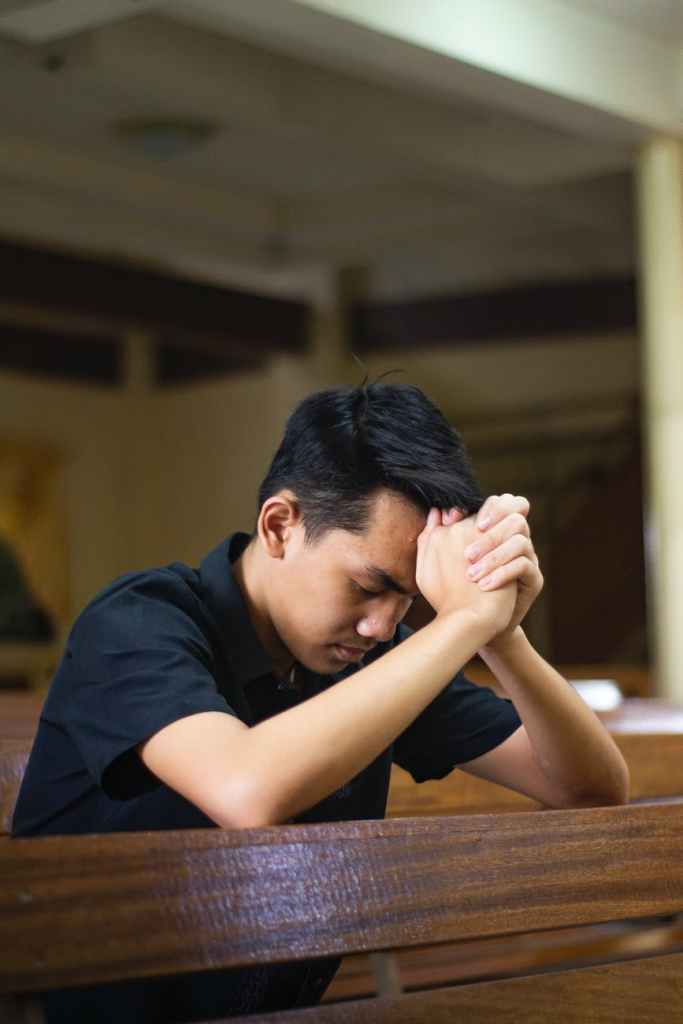
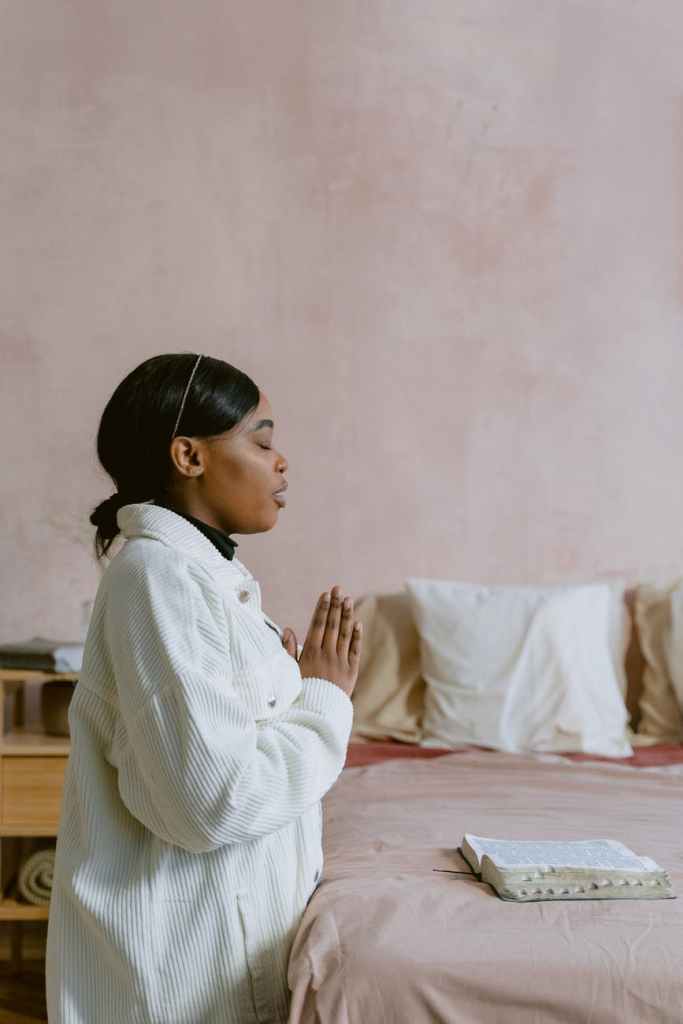
Prayer isn’t always about words– carefully drafted lists of requests or thank-you’s for our blessings–sometimes prayer is a spontaneous gush of sound or movement; sometimes, it is an intense stillness and profound silence, such that your heartbeat is deafening and the very air sings in your ears. Sometimes, it is the eruption of pain and guilt, regret and despair–the sound of your soul being pulled up through your throat and ripped almost in two. And sometimes, miraculously, it is the overwhelming presence of God in all of his Holiness, Splendor, and Might that defies any human utterance, but draws out pure praise, unfiltered by language!
Today, whatever words (or utterances, clicks, gestures, or groanings) you use, don’t neglect to express your heart and soul to the one who made you. Prayer is more than just mere words, just as God is more than just someone else to talk to! He knows every language, every thought and emotion, and each individual intimately. He will understand– even beyond words!
Many years ago (never mind how many..) there was a television show called “Green Acres.” It was a comedy about a couple from New York City, who moved to a small town in the country. The husband was excited about the move– he was tired of the rat race and bustle of the city; his wife, however, was reluctant to leave all the opportunities– she missed the shops and activity.
Green Acres was one of a group of shows that both celebrated and poked fun at rural life in America in the sixties and early seventies. The shows were very popular among viewers, but were panned by critics, and cancelled by network executives, even at the height of their popularity. https://www.closerweekly.com/posts/cbs-rural-purge-mayberry-rfd-green-acres/
More than fifty years later, you can often see these shows on networks like TV Land. They are still popular among some viewers, who like the nostalgia and the gentle humor. These shows all have happy endings. They don’t involve grotesque murders, lots of foul language, preachy lectures on social issues like homelessness, domestic abuse, or drug addiction, or copious amounts of sex, violence, or nudity. They don’t talk about war and gangs, poverty or prejudice, or urban sprawl. They celebrate family, fresh air, hard work, community, truth, justice, kindness, and humility.
What does “Green Acres” (or Andy Griffith or any other old TV show) have to do with Psalm 23 and Pursuing Prayer? Not a lot, but I would like to look at the phrase in verse 2– “He maketh me to lie down in green pastures..” Not the same as “Green Acres,” but I think the green pastures of God are viewed by the world in much the same way as “Green Acres;” scorned by a small and vocal group, but quietly cherished by many others.
Our Shepherd causes us to lie down– to find rest and nourishment and refreshing– in green pastures. That doesn’t mean that He won’t lead us through times of bustling stress, struggle, anxious moments, or rugged paths. But He will make us lie down. He will cause us to stop our frantic rushing, and renew our strength in green pasture. He doesn’t offer green pastures as an “escape from reality”, but as a reminder that dealing with reality requires us to see beyond the immediate stresses of the day and listen beyond the distracting noises around us.
God’s green pastures won’t look like “Green Acres” with old tractors and fresh-mown hay. They may not look like the small town simplicity of Americana. In fact, God’s green pastures may not be places at all, but practices– spending time in Scripture, time in prayer, times in fellowship and encouragement, time in meditation, even time in service to others. You may find green pastures in the heart of a barrio, or in the quiet of a walk in the forest, or in praying as you climb a flight of stairs or fold laundry. But you will find spiritual nourishment and renewal in God’s green pastures, wherever they are and whatever they look like. https://www.biblestudytools.com/commentaries/treasury-of-david/psalms-23-2.html
God’s green pastures will have many critics, who will ask that you cancel these practices. They will call them old-fashioned, failed practices– naive, simplistic, even laughable. But as we respond to God who make us lie down in green pastures, others are watching– and taking heart. The critics in our life may be loud and insistent. It may seem like they have the power to “cancel” our rest, and pave over the green pastures to build another fast food restaurant. But others are watching in silence, longing to experience the kind of rest and refreshment they see in us– the kind that cannot come from sophisticated treatises on war or crime, or harsh critics’ disdain, or yet another trip to an upscale shop or fast food restaurant or spa. God may ask us to stay in Manhattan, or Tokyo, or Nairobi, but He doesn’t want us to live in the same way as many of our neighbors. We are to stand out and stand apart. And that will make us targets for criticism, but it will also make us shining examples!
A few years ago, I left a full-time job– a job I loved–to help my husband open up a second-hand store that also sells amateur radio equipment. Most people would look on our store as a failure–it doesn’t make a lot of money; we don’t have hundreds of sales in a week; it hasn’t made us famous or important. But it gives me the opportunity to spend time talking and listening to the customers we do have, many of whom are lonely. It gives David the opportunity to do the same. And it gives me time to pray more, spend more time in God’s word, and write and edit this blog. It has allowed me more flexibility to spend time with my family. And it has reminded me that God is our provider and protector in ways I took for granted when I drew a bigger salary and had a more prominent position. From a worldly perspective, this is a move I would never have chosen. I spend most of my days unnoticed and unpaid–hardly a recipe for worldly fulfillment. And many days, I actually miss the bustle of deadlines, the drama of staff conflicts, and the extra money in the bank. Some days I am frustrated and ungrateful and restless–God has led me to the green pastures, but I refuse to lie down and receive the rest He wants to give me. I’d rather be shopping, or running the rat race. And God may choose to make me get up and move through valleys, up hills, or over rocky paths to the next pasture. But for this season, in this pasture, He is teaching me to lie down–to be less busy about my business, and more open to His.
The world may offer us Times Square; God offers us fresh air. The world may offer us clever ways to spend our time and money– God gives us peace that passes all understanding. God’s “Green Acres” is the place to be–resting where and how our Shepherd leads us.
But that is an illusion. I have the same amount of time as anyone else. And I can’t do anything to add to the amount of time I have in a day, or a week, or even a lifetime.
27 Can any one of you by worrying add a single hour to your life?… 33 But seek first his kingdom and his righteousness, and all these things will be given to you as well. 34 Therefore do not worry about tomorrow, for tomorrow will worry about itself. Each day has enough trouble of its own.
What’s more, I was created for eternity– I have all the time in the world! Or, at least, I will. Right now, I feel bound and limited by time. And sometimes, I feel controlled by it. Deadlines, promises, schedules–all hem me in and press in on me, making life stressful and forcing me to make tough choices.
Will I choose to use my time each day wisely? Will I let pressing tasks and urgent interruptions throw me off-stride or make me feel guilty? Will I see time as a resource, or let it become my master?
Over the years, I have found several things to be true about time– you’ve probably noticed them too (and maybe even more!), but it’s nice to have a reminder every now and again:
Time spent with God in prayer, meditation, worship, and Bible study is NEVER wasted time. It is an investment in eternity. No matter how long or short, it never seems as though I’ve spent “too much” time with God at the expense of other things. It’s when my quiet time turns into self-talk or daydreaming, or when my mind is divided with worry and distraction that it eats into the rest of the day.
Time spent caring for others is better than time spent amusing myself. That doesn’t mean that I don’t need “down” time, and “self-care”, and boundaries– everyone does. But hoarding time for my entertainment and achievement at others’ expense is a recipe for depression and emptiness.
Time IS a resource. It should be managed wisely. That means having a schedule, but not being enslaved by it. There is always something you CAN be doing, something you probably SHOULD be doing, and something you SHOULDN’T be doing. None of them matter. What you CHOOSE to be doing is what will get done. Someone may argue that they have no choice–” when I’m at work, I don’t get to choose what I do; when I have chores or housework or family obligations, I don’t have a choice”–but that’s a false argument. You CHOOSE to go to work, to fulfill your obligations and family commitments, to do the “next right thing” that comes your way. And every time you make a choice, you show what is important to you. The difference is owning up to your choices– both good and bad– and recognizing that time (in this life) is a finite commodity. You can’t be everywhere at once or do everything at once.
God is beyond time and the giver and keeper of time. He doesn’t want us to waste His gift, and He won’t give us “more” time in our day, but He can redeem some of the mistakes we’ve made with time, and He can give us the wisdom to make the most of today, and help us manage each day to come.
I love visiting old churches and cathedrals, with their vaulted ceilings and solid stone walls infused with centuries of incense and the echoed prayers. And I love being outdoors surrounded by the glorious beauty of creation. These spaces seem infused with a special sense of the sacred. It is easy to feel close to God is such spaces.
But God is omnipresent. A crowded bus is no farther from God’s presence than a majestic mesa. The hush of a hospital ward is just as close to His heart as the swelling choir in a cathedral. In fact, when Jesus lived among us on earth, He spent much of His time walking dusty roads, talking and working miracles among the noisy “rabble” of ordinary people. He did not seek out “sacred spaces;” instead, He took the “sacred” into the dark and dirty streets where it was often ignored or dismissed.
Sometimes, Jesus would go off by Himself into the wilderness or into the hills to pray, as well. It is important to make a time or space to do this. But there is nothing especially sacred about particular spaces– even ones designed to be places of worship. It may not be easy to find a physical space for prayer and worship, but we can make a mental “space”– close off distractions, move or turn away from others for a few precious minutes–focus on God’s presence. Remember, His presence is always with us; we just need to acknowledge it!
Prayer connects us to God– wherever and whenever we pray. That doesn’t mean that we should not seek out special times and places to be alone with God. But we needn’t wait for a certain moment or location or position in which to meet with God. He is eternally, immediately available to listen. Are we?
It’s another new year, and many of us are resolved to pray– pray more, pray better, pray longer, etc. That’s a good resolution, but without a plan, it can fizzle out as the year goes on. It’s not that we stop praying altogether; it’s just that we end up praying the same old way or about the same old things, and our pursuit of prayer becomes another routine.
This year, I want to present several “How-to’s” of prayer– at least one every month– to keep things fresh. Today is ACTS. ACTS is an acronym that stands for Adoration, Confession, Thanksgiving, and Supplication. I learned this method way back in college, and our Wednesday morning prayer team at church still uses it each week.
Start by coming to God in worship and ADORATION: List some of the Names of God–Father, Creator, El Shaddai, LORD, King of Kings, etc., OR List the attributes of God–Merciful, Mighty, Humble, Everlasting… Pray one of the Psalms… Sing or recite the words of a worship hymn or praise chorus… Think of creative ways to spend some time expressing God’s Worth and Majesty. This may be difficult the first time; it may feel awkward at other times. Don’t be discouraged. God inhabits the praise of His People, whenever, wherever, and however we make the effort!
Second, spend some time in CONFESSION: Ask God to examine your heart to see if there is any wickedness that has gone unacknowledged..(Psalm 139:23-24) Confess specific sins as you think of them… Confess your need for God’s forgiveness and His Guidance.. Resolve to take action– either action to seek forgiveness from those you have wronged, or action to change course in the future, or action to let go of past resentment.. Sometimes, you may need to stop and take the action NOW before you continue in prayer. Sometimes, you may need to let go of your own lingering guilt and shame over past actions for which you have already confessed. Remember, God removes our Sin as far as the East is from the West, (Psalm 103:12) and He will remember it no more– so we must trust in His forgiveness and move forward; not stay stuck in the past!
Next, THANK God–for His provision, and for His Mercy: Thank God for His daily provision of life, health, strength, and unfailing Love! Thank Him for the people in your life– those who encourage as well as those who challenge you! Thank God for His Mercies that are new every morning (Lamentations 2:22-23) Thank Him for His forgiveness and cleansing (1 John 1:9) Thank Him for His eternal presence (Hebrews 13:5; Deuteronomy 31:6) Don’t confuse this with step one–ADORATION is about Who God IS. Thanksgiving is about What God has Done for YOU. It is easy to recite a verse about what God has done for others– take time to make it personal, especially in light of whatever you have just confessed!
Last, bring your petitions and requests in SUPPLICATION to the Father: Bring your heart-cry for lost friends and relatives… Ask for God to work in situations that have you frustrated.. Plead for Justice and Righteousness to be done in the world around you.. Pray for leaders, elected officials, and church leaders..(1 Timothy 2:1-4) Ask for the strength to resist temptation, stand firm, and run the race that is set before you.. (1 Corinthians 10:13, 1 Corinthians 16:13, 1 Corinthians 9:24, more..) It isn’t that this is the least important step, but it works better when it follows the other three steps. NOW you are in the right frame of mind to present requests. They can be seen in their proper perspective. Instead of a giant wish list of things you hope God might do for you, you can present requests that you KNOW God already knows about, cares about, and for which He already has a plan! You can come in confidence, knowing that you have peace with God because He has forgiven your sins and restored your relationship as His son or daughter– nothing stands in the way! And you have just rehearsed (and said Thank You!) for all the ways God has been faithfully working in your life!
Does this sound like a lot of time and energy? It is. But it doesn’t have to be for every prayer you pray. This is for special time set aside for deep prayer. OR, you can break it up throughout the day: Wake up with praise and adoration (it will make an immediate difference!), spend some time at the end of the work day confessing (when it’s still fresh!), and end the day with thanksgiving and supplication (what a way to find peaceful rest– give all your cares over to God who has done so much for you (1 Peter 5:7)!
However you choose to do it– consider trying the ACTS method this week. Do it during your quiet time, or try it with a group. Develop a habit of coming to prayer in this order.
Keep watching this space for more ideas to stimulate your prayer life. Let’s pursue prayer together in 2023!
(Please note: This is an updated post from a few years ago. Please enjoy.)
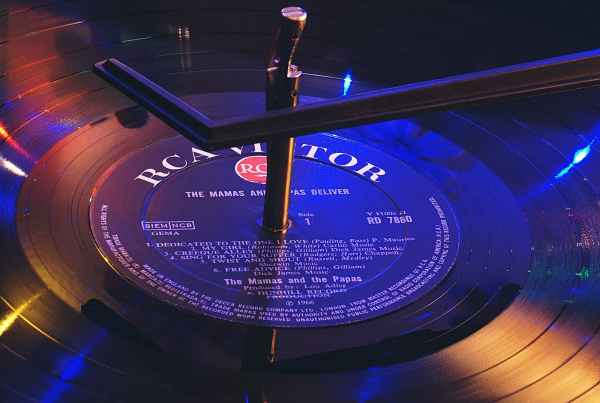
I know by writing this, I’m dating myself a bit, but when I was younger (MUCH younger!) we used to listen to a Hi-Fi stereo system. It was a piece of furniture, made of wood, complete with legs and fabric-covered speakers, and it had an enormous hinged cover that had to be locked into the “open” position or it would slam shut as your head and upper body was “inside” trying to adjust the settings! It had a turn-table for records, an AM/FM radio, and even storage for albums and other gear. It stood proudly, if awkwardly, in the living room or family room, off to the side of the other large piece of entertainment furniture, the giant television set, complete with rabbit-ear antenna. Hi-Fi stood for “High Fidelity”, reassuring us that the sounds issuing from this box were as close as we could get to “being there” for concerts, broadcasts, and other recordings. Our model was “old school”– there was no remote control, no way to record in any other medium (no tape deck or USB port), no “pause” or “mute” function– all the knobs and buttons and “arms” had to be operated by hand.
Today, we have “Wi-Fi”– a word that looks and sounds very much like the earlier “Hi-Fi.” Many people think that Wi-Fi probably stands for “Wireless Fidelity.” I looked it up– the “Wi-” does stand for wireless, meaning that information is transferred via radio waves, eliminating the need for a wire or cable connection. But the “Fi” part does NOT stand for fidelity (or anything else, exactly). It is simply a brand name for a particular wireless protocol See more about the definition of Wi-Fi here. Still, wireless communications, including cell phone service and internet, has radically changed our world, making it possible to connect with virtually anyone, anywhere, any time. It is a marvelous innovation with potential for great good. In our world and culture of global communications, we rely on Wi-Fi or wireless connections every day. We use them for information, entertainment, business, and social networking. I rely on it for this blog.
High Fidelity Prayer (as I see it) is consistent, daily prayer. Faithfully coming before God and seeking His face. Some may use a rote prayer for grace, or bedtime prayers, matins, or other standardized prayers. Others may set aside a daily time to pray–15 minutes in the morning, or an hour after breakfast, or even 10 minutes before bedtime. Some people set an alarm to pray at a certain time each day. Many even make a habit to pray with a group once or twice a week. To some, this type of prayer may seem passe, outmoded, old fashioned–after all, if God already knows our every thought, why does it matter if we pray every day or meet with the same group? It matters because fidelity matters– faithfulness, even in the “small” things, matters to God.
High Fidelity Prayer may seem awkwardly placed in the middle of our “living room”–forcing us to take time; to make and keep a commitment; to face questions or ridicule–it may seem clunky and wooden at first, even scratchy and hard to tune. And it depends on being “plugged in” to our power source! Hi-Fi prayer is meditative, deliberate, and worship-focused. We should be careful, however, of making Hi-Fi prayer a relic. Many Hi-Fi stereos from “my day” are now collecting dust, or being used to hold plants or books! Hi-Fi prayer must be practiced– even in an age of Wi-Fi lifestyles– if it is to do us any good.
Wi-Fi Prayer is not the opposite of Hi-Fi Prayer. It is not “wrong”, or illegitimate. In fact, it is great to know that we can talk to God anywhere, any time, for any reason. Wi-Fi Prayer (again, as I see it) is spontaneous prayer that is poured out to God “in the moment”. It can happen as you are driving or walking down the street (just don’t close your eyes!) It can happen alone or with a group. It can happen in response to something you overhear on a bus or a train, or read in an e-mail, or hear on the news. It is not a substitute for Hi-Fi Prayer, but it is certainly a healthy addition to it.
But Wi-Fi Prayer, just like Wi-Fi communication, can be taken for granted. Wi-Fi prayers can become “small” and “hand-held”– things we bring before God because it seems like the thing to do. We tend to put little thought, and even less grammar, into our wireless messages; we sometimes put little thought, and even less doctrine, into our Wi-Fi prayers, relying on common phrases that sound religious, but lose meaning. “Jesus just be with _____________ during this time”, “put a hedge of protection around ________________”, “I’m just claiming your promises, Lord.” There is nothing “wrong” with any of these statements, but what do we really mean? Isn’t Jesus always with us? Why is protection always a “hedge”? Which promises are you claiming? Again, there is nothing wrong with any of these phrases, and we know that the Holy Spirit can understand even our deepest utterances and wordless groaning. But just like auto-correct can mess up the simplest message, so our auto-pilot praying can mimic real communication with our Lord and Creator. There are entire comedy routines built around this kind of praying– but it creates an uncomfortably convicting kind of laughter. We should not be shamed out of Wi-Fi prayer, but we should also be careful not to let our prayer lives become a joke. Thankfully, God listens to our hearts and not just our words!
Hi-Fi or Wi-Fi, prayer is a sure connection to a faithful God.
On a final note, whether we have to turn down the knob or hit mute, there is another important “sound” principle of prayer– LISTEN! There have been some voices mocking this element of prayer, claiming that those who claim to “hear” from God are hallucinating or just plain crazy. God rarely ever speaks aloud and directly to an individual–even Jesus, while He claimed that He only did what His Father “told” Him to do– never claimed to hear the audible voice of God telling Him what to do or where to go next. There are only a few recorded instances of anyone else “hearing” the voice of God directly throughout history. But there are countless instances of people discerning the “voice” of God, and the leading of the Holy Spirit throughout the ages. How? Often through changes in circumstances, other trusted voices, new insights into scripture, or the “still small voice” of their own conscience giving confirmation. One caveat about “listening” for the voice of God– it will NEVER lead you to contradict God’s own word or act in contradiction to His character.
We have a Hi-Fi, Wi-Fi kind of God–let’s keep in tune, log in, and listen!
We have entered the season of Advent, and as we prepare our hearts for the coming of the Christ Child, one of the first steps should involve quieting our hearts.
This can be difficult in the daily noise and bustle around us– particularly in this season! We have filled Christmas with sparkle and glitter; the ringing of bells and endless songs about reindeer and jolly fat men and decorated trees. But this is NOT Christmas– not yet. The bright lights of Christmas, the joyful songs of the angel hosts, all need a proper context. And that means a cold, dark night more than 2000 years ago. It means an emptiness. A heavenly silence that stretched over 400 years. Silence from heaven; silence in the earth; silence in the soul.
In silence, we ponder. We wait. We anticipate–perhaps even dread– what may come. What will God say when He finally speaks again? Will it be judgment–severe, holy, deserved, undeniable? Will it be condemnation? Will it be that final pronouncement of God’s Holy Sovereignty, and our utter failure to measure up?
The joy of Christmas comes, not because of seeing light shows and snow glistening on trees, or listening to jingle bells and laughter. It comes from knowing that God’s Word is Peace! It is reconciliation and restoration. It is Freedom and Victory over Sin and silence and eternal Death! It is not first felt in the blaring of anthems and resounding of carols. It is in the soft cooing of new Life coming into a dark and silent world. Of everlasting love being wrapped in rags and gently laid in straw.
God delights in turning earthly things upside-down. And so He comes to us, not with fanfares and regal procession, but in stillness and gentleness, in the middle of a dark and silent night.
“Social Distancing” is the latest buzz-phrase in the media. With the spread of COVID-19, governments and health officials are asking people to avoid meeting in groups, avoid physical contact, and keep our distance from those outside our immediate family. Those who are most susceptible to the disease are being asked to self-quarantine; those who contract the disease are put in isolation. This is causing many people additional suffering, because they feel alone and even abandoned.
But God assures us that He will never leave nor forsake us. No matter how “distant” we may be from others, God is always with us– ALWAYS. Prayer does not summon God to our side, or capture His focus and attention from someone or something else. Our God is omnipresent and omniscient– He know our every thought; He is with us through every moment and every breath.
So why do we feel so alone and frightened at times like these?
Disaster, disease, hardship– especially when they come unexpectedly or develop rapidly– remind us that we live in a fallen world. We KNOW our world isn’t perfect. We know that life is fragile. We know that health and comfort are not guaranteed. But sudden tragedy leaves us unable to deny that our world is broken and we cannot, by our own efforts, fix it. We expect that God’s presence means God’s perfection will surround us, protect us, and shield us from the reality of Sin and its consequences– including the reality of Sin in the natural world around us. Hurricanes, earthquakes, infections, climate change– God allows them to happen. They will continue to impact our fallen world until God chooses to step in and put a permanent end to them. But He is still here WITH us through the storms and sicknesses and trials of life.
God’s voice is often gentle and comforting. Panic and fear are loud and insistent. We will hear the voice we focus on most. God whispers in our ear if we are listening to Him– if we concentrate on spending time with Him. How much of my time today was spent in Scripture and prayer? How much of it spent listening to the news or reading FB posts full of anger and confusion?
Sometimes, in the good times, we pay God lip service; taking for granted that He is there, but not acknowledging His presence. Sure, we say that He walks with us (or we walk with Him); but we don’t take a moment to look up and see where He is leading us. Instead of being close to God by following our Shepherd, we are close to Him because He is chasing us down to bring us back to the right path. He is right there, but in our panic, we don’t see Him, because He is no longer leading us.
Fear and panic draw our attention inward. It’s one of the reasons “social distancing” causes emotional distress. We are social creatures, but our focus is easily drawn inward, and more so when there seem to be no other people around. Our own thoughts, fears, and questions grow bigger– enough to consume us if we are not careful.
Pray. Pray some more. Pray without ceasing! (2 Thessalonians 5:17)
Let God speak– meditate on God’s word. Meditate on His names and His character.(Psalm 19) Seek out websites that magnify God. Call or e-mail friends who can pray or praise with you.
Sing! Worship the God who is bigger than any crisis we may face. Sing at the top of your lungs– if you are alone, there is no one else to hear you, but the one who adores your “joyful noise” (Psalm 100)
Encourage others– Be the reminder that someone else needs today. (1 John 4)
In Jesus’ Sermon On the Mount (Matthew 5-7), Jesus listed what have become known as “The Beatitudes”. Each phrase begins with “Blessed are..” or “Happy are…” (depending on the translation). The blessings are specific, but they are also reserved for those who do not appear to be due for blessings– the poor in spirit, those who mourn, the meek, the persecuted, those who hunger and thirst for righteousness. Each group seems pitiable, not suited for accolades and celebration. They’ve done nothing to deserve blessing. Yet Jesus calls them “Happy” and assigns them amazing gifts and blessings– not for their hard work or achievements, but because of their emptiness; their need and their ability to receive the blessings of God.
There are wonderful sermons and analyses and studies on the Beatitudes, but in relation to prayer, I want to look at this aspect. There are no blessings in the list for the doers– the movers and shakers, the revolutionaries and the organizers and life-changers. Throughout the Sermon, Jesus spends more time on attitude than on action–Murder is an action– forbidden by the Ten Commandments– but it is based on attitudes like hatred, disdain, envy, and rage. Clearly, Jesus does not want us to be unproductive or isolated from the needs of others, but our busyness, our stress, our huffing and puffing and scurrying about, does not impress Him, nor does it bring us the kind of happiness only God can offer.
He gives the same emphasis when he discusses prayer– prayer is not about public eloquence or long strings of words or excessive emotional outbursts. In fact, effective prayer has little to do with who is praying, what words or word order or language they use, where they pray, or when they pray. It IS about how and why and TO WHOM they are praying. And the only active verb not assigned to “Our Father” is found in the phrase, “…as we forgive…”
God does not command us to pray seven times a day, or to have a prayer list a mile long, or to pray only when we are in great need. He wants us to “pray without ceasing”, not as a recurring action, but as a constant state of being aware of and responsive to His presence.
I have a niece who spent several years in dance. When she was a beginner, it was both comical and sad to watch as she and many others agonized and counted the steps out as they performed– often getting all the right steps, but a slight beat ahead of or behind the music and/or the other dancers. But what a delight to see the development of young students into graceful dancers– seeing the transition from just doing the right steps at the (approximate) right time to internalizing and coordinating the music and movement into art.
I have friends who are runners, and while I don’t run, I have watched those who do…there is a difference in the stride, the posture, and the face of someone who is “a runner” and someone who is just “running.” It’s not the action, but the attitude that makes the difference.
Prayer is a gift; a privilege; a sacred meditative conversation with our Creator, Our Father, and our King. I don’t want to just pray– I want to BE in Prayer!
Our church held a hymn-sing and ice cream social last Sunday. It was an informal evening service, but we heard testimony of the power of hymns to shape our worship, and to help us remember scripture’s promises. We also had the chance to just “call out” a favorite hymn to sing together. We probably sang 15 or 20 hymns that night, and each one had special meaning to many in the congregation. We treasure certain songs, certain verses, certain stories– they feed our soul, encourage our heart, steel our thoughts, and pour balm on our wounds.
One hymn we didn’t sing the other night, though it is a favorite of many, was “Sweet Hour of Prayer.” Sweet Hour of Prayer– lyrics and much more here In getting ready to post for today, I thought about this hymn. We treasure the thought of prayer being sweet and bringing relief, but do we treasure prayer enough to spend an hour or more at it? If I add up the time spent in morning prayers of devotion, grace at mealtime, evening prayers, and “quick thoughts to heaven” throughout the day, it probably adds up to an hour…but I spend more time writing about prayer each day than I actually spend practicing it. And when was the last time I got so caught up in prayer that I lost track of time and spent over an hour at it in one sitting?
In the Sermon on the Mount, Jesus warned that we should not lay up treasures for ourselves on earth, but to store up treasures in heaven, “For where your treasure is, there will your heart be also.” (Matthew 6:21 KJV) This is true of our material treasures, but also our spiritual treasures, our thought treasures, and our time. When I hear “Sweet Hour of Prayer,” one of my first thoughts is always, “That would be nice, but I don’t have an hour to spend praying– I’d never get anything done!” But would I have said that about watching my favorite TV show? Spending an hour on Facebook or shopping at my favorite store?
God is beyond time– he’s not counting the hours, minutes or moments we spend with Him. But he feels our absence and our distraction just the same. He isn’t trying to pull us away from important things to waste our time– he wants to pull us away from the things that weigh us down, worry us, haunt us, and eat up the precious time He has given us.
I have found that when I feel “too busy” to spend time with Jesus, it’s a good time to pause and make time for prayer. When I do (and it’s not as often as I should), three things happen:
I want more! That time refreshes me, calms my spirit, and removes the burden of worries, failures, and frustrations.
I accomplish more–maybe it’s a case of God re-ordering my other priorities; maybe he just gives me the power to work more efficiently; maybe it’s a miracle–but I find that the “time crunch” I worried about seems to melt away.
Jesus becomes “more” to me– I grow closer to Him, and closer to the person He created me to be.