How Will You Be Remembered?

Today would have been my paternal grandmother’s 118th birthday. I have many memories of my grandmother, and I wish more of them were pleasant.

I remember dreading time spent at Grandma’s house. She wasn’t a horrible woman, but she was not peaceful or kind or warm. Her house was small and dark, with cobwebs and dust bunnies in the corners and under furniture. There were very few toys, and most of them broken. Grandma always wanted my sister and I to be still and silent, and I always had the feeling that she dreaded our visits as much as we did. I had a cousin who loved it when we came over, because she was just a bit older and an only child. If the weather was nice, Grandma would send us all outside, and my cousin would dare us to climb trees, or jump over a pit or some other physical (usually dirty and dangerous, too) activity. When we came in, Grandma would frown and comment on how dirty and sweaty and noisy and un-ladylike we all were.

Photo by Anna Shvets on Pexels.com

Growing up, I didn’t think of Grandma as someone who had ever been young, and noisy, or happy and excitable, or awkward and easily hurt. She seemed to have been perpetually old and cranky and bitter. In hindsight, I can see how circumstances– being the middle child of seven living on a farm; starting her married life living in with a bossy sister-in-law and verbally abusive father-in-law; losing her husband when he was only 50–had been allowed to shape her character in negative ways.

Photo by Karolina Grabowska on Pexels.com

There are some pleasant memories, and I cherish them. Grandma was a good cook. She made wonderful chicken dinners, and a strange candy out of mashed potatoes and peanut butter. She always had cold tea on a hot day. I knew that she loved my dad, and that she could be proud of us, in her own way. I was sorry when she died. Sorry that I hadn’t made more of an effort to know her better. Sorry that she had chosen bitterness, and that I had chosen to stay distant from her.

I write all this, difficult as it is, to say that Grandma–both her good and bad qualities–lives on in my memory as someone I would not choose to be. I don’t want to grow old like her. I don’t want my family members to dread spending time with me while I live, and dig deep to remember something good about me when I’m gone, or justify my bitterness and negativity.

Photo by Nishant Aneja on Pexels.com

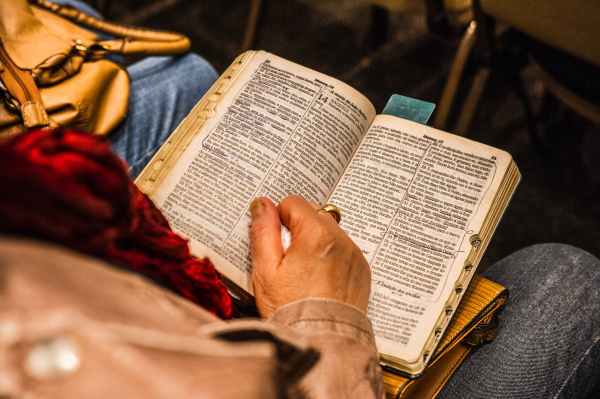
My grandmother claimed to be a woman of faith. And it is not my place to be her judge. But I saw very little evidence of faith in her daily life. I cannot remember ever hearing her pray. She did not attend church. She had a Bible, but I never saw her reading it. Her better qualities, and her walk with Christ were overshadowed by rancor, bitterness, anger, hurt, and pettiness. I do not want that to be my legacy. I want people to know, not just from my words, but in my actions and choices, that God’s love lives in me, brighter and stronger than memories of Grandma.

Photo by Andrea Piacquadio on Pexels.com

Shortly before her death, I ended up spending an afternoon with Grandma– just the two of us. She had moved into a small apartment in town, and somehow, it transpired that I had to be in town on Saturday morning for a school event, and no one could pick me up until that evening. We were forced to keep company. It began awkwardly, but as we talked, Grandma opened up about her childhood, her love of music, and more; she asked about my time at school and my love of history. It is the single most pleasant memory I have of her, and I wish there had been more afternoons like it; more afternoons to bond; more afternoons to cherish, rather than dread.

After her death, I learned a couple of things about my grandmother– things I wish I had known earlier. I found an old copy of her high school yearbook, which contained a story she had written. Grandma’s story was full of wonderful details and imaginative characters. She was a writer– and I never knew! I also found out that Grandma not only loved music, she was a singer– an alto, just like me. At some point in her life, she stopped writing, and she stopped singing. I hope that, even if I never saw it or heard it, that she never stopped praying. And I hope that when I’m gone, those who remember me will never have to wonder if I sang, or wrote, or prayed.

Photo by Edu Carvalho on Pexels.com

Miniature Joys

Life is full of “big” things–birth, marriage, death, buying a house, losing a job… But it is also full of small moments– a quiet smile, a child’s laughter, the smell of new rain, a cup of cocoa.

Photo by Pixabay on Pexels.com

Often, we let the “big” things overwhelm us, and we miss the miniature joys all around us. I was reminded of this over the past weekend, as we were able to spend time with various family members– many of whom we had not seen in months because of the pandemic. Of course, some of the “big” topics came up in conversation– COVID-19, riots in cities around the world, frustrating job situations, ongoing health concerns, and so on. But the miniature joyful moments–sharing silly memories and laughter, noticing how much the teens have grown, sharing a meal, hearing familiar voices–these are the things that stay with us and sustain us through the “big” things.

Photo by Biova Nakou on Pexels.com

One of the weekend activities was a birthday party for our granddaughter. It was a smaller gathering, and limited to family members, so there were no young girls for her to play with. All her siblings and cousins are boys, and the grandparents outnumbered the children. We sat outside on the hottest day of the year (so far), and sang “Happy Birthday” and watched her blow out candles on a small cake. And we made a promise to phone our granddaughter on her “actual” birthday two days later.

Photo by Pixabay on Pexels.com

Two days later, we had a busy day– we were running errands, and spending time with my niece and nephew. We had appointments and important phone calls to make, and e-mails to answer. We almost forgot about our promise..but our granddaughter had not. When we stopped our “big” plans, sat down and made the promised phone call, the joy in her voice was enough to light up a hundred candles and shine brighter than the sun. Such a little thing. We had already wished her a happy birthday, given her gifts, and shared her birthday cake. But in keeping our “small” promise, we shared something priceless. There is a bond of trust and love that makes the small moments vitally important in our relationships, and in our own character development.

Photo by Pixabay on Pexels.com

And the same can happen in reverse. In the book of Jonah, God sent a gourd vine. Such a little thing, and Jonah had done little to deserve it. But God sent it just the same. A tiny bit of shade to comfort Jonah in his bitterness while he watched his enemies receiving God’s grace. Several thousands of Ninevites saved from destruction v. Jonah being saved from the heat of the mid-day sun–it seems like a ridiculous comparison. But in his selfishness and anger, Jonah missed the obvious. Yet God still provided–extravagant grace to Nineveh; the grace of a gourd for Jonah. When God caused the gourd vine to be destroyed, Jonah’s reaction was fierce and extreme. He could not find joy in Nineveh’s salvation; he couldn’t sustain joy in God’s gracious gift of the gourd vine. All he could feel was the anger and bitterness. After all, isn’t it possible that some of the very Ninevites who had been spared would have been glad to offer shelter to the prophet who had brought them a timely warning? What kind of joy and healing might Jonah have experienced in the company of his former enemies?

Photo by Pixabay on Pexels.com

Lord, please help me to rejoice in the small moments, and see Your glory in the miniature joys of life. Open my eyes to see past the “big” things in life, because I know that You are bigger than all of them. Thank you for restful moments, and fleeting pleasures; for glimpses of Glory, and poignant snatches of memory; for grins, and sips of cold water on a hot day; for old photographs, and new snapshots; for Your faithfulness, and Your mercies, which are new every morning!

Photo by Shohei Ohara on Pexels.com

I Love to Tell the Story

I’ve mentioned this before, but many of my childhood memories of church revolve around old hymns, sung with more gusto than musicality– joyful noises, just not always faithful to the notes. But they were faithful to the Word, and the Worship of Christ. I will always be grateful for that heritage.

Photo by Pixabay on Pexels.com

In the more informal services on Sunday nights or Wednesday nights before we settled in for prayer, the worship leader would often ask for members of the congregation to call out the number of any random hymn. We would (attempt) to sing it, often a capella, just the first verse, or maybe the first and last. It gave people a chance to sing an old favorite, or a hymn we hadn’t sung in awhile. Sometimes, a brave soul would find a “new” hymn– one no one (or almost no one) had ever heard. Occasionally, the evening church hour would revolve solely around this worship model– a hymn-sing service. It’s a dying practice, and one that deserves to be preserved. My church has done it a few times over the past years, a local chapel does it once a month, and Bible Study Fellowship in our area begins with hymn-sing every week. It’s a great way to learn old hymns, long-forgotten choruses, and treasured truths of doctrine set to music.

Photo by Luis Quintero on Pexels.com

But I digress. As a child, I liked this spontaneous activity, except for one thing. I knew that if Mr. Teeter opened the hymnal and started to clear his throat, that he would suggest the same hymn he always picked. It never seemed to vary– ever. Mr. Teeter was one of the older men of the church. He was in his seventies, short, with wisps of white hair, wise and twinkling eyes, and a big, red nose like a strawberry, which he often blew–loudly–into his pristine white handkerchief. He always came to church in a suit, complete with a hat, which had its own special spot on the hat rack in the entryway. I could not imagine him any other way. And every time he had the opportunity, he would choose to have us all sing, “I Love to Tell the Story.”

I wasn’t much impressed with the song. It seemed old-fashioned. It was simple. It had no soaring musical passages– sometimes, it even sounded whiny to my young ears. I dreaded the thought that we would sing it (yet) again. I would try to get my hand up and choose another hymn, any other hymn, before Mr. Teeter could clear his throat. I did not understand why he never seemed to want to sing other hymns– I knew he liked “Standing on the Promises,” “Blessed Assurance,” even “Leaning on the Everlasting Arms!” But, while he could be stalled for one or two other numbers, he would eventually call out the dreaded number, and we would sing at least one verse. It’s not that I hated the song, and I certainly had respect for Mr. Teeter, but I just couldn’t figure out why THIS song? Why EVERY time?

Photo by Pixabay on Pexels.com

Just a couple of years before his death, Mr. Teeter gave his salvation story in front of the church. Many of us had never known about his wild early years; his drinking or his rebellion against his family and the church. Many of us assumed he had always lived a quiet, rather pious life. He radiated the peace and wisdom of a man who walked daily with his God. And then, he told of his fascination with this old hymn. He liked the very simplicity of it–his life wasn’t based on some grand theological argument, or a complicated list of heroic actions he had achieved to win his salvation. His life–his born-again, wonderful, eternal life– was because someone had told him an old, old story, he had believed it, and that had made all the difference. That simple old story has been the same since the beginning– God made the world, mankind sinned and fell short of God’s glory, God sent His Son to pay the price of that fall, and Jesus’ death and resurrection allows anyone who believes to be adopted as a son or daughter of God. And though Mr. Teeter knew the old story inside and out, and lived it, he never tired of it. He was “hungering and thirsting” to hear it again!

Whenever I hear this song now (or suggest it), I think of Mr. Teeter singing with saints and angels, his quiet voice full of emotion, his eyes filling with tears of gratitude and worship, as he gets his request–“and when, in scenes of glory, I sing the new, new song, ’twill be the old, old story that I have loved so long. I love to tell the story; ’twill be my theme in glory to tell the old, old story of Jesus and His love!”

Blog at WordPress.com.

Up ↑