Adonai–LORD

I’m choosing to focus for a few posts on the Names of God– titles, descriptions of His Character–that we can (and should) use in thinking about and praying to God. Today, I want to look at the term LORD, or Adonai, and what it signifies.

In English, we use the word “lord” to refer to someone who has power or authority over something– think “Lord of the Rings” or “lord and master”– someone with the power to control. In Hebrew, the word “Adonai” also means “Lord”, but in the plural form, denoting special respect or reverence. In the Bible, when we see LORD (in all capitals), it refers to the ONE who has power over all things– THE LORD, or MY LORD. (For a more detailed explanation, see https://www.christianity.com/wiki/god/what-does-adonai-mean.html)

There is an interesting passage in Jesus’ Sermon on the Mount in which Jesus uses the term “Lord.” He warns that not all those who use the phrase, “Lord, Lord” will enter the Kingdom of Heaven.

21 “Not all who sound religious are really godly people. They may refer to me as ‘Lord,’ but still won’t get to heaven. For the decisive question is whether they obey my Father in heaven. 22 At the Judgment many will tell me, ‘Lord, Lord, we told others about you and used your name to cast out demons and to do many other great miracles.’ 23 But I will reply, ‘You have never been mine. Go away, for your deeds are evil.’ (Matthew 7:21-23 The Living Bible)

We can use the name “Lord” and still not understand how fully Sovereign and Holy He is. When we acknowledge Jesus as “Lord”, we may simply mean that we think of Jesus (and the Father) as a “Lord” over certain aspects of our lives– He controls the weather, or we can pray to Him to change our present circumstances or make someone else do what we can’t make them do. But Jesus is not just a “Lord.” He is THE LORD–He is Adonai. This name (when printed in all caps) is often used as a substitute for the given Holy Name of God (Yahweh or YHWH). It IS who He IS– the One LORD over all creation. The One who is the Master of ALL. If we call Him, “Lord,” but ignore what He says, and only turn to Him as a last resort, or use His name only to sound Righteous, we are literally taking His Name in Vain and breaking the third Commandment!

What amazes me is that THE LORD of the universe wants to hear from me! He has no need of a relationship with me; there is absolutely nothing that I can bring to Him– even my obedience is only an acknowledgement of who He already IS, and the power He already has over me. He CAN make me obey Him; He has the power to circumvent my will and impose His will upon it. Yet, He chooses to ask me to follow Him; He not only tells me to obey Him, He tells me why and how! And He gives me the power (through His Holy Spirit) to do it!
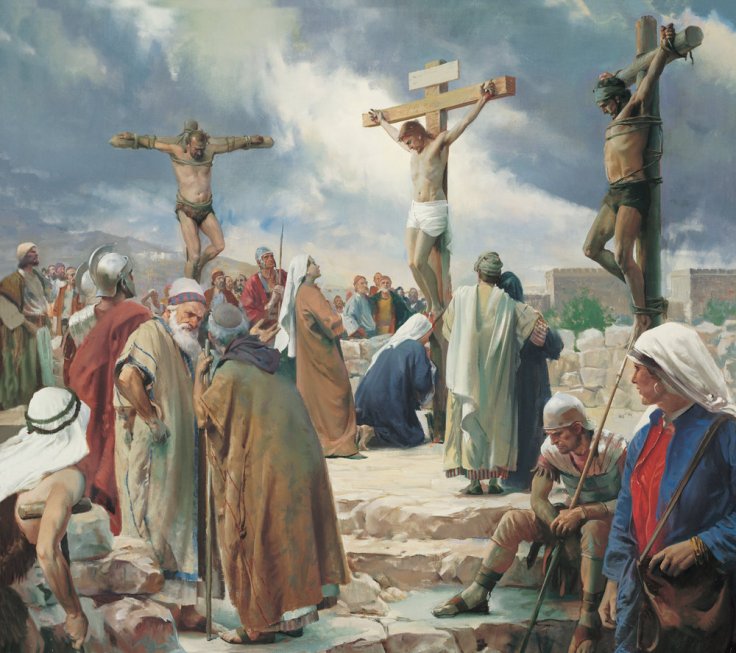
God is ADONAI– He is THE LORD! And He is patient, compassionate, and humble. When Jesus came, lived among us, and died on the cross, it wasn’t because any of us deserved His substitutionary sacrifice for our Sin. It was an extension of His nature AS “LORD.” And isn’t that worth a prayer of worship today!

Forgetting the Names of God

My given name is Lila June. I was named after my great-grandmother, Lila, and my aunt, Ila June. I have never used a nickname or my middle name, but my Aunt June rarely used her given name of Ila. In fact, she used it so seldom that she forgot it. Not literally forgot that it was her name but forgot that anyone might use it to refer to her. She and her husband lived on a series of Army bases, and when she went to the doctor’s office, they used the name on her official paperwork. A nurse would come out and call for Ila to come back to see the doctor. Startled at first, she looked around the waiting room to see who else could possibly have the same unusual name– only to hear the nurse call for Ila Mellinger! SHE was the Ila being called. But it took her a few moments to respond.

I was reminded of my aunt, and her name, this week. On my Facebook feed, there was a short video by a pastor. In the video he was lamenting that, in his view, the modern Christian church is so focused on practical Christian living– on good deeds and kind words; on outreach programs and building projects– that we have lost sight of WHO GOD IS! We serve the church; we serve the community; we serve our own notion of what makes us “good people,” but we do not serve God, because we don’t really know Him.

He was placing much of the blame for this on other pastors and institutional leaders– saying that they were at fault for not teaching the names of God. I’m not sure I totally agree with him. I think there is some merit in what he said, but ultimately, when I stand before the throne of judgment, I’m not going to be asked whether my pastor taught me the names of God. I will not be asked how much I knew ABOUT God. I won’t even be asked whether or not I know God–I will either hear that my name is in the Lamb’s Book of Life, or it isn’t! My pastors might face judgment for how true they were in teaching the Gospel, but my mission is to know God experientially. It is MY job to learn who God is, and to follow Him— to trust and obey Him.

But I DO agree that modern churches spend less time on this subject than I remember in my church growing up. Not because we spent so much time on the list of individual “names” of God, but we spent more time in worshipping God for WHO HE IS, and not for what he’s done for me, or what I can be doing for Him, saying about Him, or “identifying” as a Christian, a Christ-follower, or a Believer (and all the tiny differences in meaning that those terms might have).

Part of that comes from the habit of studying the Bible as a narrative. We used to study the “patriarchs” of the Old Testament, the “red letter” words of Jesus Christ, and the letters and “acts” of the Apostles. In fact, it is no longer politically correct to even use words like “patriarchs,” and out of fashion to teach the Bible as historical fact. But there is a value in studying this way– not because the characters are mostly men, or even because they are “heroes of the Faith.” It is important to study them precisely because they are so flawed and broken and in need of a Savior– just as we are! And as they encountered God or walked with Jesus, they saw Him– and NAMED Him– for all of His attributes.

In the Old Testament, He is Yahweh, Jehovah, the LORD. He is Almighty. He is the God who sees, the God who hears, the God who saves, the God who provides, the God who saves, the All-sufficient One, the Lord (who) is my Shepherd, the Most High God, the One whose name is a Strong Tower, the Everlasting God and the Lord of Hosts, among others. Jesus, the promised Messiah, also has a host of names, including Wonderful Counselor, Mighty God, Everlasting Father, Prince of Peace, Lion of Judah, Son of God, Son of Man, Emmanuel, Light of the World, the Living Word of God, Savior, Master, Redeemer, Rabboni, the Bread of Life, the Living Water, the Lamb of God, the Risen Lord, the Alpha and Omega, and many more. What a rich picture of God we get from His Names!

I also remember the old hymns and worship songs doing a better job of helping us to see the God of the Bible. I know we have modern worship songs that include God’s many names and attributes, but others seem to concentrate, not on who GOD is, but who I AM because of God–I’m forgiven, I’m a Child of God, etc. I miss the old hymns that remind me that God is a Mighty Fortress, He is my Vision, my Blessed Redeemer, the Rock of Ages, whose grace is Amazing, and whose Love is “greater far than tongue or pen could ever tell!”

I don’t want to “forget” any of the many titles and attributes of my Father, His Son, or the Holy Spirit. When I lose track of them, I am less likely to worship, less likely to obey, and less likely to turn to Him first in every situation. As we close in on Easter this year, I want to spend some time looking at some of His many Names. But for today, I want to take a deep breath, and worship the one who is “worthy, O LORD, to receive Glory and Honor and Power” (Revelation 4:11).

You-nique!

Have you ever read through a passage in the Bible and been astonished, or even annoyed, at the long lists of names? Genesis, Chronicles, Ezra, even some of Paul’s letters contain genealogies and long strings of names– people whose life stories and deeds we will never know. Yet they are included in the greatest story of all time! God knows each name. He knows who they were, what they did, their hopes and dreams, their fears and disappointments– even the number of hairs on each of their heads!

“And the very hairs on your head are all numbered…”– Jesus Christ in Luke 12:7a (New Living Translation)

God knows you in the same intimate way. In the entire history of the universe, and in all the future years to come, there has only ever been, and only ever will be ONE of YOU. Your fingerprints, your retinas, your DNA are all unique to YOU. Even if you are a twin or triplet– even if you are the “spitting image” of one of your ancestors or relatives, NO ONE else can ever share your life story. Even if you were cloned, and there was another person who shared your exact physical nature, they would not share your soul– your thoughts, emotions, ambitions, griefs, and experiences.

And you are uniquely qualified in prayer. No one else can share your thoughts and feelings, your praises and confessions, your requests or petitions. Thirty people can pray for the same situation, the same person; there will be thirty different prayers! Even if you say the same words, or stand in agreement with another’s spoken words, you will not pray with the same exact thoughts. Your heart-cry is different from everyone else’s.. and God hears and understands each unique prayer. Out of all the prayers rising to heaven every second of every day, God can distinguish and delight in YOURS!

Some days it is frustrating to feel like “just another number” or “lost in the shuffle” of other people waiting in line, or trying to conduct business over the phone, or scrolling though social media. But you are never just a number to God. He knows your name– he has known it from eternity past! Your prayers are not put “on hold,” or filed away for later review, or answered with a form letter. God is personal– eight billion times over! He doesn’t just celebrate your uniqueness– He designed it!

What unique and amazing prayer will you pray today? How can you live out your unique personality and purpose this week? Who might be encouraged by your unique smile, your prayers, or your personal touch as you go through your day? Just remember, no one else can be you– no one else can show God’s character and His love exactly like you can! God didn’t send someone else to do what only you can. But He will be there each moment to help you do it– in your own YOU-nique way.

Attitudes of Prayer

One day, a minister arrived later than usual for the mid-week meeting at the church where he served. He heard raised voices, and found that several of his parishioners were arguing about congregational prayer.

Stan said the congregation ought to stand.

Neil thought they should all kneel.

Ima Bower insisted that everyone should bow their heads.

Mr. Folger thought everyone should fold their hands as well.

Ray Sands declared that his hands would be raised toward Heaven during the prayer.

Iris didn’t believe in closing her eyes,

Lydia Schutter disagreed.

Selma wanted to pray scripture.

Rhys thought it would be best to recite The Lord’s Prayer at each service.

Cy Lentz just wanted everyone to pray silently in his/her seat.

Gabby Orson wanted to pray in tongues.

Andy Holder wanted everyone to hold hands when they prayed.

Wanda Singh liked the idea of praying hymn lyrics.

Mary Lee liked that idea, as long as the hymns were upbeat choruses, and not somber old hymns.

Harry and Rush both championed short prayers.

Ruth Lesley insisted that all prayers be formal, written, and submitted to the pastor for approval.

Pastor Ora Freer was dismayed by all the bickering. When the room quieted a bit, he made a suggestion.

“I think we should cancel our midweek service tonight. While I have heard about many “Attitudes” of Prayer here this evening, I don’t think we have the right “Attitude” for prayer together at this time. Perhaps next week, we can talk about which of your methods would please God the most. In the meantime, you may pray at home in any “attitude” you choose.

The next week, only five people showed up for the midweek meeting. But they had one of the most refreshing and productive prayer meetings ever held at that church.

What matters most in prayer is not the attitude of our body, the volume or nature of our words, or the nature of our expression– what matters most is the attitude of our hearts. This is especially true when we gather together. Insisting on one “right” way to pray whenever we meet with others can get in the way of our real purpose, which is to meet with GOD. God wants to hear from us–and He wants to hear us providing support and encouragement to others, even in our pursuit of prayer.

He Knows MY Name

My first name, Lila, is not unique, but it is uncommon. Last week, when my husband and I got away for a few days for our anniversary, we visited a gift shop. I was excited to see a magnet with my name on it, so I bought it (though we don’t need any more kitchen magnets, and it was more than I would normally spend on such a trinket). My husband, David, on the other hand, has the opposite experience. He can be in a room with 20 people, and if someone calls out, “Hey, Dave,” sometimes three people will answer! He can find trinkets that say, “David,” “Dave,” and “Davey” almost anywhere.

Names can be funny that way. Almost everyone knows how to pronounce my husband’s name. And spell it. It’s a good name, a strong name– that’s one reason it’s so popular. My name is shorter by one letter, but almost no one spells it correctly– I’ve seen it spelled Lyla, Lilah, Laila, Leila, and Lily; and I’ve heard it pronounced Lee-la, Lay-la, Lill-a, as well as just misread completely as Lisa, Lilian, Lina, Lenore, Delilah, Lora, Mila…

Both David and I were named after other members of our families, and we have nieces, nephews, and cousins named David or Lila, as well. Our names have personal and family importance beyond just the normal meanings. Still, somewhere in the world, there are dozens of people who bear the same name (first, middle, and last) as my husband, while there may be one other who bears my same name.

God knows my name. He never misspells it, never mangles the pronunciation or gets me confused with someone else. And he knows “my” David, and never gets him confused with someone else or lumps him in with a group of other “Davids”. God knows why David and I were named as we were, and He knew the family members after whom we were named. He knows the names of our yet-unborn great-great-great grandchildren!

Jesus had twelve disciples. The Bible records that two of them were named James, two were named Simon, and two others were possibly named Judas. Jesus gave one of the “Simons” the new name of Peter’ the other was also known as “Simon the Zealot”. The two James were distinguished as “the elder” and “the younger” or “James the brother of John, and son of Zebedee” and “James the son of Alpheus.” Judas Iscariot was the disciple who betrayed Jesus to the authorities; there was another disciple, who went by the name Jude, or Thaddeus, or Judas the brother of James. Historians know little about “the other Judas”, and even the authors of the Gospels give different lists of names for the twelve disciples, given that some of them went by more than one name. However, Jesus knew each one from before they were even born.

Of course, God knows far more than just our names. He knows our every thought– before we even think it! God “gets” us–for better or worse. He knows our quirks and our capabilities. He knows our deepest shame, and our deepest fear; our greatest accomplishment and our most secret desire. Even more, God knows our future; He knows all that we could be and all that we will become (or fail to become). He knows “what might have been” if we had been born in a different time or place. He knows exactly how our decisions have affected us for good or ill, and how others’ actions have impacted our character.

There are nearly 8 billion people alive on this planet at the current time (7.9 billion estimated as of September 2021). God knows the name and dreams and histories of each and every one! And when we pray, we are not praying to someone whose knowledge of us is limited or determined by our relation to someone He knows “better.” Imagine God having 8 billion kitchen magnets with names on each one–even if there were 100,000,000 of them with the name “David,” God would know exactly which one belonged to “my” David. And God would not confuse mine with any of the millions of similar magnets saying Lily, Lisa, Lylah, Lola, Laura, or even “Lila.”

What an amazing God! What a privilege to call on HIS Name, knowing that He knows us so intimately and loves us so thoroughly!

“How Are You Today?”

I got a scam phone call the other day. The lady on the other end started the conversation by saying something like, “Hello. My name is Jane, and I’m calling from the Business Lending Department. How are you today?” Her voice was pleasant, and her question innocuous, yet my “radar” went off, and I hung up the phone, rather than answering her question.

Photo by Andrea Piacquadio on Pexels.com

Why?

Three things:

  1. I answered the phone by saying, “Hello” and the name of my little shop. It’s a business phone number, and I get many calls from customers, and from salespeople as well. Usually, as soon as I say my greeting, they jump right in with their request, or their name and request, i.e. “This is Sharon. I was in the other day, and I was wondering about…” or “This is Matt from (Name of my insurance agency), and I need to speak with you about a change in your coverage.” A business person may occasionally say something like, “I hope you’re doing well today.” or “Is this a good time to talk?” A friendly customer or a friend will often ask, “How are you?” or “How are things going?” But this was different. There was a long pause, which seemed odd, as though the call might be from far away. The phone number that came up on caller ID was not from a local area code and didn’t include a state listing or a company name (Pennsylvania or Wyoming, State Farm, or Citibank, etc.) This can happen with cell phone calls, but it can also be an indication that the call is coming from a hidden number. “Jane,” while she sounded pleasant, also sounded like she was reading from a script. “My name is Jane” indicated that she was not someone I would have met before, and “How are you today?” sounds like the opening line from a stranger’s sales pitch.
  2. I have read articles about scam calls. One of the first things they do is ask an innocuous question like, “Can you hear me, ok?” It seems like a simple, silly, harmless question, but if they ask you a Yes/No question, and you say “Yes,” they can record your answer and use it to “prove” that you agreed to a product or program by phone– even if you didn’t. “How are you today?” isn’t a Yes/No question, but it is the kind of question most people will answer without thinking, and it naturally leads to other seemingly innocuous questions, like “Can you hear me?” Call me hyper-cynical or super-suspicious, but these questions seem– from a complete stranger– like “set ups” to me after reading about how they are sometimes used.
  3. “Jane” is such a common and unassuming name. I have friends named Jane. One of my favorite novels is “Jane Eyre.” I love reading books about Miss Jane Marple, the unassuming, crime solving spinster of the equally unassuming village of St. Mary Mead. She was just “Jane.” Not Jane Torquist, or Jane Sullivan, or Jane Suzuki. And “just Jane” was calling from “the Business Lending Department.” Not the business lending department of a particular bank or business group. Not Wells Fargo, or Chase, or even a local banking chain. Not Visa or American Express. Just “the Business Lending Department.” Again, call me paranoid, but that set all my alarm bells ringing.
Photo by Andrea Piacquadio on Pexels.com

Now– what does any of this have to do with prayer? Bear with me, as I tell the “rest of the story.”

Photo by RODNAE Productions on Pexels.com

After I hung up, I felt bad. Hanging up–even when I suspected the call was far from innocent–seems very rude. “Jane” had been very pleasant. It felt churlish and even cowardly to hang up on her. I started stewing. I don’t like to think of myself as rude, churlish, or cowardly. After all, what would Jesus do, right? So I prayed for forgiveness, even though I wasn’t sure precisely what I had done wrong.

And God answered my prayer immediately. “Jane.” The woman had given her name as “Jane.” I have a friend named Jane who is going through a tough time right now. I have been praying for her for weeks. Had I prayed for her today? Not yet! God had sent me a reminder of my friend Jane via a scam call! Aren’t God’s ways mysterious and magnificent?! He also gave me a great idea to help me be at peace about the phone call. I thought, “if “Jane” ever calls back, I’m not going to answer her question, and play a passive role in the conversation. I will simply ask her what company she works for, and how SHE is today!”

And guess what! About an hour later, “Jane” called back. The call started exactly like the earlier call. The script was exactly the same– the same pause, the same wording. So when she asked, “How are you today?” I simply asked her, “which company do you work for? You said you are calling from the Business Lending Department, but which one?” And this time, SHE hung up! I had been right to be suspicious– right to stand my ground and not get involved in a scam– on any level.

Such a simple encounter, but so many lessons to be learned:

  • God answers “little” prayers; “awkward” prayers; He answers earnest and simple prayers when we just don’t even know what to pray or why. Things that seem silly (like whether or not I seemed rude or cowardly to a scam artist!) are never too silly or unimportant to take to the very Throne of Grace.
Photo by Engin Akyurt on Pexels.com
  • God uses simple things to call our attention to bigger things. This woman could have chosen any name, but she said her name was Jane, and I believe that was God-ordained, to remind me to lift up my dear friend– to move my mind from something silly, like a phone scam, to something infinitely more important, like thanking God for Jane’s friendship over the years, and sharing in her immediate concerns.
  • God teaches us to recognize authenticity– and insincerity–as we follow Him. My “alarm bells” went off almost immediately when I answered this phone call. Why? Even though “Jane” was pleasant, she didn’t seem authentic. She used words and phrases that seemed friendly and harmless on the surface, but the delivery just seemed “off.” The same thing can happen when I read an on-line article, or listen to an advertisement, or even get involved in conversations. God sends us a spirit of Discernment that is sharper than just “being savvy.” But it comes from Him– not our own intelligence or listening to “smart people.” I know this because I know people who are acknowledged as “intelligent” who fall for amazingly stupid schemes and make appallingly bad life choices, while others who are called “simple” avoid such things without even being able to explain how. It reminds me of a story about a famous pianist practicing a complicated piece. She was playing along and suddenly stopped, saying she had missed a single note. “How can you tell?,” asked her friend who was standing nearby. “Your fingers are flying over the keys. How can you tell that you missed anything. The piece sounded fine to me.” “But I practice hours each day. I’ve heard myself play this piece hundreds of times correctly. I know what it SHOULD sound like. And this time, I missed a note.” When we practice listening to God’s voice– whether in the Bible, or in our conscience, or in the advice of others, we learn to hear “what it SHOULD sound like!”
Photo by Juan Pablo Serrano Arenas on Pexels.com
  • God teaches us wisdom, and gives us “second chances” to put it into practice. Jesus faced malicious Pharisees who tried to trick Him with seemingly innocuous questions. They came to Him with polite but false flattery, and tried to catch Him “off guard.” Jesus generally responded by asking them simple questions in return– questions that often exposed their real motives. He didn’t lose His temper; He didn’t passively fall into their traps. He didn’t walk away without an answer, either.
  • God can use “bad” experiences to teach us good things. He is teaching me to recognize a “scam” when I start to hear it. But (hopefully) He is also teaching me to speak and act more authentically myself! How often do I ask someone “How are you today?” not because I actually want to hear the answer, but because it is the “polite” thing to do? How often do I ask seemingly harmless questions without thinking? My words can bring healing– or suspicion, harm, or confusion. Jesus asked some probing questions, but always with the intent of helping others see the truth.

Lord, I am so thankful for the lessons you give us– even in the simplest situations in the midst of our busy lives. Help me to listen for your voice– even when “Jane” is on the line. What an amazing and wise God you are!

Got Jesus?

In the beginning was the Word, and the Word was with God, and the Word was God. He was in the beginning with God. All things were made through him, and without him was not any thing made that was made. In him was life, and the life was the light of men. The light shines in the darkness, and the darkness has not overcome it, 10 He was in the world, and the world was made through him, yet the world did not know him. 11 He came to his own, and his own people did not receive him. 12 But to all who did receive him, who believed in his name, he gave the right to become children of God, 13 who were born, not of blood nor of the will of the flesh nor of the will of man, but of God.14 And the Word became flesh and dwelt among us, and we have seen his glory, glory as of the only Son from the Father, full of grace and truth.

John 1:1-5; 10-14 (ESV)
Photo by James Wheeler on Pexels.com

I memorized this passage as a child. And one part of this passage stands out to me today, because the wording of the verse has not changed, but our cultural reading of it has changed a bit. I remember churches, and evangelists, using the phrases like, “Have you accepted Jesus Christ as your personal Savior (or Lord, or Lord and Savior)?” “Are you ‘born again?'” “Have you asked Jesus into your heart?”

I know in certain circles these phrases are considered “old fashioned”, “evangelical”, and even offensive. Some of us don’t identify as Christians anymore– many of us prefer the term, “Christ-followers.” “Born-again” Christians are seen as hypocritical, overbearing, judgmental, and intolerant– even violent! And there are individuals and groups who give evangelical Christianity a “bad name” by their behavior.

Photo by Alex Green on Pexels.com

Evangelicals have a reputation for putting people’s backs up, and putting people “on the spot.” They want to know, “have you GOT Jesus?” As though Jesus is a product and you either own Him or you’re missing Him. Can you get Jesus at the corner store? Do you “get” Him the same way someone “gets” a virus? Is He infectious? Can you sell Him? Lose Him? Trade Him away?

The Apostle and Gospel writer, John, was an evangelical. He was keenly concerned that His readers, friends, listeners– basically everyone he met, GOT Jesus. He wasn’t trying to sell a product, force a certain doctrine down others’ throats at the end of a sword, or offend those he met. But he DID want to make sure that people didn’t miss out on the GLORY, the incredible WONDER, the eternal GIFT of LIFE that had lived and walked and dwelt among us.

Photo by Kyle Karbowski on Pexels.com

Today, there are many who claim to “follow” Christ– they have great respect for His teachings; they want to live a “good” and even “righteous” life just as Jesus did; they believe He was a great role model. But they haven’t “received” Him. They believe what they have heard about Him; they believe “in” Him, but they don’t believe “in His Name.” Truly becoming a “follower” of Christ is to become a “Christian”– willing to be called by His name and identified with Him. Not just as a wise teacher or a gentle soul, but as a sacrifice–despised and rejected, misunderstood– and obedient even unto death. Not just the physical death of a martyr, but the social death of an outcast, the death of selfish dreams and worldly success through compromise, the loss of relationships, property, status, freedom… John knew all of this first-hand. He was standing by during the trial and crucifixion of Jesus Christ. He watched as his brother and friends were beheaded, tortured, crucified upside-down, and driven into hiding. He spent the end of his life in exile for the privilege of being a “Christian.”

Photo by Gabriela Palai on Pexels.com

Calling oneself a Christian, or a Christ-follower, or “born again,” doesn’t mean anything in and of itself. I can call myself a doctor, or an artist, or a prophet. I may have studied medicine, or created a painting, or made a prediction and be completely hypocritical. I may end up giving a bad name to myself, and causing people to be cautious about other doctors, artists, or prophets. That doesn’t make THEM hypocritical, and it shouldn’t cause them to stop doing what they do well. What matters is not what I say I am, or even what others say about me, but what and who I demonstrate that I am. I want to let my words and actions declare my relationship to Christ. At times, I would like to avoid the ridicule and misunderstandings. I’d like to be able to distance myself from the “bad examples,” but, like John, I long to testify to the GLORY of the one I follow and trust, more than I want to justify my own self at the expense of others. Yes, there are some “fake” Christians, and some who are sincerely wrong in how they attempt to live– and if someone were to catch me in a bad moment on a bad day, and show only that moment to the world, I would be counted among them– but my goal is not to ask if others have a perfect track record, or if they know all the right Bible verses or even if they have the “right” answers. My goal is to ask, ” Have you GOT Jesus?” “Do you KNOW Him– not just about Him?” When you pray, are you praying to an aloof idea or to a personal Savior? If He called you, would you answer, or let it go to voice mail? Would you scroll through and “like” His social media posts, or would you actually DO what He said?

Jesus came. He walked among ordinary people. Crowds “followed” Him, hanging on His parables, excited about His healings, and impressed by His miracles. But very few of them actually became His disciples and “received” Him. But to those who did, like John, He gave them the privilege to be called Children of God– not because they were smarter or wiser or more righteous in their own knowledge or efforts, but because they were made new, “born” again, and transformed by their relationship with Him. May that be so for all of us!

“God Bless…What’s His Name”

In the movie, The Sound of Music, a young woman named Maria is asked to leave her life in a convent to become a governess of seven children belonging to a widowed Navy Captain. After a hectic first day, she settles in for her evening prayers. She lists by name all the people she wants God to bless; but as she goes through the unfamiliar names of the seven children, she realizes she has forgotten the name of the younger, “incorrigible” boy. After a short struggle, she simply asks God to “bless what’s his name.” That evening, a storm comes up and soon three frightened girls come running to Maria’s room, and happen to mention the boy’s name– Kurt. “That’s it. Kurt. God Bless Kurt!” A short time later, Kurt, his brother, Freidrich, and the other girls show up, and they all end up bonding and singing through the storm. It’s a nice movie scene, but it also teaches us a lesson about prayer.

Maria’s lapse reminds us that even when we try to include everyone, we often forget a person’s name, or forget one member of a larger group. Sometimes, we forget that we already mentioned someone else, and count them twice. It happens. When I was a teacher, even with my roll call list, sometimes I would make mistakes as I hurried through the task to get to a lesson. As I get older, I find it’s common for me to see a person’s face, and not be able to remember their name. And, disconcertingly, I often see a name and cannot remember the face! (“God bless Kurt…whoever he is.”)

Photo by Katerina Holmes on Pexels.com

God knows the weaknesses and limitations of our minds. While it would be irresponsible to pray “God bless what’s his name” every night, and never try to call Kurt by name, it is important to lift up the “what’s his/her names” in our lives, trusting that God knows their names, their needs, their hearts, and their unique place in His plans. The very fact that we remember some essence of their personality or presence is enough to make them worth lifting up to the one who knows them far better. And perhaps someone else, who has forgotten your name, but not your value to the Father, is lifting you up in this very moment!

Maria’s prayer also reminds us that it is important to pray for individuals BY name (when we remember). We can pray for nations, groups, civil and corporate bodies, and churches, but when we pray for individuals, calling them to mind and heart, we are continuing a prayer that stretches through time and around the globe. This prayer– this list of names and remembrance of faces and spirits– began with Jesus and His disciples, and continues unbroken over centuries. It is a single prayer, tying together brothers and sisters in Christ who are otherwise divided by language and distance, time, and tide. Children saying their bedtime prayers; aged saints at their morning devotions; mothers lifting up their precious children; fathers lifting up their neighbors; missionaries lifting up their persecutors–throughout generations–this prayer is a continuous offering, like incense, rising to the throne of grace.

Photo by Luis Quintero on Pexels.com

God Bless Kurt. God Bless Gretl, and Fabiani, Yayoi and Bruno. God Bless You. And God Bless “What’s-her-name.”

Prayers for the Nameless…

I keep a prayer journal. In it, I like to write the names of people I know and pray for– family, friends, neighbors, etc. For every day of the year, I have a list of people who are celebrating birthdays or anniversaries (if I know about them). And I also have a space where I list specific requests related to health or suffering, needs, grieving, and more.

But many times, I also get generic or “unspoken” requests–no names or specific details. And for every day of the year, I also have a place or region– a city, state, province, nation, continent, ocean, desert–for which I pray. Sometimes, this can be awkward. I don’t always know for whom I am praying, or for what outcome…should I pray for peace?..prosperity?..courage?..the weather?..the government?..

Photo by Olya Kobruseva on Pexels.com

So what is the point? Why not stick to more “focused” prayer? Why not pray for those things with which I am most familiar? Most comfortable? Most able to make or see a difference?

Because God calls us to pray. And He calls us to pray both for those people and things we know well, and those we can only hope to trust to Him. I don’t have to know WHY I am praying for Albania (beyond the fact that it is on tomorrow’s page of my prayer journal). I don’t have to know who lives there, or what the needs are. I don’t have to know, because God knows, and I am trusting HIM to know the who and the why, the how and the when.

The other day, I was reading in Genesis– the story of Noah, and the Ark. The Bible introduces Noah by giving us a genealogy: a list of the descendants of Adam through to Noah. And there is a curious side story about Nephilim, and giants, and wickedness. But there is something noticeably missing. The women’s names. Even in the story of Noah that follows, Noah and his sons are named. But not the wives…we know they are there in the Ark. We know they were saved from the flood. We know they were crucial to the survival and future of mankind, but there are no names. At other times throughout the Bible narrative, there are seemingly endless lists of names of people we are likely to forget–names like Peninnah (1 Samuel 1:2), Unni (1 Chronicles 15:18), Shelumiel (Numbers 10:18), Palal (Nehemiah 3:25), Tryphena (Romans 16:12), or Onesiphorus (2 Timothy 1:16).

Photo by Felipe Cardoso on Pexels.com

Names are important to the Lord. He knows each and every person’s name before they are even born. He knows the number of hairs on each person’s head (even the ones that used to be there!). But it is not necessary for US to know every name, every need, or every situation in order to lift it before our omniscient and loving Father.

So I will continue to pray for the nameless and the unknown. I will lift up unspoken and unformed requests to the God I DO know.

Photo by Oladimeji Ajegbile on Pexels.com

Another reason I continue to pray for the nameless is that it keeps my focus outward. One of the drawbacks of the modern and post-modern world is that the “smaller” our world becomes, the smaller our focus. I can connect, via internet, to people around the globe. I can look up statistics for any country or region; I can see news reports and video uploads in real time from nearly every corner of the world. But it can be frightfully easy to turn my focus on myself and those immediately around me, to the exclusion of those whose names don’t show up on my “friends” list, or those whose faces get lost among the thousands of videos, and Facebook Posts, and Instagram shots. It can be deceptively easy to depend on what I can “know” from a computer screen, and not to depend on what God knows to be true.

Let’s open our hearts and minds to pray for the nameless among us– near and far. They are not nameless to God, and they are precious in His sight. And somewhere, someone may be praying for “nameless” people in our nation, or city, or region– US!

Photo by Luis Quintero on Pexels.com

Name Above All Names

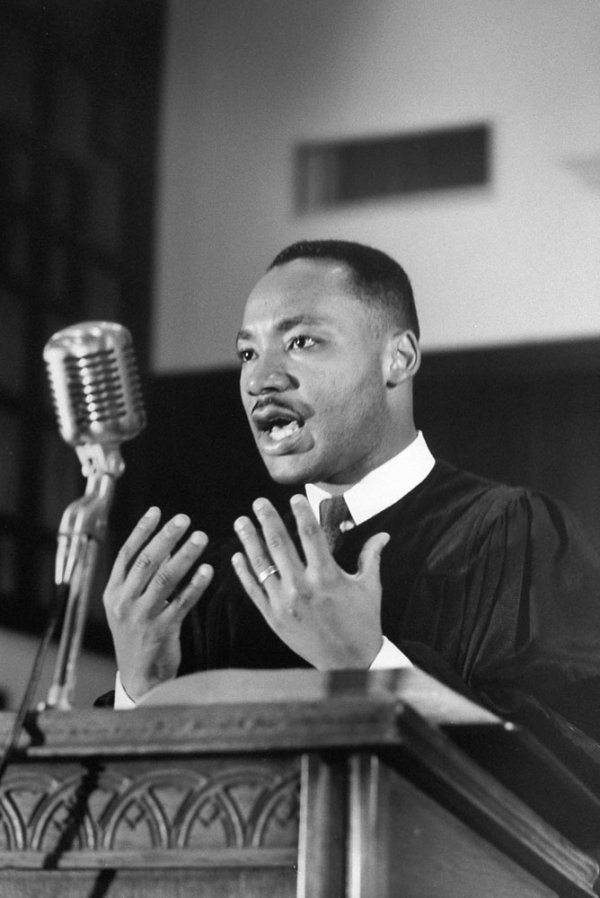
We live in a wonderfully diverse world, filled with unique individuals. One thing that defines us to our families, neighbors, and friends, is our name. Names can be tricky–some are difficult to pronounce, or spell. Some names are shortened or changed to form “nicknames.” Others are changed by circumstances, like adoption or marriage. Some names are common to several people, or shared as “namesakes” of others, or shared between generations, calling for additions, like “Jr.,” or “the elder” or “the fourth.” Some people reject the name they were given at birth, preferring to use an alias, or going through a legal process to change it. Some names have become symbolic, or stereotyped, famous, or infamous, or iconic.

Civil Rights activist Rev. Dr. Martin Luther King Jr. gesturing during sermon at Ebenezer Baptist Church. (Photo by Donald Uhrbrock//Time Life Pictures/Getty Images)

Even though many of us may share a common first name, or surname, (or even both), our name still represents who we are–it becomes a symbolic representation of all that makes us unique– our personality, our history, and our character. And it’s not just people who carry names. We name rivers and mountains, cities, houses, farms, cars, products, pets, works of art…the list goes on. It is deep in the human soul to name things. This is a God-given desire. All the way back in the second chapter of Genesis, God brought all the beasts of the air and land to Adam, to see what name he would give them. Adam and Eve chose the names for their sons– names with very personal meanings. Names are important and carry power; they should never be taken lightly.

Photo by Life of Wu on Pexels.com

God recognizes each one of us by name. The prophets Isaiah and Jeremiah both refer to God calling them before they were even born! Before the great judge Samuel even knew how to recognize God’s voice, God called him by name. God often changes names– Abram to Abraham, Jacob to Israel, Saul of Tarsus to Paul, the disciple Simon to Peter (or Cephas). One reason God changes names is to show His power to transform people and give them, not just a new name, but a renewed nature and spirit.

Photo by 3Motional Studio on Pexels.com

And when we talk to God, whose very name is sacred, He allows us to call on Him through the Name He gave to Himself/His Son– Jesus. There are many boys and men who carry this name, but when we pray in the name of Jesus, we are referring to the one and only Begotten Son of God the Father; the Jesus of the Trinity; Jesus the Virgin-born Messiah. HIS name is above all other names. There is power in every ordinary name, but THIS name carries eternal, sovereign, immeasurable power. It encompasses His holiness, His compassion, His wisdom, His goodness, His faithfulness, and His Love. There is no other name by which we are saved; no other name by which we can be made new. It is not a name to be taken lightly or in vain. It is a name to be honored, cherished, and exalted. JESUS. The name above all names!

Photo by Patricia McCarty on Pexels.com

Blog at WordPress.com.

Up ↑