A Drop in the Bucket

We had a leaky faucet the other day–drops of water dripping into the sink, “plink…plink…plink.” It was an annoyance. I put a container under the faucet to catch the water as it came out. It wasn’t a large container, but it filled up and had to be emptied, before it could overflow. It seemed such a waste; each drop just dribbling away to no good purpose.

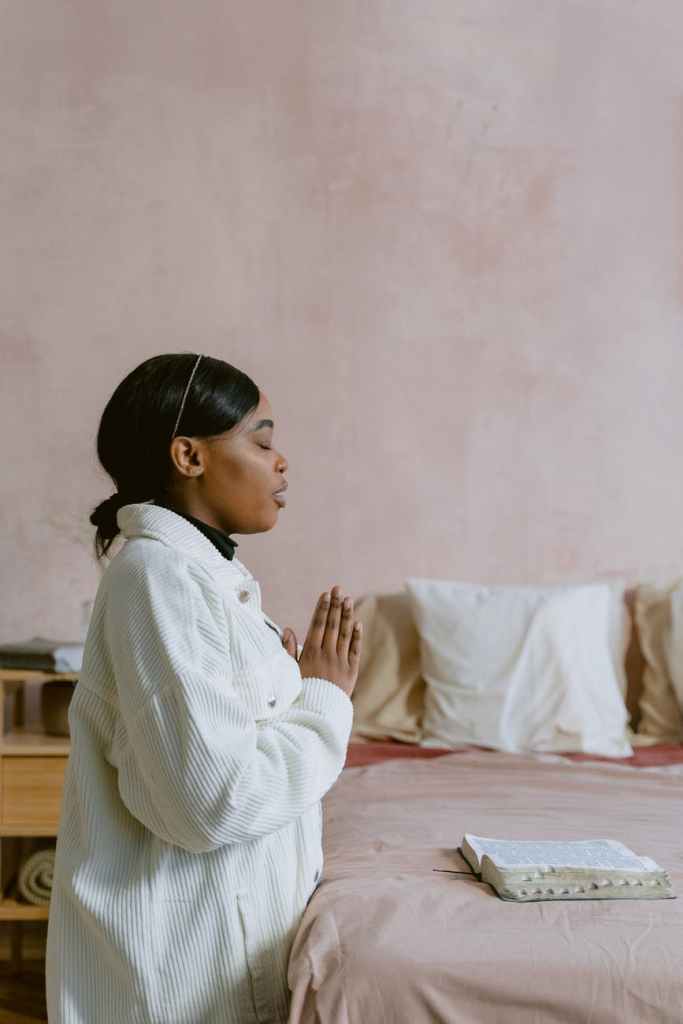
Sometimes, I feel like my prayers must be like those drips from the faucet; that they are just drops in a huge ocean of prayers and requests being poured out by people all over the planet. But that is not true. According to the Bible, God experiences our prayers as an aroma, like incense, rising up to Heaven, where He breathes them in. (See Psalm 141:2 and Revelation 5:8, among others.)

My prayers may feel small and insignificant, but they blend with the prayers of others into an intoxicating aroma of praise, worship, dependence, submission, obedience, sacrifice, awe, reverence, reflection, repentance, joy, and even grieving tears. My prayers are part of something magnificent and mysterious. So are yours!

To pray is to offer ourselves to God– our thoughts and emotions, our time, our gratitude, our honesty, our humility, and our joy.

Just think of the power of a majestic waterfall, or the might of the ocean waves– all made up of tiny individuals drops of water. Water can turn turbines to produce electricity; water can carve canyons our of rock; and water can change landscapes or reshape landforms. And there is power in the volume of water, or of prayer. But there is also the mighty power of the Holy Spirit inhabiting our individual prayers. Each single “drop in the bucket” holds amazing worth and power in God’s hands.

So don’t turn off the spigot of prayer today. Let each drip and drabble do a mighty work!

Sowing the Wind

“They sow the wind, and reap the whirlwind…”  Hosea 8:7

Hosea was a prophet who foretold the destruction (and eventual restoration) of his people.  God was pouring out his judgment against an unfaithful nation, and he used the tragic family life of Hosea as a living example of his dealings with Israel.  Hosea married a prostitute; an unfaithful and unloving spouse who chased after men with ready money and cheap gifts.  But when her activities resulted in slavery, shame, and despair, Hosea redeemed her and restored her as his wife.  In the same way, God had made a promise to the people of Israel, but they had broken their covenant and followed their own rules, chasing after the surrounding cultures, with their foreign gods and their hedonistic rituals, including human sacrifice, temple prostitutes, and divination.  There are many metaphors used throughout this book, but one that often stands out is the short phrase found in chapter eight.  In it, God is talking about the unfaithful priests and leaders of Israel, who have not only betrayed God in their rebellion and idolatry, but have led others astray.  God says of them that they have sown the wind, and are reaping/will reap the whirlwind.

How does this relate to us today in our pursuit of prayer?

I believe that many of us are sowing the wind– we do it in our careless words, gossip, rumor-mongering, complaining, babbling, prattling, and yes, in our half-hearted obedience, and our tepid prayers.  We often come to God, not eager to commune with him, or to hear his voice, not in humble adoration and open confession, but to complain, wheedle, and boast.  We pay lip service to his Holiness, while refusing to give up that bad habit that “isn’t really all that bad.”  We thank him for his Grace, but harbor resentment against a neighbor or family member who slighted us.  We ask for him to bring us success in our plans and ventures without really making sure if they line up with his will.  We excuse our lack of attendance at church, and our failure to spend time in God’s word.  We make rash promises to do “better” if God just gets us through this week.  We ask for his blessing, and thank him for the riches he has bestowed on us, but we turn our noses at those in our backyard who are in need.  We are bold about posting “Christian” sayings on Facebook, X, Pinterest, and Instagram–almost as bold as posting about our favorite new Brew Pub or Spa trip or “almost inappropriate” joke, or latest political rant.  Except that our “Christian” posts are less entertaining and more critical of others.  (They’re usually really pretty, though– pictures of flowers or mountain streams or desert sunsets–it’s really easy to “like” and “share” a sunset!.)  We cheapen the Gospel, we cheapen the Christian walk, we cheapen prayer, when we pursue it as a hobby or a social habit. Bur prayer is not something we do only because (or only when)  it makes us feel “good” or “better”– it is something we pursue because it brings us life and peace for eternity, and it brings glory and joy to the King of Kings.

“They sow the wind, and reap the whirlwind…”  There is a price for this shallow, careless pursuit of something that looks and feels vaguely like Godliness.  It is the whirlwind…being tossed about by “every wind of doctrine” as Paul warns against in Ephesians 4.  It is being caught up in doubts and half-truths, compromises, hypocrisy, division, scandal, and shame.  It is having to face the onslaught of detractors and persecution that come as a result of so many of us abusing and misrepresenting the very Gospel of the one whose name we carry.   “Oh, what peace we often forfeit; Oh, what needless pain we bear; All because we do not carry everything to God in prayer.”  The words of that old hymn are no less true today– when we trifle with prayer, carrying only our selfish needs, our petty complaints, and our flimsy agendas to God in prayer, we pay a huge price.

There is another metaphor, this one in the Gospel of John, that I think helps us combat this tendency to “sow the wind”–  Jesus says of himself in John 15 that he is the vine, and we are the branches.  If we are faithful, we remain in him– we draw our life and strength from him– and we are fruitful.  Remaining in him, we are grounded– he provides the roots that keep us from blowing every which way.  And he provides the nourishment, and strength to grow and produce more fruit.

I say “we” because I too am guilty of having sown the wind.  The great news, in Hosea and in the Gospel of John, is that God is eager to restore us– to graft us in–to welcome us home after our storm-tossed wanderings.  Let’s get serious about abiding in God, instead of scattering the latest “feel-good” religious spam.  God, forgive me for the times I have cheapened your precious gift of prayer.  Help me to abide in you, and refrain from careless words to you, about you, and about others.

Transformative Prayer

This cute meme has been making the rounds on Facebook and Pinterest a couple of years ago.  It suggests that prayer turns meek kittens into mighty lions.  And it can.  Most times it should.  But how often do we experience this level of transformation when we pray?

I write this blog, partly in response to comments I’ve heard or read that belittle the effectiveness and the power of prayer.  I talk a good game when it comes to prayer–I pray daily, I keep a prayer journal, I consider myself a prayer veteran, even a prayer warrior.  I believe in the transformative power of prayer.  So why do I often feel like a kitten both before and after prayer?

I’m afraid that, too often, I really don’t want to be transformed when I pray.  I want to be heard; I want to be comforted; I want to be refreshed.  But I don’t really want transformation.  Transformation is not cute or comfortable–it hurts, it stretches.  Transformation requires risk and commitment in the face of uncertainty.  I want to be a kitten who thinks of herself as a lioness, but I want a cozy lap to rest on, and a bowl of gourmet cat food laid out for me.  Kittens may wrestle with yarn or mice; lionesses wrestle with crocodiles and wildebeests.  I want to lift up those in pain, those who struggle, those in need– but I want to do it from the comfort of my own quiet corner.

If my prayer life isn’t causing changes in every other aspect of my life, I need to be concerned.  Prayer that never calls me into battle; prayer that leaves me feeling comfortable while others suffer..that isn’t really prayer.  That is giving lip service without heart-service.

But I also need to be careful to be transformed by the renewing of my mind (See Romans 12: 1-3).  Prayer should be transforming my heart and mind, but in Christ’s likeness.  Christ, who is not only the Lion of Judah, but the Lamb of God.  There are times when I should charge out of the prayer room, energized and ready for battle.  But it must come from God’s spirit, and not my own pride or in conformity to the world’s pattern of fighting.  Transformation doesn’t come about just because I say any prayer– it comes about as I walk and talk with the Father, the Son, and the Holy Spirit.  I don’t have the power to transform myself, nor do I have the power to decide the nature and speed of my journey.

I think sometimes, I see it as all or nothing– either I am running full speed ahead and making great conquests (Lioness), or I am mewling  and helpless (Kitten).  But God sees the bigger picture.  Sometimes,  we should enter the prayer room as kittens and leave like lions; other times we should enter as lions and leave as lambs– recognizing that our own roaring will never win the battle, and also recognizing that sometimes, in quiet obedience and sacrifice, we are doing what is necessary in the larger plan.  What should never happen is that we go running into the prayer room eager and ready to serve, and come sauntering or swaggering out, puffed up with our own importance, but unmoved toward others.

So the challenge is to go into the prayer room, expecting to be transformed– by God, for God’s glory, into the people God wants us to be– expecting to be changed, stretched and challenged.

pexels-photo-415380.jpeg

Recipe for Prayer

I love to cook. I’ve been cooking for most of my life, and sometimes, I don’t use a recipe. Often, it’s a dish I’ve made so many times, I make it from memory. Other times, I’m adapting for ingredients I have, or substituting one cooking technique for another.

But I don’t recommend creating a new dish without a recipe or guideline. Cooking is a lot like chemistry– too much of one ingredient, or leaving out another one entirely, can result in disaster! You can’t just throw together a little of this and a little of that, cook it for who knows how long, and expect good results.

The same can be said for pursuing prayer as a lifestyle. I use a “recipe” for prayer. And yes, there are times when I vary from it. But a good, healthy prayer LIFE should contain the following four ingredients:

Praise/Worship/Adoration: After all, we are not praying to an unknown being with unknown qualities. We are praying to the One True God, whose marvelous attributes are worthy of unending praise. If I am praying regularly, and NOT praising God, what is the purpose of my prayer? It can devolve into a laundry list of my complaints, worries, wishes, and whims, instead of being a conversation between a child and her Beloved and Faithful Father.

Confession/Repentance/Review: This ingredient is a stumbling block for many people. If we have been forgiven, why do we need to confess or repent? God already knows our deeds, and Jesus’ death and resurrection have already removed our sins as far as the East is from the West, right? Right. But Confession is not about beating ourselves up over wrongs we cannot undo. Rather, it is simply agreeing with God about our condition and actions. Yes, Jesus has forgiven me. But I need to acknowledge who I am before Him. I am forgiven, not by being better than someone else, or even better than I was before, but because God has extended His Grace and Mercy. And if I don’t remind myself of this fundamental truth, I may forget, and begin to believe that I no longer “need” God’s mercy in my life.

Asking/Requests/Supplication: Supplication is an old word that means asking or pleading. Once again, this can be a stumbling block in a couple of different ways. As with confession, God already knows what we are going to ask. He already knows our needs. Saying them isn’t about making God aware; it’s about giving us a chance to seek HIS mercy, HIS will, and HIS answer. And it’s about acknowledging HIS sovereignty in all aspects of our life. I can’t count the number of times I have asked God for something, and realized that I was not really asking, but rather trying to dictate to God what I wanted to have happen. If I’ve started with the first two ingredients above, I quickly realize that, while God knows what is in my heart, He also knows what is best– and often that is much larger or better than I can imagine!

Thanksgiving/Responding/Yielding: The last ingredient in a healthy prayer life is a heart bursting with Thanksgiving and willing response to God’s Love and Care in my life. Prayer is, at heart, a conversation we have with God. And part of any good relationship is affirming that bond. If I talk with my friend, and even ask a favor, or share some of my burdens, I don’t just walk away without acknowledging how much their friendship and love mean to me– regardless of whether they respond immediately to my request. And I don’t listen to their loving advice and support and walk away as though they never spoke. Prayer should include a time of saying, “YES!” to our relationship with Jesus. YES, I trust you. YES, I gladly accept Your will and all the blessings You have provided in my life. YES, I will obey you and follow you!

Of course, every prayer and every pray-er is unique. Some prayers will have more asking than confessing; others will be “heavy” on Thanksgiving (especially those coming up later this month!). But it is good to stop and consider how the “ingredients” of prayer are producing a harvest in the way we live and the way we pursue a Godly lifestyle. For more about this topic, see https://www.dailyeffectiveprayer.org/prayer-acronym/ and also https://proverbs31mentor.com/acts-prayer/.

Objects In the Mirror…

“Objects in the mirror are closer than they appear…” This notice is on the side rear-view mirror of my car. It serves to remind me that I cannot judge distances by what I see– that my mirror is meant to show a wide-range view, rather than one that is precise and in-scale.

Many things in life are similarly distorted. The actual objects in my rear-view mirror don’t appear distorted, but if I back up without considering the warning, I am likely to run into an object and “distort” my back bumper!

The Bible also warns us about distortion and mirrors. In James, chapter 1, the Apostle writes:

22 Do not merely listen to the word, and so deceive yourselves. Do what it says. 23 Anyone who listens to the word but does not do what it says is like someone who looks at his face in a mirror 24 and, after looking at himself, goes away and immediately forgets what he looks like. 25 But whoever looks intently into the perfect law that gives freedom, and continues in it—not forgetting what they have heard, but doing it—they will be blessed in what they do.
26 Those who consider themselves religious and yet do not keep a tight rein on their tongues deceive themselves, and their religion is worthless. 27 Religion that God our Father accepts as pure and faultless is this: to look after orphans and widows in their distress and to keep oneself from being polluted by the world.

James 1:22-27 (NIV)

We can easily read what the Bible says; we can easily hear the truth; we can even recite Scripture– and still be deceived and following a distorted version of God’s Word. As I write this, I can quote James, or another passage of Scripture, and walk away from the keyboard only to spread gossip, or snap at my husband, or in some other way distort what I know to be true about myself and about God.

The Apostle Paul also references mirrors in 1 Corinthians:

Love never fails. But where there are prophecies, they will cease; where there are tongues, they will be stilled; where there is knowledge, it will pass away. For we know in part and we prophesy in part, 10 but when completeness comes, what is in part disappears. 11 When I was a child, I talked like a child, I thought like a child, I reasoned like a child. When I became a man, I put the ways of childhood behind me. 12 For now we see only a reflection as in a mirror; then we shall see face to face. Now I know in part; then I shall know fully, even as I am fully known.

1 Corinthians 13: 8-12

Even though this chapter is famously known as the “Love” chapter, it also addresses our need to be alert, humble, and committed to acting on what we know to be true. We can speak of love, even perform acts of self-sacrifice, yet distort what it actually means to practice Love. If we glance at our lives in the distorted mirrors of pride or worldly comparison, we will lose our perspective and our proper focus– and end up damaging more than just a bumper!

This distortion can also infect our prayer life. We can pray on “auto-pilot”– looking at things in a distorted mirror, instead of focusing on God and putting things in their proper perspective. How many times have I prayed that God would help those in need, without ever considering how He might want me to DO something? Have I asked locally if there is a need I can help meet? Not just with money, but in time or service? Do I pray “globally” but ignore those right in my own back yard? Sadly, I must answer than I have been guilty of such distortion. Or how many times have I been in the one in need, praying for a miracle, while refusing the practical help that someone has offered? Have I prayed that God would “change” someone else’s attitude, without seeing that mine needs to change as well (or instead!)? Have I confessed a sin, without really repenting? There is temptation, waiting in my rear-view mirror– and much closer than it appears!–but I want absolution without discipline. I want help without humility. I want to love others– when it is convenient.

Thankfully, God WANTS us to see clearly. He gives us warnings about the mirrors we tend to use, and His Word helps us correct our focus.

God wants us to see things as they really are– both the horror of our sin and rebellion, and the wonder of His Grace. And sometimes, that means grappling with the distortions in the mirrors of our own making.

“I Would Prefer Not To..”

Years ago, our high school class read a classic short story by the American author, Herman Melville. Bartleby the Scrivener tells the story of an unusual clerk– one who begins as a good worker, efficient and conscientious, but ends up dying in prison, hopeless, ruined, and broken. His tragic downward spiral begins one day when the lawyer for whom he works asks him to examine a short document. This is a commonplace request, much like asking a writer to proofread her final draft before submitting it to the editor. However, Bartleby responds by saying “I would prefer not to.” The startled lawyer decides not to force the issue, and gives the task to someone else.

Bartleby’s refusal to do what is expected of him escalates until he no longer does ANY work. He refuses to work, refuses to leave the office, and refuses to eat. He isn’t angry or violent, but he remains defiant until the very end.

So it is with us when we are living in sin and rebellion against God. It may start out small– some little habit or attitude. We know it is wrong, but instead of obeying God’s word, we calmly say, “I would prefer not to…” not to tell the truth, not to turn away from porn, not to help my neighbor, not to agree with God about my behavior.

8 The Lord is merciful and gracious,
    slow to anger and abounding in steadfast love.
He will not always chide,
    nor will he keep his anger forever.
10 He does not deal with us according to our sins,
    nor repay us according to our iniquities.
11 For as high as the heavens are above the earth,
    so great is his steadfast love toward those who fear him;
12 as far as the east is from the west,
    so far does he remove our transgressions from us.

Psalm 103:6-12 (ESV)

God is patient. He is gracious and kind. He does not treat us as our offenses deserve. He gives us the chance to repent. He offers forgiveness. But every time we say to God, “I would prefer not to,” we get a little more like Bartleby– isolating ourselves, wasting our potential to be all that God created us to be, growing more defiant and more rebellious, until we waste away into a prison of our own making, and, finally, death.

One of the things that makes Melville’s story so disturbing is that the narrator keeps trying to explain away Bartleby’s defiance–perhaps he is having trouble with his eyesight and doesn’t want to admit it; perhaps he was traumatized at a previous job; maybe there is a reason for his passive aggression. But in all of his attempts to understand, the narrator cannot save Bartleby from prison and death.

Understanding sin cannot change us. Excusing sin does nothing to stop its consequences (see Romans 6:23). No one killed Bartleby, yet he died because he “would prefer not to” do the things he needed to do to live. His small act of defiance, which starts out singular and almost heroic (after all, who wouldn’t like to tell the boss, “I would prefer not to,” every once in awhile?), sounds innocuous. Such a little thing to refuse. Surely God would not punish us for so small a thing…until one small thing leads to another…and another; a bigger rebellion; a numbing complacency; loss of perspective; a heart of stone; isolation; starvation; imprisonment; death.

What am I refusing to do for God today? What am I refusing to give up? Refusing to admit? Refusing to listen to? Am I excusing myself? Do I tell myself I am not in rebellion because I have been polite in my refusal to obey? Do I comfort myself that my rebellion is really just a matter of “preference,” and will not be consequential? That God’s Holiness is less important than my comfort or convenience?

Many people coast through life in the belief that God is SO merciful and SO loving that He can’t also be Holy and Just– that His commands are really suggestions; that His wrath is mythical; that our own wisdom is sufficient for living a “good” life and pleasing Him. But God isn’t concerned about whether we live a “good” life– He wants us to have an abundant life– filled with joy and peace, love and relationship, both now and forevermore. In fact, He would “prefer not to” punish us. He is not “willing” (i.e. desirous) that any should perish (2 Peter 3:9), but that everyone would some to repentance. That doesn’t mean that He won’t punish those who refuse to obey Him, or those who refuse to turn from their rebellion and trust Him; only that He will continue to give us the opportunity to recognize our need for forgiveness.

10 If you keep my commandments, you will abide in my love, just as I have kept my Father’s commandments and abide in his love. 11 These things I have spoken to you, that my joy may be in you, and that your joy may be full.12 “This is my commandment, that you love one another as I have loved you. 13 Greater love has no one than this, that someone lay down his life for his friends. 14 You are my friends if you do what I command you. 15 No longer do I call you servants, for the servant does not know what his master is doing; but I have called you friends, for all that I have heard from my Father I have made known to you.

John 15:10-15 ESV– taken from biblegateway.com

God has made it possible for us to be more than servants. We don’t have to respond to God as Bartleby responded to his boss– though God has the ultimate authority to demand our loyalty and obedience. Through Jesus, we are sons and daughters and friends! When God gives us commands, like “Love one another,” they are still commands. But His heart is that we should trust that all of His commands are righteous, life-giving, and in our eternal best interest. But some of us are still saying, “I would prefer not to.”

Intelligent Fools

The fool says in his heart, “There is no God.”
    They are corrupt, they do abominable deeds;
    there is none who does good.

Psalm 14:1 (ESV)

Only fools say in their hearts, “There is no God.”
They are corrupt, and their actions are evil;
not one of them does good!

Psalm 53:1 (NLT)

One thing that seems to surprise many intellectuals is the discovery that other intellectuals are Christians! There is a certain class of thinkers who believe that only ignorant people “need” to believe in God. Many of them posit that the concept of “god” is outdated and primitive, steeped in superstition, and unnecessary for anyone. Others claim that any belief in a supreme deity, a Sovereign God who has authority over all humankind, and all of nature, is actually dangerous

If God could be discovered by intellect alone, this might be disturbing for those of us who are not certified “geniuses.” If mere knowledge about God could save us, we could trust intellectuals to be our “saviors” and spiritual guides. But just because someone is intelligent and learned doesn’t mean that they have attained wisdom. Wisdom is a gift of God, and it begins with acknowledging a simple fact– God exists. This does not come automatically with knowledge about God–such knowledge can be dismissed, twisted, and even lost. If God exists– not just as a concept or a long-lost myth–certain other truths must be acknowledged. Chief among these is the truth that I am NOT God.

Fools come in all shapes, sizes, colors, and intellects. There are people of limited intellectual capacity who are very wise. There are intelligent people who live as fools. Foolishness comes when we deny God– whether we deny His very existence, or His authority over our lives– and live as though we are the supreme authority in our own lives.

“The Fool says in his HEART, ‘There is no God.'” Foolishness doesn’t begin in the brain. It begins in the heart. The more I believe that I KNOW better than others–including God–the less I will listen to instruction, advice, and wisdom. The more I will do what I want– and justify it, even if others get hurt. The Apostle Paul–no intellectual slouch himself– warns us in 1 Corinthians 8:1 that “Knowledge puffs up..” Not all intellectuals are snobs, but it is easy to become hardened to others if they believe they know more or better than everyone they meet. And Paul’s warning is to believers! Just because we believe that God exists, we can be foolishly puffed up by our very knowledge of scripture, and ignore God’s sovereign call to love our neighbors! We can be foolish “Christians” who acknowledge that Christ exists, but deny His Lordship in our lives.

There are many intelligent Atheists. Some of them lead moral lives, and do many things that we might see as “good.” They give to charities, advocate for healthful living, a clean environment, and world peace. So why does the Bible use such strong language to denounce them as fools, who are corrupt and even abominable? Doesn’t God see their good works? Doesn’t God give them “credit” for doing the “right” things (sometimes more than their Christian neighbors!)?

God sees us from a different perspective– He looks on the heart. The heart of someone who denies God is the heart of someone in rebellion. It may be a quiet rebellion; it may be vocal and even violent. But once a person denies the very one who created her/him, their heart is corrupted and opposed to giving God His proper place. Even “good” deeds done in defiance of the God of all goodness will become twisted by the selfishness and pride of the doers. The smartest among us may have many great ideas for achieving world peace, but they do not have the power to control all of humanity, nor the authority to force others to accept their “brilliant” ideas. In the end, they will either face disillusionment and despair, or they will become tyrannical in their efforts to “fix” the world’s problems according to their own plans.

God asks us, first and foremost, to trust Him. Second, we are to obey Him. Third, we are to live with, and love, others– to share the love and wisdom He gives! Fools may know about God, but they stop short of trusting Him, obeying Him, and learning to serve others. They deny His wisdom; they deny His Grace, and their need for it. They deny themselves the joy of relationship with the God of Love. There is nothing wrong with learning and intelligence– they, too, are gifts from God–but when we depend on them ahead of leaning on God’s wisdom, we become fools.

Father, I don’t want to be a fool. Help me to acknowledge You in everything I say and do. Help me to recognize Your wisdom, and cling to it. And help me to appreciate the wisdom of Your Word in guiding my intellect and learning.

“I Hate Waiting…”

One of my favorite characters from “The Princess Bride” is Inigo Montoya. He has a few redeeming qualities– he is a loyal friend; he is intensely (obsessively) loyal to his father’s memory; he is basically honest; and he has a soft spot for lost causes, including a tender-hearted giant and a (mostly) dead pirate/rival/would-be hero.

But Inigo has many failings, as well. He is a drunkard, he lacks the skills to plan great achievements, and he has an over-developed sense of revenge that gets him in a lot of trouble. Also, he hates waiting. And he has done a lot of it– he’s waited over 20 years to track down his father’s killer and challenge him to a duel (the above-mentioned revenge).

When he first meets Westley (the above-mentioned pirate/rival/would-be hero), Westley is climbing a treacherous cliff. Inigo waits at the top as Westley struggles up the rocky crag, trying not to fall to his death. Inigo, ever concerned, calls down to ask how it’s going. He wants to know if Westley can “a-speed things up.” He REALLY hates waiting. Later, as he seeks to rescue Westley, he is told that he must wait at least 15 minutes for the magic potion to work and for Westley to regain consciousness. Inigo is delighted when Westley can talk and move his head a little, but he cannot wait for Westley to regain the use of his arms or legs before “storming the castle!”

Not many of us enjoy waiting. Some of us are better at it than others. And it is a character quality that God asks us to develop. Several times in the Bible, God asks us to “wait” or “wait on the LORD.”

When we pray, it is tempting to expect or even demand an immediate, clear answer. If we don’t get it, we fall into two temptations. The first is to despair and/or lose faith. If God doesn’t “show up” right away, we are tempted to believe that He just isn’t listening or doesn’t care about our situation. As time goes by, we may become bitter, angry, sullen, and depressed. We stop calling out to God; we turn away and seek answers (or escape) elsewhere.

The second temptation, the one I believe Inigo falls into, is to stop depending on God and carry the burden of our pain, our grief, or our situation all by ourselves. Inigo’s father was killed when he was eleven years old–his entire adult life has been wasted on a quest to avenge his father’s death. He hasn’t developed a life of his own– he has no career (he does odd jobs for crooks like Vizzini), no family, no plans for a sustained future– only his anger and bitterness over a twenty-year-old tragedy. And only when, in desperation, Inigo pauses for a moment and prays, does he find any real help in achieving his goals. In fact, at the end of the story, when Inigo finally achieves his revenge on Count Rugen, he is left with a dilemma. He admits to Westley that he has no idea what to do with the rest of his life! He has allowed the past to consume both his present and his future.

Another story that illustrates this temptation is the story of King Saul. In 1 Samuel 13, Saul has begun to attack the enemies surrounding Israel. He and his troops are hiding in caves and waiting for the prophet Samuel to offer a sacrifice and seek God’s counsel. The enemy is camped nearby with thousands of troops and chariots, and Saul’s men are beginning to panic and desert him. When Samuel doesn’t come at the appointed time, Saul disobeys God’s law by offering the sacrifices himself, even though he is not of the priestly line. Instead of standing firm, and encouraging his men, Saul gives in to the general panic and takes matters into his own hands. He takes a visible action — offering the sacrifice– without taking the right attitude of seeking God’s counsel.

Waiting can be difficult– especially when we are faced with fear, anxiety, danger, and lack of plan or purpose. But learning to wait for God’s ways and timing will teach us how to grow in Faith and confidence. Today, instead of asking God to “a-speed things up,” may we thank Him for all the times He has been faithful in the past, and trust that He will “arrive” at just the right time!

Choices

I like having choices. When I go to a restaurant, I get a menu, with several choices– appetizers, entrees, beverages, desserts. I have choices at the grocery store– brand X cereal or brand Y, different sizes of laundry detergent, which cucumber to put in a produce bag– sometimes even a choice between paper and plastic and reusable bags! I have a choice to buy or rent a house or apartment/condo. I have a choice about the car I drive or the choice not to drive, but to walk or take public transportation. I choose which church to attend, or not to attend at all. I choose when I get up in the morning and when I go to sleep. I choose what to wear each day. I choose to obey the law, including speed limits on the highway and slowing down in school zones, paying whatever taxes are due, and registering for the census, voting, and other civic duties.

Many of these choices seem benign. It doesn’t really matter to anyone else which brand of cereal I buy or when I eat it, or even if I decide not to eat it, but end up throwing it out. It doesn’t matter to most people where I live, or go to church, or what I am wearing. It doesn’t hurt anyone else if I drive a couple of miles faster than the speed limit on a back road somewhere.

But some choices DO matter– they matter a lot. If I choose to drive at high speed through a school zone, I might end up accidentally killing a student or school worker. If I live in a house or apartment I cannot afford, or if I refuse to maintain my house or apartment, I may end up evicted or homeless. If I choose to use drugs– even prescription drugs– in an unwise manner, I may end up in the hospital or in the cemetery! And I may hurt others around me in the process.

I live in a nation that prizes “freedom” and “freedom to choose.” But in the past century, more and more voices are being raised in an effort to make all choices “equal.” And they are not. Many of our “choices” are in direct contradiction to the Word of God, to traditional values, and even to common sense! Our choices have consequences– some benign, and some catastrophic. Voices are shouting about their “right to choose” even as they are also raised in righteous indignation about others’ rights and choices.

I could speak to this for days on end, defending my own choices, and pointing out which “choices” break my heart or offend me. But I feel compelled to point out just three things to consider about individual choices:

  1. How does this choice honor God? I think it is easy to focus on “big” choices when we think of this, but I have been challenged lately to see how even my “easy” and “little” choices honor Him. Does it really matter which brand of cereal I eat in the morning? Probably not. But what about brands and manufacturers that support causes that do not honor God? Most of the time, I am unaware of such considerations. But the money I spend on my favorite sugary breakfast treat may help sponsor evil. And if I am aware of which manufacturers are giving large donations to causes I despise, but I am still buying their products every week, I am helping to sponsor that evil.
  2. How does this choice impact others? We DO have the freedom to choose our actions, but we do NOT have freedom from the consequences of those actions. “My Body, My Choice” looks good on posters and banners, but things like abortion or gender reassignment have an impact beyond a single person. Abortion always ends with the death of a second “body”– one without any choice in the matter. Gender reassignment impacts more than just one person– it impacts their present and future relationships, as well as impacting their future physical health and reproductive system. It is also important to establish whether my choices are made to try to please or influence others. It’s easy to blame others after the fact, citing “peer pressure” or claiming “I didn’t have another choice,” but is that really true, or was one choice just a lot easier or more popular than another? That same group that pressured you make certain choices– will they be there for you afterward? No matter the consequences? Will they still be your friends if you make a different choice?
  3. Does this choice help me grow into a better person? Many of our choices come from wanting to be a happier, wealthier, or more popular person– NOT a healthier, more mature, or wiser person. And most of our choices focus on immediate gratification, rather than long-term growth. Doing something because you have the “right to choose” is not the same as “doing the right thing.” Doing the right thing often involves sacrifice and even a season of suffering. Our present choices–even the small ones– will impact our future circumstances, and our development as an individual. Eating a donut today may be tasty, but eating donuts every day may lead to obesity, diabetes or heart disease, and even a lessening of enjoyment for donuts– they’re no longer a tasty treat, but a habitual threat to my health!
  4. Am I angry and defensive about my “choice?” Years ago, I was stopped for speeding on my way to work. Of course, I had been running a little late, and being stopped made me even later. I had to explain my tardiness to my boss, who dismissed the whole incident with a sly “next time, don’t get caught..” But one of my co-workers self-righteously handed me a two-page pamphlet on the evils of driving over the speed limit. At that time, I was indignant and offended. (I still would be a bit miffed– I don’t agree with either of the reactions I got that day, but that’s another post…) As I have grown older, however, I have come to value the three questions above– and it changes my perspective. I KNOW it’s “wrong” to drive over the speed limit. I know many people do it anyway and get away with it. But the bottom line is this–speeding does not honor God. It does not help anyone else, and could potentially harm someone. And it does not grow my character. I don’t automatically become a “good” person if I DON’T speed– let me be clear about that. But I do grow in character when my choices are made out of a heart that prioritizes God and others over my own selfishness (and procrastination!) When I find myself getting angry and defensive, I need to consider whether or not it is really guilt. If I wasn’t speeding that day, I wouldn’t have had any reason to be angry with my co-worker or ashamed of being “caught.” If someone is angry and defensive about his or her behavior, it is often brought about by guilt, shame, and a rebellious spirit, tired of defending what everyone else (and sometimes their own conscience) tells them is “wrong.”

We make choices every day– some benign, some “good,” some “bad.” Let’s pray for wisdom to make the best choices, confess the “wrong” choices, and offer encouragement and truth, rather than judgment, to those around us.

Today, I’m praying about the “choice” of abortion and its impact on my nation (as well as worldwide). In the 50+ years since Roe v. Wade attempted to make abortion “legal” in all 50 of the United States, over 60 million abortions have been reported in the U.S. during those years.* This figure does not include other nations, unreported (back alley or non-clinical) abortions, or natural miscarriages. Not only does this represent the “choice” to end the lives of over 60 million precious individuals, it represents millions of women (along with men and other family members) who have been impacted by the deceptive offer of “freedom” and the increasing pressure to make this “choice” seem both normal and healthy. For my friends, family, and others who have made this choice– my heart aches for what you have been through, and I rejoice with those of you who have found Grace and renewed hope through Jesus. God loves you– YOU, not your past choices– and welcomes you to choose Him today and every day. For those who have not been in a position to be tempted by this “choice”– I pray that we live with compassion, and that we stand up for and speak up for TRUTH and LIFE– not self-righteousness and fear.
* A more conservative estimate still places the number at well over 40 million
https://www.pewresearch.org/short-reads/2024/03/25/what-the-data-says-about-abortion-in-the-us/
https://www.statista.com/statistics/185274/number-of-legal-abortions-in-the-us-since-2000/

The Offer of Life or Death

11 Now what I am commanding you today is not too difficult for you or beyond your reach. 12 It is not up in heaven, so that you have to ask, “Who will ascend into heaven to get it and proclaim it to us so we may obey it?” 13 Nor is it beyond the sea, so that you have to ask, “Who will cross the sea to get it and proclaim it to us so we may obey it?” 14 No, the word is very near you; it is in your mouth and in your heart so you may obey it. 15 See, I set before you today life and prosperity, death and destruction. 16 For I command you today to love the Lord your God, to walk in obedience to him, and to keep his commands, decrees and laws; then you will live and increase, and the Lord your God will bless you in the land you are entering to possess. 17 But if your heart turns away and you are not obedient, and if you are drawn away to bow down to other gods and worship them, 18 I declare to you this day that you will certainly be destroyed. You will not live long in the land you are crossing the Jordan to enter and possess. 19 This day I call the heavens and the earth as witnesses against you that I have set before you life and death, blessings and curses. Now choose life, so that you and your children may live 20 and that you may love the Lord your God, listen to his voice, and hold fast to him. For the Lord is your life, and he will give you many years in the land he swore to give to your fathers, Abraham, Isaac and Jacob.
Deuteronomy 30: 11-20 (NIV)

At dawn he appeared again in the temple courts, where all the people gathered around him, and he sat down to teach them. The teachers of the law and the Pharisees brought in a woman caught in adultery. They made her stand before the group and said to Jesus, “Teacher, this woman was caught in the act of adultery. In the Law Moses commanded us to stone such women. Now what do you say?” They were using this question as a trap, in order to have a basis for accusing him.
But Jesus bent down and started to write on the ground with his finger. When they kept on questioning him, he straightened up and said to them, “Let any one of you who is without sin be the first to throw a stone at her.” Again he stooped down and wrote on the ground.
At this, those who heard began to go away one at a time, the older ones first, until only Jesus was left, with the woman still standing there. 10 Jesus straightened up and asked her, “Woman, where are they? Has no one condemned you?”|
11 “No one, sir,” she said.
“Then neither do I condemn you,” Jesus declared. “Go now and leave your life of sin.”
St. John 8:2-11

Exceedingly, Abundantly, Above…

“Now unto him that is able to do exceeding abundantly above all that we ask or think, according to the power that worketh in us,”

Ephesians 3:20 (KJV)

What do I expect as I pray? What is the outcome that I hope for? Most of the time, it looks like one of the following:

  • I expect to praise and worship God; I hope that He will hear my heart of gratitude and worship, and that He will be pleased with my words and actions
  • I expect Him to act on or through a particular circumstance, such as providing healing or guidance to someone in need
  • I expect to hear from Him, or to gain wisdom or guidance for myself
  • I expect that He will honor His promise to forgive my sins when I confess them
  • I expect to grow closer to God as I speak to Him and wait to hear from Him

But Paul reminds us in the book of Ephesians that God is able, through the power of Christ at work in us (emphasis added), to do much more than anything we can imagine or ask! What does that mean in my pursuit of prayer?

Well, it means more than I can explain in any blog entry, but let me attempt to imagine a few outcomes that go beyond my normal expectations:

  • Prayer is a matter of choice. It is also a matter of obedience and acknowledgement. No matter how short, or faltering, or disorganized it may be, each prayer proclaims that God is GOD–worthy of praise, able to save and forgive, supremely authoritative over my life and the lives of others, and ever present to listen to every voice that calls out to Him. And it proclaims this both to the physical world (if we’re praying aloud or with others) and to an unseen and metaphysical world inhabited by spiritual beings who also owe God their worship and obedience.
  • Prayer is a partnership. In some mysterious way, God allows us to participate in His ongoing work– whether it is bringing healing, joining the chorus of angels in songs of praise, praying for God’s hand to move in global and historical affairs, or developing our personal relationship with Him–God chooses to let us “have a voice” in what He does. God is still in charge. Our prayers will not cause Him to go against His own will. But as we pray, we grow to understand God’s heart. We begin to want what He wants, and to ask for His will because it is what we want most. As we see and hear about miracles, we can know that we are “part of the team.”
  • Prayer changes things–often in ways we cannot ever see or measure. Someone may pray for years to see a relative or neighbor come to Christ– seemingly without success. What they may NOT see is how their testimony, though spurned by the object of their prayers, has brought others to Christ over the years. And each one of THOSE people has the potential to witness to others– including the one who rejected the original efforts! A prayer for healing that seems to go unanswered may inspire someone to commit their life to researching a disease of find a cure so that thousands of others may be spared the suffering you prayed to alleviate. Praying for peace or justice may not have immediate effect. But we cannot know or imagine the cumulative effect of such prayers in bringing lasting peace or more perfect justice to our children or future generations.

  • Prayer changes people– especially us! If I am praying for someone, my thoughts and actions will follow. I will take a more active interest in those for whom I pray. I will (or should!) reach out with practical efforts and partner with others who share my concerns. I will give, share, encourage, work, and advocate– not just pray and move on unchanged.
  • Prayer has substance. We imagine prayer to be ethereal and mental or spiritual. But the Apostle John, writing in Revelation 8:3-4, describes the prayers of the believers (saints) as incense. Our prayers have a pleasing odor, and they rise like smoke into the presence of God. There is nothing empty or “fake” about prayers lifted to Almighty God. Our prayer is not just an exercise in wishful thinking or the power of group-think or “positive vibes.”
We serve an amazing, limitless, all-powerful, all-wise God! Our prayers may seem like just words–humble, inadequate, or even unintelligible– but in God’s hands, they are mighty tools, bringing Him glory in ways we can’t even begin to explain or imagine!

Blog at WordPress.com.

Up ↑