Choosing to Pray

Yesterday, I voted in a primary election. In a few months, I will vote in a general election for President. I live in a nation of choices. I can choose to vote for any of the listed candidates, or I can write in a name. I can choose not to vote at all. I can choose how to spend my money– I can invest, purchase, pay my bills (or not), gamble it away, or give the money to charity. I choose what to do with my time– I can sleep all day, go to work on time or arrive late, I can spend all my time on-line, or I can binge-watch movies or TV shows. I can keep a consistent schedule, or I can take each day’s time as it comes. I can choose where to go– I can stay indoors in my apartment, I can walk all over town, or I can get in my car and drive to another city. I can choose my attitude and outlook; I can choose my political and social stands, and I can choose my beliefs. Others may apply pressure and coercion, but they can’t take away my right to choose.,. For better or for worse!

However, my choices have consequences. If I choose to act against the law of the land, it is very likely that I will be caught and punished. I may be fined, or jailed. I may face a trial. In many countries, I may be executed for doing things that would be allowed in my home country. If I choose not to pay my bills or not to go to work, I may face economic hardship as a result– late fees, loss of a job, and a difficult time finding future employment. If I choose to eat only junk food, or no food at all, I will experience health issues. The choices I made today in the voting booth, and the choices I will make in November will have consequences– most of which I cannot predict with any accuracy. I think I know what will happen– and others may predict dire consequences if I don’t vote “their” way– and my one small vote may not seem consequential, but it counts! Even my small actions have a ripple effect on the rest of my life, and the way in which I conduct it. I will either “show up” or I will “stand back.” I will either accept responsibility in the small things and large, or I will try to blame others. I will practice self-control and discipline, or I will drift through life at the whim of emotions, influences, peer pressure, and deceptions.

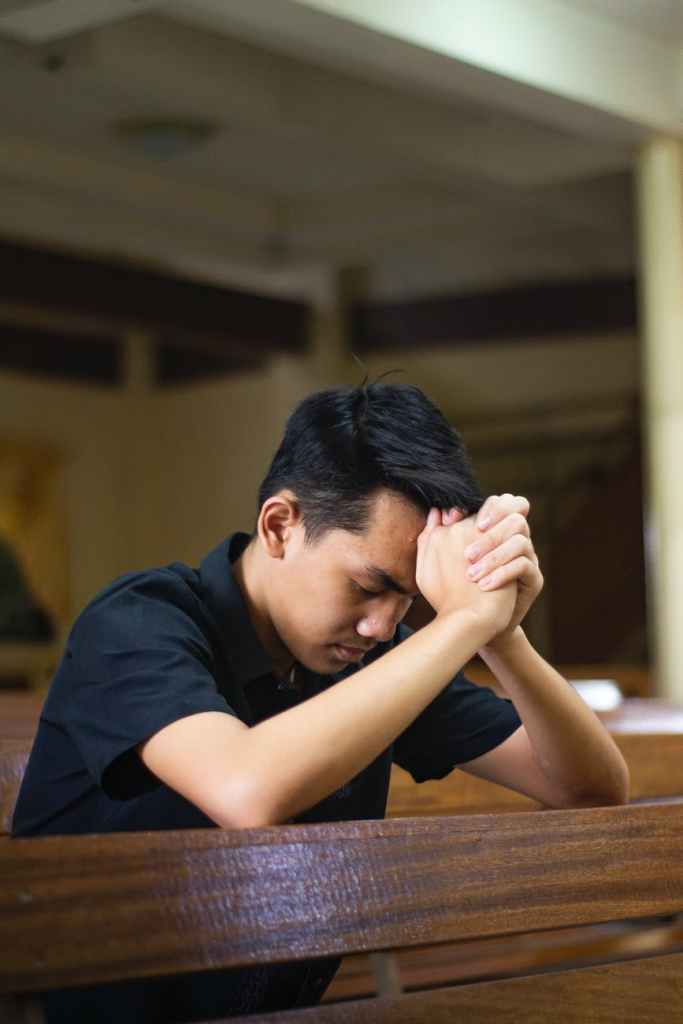
When it comes to prayer, I also have choices. There are times when I feel “compelled” to pray– circumstances beyond my understanding or control will cause me to want to cry out for divine help. Hearing about others’ needs make me want to ask God to work in their circumstances. Sometimes, I feel waves of gratitude and worship that cause me to sing and praise God for His character, His faithfulness, and the blessings He has poured out in my life. But I am not required to pray. I choose to pray. Sometimes, my choice to pray is simple, natural, and automatic. At other times, it is a sacrifice to pray. Prayer is more than just “an option” in my life. It really is a pursuit. I choose to keep a prayer journal. I choose to focus on prayer every day– both in practice and in testimony (as in this blog entry).

So today, I will join with others this morning in corporate prayer. I will pray alone at home. I will pray throughout the day for my community, and for individuals as they come to mind or show up in my prayer journal. And some of the prayers will come naturally; others will require me to dig deep, to confess my own failures, and admit my need for God’s Grace, His Wisdom, and His Strength.

And the consequences? Well, I can’t predict how my prayers may impact my own life or the lives of others. I don’t know how God will choose to answer my prayers. I don’t pray because God always does what I want– I trust Him to do what is BEST; and I have learned that His timing and His ways ARE the best!–but I pray because I know it is the best and first action I should take in any situation. I’m not perfect in prayer. I don’t always pray first. I don’t always listen for God’s answer when I DO pray. And I also know the consequences of NOT praying– worry, confusion, anger, restlessness, disappointment, and more. Oh, I may not experience all of these things instantly. But eventually, my choices and their consequences lead to frustration when they are not coupled with prayer, trust, and obedience.

I hope you are praying, trusting, and following God today. I hope that is your choice every day. God will not force you to come to Him. But He is ALWAYS right there when you do! Your choice to pray may not change the world instantly, but it WILL have consequences!

When I voted yesterday, I got a sticker, proclaiming to everyone that I had made the choice to vote. What might happen if Christians (myself included) were bold enough to proclaim our choice to pray every day and in all circumstances!?

“I Don’t Want Your Prayers!”

Have you ever offered to pray for someone– maybe they’re going through a Cancer journey or they’ve just lost their job– and they reacted with anger and indignation? I have; and it’s a very uncomfortable feeling.

Often, they may say they don’t need prayer; they don’t believe in God, therefore, they don’t believe that prayer has any power or effect. Sometimes, they feel that prayer is only for those who “can’t make it on their own,” or for those who are weak and needy– and they don’t wish to think of themselves (or to be thought of) in that way. Some people even fear prayer– that they will get their hopes up, only to have them dashed when God doesn’t give them the answer they expect or hope for.

But sometimes, they are angry– not so much at you or me, but at God. Even those who say He doesn’t exist often subconsciously “blame” Him when things go wrong. Others believe that God exists only to punish them or to make their lives miserable. They hate God and they hate anything to do with Him, including prayer. And some people have been hurt by other Christians– those who use their own perceived righteousness as a weapon. Their offer, “I’ll PRAY for you.” rings hollow, smug, and superior. Such experiences can leave such a bad impression that all offers of prayer sound ugly to them.

It is natural to be upset or hurt when someone refuses offered prayer. It can be tempting to respond by granting their wish– “Ok, I won’t pray for you!” But remember the following:

  • God doesn’t listen to our prayers based on someone else’s wishes or their attitude. God listens to OUR heart. If you feel compassion, and want to pray, and you DON’T do it, you are letting another person quench your spirit-driven desire.
  • God loves everyone. It is not His desire that anyone perish, or that they suffer needlessly. And if they won’t pray for themselves, that doesn’t mean that God can’t or won’t intervene. Don’t let their unbelief determine your level of trust!
  • “A soft answer turns away wrath, but harsh words stir up anger.” (Proverbs 15:1 ESV) Don’t match anger for anger or resentment for resentment. Hurting people hurt other people– they lash out from a place of pain. A gentle response from you may not quell their anger, but it WILL keep from adding fuel to the fire!
  • It is not our job to change people’s minds and hearts– it is our job to be witnesses of God’s love for them. Don’t withdraw your offer of prayer, but likewise don’t pummel someone else over the head with it. Simply express your empathy and your desire for their healing, or for their situation to improve, and your willingness to pray as part of that.
  • Remember that we are commanded to pray for others– it is not a suggestion. Nor is it a “strategy” meant to disarm, charm, or convict others into submission. Pray for their salvation, certainly, but don’t pray for that without also praying for their situational needs.

I know of numerous examples of people who have been led to Christ because of the faithful prayers of family or friends–even when they were in rebellion against God and angry with the Christians in their lives. That doesn’t mean that you will see immediate results– God’s timing is not ours; we may never see the results of our prayers in ways we recognize. But prayer IS powerful. Perhaps that is why so many people are afraid of it. It is beyond our power to predict; beyond our power to control; beyond our power to understand.

Comfort or Courage?

My husband and I recently sat in the comfort of our apartment, and watched the movie trilogy of The Lord of the Rings. I’ve read the books several times, and enjoyed the movie several times, as well. The story is a classic tale of good v. evil, where it looks almost impossible for good to triumph. But, through the courageous acts of a few unlikely heroes (with the help of many others), evil is destroyed at last, and peace–eventually– returns to Middle Earth. It is one of my favorite stories, but it is not always “comfortable.”

The books and movies can be almost torture to watch, sometimes. There are battles, and betrayals, tragedies, and frustrations galore. From the midges that attack the party near the beginning of their journey, to the Ring Wraiths who relentlessly haunt Frodo as he carries the ring of power to its final end; from the unnatural armies of the Uruk-Hai, created by the betrayer Saruman, to the betrayal of Boromir from within their own fellowship; from the fall of Gandalf in the mines of Moria to the madness of Denethor in Gondor–there are plenty of times that the reader/viewer is tempted to turn away from such agony and despair. How could there be a “happy” ending? How could Frodo and Sam possibly survive long enough to finish the task, let alone return from it?

And yet, Sam himself provides an answer:

Yes, that’s so,’ said Sam. ‘And we shouldn’t be here at all, if we’d known more about it before we started. But I suppose it’s often that way. The brave things in the old tales and songs, Mr. Frodo: adventures, as I used to call them. I used to think that they were things the wonderful folk of the stories went out and looked for, because they wanted them, because they were exciting and life was a bit dull, a kind of a sport, as you might say. But that’s not the way of it with the tales that really mattered, or the ones that stay in the mind. Folk seem to have been just landed in them, usually – their paths were laid that way, as you put it. But I expect they had lots of chances, like us, of turning back, only they didn’t. And if they had, we shouldn’t know, because they’d have been forgotten. We hear about those as just went on – and not all to a good end, mind you; at least not to what folk inside a story and not outside it call a good end. You know, coming home, and finding things all right, though not quite the same – like old Mr Bilbo. But those aren’t always the best tales to hear, though they may be the best tales to get landed in! I wonder what sort of a tale we’ve fallen into?’ ‘I wonder,’ said Frodo. ‘But I don’t know. And that’s the way of a real tale. Take any one that you’re fond of. You may know, or guess, what kind of a tale it is, happy-ending or sad-ending, but the people in it don’t know. And you don’t want them to.’
https://thetolkien.forum/wiki/Sams-Speech

Movie version:

Often, when I am facing “an adventure,” I am praying for God to take away the circumstances; to change the world around me, so I can be comfortable. I love to read stories, but I don’t want to live through what it might take to make a great one! And yet, God calls us to “be strong and courageous” (Joshua 1:9). Jesus calls us to be courageous as well, “In the world you have tribulation, but take courage; I have overcome the world” (John 16:33b). And Paul reminds his protege, Timothy, that “God has not given us a spirit of timidity, but of power and love and discipline.” (2 Timothy 1:7)

Source: https://bible.knowing-jesus.com/topics/Courage

In the movie version of Lord of the Rings, the four courageous hobbits return to the Shire after all the fighting to find things almost exactly as they had left them– hobbits comfortably going about their business, oblivious to the grand and terrible adventures of their neighbors and the rest of the world. Hobbits, we are told early on, do not concern themselves with the “adventures” of the wider world. They like comfort. And the Shire, in some ways, represents a haven from the evils of the world of men and orcs and other creatures. In the books, however, evil spills over into the Shire, and the hobbits must face battles even when they expect to return to comfort.

Comfort is a wonderful feeling– ease and peace, no reason to worry or fret. Everything is familiar and good, expected, and desired. But comfort doesn’t build character. Courage does. Frodo and Sam, Merry and Pippin, all return to the Shire changed by their adventures. They are no longer “comfortable” living in ignorance of the wider world, no longer afraid of what might happen if they step beyond the borders of the Shire.

The same is true for us as Christ followers. Jesus commands us to Go into all the world. He does not promise comfort, in fact, He promises that we WILL have trouble. But He also promises that we will not face danger alone; and that we will see victory– His final victory. We DO know the end of the story! We do not know what tomorrow may bring, but we DO know that it won’t end in futility. Even our disasters will be redeemed! Even if tomorrow brings tragedy, grief, pain, or torture, we know it is not the way our story ends. But we must face tomorrow with courage. We must continue on THROUGH the story, even when it looks like we can’t go on. Courage, not comfort, will lead us to the victory.

Today, I pray that God will forgive me for the times I have asked for comfort and not for courage. For the times I have stayed in the Shire, instead of going forth to face the battles beyond. For the times I have been too afraid, or just too lazy, to obey His call to GO and be a light in this dark world.

“Lord, Lord…”

21 “Not everyone who says to me, ‘Lord, Lord,’ will enter the kingdom of heaven, but the one who does the will of my Father who is in heaven. 22 On that day many will say to me, ‘Lord, Lord, did we not prophesy in your name, and cast out demons in your name, and do many mighty works in your name?’ 23 And then will I declare to them, ‘I never knew you; depart from me, you workers of lawlessness.’
–Matthew 7:21-23 (ESV)

As someone who spends her time “in pursuit” of prayer, I pay close attention when I hear others praying. People use many different phrases to address God when they pray– “Our Father in Heaven,” “Father God,” “Heavenly Father,” “Daddy,” “Papa God,” “Lord Jesus,” and many others. And there is no “right” phrase or “wrong” phrase to use. But there definitely IS a right and wrong mindset and heart attitude!

Jesus himself, shortly after teaching His disciples what is known as “The Lord’s Prayer,” talks about those who go around calling Him “Lord, Lord.” But they do not obey God, and they will not enter the Kingdom of Heaven. This suggests that that have “prayed” in some form or other, but it is merely a formality or a ritual, and not something that comes from a humble heart. Jesus goes on to tell of their insistence that they “deserve” to enter Heaven based on the incredible things they have done “in (your) name.” Most people, looking at their outward success and good works, would surely assume that they are sincere followers of Christ– after all, how else could they perform such miracles? They have called on the Name of Jesus and they have called Him, “Lord.” Yet, Jesus says of them, “I never knew you.”

What terror those words strike in the heart of those who desire to follow Christ! Is it possible that God will reject those who have called on His Name and believed on Him?

Well, Yes and No… Later in Matthew, Jesus is teaching His disciples about the final judgment, and He tells a similar story, but with more “context:” In the following parable, both the sheep and the goats claim to have done good works and both groups believe they will enter into the Kingdom of Heaven. It can be assumed that both groups have prayed at various times and believe themselves to be “known” to the Father…

31 “When the Son of Man comes in his glory, and all the angels with him, then he will sit on his glorious throne. 32 Before him will be gathered all the nations, and he will separate people one from another as a shepherd separates the sheep from the goats. 33 And he will place the sheep on his right, but the goats on the left. 34 Then the King will say to those on his right, ‘Come, you who are blessed by my Father, inherit the kingdom prepared for you from the foundation of the world. 35 For I was hungry and you gave me food, I was thirsty and you gave me drink, I was a stranger and you welcomed me, 36 I was naked and you clothed me, I was sick and you visited me, I was in prison and you came to me.’ 37 Then the righteous will answer him, saying, ‘Lord, when did we see you hungry and feed you, or thirsty and give you drink? 38 And when did we see you a stranger and welcome you, or naked and clothe you? 39 And when did we see you sick or in prison and visit you?’ 40 And the King will answer them, ‘Truly, I say to you, as you did it to one of the least of these my brothers, you did it to me.’ 41 “Then he will say to those on his left, ‘Depart from me, you cursed, into the eternal fire prepared for the devil and his angels. 42 For I was hungry and you gave me no food, I was thirsty and you gave me no drink, 43 I was a stranger and you did not welcome me, naked and you did not clothe me, sick and in prison and you did not visit me.’ 44 Then they also will answer, saying, ‘Lord, when did we see you hungry or thirsty or a stranger or naked or sick or in prison, and did not minister to you?’ 45 Then he will answer them, saying, ‘Truly, I say to you, as you did not do it to one of the least of these, you did not do it to me.’ 46 And these will go away into eternal punishment, but the righteous into eternal life.”
–Matthew 25:31-46 (ESV)

We can call Christ “Lord” without actually making Him our LORD. We can pray to God without seeing Him for who He really IS. And we can follow “Christianity” without actually following CHRIST.

I think the phrase that Jesus uses in the first quote is very telling. The people call Him “Lord, Lord.” And then, they go into a litany of things “WE have (done) in your name” (emphasis added). They do NOT call Him “Father” or even “LORD” (In the Bible, the term, “LORD” is “Adonai”, which is the substitute for Yahweh– the actual NAME of God, sacred to the Hebrew authors. It is not like “lord” as we might use for any nobleman or someone in authority, but is reserved only for the One with ultimate authority and majesty. In other words, not “Lord, Lord” but “LORD– the ONLY LORD”). Instead, they call Him, “Lord, Lord”. And they boast of the spectacular and even superhuman things THEY have done. But one of the things they fail to mention is prayer. They have used His name, but they have not necessarily called on His name– except as a formality. They have not spent time in communion with Jesus. They have not asked for His will to be done. They have not come to Him in humility or praise for HIS mighty works, only in arrogance of how they have done miracles similar to His. Nowhere do they mention following in service, as Jesus taught His disciples, nor do they mention suffering in His Name! In the later parable, both groups (the “sheep” and the “goats”) were startled by the examples Jesus gave of what they HAD or HAD NOT done. These were simple acts– humble acts rendered to outcasts, rather than showy acts of power. They were acts that materialized (or didn’t!) out of humility and compassion, rather than power or favor.

True followers of Christ will take up His yoke. They will listen for His voice, and they will be eager to obey. They will serve like Him– they will stay yoked to Him in humility and in submission. If you wonder whether or not you are truly following Christ– this is a good test. Satan will always try to make us feel as though WE must carry the load, proving ourselves worthy. He may tempt us to compare ourselves with others who seem to be “winning” at Christian service by getting noticed or listing multiple achievements. But our eyes should not be on others or even on ourselves or our accomplishments. Our eyes should be focused on God– what He has done for us on the Cross; what He is doing in our lives as we obey Him; and what He chooses to do through us as we continue to follow Him–even when it seems that we are doing very little things. We may never know in this life how important our small acts of service really are. In God’s economy, they are huge. Heaven rejoices over such small things as giving a cup of water to a thirsty child, or smiling at a lonely person on the bus, or visiting someone in the hospital or in a jail cell. The world needs more humble servants and fewer TV evangelists. (Note: I am not saying that TV evangelists cannot be doing the work of God– but I am saying that I see very few humble celebrity pastors…just an observation.) And, as the Apostle Paul reminds us, God’s strength is shown best in our weakness. (see 2 Corinthians 12:9) As we come to Him in prayer, in dependence and in humility, God’s power is perfected. As we respond in obedience, our life is brought into conformity with His.

Today, as I pray, “Lord Jesus” or “Heavenly Father,” I pray that I will do it with the right spirit. I pray that I will be quick to praise, quick to obey, and eager to seek my Father’s face, instead of my own validation. After all– Jesus is LORD!

Afraid to Pray?

Are you ever afraid to pray? Afraid that God will not hear, or worse yet, that God will hear but reject your prayers?

The Bible has much to say about fear and our worship of God and in our conduct before God. We are supposed to have a healthy “fear of the Lord.” After all, God is Sovereign. He holds absolute power over life and death, both in this life and throughout eternity! We should have the kind of awe and respect we have for one whose power is so great. We fear forces of nature, such as fire, floods, earthquakes and tornados. We should be afraid of God’s power in relation to our own. But what does this mean in relation to prayer? Does fear have any place in our pursuit of prayer?

So we have come to know and to believe the love that God has for us. God is love, and whoever abides in love abides in God, and God abides in him. By this is love perfected with us, so that we may have confidence for the day of judgment, because as he is so also are we in this world. There is no fear in love, but perfect love casts out fear. For fear has to do with punishment, and whoever fears has not been perfected in love. We love because he first loved us.

1 John 4:16-19 (ESV)

The “fear of the Lord” has to do with God’s power and authority to punish sin. We live in a fallen, sinful world, and we are fallen, sinful people. Our natural response is that of Adam and Eve in the Garden of Eden– to hide from God, and try to avoid His righteous judgment against us. Those whose consciences have been seared will lose this healthy and natural fear– they will be proud in their defiance against God. They will say that God is not sovereign or Holy; that He does not have the power to judge them; that they can “bargain” with God about their eternal destiny– they will even deny His very existence. Others will claim that God is Holy, but not “Good.” They claim that He is disposed to judge harshly; that He is vindictive and without mercy; that He demands too much of us. On the other end of the spectrum, Christians and others can become so disposed to seeing God as their friend and advocate that they forget His awesome Holiness and Power. Christians have no reason to be afraid of God, but we have every reason to stand in AWE of Him!

The Truth of God, as revealed in Jesus Christ is that God is LOVE– perfect and everlasting Love! While He has the power and the authority to judge, it is His desire to lavish mercy on us! Such love should compel us to run TO God, rather than run away from Him! We fall on our knees in worship and adoration, not in abject terror.

So what could still cause us to be afraid to pray?

Perhaps we are still in sin, or we have strayed back into sin. Christ has already paid the penalty for Sin– it has no real power over the believer who “abides in God.” But it still has the power to draw us away from God and damage our relationship so long as we hide it, refuse to confess it, or repent of it. Even as we know that Christ has paid the price for our Sin, we also know that we need to abide in His Love to grow into a more perfect relationship with Him.

Perhaps we are holding on to old patterns of thinking and old guilt. Satan is an accuser. Even after we have confessed our sin and received God’s forgiveness, Satan will try to keep us enslaved to our guilt and shame. He will try to bring it to mind, or have others treat us with condemnation or condescension, so that we feel unforgiven or unlovable. We need to follow the advice of the Apostle Paul:

So here’s what I want you to do, God helping you: Take your everyday, ordinary life—your sleeping, eating, going-to-work, and walking-around life—and place it before God as an offering. Embracing what God does for you is the best thing you can do for him. Don’t become so well-adjusted to your culture that you fit into it without even thinking. Instead, fix your attention on God. You’ll be changed from the inside out. Readily recognize what he wants from you, and quickly respond to it. Unlike the culture around you, always dragging you down to its level of immaturity, God brings the best out of you, develops well-formed maturity in you.

Romans 12:1-2 (The Message)
Photo by Rubenstein Rebello on Pexels.com

God’s love is PERFECT. But our love is not. Sometimes we are praying, not out of love, but out of duty or even selfish motives. We pray for God to give a green light to our wants and desires and plans, rather than listening for His wisdom and grace in our situation. We pray for God to “change” that person who annoys us or persecutes us, rather than praying for God’s blessing on them, and listening to the ways He may want to “change” us! Sometimes we cannot see the wisdom of an outcome we don’t like, and we are afraid of the unknown path we must take– even with God’s continued presence by our side.

We don’t have to be afraid to pray. But when we feel apprehensive, it may be a sign that we NEED to pray–honestly telling God what He already knows and asking for the grace and wisdom to listen to what He so lovingly wants to tell us.

Therefore, since we have a great high priest who has passed through the heavens—Jesus the Son of God—let us hold fast to our confession.  For we do not have a high priest who is unable to sympathize with our weaknesses, but one who has been tempted in every way as we are, yet without sin. Therefore, let us approach the throne of grace with boldness, so that we may receive mercy and find grace to help us in time of need.

Hebrews 4:14-16 (CSB)

Prayer in the Cyber Age

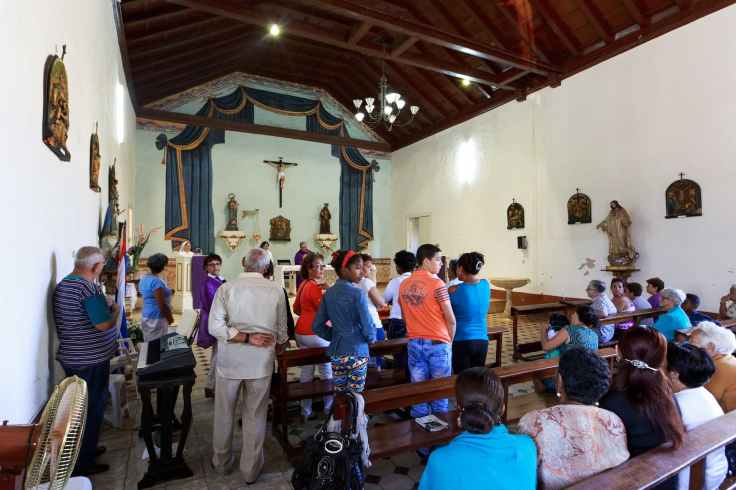
I attend a weekly prayer meeting at our church. A small group of us meets one morning a week to share prayer concerns, pray for our pastors and church workers, missionaries, community members in need, etc. It usually lasts just about an hour. On a “good day,” we have about seven people.

I grew up in a small rural area, and our little country church had a weekly Wednesday evening prayer service. On a “slow night,” we might have seven people. Sometimes, we had thirty or more (nearly half the church congregation)! They lasted about an hour and a half. When I was in college, we had groups that met once a week for prayer. It wasn’t always the same group, but it met at the same time, and, again, we sometimes had as many as thirty in attendance– for prayer. Often, we met in a dorm room, so it was cramped, and many of us were sitting or kneeling on the floor. Once, we had a fire drill, and my feet had “fallen asleep” and I had to be helped as we walked to the exit!

I don’t say this to disparage our current small group, but to point out some of the differences between life in the 1970s, 1980s and today. My current church has activities every Wednesday evening, and much larger attendance than the little country church ever attained. And prayer is still a small part of the Wednesday evening programming. Prayer is encouraged in small groups, individually, and we pray during service. But sustained time set aside for prayer– what the old hymn refers to as “Sweet Hour of Prayer”–in a group setting is becoming more of a rarity.

There are many reasons for it– some good, some not so good.

On the “good” side, it must be noted that corporate prayer today has expanded far beyond the traditional in-person prayer meeting. Prayer can be skyped, group-chatted, zoomed, and conference-called. Prayer can be “hosted” in one location, with satellite groups around the world praying in real time together. In such ways, thousands, and even millions of people can be joined in prayer. This is an amazing development!

And, along with such developments, prayer has become far more global, and far more immediate. I can receive a text or e-mail notifying me of a prayer request from nearly anywhere in the world, and know that I am joining with a host of other Christians when I stop and take a few moments to pray right then.

So what’s the “downside” of cyber prayer?

Speaking as one who has lived the experience of meeting with the same people at a dedicated time over many years specifically to pray, I have observed the following benefits:

In-person prayer meetings offer a more intimate time of fellowship, compassion, and service. I’m not just seeing other people on a screen, reading a text message, or even filling an auditorium seat as part of a huge “movement”– I’m sitting in a circle, breathing the same air, hearing the same hum of the furnace or fluorescent lights, the sound of others breathing, sighing, or even crying quietly around me. Sometimes, I’m holding another person’s hand, or giving them a hug. I am not just among fellow believers, I’m with family. We get to know one another in a deeper way. I know their families, their personal struggles and victories. I learn the rhythm of their prayers, and the issues closest to their hearts– and they know mine! And that can be a scary thing at first– building the kind of trust that intimate fellowship demands. But it pays off a thousand-fold!

In-person prayer meetings are also focused in a different way. Cyber prayer usually focuses on a specific need– sometimes an immediate, or even temporary issue. In-person prayer focuses on the long term discipline of praying. I have prayed with groups over years for lost relatives or unresolved health issues. And while that may seem depressing to read about, in practice it teaches patience, and deepens faith. As a group, we see God’s answers develop according to HIS timing and HIS plan. Sometimes, we see issues resolved quickly; other times, we see how God strengthens us in our trials; and still other times we see God do surprising and miraculous things just as we’ve almost given up hope. And there are some answers we may never “see.” But, primarily, we are not praying for an outcome– we are praying as a pursuit of Christian living; developing a life of prayer, faith, and obedience. We spend much of our time in prayer lifting up requests, but we also spend much of our time in praise, worship, adoration, confession, and thanksgiving– because prayer is a holistic pursuit.

Which brings me to another benefit, one that may not seem obvious at first. Meeting consistently and weekly for prayer is a habit. It builds a character of faithfulness and true compassion like very little else I’ve encountered. God can “show up” wherever two or three are gathered (see Matthew 18:20), and because God is beyond time and space, He can be present in a church meeting room, in cyberspace, or in outer space! But we are temporal. We have to learn patience, hope, and faithfulness. We learn to be trustworthy of the feelings and confidences of others by sharing our hearts. We learn to serve by the practice of serving those around us over an extended period of time. We learn patience by waiting on the Lord, stopping our busy, deadline-driven, goal-oriented lifestyle to make time for the development of our faith.

Finally, in a post-COVID society, sustained, regular, corporate prayer is also sustained, regular, corporate fellowship. We live in an increasingly isolated society. With more people on the earth than ever before, we are more lonely, depressed, anxious, and self-absorbed than ever before. Even in Church! Many people attend service regularly, but still feel unconnected and uninvolved. And others get “involved” in every activity, often burning themselves out trying to “outdo” themselves (or others). Activities that promise fellowship can sometimes fall “flat” in the face of social expectations. We attend, hoping to “get something” out of an experience. We want to be entertained, challenged, encouraged, uplifted, etc. But often, our expectations are not met. We don’t feel included, or we feel overwhelmed. We imagine we are being compared to others (or we do the comparing!), and feel that we fall short. We don’t know enough, do enough, are not “enough.” And we give up. We give up on the church, on other Christians, on God.

Committing to attend a weekly prayer meeting pulls us “out of ourselves.” We learn to pray for the needs of others. We learn to share our own needs and allow others to pray for us. We learn to be transparent and authentic. We learn to forgive.

Prayer is amazing– in any form. Communicating with the God of the Universe is an unspeakably miraculous opportunity, made possible BY God, THROUGH God, for OUR benefit. Prayer in the cyber age is diverse, global, immediate, and effective. But let’s consider the blessing of old-fashioned Prayer Meetings, and not forsake the practice of meeting together (see Hebrews 10:25) , in person, with no other goal than to spend a sweet hour in prayer!

But Even If He Does Not…

16 Shadrach, Meshach and Abednego replied to him, “King Nebuchadnezzar, we do not need to defend ourselves before you in this matter. 17 If we are thrown into the blazing furnace, the God we serve is able to deliver us from it, and he will deliver us[c] from Your Majesty’s hand. 18 But even if he does not, we want you to know, Your Majesty, that we will not serve your gods or worship the image of gold you have set up.”

Daniel 3:16-18 (NIV)

I hear a lot of American Christians complaining about the “dark days” in which we live. And indeed, they are dark. There is great evil in the world– wars, famines, injustices, hatred, division, greed, and immorality. But, along with complaints, I hear a note of whining. Isn’t God supposed to deliver us from just such evil? Isn’t He supposed to clear the way for us to love one another in peace and harmony? Surely, it can’t be His will for us to be laughed at, spit upon, misunderstood, and treated with contempt?!

The ancient nation of Israel was conquered and sent into exile. Israelites who had abandoned their faith, as well as those who had steadfastly served the Lord, were ripped from their homeland and marched to Babylon. Worship in the Temple of Jerusalem ceased. The Temple itself had been destroyed. There were no tabernacles, no festivals– none of the systems and structures of worship left available to God’s people. Yet some still worshipped– in homes, isolated from their fellow Jews, or in secret groups. They were not surrounded by reminders of when “their” religious beliefs were considered the cultural norm. Nor did they live in a culture that practiced religious “toleration” as we understand it today.

In the book of Daniel, the commitment of s handful of exiles is detailed as it comes in conflict with the oppressive control of the Babylonian (and later the Persian) Empire. Daniel and his three friends are challenged by the pressure to compromise and adapt to their surroundings. They are tempted and bribed by the promise of power in the court– if they can compete with other Babylonians. But they secretly hold fast to their “old” diet, and religious practices. They refuse to eat the rich food of Babylon– or bow to its gods.

In Chapter 3 of Daniel, the three friends, Shadrach, Meshach, and Abednego, refuse to bow to a golden statue of Nebudchadnezzar, the megalomaniac for whom they worked. Even though he had appointed them to high offices, he refused to “coddle” them in their worship of a foreign god. He demanded that they bow to his statue– something God had commanded them NOT to do.

It might have been easy enough to secretly meet in homes and celebrate Passover without alerting those around them. It would have been possible for them to hide scrolls containing the ancient words of their historians and prophets, to be read or studied. But they were being asked to publicly bow to a statue of their King– to acknowledge him as a “god.” And they refused. As court officials, their refusal was not just a minor snub, but a scandalous insult. Yet they stood firm.

Shocked and angered, Nebuchadnezzar, a notoriously cruel and impulsive king, gave them a generous “second chance” to save their careers and lives by obeying his orders. Amazingly, the three did not even spend a moment considering their options. They answered, boldly, courageously, and graciously, that they would not bow down to the statue. And God rescued them from the fiery furnace, so that not even their hair was singed by the flames– even though their captors were killed in the very act of pushing them into the furnace! God not only rescued them– He appeared WITH them in the midst of the flames. This so astonished Nebuchadnezzar, that he ordered them released and proclaimed that no one should say anything against the God of Shadrach, Meshach, and Abednego–an incredible act of religious toleration for that culture and time.

The story of The Fiery Furnace is well-known. I’ve used it before in my posts. But today, I’d like to focus on just one little phrase that stood out to me this week. When brought before Nebuchadnezzar the first time, the three men said, “we do not need to defend ourselves before you in this matter…” (v. 16).

How tempting it might have been to have defended their refusal– to give Nebuchadnezzar a lecture on God’s Law and His past miracles. But they refused to explain or defend their actions. They merely gave testimony of their faith that God COULD save them, and that, “even if He does not..” they were willing to die rather than dishonor Him. And Nebuchadnezzar SAW the proof of their faith in a way that their words and arguments could not have accomplished!

Most of the time, when I hear Christians talking about this story, they focus on the miraculous deliverance of the three men from the flames. The lesson is that God will be with us, no matter what. He can deliver us FROM the flames, but often, He chooses to deliver us THROUGH the flames. And that is a wonderful lesson and a true promise.

But that deliverance should not overshadow the quiet dedication of the three men. Before God joined them in the fire, they were already committed to dying in silence to obey God rather than their earthly king. They stood to lose everything– their lives, their legacy of faith, their service, their families (who might have been left destitute or even subject to punishment)– all of it was riding on their willingness to suffer injustice and torture. We know that God “showed up”– literally– in their defense. And they certainly knew that God COULD save them. But they also acknowledged that “if He does not..” they were still willing to die. And they were willing to do so, not acknowledged as martyred heroes, but as convicted criminals.

Centuries later, Jesus Christ would appear before Pontius Pilate, who asked Him to give a defense. Astonished at Jesus’ refusal to argue and plead for His life, Pilate came to the conclusion that “I find no fault in Him.” (John 19:4) Jesus willingly accepted an unjust sentence of Death, offering no argument or defense, except the Truth. No one came to His rescue. And God did NOT spare His life! The Son of God died as a criminal on a Roman cross, betrayed by Jewish leaders. Yet, Jesus’ obedience; His willingness to die brought US life, and forgiveness and peace!

There are millions of believers in Christ today who must be prepared to face a “fiery furnace” moment–maybe it involves death or torture. Perhaps it only involves being teased or despised by a neighbor or a classmate at school. And we may pray for deliverance–that is natural. But how often do we give up the chance to argue, and justify our diligence, our “right” to worship “our” way? How ready are we to be seen as foolish, or even rebellious to the culture of the day? We long for God to come to our physical rescue– to join us IN the fire– but are we willing to let Him be our defense? Are we willing to be humble in the face of obvious injustice, and let God speak up on our behalf? And what if He does not?

The Apostle Paul also faced this dilemma. Not only were there Greek and Roman officials who thought him a fool, there were Jews– his own people– who were going around defaming him, denouncing him, and spreading lies and rumors. Paul (never one to let a good argument go unargued!) spent much of his time in letters writing out his defense of the Gospel. But, in his own defense, he downplayed his position and his great knowledge of the scripture. He was not defending himself “in these matters”– he was defending the Truth of the Gospel! He also acknowledged that God could use even detractors and tormentors to spread the Gospel. And he often urged fellow believers to live in peace with their unbelieving neighbors, even those who taunted them!

It is tempting in Western Culture, where Christianity has been normalized, to think that when we defend ourselves, we are defending Christianity. But what if, like Shadrach, Meshach, and Abednego, we let God be our defense– in the flames, in the courtroom of public opinion, in our own families? What if we followed Jesus’ example and remained calm and confident, even under duress? What if we lived humble and quiet lives of integrity, ready to submit even to the flames or the cross, serving even those who would stoke the fires or pound the nails? God might just “show up” in ways we never could have imagined! Courage is often seen as boldness and speaking up in our own defense. But, sometimes, it takes greater courage to stand silent and let our actions– even when they are disparaged and misinterpreted– speak as a testimony of God’s power.

But Not Yet…

I really need to go on that diet.
I really should call my Aunt Kay.
I need an hour of peace and quiet.
And time to sit and pray.

But I’m scrolling through Facebook.
I’m following the news.
I just need another look;
This meme has so many views..

I should greet that new couple at church.
I should make them feel at home.
But I need a cup of coffee first.
And my hair should be re-combed.

My Bible waits by my chair–
Unread these past four days.
Later, I know it will still be there–
Ready to catch my gaze

Tomorrow, or the next day.
God will understand.
I want to follow His Way,
But this wasn’t what I planned.

I got caught up in a magazine
I stopped to shoot the breeze–
My house is needing to be cleaned
Before I get on my knees.

I “had to,” “should have,” “had a mind”
To spend time with God, and yet
My day’s flown past, and now I find
I’ve only time to fret.

“Not yet” was my sad refrain
“Not yet” kept me on the go.
“Not yet” robbed me once again
Of time spent with One who loves me so.

And so my day was filled and rife
With wasted time and small regrets.
I missed the more abundant life
Of trust grown from obedience.

The internet will still be there
Tomorrow and the next day;
But the trust built up in an hour of prayer
Can never be taken away.

Today may be busy with “urgent” needs and countless distractions. But there will only be one “today” to meet with God– in prayer, Bible study, meditation, and worship. What is my priority today? Even if I can’t “find” an entire hour in my busy schedule, have I made a plan and a priority to meet with God? Am I searching for opportunities to serve Him and encourage others, or am I too busy searching for my own entertainment and fulfillment? What are the empty things in my life that I should be telling, “Not yet?”

The Righteous Will Live By Faith

“Look at the proud! They trust in themselves, and their lives are crooked, but the righteous will live by their faith.”

Habakkuk 2:4

Is it rational to believe in God? About three and a half centuries ago, the French philosopher, Blaise Pascal, drew up what is now known as “Pascal’s Wager.” In it, he gives a “rational” justification for belief in God (theism). In it, he posits that if God doesn’t exist, it doesn’t matter whether or not we believe that He does. But if God is real, the consequences of our belief or denial are crucial. If the God of the Bible exists (along with heaven and hell, sin and salvation), the failure to believe will lead us to lose everything; the decision to believe will lead us to gain everything…there is no in between.

I’m not a big fan of Pascal’s Wager. Not because it’s bad logic, per se, but because it depends on belief, but not faith.

What’s the difference? Belief says that God exists–that He is supreme, that He controls our destiny, and that He must be obeyed. It will produce a life of theistic obedience to God’s Law, including a life of “good” works, moral conduct, and “right” thinking. But it will not produce a Godly character. It will not be a life of righteousness.

Faith, on the other hand, believes that God not only exists, but that He rewards those who earnestly seek Him (Hebrews 11:6) and that He so loved the world, that He gave His only Son (John 3:16) to save us from Sin and Death (1 Corinthians 15:56-7). It is not our belief in God’s existence that saves us and gives us life; rather it is Faith by His Grace! (Ephesians 2:8-9) in the nature and character of God– in the atoning work of Jesus as revelation and proof of His character– that saves us from Sin and Death.

Pascal’s Wager is a way of thinking about God. It can lead someone to believe, which can produce a life of Faith. But it can also produce a kind of life that is ruled by grudging obedience, resentment, and pride in one’s own powers of self-control and understanding. Faith lives in dependence and humility, and joyous gratitude for God’s gifts.

The prophet Habakkuk, who first wrote the phrase, “the righteous will live by faith,” learned this lesson in dramatic fashion. He “believed” in God– in His righteousness and justice. He spoke to God about the wickedness he saw all around him, among his own people. God gave him a difficult answer: Justice was coming in the form of an invasion by the Babylonians– a group known for their wickedness and cruelty and lack of justice! God’s answer was shocking and counter-intuitive. But Habakkuk chose to believe and put his faith in God’s Eternal Character, as God revealed the “rest of the story.” Israel would suffer; justice would be cruel–but God’s glory and His salvation would triumph. Habakkuk’s response was a song of praise. Regardless of his circumstances, Habakkuk would wait and rejoice, knowing that God’s ways are perfect.

It’s not difficult to say we believe in God. But are we living in Faith? I find it easy to let circumstances–especially injustice and wickedness–overwhelm me and rob me of peace and joy. But I find it comforting to know that my momentary doubts cannot stop God’s promises, His Mercy, or His power to help me live by Faith. That’s due to His righteousness, not mine, but through Christ, I can trust in it, walk in it, and live in it!

At the Impulse of Thy Love

Sometimes, I am impulsive. I blurt out my thoughts and emotions; I end up buying a candy bar as I finish checking out my groceries; I decide to turn left at the intersection instead of going straight. Generally, impulsive actions are frowned upon. They can be foolish, wasteful, even dangerous. God does not call on us to be foolish or thoughtless, but there are times when He wants us to act on HIS impulse– to obey without stopping to weigh the pros and cons, without stopping to consider how we will appear to others or how obedience might “mess up” our carefully planned day.

Have you ever felt the “impulse” of God’s love moving you to an unexpected action? Maybe you had a sudden urge to speak to a stranger on a train, or get in touch with an old friend. Maybe you felt compelled to give a gift to someone or stop and offer to help carry a load for them. Maybe you saw a news story and it caused you to pray– and to remember someone’s need and pray some more!

Our own selfish impulses can get us into a lot of trouble. But God’s impulses can lead to blessing beyond our understanding. Just remember:

  • God’s impulses will never cause you to act contrary to His word. Buying things you know you can’t afford (especially for yourself!), or blurting out judgmental and hurtful comments– such impulses are NOT Godly. “Speaking the truth in Love” is not the same as spewing finger-pointing condemnation and self-righteous justification. Trusting that “God will provide” is not the same as assuming He wants you to have everything you desire.
  • Delayed obedience is the same as disobedience. God’s impulses are meant to be spontaneous moments of joyful service– not grudging acceptance of an imposition. That doesn’t mean that we can’t take a split second to discern God’s voice (see above) and respond appropriately. But God wants our “moments” as well as our “days”–He knows our plans. But He also knows His plans are better. If we are not willing for our plans to be redirected, then God is not really our Lord.
  • God’s impulses almost always involve others. God is LOVE. His impulses, therefore, are all about showing love–HIS LOVE–giving, serving, listening, helping, sharing, encouraging! God’s impulses will be directed outward, either toward others or toward God on the behalf of others. Amazingly, in God’s economy, we often reap a residual reward when we put aside our own plans. Sometimes the reward is not immediate or obvious–we may seem to meet with rejection, or even failure at first. Our actions may be misunderstood; our offers to help may fall flat; our prayers may seem to go unheard. But the love we show is not empty or worthless. We may never see the fruit of our actions or prayers, but we can still plant the seeds and water them!
  • God is a God of Grace and Mercy. Did you fail to act on a Godly impulse today? Stop. Take a moment to repent. Learn from today. Ask for wisdom to do better at the next opportunity!

I’m always amazed at the miraculous opportunities God has given me to bless others, and to learn more about His amazing Love. From unexpected encounters in faraway places, to reminders and prayer requests on Facebook or local news stories, to a sudden urge to do a random act of kindness– God’s impulses give us the opportunity to participate in His miracles!

Blog at WordPress.com.

Up ↑