Souvenirs or Baggage?

My Mom died recently, and my brother and sister and I are cleaning out her estate. This is by no means a small task, as my Mother saved EVERYTHING! All of our elementary school report cards, 4-H Awards programs, class play programs, thousands of photos (mostly unidentified), post cards from all of our vacations (including places we re-visited!), ticket stubs from movies and football games and banquets, our old baby shoes, broken toys, recipes clipped from magazines and old boxes, letters we sent from college, and letters sent to her when she was in high school. She even saved such things that her own mother and grandmother had saved! Souvenirs and memories, all tucked away or piled up throughout her house.

Photo by Tina Nord on Pexels.com

My mom was what is known as a “hoarder.” She was pathological in her collecting bits and pieces of everything that went on all around her. She had clothing she had never worn. She had Christmas gifts she had opened and put back in their wrapping, but never enjoyed. She had books she had never read, DVDs she had never watched, and pots and pans she had never used. She had stacks and bags and boxes of memories she always meant to sort through– someday.

Photo by Ricky Esquivel on Pexels.com

As she grew older, she sometimes would lament that we, as her children, would be burdened with the job of sorting through all her “stuff.” Even so, she wouldn’t let us touch any of it until the last months of her life, when it was obvious that she would never be able to do it herself. And we weren’t to throw anything out– only make an attempt to organize it all!

Photo by Ketut Subiyanto on Pexels.com

Of course, now we are throwing out the majority of what she kept. Much of it was damaged by being stacked and stored in the haphazard way it was. Some was damaged by a leaky roof, or mice. Many of the things that are damaged were once useful, and might have been useful yet if they had not been hoarded and held back. Blankets and towels that might have been passed on were left to be chewed up or rotted. Books and photos are warped or stained.

Photo by Wendelin Jacober on Pexels.com

I loved Mom, and she was a great woman of God– a prayer warrior and evangelist. But she was human. In this part of her life, she missed some great opportunities to bless others with the resources she had. She even missed the opportunity to enjoy many of the things she obsessively stored for “someday.” Moreover, she saved many things that weren’t useful. Old boxes and jars of spoiled food, old bills and advertisements, expired credit cards and driver’s licenses.

I have been reminded of many things as I’ve helped go through Mom’s “things.” There are many wonderful memories that still can be found in all of her souvenirs. I found an old storybook– one of my favorites–about a Mama Bear and her naughty, curious little cub. “Why do you love me?,” the cub asks after getting into trouble yet again. “Because you’re my little bear,” she answers as she cleans the wounds and lovingly carries her cub home. Love transcends mischief. It transcends things like lost opportunities and hoarding tendencies, and the frustrations of life.

But sometimes we hang on to things, not out of love, but out of pain or desperation. Mom was a child of the Great Depression. Her family had to move a lot when she was younger. She was forced to give away toys and clothes she wanted to keep; forced to leave old friends and make new ones; forced to make things “last” when new things couldn’t be had. She spent many years having to be frugal and careful to make small memories last a lifetime. She became obsessed with collecting “souvenirs” of even the smallest events, even tragic ones, and holding on to what was “good enough,” even if something better was offered.

Photo by Carlo Ju00fcnemann on Pexels.com

Many of Mom’s “souvenirs” have become baggage for those of us who follow. And many of our “souvenirs” will be baggage for those who follow us. Some of our scars will be passed down to our children. Some of our hopes and dreams will be unrealized–unopened and unused gifts that “might have been.” Others objects and experiences will be pleasant reminders of the love that lasts beyond our own lives and limitations. But objects, in themselves, cannot take the place of the actual experiences of joy, love, and peace they are meant to represent.

Photo by Inna Lesyk on Pexels.com

God wants us to hold fast to certain things. Truth. Hope. Love. Faith. But He calls us to let go of other things. Bitterness, resentment, anger, self-pity. I know that in my final days, I will probably find that I am still carrying some baggage. But I hope that I will find more souvenirs– good memories of a life enjoyed, goals accomplished, and relationships that have stood the test of time. Mom had those in abundance. But some were hidden among the baggage–treasured memories of those who loved her, and those whom she loved, surrounded by the baggage of heartache and longing. I pray that those who follow me won’t have to search among the ruins to find my souvenirs, or hunt through piles of souvenirs to find my treasures.

Praying for Fiji

At least once each month, I want to encourage you with a practical step in pursuing a life of prayer. Today, I want to talk about how you can pray globally.

Photo by Monstera on Pexels.com

What does this mean, and how does it look? Well, it means making a concerted effort to pray for different places, people groups, and issues around the world. How you do that may look very different from how I choose to do it, but I’ll give you a peek into my method. You can tool around until you find what works for you.

I mentioned in a previous post that I once found a commercially-produced “Prayer Journal” on sale at a Christian Bookstore. It was a marvelous book with a world mission focus. Each week, there was a short discussion of a different “at-risk” people group. There was information about the region(s), the population, the average life expectancy, the literacy rate, the estimated percentage of Christians (as well as percentages for other religions) in the area, and more. There were suggestions about how to pray for the people/area, and then space to write notes and other prayer requests. I have never again found such a resource in a bookstore, but I decided to make my own journal.

Photo by Vlada Karpovich on Pexels.com

My journal takes up four notebooks– one for each quarter of the year– roughly ninety-two days in each notebook. Each day has a heading with a geographical location: a continent, a nation, a state or province, a city or town, even major rivers, deserts, and oceans. (In addition, I have space for the names of individuals with birthdays or anniversaries, and a space for urgent and immediate prayer requests for that day. In the front of the journal, I have a list of “Prayer Points” for the various days of the week– you can check out my page on Prayer Points here Proactive Prayer Points. The notebooks can be used from year to year, and have space on the back of every page to record answers.)

I don’t have the marvelous demographic information that was in the earlier journal, but I have an almanac or the internet if I want to dig deeper. In putting the notebooks together, I alphabetized all the names of places I wanted to include, narrowed the list down to 365, and assigned one place to each day of the year. Yesterday, I prayed for Fennville, a small town in Michigan where I used to be a student teacher. Today is Fiji, which comes next alphabetically. So I will be praying for Fiji, along with other people, places, and issues on my list. I may not know a lot about Fiji- I know it is an island republic in the South Pacific. I know that many Fijians are Christian, while others are Muslim or Hindu. But God knows everything about this group of islands– He knows if it is the rainy season there now, or if the people are battling sickness or poverty, or if they are in a season of clear skies and abundance!

So WHY do I recommend praying for Fiji (and all the other nations of the world, as well as major cities and even deserts?) Why Global Prayer?

  • First, it is Biblical, and it is a step in obedience. We are to “go into all the world” to preach the gospel (Mark 16:15). So we should also pray “into all the world”– pray for those who are going to other nations; pray for those who need to hear the Gospel in other nations; pray for those who are going FROM there into all the rest of the world. “For God so loved the WORLD…” (John 3:16). And so should we. Whether we can travel or not; whether we can study all the needs and factors of each nation or area or not, we should remember them in prayer.
  • Second, it will change your prayer life. I believe it makes my prayer life richer and more effective. Once again, it takes my focus off of me and lifts it to the God who holds the whole world in His Hands. I’m not just praying to “my” Father– I’m praying to “Our” Father. He loves me, and He listens to me, but He is big enough, powerful enough, and compassionate enough for the entire world! Once I acknowledge that, it changes the way I approach prayer.
  • It also is a great way to learn about the world and about other people and cultures! Imagine meeting someone from Fiji, and being able to say, “I have prayed for your homeland!” Imagine how much joy it can bring to pray for those places that have special meaning to your family and friends. I haven’t traveled the world, but I have met people from many countries. I’m still waiting to meet someone from Fiji, but if I do, I will have even more joy in praying for it next year on this day!
  • It brings discipline to my prayer life. Sure, I feel an urgency to pray for “hot spots” around the world– wars and famine, political upheaval and natural disasters call to mind certain areas of the world for prayer. But praying for an area without such prompts requires that I have some system in place. And who knows what God’s plans are for any given region on any given day, or what needs may arise that I can’t know about in advance?

So HOW can you pray Globally? I can recommend a few first steps:

  • Make a list. Maybe start with a single week. List seven locations– nations, cities, even continents or oceans (there are seven continents and “seven seas” after all). Perhaps you want to list places both near and far– local towns or villages AND faraway lands–over the course of a month or even a year.
  • Set up a system–you may want to use a notebook, planner, or calendar. Or you may want to set up a database. Your system can be set up weekly, monthly, yearly— whatever will work for you.
  • Be flexible and persistent. It has taken me nearly 20 years to settle on a system that truly works for me. Don’t be afraid to make changes or say “no” to a system just because it works for someone else.
  • Pray about it!
  • Resolve to DO IT. Many years, I spent so much time trying to “perfect” my system that I neglected to do the actual prayer! Please don’t let this happen to you. And don’t let guilt or impossible expectations keep you from your pursuit. Even if you take a step backward, forget a day, stumble through a week– Keep going!
  • Thank God for the opportunity to pray for others. Thank Him for loving the whole world (including you)! Praise Him for being a God who watches over every grain of sand and every drop of water in the oceans, over every bird of the air, and every precious life!
Photo by Porapak Apichodilok on Pexels.com

Imagine what can happen in our world if even a few of us are faithful in praying for all of us?! God is giving YOU an opportunity to be involved in HIS work throughout the world. Will you pray for Fiji today? Who can you pray for tomorrow?

But I Didn’t…

I could have welcomed that visitor at church this morning…
The one who looked a little lost; a little overwhelmed.

Photo by cottonbro studio on Pexels.com

I could have smiled when I paid my utility bill the other day–
When the clerk asked if she could help me, and thanked me, and sent me on my way.

I might have offered my unused coupons to that young man who was shopping–
The one with two boisterous kids in the cart, and very few groceries.
Maybe he would have been offended. But maybe it would have given him an opportunity
And a little hope.

I thought about calling an old friend and asking if we could pray together.
Maybe we could have met for tea or gone for a walk together.

Photo by cottonbro studio on Pexels.com

I had planned to clean out the closet and set aside some clothes to take to a local shelter.

I considered calling my sister, sending a card to that widower from church, or e-mailing my cousin…

I really needed to spend a little time in confession and repentance, and cleansing.
I needed to be renewed, recharged, and transformed. At least, I thought I did.
But something else claimed my thoughts, and my good intentions.
Now, I just feel worn and guilty and unworthy.

Photo by Engin Akyurt on Pexels.com

And the “thing” is– I didn’t do anything horrible. I didn’t make anyone cry, or rob a bank.
I didn’t burn dinner or break the speed limit. I didn’t break my marriage vows or embezzle a fortune.
I didn’t break the law– I didn’t even break a sweat!

I just
Didn’t.

Lord, today, I pray that you would light a fire under me. Help me to see the opportunities all around me– tiny acts of kindness, and truths that I need to hold tight. Show me people who need a listening ear, or a helping hand, or a word of encouragement. Help me to move “at the impulse of your love.” And when You direct me to be still, help me to be still and KNOW that You are a God of purpose and hope; joy and abundance. Help me to BE first–to Be obedient, to Be humble, to Be available. But then, help me to DO what you would have me do for Your Great Name. Thank you for second (and third) chances to BE and DO all that brings You honor. Amen.

Photo by Munmun Singh on Pexels.com

Pursuing Discipline

Prayer can take many forms and be many different things. I write about prayer as a pursuit– something done with purpose and with some kind of discipline. Prayer is not meant to be just another discipline in the life of a believer. “Pray without ceasing,” Paul says in 1 Thessalonians 5:17; but this is not meant as an exercise to pursue quantity of prayer over quality, or to spend every waking moment consumed with prayer to the exclusion of all else.

Photo by Karolina Grabowska on Pexels.com

However, we are called to be disciples– and that necessarily entails learning discipline. Any activity taken on without discipline can’t really be called a pursuit. It may be a hobby or an entertainment, but pursuit involves direction, dedication, and focus. And this includes our prayer life.

I want to be very careful in discussing this aspect of prayer, because I believe that there is a real danger of letting the discipline overshadow the purpose of prayer. HOW we pray is never more important than WHY we pray, or to WHOM we pray! But failing to make a plan for prayer can cheat us of the benefits of learning to pray deeply, consistently, and with greater focus.

Photo by Claire Morgan on Pexels.com

With this in mind, I want to spend some time each month talking about ways to “grow” a life of prayer. Today, I want to focus on journaling as a way to pursue prayer.

As with any discipline, the key is consistency. That’s why journaling can really help. Keeping a record every day of things to pray about, of reasons for praise, of people or issues to bring before the throne of Grace, can keep us focused. It can also help us chart God’s answers and His work in our lives and the lives of others. I keep four separate notebooks– one for each quarter of the year. But there are wonderful daily journals and notebooks that can work as well. Some come pre-printed with scripture or prayer prompts for each day. Some people use a pocket calendar or calendar app on their phone or computer. The method isn’t as important as having a planned approach.

Photo by Bich Tran on Pexels.com

I recommend having a daily focus that is consistent from week to week. For instance, on Sunday, I focus on The Church– missions, local church congregations, persecuted churches, evangelism effort, etc.. On Monday, I focus on Family and Friends. Tuesday, I pray for the Government– local, state, federal, and leaders of other nations. Wednesday is Community–community services, schools, businesses, neighbors, even roads and parks and utilities! Thursday is Global Day– things like war and drought, natural disasters and diseases. Friday, I focus on business and finances– my own, and others. Saturday is a day to pray about cultural issues, like abortion, marriage, gender issues, etc. That doesn’t mean that I don’t pray about family members on Thursday, or about a school shooting on Sunday. But it means that I pay special attention to those matters on particular days. Here are some reasons why:

  • God wants to hear from me about everything. But without a plan, I tend to pray about the same few things over and over. I pray about whatever is worrying me in the moment. And only that. God wants me to be aware of all that He is doing. He also wants to remind me that He is LORD of everything; big and small, immediate and long-term, far away or around the corner.
  • God wants me to be consistent and persistent in praying. But that doesn’t mean praying obsessively. Obsessive prayer can become nagging, doubt-ridden, desperate pleas. God listens to our prayers. And we can trust Him, even when we don’t get immediate answers or relief. We don’t stop praying, but we also don’t stop trusting Him for the next step in the journey. God is bigger than just one aspect of my life– no matter how urgent or overwhelming that aspect may seem today. My focus needs to be on God’s sovereignty, and not just my immediate circumstances.
  • God works in mysterious ways. I may not feel like praying for my Governor, or my neighbor, but it may be that my faithful prayer today is what God will use to make changes in some other aspect of my life. Praying for what I have on my list, rather than just what pops into my mind may actually remind me of something else, and help me see how God is working in an area I might have missed otherwise!
  • By practicing this discipline in prayer, I am learning discipline in other areas of my Christian walk.

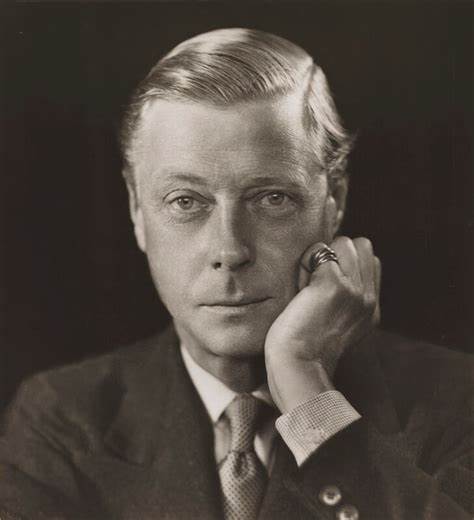
I read an interesting article on-line the other day about the late Duke of Windsor. Born as the heir to the throne of Great Britain, he was trained from an early age. His father, the King, wanted him to learn discipline and honor, so as to be prepared to assume his role. But Edward despised his father’s training. He found his father to be harsh and critical, prim and joyless. And he rebelled. He took little interest in the affairs of state, preferring to focus on his own pleasure. As his father grew older and weaker, Edward was asked to take on more royal duties. He enjoyed making appearances at parties, but despised many of the other tasks– letter writing, or visiting factories or various parts of the Commonwealth. He refused to settle down and marry, until he met Wallis Simpson, who was twice-married, and separated from her second husband. She was also an American citizen.

Edward VIII wanted to defy the laws and traditions of his own nation in order to marry. When this proved to be contentious, he decided to abdicate his throne, marry Mrs. Simpson, and live abroad. Instead, his brother became the next king (George VI), guiding his nation and the commonwealth through the difficult days of the second world war.

For many years, the myth of a king who gave up his throne to be with “the woman I love” has prevailed. But there was more to Edward’s abdication than blighted love. Edward was not incapable of ruling, but he was unfit to rule it well. His lack of dedication to his duties and citizens became evident in the very first crisis. Those who were working with him during his short reign witnessed his lack of care or concern about paperwork, and his selfish insistence on doing what he wanted to do, and not what was expected of him or of benefit to his people. He was a man without discipline and without a clear moral compass https://www.dailymail.co.uk/news/article-417388/Prince-Charmless-A-damning-portrait-Edward-VIII.html.

Photo by nappy on Pexels.com

The Bible is filled with many examples of kings throughout the history of Israel and Judah who also failed to learn discipline or restraint. Their desire to reap the benefits of their position without learning to fulfill their responsibilities led to the moral, and eventually the physical and political collapse of their nations. They did not make a habit of seeking God, or of listening to His prophets. They sneered at good advice, and defied the laws of Moses and the rules God had given for the kings. Some of them worshiped other gods; some even sacrificed their own children to foreign gods or goddesses. They failed to keep the sacred holidays; they failed to read the Word of God; they failed to pray– except as a last resort!

We often perceive prayer as a personal practice– and it is. But how we choose to develop our prayer life may be tied to how we choose to develop the rest of our lives. We don’t need to be rigid and legalistic about it. But we do need to live– and pray– with purpose, if we wish to follow the example of Jesus and grow in our walk with Him. Not only does it impact our life and growth– it impacts our witness and our influence as well. Pursuing prayer in a disciplined way may have a far-reaching impact on our life and the lives of others– even in the generations to come. For more, see the page Why I Keep a Prayer Journal

Cautious or Courageous?

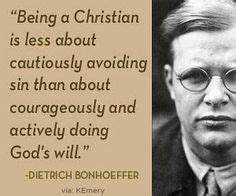
Being a Christian is less about cautiously avoiding sin than about courageously and actively doing God’s will.

Dietrich Bonhoeffer

Dietrich Bonhoeffer was a German pastor and writer who ended up sacrificing his life as he protested the Nazi regime in his homeland. Many of the things he wrote are uncomfortable for modern Christians to read. Sometimes, we want to coast along, joyfully celebrating our own Salvation, and ignoring the evil around us. After all, the ultimate victory is already won in Christ, isn’t it?

I write a lot about the power of prayer. And I stand behind what I write. But a life of prayer and Bible Study that doesn’t result in actively living out and spreading the Gospel is a life of lukewarm and selective obedience. This is not to say that we should skitter around trying to earn our Salvation with random acts and self-righteous crusades. But we must have the courage to “come out of the closet” as Christians in a dark and unfriendly world.

Photo by Pavel Danilyuk on Pexels.com

What does this look like? Does it mean wearing a badge or getting in people’s faces with “the Truth.” Perhaps. But mostly, it means every day living out the kind of love and truth that Jesus demonstrated. Jesus didn’t march in protests, hand out pamphlets with convicting messages, or start arguments to humiliate atheists in front of crowds. But He didn’t back down in the face of arguments and tough questions asked by His opponents. He ate with sinners– but He didn’t wink at their sin, or send them away reassured that they were “good enough” to please God. He went where God sent, spoke God’s Truth, and DID God’s work.

Jesus wasn’t a writer; He wasn’t a professor of Theology, or an elected official. The Pharisees were constantly frustrated with His lack of “credentials.” But their frustration came because Jesus spoke with the kind of authority they could never achieve– Jesus was authentic. He spoke, not from cold and lofty intelligence, but from wisdom and love. And Jesus didn’t just speak. He served. He listened. He lived out all that He spoke. He “courageously and actively” DID the will of the Father.

Jesus prayed and studied scripture. Jesus spent time alone communing with the Father. He spent time in rest. He spent time being social with His family and friends. But in every activity, He wove in the Truth of God’s word. And crowds followed Him. They wanted to listen, even as He spoke uncomfortable truths. And some of them came to love Him. Others came to hate Him, and even kill him.

We can’t be true followers of Christ and not risk being mocked, and hated. We WILL be misunderstood, laughed at, persecuted, ignored, and inconvenienced. We should not invite this with obnoxious or arrogant behavior. But we must not shrink away from it when it comes at us, or try to avoid it by being silent in the face of evil and injustice.

One of the recent charges leveled against Christians is that we meet evil with “thoughts and prayers” but little action. We must be wise and careful with such charges. Often, the taunt is thrown at us in an effort to get us to take a specific, ungodly “action” INSTEAD of praying. But we must honestly examine ourselves and ask what Godly actions SHOULD I be taking to make a difference? What actions should I be denouncing as ungodly, even if they are popular and seem to be “right?” And what must I do to defend the power of prayer in the face of ridicule?

Photo by Mikhail Nilov on Pexels.com

One of the other charges leveled against Christians is that we are “intolerant.” Again, we need to be wise and careful in answering this charge. Are we quick to judge others, while giving ourselves a “pat on the back” for merely avoiding a particular sin or sinful lifestyle? What is if about our life and work that makes others see us as “intolerant?” Are we exclusive and prejudiced in our interactions? Or are we humble in presenting the truth of God’s word? Do we speak from a need to defend our own actions or from a desire to help others? Are others offended by our words and actions, or by the truth of God as it convicts them?

Photo by Ketut Subiyanto on Pexels.com

I pray today that I would be courageous and active in LIVING the Christian life, and not merely writing about it.

In the Beginning Was the Word…

1 In the beginning was the Word, and the Word was with God, and the Word was God. 2 The same was in the beginning with God. 3 All things were made by him; and without him was not any thing made that was made. 4 In him was life; and the life was the light of men. 5 And the light shineth in darkness; and the darkness comprehended it not. 6 There was a man sent from God, whose name was John. 7 The same came for a witness, to bear witness of the Light, that all men through him might believe. 8 He was not that Light, but was sent to bear witness of that Light. 9 That was the true Light, which lighteth every man that cometh into the world. 10 He was in the world, and the world was made by him, and the world knew him not. 11 He came unto his own, and his own received him not. 12 But as many as received him, to them gave he power to become the sons of God, even to them that believe on his name: 13 which were born, not of blood, nor of the will of the flesh, nor of the will of man, but of God. 14 And the Word was made flesh, and dwelt among us, (and we beheld his glory, the glory as of the only begotten of the Father,) full of grace and truth.

John 1:1-14 (Authorized KJV)
Photo by Jeswin Thomas on Pexels.com

We celebrate Christmas as the “birth” of Christ. Yet, the Bible tells us that Jesus (Christ) was in the beginning with God: Jesus had no beginning and no end. He is eternal with the Father and Spirit. We call this season before Christmas “Advent”– we await and celebrate, not the birth of a new being, but the advent of His coming from Heaven to earth.

Photo by Pixabay on Pexels.com

Jesus came to Earth for many reasons– some of which are given in the Bible, and some of which are likely beyond our comprehension. He came to live among us as a man of flesh and bone (John 1:14); He came to bring life and light (vv.4-9); He came to live a sinless life, which He sacrificed as a ransom for the sins of the those who repent: and He came to serve others–to model the kind of service that God desires from us (Matthew 20:28). Jesus came in obedience to the Father (John 6:38). Finally, Jesus (as a member of the Triune Godhead) came because “God so Loved the World” (John 3:16) –He Wanted to come! The Advent was part of God’s perfect plan. It was not Plan B, developed after the fall of man. It was so “from the beginning.” It was foretold and prophesied. It was planned down to the tiniest detail.

Photo by Ketut Subiyanto on Pexels.com

Jesus has always been. He has always been The Word of God. Jesus speaks. Jesus listens. When we pray, it is natural to speak words to The Word. Jesus created us to communicate. Unlike any other creature on earth, mankind chooses to communicate through complex and subtle language, as well as through art, music, dance, architecture…even food! We chatter about trivia; we choose to wear certain colors to express our moods; we make silly faces at infants and delight in their own facial contortions.

Photo by Antoni Shkraba on Pexels.com

Prayer is so important, because it is the essence of expressing our hearts and minds to the very one who created us to BE communicators. God listens through all the words of all the languages we use (or the non-verbalized thoughts, groanings, etc.) to hear our true heart-cry.

Photo by Pavel Danilyuk on Pexels.com

This season, we take time to reflect on just what it means that Jesus was “In the Beginning…” as well as in the manger. We reflect that “before Abraham was”–He IS (John 8:58). We glory in the knowledge that He is the same yesterday, today, and forever! (Hebrews 13:8). These “words” give us life and hope and joy– not just now, but throughout all the years of our lives.

What a reason to say just a few words today in prayer!

When God Uses a “Wasted” Opportunity

God’s ways are NOT our ways. And often, we can become discouraged by things that have happened in our past or things that seem like obstacles in the present. But our vision is limited by both time and space. We can’t see things from the outside looking in, and we can’t see things unfolding before they happen. Instead, we use our imagination, which can give us a vision that is wildly out of perspective.

Photo by cottonbro studio on Pexels.com

Take the case of Jonah (see Jonah 1-4). Jonah was given a clear mission from God– go to the great city of Nineveh and give them a message of judgment. Jonah could not “see” the outcome, but he could imagine a lot of things that made him run in the opposite direction! Nineveh was the capital city of his arch-enemies. The Assyrian armies had swept through Jonah’s land, and had very likely killed several of his family members. They were notoriously violent and Jonah must have presumed that there would be great danger involved in traveling into Nineveh, let alone proclaiming a message of certain doom!

Photo by Alex Andrews on Pexels.com
Photo by Guillaume Soucy on Pexels.com

Jonah didn’t just ignore God’s command– he went as far as he could in the opposite direction. He wasted the opportunity to see what God had planned, choosing instead to run away. He boarded a ship for Tarshish. He probably thought that God would have to use someone else, or that He would bring judgment upon Nineveh without any warning. At least he, Jonah, would be safe. But God’s ways were not Jonah’s ways. God brought a fierce storm that threatened to sink the ship. The sailors were terrified, but Jonah felt the weight of his guilt. He told the sailors to throw him into the sea, and God would save them from the storm. Though the sailors probably felt they were sending Jonah to his doom, they obeyed. And they were amazed as the storm disappeared! Nothing about Jonah’s words or actions caused these sailors to see God’s glory, but see it, they did. And they worshipped

Jonah missed the opportunity to see how God worked “around” him to amaze the sailors– instead, he got another lesson in how God’s ways were not Jonah’s ways. Jonah may have expected to drown, but God sent a big fish to swallow him, instead. Jonah spent three days inside the fish, being saved from the icy waters of the sea, and transported back to land, where the obedient fish “spit” him out onto the shore.

God did not find someone else to send the message. God did not change His plans. God simply changed Jonah’s situation and gave him a second chance. This time, Jonah obeyed. And God performed another miracle. Instead of killing Jonah or ignoring his warning message from the Lord, the Ninevites believed. And they repented– from the King down to the lowest citizen. God relented and showed mercy in the face of such repentance. Jonah had the opportunity to see God’s mercy and wisdom.

Photo by Luis Quintero on Pexels.com

But Jonah wasted this opportunity, as well. Instead of seeing the gracious hand of God at work to change the hearts of his enemies, Jonah only saw that God had not acted with vengeance and harsh judgment. (Later, when the Ninevites returned to their old ways of life, God DID send destruction, but Jonah missed that, too.) In fact, Jonah was angry with God, and threw a temper tantrum as the Ninevites celebrated God’s kindness and mercy. Jonah was a prophet– he very likely had a long career doing God’s work. He probably had many successes, but the Biblical account we have of him tells only of his failure. In spite of that, we can see in the story of Jonah how God can use even failure to bring salvation and redemption to the lost. God’s ways are not our ways!

Photo by Daka on Pexels.com

Today, I want to be encouraged by Jonah’s story. So often, I get bogged down in the mistakes of my past–missed opportunities and failures, things left unsaid, or actions that can’t be undone. It is important that we acknowledge our sins and mistakes; that we do what we can to make amends, and that we repent. But we must also acknowledge God’s power to make all things work together for good (Romans 8:28) and remember that “He who began a good work in you will be faithful to complete it.” (Philippians 1:6) Know too, that God knows the plans He has for you (Jeremiah 29:11) even though you and I cannot see the end of the story. God’s ways are not our ways (Isaiah 55:8); they are higher and Holier. His wisdom and power are infinite, and His plans are ultimately for our Good.

“Wasted” opportunities need not lead to years of guilt and self-torture. Instead, they should be learning experiences that lead us to greater faith, quicker obedience, and greater joy!

God is Not On “Our Side”

Tomorrow is Election Day in the United States. It is a “mid-term” election. We will not be electing a national president, but we will be electing (or re-electing) all 435 federal Representatives to our national legislature, several Senators, some state Governors, and many state legislators. Some towns and cities will be electing mayors and council members; many school districts will be electing board members. There will also be many proposals on the ballots– in my own state, we will be voting on whether or not to change our constitution to legalize abortion, whether to change our voting laws, and whether to amend our statute on term limits for state officials.

Photo by Element5 Digital on Pexels.com

Pundits and worried voters will tell you that there is a lot at stake tomorrow. They will make it sound as though the world will end if “their” side doesn’t win–if their proposals don’t pass or their party’s candidates lose the vote count. While there IS a lot at stake in the vote, there is also a lot of hope, regardless of the outcome. No matter who “wins” or what proposals get passed, God is still on His Throne. It is God who forms nations, raises up rulers, or puts them down, and who sees the hearts and minds of all people.

Photo by Porapak Apichodilok on Pexels.com

God is not an American. He is not a Democrat or Republican. God is Sovereign over all the Earth. He does not “take sides,” in any way that we would understand. God, who promised to be the God of Abraham, Isaac, and Jacob– who promised to lead them to a land He would show them, and to establish their nation–is the same God who raised up Nebuchadnezzar to rule the Israelites during their exile. He is the same God who raised up Pharaoh, who enslaved the people of Israel, and used Pharaoh’s own stubbornness to reveal His power during the plagues and the parting of the Red Sea. God uses unlikely people to accomplish His purposes, NOT our agenda.

Photo by antonio filigno on Pexels.com

I believe that Christians have a clear duty to vote and to participate in civic matters. And I believe that Christians should be informed and critical voters, not rubber-stamping a candidate or agenda just because s/he/it “looks good.” But I also believe that Christians are to be honest people of integrity and honor, regardless of the outcome of a particular election cycle. That doesn’t mean that we can’t speak out against injustice, corruption, or deceptive campaign ads; nor does it mean that we can’t be conflicted about imperfect laws and candidates. In the final analysis, our ultimate allegiance and our ultimate trust must be found in God and in His Word. We are citizens of God’s Kingdom first, and our nation after that.

Groups, whether political or social groups, must be very careful about claiming that “God is on our side.” We must be far more concerned with whether or not WE are on GOD’S side! As individuals, are WE humble, honest, obedient, and committed to the truth? Are we working to build up our neighborhoods? Are we caring for the poor, the widows, and the fatherless among us? Are we turning a blind eye to evil in our midst, or worse, winking at corruption or excusing those in power when they abuse it in “our” favor?

Photo by Andrea Piacquadio on Pexels.com

God promises never to leave us nor forsake us (Hebrews 13:5). He promises to be by our side, all the way, all the time. But He never promised to be ON our side. It may be His will to bring judgment to our nation, our state, or our city, in the form of corruption and even failure. It may be His will to lead us through a time of hardship, chaos, and persecution. It may be His will to bring swift correction and justice where we have felt comfort and let our own moral standards grow lax. God’s will is always for us to grow, to improve, to become more disciplined in our own lives and more compassionate toward others around us. And His will is more important than our own comfort or being proved “right” over our political rivals.

Whatever God’s will is; whatever the outcome of tomorrow’s election, I pray that I will be a good citizen of His Kingdom, and a good citizen of my country. Of course, I hope that good measures and Godly candidates will prevail, but I know I can trust my Savior more than I can trust a ballot box. And His reign has no term limits!

Photo by Juhasz Imre on Pexels.com

The Greatest of These…

5-9 So don’t lose a minute in building on what you’ve been given, complementing your basic faith with good character, spiritual understanding, alert discipline, passionate patience, reverent wonder, warm friendliness, and generous love, each dimension fitting into and developing the others. With these qualities active and growing in your lives, no grass will grow under your feet, no day will pass without its reward as you mature in your experience of our Master Jesus. Without these qualities you can’t see what’s right before you, oblivious that your old sinful life has been wiped off the books.

2 Peter 1:5-9 (The Message)
Photo by Pixabay on Pexels.com

4 Love is patient, love is kind. It does not envy, it does not boast, it is not proud. 5 It does not dishonor others, it is not self-seeking, it is not easily angered, it keeps no record of wrongs. 6 Love does not delight in evil but rejoices with the truth. 7 It always protects, always trusts, always hopes, always perseveres…
13 And now these three remain: faith, hope and love. But the greatest of these is love.

1 Corinthians 13:4-8;13 (NIV)
Photo by Pixabay on Pexels.com

In 2 Peter, the Apostle gives us a list of character traits that we should develop as believers in and followers of Christ. The last two seem similar, but there is a reason both are there, and both at the end. As we follow in Christ’s footsteps, we should develop traits that mark growth in our relationship with God– faith, patience, hope, etc. But we should also show growth in our relationships with other people. We should interact with others as God interacts with us– we should show compassion, forgiveness, concern, generosity, and selfless Love for others. “Brotherly kindness” is what we should be ready to show to everyone– neighbors, strangers, and even enemies, included. “Generous Love” is not just a feeling of deep affection or even good will. The Love we should develop is selfless and giving beyond what we can offer in our own hearts. It is the culmination of all the other characteristics we are developing as we seek to become more Christlike.

Photo by Inna Lesyk on Pexels.com

“We love Him, because He first Loved us.” 1 John 4:19– It is Christ’s example of Love, coming from Himself (Father, Son, and Spirit) that teaches us what Love really is, and causes us to be able to love in truth and fullness. Christ came to serve–He did not live for His own whims and gratifications. He gave audaciously, loved lavishly, forgave freely, and lived humbly. The Apostle Paul underlines what Peter says in his letter to the Corinthians, chapter 13. We should learn to have faith and hope, but in the end, Love is the greatest characteristic we can develop.

Photo by Pixabay on Pexels.com

My one-time choir director once asked us to do this exercise: Write out 1 Corinthians 13: 4-8. Now substitute the word “Jesus” for each instance of the word, “Love.” Because God is Love (1 John 4:8) this is a valid substitution. “Jesus is patient. Jesus is kind. He does not envy,” etc… Think about how Jesus demonstrated what Love is as He interacted with His disciples– including Peter’s denial and Judas’s betrayal– and with those in the crowds. This is our model, and our assignment– this is how we should Love. Now comes the real test…substitute Your name to see how closely your life and actions resemble those of Our Savior. Can you say that your are patient and kind? That you don’t hold grudges or become easily angered? That you always hope? Always persevere? Of course, there will be instances when we don’t live up to Christ’s example– but are we becoming more Christlike? Are we growing in Love? Type this passage out three times– in its original text, with Jesus’s name, and with your name. Print it out and hang it somewhere where you will be reminded, convicted, and encouraged to live out Christ’s Love. If someone else reads it, they should be challenged, as well.

Photo by Luis Quintero on Pexels.com

Bringing this Bible Study back around to prayer– are we praying through these characteristics? Do we come with faith, obedience, understanding and discipline, patience, wonder, compassion and love? Do we expect God to do OUR will, or are we eager to see His will be done? Do we believe that God rewards those who earnestly seek Him (Hebrews 11:6)? Do we rejoice in the truth, and always hope, even in the moments of pain and injustice? Our prayer life will follow our growth in all these areas. I pray that we are all growing more like Christ each day. Let today be the next step in that growth– turn from yesterday, let God take care of tomorrow, and grow in this moment.

The “Curse” of Proverbs 31

If you are a woman who has grown up “in the church,” you are probably familiar with Proverbs 31. It is the chapter about a virtuous woman. She is the role-model that is held up for young girls and older women alike. And she is, like Mary Poppins, “practically perfect in every way.” She gets up before the sun, stays up late into the night–always busy, always productive; she never slows down. She never has a bad hair day, never loses her temper, never forgets to pack a lunch or fold the laundry. She never nags, never scolds, never pouts, and never has to raise her voice.

Photo by Andrea Piacquadio on Pexels.com

It helps that she has serving girls to do her bidding, and has her own business. She appears to be independently wealthy and active, yet she has time to raise children who “rise up and call her blessed,” and satisfy her husband, who “lacks nothing of value.”

I would love to say that I am just like that woman. Most days, however, I feel nothing like her. I don’t have money to buy a new field. I don’t get up before the sun and my hands are not eager to work. I don’t make and sell linen garments. No one is running around calling me “blessed” or singing my praises… I can never measure up to this woman. I feel cursed.

Photo by Andrea Piacquadio on Pexels.com

But a closer reading of this chapter makes me think again.

While the woman described in this chapter is a model to emulate, she is not the norm. Nor is she the standard to which I must adhere to “earn” my way into God’s good graces. Indeed, God’s Mercy is the richer and His Grace more precious for knowing that I cannot “measure up.”

Instead of using Proverbs 31 to beat myself up for not being perfect (or using it to discourage or intimidate others), I need to learn from it. Here are a few things I’m hanging on to as I read through it this week:

Photo by Luis Quintero on Pexels.com
  • “She brings him (her husband) good, not harm…” (v. 12) What are some ways I can bring good, not harm, into my home and marriage? How can I listen more, nag, less, be more available, and otherwise show love and care? I won’t be perfect, but I can look for ways to improve!
  • “She works with eager hands..” (v. 13) “She sets about her work vigorously…”(v. 17) I may not be spinning wool or flax in the early light; I may not have serving girls to order, but I have hands and work to do throughout the day. How can I do a better job of seeing chores as opportunities, rather than oppression and drudgery? How can I bring a greater sense of purpose to my tasks? I may not have serving girls, but I have appliances–am I “ordering” them properly by taking care of them, instead of just taking them for granted? And am I grateful for their help?
  • “She opens her arms to the poor and extends her hands to the needy…” (v. 20) What can I do to “give” more–donate, volunteer, provide hospitality and encouragement? How can I keep in mind that during various seasons of life the “poor” and “needy” may be in my own home and family–children or grandchildren needing nourishment and discipline; parents needing care and support…How can I be more available to those outside of my home, or during my work hours? Can I send an e-mail or make a call to offer encouragement? Can I share a recipe with a friend, or invite them to come with me shopping or to church? Can I make time to pray with a neighbor? Can I clean out a closet and donate clothes or linens?
  • “She speaks with wisdom, and faithful instruction is on her tongue..” (v. 26) What a challenge!? What is “on my tongue?” Gossip? Criticism? Complaining? Idle chatter? Do I speak too much? Do I remain silent when I could offer needed instruction, encouragement, or correction? Do I speak with gentleness and compassion? With conviction and truth?
Photo by Andrea Piacquadio on Pexels.com
  • “…she does not eat the bread of idleness..”(v27). Ouch! Everyone needs to rest– even the seemingly indefatigable woman of Proverbs 31! But am I becoming “fat” on leisure time? How much time to I waste on distractions and entertainment that could be put to better use?
  • “Charm is deceptive, and beauty is fleeting, but a woman who fears the Lord will be praised..” (v30) I may strive to be an “accomplished” woman– someone who is poised, talented, successful in business and society, with a picture-perfect house and garden, children on the dean’s list or the winning sports team; I can be will-traveled and well-educated, someone who seems to “have it all”–and still NOT be a woman of noble character. God isn’t impressed by my clothes or my achievements; He doesn’t give me credit for being “better” than my next door neighbor, or having the best kitchen on the block; God will not love me any more for being more successful or productive than anyone else. If my house is cluttered, my hair is untame-able, my kids have public melt-downs, and I don’t belong to the “in” club; if my business fails, my car is rusty (or I don’t have one), and my husband and I wear second-hand clothes, God still sees my heart. I can still be a woman who fears, trusts, and serves the Lord– one who is loved, accepted, and even “praised” by the One who matters most!
  • Finally, I can Pray to become a woman/wife of noble character (v.10), striving for good habits, rather than fretting over and wallowing in bad ones. I can trust God’s willingness and ability to transform my life and my attitudes. In fact, I am reminded of a seemingly unrelated portion of scripture from Philippians:

8-9 Summing it all up, friends, I’d say you’ll do best by filling your minds and meditating on things true, noble, reputable, authentic, compelling, gracious—the best, not the worst; the beautiful, not the ugly; things to praise, not things to curse. Put into practice what you learned from me, what you heard and saw and realized. Do that, and God, who makes everything work together, will work you into his most excellent harmonies.

Philippians 4:8-9 (The Message)
Photo by Tima Miroshnichenko on Pexels.com

I need to spend less of my time worrying about getting things “done”, than getting them done God’s way! I don’t need to fear the “curse” of Proverbs 31– failure to measure up to a model– instead, I need to see the opportunity to become a woman after God’s own heart– one who accepts God’s help and wisdom to become the woman HE wants me to be. I pray that God will give me the chance to develop–and help others–today and each new day.

Blog at WordPress.com.

Up ↑