
What’s That Smell?!

Years ago, when I worked in a public library, one of my jobs was to help empty the book drop. Most libraries have a large receptacle outside the building where people can drop off their books after hours. We had a “drive up” drop box, and the large bins would get full– especially over a holiday weekend! It was important to empty them out and get the books checked back in– and to check for damage.

I was always amazed at the state of some of our returned books. We were located near several beaches along Lake Michigan, and many of our books would return with sand trapped in the plastic covering (and between the pages) of many books. Some books came back with torn or dog-eared pages. Some had been marked with pens, crayons, or markers. Some books came back with unusual “bookmarks,” including utility bills, photos, letters, and even credit cards and drivers’ licenses!

But the worst one I can remember happened on a Tuesday morning after Labor Day weekend. There was a plastic shopping bag, tightly knotted at the top, containing two books. And it smelled HORRIBLE. It smelled like swamp water and mildew and dead animal! Inside, the two books were not just mildewed– they had mold growing in them. The books were almost a month overdue, but they were damaged beyond all repair, and I needed to call the borrower to let them know we would be charging a book replacement fee.

The story came out– I talked to the mother. Her daughter had taken library books to Summer Camp, and they had gotten wet after a rainstorm. Not wanting her clothes or other items to get wet, the girl had placed the books in the plastic bag. Summer Camp ended, and she packed everything–including the still-damp books inside the shopping bag– and brought them home. Somehow, the bag with the books ended up under her daughter’s bed, where they stayed for three more weeks! In the meantime, the mother had received an overdue notice from the library and couldn’t find the books. Certain that they had been returned, she had called the library to complain about “our” mistake. Several staff members had combed the shelves, trying to find the missing books, but hadn’t seen them.

Summer was coming to an end, and the girl in question was cleaning her room, which had begun to smell. She found the bag with her two missing library books– the source of the smell. Totally embarrassed, the mother brought the bag to the library book drop and threw it in, so she wouldn’t have to face us in person. She apologized profusely over the phone, and happily agreed to pay the replacement fee the next time she came in.

What does all of this have to do with prayer and worship?

Well, it’s a long and winding story, but here is my thought process today: It’s getting ready to rain. We have a small leak, and a bucket that catches the rainwater in our hallway. Water that drips into the bucket and stands for a few days will get fetid. That got me thinking about living water. Living water is described throughout the Bible– and it is always moving– flowing, rolling, gushing, pouring, etc., which reminded me of a verse in the book of Amos–“But let justice roll on like a river, righteousness like a never-failing stream” Amos 5:24 (NIV). But as I was looking at this verse in context, I was arrested by the verses just above–Amos 5:21-25 “I hate, I despise your religious festivals; your assemblies are a stench to me. Even though you bring me burnt offerings and grain offerings, I will not accept them. Though you bring choice fellowship offerings, I will have no regard for them. Away with the noise of your songs! I will not listen to the music of your harps. But let justice roll on like a river, righteousness like a never-failing stream!” (emphasis added).

God isn’t just mildly offended when we neglect justice, obedience, compassion, and truth. He calls the empty festivals of the wayward Israelites a “stench”– a nose-twisting, swoon-inducing, stinking, reeking, sweltering offense that causes the eyes to water and the whole body to convulse with repugnance!

And what had caused the festivals and religious assemblies of the Israelites to become a stench? They were following the rules for burnt offerings. They were singing songs and fellowshipping together. But it was all about THEM. They were not elevating and worshipping God, but worshipping idols dedicated to the stars and the sun and the moon. And they would leave the assembly unmoved, unchanged, and continuing in their wicked ways. They oppressed the poor and innocent and ignored the very God they claimed to serve.

Suddenly, my memory of the stench of those books attached itself to the condition of complacent, and even false worship as it was described by Amos. Those moldy books had been thrown into a convenient bag and then forgotten. They were ignored, shoved under a bed and returned late, shamefully treated, and falsely claimed as returned. Just like God’s people had treated His word, His commands, and His promises.
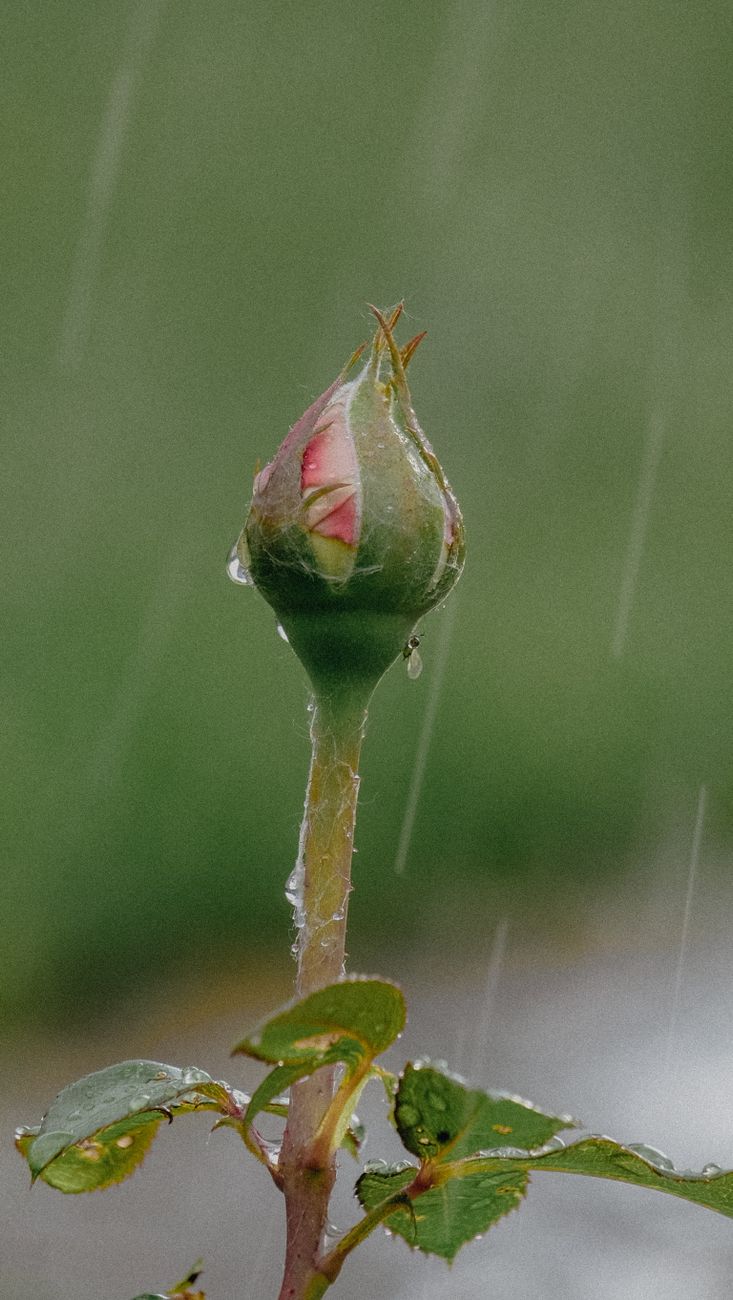
Water– rain water, river water, spring water–if it is allowed or even forced to sit still, can lose its freshness and stop giving life. Justice, righteousness, mercy– are all supposed to roll like water– they are meant to be shared, pursued, and spread. When we withhold justice, hoard mercy, compromise on obedience, make worship about spectacle and feelings instead of honor and true praise, we stagnate. Our testimony begins to stink. Our lives spill over with selfishness, bitterness, and apathy. When our praise becomes automatic, OR it becomes more about the spectacle than the Spirit– it will also stagnate and smell “off.”

As the rains arrive, I want to remember that God sends Living Water, not just to fill my cup, but to spill over and bring life to others, and glory to Himself.

Nothing smells like the freshness after a spring rain! And THAT’S the aroma I want to give back to God in my prayer time, my worship, and in my life!

“Little” Prayers

I was challenged the other day by someone who suggested that my prayers are “too little.” Well, not precisely “my” prayers– I head up a small prayer group at church, and we pray for people in our congregation and our community. We keep a running list of people who are suffering from various health issues or housing issues, relationship issues, etc. We also pray for our church staff, for missionaries that our church supports, for upcoming ministry opportunities and programs, and other seemingly “small” requests. These are posted on a list and shared with some of our church members who are shut in or who want to lift up their neighbors in very specific ways.

I don’t think this person meant to be insulting but I see our prayer group quite differently. These “little” prayers are heartfelt, and I believe they reflect the heart of our Savior. Yes, Jesus offered salvation through His death and resurrection to “whosoever believeth” (John 3:16) throughout all the ages, but in His ministry, Jesus was extremely personal and intimate. Among His disciples, Jesus taught them to ask for “our daily bread” and for simple forgiveness as “we forgive” those who have hurt us. (Matthew 6:9-13) And I think our prayer group reflects that aspect of prayer. So, even though our list may seem “small” as we pray for Ned’s pneumonia, or Clarice’s upcoming CAT scan, next week’s teen outing, or Chris’s continuing housing issue, it is also showing compassion and worth to each individual, sharing in their “burdens” (Galatians 6:2) because God loves each of us without condition or limit!

On the other hand, I think I know what this individual was trying to convey. We are also called to pray “big” prayers. Jesus encouraged His disciples to have “big” faith– the kind that moves mountains (see Matthew 17:20– although Jesus says that even faith as small as a mustard seed can result in this kind of answer!) “Little” prayers can be the result of “little” faith. We pray for God to intervene in ordinary things without asking Him to unleash His power and majesty. God is able to do infinitely more than we ask or imagine (Ephesians 3:19-20) through the power of Christ in us! So are we tapping into that promise, or limiting our prayers to what we think God might do on a small scale?

I don’t think our prayer group is doing this at all. We often pray for peace in the Middle East and in other war-torn regions. We pray that the spirits of Anger, Lust, Deception, and Rebellion will be bound and that the eyes of the lost will be opened; that hearts will be softened toward the Gospel, and that our brothers and sisters facing persecution will be, strengthened, emboldened, and protected/rescued. We pray for Revival and renewal across nations and continents. And we pray that in these “little” situations, God’s love, wisdom, and power will be shown clearly– even to those who deny His existence.

Prayer is a huge topic, and a lifelong pursuit. I was challenged by this comment the other day to look closely at how our group functions; at how I present prayer each week; at how we perceive the calling and responsibility of prayer. In the Proverbs, we are told that “As iron sharpens iron, so one person sharpens another.” (Proverbs 27:17) Comments like the one that challenged me the other day are golden opportunities to learn, review, and grow in our daily pursuit. The Church is strengthened when we allow for each member to speak– especially if it stretches our view of things we take for granted!

I don’t believe there are any prayers that are “too little” to bring to God– He delights in our smallest steps of Faith; in our complete and simple dependence on Him. But I also don’t believe that our prayers can or should be limited by the mundane and ordinary. We should come boldly to the throne of Grace– not because of who we are or what we’ve done, but because of the Awesomeness and perfect Sufficiency of the God we serve!

Oh, Be Careful, Little Tongue

13 Suppose I speak in the languages of human beings or of angels. If I don’t have love, I am only a loud gong or a noisy cymbal. Suppose I have the gift of prophecy. Suppose I can understand all the secret things of God and know everything about him. And suppose I have enough faith to move mountains. If I don’t have love, I am nothing at all. Suppose I give everything I have to poor people. And suppose I give myself over to a difficult life so I can brag. If I don’t have love, I get nothing at all.

1 Corinthians 13:1-3 (NIRV) via biblegateway.com
Photo by Sora Shimazaki on Pexels.com

We run a small shop, my husband and I. The other day, a sweet-looking elderly lady came in looking for antique buttons. She was delighted to find a few that would suit her purpose and she came to pay for them. We struck up a conversation, and I was appalled to hear the words coming out of her mouth. It was like listening to an R-rated stand-up comedian–filled with profanities and bigoted remarks–all delivered in quiet, honeyed tones. I was stunned!

Photo by Ron Lach on Pexels.com

Such talk becomes habitual. Most people don’t even notice how often they say offensive words or off-color remarks. In this situation, I simply kept a kind of stony silence– I neither exploded with offense, nor nodded in compliance. She stopped talking and made her exit, knowing she had somehow displeased me, but likely unaware of how she actually sounded. I felt guilty for not having challenged her, but I truly think she was oblivious. She had not been swearing in anger; she had not used obvious slurs, but to me, her language was like a cesspool. My ears felt dirty just listening.

Photo by David Selbert on Pexels.com

But after I had judged her harshly, I turned the lens on myself. How often do I offend others with my language? I don’t mean with obvious swear words or racist language, but with careless statements or unkind sarcasm? Or with selfish empty boasts about how wonderful my life is or even how good God has been to me? How often do I sound like a clanging, clamoring “noisy cymbal?”

I love to talk, but do I talk with Love? Do I speak words of truth and beauty; blessing and encouragement? Do I speak words of conviction out of love for others, or out of my own contempt? Do I pray with a heart of grieving for those who struggle, and those who are lost? So I assume, as this woman did, that my ugly words will be accepted because I speak them in polite and dulcet tones to someone who looks like me? Or because “everyone else” I know uses such words or spreads such opinions? Do I choose to listen to celebrities, or neighbors, or family members whose speech is filled with hatred and filth? Do I add my nervous laughter when others make careless remarks– worse yet, am I developing bad habits in my own speech or in my social media interactions?

Oh, be careful, little tongue!

Blog at WordPress.com.

Up ↑