I don’t know about anyone else reading this, but I need a reminder every so often about living in the present (including keeping my prayer life centered in the present). It is very tempting sometimes to wallow in the past or dream of the future. There’s nothing wrong with learning from past mistakes or making future goals, but we are not to waste our time or our energies pursuing what isn’t, while ignoring what is happening around us.
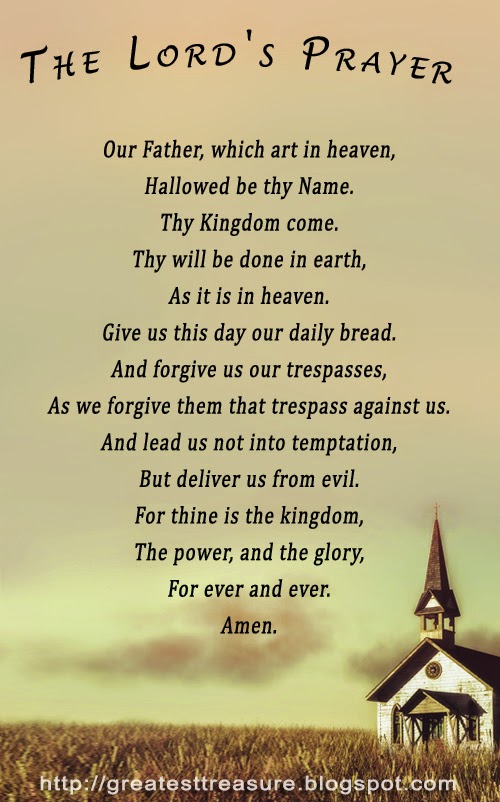
If we look closely at the Lord’s Prayer, we see how centered it is in the present. There are a couple of forward-looking phrases (Thy kingdom come…lead us not into temptation…For ever and ever..) but most of the prayer is for the present and foreseeable future.
I need to be reminded, through Christ’s example and through scripture, that God wants me to trust Him for my daily needs and follow one step at a time. If I find myself spending more time asking God for things far out in my future, or continually bringing up things from my past, it may mean (though not always) that I am not fully trusting in the sufficiency of His Grace for today.
God has already seen my past– and loves me unconditionally. His Grace will not be rescinded each time I face a reminder of my past; He will not change His mind if someone else carries a grudge against me.
God has also seen my future. He knows my needs, my concerns, my desires. He wants me to bring my whole heart to Him in prayer–a heart that is ready to trust His provision and plan, even when I don’t know the details.
Think what would happen if every parent-child conversation involved the following themes:
“Mom, do you remember the time I tipped over your plants when I was five, and you yelled at me. I just want to tell you I’m so sorry I did that. I know you said you’ve forgiven me, but I need to ask you again.” “Dad, I know you were disappointed when I got into a fight with my brother back when I was eight, but I hope you can see how I’ve learned a lot since then. Please don’t hold that against me today.”
“Hey, Dad, I really want to drive when I turn 16. Can I ask you for a purple sports car when I turn 16? I want to be a good driver, and I just know that you want me to be a good driver. I think a purple sports car would make me a great driver in another seven years.” “Mom, will you promise to babysit my kids after I have kids? I just know my kids will want to have a close relationship with you, so will you just promise to be close to my kids when I grow up and have them?”
There’s nothing essentially wrong with the actual requests– but when we focus on the past or the future at the expense of the present, we miss learning what God has for us TODAY. We also risk seeing God only for what He gives and what He has done, and not for Who He Is!
Let’s enjoy time with God today (and every day) as it unfolds.
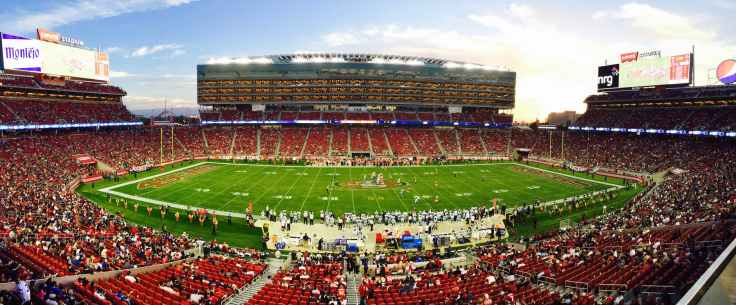
Last Friday, I attended a high school football game in my home town. It was homecoming, complete with floats and balloons, face paint, and screaming fans (myself included).
My hometown team is having a fantastic season so far– their record is 6 and 0, and they are winning by wide margins each week. I’m a little biased, not only since this is my home town, but because I have a nephew and a cousin on the team! They have already qualified for a spot in the playoffs for their division, and they have dreams of becoming state champions.
I hope they make it. I pray that they will play their best; that they will stay safe and healthy, too. I want them to win, and I think they have a good chance. But the season’s not over yet. They still have to play a couple of tough teams in the regular season, and they will face stiff competition in the playoffs.
As good as they have been so far, the teammates and coaches will still drill, train, and learn how to adjust the way they play based on whatever the next game throw at them. Next week’s team may be better at passing, or rushing. Their players may be bigger, or more agile, or more experienced than others. The weather conditions may play a bigger role next week.
All that to say that we all go through seasons– sometimes even “winning” seasons– and each one requires that we prepare, work, train, and persevere until the season is over. Some of us are facing a season of trials and losses–we’re waiting and hoping for the season to end. And it will. But the season’s not over yet. Stay in the game– keep praying, keep training, and keep believing that there will be a new season of hope. Some of us are in a season of victory! That’s great, but the season’s not over yet. Stay focused– keep training and preparing, and learning, knowing that there will come a season of trial. Some of us are watching others in their success–but the season’s not over yet. Stop comparing– reach out and connect. Show respect; show compassion.
This is true in all areas of life– there are seasons in our education, seasons in parenting and relationships, seasons in our careers and service, seasons in politics, economics, and even in our faith walk. And in every season, God is there. Like a proud parent or an ardent fan, He is cheering you on; like a great coach, He gives guidance and instruction; like a cherished teammate, He has your back. In all of this, God roots for all His children– not that some will “win” and others will “lose”, but that all will learn to play their very best and become “victors”.
No matter what kind of season we are in, or where we are in our season, we should remember a few things:
Life is both an individual and a team activity. None of us can “win” on our own, nor can we expect the team to “carry” us to victory without any effort on our part.
We can’t see the end from the beginning (or even the middle). But God can. And we can trust His guidance and His timing, even if we don’t see the whole picture.
God goes not see “winning” and “losing” in the same way the world judges it. What looks like “winning” to us may be superficial and false. What feels like losing may be building a Godly character that will overshadow the temporary struggles of this season.
Seasons come and go, but not everyone experiences them the same way or at the same time. In other words, don’t compare your winning swim season to someone else’s losing soccer season, or your dry summer to someone else’s monsoon season. Instead, focus on your own season and your own growth. Don’t close yourself off to others– you may have an opportunity to give or accept help, advice, training, and encouragement along the way–but don’t let others become more powerful (or less worthy of respect) than they really are.
At the end of the “season”, if we know Jesus Christ, we will share in the ultimate victory. The celebration that occurs over each person who comes to Christ makes any celebration here on earth seem dull and timid–no amount of parade floats, lights, fireworks, screaming fans, balloons, or other excitement can compare to the joy of welcoming a lost soul into the Kingdom of Heaven.
I’m revisiting Jonah today. The book of Jonah is a fascinating study–it’s just four short chapters, but they are packed with messages that inspire, convict, and encourage. More about Jonah here…
At the beginning of the book, Jonah is sent by God to preach disaster to a city steeped in evil and violence. Nineveh was an ancient metropolis of the Assyrian empire, located near modern-day Mosul, Iraq. The people of Nineveh had been responsible for attacks against Israel, and it is believed that Jonah may have lost family members in these attacks. Now God is sending him into the “belly of the beast” to preach judgment and doom. Instead of following God’s command, Jonah tries to run away and gets swallowed by a big fish.
This is the part of the story with which most people are familiar– Jonah and the “Whale”. But this covers only the first quarter of the story! Inside the fish, Jonah prays. It is a beautiful prayer of praise and acknowledgement of God’s might and power to save. This is not the sniveling coward of chapter one, but the great prophet he could have, should have been. God gives him another chance and this time, Jonah is faithful to preach the message God sends– forty more days and He will wipe out Nineveh.
But something unexpected happens. The people of Nineveh hear Jonah’s dire warning– a lone voice calling in the streets with a gloomy message– and they repent. From the least to the greatest, they cry out for mercy, they fast and mourn and do a complete about-face. Just as God saved Jonah from the fish, He relents and saves Nineveh from destruction. Jonah’s enemies get to live to see a new day!
The Ninevites repented, God relented, and Jonah resented. The last chapter tells of Jonah’s temper tantrum in the light of God’s mercy. God even sends him an object lesson in the form of a gourd vine. The book of Jonah ends abruptly with God’s last statement. We never read Jonah’s response; we never find out if he learned his lesson a second time or not.
Even with its abrupt end, the book of Jonah teaches about three important responses:
The people of Nineveh repented. When faced with judgment, they humbled themselves and called for mercy. They received it. In spite of their former violence, idolatry, and wickedness, God sent them a warning, and He extended the grace and mercy they did not deserve.
Two words of warning here:
1) Their response was immediate, sincere, and dramatic. That makes for an exciting story, but repentance sometimes comes over time and quietly. God knows if our repentance is real. It is not our place to judge someone else’s conversion or apology.
2) In the case of Nineveh, their repentance was short-lived. God eventually destroyed the city and the Assyrian empire. Just because we have a moment of sincere regret or keenly feel a need for mercy doesn’t mean that God has an obligation to extend mercy or to withhold judgment indefinitely. Grace is a gift, not a negotiation!
God relented. God listens, ready to extend His grace. He does not punish us as we deserve. He does not mete out immediate judgment without hope of redemption. God sent Jonah with a message of potential doom to Israel’s sworn enemy in the knowledge that they (EVEN THEY) would repent. God sent dozens of prophets to the nation of Israel warning of doom and exile, and they mocked and even killed the messengers! God is patient, loving, and kind. But He is also just– evil will not be forgotten or left unpunished. God will relent, but He won’t retreat, back down, or surrender.
Jonah resented. We don’t know if he stayed resentful, or rediscovered gratitude for God’s grace to Nineveh or to himself, but we are left with a picture that Jesus echoes in the story of the prodigal son. Jonah is like the older brother who worries more about his brother’s misdeeds than his brother’s soul. How many of us who have experienced grace sulk and pout when we see others enjoying their first delightful taste of it? Do we stamp our feet at God when he sends us to bring the Gospel to people we have written off as uninterested in or unworthy of it? Do we resent being corrected and humbled by a loving God? Do we worry and fret over our creature comforts as Jonah worried over his gourd vine, while others live without hope, food, or shelter?
Three words, so similar in spelling and sound, but so very different in impact!
Lord, I pray that my repentance would always be immediate and sincere; that I would see others, and their need for your grace, through your eyes of compassion; and that I would not resent your goodness and patience toward others. Thank you for your patience and mercy toward me, and may I give the same to those who need to see Your face. Give me the wisdom to trust you and obey, even when my flesh would run away. May I see the gourd vines and big fish in my life as your gifts.
My husband and I are licensed amateur radio operators. This weekend, we participated in an exercise/contest known as “Field Day.” Every year for Field Day, tens of thousands of radio operators across North America spend twenty-four hours trying to make as many radio “contacts” as they can, in conditions that mimic being “in the field” or off-grid. Many groups, clubs, and even individuals will set up in camp sites, open fields, county fairgrounds, barns, sheds, and other locations. Some will use their radios on generators, batteries, solar power, or the lowest power settings available. Some will have campfires and cookouts; others will order in pizza, but all of them will be seeking to make radio contact with people from all over the continent.
To make an official “contact,” certain key elements have to be exchanged. Every licensed amateur operator has a “call sign”– a unique identification code. There is also a “report”, telling how many radio stations are being used by the group, and what kind of conditions and power supplies are being utilized. Finally, there is a section code, telling where the station is located. Most codes are similar to the two-letter state codes used for mailing letters, GA for Georgia, CT for Connecticut, BC for British Columbia. All three elements must be sent, received, and understood by both operators to qualify for a “contact”. In other words, if I am listening, and I hear an operator in Texas give his call sign, his report code and his section code, it doesn’t count unless I know he has heard my information, and he knows I have his. Only if both parties have exchanged and verified all information can the contact be “logged” and counted.
Communicating via radio is an amazing experience, even in this age of cell phones, and Skpye, and social media utilizing satellites. Knowing that your voice is being carried by the thin air and transmitted to someone across miles using simple machines that use less power than a desk fan or a microwave oven is mind-blowing. But on Field Day, it is even more miraculous to listen as thousands of voices are carried simultaneously. The radio hums and crackles with the static of ten thousand tongues all trying to get their message out–“Here I am!” “Can you hear me?” “Did you get my message?” “Where are you?” “Who are you?” Letters and numbers and codes all mingle and form a messy barrage of sound. Voices, beeps, pops, whistles, and more assault your ears, before you can tune into just one understandable voice. There is a thrill in hearing that lone voice calling out their message..they could be anyone from any number of places. You get ready to respond, and then you hear it—static of a hundred other stations trying to get through. All those radio waves carrying the hopes and messages of a hundred or a thousand others just like you, wanting to make contact; wanting to be heard and understood.
Sometimes, miraculously, you get through on your first try– you send your call sign, and the other operator repeats it back, telling you it’s ok to send the rest of your message and receive his/hers. The two of you exchange the three elements, sign off, and you can tune to another frequency and try to make another contact. Most of the time, though, you spend several minutes calling out your ID, hoping to be acknowledged, only to listen as others get to make their contact, waiting your turn. Even more frustrating, as you wait, sometimes the atmospheric conditions change and the voices all fade out into a low buzz of static– the contact opportunity is lost. Conditions may change in another minute– or an hour– or not at all. I may hear from someone in Alaska, or Vermont, but I won’t be able to count them as a contact this year.
Field Day is exciting; sometimes frustrating, sometimes exhilarating. There is a thrill to making a contact and finding out that you’re talking to someone from Alberta, Canada, or South Florida, or Rhode Island, or the San Joaquin Valley in California. It’s exciting to make a contact, and realize it’s someone you know from a neighboring county! We have a logbook program on our computer that “shades in” the various sections as you key in a contact, so our map becomes colorful as the contest period continues, and we tense up to see if we can fill in most of the sections– can we “get” Hawaii? Nova Scotia? Wyoming? South New Jersey? Will the weather and atmospheric conditions cooperate? Sometimes a series of thunderstorms or solar flares can break through or distort the radio waves and make it impossible to stay tuned in long enough to send and receive even a short message. Sometimes, you can make clear contacts with certain regions and not with others, even ones close by– one year, we got zero contacts with a neighboring state, while getting several other regions hundreds of miles away!
While Field Day is exciting, and it serves as a great way to test and practice with radio equipment in case of a nationwide or region-wide emergency, it is still just an event–a single 24-hour period of making contacts with complete strangers (in most cases) for a couple of minutes.
Prayer is a thousand times more amazing than Field Day for a number of reasons. Think about it:
God is ALWAYS listening–twenty-four hours, seven days a week, every moment, every year of our lives.
God is ALWAYS tuned in to our cries– there is no distortion, no static. He hears millions of cries simultaneously and with perfect clarity.
We don’t need a “call sign” or identity code. God knows each voice intimately..He doesn’t have to ask us to speak louder or more distinctly. He doesn’t hear an “accent” or lisp, or rasp in our voice. He doesn’t have to ask us to repeat our request three or four times because He didn’t understand us the first time.
We don’t need a section code– God knows where we are better than any GPS system every invented. We can’t hide from Him, and He isn’t surprised to find out where we are, or where we came from. He already knows where we are and where we’re going!
Our messages can be as personal and as lengthy as we want. God doesn’t need to “hurry up” to get to the next person’s request, and He wants to hear all our thoughts and needs.
Prayer is not an event or a contest– it’s not a practice run–it is an actual conversation with our Loving Father!
You don’t need a license, or a radio, an antenna, or a microphone to contact God!
We can pray for others anywhere, anytime, for any reason, and God already knows the details– where they are, what their needs are, and what is best in the long run. Just as He already knows us intimately, He knows the needs of everyone we’ve ever met– and everyone we haven’t met yet! Some groups will have made upwards of 500 contacts over the course of Field Day– God can make millions in the same moment, and not miss a single one!
God doesn’t want to make contact with us to fill a quota for a contest; He doesn’t want to hear from us because it’s thrilling to hear from someone new. He wants to have a relationship with us– filled with love and trust and hope and joy. He doesn’t just want a Field Day with us– He wants Eternity!
Have you ever looked at a series of pictures that “zoom” in or out (or both)? Something that seems “normal” in size suddenly becomes a tiny detail in a much larger picture. Or one tiny detail grows large enough to show intricacies hitherto unseen. It is mind-blowing to think of how many details there are in God’s universe–little things that go unnoticed and unappreciated every day. But not by God. God knows and cares about every single detail– from the individual hairs on your head, to the variations and whorls of each of your fingerprints; from the gradations of colors in each moment of each sunrise, to the exact air temperature in each square foot of atmosphere around the world; from the wings of every butterfly to the fins of every fish– nothing escapes his notice or falls through the cracks.
We can pray with confidence that God hears every word we say, and knows the thoughts we can’t even put into words. I believe God loves to hear all our details. He loves listening to us, because of his great love for us. He wants us to hold nothing back. This is especially true when we pour out our deepest delights and our most pressing burdens. He wants to share them with us– to double our joy, and shoulder our pain.
I was reminded about God’s attention to detail while reading His word this morning. I was reading through one of the books of history (II Kings) in which the various kings of Israel and Judah are listed, along with short accounts of “what happened” during their reigns–some kings are given several paragraphs or a couple of chapters; others merely a sentence or two. In the midst of all this, there is a curious reference in II Kings 14:25. King Jeroboam II of Israel is accounted a generally wicked king, but he did restore some of the ancient boundaries of the country, “in accordance with the word of the Lord, the God of Israel, spoken through his servant Jonah, son of Amittai, the prophet from Gath Hepher”– that’s right, THAT Jonah– the one of the giant fish and the adventure in Ninevah (see Paltry Prayer ). How many times have I read the story of Jonah, and passed right over this reference to him in another book! The Bible is full of such hidden hints and corroborating details. I believe that God put them there to remind us of his great attention to detail. The God who lists genealogies throughout his word— long lists of otherwise forgotten names; the one who makes a point of listing palace guards and minor officials, and builders and temple workers–this God sees ME! He sees YOU! He hears us when we call. He knows all of our quirks and idiosyncrasies– and loves each unique detail of our makeup.
















 Pursuing Prayer