I had a small habit. Not a horrible addiction, Or a life-threatening compulsion. Just a little thing. No need to pray about it…
I had a toothache. Just a small one. I made a dental appointment. No need to pray about it…
My boss was giving me a hard time– She “had it out for me.” She was wrong, of course. Everyone else said so. No need to pray about it…
Finances were tight last month. We were just a few dollars short. No big deal. Some bills were paid a little late. No need to pray about it…
My son is having a hard time at school. There’s a bully in his class. I spoke to the teacher. I gave him advice. I told him all about the bullies I had faced. Bullies I had dealt with and overcome. No need to pray about it…
“Pray without ceasing.” (1 Thessalonians 5:17) “Cast all your anxiety on him because he cares for you.” (1 Peter 5:7) “Do not be anxious about anything, but in every situation, by prayer and petition, with thanksgiving, present your requests to God.” (Philippians 4:6) “Look to the Lord and His strength: seek His face always.” (1 Chronicles 16:11) “May my prayer be set before you like incense; may the lifting up of my hands be like the evening sacrifice.” (Psalm 141:2)
God is not so far away That He does not know my every need. The “small” things I keep from Him Keep me from seeing Just how close He really is…
“For though the Lord is high, he regards the lowly, but the haughty he knows from afar.” (Psalm 138:6)
We are approaching Thanksgiving in America. Too often, Thanksgiving is lost amidst the shuffle between Halloween and Christmas. No one dresses up for Thanksgiving; no one passes out treats. There aren’t the same long-standing cultural traditions that we have with Christmas– no trees to decorate, no “Thanksgiving” cookies to make, no “Thanksgiving” elves or Santa Claus. There are turkeys, and sometimes stories about Pilgrims and Natives sharing a peaceful feast, but even that has become a sore topic. In fact, for many people, Thanksgiving is about three things– eating, watching parades on TV, and watching Football (trying to stay awake after all that food!). Some families give a nod to the spirit of Thanksgiving by going around the table and reciting the things for which they are thankful. But we rarely take the opportunity to draw attention to the Giver of all good things. We are more likely to be thankful for things we have as a result (we think) of our own hard work, wise decisions, and “good luck.” Families may travel long distances to be together, but even that is going out of fashion, as young adults often opt to spend the day with their friends or even on their own, and older adults are often “celebrating” without any family present.
I love Thanksgiving. It is one of my favorite holidays. But I think we have lost much of the spirit of Thanksgiving. Thanksgiving is not just about one day with lots of food spent with family or friends. Thanksgiving is really a lifestyle. The Bible is rich with thanksgiving and praise:
“I will give to the Lord the thanks due to his righteousness, and I will sing praise to the name of the Lord, the Most High.” Psalm 7:17 “I will give thanks to you, LORD, with all my heart; I will tell of all your wonderful deeds.” Psalm 9:1 “Enter his gates with thanksgiving and his courts with praise; give thanks to him and praise his name.” Psalm 100:4 “Give thanks in all circumstances; for this is the will of God in Christ Jesus for you” 1 Thessalonians 5:18 “Do not be anxious about anything, but in everything by prayer and supplication with thanksgiving let your requests be made known to God.” Philippians 4:6 “And let the peace of Christ rule in your hearts, to which indeed you were called in one body. And be thankful.” Colossians 3:15 “Through him then let us continually offer up a sacrifice of praise to God, that is, the fruit of lips that acknowledge his name.” Hebrews 13:15
We have much to be thankful for, but when we look at the Bible verses, Thanksgiving is NOT about WHAT but about WHO. We can be thankful for good health, but we should “give thanks” to the One who gives LIFE– even when we aren’t enjoying perfect health. We can be thankful for our family, but we should really be thankful for the One who created and designed families– including our imperfect, slightly dysfunctional family.
Job learned this lesson well. He was extremely blessed– one of the richest men in all the land. He owned cattle and land, had a large family, and was highly respected. But when he lost it all, he still took time to thank God– not just for the good things He had given Job, but for who He was and is. Job acknowledged that the same God who gives is also the God who takes away– yet He is just, Holy, and awesome. He is sovereign and merciful. And, in the end, Job was restored to health, prosperity, honor, and given a new family.
Jesus was always thanking God– and not for the things we might expect! Jesus arrived in Bethany to find His friend Lazarus dead. Yet He thanked the Father. He did not thank God for “letting” Lazarus die, but He thanked Him for always hearing His prayers, including His prayer to restore Lazarus to life. Jesus thanked God for food– even though He proved that He could turn water into wine and small amounts of food into feasts! Jesus even thanked the Father for hiding His message from those who think they are wise, while revealing it to the lowly and meek. Imagine how much easier His ministry would have been if God had simply opened everyone’s heart and mind to accept that Jesus was the Messiah! But it pleased God to make Jesus’ ministry “fail” on many levels and lead to the Crucifixion. In spite of this, Jesus praised the Father for His wisdom and sovereignty.
We can be thankful to God, not just when things are going well, and we are feeling blessed, but when things are dark and chaotic, or we feel as though we have failed. We don’t ignore the grief of loss, the pain and struggles we face– but we look beyond to the God who sees, hears, heals, and makes all things new in His time. We can thank God in all circumstances, because He is GREATER than all circumstances!
This season, may we take time to contemplate– not just all the good things we have–but to dive deep into who God IS. May we say with Job, “The LORD giveth, and the LORD taketh away; Blessed be the Name of the LORD!”
I write about prayer as a pursuit. Prayer is, at once, both simple and mysteriously complex.
It is a simple thing to pray–to direct one’s thoughts and words toward God. It is no more difficult than having a conversation with another person.
And yet it is not the same as talking to another person. God’s ways are not our ways. He is Holy, Sovereign, and Almighty. We come to God in need, but God has no “needs.” He has no need to confide in us, or ask for our help, or plead with us. Instead, He chooses to share with us His promises and His plans. He allows us to be part of His great work, and asks us to be His hands and feet and voice in this world. He pleads with us to come and spend time with Him and walk in relationship with Him.
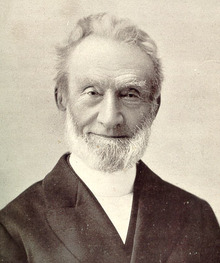
I spent some time recently reviewing the life of George Muller. https://www.georgemuller.org/ George Muller was born over 200 years ago. He was, by his own admission, a liar and a thief in his early years. But when we came to Christ, his life changed dramatically. His life was a series of miracles that attested to his great faith and active practice of prayer. Muller founded several orphanages in England, and he did all of it through prayer. He never did traditional fund-raising: he never asked anyone for money or donations, he didn’t take out loans, he didn’t find “partners” or “sponsors” to pay for any of the needs. He simply prayed. He prayed for money to buy buildings. He prayed that God would send workers. He prayed for food and clothing and furniture that the children would need. And he vowed to take in any (and as many) children who came.
The stories of George Muller’s faith are legendary. He prayed for money to start one orphanage– he ended up with enough for several! He prayed for supplies– people came and gave furniture. Milk wagons broke down and the milk was donated to the orphanage. One story states that there was no food one morning. Muller prayed. Shortly afterward, he went to the door, and there, on the doorstep, lay a 50-lb. bag of rice. No one knows who left it or how it got there. God showed up in miracle after miracle in Muller’s life. And that doesn’t mean that his life was without struggle or heartache. He agonized over friends who were unsaved; he prayed for them over a period of years. One close friend remained unsaved until after Muller’s death. He experienced the heartbreak of losing his wife. But he was consistent in his witness about the power of prayer.
Muller prayed about everything– as we all should, all the time. (Philippians 4:6, 1Thessalonians 5:17) Little, seemingly unimportant things; huge, seemingly impossible things. God cares about them all. He is the Almighty– there is nothing so big (or so tiny) that He cannot do it! There is no heartache or struggle that He doesn’t want to hear about! Nothing can separate us from His Love (Romans 8:38). No matter what we’re going through, we can bring it to God.
But God’s ways– powerful, compassionate, miraculous– remain mysterious. We can trust that God will hear our prayers. But we cannot predict how, or when, or if He will let us see the answers we seek. Nor can we predict how God will use our simple prayers to impact the world around us! George Muller’s orphanages helped more than 2,000 homeless children survive, grow, and in many cases thrive and contribute to the lives of countless others. And the stories of his faith and the hundreds of small but significant miracles he experienced have inspired generations of people for more than a century and a half! And his story is not unique–we have an amazing “cloud of witnesses” (Hebrews 12:1) throughout history testifying to the power of God to hear and answer prayer in mysterious, miraculous, even mischievous ways! From finding lost keys to feeding multitudes; from protecting kittens to rescuing captives; from stretching budgets to saving souls– God’s ways are mysterious, Holy, and wholly good.
Prayer can be such a simple thing– and it can have eternal impact!
If is a very short word, but it can cause a lot of trouble in our thoughts and prayer life. It seems harmless enough, but it can be very corrosive.
“If” is generally a speculative word. We waste precious time and energy on things that didn’t or haven’t happened. What if my circumstances were different? Why didn’t I get that promotion “if” I could have gotten it? What if I had made other choices in my past? Would I be in a different place now? Could I have a “different” life? What if something happens to my health? “If” seems to promise a lot of possibilities, and lead to a lot of pointless questions, but it delivers nothing concrete.
“If” is a conditional word. If…then… This is not always a bad thing, but it can warp our thinking about higher things, like God’s Love and Forgiveness. Sin and its consequences are conditional. IF we sin, there are consequences. Some of God’s promises have conditions– “If we confess our sins, He is faithful and just to forgive us our sins…” (1 John 1:9) But God’s love is not an “if”– it is constant and unwavering. His forgiveness is not based on whether we have earned it, or whether we go to the “right” church or say the “right” things. God’s promises are based on HIS eternal character and faithfulness. Nor is God’s truth conditional. It does not change or depend on our feelings or the opinions of our neighbors.
“If” takes our focus away from the present. We spend time wondering “what if..” about the future, or “if only..” about our past. And “if” is passive about the present. It causes us to focus on fear of the future and regret about the past, instead of action and accountability in the present.
“If” only has two letters, but the first one is “I.” I don’t spend much time asking “if” someone else made the right choices (unless I’m judging them, which is also wrong), or if something good or bad will happen to my neighbors. “If” usually focuses on MY wants, MY fears, MY past, MY circumstances.
“If” doesn’t have to hurt our prayer life or take over our thoughts, but it must be kept in check. The Bible has a lot to say about letting the “ifs”, “what ifs”, and “if onlys” take over our thinking:
Matthew 6:25-28 Isaiah 35:4 John 14:27 Jeremiah 17: 7-8 Luke 12:28-30 Psalm 59:16 Philippians 4:6-7
This month, I want to encourage you to let people know you are praying for them. This seems like such a simple thing, and not necessarily a way to improve one’s prayer life. After all, didn’t Jesus teach us not to brag about our praying? Aren’t we supposed to pray in private, not calling attention to ourselves? (See Matthew 6:1-15)
There are four “do’s” and a couple of “don’t’s” when it comes to telling others about praying that I want to emphasize today. Not because I have a perfect formula, but these are things I have found true in my own experience, and I think they line up with Biblical principles:
DO:
When you hear a need, pray about it. Don’t put it off; don’t promise to pray at a more convenient time. Do it now. If that means stopping in the middle of a conversation and praying with someone who is pouring out their heart– do it (assuming that it is possible). Not only is this practicing obedience to the prompting of the Holy Spirit, but it is honoring the importance and value of the other person. (see Philippians 4:6; Romans 12:12; Ephesians 6:18; others…) Showing others that their needs are important and that God cares about their needs is NOT boasting or being hypocritical. Just remember to approach with humility. Don’t be offended if they refuse in the moment; don’t use the opportunity to pray “over them”– pray beside them; pray with them; pray for their needs, not your own virtue-signaling. If you are worried about your actions being misconstrued or offensive in some way, ask first. “May I pray for you right now?” “Would you mind if we just stopped and said a quick prayer about this situation?” They can always refuse to let you pray immediately, but at least they will know you sincerely want to bring their burden before God. Also, if there is practical help you can give in the moments following, don’t hold back. Maybe their need is beyond your ability, but if you can direct them to counseling, aid from a local church group or non-profit, or offer to follow-up, you should do what you honestly can. Don’t promise beyond your ability, but don’t just pray and walk away, either.
The same goes for on-line requests for prayer. Don’t just scroll past someone’s need. It takes three seconds or less to type, “Praying”, or “I’m praying for you.” Again, if there is practical help you can offer, this is an opportunity to do so. There is no need to go overboard– but letting others know that someone “out there” is praying can be an enormous encouragement.
Be specific. Generic prayers aren’t “bad,” but they are often hasty and leave something lacking. The same goes for practical help. One of the mistakes I often make is to say, “If there’s anything I can do, give me a call.” I mean it– I want to help, and don’t know just how. But this puts the burden of asking on the person you meant to help! If you don’t know what to do– say so– but give them something solid to go on. It may be a phone number or e-mail, or an idea of a service you are able to offer–“I have Wednesday afternoons off if you need someone to drive you/go with you to an appointment.” or “If you ever want to meet for coffee…” or “I know the church has a Benevolence fund for unexpected bills and expenses. I could contact someone or give you their contact information,” etc..
Follow through! If someone asks for prayer for an ongoing concern, make a point of checking in every so often. Call, send a note or text, stop them at church and let them know you are still thinking of them and praying for them. This can also be another opportunity to offer practical help, a hug, or other form of encouragement. Often a week or two can be time enough to reveal practical steps to meet some of the smaller needs related to a big crisis or situation.
DON’T:
Say you will pray and then forget to do it. I used to be bad about this on-line. It only takes three seconds to promise to pray or to type a message about prayer, but don’t say it/send it if you aren’t going to act on it. Either stop then and there to pray about it, or stop and write it down where you will see it later and act on it! Good intentions are NOT enough to bring real encouragement and change. And good intentions do not form a disciplined and growing pursuit of prayerful living. In fact, such lost opportunities can become a barrier to our prayer life AND our relationships with others.
Break confidences. If someone asks publicly for prayer, it is fine to respond publicly that you will pray or are praying. It is NOT fine to then share someone else’s burden with ten of your other neighbors or closest friends. It is not fine to repost someone else’s request without their permission. It is not fine to publicize others’ private burdens, confessions, or pain. You may want to ask others to join in prayer, but don’t share details and names. Even if you have permission to share a prayer request, it is not for you to pour out someone else’s feelings, relationships, or struggles. This is another area in which I’ve had to learn a lot. I tend to over-share my own struggles when asking for prayer, and I want others to be concerned, so they will pray also. But it is very easy to fall into gossip, oversharing, and speculation, which has no place in prayer– and no place in my relationships! Share only those specifics that are helpful– “S______ is battling cancer. She has an appointment with her oncologist this week and would like prayer.” It is tempting to give the time and date of the appointment– and S______ may be ok with you doing this so people can be praying “in the moment.” However, she may be concerned about too many people knowing when she will or won’t be home, which might tempt a burglar. She may not want to receive a host of phone calls later that afternoon from people wanting “updates” or wanting to “cheer her up” when she is exhausted. Respect others’ privacy.
We are commanded to pray for one another (see Galatians 6:2; Colossians 4:2, etc.) And prayer is the most powerful tool we have to help those around us. Even though I recommend “practical” help along with prayer, I do not mean to say that prayer is impractical. Prayer IS practical and powerful. It should never be dismissed as “lesser than” other forms of help. But neither should it be used as an excuse not to meet needs in others ways as God gives us resources.
Making a habit of praying for others– really responding to needs immediately and faithfully in prayer– is a great way to experience its power. We will see God working through the prayers we offer– not just in the way He answers in the lives of others, but in the way He will change our hearts and minds about situations, relationships, and in growing Faith and confidence. It will train you to listen for needs, and to prepare to help. It will also train you to see needs in your own life, and make it easier to trust God with the needs in your life. You will find it easier to share your needs with others, and to accept help when you experience how much your efforts (even small ones) can encourage others. It may even encourage you to begin networking with others to meet needs and be proactive, instead of just reacting to needs after they are felt! If you are already strong in this area, be grateful for the way God is using you in the lives of others. If you are struggling in this area, I hope you will persevere. God is gracious in giving us opportunities to grow and serve!
6 Do not be anxious about anything, but in every situation, by prayer and petition, with thanksgiving, present your requests to God.
Philippians 4:6
Sometimes, I write because I feel as though I have received wisdom to pass on about prayer. But sometimes, like today, I write because I need to confess how much I still need to learn (or put into practice)!
My mother has been in and out of the Emergency Room over the past few weeks. It’s not that she is experiencing actual emergencies–heart attack or difficulty breathing or broken bones or blood clots (though she has been checked for all of these at one point or another). Instead, she is experiencing pain and fear– fear that her pain is related to a larger issue that could be life-threatening. My mother is 88 years old, and there is a reasonable fear that her health is deteriorating and that death is closer than she wants to think about.
The other day, I received a call from a dear friend and neighbor of my mom to say that she had stopped by to visit Mom and ended up taking her to the ER at the local hospital. Again, Mom was not in medical distress requiring an ambulance– this was not a “life or death” call; but Mom hadn’t slept well, she was hurting, and she just didn’t feel “right.” She had just seen her physician last week, and she had an appointment to see another doctor the next day, but she was afraid.
I was very much less than gracious about receiving the call. My siblings and I are exhausted, frustrated, and worried. I can’t speak for the others, but I feel guilty about not doing enough, and guilty for doing “too much” all at the same time. My emotions were raw; my gut was churning, and my mind was a complete disaster. I couldn’t think clearly, and I couldn’t “feel” anything. As a “last resort,” I sent out a request via Facebook asking others to pray for my mom– I didn’t feel like I could even do that on my own.
Of course, there is a power in prayer that goes beyond anything we can comprehend, much less explain. Within minutes, over three dozen people let me know they were sending prayers for my mom. But more than that, I received a call from my cousin–and he had just the words to assuage my false sense of guilt and refocus my thoughts and emotions. As time passed, our friend called with an update–Mom has severe arthritis in her back, and another minor issue that should respond to simple medication. She will still have pain; but now she has one less reason to worry about the cause.
I can’t say that this is the “end” of the frustration, exhaustion, or even the worry about my mom’s declining health. We are still struggling with various questions and decisions she needs to make for the future.
But this episode reminded me that prayer should not be a “last resort” when facing the unexpected. It’s not that I haven’t prayed about Mom’s health recently– a lot! But in that initial moment of hearing about yet another trip to the ER, my first thought was not to “take it to the Lord in prayer,” but to worry and let my thoughts run everywhere but up.
Thankfully, God is eternally gracious and powerful– willing to give the doctors wisdom in dealing with my Mom, and willing to give me peace and restore my flagging faith. Mom still has to face pain; my siblings and I still have to face the looming reality of life “after” God calls Mom home, and the chaos and uncertainty in the time between now and then. But we can seek Him first, with confidence and hope, rather than letting worry sap our energy and steal our joy. God’s love and grace are more powerful than worry and doubt, fear and guilt.
I’ve mentioned it before, but one of my earliest memories is of my Mother singing and humming an old hymn as my lullaby. Even as I watch her struggling with end of life issues, I am joyfully anticipating that this season will give way to being “lifted” by Love into eternal bliss. I am so grateful that this song is etched in my heart– even when I need a reminder. So I’m going to listen and let it be part of God’s comforting message to me. And I hope, for anyone struggling with stress, guilt, worry, or fear, that it will be “uplifting” for you today, as well.
I hope that today will be filled with peace, joy, and blessing for anyone reading this. But I know that today will bring bad news for some, pain for others, and hardship for many. Life is filled with struggle, disappointment, failures, and loss. Our first reaction is often to worry, which can lead to more worry, and a sense of urgency, even panic. In many cases, we have neither the resources nor the wisdom to overcome our struggles–even sustained effort or a “lucky break” may leave us without much hope. And the more we worry, the less we accomplish. But telling ourselves (or others) to simply “stop worrying” doesn’t banish worry; sometimes it increases it! Now we worry about worrying too much, or we find new things to worry about.
But there is a time-honored and proven pattern that can help. Jesus spoke of it in His “Sermon on the Mount.” In Matthew 6, He gives us this advice:
“So do not worry, saying ‘What shall we eat?’ or ‘What shall we drink?’ or “What shall we wear?’ For the pagans run after these things, and your heavenly Father knows that you need them. But seek first his kingdom and his righteousness, and all these things will be given to you as well. Therefore do not worry about tomorrow, for tomorrow will worry about itself. Each day has enough trouble of its own.”
The Apostle Paul expanded on this in his letter to the Philippian believers. He told them to be anxious for nothing–that regardless of our situation or circumstances, we should not panic, but pray (seek God’s grace, righteousness, wisdom, and help). But more than that, we should present all of our prayers, petitions, and requests with thanksgiving and praise!
This is not the same as pretending that our struggles don’t exist, or that they are not important, or that we are glad about the pain, uncertainty, or hardship that they bring. Instead it is lifting our eyes to Heaven and finding that God is bigger than it all; that His grace, His strength, His wisdom is sufficient for the next step– for today’s worries–for today’s battles and burdens.
This doesn’t happen naturally or automatically–we must seek, pray, pursue righteousness, ask for help, and continue to stand firm. There are some who point to the words of Jesus, or of Paul as a kind of “magic formula.” If we repeat a few promises from the Bible, or if we pray certain prayers, or convince ourselves and others that we have “enough” faith, God is obligated to change our circumstances and give us the resolution or relief we want. God is not primarily interested in our relief– He is interested in our redemption, our renewal, and our eternal reality. In following this pattern of turning our panic into prayer, and our prayer into praise, He promises that we will experience His peace. Our panic will be transformed–even if our situation stays the same; even if it gets worse before it gets better!
So how do we practice this pattern; how do we train for this transformation?
Start by seeking God with abandon–pursue Him with your whole heart– thank Him for who He is, and for all He has done. It can be helpful to review some of the names of God–I AM, Almighty, Creator, Lord, King of Kings.. Or read a Psalm or find a song that reminds you of God’s character and power. Think of the times when God has been faithful in your own past.
Find something about your situation for which you can be thankful– genuinely thankful. Years ago, when I was young and single, I was laid off from my first full-time job after nine months. Was I worried? Yes! Where would I find another job? How would I pay my bills? But I resolved to start being thankful about all I had learned on the job– I had met new people, learned new skills, purchased a car…God knew my needs for the future, and even though I had to wait another eight months before I found a full-time job, I was able to find temporary work and interview for other jobs in the meantime. And I had friends and family who offered good advice and encouragement along the way. I know some situations are more painful and perplexing than the loss of a job. When I my father died, nothing made the pain less, but I could thank God for Dad’s life and the time we had with him. This is NOT easy, nor is it meant to be…It may not happen for days, or weeks–don’t give up!
Cry out to God– in praise, but also in petition, pain, confusion, confession, and raw emotion. God wants a real relationship with us, and that includes walking with us in the “valley of the shadow of death.” We don’t have to fear evil, or worry about the future, not because it holds no danger or dread, but because we never have to walk alone and defenseless!
Remember this is a pattern to follow, not a pill to swallow–none of this comes easy, and God’s peace is not an instant “fix.” Instead, it is a growing conviction that God is who He says He is– faithful, loving, victorious, eternal, and sovereign. Such peace defies our panic and erodes our worry, leaving us ready to face the battles before us, and move forward through the struggles.





























 Pursuing Prayer