Praying for Fiji

At least once each month, I want to encourage you with a practical step in pursuing a life of prayer. Today, I want to talk about how you can pray globally.

Photo by Monstera on Pexels.com

What does this mean, and how does it look? Well, it means making a concerted effort to pray for different places, people groups, and issues around the world. How you do that may look very different from how I choose to do it, but I’ll give you a peek into my method. You can tool around until you find what works for you.

I mentioned in a previous post that I once found a commercially-produced “Prayer Journal” on sale at a Christian Bookstore. It was a marvelous book with a world mission focus. Each week, there was a short discussion of a different “at-risk” people group. There was information about the region(s), the population, the average life expectancy, the literacy rate, the estimated percentage of Christians (as well as percentages for other religions) in the area, and more. There were suggestions about how to pray for the people/area, and then space to write notes and other prayer requests. I have never again found such a resource in a bookstore, but I decided to make my own journal.

Photo by Vlada Karpovich on Pexels.com

My journal takes up four notebooks– one for each quarter of the year– roughly ninety-two days in each notebook. Each day has a heading with a geographical location: a continent, a nation, a state or province, a city or town, even major rivers, deserts, and oceans. (In addition, I have space for the names of individuals with birthdays or anniversaries, and a space for urgent and immediate prayer requests for that day. In the front of the journal, I have a list of “Prayer Points” for the various days of the week– you can check out my page on Prayer Points here Proactive Prayer Points. The notebooks can be used from year to year, and have space on the back of every page to record answers.)

I don’t have the marvelous demographic information that was in the earlier journal, but I have an almanac or the internet if I want to dig deeper. In putting the notebooks together, I alphabetized all the names of places I wanted to include, narrowed the list down to 365, and assigned one place to each day of the year. Yesterday, I prayed for Fennville, a small town in Michigan where I used to be a student teacher. Today is Fiji, which comes next alphabetically. So I will be praying for Fiji, along with other people, places, and issues on my list. I may not know a lot about Fiji- I know it is an island republic in the South Pacific. I know that many Fijians are Christian, while others are Muslim or Hindu. But God knows everything about this group of islands– He knows if it is the rainy season there now, or if the people are battling sickness or poverty, or if they are in a season of clear skies and abundance!

So WHY do I recommend praying for Fiji (and all the other nations of the world, as well as major cities and even deserts?) Why Global Prayer?

  • First, it is Biblical, and it is a step in obedience. We are to “go into all the world” to preach the gospel (Mark 16:15). So we should also pray “into all the world”– pray for those who are going to other nations; pray for those who need to hear the Gospel in other nations; pray for those who are going FROM there into all the rest of the world. “For God so loved the WORLD…” (John 3:16). And so should we. Whether we can travel or not; whether we can study all the needs and factors of each nation or area or not, we should remember them in prayer.
  • Second, it will change your prayer life. I believe it makes my prayer life richer and more effective. Once again, it takes my focus off of me and lifts it to the God who holds the whole world in His Hands. I’m not just praying to “my” Father– I’m praying to “Our” Father. He loves me, and He listens to me, but He is big enough, powerful enough, and compassionate enough for the entire world! Once I acknowledge that, it changes the way I approach prayer.
  • It also is a great way to learn about the world and about other people and cultures! Imagine meeting someone from Fiji, and being able to say, “I have prayed for your homeland!” Imagine how much joy it can bring to pray for those places that have special meaning to your family and friends. I haven’t traveled the world, but I have met people from many countries. I’m still waiting to meet someone from Fiji, but if I do, I will have even more joy in praying for it next year on this day!
  • It brings discipline to my prayer life. Sure, I feel an urgency to pray for “hot spots” around the world– wars and famine, political upheaval and natural disasters call to mind certain areas of the world for prayer. But praying for an area without such prompts requires that I have some system in place. And who knows what God’s plans are for any given region on any given day, or what needs may arise that I can’t know about in advance?

So HOW can you pray Globally? I can recommend a few first steps:

  • Make a list. Maybe start with a single week. List seven locations– nations, cities, even continents or oceans (there are seven continents and “seven seas” after all). Perhaps you want to list places both near and far– local towns or villages AND faraway lands–over the course of a month or even a year.
  • Set up a system–you may want to use a notebook, planner, or calendar. Or you may want to set up a database. Your system can be set up weekly, monthly, yearly— whatever will work for you.
  • Be flexible and persistent. It has taken me nearly 20 years to settle on a system that truly works for me. Don’t be afraid to make changes or say “no” to a system just because it works for someone else.
  • Pray about it!
  • Resolve to DO IT. Many years, I spent so much time trying to “perfect” my system that I neglected to do the actual prayer! Please don’t let this happen to you. And don’t let guilt or impossible expectations keep you from your pursuit. Even if you take a step backward, forget a day, stumble through a week– Keep going!
  • Thank God for the opportunity to pray for others. Thank Him for loving the whole world (including you)! Praise Him for being a God who watches over every grain of sand and every drop of water in the oceans, over every bird of the air, and every precious life!
Photo by Porapak Apichodilok on Pexels.com

Imagine what can happen in our world if even a few of us are faithful in praying for all of us?! God is giving YOU an opportunity to be involved in HIS work throughout the world. Will you pray for Fiji today? Who can you pray for tomorrow?

Developing Discipline

In my last post, Pursuing Discipline, I spoke of journaling and being consistent in prayer as part of learning discipline. Discipline is an important part of the Christian Walk; one that we don’t always talk about. Discipline is difficult. Discipline is developed over time. And I want to be clear that keeping a Prayer Journal, like other forms of discipline, will take time and effort.

Photo by RUN 4 FFWPU on Pexels.com

My current prayer journal is the result of years of effort, changes, failures, and baby steps. Several years ago, I found, in a Christian Bookstore, an item called a “Prayer Journal.” It was pre-printed with wonderful facts about different unreached people groups to pray for each week of the year. It was set up in a “planner” format, with each week spread out on a double page, and areas for each day to write in appointments, notes, personal prayer requests, etc. I loved it. But it was specific to that year. As the year was drawing to a close, I went back to the same bookstore, eager to get the next year’s edition. I could not find it.

Photo by cottonbro on Pexels.com

I thought, “How hard could it be to create my own?” HARD! I did not have the resources to update the information about various countries. I did not like many of the other “planners” I came across. I wasn’t satisfied with apps and on-line planners and calendars. And I wanted to add space for local and personal prayer requests, including all the birthdays and anniversaries of people I know. I wanted a format I could use from year to year, so I wouldn’t have to enter the information over and over again. And I wanted a format where I could see it all, spread out in front of me.

Photo by Eva Bronzini on Pexels.com

More than twenty years later, I began using the system I currently use– four notebooks for each quarter of the year. Each page is a single day, with the names of people celebrating birthdays, anniversaries, or (in some cases) families mourning the loss of a loved one on that day. In the top corner, I have the name of a country, city, community, or geographical area. These are my daily focus points. In the front of the notebook, I have a reminder of the “Prayer Points”– those topical areas for each day of the week. The bottom half of the page is free for me to add in immediate prayer requests– hospitalizations, those who are traveling or moving, etc.. Each “new” request I add at the bottom gets “tagged” with the year of the request. This way, the journal can be used year after year, until I run out of space for requests, or it wears out! I leave the back of each page for answers. Some days, I go back and look at prayer requests from the previous week and write in the answers or progress. Sometimes, I am reminded to update the request. Sometimes, I see a request from a previous year, and I have not yet written the answer, or there has been an update. In this way, I can help focus my daily prayer time in the morning and/or evening. Of course, I can pray about anything, any time; this is just a way to pursue a more disciplined approach to prayer.

For anyone wanting to use or create a Prayer Journal– please take time to build it prayerfully and deliberately. But also be prepared to “fail.” I went through several notebooks, purchased planners and ready-to-use prayer journals before I found one that works well for me. And even now, there are days when I do not open my journal and use it as it was intended. It is not, after all, a ritual or a code to follow. Prayer is a pursuit– but it is just one part of the pursuit of a closer relationship with God. Disciplined prayer helps me focus on God, helps me understand more of His Character, and helps me build our relationship. Perfect prayer is not the goal, but building on prayer is the objective toward reaching the goal. Part of the building of character and discipline is the journey!

When Jesus’ disciples asked Him to teach them to pray, He did not give them a formula for a prayer journal. He did not give them a system for prayer. He gave them a very simple sample format. But Scripture gives us several other examples of prayers– long and anguished, poetic and joyful, even quick bursts of panic or exasperation. Prayer is far too complex to boil down to a single formula or system.

Photo by Luis Quintero on Pexels.com

I hope that what I write here helps you on a journey to discover the complexities of prayer. I hope that you, like me, will draw closer to God as you pursue ways to think about and to practice praying. Your journey, and your journal, will look and function far different from mine. But I hope you find one that helps you grow in discipline, in compassion, in knowledge, and in character. As for me, I will be turning my focus on East Timor, my nephew (who is celebrating his birthday today!), and business and financial issues. And then all the other things on my heart throughout the day! Because God is always listening, and God is always everywhere!

Pursuing Discipline

Prayer can take many forms and be many different things. I write about prayer as a pursuit– something done with purpose and with some kind of discipline. Prayer is not meant to be just another discipline in the life of a believer. “Pray without ceasing,” Paul says in 1 Thessalonians 5:17; but this is not meant as an exercise to pursue quantity of prayer over quality, or to spend every waking moment consumed with prayer to the exclusion of all else.

Photo by Karolina Grabowska on Pexels.com

However, we are called to be disciples– and that necessarily entails learning discipline. Any activity taken on without discipline can’t really be called a pursuit. It may be a hobby or an entertainment, but pursuit involves direction, dedication, and focus. And this includes our prayer life.

I want to be very careful in discussing this aspect of prayer, because I believe that there is a real danger of letting the discipline overshadow the purpose of prayer. HOW we pray is never more important than WHY we pray, or to WHOM we pray! But failing to make a plan for prayer can cheat us of the benefits of learning to pray deeply, consistently, and with greater focus.

Photo by Claire Morgan on Pexels.com

With this in mind, I want to spend some time each month talking about ways to “grow” a life of prayer. Today, I want to focus on journaling as a way to pursue prayer.

As with any discipline, the key is consistency. That’s why journaling can really help. Keeping a record every day of things to pray about, of reasons for praise, of people or issues to bring before the throne of Grace, can keep us focused. It can also help us chart God’s answers and His work in our lives and the lives of others. I keep four separate notebooks– one for each quarter of the year. But there are wonderful daily journals and notebooks that can work as well. Some come pre-printed with scripture or prayer prompts for each day. Some people use a pocket calendar or calendar app on their phone or computer. The method isn’t as important as having a planned approach.

Photo by Bich Tran on Pexels.com

I recommend having a daily focus that is consistent from week to week. For instance, on Sunday, I focus on The Church– missions, local church congregations, persecuted churches, evangelism effort, etc.. On Monday, I focus on Family and Friends. Tuesday, I pray for the Government– local, state, federal, and leaders of other nations. Wednesday is Community–community services, schools, businesses, neighbors, even roads and parks and utilities! Thursday is Global Day– things like war and drought, natural disasters and diseases. Friday, I focus on business and finances– my own, and others. Saturday is a day to pray about cultural issues, like abortion, marriage, gender issues, etc. That doesn’t mean that I don’t pray about family members on Thursday, or about a school shooting on Sunday. But it means that I pay special attention to those matters on particular days. Here are some reasons why:

  • God wants to hear from me about everything. But without a plan, I tend to pray about the same few things over and over. I pray about whatever is worrying me in the moment. And only that. God wants me to be aware of all that He is doing. He also wants to remind me that He is LORD of everything; big and small, immediate and long-term, far away or around the corner.
  • God wants me to be consistent and persistent in praying. But that doesn’t mean praying obsessively. Obsessive prayer can become nagging, doubt-ridden, desperate pleas. God listens to our prayers. And we can trust Him, even when we don’t get immediate answers or relief. We don’t stop praying, but we also don’t stop trusting Him for the next step in the journey. God is bigger than just one aspect of my life– no matter how urgent or overwhelming that aspect may seem today. My focus needs to be on God’s sovereignty, and not just my immediate circumstances.
  • God works in mysterious ways. I may not feel like praying for my Governor, or my neighbor, but it may be that my faithful prayer today is what God will use to make changes in some other aspect of my life. Praying for what I have on my list, rather than just what pops into my mind may actually remind me of something else, and help me see how God is working in an area I might have missed otherwise!
  • By practicing this discipline in prayer, I am learning discipline in other areas of my Christian walk.

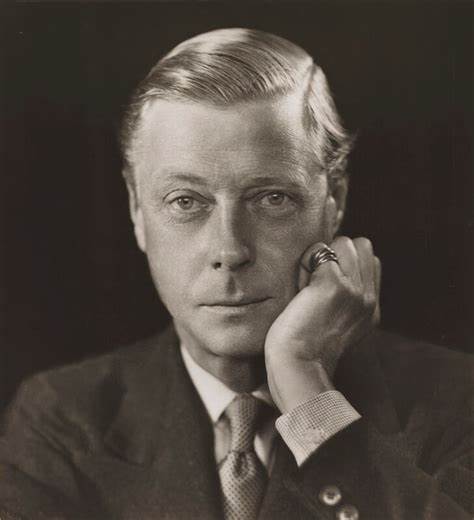
I read an interesting article on-line the other day about the late Duke of Windsor. Born as the heir to the throne of Great Britain, he was trained from an early age. His father, the King, wanted him to learn discipline and honor, so as to be prepared to assume his role. But Edward despised his father’s training. He found his father to be harsh and critical, prim and joyless. And he rebelled. He took little interest in the affairs of state, preferring to focus on his own pleasure. As his father grew older and weaker, Edward was asked to take on more royal duties. He enjoyed making appearances at parties, but despised many of the other tasks– letter writing, or visiting factories or various parts of the Commonwealth. He refused to settle down and marry, until he met Wallis Simpson, who was twice-married, and separated from her second husband. She was also an American citizen.

Edward VIII wanted to defy the laws and traditions of his own nation in order to marry. When this proved to be contentious, he decided to abdicate his throne, marry Mrs. Simpson, and live abroad. Instead, his brother became the next king (George VI), guiding his nation and the commonwealth through the difficult days of the second world war.

For many years, the myth of a king who gave up his throne to be with “the woman I love” has prevailed. But there was more to Edward’s abdication than blighted love. Edward was not incapable of ruling, but he was unfit to rule it well. His lack of dedication to his duties and citizens became evident in the very first crisis. Those who were working with him during his short reign witnessed his lack of care or concern about paperwork, and his selfish insistence on doing what he wanted to do, and not what was expected of him or of benefit to his people. He was a man without discipline and without a clear moral compass https://www.dailymail.co.uk/news/article-417388/Prince-Charmless-A-damning-portrait-Edward-VIII.html.

Photo by nappy on Pexels.com

The Bible is filled with many examples of kings throughout the history of Israel and Judah who also failed to learn discipline or restraint. Their desire to reap the benefits of their position without learning to fulfill their responsibilities led to the moral, and eventually the physical and political collapse of their nations. They did not make a habit of seeking God, or of listening to His prophets. They sneered at good advice, and defied the laws of Moses and the rules God had given for the kings. Some of them worshiped other gods; some even sacrificed their own children to foreign gods or goddesses. They failed to keep the sacred holidays; they failed to read the Word of God; they failed to pray– except as a last resort!

We often perceive prayer as a personal practice– and it is. But how we choose to develop our prayer life may be tied to how we choose to develop the rest of our lives. We don’t need to be rigid and legalistic about it. But we do need to live– and pray– with purpose, if we wish to follow the example of Jesus and grow in our walk with Him. Not only does it impact our life and growth– it impacts our witness and our influence as well. Pursuing prayer in a disciplined way may have a far-reaching impact on our life and the lives of others– even in the generations to come. For more, see the page Why I Keep a Prayer Journal

Consistent, Fervent Prayer

What does it look like (or feel like) to pursue consistent, fervent prayer? Is it an endless repetition of the same words? Is it mindless pleading, mixed with angst and flowing tears? Is it rehearsing the same requests over and over in an attempt to “get the right words” that will cause God to act?

No. Jesus addressed this very issue in His Sermon on the Mount, and just before He gave us a wonderful example of how we can pray:

And when you pray, do not keep on babbling like pagans, for they think they will be heard because of their many words. Do not be like them, for your Father knows what you need before you ask him.

Matthew 6:7-8 (NIV)
Photo by Tima Miroshnichenko on Pexels.com

If God already knows our needs, why SHOULD we practice consistent, fervent prayer in the first place? Because God desires to hear our heart cry. When something touches our heart– even though God already feels our sadness, pain, and fear–God wants to SHARE it in personal and intimate detail. What He does not want is for us to use prayer to try to manipulate a particular outcome, or to push our own desires and agenda ahead of His wisdom and sovereign will.

Instead, we should meet with God as our Father, knowing that He knows us, cares for us, and cares about the things that concern us. Consistent, fervent prayer is simply sharing our concerns with a loving God honestly over time.

Photo by cottonbro on Pexels.com
  • Whining and “babbling” shows that we don’t trust God’s wisdom. It’s like a toddler, who keeps saying, “Please….pretty please…pretty please with sugar on top…” “But I want it…I REALLY need it… REALLY…”
  • Saying nothing is no better. It is closing our hearts away from the one who loves us unconditionally. Sometimes, we try to over-spiritualize, saying that because God already knows our needs, we need not mention them again.
  • We need to find a middle ground. We need to be humble enough to say that we need God’s help and His wisdom, and huble enough to accept that His ways and timing are not the same as ours.

So what DOES it look like? Probably a little different for each person, but I think there are some guidelines:

Photo by Ian Panelo on Pexels.com
  • Consistent prayer means that we pray every day, throughout the day. About everything! Not just obsessively about our worries or needs, but about our joys and sorrows, as well as our questions, wonders, adoration, praise and confessions. Much like speaking with our best friends–the best ones are willing to listen to the same story about our cat even if we’ve told it twice before. They will cry with us next week as we share our continuing frustration with a rebellious teen or our parent’s journey with dementia. The difference is that God has a purpose and a plan in sharing our grief and our weakness beyond anything we can imagine. He is the “God of all Comfort” (2 Corinthians 1:3-5) as well as a God of healing.
  • Fervent prayer isn’t just anguished prayer or dramatic, emotional prayer. It is intensely humble and full of faith. The Apostle James gives an excellent example in chapter 5 of his epistle: 17 Elijah was a human being, even as we are. He prayed earnestly that it would not rain, and it did not rain on the land for three and a half years. 18 Again he prayed, and the heavens gave rain, and the earth produced its crops. (James 5:17-18 NIV) When Elijah faced the pagan prophets of Baal and Asherah, he prayed fervently, but he left the drama to the others. Elijah chided the prophets of Baal, because they prayed with raving, shouting, dancing, and cutting themselves in an effort to get Baal to hear them. Elijah’s prayer, while simple, was answered immediately and with dramatic effect. This wasn’t just a show of God’s awesome power through His chosen prophet. It was also a clear sign that Elijah was in constant communication with the One True God. He didn’t have to “get God’s attention.” He knew God was right there with Him. (See 1 Kings 18 for the whole story.)
  • Consistent, fervent prayer is part of a journey, not a destination. The same Elijah who was able to call down fire from Heaven, ran and hid in a cave and prayed to die! God wants us to pursue prayer the same way we pursue righteousness– knowing that God is the source of our wisdom and strength. He wants our anguished prayers as well as our prayers prayed in absolute trust– He wants them all!
  • I find it helpful in my personal prayer to have a journal. In it, I keep a list of people and places, concerns and requests. Each day of the week, I have a focus point for my prayers, and a list of specific people to lift up, plus a place for immediate and ongoing concerns. This does the following for me:
    • It allows me to put concerns into perspective. On Mondays, I concentrate on family and friends. That doesn’t mean that I don’t pray for my family on other days, but Mondays are focused on family and friends. On Wednesday, I concentrate on praying for my community. On Thursdays, I pray for global issues. This doesn’t preclude urgent requests or needs, but it keeps me from obsessing about some concerns at the expense of others. And it reminds me that God is the God of my family, AND my community, AND those suffering from a recent earthquake or famine.
    • A Prayer Journal gives me a place to write out my requests. Sometimes, seeing it in writing reminds me that God already knows– my concerns are written on His heart! No need to use the same words over and over again–but God may want to hear how MY heart has changed since I wrote the request. Maybe I have new information that changes my outlook. Maybe I can see how God is already working in the situation…which brings up another advantage of journaling:
    • I have a space in my prayer journal for answered prayer. Sometimes, I’m praying for someone from my church with a health issue. I can come back and write out God’s response– maybe He provided miraculous healing; maybe He took them “home.” Maybe He is causing them to travel a long road — giving them opportunities to bear witness to His faithfulness in every situation. Perhaps He is causing their family or caregivers to see Him in a new way!
    • Finally, a Prayer Journal helps me to be more consistent. I can turn to it every day for prompts and reminders of God’s love and faithfulness. God IS Fervent and Consistent– He is Faithful, and His Love is limitless. And He is the one who can teach me to be the same!
Photo by RODNAE Productions on Pexels.com

You’ll Never Pray Alone!

I attend a mid-week prayer meeting. Sometimes we have a dozen or two in attendance. The other day, we had just five. But God shows up every week! There is a mystical, spiritual quality in communal prayer– voices raised in praise, thanksgiving, and intercession; voices raised in agreement, in harmony, and in support. We spend nearly an hour in prayer; some stay after to pray longer, some stay silent for most or all of the hour, just listening and giving spiritual support by their presence. We also spend some time reading scripture, sharing updates on missionaries and community outreach programs, or updates on requests from previous weeks. And, in listening to others pray, we can “hear” their hearts and get to know them a little better. But this is not meant as a social hour. We are there for one purpose– to pray. It is a commitment to pray faithfully, to pray consistently, and to pray humbly and gratefully.

Photo by Tima Miroshnichenko on Pexels.com

We are blessed to have the opportunity to gather publicly and freely to pray. But what about those who cannot? Not everyone has the freedom in their weekly schedule to attend our prayer meeting (or other meetings that might be scheduled throughout the community). Not everyone lives in an area where public prayer is safe and encouraged. Some people are shut in. Some face persecution for their faith– public gatherings increase the risk of violence and arrest.

Photo by SHVETS production on Pexels.com

Most prayers happen in seclusion and isolation. And sometimes, this can lead us to believe that personal prayer is a small thing. One silent prayer in a room somewhere in Michigan may seem tiny and frail. It can seem puny and ineffective. And praying in isolation or under threat can feel even smaller and lonelier. We trust that God hears us, but we can feel so weak, so ineffectual. We long for support and communion. Praying in a group “feels” stronger, and more “important,” surrounded by fellow believers and hearing the voices chiming in with praise and heartfelt requests.

I value and appreciate meeting and praying with other believers, but most of my prayers are personal– said in silence in my own home. I pray by myself, often with my Prayer Journal in front of me; sometimes, just lying in bed, or sitting at my workspace. Yet, I never pray alone! Jesus, in The Lord’s Prayer, taught His disciples to pray to “Our Father.” But He must have known that they would also pray personal prayers. He did not teach them to say “My Father,” or “My God.” Surely, when we are alone, we can use those terms (as Jesus Himself did in the Garden of Gethsemane). But I think Jesus was acknowledging that God “inhabits the praise of His people” (Psalm 22:3)– and that when we pray, we are mystically and spiritually joined with God– Father, Son, and Spirit– and also with the family of other believers. And their prayers join with ours. When I pray, alone in a darkened room or closet, I may be physically separated from believers in Pakistan or Colombia, but I am spiritually linked with them (and they with me) in ways I don’t fully comprehend. I can’t hear their prayers; I can’t understand their language, and I don’t know their needs. Nor do they know mine. But God knows them all, and knits them all together in ways that bring Glory and Honor to Him! Praying with our Wednesday group (or any time I pray with other believers) helps me better feel this connection, but it goes beyond what we experience in corporate prayer. None of my “puny” prayers is lost in the fugue of a hundred thousand other prayers prayed in that moment– instead, they blend in with other silent cries and unspoken expressions of praise from all over the globe. They rise up like the notes of a never-ending symphony!

Photo by cottonbro on Pexels.com

Prayer is so much more powerful and deeper than we imagine! Today, let’s pray–together–knowing that whatever our situation or circumstance, we will never pray alone!

Laundry List Prayers

Do you ever feel like your prayer life has become an endless pile of laundry lists?

Photo by cottonbro on Pexels.com

I keep a prayer journal, and I have daily “prayer points” that help focus my prayers, but I have to be careful not to let my prayer life become all about “ticking the boxes.” It’s easy to see a list of names or a topic on paper or a screen, and make prayer about what is written in my journal, or making sure I don’t “miss” someone on the list. Prayer is a conversation, and it should flow like one. I would not like to have a conversation with someone who came to me with a long list of requests and nothing else.

Photo by cottonbro on Pexels.com

That doesn’t mean we can’t bring our requests to God– we should! And sometimes it makes sense to list them out methodically and specifically. But it’s also important to remember that God already knows all the concerns of our heart. He is eager to hear from us— not just our concerns, but our other thoughts, too. He wants to hear our excitement and joy over small triumphs; our questions and ponderings; and all the little things that make us go, “hmmm.”

Photo by Andrea Piacquadio on Pexels.com

When Jesus taught His disciples how to pray, He didn’t have a list of names or specific situations. He asked that “Thy will be done in earth as it is in Heaven.” (Matthew 6:10). He asked the Father to “give us this day our daily bread,”(v.11) without specifying when or how. And He asked, “Forgive us our debts, as we forgive our debtors,”(v.12) without naming names or reminding God of the debts involved! Sometimes we need to be reminded that that God knows our needs, our neighbors, and our universe far better than we do!

Photo by S Migaj on Pexels.com

Today, I want to put aside the “laundry list” and just spend time conversing with my Savior. I hope you will, too.

Praying for Bahrain

I have never been to Bahrain. I know very little about Bahrain. All I know is that it is a small country in the Middle East, located on a series of islands in the Persian Gulf. But I prayed for Bahrain the other day. It’s on my prayer calendar/journal. Every day of the year, I have a nation, city, or geographic region (desert, ocean, continent) to pray for. It’s somewhat random, and personal–many of the “cities” are really local small towns or places close to my heart–and it doesn’t make my prayers virtuous or important. My prayers can’t “save” the world, or any corner of it, from natural disaster or political corruption, disease, or any other malady common to our fallen world. So why do it?

Photo by Anna Shvets on Pexels.com

First, because God loves and cares about the whole world. It’s easy for me to focus on my surrounding community; my state; my country. I know the people and language and culture here. But there is nothing exclusive about God’s love. Throughout the Bible, it is clear that our God is a global God. Sure, God “chose” Abraham and the nation of Israel to display His Holiness. But He also raised up other nations and leaders– Pharaoh, Nebuchadnezzar, the Queen of Sheba, Caesar Augustus–and sent prophetic warnings to Babylon, Edom, Assyria, Egypt, and many other nations who neither knew Him nor worshipped Him. I don’t know enough to know how many of the people of Bahrain are Christians, Muslims, Atheists, or any other religion. I don’t know how many of them are suffering from depression, domestic abuse, or disease. But I know that God knows– and cares. Even though I am praying “blind,” I am making an effort to “see” God’s heart for others.

Photo by Monstera on Pexels.com

Second, as I pray for various nations, I become more interested in them. I learn more about them. I recognize them when they are mentioned in the news, or when I hear about people who live or visit there. Again, this doesn’t make me a better person, or my prayers better than anyone else’s–but it helps me be a more informed (and hopefully more compassionate) person than I was yesterday or last year.

Photo by Cameron Casey on Pexels.com

Praying for others reminds me of two important truths: I am very small in the scheme of things– one of more than 8 billion people on the planet! I cannot know them all; I cannot care for them all or influence them, or change their situations. But God can! I serve a God who not only knows all 8 billion individuals; He knows their thoughts, their pasts and their futures–He even knows the number of hairs on each head! The second truth that arises from that is that, small as I am, I am known by God. He cares about ME, just as He cares about each person that breathes. HE can change the small circumstances of my life, and the lives of those I know and love; AND He can raise up kingdoms and break down empires!

Photo by Karolina Grabowska on Pexels.com

Pursuing prayer is about following God. Part of that is learning discipline. God isn’t “grading” me on whether or not I pray for Bahrain, or Belarus, or Boston, or the tiny local town of Baroda. He isn’t going to turn His back on me if I don’t pray for any of these places. And He won’t love me more if I do. But I will get better insight into His character as I learn to pray faithfully, consistently, and compassionately for others– wherever they are.

Lord of All, Large or Small

I’ve written a number of times about my prayer journal. In it, I pray for individuals and individual requests, as well as praying for communities and regions each day of the year. I also use what I call “Prayer Points” for each day of the week. These are broad topics– The Church, Family and Friends, Government and Politics, Community and Services, Global Health (Healthcare, Diseases, Ecology, etc.), Business and Economy, and Cultural Issues. Often, these broad topics will lend themselves to specific needs or requests (which may overlap items in my prayer journal), but there are also times when the topics seem generic and almost overly broad. I use them anyway.

Photo by Pixabay on Pexels.com

Why?

It isn’t because I have any influence over such broad categories– but because God does! And I need to be reminded of that every day. God loves to hear our specific requests– heart cries and urgent needs–even bad hair days and misplaced keys. But He also loves to hear us acknowledge that “all the world” belongs to Him; that He is sovereign over our nations, our culture, His Church, our families, etc. He has authority over world economies, including all the factors we worry about– drought and famine, production, distribution, wealth (or lack thereof). He has the power to overthrow corrupt governments and bring justice. He has the power to defeat disease, and restore forests and rivers; to meet our financial needs, and to save marriages.

Photo by Johannes Plenio on Pexels.com

Moreover, He knows best in all these situations– even when I know next to nothing! My efforts to change society or fix the planet will be puny, and based on my limited knowledge and experience. Even my outlook on my own small community is limited– I don’t know all the individual people, organizations, or companies that make up my small town. I trust that God, however, knows each teacher, garbage collector, city worker, police officer, fire fighter, mail carrier, nurse’s aid, day care provider, physical therapist, food service worker, accountant, paralegal, banker, and shopkeeper (and all the other valuable members of my community)– AND He knows the number of hairs on each of their heads! It revolutionizes the way I think and the way I pray each day.

Photo by Cameron Casey on Pexels.com

Imagine what can happen when we pray this way collectively! Imagine the way it can change our outlook, and our actions. I can be saddened by the state of our culture or the breakdown of families. But I have a Mighty Father who has both the wisdom and the power to redeem them! I know I can trust God with everything– large and small. But it is easy to take that for granted, or to “know” it only in the abstract. Keeping prayer points where I can see them and use them daily helps me to live out the truth that I already know.

Photo by MART PRODUCTION on Pexels.com

So this morning, instead of worrying about our business or the larger economy, I will lift them up into the arms of One who can really make a difference! And I will pray for smaller and more personal requests– those in the hospital or grieving a recent loss; those who are discouraged; those who are celebrating birthdays or anniversaries, promotions or new opportunities; those who are lost, and those who have misplaced their keys (again).

Because God is the Lord of ALL. AMEN!

Why I Keep a Prayer Journal

I keep a journal of my daily prayer life. I have found it useful, and I recommend it as you pursue a lifestyle of prayer. Why?

  • It helps me keep organized and disciplined as I pray. Not everyone needs help in these areas, but I find that I do, and keeping a journal helps. It helps remind me to pray specifically for certain people, issues, locations, etc. That doesn’t mean that I don’t pray “in the moment.” But it means I have a focus when I sit down to start the day or finish the day in prayer.
  • It provides a place to document God’s answers to prayer. I leave space in my journal, and I go back through and note the ways God has answered prayers for various needs. It is a great reminder of God’s faithfulness and even His attention to detail!
  • It reminds me how BIG God is–I am amazed at how many different items end up in my journal. I pray for a lot of people each day, and a lot of different situations– needs, praises, confessions, worship, “unspoken” items, continuing issues…God hears them all. He knows them all before I even pray! Yet He delights in hearing them on my lips or in my mind.
  • It helps me focus on others. Life can be full of “self” distractions–“my” finances, or aches and pains, scattered thoughts, etc.. A prayer journal reminds me that others need prayer, that our lives are intertwined and impact each other, and also that others are praying for me. In that sense, it makes prayer a very unifying and “communal” activity.
  • It also makes my prayer very personal–conversely, using a journal means that my private thoughts and goals and relationships are in a journal for my eyes (and God’s!) only. I may write down a poem or someone else’s written prayers as well, but I’m not praying someone else’s heart-cry or someone else’s thoughts in place of my own.
Photo by Ian Panelo on Pexels.com

Keeping a prayer journal doesn’t make me a “better” prayer than anyone else. It doesn’t impress God or bring me closer to Him because I have a journal of my prayer life. And I don’t recommend it for any of those reasons. But I have found it easier to be more consistent and more confident as I pray. I am not journaling just my words or even my thoughts– I am journaling a relationship.

Photo by MART PRODUCTION on Pexels.com

How can you develop a prayer journal?

  • Do what works best for you–this is YOUR journal, not mine. I keep mine in four simple notebooks– one for each season, one page for each day of the year. But you could use index cards, or a calendar, or your smartphone or computer calendar. Use whatever works– it may take a few tries before you find what works best.
  • Pray! Ask God to give you wisdom about what to include or how to organize your journal. I use birthdays and anniversaries to remind me to pray for certain people, but I leave plenty of space for “spur of the moment” requests and ongoing issues. I also pray for various geographic regions, but you can organize it around cultural issues, family members, etc. There are even websites and books that can help you learn about various topics or people groups to pray for..
  • Start simple. You don’t need to have a year-long journal to begin the process. Try journaling for a month first, if that will help you keep with it.
  • Don’t let the journal become bigger than your prayer life. This is a pitfall I landed in early on. I had the ambition to have a “perfect” prayer journal– and it ended up so convoluted that I wasn’t actually praying! Starting small allows you to build the habit first, and add the discipline of journaling in a more natural way.
  • Ask for help– just remember that you don’t have to do it “just like” anyone else, and you shouldn’t do it just to impress someone else.
  • See the attached pages on keeping a prayer journal on this blog..

Pursuing a lifestyle of prayer is a great way to start a new year. And continuing is a great way to look forward in the new year!

In the Bleak Midwinter

It’s not actually midwinter just now. In fact, “winter” won’t officially begin for another few days. But it has been bleak around here.

Photo by Tan Danh on Pexels.com

I suffer from seasonal depression. In spite of the joy I know I should feel during this season; in spite of all the reasons I have to BE joyful, I have been in a funk. I’ve been physically ill, but even more, I’ve been mentally drained and emotionally overwhelmed for over a week. I’ve missed posting a couple of days recently, because I feel hypocritical writing about Christmas.

Photo by Laura James on Pexels.com

But I choose to write tonight about the enduring power of prayer. There are people praying for me, not because I’ve said anything about my condition, but because they are faithful in praying for people, and I happen to be one of them. The clouds are beginning to lift and I’m finding it easier to feel what I already know– that God is in control; that He cares; that He has a purpose beyond the sadness. It’s why I’m so passionate about praying and keeping a prayer log or prayer journal. I am one of those who pray for others, and I am one of those who are being prayed for–we lift each other up, even when–especially when–we don’t fully understand why.

Photo by Arina Krasnikova on Pexels.com

Some may ask, “How can you say that prayer works if you are depressed? Doesn’t that just prove that prayer isn’t working?” Some people mock the power of prayer in the face of “bad” circumstances. The recent school shooting in my home state of Michigan, or the recent spate of tornadoes in Kentucky and other states are prime examples. Sincere people of faith are being mocked for saying that their “thoughts and prayers” are with the people who are suffering. Mockers say that thoughts and prayers are meaningless–otherwise, prayers should have prevented the events in question from ever happening. In the aftermath, only actions are of value.

Photo by Kelly L on Pexels.com

In the face of disaster, distress, or depression, prayers may seem small and even meaningless. Most prayers don’t pack the power of a tornado, nor elicit such an immediate and dramatic response. My depression didn’t suddenly disappear the moment someone began praying for me; those whose homes and lives have been turned upside-down in the past days and weeks didn’t wake up this morning to find that it was just a bad dream. And prayer should be accompanied by thoughtful and compassionate action. But prayer heals– and healing takes time. God chooses to use the prayers of others to seep into our lives; to fortify us and draw us together. Actions may change the circumstances, but prayer changes the person. Prayer reaches beyond the circumstances and the limitations of our human nature.

So today, I will pray. Through the “funk,” through the pain, through the confusion and chaos of a troubled world, I will choose to pray. For those individuals listed in my journal; for those whose needs are posted online or made known to me some other way; for those whose names and faces come to mind throughout the day. Because it is God’s way. Because others are faithfully doing the same. Because, in the end, it brings joy and peace. Even when–especially when– things seem so bleak.

Blog at WordPress.com.

Up ↑