Push and Pull and Prayer

Many years ago, I watched the movie, Dr. Doolittle. (This was the old version with Rex Harrison, long before Eddie Murphy or Robert Downey Jr. starred in the more recent remakes.) I can still remember the wonder of seeing a “Pushmi Pullyu– a quirky, mythical-type creature that looked like a conjoined llama. It had two heads and two sets of front legs pointing in opposite directions. If one half of the creature wanted to run forward, the other half would have to try to run backward. It was large, awkward, timid, but rather useless for working, herding, etc.

Then, last week, as I was entering the ladies’ rest room at church, I was astonished to find it opening with only the lightest of touches. Just as I tried to push open the door, someone on the other side was pulling it open on her end. Both of us commented on how easily the door swung open as I pushed and she pulled at the same time. We didn’t plan it– we couldn’t see the other person helping us along– but the result was worthy of remark.

There are many things in life that have a push and pull element, including prayer. When we push and pull in opposite directions, awkwardness, complications, and chaos can be the result. How many times have I prayed very specifically for a desired result, only to find that MY will, MY timing, and MY wisdom is NOT the same as God’s?! God still hears– and answers– my prayers. But my expectations and desires cause me to be frustrated and even ungrateful for God’s response. Instead of seeing His protection and provision, I see only delay or denial. I’m trying to push God in one direction as He pulls me in another!

How much easier when I pray for God’s will to be done “on earth as it is in Heaven!” (Matthew 6:10) When I truly push in God’s direction, doors open and peace wraps around me like a comfortable blanket. I may not “see” God’s actions on the other side of the door, but I can sense His presence in a remarkable way!

The same is true when asking for prayer from others. Sometimes, we refuse to ask for help or prayer– maybe we’re too proud; maybe we are too ashamed to admit our weakness or need; maybe we just isolate or withdraw. At other times, we may ask for help (or offer help) that is contrary to what we (or others) really need. I remember one friend from college who would consistently ask for advice, only to come up with dozens of excuses why she couldn’t (or wouldn’t) follow any of it! And I’ve been there, too!

Praying with and for others is a great privilege and responsibility. It is not enough to simply listen to a quick request or make an offhand promise to “pray about it” later. It is important to listen carefully, show compassion, and pray according to Scripture and God’s will. Showing compassion may involve asking questions, getting some background about the circumstances, offering practical help, or stopping to pray WITH the person NOW as well as praying later.

Thankfully, prayer is not meant to be like a Pushmi-Pullyu. God designed prayer to be much more than a means of asking for help. And His power is designed to help us become “more than conquerors” (Romans 8:37). In fact, the Apostle Paul reminds us that God is “able to do exceedingly, abundantly, above all that we ask or think, according to the power that works in us” (Ephesians 3:20)


Pursuing Discipline

Prayer can take many forms and be many different things. I write about prayer as a pursuit– something done with purpose and with some kind of discipline. Prayer is not meant to be just another discipline in the life of a believer. “Pray without ceasing,” Paul says in 1 Thessalonians 5:17; but this is not meant as an exercise to pursue quantity of prayer over quality, or to spend every waking moment consumed with prayer to the exclusion of all else.

Photo by Karolina Grabowska on Pexels.com

However, we are called to be disciples– and that necessarily entails learning discipline. Any activity taken on without discipline can’t really be called a pursuit. It may be a hobby or an entertainment, but pursuit involves direction, dedication, and focus. And this includes our prayer life.

I want to be very careful in discussing this aspect of prayer, because I believe that there is a real danger of letting the discipline overshadow the purpose of prayer. HOW we pray is never more important than WHY we pray, or to WHOM we pray! But failing to make a plan for prayer can cheat us of the benefits of learning to pray deeply, consistently, and with greater focus.

Photo by Claire Morgan on Pexels.com

With this in mind, I want to spend some time each month talking about ways to “grow” a life of prayer. Today, I want to focus on journaling as a way to pursue prayer.

As with any discipline, the key is consistency. That’s why journaling can really help. Keeping a record every day of things to pray about, of reasons for praise, of people or issues to bring before the throne of Grace, can keep us focused. It can also help us chart God’s answers and His work in our lives and the lives of others. I keep four separate notebooks– one for each quarter of the year. But there are wonderful daily journals and notebooks that can work as well. Some come pre-printed with scripture or prayer prompts for each day. Some people use a pocket calendar or calendar app on their phone or computer. The method isn’t as important as having a planned approach.

Photo by Bich Tran on Pexels.com

I recommend having a daily focus that is consistent from week to week. For instance, on Sunday, I focus on The Church– missions, local church congregations, persecuted churches, evangelism effort, etc.. On Monday, I focus on Family and Friends. Tuesday, I pray for the Government– local, state, federal, and leaders of other nations. Wednesday is Community–community services, schools, businesses, neighbors, even roads and parks and utilities! Thursday is Global Day– things like war and drought, natural disasters and diseases. Friday, I focus on business and finances– my own, and others. Saturday is a day to pray about cultural issues, like abortion, marriage, gender issues, etc. That doesn’t mean that I don’t pray about family members on Thursday, or about a school shooting on Sunday. But it means that I pay special attention to those matters on particular days. Here are some reasons why:

  • God wants to hear from me about everything. But without a plan, I tend to pray about the same few things over and over. I pray about whatever is worrying me in the moment. And only that. God wants me to be aware of all that He is doing. He also wants to remind me that He is LORD of everything; big and small, immediate and long-term, far away or around the corner.
  • God wants me to be consistent and persistent in praying. But that doesn’t mean praying obsessively. Obsessive prayer can become nagging, doubt-ridden, desperate pleas. God listens to our prayers. And we can trust Him, even when we don’t get immediate answers or relief. We don’t stop praying, but we also don’t stop trusting Him for the next step in the journey. God is bigger than just one aspect of my life– no matter how urgent or overwhelming that aspect may seem today. My focus needs to be on God’s sovereignty, and not just my immediate circumstances.
  • God works in mysterious ways. I may not feel like praying for my Governor, or my neighbor, but it may be that my faithful prayer today is what God will use to make changes in some other aspect of my life. Praying for what I have on my list, rather than just what pops into my mind may actually remind me of something else, and help me see how God is working in an area I might have missed otherwise!
  • By practicing this discipline in prayer, I am learning discipline in other areas of my Christian walk.

I read an interesting article on-line the other day about the late Duke of Windsor. Born as the heir to the throne of Great Britain, he was trained from an early age. His father, the King, wanted him to learn discipline and honor, so as to be prepared to assume his role. But Edward despised his father’s training. He found his father to be harsh and critical, prim and joyless. And he rebelled. He took little interest in the affairs of state, preferring to focus on his own pleasure. As his father grew older and weaker, Edward was asked to take on more royal duties. He enjoyed making appearances at parties, but despised many of the other tasks– letter writing, or visiting factories or various parts of the Commonwealth. He refused to settle down and marry, until he met Wallis Simpson, who was twice-married, and separated from her second husband. She was also an American citizen.

Edward VIII wanted to defy the laws and traditions of his own nation in order to marry. When this proved to be contentious, he decided to abdicate his throne, marry Mrs. Simpson, and live abroad. Instead, his brother became the next king (George VI), guiding his nation and the commonwealth through the difficult days of the second world war.

For many years, the myth of a king who gave up his throne to be with “the woman I love” has prevailed. But there was more to Edward’s abdication than blighted love. Edward was not incapable of ruling, but he was unfit to rule it well. His lack of dedication to his duties and citizens became evident in the very first crisis. Those who were working with him during his short reign witnessed his lack of care or concern about paperwork, and his selfish insistence on doing what he wanted to do, and not what was expected of him or of benefit to his people. He was a man without discipline and without a clear moral compass https://www.dailymail.co.uk/news/article-417388/Prince-Charmless-A-damning-portrait-Edward-VIII.html.

Photo by nappy on Pexels.com

The Bible is filled with many examples of kings throughout the history of Israel and Judah who also failed to learn discipline or restraint. Their desire to reap the benefits of their position without learning to fulfill their responsibilities led to the moral, and eventually the physical and political collapse of their nations. They did not make a habit of seeking God, or of listening to His prophets. They sneered at good advice, and defied the laws of Moses and the rules God had given for the kings. Some of them worshiped other gods; some even sacrificed their own children to foreign gods or goddesses. They failed to keep the sacred holidays; they failed to read the Word of God; they failed to pray– except as a last resort!

We often perceive prayer as a personal practice– and it is. But how we choose to develop our prayer life may be tied to how we choose to develop the rest of our lives. We don’t need to be rigid and legalistic about it. But we do need to live– and pray– with purpose, if we wish to follow the example of Jesus and grow in our walk with Him. Not only does it impact our life and growth– it impacts our witness and our influence as well. Pursuing prayer in a disciplined way may have a far-reaching impact on our life and the lives of others– even in the generations to come. For more, see the page Why I Keep a Prayer Journal

Praying Around Town

I live in a small town. Every week, I take a mental (and sometimes also a walking) tour of my town as I pray for it. I pray for the businesses, the public services, the churches, schools, families, and more. Sometimes, I try to picture my town street by street…the pharmacy, the pizza place, the real estate agent, the City Hall, the little ice cream shop, the Library, the beauty salon, the Post Office, the bakery, the corner gas station…

Photo by Pixabay on Pexels.com

It’s a routine, and it’s a exercise, but it’s also a great reminder of several things:

  • Prayer is about every aspect of life–even the things I take for granted, like the corner store or the insurance agent down the street, or the fire station. I can (and should) thank God for the blessings He has given me. I should also lift up my neighbors and friends in prayer. I may not always know specific needs, but as I recall places, sometimes I recall needs as well.
  • Prayer is about more than just me. It is easy to get caught up in my own triumphs or worries and lose sight of how God is working in others’ lives around town.
  • God is all about community–Jesus came to announce that “The Kingdom of God is among (or within) you” (Luke 17:21; Matthew 3:2, etc.) We are not to live our lives isolated from others. And this is certainly true of prayer. We are to think of others, and to love our neighbors “as ourselves” (Matthew 7:12; Mark 12:31, others), and that includes praying for them. We don’t have to pray grandiose prayers or pointed prayers, but pray for their health, well-being (including, but not limited to their spiritual well-being), and relationships.
  • Praying for the town and its various residents reminds me to reach out and treat them with respect. It’s much easier to pray for someone you talk to and get to know– and it’s easier to reach out and get to know people around you if you are praying for them already! We don’t pray in a vacuum or a hermit’s cell– prayer should spur us to action and interaction!
  • Praying around town actually helps me get to know the town better–As I think about the various places around town, I remember shops or neighborhoods I normally walk or drive past, but don’t really notice, or services I don’t normally use. Our small town has an airport, a canoe rental, a hospital, two museums, a book store, several restaurants, a couple of car dealerships, several barbers and salons, a pastry shop, a purse store, a candy shop, a yarn store, dentists, chiropractors, eye doctors, auto repair shops, flower shops, thrift stores, several churches, a funeral home, parks, hardware stores, a laundromat, a rent-to-own store, a flooring shop, a shop that sells art and suits (that’s actually its name– Art and Suits), gas stations/convenience stores, at least three grocers, and many other businesses, including our own shop that sells radios and antiques! The more I know, the more I can help others get to know about our town– and the better I can pray for those in it.
Photo by Samson Katt on Pexels.com

I pray for my community (specifically) once every week. It’s part of what I call “Prayer Points”– every day of the week has a special focus. One day is for the Community; one day is for Global Issues (war, hunger, climate issues, disease, poverty, etc.); one day is just for issues relating to The Church (persecuted Christians, Evangelism and Missions, etc.. Why do I do this? For me, it helps me focus on needs that are ongoing– needs I might otherwise forget or de-emphasize in the hustle and bustle and “noise” of newsfeeds, “urgent” requests, and general self-indulgence. It doesn’t make me a better person. But I hope it makes me a better “pray-er.”

Photo by Rubenstein Rebello on Pexels.com

Do Not Ask…

*Warning– The following poem is a work of fiction. The first part of this post is meant to reflect emotions that may be associated with depression and suicide. The represent things I have heard, and some things I have said…

Do not ask me, “How are things going?”
Things go on around me. Things happen at me.
Things are not going– of if they are, I am not going with them…

Do not ask me, “Are you ok?”
I will say, “Sure, everything’s fine.”
Not because it is; not because I am, and
Not because I care whether you believe me.
It is what I will say because it gives you permission
To feel good about asking, without actually having to
Share the pain and fog and futility of my honest answer.

Do not ask me, “How are you doing?”
I am not doing– not much of anything.
I live surrounded by unfinished tasks–
Stacks of unwashed dishes and piles of dirty laundry;
Unpaid bills and unopened mail.
I forget to eat or brush my teeth;
I have trouble finding the energy to remember how to
Smile, use polite words, look up, function…

Do not ask, “How are you?”
For I am not…

Photo by Joanne Adela Low on Pexels.com

How do I pray for someone like this? How do I pray AS someone like this?

Depression is devious and deadly. It impacts thousands of lives, and takes thousands of lives each day.
It is easy enough for me to say, “Snap out of it!”, or to blame the person who chooses to think and act negatively. After all, attitude is a choice. We choose to look at the positive or negative in life, and no one else can choose for us what to think or how to feel.

Photo by Matej on Pexels.com

What we can choose– all of us– is to turn our focus on God and away from the negative. I cannot rescue someone else from their own emotional demons; I cannot save myself with “positive” thoughts. I CAN cry out to the one who loves me more than I love myself– even on my best days–that HE would transform my thinking, and bring light into the darkness of those who cannot see past the fog and mire of their own gloom.

Photo by Sofia Alejandra on Pexels.com

And I can stop asking the surface questions– “How are you?”– prying and digging without being prepared for the raw ooze and festering pus that comes with honesty. Those questions may be well-meant, but they often come without context or conviction. They can become a polite way of skirting the obvious– we EXPECT the reassurance that everything is fine; and when it isn’t, we feel obligated to come up with a quick cure for a problem we haven’t fully diagnosed.

Depression is scary– both for those who experience it and those who encounter it in someone else. Ignoring it, covering it up, or trying to force it into the background doesn’t help. Nor does it help to wallow in it, trying to micro-manage it or hyper-spiritualize it.

The same God who listened to Elijah begging to die just after his momentous victory over 450 prophets of Baal (1 Kings 19: 1-14); the same God who listened to David in exile, Jonah from the belly of the whale, Moses in the midst of rebellion and exhaustion, and Job from the ash heap– He listens to us in our weariness, our grief, our confusion, and our depression. This is the same God who Himself experienced the agony of Gethsemane (Mark 14:32-42), and expressed a soul “overwhelmed with sorrow to the point of death.”

If you are struggling with depression, even if you question whether God is listening, you can still pray. God will never ask, “Are you ok?”– He already knows. Moreover, He already knows the best that He has for you.

Photo by Inzmam Khan on Pexels.com

If someone you know is struggling with depression, PRAY! But don’t stop there. When Elijah was depressed, God sent food and water. When Moses was struggling with the entire nation of Israel in the wilderness, God sent food and water– and wisdom from Moses’ father-in-law. Practical help, positive reminders, and consistent care DOES make a difference. I cannot begin to tell how many times a random smile or compliment has helped stem the tide for me. Someone I haven’t seen in awhile who doesn’t just jump in asking how I’m doing, or how I’m feeling, but instead comments that it is good to see me–someone who admits that they have struggled, and found grace and healing– someone whose primary goal is not to “check up on me,” or “fix me,” but rather to interact and connect and to be “present” with me.

Photo by Anna Shvets on Pexels.com

Losing someone to suicide is horribly painful, and it is tempting to carry a load of guilt and unanswered/unanswerable questions. PRAY! And then PRAY some more! God won’t send easy answers; He won’t take away the pain of loss; though He will provide healing and grace. But God will do as He has promised– to BE with us, no matter what, and to give us a peace that passes all understanding. God never punished the people in the Bible for feeling depressed, or for crying out in despair. God didn’t tell them to “Snap out of it,” or to “Get over it.” But neither did He coddle it. He did not rescue those, like King Saul, who fell on their own swords rather than falling on their knees.

For more Biblical information on depression: see https://www.beliefnet.com/wellness/health/emotional-health/depression/5-bible-figures-who-struggled-with-depression.aspx#:~:text=Even%20kings%20get%20depressed.%20King%20David%20was%20%E2%80%9Ca,Psalms%2C%20stem%20from%20any%20of%20several%20probable%20causes.

Please pray– but don’t ignore practical help. Even simple steps, like taking a shower, paying attention to sleeping, eating, and drinking habits, making sure you move/exercise/stretch throughout the day, can help. Ask for and accept help– true help–and beware of asking for “substitute” help that will enable you to continue with unhealthy thinking and behavior.

Photo by antas singh on Pexels.com

Because I want you to “do well.” I want you to “be ok.” I want you to be!

Gifting “Outside the Box”

This year has been a difficult one for my family financially. With Christmas coming, there is no money for expensive (or inexpensive) gifts– barely any money for bills. We always like to say that it’s not about the gift, and that “it’s the thought that counts,” but we don’t enjoy putting those words to the test. Like it or not, we have a tendency to equate Christmas with shiny decorations and festive packages– especially for the kids and grandkids.

Photo by Pixabay on Pexels.com

Even the first Christmas featured gifts from the Wise Men of the East– Gold, Frankincense, and Myrrh. But what gifts did the shepherds bring? The Angel hosts? Jesus’s own parents? What they brought– love, worship, Good News of Great Joy– was priceless and just as precious as the physical gifts of the Wise Men.

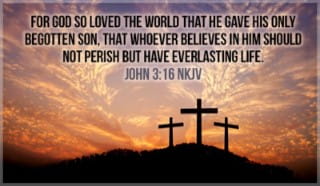
This Christmas, whatever gifts you choose to give; whatever gestures or actions you perform–let them be done with joy and with a full heart. After all, the REAL gift of Christmas wasn’t wrapped in a box. It was wrapped in flesh and blood, sacrifice and suffering. “For God so Loved the world, that He gave His only Begotten Son…” (John 3:16)

Our gifts matter– small gifts, fancy gifts, hugs, smiles, time spent listening, words of encouragement, even just sitting in silence with someone who is in pain.

Photo by Pixabay on Pexels.com

One of the greatest gifts we can give this season and in the coming year is the gift of prayer. Try this challenge for 2020. Choose a person (not necessarily someone in your family or close circle of friends) and pray for them every day for one month–if you know them well enough, ask them for specific ways that you can pray for them. Write their name and/or their requests somewhere (a calendar or datebook, index card..) where you will see it. At the end of the month, send the person a card or note or text message, or give them a call– let them know you’ve been thinking of them every day and praying for them.

Photo by Matheus Bertelli on Pexels.com

A few warnings:

  • DO NOT use this activity as a form of intimidation, “virtue-signaling”, or with any selfish motive. Be careful not to make this about the other person’s “neediness”– their inability or unwillingness to talk to God on their own; your superior righteousness or religiosity. Pray for their health, their well-being, and any needs that THEY express. Remember, this is a gift, not an intervention. If you are not praying that way, don’t pretend you are actually giving a gift.
  • Be ready to commit. You may even want to begin with one week, instead of a month. But don’t begin until you are ready to finish well. That doesn’t mean if you miss one day you’ve failed. But it does mean that you need to have an intention and a plan.
  • Follow through! It’s one kind of gift to offer to pray– but it’s kind of like giving a child a gift that requires batteries, and not providing the batteries…
  • Beware–gifts like this tend to come with surprises and unexpected obstacles:
    • Your offer of a gift will not always be accepted. Even if it is offered in the best of spirits, some people will find it offensive. You can still pray for them, but don’t expect gratitude or cooperation.
    • Your commitment will be tested– you may find yourself “extra” busy, or suddenly find it difficult to focus and remember your commitment; you may even find yourself tempted to give up for no reason or you may question the value of your gift.
    • Your prayer life may get challenged in unexpected ways– as you pray for someone new, you may be convicted of your own needs, your own unworthiness, your own lack…
    • You may be surprised by the realization that in giving, you also receive. As you pray for someone you don’t know well, you will find yourself developing a heart for them and wanting to know them better. You may find yourself blessed with a new and growing friendship, or a better understanding of needs and experiences you never knew before.
Photo by Daria Shevtsova on Pexels.com

Blog at WordPress.com.

Up ↑