Writing the Next Chapter

Welcome to the year 2020! The next 366 days stretch before us– new, unknown, and ready to be discovered, experienced, LIVED!

Photo by nappy on Pexels.com

It is tempting to make bold plans, resolutions, or vague wishes for all the days at once– trying to fold the entire year into a single goal or set of goals. But is this consistent with Biblical principles?

Today, I want to pray, as Jesus did, that God would “give us THIS DAY our daily bread”– that I would walk and talk with my Savior each day, each moment as it comes. That doesn’t mean that I make no plans or goals for the future; rather, I keep things in a proper perspective. God knows the future much better than I do. I know where I am and where I’ve been (hopefully!), but only God knows everything that lies ahead. My job is not to dream about the finish line, but to continue running the race– step by step and moving forward, my eyes fixed on Jesus:

Photo by Pixabay on Pexels.com

Therefore, since we are surrounded by such a great cloud of witnesses, let us throw off everything that hinders and the sin that so easily entangles. And let us run with perseverance the race marked out for us, fixing our eyes on Jesus, the pioneer and perfecter of faith. For the joy set before him he endured the cross, scorning its shame, and sat down at the right hand of the throne of God. Consider him who endured such opposition from sinners, so that you will not grow weary and lose heart.

Hebrews 12:1-3 (NIV) taken from http://www.biblegateway.com

Life is like a long race; it’s also like a story. As we enter a new year, we can look around and see where the story has brought us. Some of us are in crisis. Some of us have just defeated a giant, or survived a trip down the raging rapids. Some of us are headed for disaster, or about to head into battle. Some of us are caught in a trap and we can’t see any hope of rescue.

Photo by bruce mars on Pexels.com

I can’t change the race course I must face in the coming year. Nor can I change the story I’ve lived so far– I can’t change anyone else’s. But I know this– the next unwritten chapter is in God’s expert hands. God, the author of miracles and second chances. God, who turns shepherd boys into heroic kings; God, who transforms prostitutes into saints; God, who sends Himself naked and shivering into His rebellious creation knowing He will suffer and die at the hands of those He loved into being, and knowing that this death is not the end, but a glorious beginning! This God has a triumphant and joyous ending in store for me– for you!

Photo by Vlad Cheu021ban on Pexels.com

God has given us the amazing story of our lives–and the next chapter is here. God also gives us the amazing opportunity to write the next chapter. He will guide us through the process– bring in new characters and plot twists, or send us to new places through unexpected channels–but we have the power to choose the next step. Today and every day.

My prayer for this new year is a prayer for this new day. Tomorrow, I get the gift of taking the next step; of writing the next sentence!


Photo by Pixabay on Pexels.com

20/20 Vision, Blind Faith, and Prayer

As we approach the arrival of a new year, there is a lot of talk about vision–20/20 vision, that is. For the past few years, I’ve heard of companies, community groups, even churches using the year 2020 as a target date for planning, and using the phrase “2020 Vision” in their mission statements, fund-raising drives, and talking points.

Photo by Christina Morillo on Pexels.com

The phrase comes from 20/20 vision, considered clear or “good” vision. Someone with 20/20 vision has no need of corrective lenses or surgery to improve their reading, or correct their sight. Figuratively, 20/20 vision suggests good planning or foresight. So it is desirable to plan with clear “vision” and forethought, rather than jumping into a project, or from one unmet goal to another.

But, while it’s clever to borrow the idea of 20/20 vision and tie it to the coming year, it doesn’t guarantee that our future plans will be wise or successful just because the calendar says 2020. In the same way, just because we have 20/20 vision, it doesn’t mean that we can see everything around us perfectly. We will see clearly those things on which we focus– those things that are right in front of us and not obstructed. Even with “good” vision, we cannot see things that are hidden from sight or things that are outside our scope of vision.

Photo by malcolm garret on Pexels.com

Even the old phrase, “Hindsight is 20/20 vision,” doesn’t mean that we will always gain clarity with time. Sometimes we understand past experiences in a different light after time has passed. But sometimes, we are still left wondering and asking about events from our past; no wiser or less damaged by setbacks or failures, and no better prepared for future trials and pains.

If vision, even good vision and planning, is no guarantee of future success, perhaps it would be better to trust to “blind faith.” After all, doesn’t the Bible say, “walk by faith, not by sight?” Except the Bible doesn’t exactly say that. Instead it says:

So we are always confident, knowing that while we are at home in the body we are absent from the Lord. For we walk by faith, not by sight. We are confident, yes, well pleased rather to be absent from the body and to be present with the Lord.

2 Corinthians 5:6-8 (NKJV via http://www.biblegateway.com)

This verse often gets taken out of context and twisted to suggest that “faith” is opposed to “sight,” and therefore faith must be “blind” to reason, experience, or reality. Many good articles and sermons have been written to clarify the concept (see one example here:
https://www.biblestudytools.com/blogs/theologically-driven/walk-by-faith-a-misused-verse.html). Faith is not blind–or should not be blind. Rather, it utilizes the ability and practice of seeing what is hidden or indistinct in the present. If our faith is based on empty myth, rumor, conjecture, or cloud dreams, it is not faith at all–it is nothing more than a mirage. Faith is seeing beyond the obvious, the blatantly visible, and trusting more than just what we can immediately see. We don’t walk through life ignoring reality, or dancing across a superhighway full of speeding cars. But we see our circumstances as having hidden elements; our lives have unseen depths, and are lived on both physical and metaphysical spheres. There is more to life than meets the eye– and while faith may not always show us a clear picture of what lies beyond our sight, it causes us to know that something beyond our “20/20 vision” exists and matters.

Photo by Daniel Spase on Pexels.com

The great old hymn, “It Is Well With My Soul,” speaks to this as well. No matter what our circumstances look like, we can have confidence that “It is well, it is well, with my soul!” “And Lord, haste the day when my faith shall be sight..” We look forward, even as we look around, and look back to the finished work of Jesus our Savior. We see the present, but we walk in the knowledge that there is more than what our eyes behold.

Faith doesn’t negate the need to use our senses and common sense to navigate life. And using planning and vision for the future doesn’t negate the need for faith. Rather, they work together. And they work together best in prayer.

When we pray, we are exercising our faith– speaking to the One we do not see, though we know Him and trust Him. And we bring to Him our plans and visions and hopes and dreams. We lay them in His Hands, trusting that where our vision is “good,” He will empower and bless us; where our own vision is lacking, His Spirit will help us to refocus and see enough of what lies beyond to keep walking forward.

Photo by Harrison Haines on Pexels.com

As we walk into a new year, may we have more than just 2020 vision– may we have faith and hope in the One who has perfect vision!

Gifting “Outside the Box”

This year has been a difficult one for my family financially. With Christmas coming, there is no money for expensive (or inexpensive) gifts– barely any money for bills. We always like to say that it’s not about the gift, and that “it’s the thought that counts,” but we don’t enjoy putting those words to the test. Like it or not, we have a tendency to equate Christmas with shiny decorations and festive packages– especially for the kids and grandkids.

Photo by Pixabay on Pexels.com

Even the first Christmas featured gifts from the Wise Men of the East– Gold, Frankincense, and Myrrh. But what gifts did the shepherds bring? The Angel hosts? Jesus’s own parents? What they brought– love, worship, Good News of Great Joy– was priceless and just as precious as the physical gifts of the Wise Men.

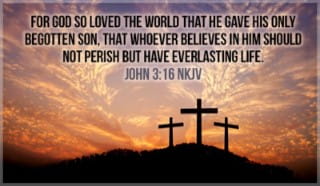
This Christmas, whatever gifts you choose to give; whatever gestures or actions you perform–let them be done with joy and with a full heart. After all, the REAL gift of Christmas wasn’t wrapped in a box. It was wrapped in flesh and blood, sacrifice and suffering. “For God so Loved the world, that He gave His only Begotten Son…” (John 3:16)

Our gifts matter– small gifts, fancy gifts, hugs, smiles, time spent listening, words of encouragement, even just sitting in silence with someone who is in pain.

Photo by Pixabay on Pexels.com

One of the greatest gifts we can give this season and in the coming year is the gift of prayer. Try this challenge for 2020. Choose a person (not necessarily someone in your family or close circle of friends) and pray for them every day for one month–if you know them well enough, ask them for specific ways that you can pray for them. Write their name and/or their requests somewhere (a calendar or datebook, index card..) where you will see it. At the end of the month, send the person a card or note or text message, or give them a call– let them know you’ve been thinking of them every day and praying for them.

Photo by Matheus Bertelli on Pexels.com

A few warnings:

  • DO NOT use this activity as a form of intimidation, “virtue-signaling”, or with any selfish motive. Be careful not to make this about the other person’s “neediness”– their inability or unwillingness to talk to God on their own; your superior righteousness or religiosity. Pray for their health, their well-being, and any needs that THEY express. Remember, this is a gift, not an intervention. If you are not praying that way, don’t pretend you are actually giving a gift.
  • Be ready to commit. You may even want to begin with one week, instead of a month. But don’t begin until you are ready to finish well. That doesn’t mean if you miss one day you’ve failed. But it does mean that you need to have an intention and a plan.
  • Follow through! It’s one kind of gift to offer to pray– but it’s kind of like giving a child a gift that requires batteries, and not providing the batteries…
  • Beware–gifts like this tend to come with surprises and unexpected obstacles:
    • Your offer of a gift will not always be accepted. Even if it is offered in the best of spirits, some people will find it offensive. You can still pray for them, but don’t expect gratitude or cooperation.
    • Your commitment will be tested– you may find yourself “extra” busy, or suddenly find it difficult to focus and remember your commitment; you may even find yourself tempted to give up for no reason or you may question the value of your gift.
    • Your prayer life may get challenged in unexpected ways– as you pray for someone new, you may be convicted of your own needs, your own unworthiness, your own lack…
    • You may be surprised by the realization that in giving, you also receive. As you pray for someone you don’t know well, you will find yourself developing a heart for them and wanting to know them better. You may find yourself blessed with a new and growing friendship, or a better understanding of needs and experiences you never knew before.
Photo by Daria Shevtsova on Pexels.com

Pride Goeth Before a Flu..

I’m late writing this entry. I was so proud of keeping to my schedule, and I had an idea of what I wanted to write yesterday so it could be published this morning. But then, I got the flu.

I’m still not feeling well. I’ve spent most of the last two days in bed or in the bathroom. But God is good–I have a bed and a bathroom; I have a husband who has taken care of me, letting me rest, and getting containers when I needed to throw up.

So tonight, I’m asking for prayer, and thankful that prayer is more powerful than pride (and the flu)!

Jesus Calls Us

I was at worship yesterday. We sang some wonderful hymns and songs of worship. Still, I miss some of the “old” hymns we used to sing in the small country church of my youth. This was one of them:

In case the video does not show up, here are the words:
Jesus calls us: o’er the tumult of our life’s wild, restless sea,
Day by day His sweet voice soundeth, saying, “Christian, follow Me.”
Jesus calls us from the worship of the vain world’s golden store,
From each idol that would keep us, saying, “Christian, love Me more.”
In our joys and in our sorrows, days of toil and hours of ease,
Still He calls, in cares and pleasures, “Christian, love Me more than these.”
Jesus calls us: by Thy mercies, Saviour, may we hear Thy call,
Give our hearts to Thine obedience, serve and love Thee best of all. Amen.

Photo by Victor Freitas on Pexels.com

Prayer is never just a one-way communication. We may not “hear” from God in an audible voice, but He calls us into communion with Him daily. He wants to hear from us; He wants to speak to us–through His word, through our experiences, through friends and neighbors and even chance encounters. We may not have a deep spiritual burden to bring before the throne of grace– does that keep us from needing to share a quiet moment with the lover of our soul?

Suppose the only time you ever spoke to your spouse was when you desperately needed her/his help? What would that say about your relationship? The same holds with our spiritual walk. God wants to speak to us; to have us notice the beauty of the sunrise, or the grace of moonlight in the mist. He wants to bring us hope and comfort in the stories and psalms of scripture. He wants us to share our nagging worries and our minor triumphs– not because He doesn’t know or cannot see–because He wants to share in our struggles and our joys, our deep grieving and our small amusements.

He wants all of this because of His great love for each of us. If we could just see His eyes light up with love when we walk into a room…and if we could hear the love in His voice– we would be undone. Someday, we will be– undone, and remade, and able to catch His eye without shattering in the light of that love.

But for now– He is calling…

I Am..

There are many ways to describe who I am (or who you are). I can describe myself in terms of my appearance, my social status, my occupation, age, familial role, or any number of other labels. These labels help distinguish me from other people around me, while also grouping me in with still others. Even my name functions in this way. My surname connects me with my current family; my maiden name with my birth family–my first name distinguishes me from my siblings within the family. However, there are many others in the world with either the same first name, surname, or both!

Photo by Craig Adderley on Pexels.com

I know that I am a unique person, but I am not singular. That is to say that while I am a unique combination of genetic materials, with unique hopes and dreams, I still belong to the human race, to my family group, and to the culture and time in which I live.

Only God can say “I AM!” and not have to add any modifier. God is..God. There is no one like God–no label that can be applied to Him and to anyone or anything else. We use words like “King”, “Father”, “Lord”, “He” even “God”, but none of them convey the fullness, the enormity, the eternity of the great “I AM.” Many ancient cultures worshiped gods; supernatural beings who ate and drank, married and had families, ruled the skies or waters or land or underworld, fought, loved– some even died. But none of them could say they were “I AM”. I AM stands in the face of doubt and unbelief; I AM remains unchanged and unchanging in the face of progress and technology; I AM defeats our attempts to shrink Him into our own limited understanding and our own limited lifespan; I AM is ever present, ever aware, everlasting.

Photo by Pok Rie on Pexels.com

And this I AM created each of us to BE. Because of I AM, I can say that I am, too! And my purpose is to be, and to become more like He is, to the glory of I AM, and the fulfillment of what I am in Him.

Photo by Pixabay on Pexels.com

Lord, Father, and the great I AM– help me to see you more clearly for who you are. Help me to become more like you, and more like the person you created me to be. Help me to reflect your glory in the words I speak and the actions I take today.

Panic, Prayer, Praise, Peace!

Philippians 4:6 New International Version (NIV)

Do not be anxious about anything, but in every situation, by prayer and petition, with thanksgiving, present your requests to God.

https://www.biblegateway.com/passage/?search=Philippians+4%3A6&version=NIV

I hope that today will be filled with peace, joy, and blessing for anyone reading this. But I know that today will bring bad news for some, pain for others, and hardship for many. Life is filled with struggle, disappointment, failures, and loss. Our first reaction is often to worry, which can lead to more worry, and a sense of urgency, even panic. In many cases, we have neither the resources nor the wisdom to overcome our struggles–even sustained effort or a “lucky break” may leave us without much hope. And the more we worry, the less we accomplish. But telling ourselves (or others) to simply “stop worrying” doesn’t banish worry; sometimes it increases it! Now we worry about worrying too much, or we find new things to worry about.

Photo by bruce mars on Pexels.com

But there is a time-honored and proven pattern that can help. Jesus spoke of it in His “Sermon on the Mount.” In Matthew 6, He gives us this advice:

“So do not worry, saying ‘What shall we eat?’ or ‘What shall we drink?’ or “What shall we wear?’ For the pagans run after these things, and your heavenly Father knows that you need them. But seek first his kingdom and his righteousness, and all these things will be given to you as well. Therefore do not worry about tomorrow, for tomorrow will worry about itself. Each day has enough trouble of its own.”

Matthew 6:31-34 (NIV)
Photo by Úrsula Madariaga on Pexels.com

The Apostle Paul expanded on this in his letter to the Philippian believers. He told them to be anxious for nothing–that regardless of our situation or circumstances, we should not panic, but pray (seek God’s grace, righteousness, wisdom, and help). But more than that, we should present all of our prayers, petitions, and requests with thanksgiving and praise!
This is not the same as pretending that our struggles don’t exist, or that they are not important, or that we are glad about the pain, uncertainty, or hardship that they bring. Instead it is lifting our eyes to Heaven and finding that God is bigger than it all; that His grace, His strength, His wisdom is sufficient for the next step– for today’s worries–for today’s battles and burdens.

Photo by Pixabay on Pexels.com

This doesn’t happen naturally or automatically–we must seek, pray, pursue righteousness, ask for help, and continue to stand firm. There are some who point to the words of Jesus, or of Paul as a kind of “magic formula.” If we repeat a few promises from the Bible, or if we pray certain prayers, or convince ourselves and others that we have “enough” faith, God is obligated to change our circumstances and give us the resolution or relief we want. God is not primarily interested in our relief– He is interested in our redemption, our renewal, and our eternal reality. In following this pattern of turning our panic into prayer, and our prayer into praise, He promises that we will experience His peace. Our panic will be transformed–even if our situation stays the same; even if it gets worse before it gets better!

So how do we practice this pattern; how do we train for this transformation?

Photo by Reafon Gates on Pexels.com

Here are a couple of suggestions:

  • Start by seeking God with abandon–pursue Him with your whole heart– thank Him for who He is, and for all He has done. It can be helpful to review some of the names of God–I AM, Almighty, Creator, Lord, King of Kings.. Or read a Psalm or find a song that reminds you of God’s character and power. Think of the times when God has been faithful in your own past.
  • Find something about your situation for which you can be thankful– genuinely thankful. Years ago, when I was young and single, I was laid off from my first full-time job after nine months. Was I worried? Yes! Where would I find another job? How would I pay my bills? But I resolved to start being thankful about all I had learned on the job– I had met new people, learned new skills, purchased a car…God knew my needs for the future, and even though I had to wait another eight months before I found a full-time job, I was able to find temporary work and interview for other jobs in the meantime. And I had friends and family who offered good advice and encouragement along the way. I know some situations are more painful and perplexing than the loss of a job. When I my father died, nothing made the pain less, but I could thank God for Dad’s life and the time we had with him. This is NOT easy, nor is it meant to be…It may not happen for days, or weeks–don’t give up!
  • Cry out to God– in praise, but also in petition, pain, confusion, confession, and raw emotion. God wants a real relationship with us, and that includes walking with us in the “valley of the shadow of death.” We don’t have to fear evil, or worry about the future, not because it holds no danger or dread, but because we never have to walk alone and defenseless!
  • Remember this is a pattern to follow, not a pill to swallow–none of this comes easy, and God’s peace is not an instant “fix.” Instead, it is a growing conviction that God is who He says He is– faithful, loving, victorious, eternal, and sovereign. Such peace defies our panic and erodes our worry, leaving us ready to face the battles before us, and move forward through the struggles.
Photo by Pixabay on Pexels.com

It is not will power or a change of circumstances that brings incomprehensible peace. It is not magic– it is Majesty!

Praying for People I’ve Never Met

I keep a prayer journal. For each day of the year, I have a list of names– people who are celebrating a birthday or anniversary. I also list one location (nation, region, major city, etc.) and I have room for urgent prayer requests. As I read through the names, places, and situations on the list, I can lift them up in prayer. Today, I had the names of two young women– distant cousins I’ve only ever met once or twice at family reunions. I know who they are in relation to myself and my husband; I know that one of the young women became a mother earlier this year. But my list today also included the nation of South Africa. I know very little about South Africa, and I am not aware of knowing anyone who lives there. I also received a request to pray for an infant who is critically ill. I have never met her.

Photo by Aaditya Arora on Pexels.com

How do I pray for people I have never met? I do not know any details about their needs or anything about their background. I do not have a relationship of trust or mutual experiences with them. They don’t know that I have prayed for them or what I have said about them or their needs.

Photo by Victor on Pexels.com

But God does! And in lifting up others to Him, I am not praying into a vacuum; I do not need to know any details, or get the words “just right.” Jesus Himself gave a blueprint, when He prayed for those who would come to faith long after He had ascended into Heaven after His resurrection:

20 “I do not pray for these alone, but also for those who will believe in Me through their word; 21 that they all may be one, as You, Father, are in Me, and I in You; that they also may be one in Us, that the world may believe that You sent Me. 22 And the glory which You gave Me I have given them, that they may be one just as We are one: 23 I in them, and You in Me; that they may be made perfect in one, and that the world may know that You have sent Me, and have loved them as You have loved Me. 24 “Father, I desire that they also whom You gave Me may be with Me where I am, that they may behold My glory which You have given Me; for You loved Me before the foundation of the world. 25 O righteous Father! The world has not known You, but I have known You; and these have known that You sent Me. 26 And I have declared to them Your name, and will declare it, that the love with which You loved Me may be in them, and I in them.”

John 17:20-26 New King James Version (NKJV) (taken from biblegateway.com)
Photo by Magda Ehlers on Pexels.com

Even when praying for people I know well, it is not my knowing them that makes prayer important, effective, or worthy– it is not the subject of my prayers that makes them worthy or noble–it is the act of bringing EVERYTHING to GOD in prayer. The known, the unknown; the global crises, the aches and pains and heartaches of friends and neighbors, and the unspoken request of a stranger– all of them are welcome at the throne of Grace and in the presence of the King of Kings!

Photo by Munmun Singh on Pexels.com

Never discount the wonder that someone, somewhere– someone you have never met–has prayed for you; may be praying for you in this instant. Why? Because God loves you that much! And He loves every stranger you’ve never met just as much. Don’t hesitate to pray for those you’ve never met. You may yet meet them and enjoy their company in eternity!

He Knows My Name

The Bible is full of names. Some we know well– Adam, Eve, Abraham and Sarah, Joseph, David, Moses, Mary and Joseph, Jesus, John, Peter, Paul, Mary Magdalene. Others are less familiar–Nimrod, Eli, Darius, Deborah, Ezekiel, Jezebel. Some are just unbelievable– Keren-Happuch, Maher-shalal-hash-baz, Basemath, Abishag, Shammuah, Pallu…you get the idea.

Photo by Min An on Pexels.com

But sometimes, the Bible seems to get carried away with names. Take the lists of genealogies and “begats” found in Genesis, Matthew, and Luke. Endless names of fathers and sons, tribes, and descents. They can be boring to read; even mind-numbing. But there is also important information included in these lists, if you just take the time to look closely. https://christinprophecy.org/articles/those-boring-begats/

Similarly, in places like Exodus and Leviticus, 1 Samuel, 1 Chronicles, Ezra, and Nehemiah, and elsewhere, there are extensive lists of those who were leaders of clans and families, workers who helped build (or rebuild) the temple and walls of Jerusalem, those who served in the tabernacle, and those who were among the heroes of King David’s army. In the New Testament, there are lists of people in Paul’s letters– greetings, rebukes, side-notes and requests meant for various people who are never mentioned again. Why include what amounts to a post-script in Holy Scripture?

Photo by Pixabay on Pexels.com

It turns out that many of these names give us valuable clues about development of the nation of Israel– how the tribes settled and spread out; how they interacted with each other and with the surrounding nations. The names in Ezra and Nehemiah help us connect the returning exiles with their ancestors (and confirm the extent of the destruction of entire clans and families in the fall of Jerusalem). The names in the New Testament show a picture of the early Church– how it spread, who joined the early believers, and where they came from.

What does all this mean to us hundreds of years later? It show us:

  • God’s plans are detailed and inclusive–The Biblical writers did not have to include so many names– they could simply have condensed the story to say that Abraham had hundreds of descendants; that the tabernacle was built; that many people returned to Jerusalem to rebuild the temple and walls, and that the early Church grew rapidly. But God wanted names included (even the strange ones) so generations of readers would see the scope and detail of God’s unfolding plan. These were real people– individuals–cherished by God and worth including in the Biblical narrative.
  • The Bible is more than a series of mythical adventures or allegories. Many of the names (of people and places) in the Bible have been confirmed in historical and archaeological records– even those that were thought to be “wrong.”
  • God’s plans are universal. The Bible lists include names from various nations and cultures– Jewish names, Egyptian, Ethiopian, and Babylonian, Roman and Greek names, the names of tribes and clans that spread throughout the Earth. God knew them all. God watches over us all.
Photo by malcolm garret on Pexels.com
  • Each of us has an important role to play in the ongoing story of God’s grace. Our names may not all end up in the pages of Scripture, but our names can be in the Lamb’s Book of Life. God knows the name of every person who has ever existed! He doesn’t call us by the name of our younger sister, or get confused by our nickname or birth/adopted name– He knows us intimately like no one else ever will!
  • Names are important. None is more important than the Name that is above all Names– Jesus. Messiah, Christ, Savior, Immanuel. His is the Name that saves. Let’s call on Him today!

The Lord is My Shepherd

Psalm 100:3 Christian Standard Bible (CSB):

Acknowledge that the Lord is God.
He made us, and we are his—
his people, the sheep of his pasture.

Psalm 23 New King James Version (NKJV)
The Lord the Shepherd of His People
A Psalm of David.
23 The Lord is my shepherd;
I shall not [a]want.
He makes me to lie down in [b]green pastures;
He leads me beside the [c]still waters.
He restores my soul;
He leads me in the paths of righteousness
For His name’s sake.
Yea, though I walk through the valley of the shadow of death,
I will fear no evil;
For You are with me;
Your rod and Your staff, they comfort me.
You prepare a table before me in the presence of my enemies;
You anoint my head with oil;
My cup runs over.
Surely goodness and mercy shall follow me
All the days of my life;
And I will [d]dwell in the house of the Lord
[e]Forever.
Footnotes:
Psalm 23:1 lack
Psalm 23:2 Lit. pastures of tender grass
Psalm 23:2 Lit. waters of rest
Psalm 23:6 So with LXX, Syr., Tg., Vg.; MT return
Psalm 23:6 Or To the end of my days, lit. For length of days

http://www.biblegateway.com

The Bible is filled with imagery of sheep and shepherds. Growing up, I lived in the countryside, but we never raised sheep, and I had little experience with livestock of any kind. We had one neighbor who had sheep, however, and he shared a lot of insight into why we should pay attention to what sheep can teach us about ourselves, and our God.

Photo by Trinity Kubassek on Pexels.com

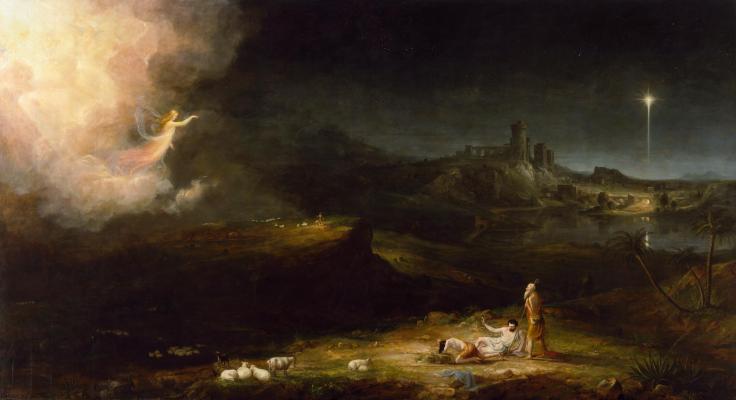
Not only does God use the imagery of sheep and shepherds, He uses examples throughout the Bible of actual sheep and shepherds. Abraham, Isaac, Jacob, the sons of Jacob, David, and the prophet Amos– all were shepherds. When the Messiah was born, the first announcement went to shepherds in the fields, keeping night-watch over their flocks!

Jesus used stories of sheep and shepherds in his parables, as well. There is a lot to understand, and I am not qualified to teach anyone about shepherding, but there are several wonderful principles that don’t require a lot of in-depth knowledge:

  • Sheep NEED a shepherd. There are breeds of mountain sheep that live independently, but the Bible stories speak of domesticated sheep…they are “high maintenance” animals– they need food and water, shelter, protection, and a lot of guidance and supervision! We NEED God–He understands our situations, our weaknesses, and our strengths, far better than we do. He knows the future; He has a plan, and He provides all that we need. We may not see the road ahead–we may not see the green pasture or the still waters where He wants to lead us–but He IS the WAY, the truth, and the life (John 14:6), and we can trust Him to get us there.
Photo by Chama on Pexels.com
  • Sheep need to be sheared. Left unsheared, the sheep’s wool will become matted, filthy, and a potential source of danger and disease. The sheep cannot get rid of its wool on its own. However, once the old wool is sheared off, the sheep is clean, and new wool can grow. Not only does God provide for our immediate needs, He provides for our renewal and growth–physical, emotional, and spiritual growth. Sometimes, that means we need to be “sheared” of habits, people, or situations that have become “matted”, and filthy. We haven’t even noticed the change, and we don’t see the danger. God wants to free us from the “baggage” we accumulate, and help us experience new growth.
  • Sheep depend on others to stay safe, healthy, and fed–there may be “lone wolves”, but there are no “lone sheep”. God will bring us into “flocks”. We learn to eat together, travel together, rest together, live together, and follow our shepherd’s voice together. Trying to be a “lone sheep” makes for a lot of trouble!
Photo by Ekrulila on Pexels.com
  • Shepherds make great sacrifices to care for their sheep– they provide, protect, rescue, heal, guide, and clean their sheep. A good shepherd is watchful, faithful, caring, and gentle, even as s/he must be strong, brave, and fiercely protective, risking their lives (or even giving their lives) for their flocks. Jesus, our Good Shepherd, knows each one of us intimately– He knows how to heal and guide us. He wants us to recognize His voice above all others, and to stay close to Him. He died to redeem you and me!
Photo by Magda Ehlers on Pexels.com

May we trust our Good Shepherd today, and every day. May we spend time acknowledging Him as our loving and faithful Shepherd, and call out to Him– in praise, in adoration, in supplication, and in loving gratitude.

Blog at WordPress.com.

Up ↑