As Iron Sharpens Iron

As iron sharpens iron, so one person sharpens another.

Proverbs 27:17
Photo by igovar igovar on Pexels.com

Do you have a friend who “sharpens” you? Someone who keeps you honest? Someone who challenges you? Someone who holds you accountable? The Bible has much to say about relationships that we form– and some of it may surprise us. Earlier in Proverbs 27, the writer says, “Better is open rebuke than hidden love.” (v.5 NIV) and, “Faithful are the wounds of a friend, but the kisses of an enemy are deceitful.” (v. 6 NKJV).

Photo by Liza Summer on Pexels.com

I don’t know about you, but I want friends who encourage, friends who make me feel good about myself; friends who make life more pleasant and uncomplicated. I don’t enjoy hearing criticism, or having my beliefs and ideas challenged. I don’t enjoy conflict, and I tend to avoid it whenever possible. However, I also know the truth of verse 6 from experience–I can trust the constructive criticism of a good friend, even when it stings in the moment. A loving friend will take the risk of saying what needs to be said, and not just what I want to hear.

Photo by Tirachard Kumtanom on Pexels.com

There are three points that struck me recently as I came across these verses:

  • “Iron sharpens iron”–nothing gets sharpened by a marshmallow, and an iron blade that is left unsharpened will either lose its edge over time, or rust from disuse. We may not like conflict. But we need to be disciplined, and that means that we need to be held accountable. We need to be challenged and sharpened, or we will grow dull or rusty. God can use the “fire” of circumstances to soften our hard hearts, but He often uses other people to “spark” us into action. Left to my own devices, I can grow rusty and useless. I can feel sorry about a bad or sinful habit– I can confess it, and make plans to change. But I am more likely to grow and develop positive habits and actions if there is someone keeping me honest. I can have good ideas; I can know what the Bible says– but I can also fall into deception, lazy thinking, and pride. A good friend can help keep me “sharp” in both actions and thinking. We are not meant to do life alone, and God does not want “Holy Hermits.” He also does not want us to be so timid and accepting that we fail to sharpen others. It is really hard to risk a friendship by speaking the truth–but NOT speaking is sometimes more damaging to the friendship– and to our friends!
  • “Iron” is what sharpens “Iron”–We need to seek out truth and wisdom, and that’s what we need to offer others, as well. We should not waste time on petty disagreements, trying to “win” every point in an argument, or pointing out every minor fault. We also need to have mutual respect; being willing to listen, willing to let a few sparks fly, and willing to respect another’s strengths as we develop our own. This verse is not about letting someone else dominate you or shut down your voice, just as it is not about dominating or “fixing” someone else by forcing your opinions (even if grounded in the truth) down their throat.
  • “So one person sharpens another.” Notice it doesn’t say whether the person is a believer, a dear, personal friend, or a relative. Any person can “sharpen” us. I may disagree with another person– a coworker, a peer, a neighbor–and still respect that their ideas, their words, even their criticism.
Photo by SHVETS production on Pexels.com

How does this tie into our pursuit of prayer? Conflict and testing can make us better or bitter–in this analogy, it can make us humble or it can make us brittle. A humble person will be shaped and sharpened. A brittle person will snap or break.

Photo by Pavel Danilyuk on Pexels.com

When I am challenged or criticized, do I take it to God or do I take it to heart? Do I ask God to reveal truth or have I already decided what I want to believe? Not all criticism is constructive; not all challenges are meant to sharpen us. Do I react in anger? Do I become sullen? Do I crumble into a puddle of doubt? Or do I see it as an opportunity to become sharper, to change course, or to refine my thinking? Conflict and criticism do not happen in a vacuum–God is as close as a prayer, and willing to give wisdom, discernment, and strength!

How do I react to the other person? Do I become bitter toward them? Do I seek for ways to repay them with criticism or prove myself to them? Do I pray for THEM to change, without looking at my own responsibility? Do I appreciate the risk they may have taken to speak up? (Or do I appreciate the reasons they may have for feeling or thinking as they do, even if I am convinced they are in error?) Can I offer thanks to God for the way He may be using that person to sharpen me–even if that is not their intent? Can I pray for God to bless and strengthen them, even if we don’t agree?

Photo by Jopwell on Pexels.com

This is all easier to write than to put into practice. But I can say from experience that God has often used the most unlikely people to “sharpen” me in unlikely ways and unlikely moments, and I am so grateful for the “faithful” (and temporary!) wounds of friends. I am also grateful for others who challenge me to defend the Faith, and who open their hearts to me– even when we clash sometimes.

Be Reconciled

23 So if you are offering your gift at the altar and there remember that your brother has something against you, 24 leave your gift there before the altar and go. First be reconciled to your brother, and then come and offer your gift.

Matthew 5:23-24 (ESV)
Photo by RF._.studio on Pexels.com

Why do we find it so difficult to be reconciled? We crave God’s forgiveness, but we withhold our own toward our neighbors, or family members. We let anger and bitterness keep us apart. We let pride keep us from doing what we know is right in God’s eyes.

I speak from conviction. I have been estranged from a cousin of mine. Years have passed since we’ve spoken. We argued about something, and simply stopped talking. I tell myself that I have nothing for which to apologize–that’s just the way things ended. And my life is far less stressful since we’ve stopped talking. I do not “hate” my cousin, or feel bitter toward her. In fact, I tell myself that I only wish her the best– I just don’t want to be involved in her life, or have her involved in mine.

Photo by Josh Sorenson on Pexels.com

I know this is not what God wants. I know I should get in touch, and reassure her that “we’re okay”. Yet I am afraid to reach out and re-establish contact. Not because she poses any sort of physical threat, but she threatens my pride and my comfort. I find her difficult to talk to; difficult to understand. We have different ideas about boundaries and expectations–I find her “needy,” and she finds me “aloof.” I don’t think time will have made our relationship “easier.”

Photo by Liza Summer on Pexels.com

But God finds her precious in His sight– and worthy of my effort to reconcile our relationship. That doesn’t mean that I must allow her to manipulate me or abuse my emotions, or that I must demand that she be someone she is not to make me more comfortable. But it does mean that I may be embarrassed or inconvenienced at times. I need to be willing to listen, even when it is difficult, and so speak, even when it seems like I’ve said the same thing before. And it means that I must learn to set healthy boundaries and insist on them– not to shut her out as I have been doing, but to keep our relationship balanced and safe for both of us.

God puts a great premium on our willingness to be reconciled to one another. So much so, that Jesus told His listeners in the Sermon on the Mount, that if they were ready to bring an offering, and they remembered that someone had something against them, that they should leave their offering– unoffered– and go be reconciled first. Being at odds with others puts us at odds with their Creator and the One who loves them. Whenever possible, we should seek to reconcile. Broken relationships are sometimes a reflection of our relationship with Him. It hinders our prayer life, as well as our witness to the Power of God to redeem and reconcile the world around us.

Photo by Timur Weber on Pexels.com

God is aware that we are sinful people. And there are some relationships that are absolutely toxic. Reconciliation and forgiveness are NEVER about allowing another person to continue to abuse or manipulate you. Especially if this involves physical or sexual abuse. Forgiveness is not the same as accepting someone else’s manipulation or abuse. God, and only God, can redeem us and make us a new creation. Some relationships cannot be fully “reconciled” in this life. But “letting go” is not the same as “locking out” or “running away.” We must let others know that God can do what we cannot–He can restore broken relationships. He can make all things new.

Who Do I Think I Am?

(This post was originally published in March of 2021. I am re-posting it.)

I was struck the other day by the parable of Lazarus and the Rich Man (Luke 16: 19-31). I’ve heard sermons and talks and done Bible studies on this passage, and the focus is always on the rich man. In life, he did nothing to help the poor beggar who was literally on his doorstep. In death, he ends up in torment, and seeing Father Abraham with Lazarus in Heaven, he tries to strike a bargain with Abraham to ease his own tormented soul.

Photo by sergio omassi on Pexels.com

But I was struck by several things I had never considered:

  • Jesus named Lazarus, but not the Rich Man. This is a parable– a metaphorical story– so Jesus did not need to have specific names for any of the characters. He often told such stories with no names. This one contains a specific person, Lazarus, and very specific details about his earthly life. He was not just a beggar, but a beggar covered with sores and starving. Jesus even related that the “dogs came and licked his sores” (v.21). And Jesus makes it clear that the rich man recognized and knew Lazarus by name. Yet he had done nothing to help Lazarus when he had the chance. We never hear in the story whether or not Lazarus was ever cured or helped; we don’t know if he had been a wealthy or prominent man at one time, of if he had always been a diseased beggar. The point is that Jesus, and Abraham, and the rich man all KNEW Lazarus. He mattered enough to call by name. The Rich Man in this story also had a name. He probably was well-known in the town or city where the story took place. And we know that he had five brothers who were likely well-known and highly respected. But NONE of them are named in the story. Only Lazarus.
  • The Rich Man looks up into Heaven. He can see and recognize Lazarus and Father Abraham. But he never looks for, sees, talks to, or wonders about the Heavenly Father. He never asks for comfort from God– he doesn’t even ask a favor of the Patriarch– he only considers that someone like Lazarus should be made to help him and/or his brothers.
Photo by Andrea Piacquadio on Pexels.com
  • Abraham explains that Lazarus cannot and will not be allowed to do as the Rich Man requests– but the parable does not tell us that Lazarus can either see the Rich Man or hear his requests, nor does it say that Lazarus is unwilling to help.
  • Jesus tells this story in a straightforward manner, even though it is a Parable and has hidden meanings. The Rich Man wants help in his hour of torment, even though he was unwilling to help others in their need. But he isn’t without feeling or pity– he loves his brothers enough to try to warn them. Jesus could have used this parable to say much more about Social Justice, and the plight of the poor and the wealthy. He could have said much more about greed or apathy. He could have pressed the point about loving one’s neighbor. He did NOT make some of the connections we add to this story. We often assume that the Rich Man is in hell only because he did not help Lazarus during his lifetime, and that Lazarus is in Heaven solely because he was oppressed and afflicted in life. But is that really what Jesus says?
Photo by Pixabay on Pexels.com

What struck me the most about this story is that I always look at it as an outsider. I don’t relate with either of these characters. Of course I don’t want to think that I am cold and selfish like the Rich Man in this story, but neither do I think I am Lazarus. So who do I think I am when I read this parable? Do I pat myself on the back for sending a check to a charity a couple of times a year, or speaking up for the poor or marginalized in my community? Do I indignantly point out all the “others” who are not doing their part to help? Do I see myself, not as a poor diseased beggar, but as someone who has been “oppressed” by nameless, faceless rich people– someone who deserves to be rescued and comforted while “they” suffer through eternity?

Photo by Charles Nunes on Pexels.com

I don’t have any answers as to how I “should” see myself (or others) in this parable. But I think Jesus wants us to grapple with some of the realities it presents:

  • Our world is filled with situations like that of Lazarus and the Rich Man–situations of injustice, struggle, disease, poverty, inequality, suffering, and luxury. And while it is clear that we should do what we can to help others, and to bring justice and mercy, and to reach out and connect with our neighbors in love, it is also clear that such situations are not for us to make blanket judgments. I know many who see poverty as a judgment– those who are poor are lazy or unworthy. And I know others who see luxury and wealth as a judgment–those who are wealthy are greedy and selfish and unworthy. God will not judge us by our circumstances or the injustices done against us. He WILL judge us by our response to Him– when we look toward Heaven, do we see Him, or do we see the place we think we deserve to be?
  • Our ultimate situation has very little to do with our earthly circumstances. Are we sick, poor, suffering, grieving, or in pain? God is aware, and He offers eternal comfort. We can endure and hope because we know that this is not all there is to life. Are we blessed with comfort and ease right now? We should not take our circumstances for granted, but be willing to share in our abundance, knowing that our future is sure, and that God will care for our needs as we care for others. But wealth or poverty, status or shameful circumstances, do not predict our eternal destiny.
Photo by ding lei on Pexels.com
  • God sees us! He sees our circumstances, and He cares! He sees our heart and our motives. He knows our every thought.
  • We need to look with God’s eyes. The Rich Man in this story thought he was important– in life and even in the afterlife. He thought Lazarus was worthy only to serve him or stay out of his way as he enjoyed life’s luxuries. But he also thought he was more important than Heaven! Sitting in eternal torment, he was not humbled or repentant– he was still trying to see the world through his own self-importance. Lazarus may have spent his life thinking that he was NOT important– a beggar, alone, forgotten, and unwanted. But God knew his name and saw his suffering. Lazarus could have been bitter, cursing God for his circumstances, or spending his days trying to steal or take revenge on the Rich Man.
  • I need to look with God’s eyes, not only at who I am in relation to God and others, but at OTHERS in relation to God and to me. I may see someone like the Rich Man– selfish, pompous, self-important– and dismiss them as unlovable and unworthy of mercy or grace. But God sees someone He created; someone who is needy and lost– someone He loves enough to die for. I may see someone like Lazarus–hurting and forgotten– and think they are a lost cause or fear that they will prove to be “undeserving” of my help. But God sees someone He created; someone He aches with; someone He loves enough to die for!

For Righteousness’ Sake

Blessed are those who are persecuted for righteousness’ sake,
For theirs is the kingdom of heaven.

Matthew 5:10 (NKJV)
Photo by Meruyert Gonullu on Pexels.com

Yesterday was Easter (in parts of the world)–the celebration of Christ’s resurrection and victory over Sin and Death. We have much to celebrate. But we also have a mission. We have the assurance of eternity in Heaven, but in THIS world, Jesus warned us, “you will have trouble.” (John 16:33). We will be misunderstood, mocked, and persecuted. We will have to face the temporary consequences of living in a fallen world– anger, greed, abuse, violence, betrayal–even bad weather and natural disasters!

In giving the Beatitudes, Jesus turned common expectations upside-down. Blessed are the poor in spirit; blessed are the meek; blessed are those who are persecuted for righteousness’ sake… We don’t consider poverty, powerlessness, suffering and persecution blessings to be desired. Yet Jesus, the One we follow, gladly endured all of these for our sake! Notice that the “blessing” is the same here as in the first of the Beatitudes– “for theirs is the kingdom of heaven.” The Kingdom of Heaven is not reserved for those who are victorious in their own power or through force of will or extraordinary effort. But it is reserved for those who persevere in the face of evil–those who lean, and those who rest, and those who stand IN THE POWER of God.

Notice, too, that we are blessed if we are persecuted “for righteousness’ sake.” There is no blessing for suffering due to our own stubbornness or foolishness. There is no blessing for those who are persecuted for their own pride and judgmental nature and unforgiveness toward themselves or others. (see 1 Peter 3) https://www.biblegateway.com/passage/?search=1+Peter+3%3A8-17&version=CEV

Photo by MART PRODUCTION on Pexels.com

We live in a culture that celebrates “victimhood.” Those who suffer injustice– even perceived of implied injustice–are considered to have a special status. Those who claim to have been offended or hurt by individuals or groups often demand recognition for their “bravery” or retribution for their suffering. This happens even among certain Christians, who claim to be “persecuted,” when they are merely suffering the consequences of their own hubris and self-righteous posturing. This is a monstrous injustice to fellow Christians who are truly suffering persecution “for righteousness’ sake.”

Photo by Cameron Casey on Pexels.com

My prayer today is that I will emulate the example of Christ– that I will serve, humbly, willingly, sacrificially, enduring any persecution that comes as a result, and lifting up fellow Christians who are suffering, as well as their persecutors! For righteousness’ sake– for the sake of the Kingdom of Heaven.

A Lenten Prayer

Father,
I gave up nothing for Lent this year.

I went on a “weight-loss” plan because my doctor said I should.
Even so, I didn’t give up meat or chocolate,
Or sweets, or even television, like some others did.

I didn’t give up shopping.
I didn’t give up social media.
I didn’t give up…anything for this short season.

Photo by Kindel Media on Pexels.com

But today I acknowledge that Lent isn’t really about
What I have or haven’t given up.
It’s about what YOU gave up.
You gave it all:
Your Glory;
Your Power;
Your Majesty.
You became a simple man.
A servant of men.
A man without a home;
Without prestige;
Without a title.

Photo by RFA on Pexels.com

You were betrayed;
Falsely accused,
Corruptly tried,
Shamefully condemned,
Brutally beaten,
Crucified.
So that I might gain eternal life.

You do not judge me for what I haven’t given up for a season.
You do not withhold your love and forgiveness;
Waiting for me to learn the disciplines of Lent.
You ask for more than that– and less.
You ask me to follow you–to leave it all behind.
You ask me to give up my life– only to find it again in You.

Photo by John Ray Ebora on Pexels.com

Let me reflect today on what more I need to give up:
My pride.
My apathy.
My selfishness with time and money.
My need to have my own way;
My own comforts.


May I be free to serve you;
To serve others.
May I be ready to give up whatever is
Keeping me in thrall;
Keeping me enslaved;
Keeping me from serving you with abandon.

Show me how to let go
Of all but You–
That You may be my All.

Prayer and Weight Loss

Recently, I found out that I have developed diabetes. One of the ways to lower my glucose count and mitigate the effects of diabetes is to lose weight– something I’ve been trying to do over many years with little success!

Photo by Andres Ayrton on Pexels.com

Weight loss can be a tricky thing– the harder I try, the less I seem to lose. In fact, sometimes, I gain weight instead! Part of the process is not to think of it as weight loss, but as a change of attitude and lifestyle. It is easy to get fixated on numbers– calories, carbs, ounces, serving sizes, etc.. But numbers alone don’t tell the whole story. It’s not just what I eat, or the amount, but when, and how, and why. Am I skipping meals? Do I fry my vegetables in butter, or drown them in cream sauces? Do I eat because I am bored, or stressed? Do I exercise? Do I drink enough water?

Photo by Lisa Fotios on Pexels.com

Prayer can be a tricky thing, as well. It shouldn’t be complicated or stressful, but I can add all kinds of expectations and structures to my prayer life that actually get in the way. I can stress about whether I am praying enough, or too little; whether I am forgetting to pray for someone, or if I’m praying selfishly for a certain situation; whether I am too distracted or tired; the list seems endless.

Photo by MART PRODUCTION on Pexels.com

One of the biggest barriers to prayer comes when we carry the extra “weight” of subtle sins like guilt, fear, doubt, or pride. And just like physical weight loss, the harder we try to deal with it using our own willpower and our own wisdom, the less likely we are to “lose” it. The only way to lose this kind of weight is to confess it– asking God to take it and replace it with a new way of thinking and a new attitude. Instead of focusing on what I need to lose, I need to start focusing on what I will GAIN as I change my eating habits.

Photo by Andrea Piacquadio on Pexels.com

My current weight-loss goal is to lose between 15-20 lbs. over the next three months (in time for summer). But my REAL goal is to change my way of cooking and eating, such that I am living a healthier lifestyle going forward. My current prayer goal is to spend more time in prayer (an hour each day). But my REAL goal is to develop prayer habits that further my relationship with God– to continue to draw closer to Him. It’s worth losing old habits and attitudes to gain so much more!

What Costs Me Nothing…

We’re coming up to Thanksgiving in the U.S. next week. Many families will sit down to sumptuous meals–turkey with dressing/stuffing (depending on what region you live in), pumpkin pies, sweet potatoes, corn, beans, rolls or muffins, salads, mac and cheese, casseroles, cranberry sauce, and more. Some will settle in front of big screen televisions to watch American football, and parades crowded with giant balloons and marching bands. Some will have modest gatherings with family and friends.

Photo by RODNAE Productions on Pexels.com

And the following day– Black Friday– they will rush to malls and giant box stores to take advantage of the spectacular sales. People will buy hundreds of dollars worth of Christmas gifts, all with the satisfaction that they might have spent a lot more if they had not braved the crowds and the 4 a.m. opening times (some will begin shopping on Thanksgiving Day for the “head start.” Others will stay comfortably and safely indoors and spend their money shopping on-line).

Photo by Artem Beliaikin on Pexels.com

All of this costs money, of course. But for many Americans, it is not a real pinch to celebrate Thanksgiving. And we will say “Thanks,” and count our many blessings. We will also give. Charities and organizations are already taking donations. We can give $10 at the store to help buy meals for the hungry. We can buy small gifts to be sent overseas or to be given to the children of those in prison, or those who are homeless. We can buy coats (or hats or mittens, etc.) for those who have none. These efforts cost some money, too.

Photo by cottonbro on Pexels.com

But how much of these efforts comes from true “thankfulness” and how much from other sources– pride or guilt or a sense of duty? For what am I truly grateful at Thanksgiving? Thankful that I have so much? Thankful that I have the power to help others? Thankful that I have the day off to go shopping?

Photo by Tim Douglas on Pexels.com

It is easy for some of us to be thankful and generous–in our own eyes. I can give with the click of a button, and money I barely know I have is taken from my bank account and deposited in the account of a charity I may know very little about. I never have to see the people who are helped, and I never have to see what they have suffered or how my gift makes a difference. In fact, I don’t really have to see whether my gift even arrives where I imagine or does what the charity has promised. Some organizations are more transparent than others, and more reputable or honest than others, but I can feel good just by giving. In some cases, I can “make a difference” without any cost at all– just “like” a certain site, or fill out a survey. I can “give” without even giving!

In recent years, however, I have been surprised by those who have tried to make me feel bad about giving. They are not angry because I have not given, or have given very little, or given to dishonest charities. No. One lady was outraged that I should give to an organization that sends toys, hygiene items, and school supplies to needy children in countries around the world. What caused her outrage? Three things–the toys were “too American”–the instructions were printed in English, or they were “frivolous” toys like jump ropes and “matchbox” sized cars and trucks. Also, some of the boxes and wrapping were printed with cartoon-like children, which she felt were “racist” in their depiction. Finally, the spokesperson for the organization had been portrayed by the media as narrow-minded and “hateful” toward the issue of gay marriage. Her solution: she was never going to give to such an organization. She was urging people to give to groups that were providing livestock, instead. Here, she felt, was a useful gift. Chickens, goats, cows–these were gifts that would truly make a difference. And such gifts can and do make a difference– in rural areas, where there is space and enough grass or other food to sustain such animals. Her gift will have little impact on a child living in Nairobi, or Tegucigalpa, or Kosovo. I am glad she has the means and the desire to give and to help. And the organizations who provide such gifts are worthy–I mean no disrespect to any of them. But giving should be a joyous outpouring of love and thankfulness, of compassion and humility. If that means helping a rural community get milk and meat, that’s wonderful. If it means sending a stuffed animal, some silly socks, and some soap and washcloths to Lebanon, that’s great, too. Even if I don’t like the wrapping paper…

Photo by Pavel Bondarenko on Pexels.com

My point is that a lot of our “giving” has become more about virtue signaling than joyously sharing with others to meet their needs. It costs a lot more in money to send a goat to Peru. But it may cost a lot more in time and energy to spend a day serving meals at a homeless shelter, or volunteer to rebuild in a community hit by a tornado or hurricane. And even though there may be a monetary cost to some of our gifts, in some ways, our “giving” costs us nothing. Not just little or nothing in dollars and cents, but little in emotion or thought or effort. There is nothing personal, or heartfelt, or sacrificial about some of our giving.

Photo by Liza Summer on Pexels.com

And if that is true of our giving to strangers, what does that say about what we “give” to our families, our neighbors, and to God?

Photo by MART PRODUCTION on Pexels.com

During the reign of King David, there are many instances of celebration and thanksgiving. But there are also stories of heartbreak, loss, and repentance. In one of these incidents, King David angered God by taking a census. His conscience caused him to ask God’s forgiveness and ask what could be done to take away the guilt. God sent the prophet Gad to give David three choices, but David left it in God’s hands. God sent a vicious plague that swept toward Jerusalem. When the angel of death reached the threshing floor of a man named Araunah the Jebusite, God told him to stop. David could actually see where God had stopped the plague, and immediately went to buy the threshing floor, so he could build an alter and sacrifice to the Lord in repentance and in thanksgiving for God’s mercy.

Read more about the story of David in 2 Samuel 24
Photo by Ihor Lypnytskyi on Pexels.com

King David had plenty of money. He also had authority, and the respect of his people. Araunah offered to give David not only the field, but the oxen to make the sacrifice. As the king, David could have taken the land and oxen– he could even have demanded them of Araunah. But David paid for it all, saying that he would not give to God that which had cost him nothing.

Photo by Kampus Production on Pexels.com

In this season of giving, it can be tempting to measure the value of our gift by the monetary cost, or by the value WE receive from giving. But true giving should involve a willing and joyful sacrifice of our pride and our time. Sometimes, this may mean NOT giving a toy or a goat–it may mean giving an apology, or a second chance, or being willing to give up a turkey dinner or a shopping trip, in order to visit a shut-in, or spend some much needed time on our knees.

Having said that, there are plenty of things we can give that cost us “nothing”–smiles, a warm welcome, a listening ear, reaching out for reconciliation, and most of all, a heart-felt “Thank You.” Sometimes, these gestures cost us nothing– sometimes, they are a sacrifice. But they are gifts that really make a difference.

Praying with Confidence

What does it mean to pray with confidence?

Does it mean that we pray with the sure knowledge that God will give us whatever we ask for?

Photo by Andrea Piacquadio on Pexels.com

22 Then Jesus said to the disciples, “Have faith in God. 23 I tell you the truth, you can say to this mountain, ‘May you be lifted up and thrown into the sea,’ and it will happen. But you must really believe it will happen and have no doubt in your heart. 24 I tell you, you can pray for anything, and if you believe that you’ve received it, it will be yours.

Mark 11:22-24 (New Living Translation)
Photo by Pixabay on Pexels.com

This is a difficult concept– and one I don’t fully understand. But I do believe the following:

  • “Confidence” means: “A trusting, or reliance; an assurance of mind or firm belief in the integrity, stability or veracity of another, or in the truth and reality of a fact.” (from studylight.org) Our trust is not in the power or our own words or in our worth, but in the power of God’s will to act justly, righteously, and in His sovereignty. I cannot ask God to act against His will and have confidence that He will give me what I ask for. Even if I ask for a miracle– like moving the mountain into the sea–I must trust that God will do it because it is part of His plan; not because God must obey my whims.
  • The more I learn of God’s power and love– by seeking Him, following Him, and experiencing His Grace–the more I will ask in confidence and assurance.
  • The more I seek my own will and ignore God’s wisdom, the more I will ask in arrogance and/or doubt.
  • Confidence will change the tone of our prayers from beseeching to believing–instead of asking for an outcome we don’t really expect, we will ask expecting that God already knows the outcome that is best.
  • Confidence doesn’t need immediate results. That mountain may not be moved in an instant. That doesn’t mean that it won’t be picked up and thrown into the sea–perhaps in our lifetime; perhaps in a year; perhaps in a thousand years. We sometimes trust in God’s power and willingness, but we forget to trust His timing.
Photo by Michelle Leman on Pexels.com

We can pray in confidence. In fact, we must learn to pray with confidence! And we can be confident that it will happen!

Photo by Ian Panelo on Pexels.com

3-6 Every time you cross my mind, I break out in exclamations of thanks to God. Each exclamation is a trigger to prayer. I find myself praying for you with a glad heart. I am so pleased that you have continued on in this with us, believing and proclaiming God’s Message, from the day you heard it right up to the present. There has never been the slightest doubt in my mind that the God who started this great work in you would keep at it and bring it to a flourishing finish on the very day Christ Jesus appears.

Philippians 1:3-6 (The Message)
Photo by Alyona P on Pexels.com

The LORD God Almighty Is His Name

He who forms the mountains, who creates the wind, and who reveals his thoughts to mankind, who turns dawn to darkness, and treads on the heights of the earth— the LORD God Almighty is his name.

Amos 4:13 NIV (via biblestudytools.com)
Photo by Quang Nguyen Vinh on Pexels.com

To whom do you pray? I know many people who address their prayers to “Our Father.” Others pray to the Name of Jesus, or to “Abba,” or even through a saint. I’ve heard some even use terms like “Daddy God,” or “The Man Upstairs.” But the One who hears our prayers, the Triune God of the Universe, is altogether Holy, Righteous, Sovereign, and Supreme. We forget that or diminish that to our peril.

Photo by Tima Miroshnichenko on Pexels.com

That doesn’t mean that we cannot draw near to our Creator– in fact, He wants us to call on Him and commune with Him. But He is more than just another someone we can talk to. He sees us– and He sees through us! We may be able to “fool” our friends and even our family with a false smile or half-attentive listening, but God is not fooled by our appearance or our shallow actions.

Photo by Dids on Pexels.com

The people of Israel, during the time of Amos’s writing, had formed a bad habit of “fake” worship. They prided themselves on their rituals– morning sacrifices, tithes, offerings, etc. They were religious– on the surface. But their lives were filled with greed, selfishness, corruption, pride, and apathy. They not only knew there was injustice all around them, they were willing participants!

They had pushed a loving and merciful God to His limits. He had sent plagues, famines, war, and other disasters to humble His people and shake them out of their sinful stupor. Hard times can bring people together; disasters can cause them to turn their eyes to Heaven; to ask for help, and to offer help to their neighbors. But these stubborn people used hard times to take advantage of those who were already in trouble– the rich watched in comfort and disdain as their countrymen starved. They cheated and hoarded while others were dying.

Photo by George Webster on Pexels.com

Sadly, the Israelites of Amos’s time are not so very different from people in our own time and countries. God’s warnings and pleadings don’t sound out of place in 21st century America. Or Europe. Or anywhere else. We have a form of worship– people who brag about their Mega-churches with worship orchestras, bistros, indoor playgrounds for the kids, light shows, and more; people who attend every “Christian” concert that comes to town, or attend retreats and seminars. And there’s nothing overtly “wrong” about such worship. But it has to translate into WORTH-SHIP–recognizing that God is not just another superstar; that His House is not just a place to be entertained or meet other “nice” people. That His Word is not just a bunch of stories about “other” people who messed up, with a list of suggestions on how to live a “better life now.”

Photo by Karolina Grabowska on Pexels.com

He who forms the mountains, who creates the wind, and who reveals his thoughts to mankind, who turns dawn to darkness, and treads on the heights of the earth— the LORD God Almighty is his name.” May we never forget or take for granted WHO God really is. And may we always recognize His Worth and Majesty. May we be quick to listen and obey Him, and quick to repent when we go astray. That’s what He was asking through Amos and the other prophets– that’s what He asks of us today.

Prayer Priorities

What’s the most “important” prayer you can pray today? Sometimes, we think it is the prayer we pray in a moment of crisis. Or maybe the one we are asked to lead in front of a congregation. But the setting or the situation doesn’t make one prayer more important than any other.

It’s almost a trick question, really. Jesus never taught that some prayers were more “important” than others. But He did teach the some prayers were more effective than others. And His answers may be surprising to some.

Photo by sergio omassi on Pexels.com

The prayers Jesus praised were prayers of humble confession and needy request. God doesn’t judge our prayers– He judges the heart of the Pray-er. Jesus praised the prayer of the Tax Collector over that of the self-righteous Pharisee (Luke 18:10-14). While others might have been impressed by the Pharisee’s words and confidence, Jesus heard the desperation and the dependence of the Tax Collector. Just before this exchange, Jesus told the parable of a persistent widow, whose constant nagging resulted in getting justice from corrupt judge (Luke 18:1-8). It’s a strange parable–the woman is not meekly accepting of her situation; the judge is corrupt, initially refusing to do the right thing. Yet Jesus prefaces the story by telling his followers to “always pray and not lose heart.” (v. 1) So, the very prayers we dismiss– the nightly prayers for our loved ones, the “unspoken” request we lift up on behalf of a friend, or the seemingly unanswered requests–are no less important than any others.

Finally, Jesus praised (and prayed!) prayers that were “real.” He poured out His heart to His Father in the Garden of Gethsemane; He lifted up His friends’ needs at the Last Supper (John 13-17); He said simple grace before feeding the crowds.

Photo by RODNAE Productions on Pexels.com

So often, we judge our efforts when we pray– did we say the “right” thing? Did we say it the “right” way? Did we leave something out? Forget to say something? But God knows what is on our heart and in our mind. He knows what we “meant to say.” He knows everything we need– and all the needs of everyone else we could mention! He already knows all His names and attributes! And though He loves to hear us speak words of praise, He also listens to our heart, and–26 In the same way, the Spirit helps us in our weakness. We do not know what we ought to pray for, but the Spirit himself intercedes for us through wordless groans. 27 And he who searches our hearts knows the mind of the Spirit, because the Spirit intercedes for God’s people in accordance with the will of God. (Romans 8:26-27 NIV via biblegateway.com)

There is one caveat– because God knows our heart, He also “sees through” prayers that are insincere, proud, self-centered, and thoughtless. Some of the most “important-sounding” prayers fall short of touching God’s ears. He will not listen to the prayers of those who wish to “strike a bargain” with Him, or convince Him of their own self-worth. That doesn’t mean that God doesn’t value each one of us– after all, He became Sin who knew no sin, so that we could become the Righteousness of God (2 Corinthians 5:21). But God’s love is a gift–when we try to bargain for His gifts and earn His Grace with our eloquence, we lose sight of Who He Is.

Photo by Alex Green on Pexels.com

Many centuries before Jesus walked the earth, Hannah poured out her heart in tears, wordless anguish, and groaning. (1 Samuel 1). Her prayer was such a mess, the priest, Eli, accused her of being drunk! But God heard her heart, and answered her prayer, and because of her great faith, her son, Samuel led Israel through some of its most trying times. Hers was a very “important” prayer.
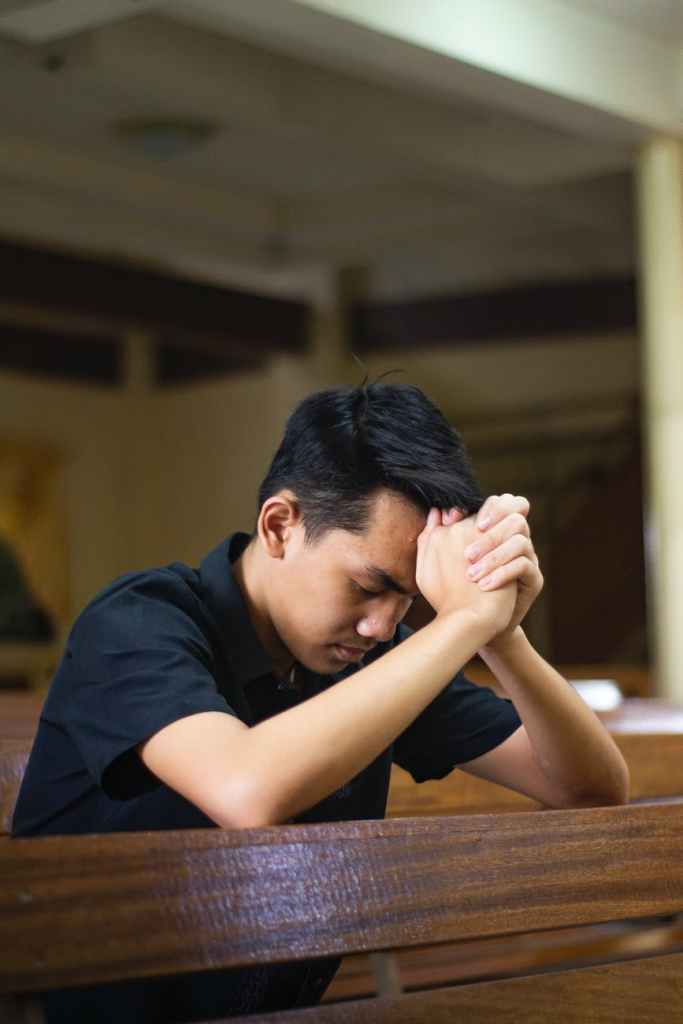
What if our stumbling effort to pour out whatever is on our hearts and lift it up to Almighty God–our praise, our failings, our grief, our desperate need–is be the most important prayer we can pray today?

Blog at WordPress.com.

Up ↑