It’s Not Enough!

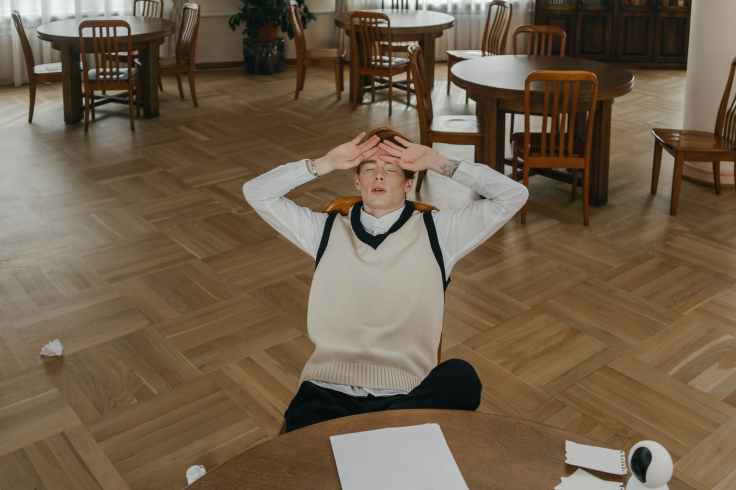
Often, when there is a disaster– especially one that seems preventable and senseless, like a mass shooting or a horrible crash–thousands of people reach out with “thoughts and prayers” for the victims and their families. And, predictably, others will angrily comment that thoughts and prayers are “not enough.” What good are thoughts and prayers in the face of senseless violence or preventable dangers? Shouldn’t we be driven to action? Shouldn’t we focus our efforts on justice or working to guarantee that such disasters can never happen again?

Such anger is natural, and such sentiments may seem more virtuous than offering nebulous emotional support. What, after all, can thoughts and prayers really DO in the face of evil, injustice, pain, and grief?

Well, I can’t speak for “thoughts”, but I have studied prayer for most of my life. I would offer the following words about the effects of prayer:

  • First, prayer reminds me that I am NOT in control of my circumstances– only my reaction to them. I cannot control what happens, what HAS happened, or what WILL happen. And my anger will not change what has already happened, nor will it prevent future disasters from happening. And while I may not be able to prove to others that prayer CAN prevent future disasters or heal present grief, I have known it to do both in my life and in the lives of others.
  • Second, prayer reminds me that there is Someone Bigger than me– Someone Bigger than my circumstances– who has the wisdom and the power to do what even thousands of well-meaning people cannot. Thousands of people coming together can make a difference over time, but God can do miraculously more than we can imagine!
  • Third, praying for others is something I CAN DO— anywhere, anytime– across distances, cultures, time zones, and circumstances. Prayer doesn’t cost anything. It doesn’t require that I have specialized skills or access to physical resources. It may not seem very active, like ranting or screaming, marching or protesting, but it isn’t the same as inaction or apathy.
  • Lastly, praying for others is a first step in helping others. My prayer alone may not seem like “enough”, but prayers have a way of multiplying, and inspiring, and intensifying in positive and impactful ways.

But more than just talking about the effectiveness of prayer, I’d like to pose a couple of questions for those who dismiss prayer as “not enough.”

  • What are you offering (instead of prayers)? Will your thoughts, plans, and actions have immediate or eternal results? Do you have the solution to all the world’s problems? Will you be able to control what happens in the future, or make sense of what has happened in the past? Will your solutions be perfect– no unintended consequences or necessary casualties?
  • If you are so angry about others praying, why waste your energy complaining about it? Go ahead with your own solution/reaction/plan.
  • Is your solution “enough?” Is your anger “enough?” Are your good intentions “enough?” Ultimately, you must wrestle with the existence of evil and injustice in this world. Senseless things happen. Good people suffer, and guilty people enjoy “success.” And nothing we offer is ever “enough” to change the world around us.

Our efforts and actions will never be “enough.” But prayer taps into the reality that God IS ENOUGH. His Grace is sufficient; His Love endures forever; His wisdom is higher than ours, and His power is boundless. He doesn’t always remove us from the chaos and suffering of this world, but He redeems us, and He enters into the circumstances of our own suffering and grief. He gives us courage, strength, hope, and a sense of purpose that goes beyond what we can find in ourselves.

In One Accord

I heard a riddle a few years ago, that went something like this: ”What kind of car would Jesus drive? A Honda–it says in the Bible that Jesus and his disciples were all in one Accord!”

While that pun may raise some groans, it also hints at a valid principle. Those who follow Christ should be “in one accord.” Whether we are riding together in a car, or sitting together in a service, or serving together on the mission field, we should be of one mind. But what does that actually mean in a practical sense? How does it relate to a pursuit of prayer?

To be “in accord” is to be unified, in agreement, in consensus, in harmony, with all the others of a group. It is the act of blending together for a single purpose– to match up with others in a single focus–to unite in one glorious expression. Think of a harmonic musical chord– three or more single notes being played together to make a fuller, richer, more complete burst of sound. The notes must act together– they must be in harmony within the scale, and they must be played at the same time. There is even such a concept in music of “resolving” a chord– first playing a chord in a minor key, then changing one or more of the notes to form a similar chord in a major key. The human ear is drawn to chords that “resolve”– music that ends on a “positive note.”

In human relationships, we also like resolution and harmony. As Christians, we are strongly encouraged to live in harmony and unity, living for others, so that we may “glorify the God and Father of our Lord Jesus Christ with one mind and one voice.” (Romans 15:6 CSB) We are not to insist on having things “our way,” to resist those who offer Godly correction, or to be part of creating divisions. Instead, we are to refrain from selfish ambition, to remain faithful to Christ’s teachings, and to “resolve” conflict whenever possible.

Likewise in prayer. We should echo the prayers of others, as we seek God’s will to triumph over situations and circumstances. That doesn’t mean that we all have to intone the same rote words whenever we are together. But it does mean that we should support each other in prayer, just as we would in speaking to each other and about each other.

And that involves seriously evaluating how we speak and act and think about our fellow Christians. If we gossip or spread complaints about our Brothers and Sisters in Christ, we are NOT in accord, and our prayers cannot be in harmony with theirs. If we are waiting for others to see things “our way,” we should be very careful about how we pray– it may be that WE are the ones who need to reconsider, or it may be that we need to listen before we presume to judge. Being “in one accord” involves humility, kindness, gentleness, and a willingness to accept (and sometimes to give) difficult Godly correction. The goal is not for others to see things “my way,” but for all of us to see things God’s way!

And when that happens, our prayers will be like a symphony, built of gloriously harmonious chords. Just imagine how delightful it is to pray “in one accord,” knowing that our prayers not only reach heaven, but fill it with music!

For more information on this concept, check out https://www.gotquestions.org/in-one-accord.html .

Salt of the Earth

The other day, as I was doing a Bible study on the Women of the Bible (Spangler and Syswerda, Zondervan Press, 2007), I was reading about Lot’s wife. The story is found in Genesis 19. Lot and his family were living in the wicked city of Sodom, which the Lord was getting ready to destroy. Abraham, knowing his nephew and family could face destruction, had pleaded with the Lord. God had promised that if He found even 10 righteous people in the city, He would not destroy it. But the men of the city came in a mob and tried to rape the angels of God. Only Lot tried to prevent this crime, and even offered his daughters as a substitute for the angels! No other righteous people were found. The doom of Sodom was at hand.

The Angels led Lot, his wife, and his two daughters out of the city toward the small town of Zoar. In fact, they had to take them by the hands and physically drag them away from the coming disaster. They warned the entire family to flee– take nothing with them, and don’t look back! But Lot’s wife did look back, and she was turned into a pillar of salt. In one split-second of weakness, she lost her life and her future, and left her family to unravel (see later chapters in Genesis).

I remember hearing this story as a child, and one question has always nagged at me. Why a pillar of salt?

Have you ever wondered about it? What is it about the destruction of Sodom and Gomorrah that would cause anyone to become a pillar of salt? God never does anything without a reason or a lesson to learn. So what can we learn from this?

Interestingly, the authors of the Bible study spent an entire lesson on “Salt.” They told of its importance in the Ancient World, its abundance in the Middle East, and how Jesus spoke of His disciples being the “Salt of the Earth.” (see Matthew 5:13). We are commanded to have qualities similar to salt– to cleanse, purify, and season the world around us. 

And then, yesterday, we experienced some freakish winter weather. It rained. And it sleeted. And it rained some more. And the temperature hovered just at the freezing point, causing a layer of ice to form over the roads, sidewalks, trees, power lines, cars, etc. Ice was everywhere, and I was out spreading –you guessed it– salt. Salt melts the ice that covers walkways and roads, making it safer to walk or drive.

But here’s the thing about salt. It only works when it is spread around and used. It does no good to put a pillar of salt in the middle of a highway, or on the kitchen table. A pillar of salt can make an interesting decoration, but it’s real worth is in its usefulness, and in its interaction with other elements. We don’t eat salt by itself. We use it to flavor other foods– we sprinkle it, we rub it in, we dissolve it– we don’t appreciate salt unless it works WITH something else. We use it WITH ice, to melt it off of the sidewalk. We use it ON raw meat to cure it and preserve it. We use it IN water to clean or soften items.

Lot’s wife was a pillar of salt. She had worth and value; she had a family that was being preserved to be a witness of God’s Grace and Redemption. But she turned away from God’s protection and His provision. Her value was trapped by her moment of rebellion, or curiosity– whatever caused her to look back.

How are we being salt in the world today? Are we being used to season the world around us? To help spread health, and purity, and life? Are we helping to melt icy hearts and soften hard hearts we meet? Are we willing to be spilled and spread and rubbed in to situations not of our choosing? Or are we standing as pillars of useless potential?

I pray that I will learn from the story of Lot’s wife. A new lesson. A new sense of purpose today. I hope you will be encouraged, as well. Let’s go out and “shake” things up in our world today!

The Value of a Life

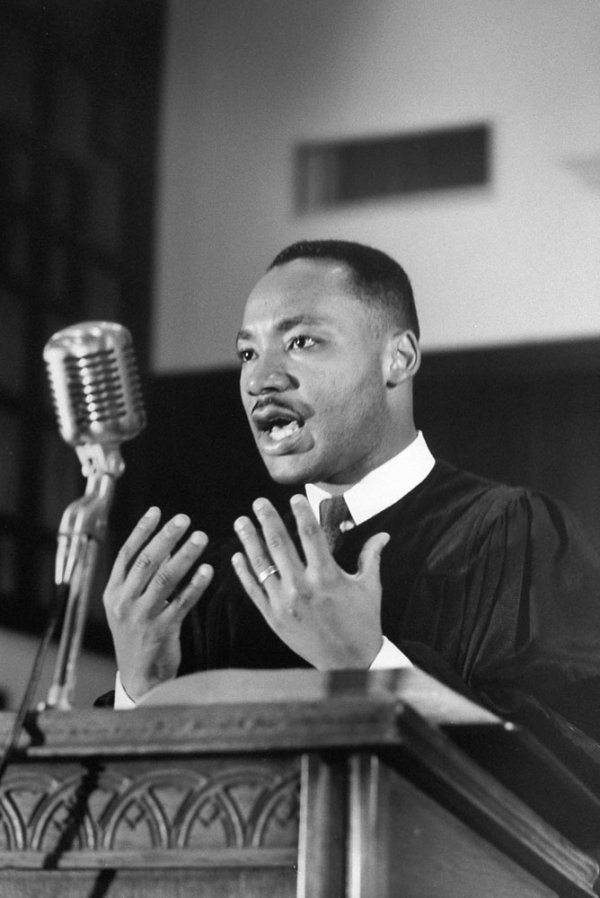
Today in America, we celebrate the life of Dr. Martin Luther King, Jr. Dr. King was a minister, a brilliant writer and student of theology, a leader in the Civil Rights movement of the late 1950s and early 1960s, a noted speaker, and man who arguably made a difference in the world. Dr. King was murdered in 1968, at the age of only 39, leaving a family and a nation devastated by his loss.

Next Monday, we will observe the 51st anniversary of the Supreme Court decision Roe v Wade, in which nine judges effectively legalized abortion in the U.S. for over half a century. Even though this decision has been overturned, many states, using the precedent of Roe v Wade, have changed their state laws to allow for abortion. In many states, it is now legal to abort a child right up to the moment of birth!

What is the value of a single life? Who gets to decide that they have the right to take another person’s life– whether by assassination, capital punishment, abortion, murder, or euthanasia?

It is a question that our society has struggled with for centuries. Who can give life? Who can take life? Who can determine the conditions of another person’s existence? And, for those who live, what is the “value” of their life–to their family, to their neighborhood, to their nation, or to history? Who gets to set the standard of what constitutes a “worthwhile” life or the “quality” of life for someone else? For themselves?

I’ve been reading through the book of Genesis this month, and, according to the Bible, this subject is as old as human life on earth. Cain decided that Abel’s life was expendable, so he killed him– the first murder. The people of Sodom and Gomorrah felt they had the right to enslave and rape anyone they wanted to. Joseph’s brothers plotted to kill him, before selling him into slavery, instead.

The Bible doesn’t hide this history, nor does it sugar-coat the actions of those featured in its pages. But, the Bible offers us a clear picture of WHO gives life, and WHO has the authority to decide what life is worth. God alone has this authority. It is God alone who can create and sustain life. Mankind has the choice– to protect life or destroy it; to treat life with respect or with disdain; to honor the Giver of Life, or to rebel against Him.

All the atrocities of the Old Testament lead to the ultimate decision on the value of a single life. Jesus lived a simple, ordinary human life. He lived with compassion, with purpose, and with humility. And He was willing to GIVE His life to atone for all the murders, all the abortions, all the slavery, all the injustices in history, so that WE could enjoy abundant, eternal life with Him. By looking to this singular life, and trusting in the power of His death and resurrection, we can choose to honor all life. We can make a difference. We can live with purpose and joy.

Dr. King’s legacy is one of honoring life, and pointing out the evils of those who seek to devalue the lives of others based on the color of their skin. Abortion’s legacy is one of destroying life, and promoting those who devalue the rights of the helpless.

The choice is still before us. How will we determine the value of a single life in the coming week? How will be add value to life on earth? How will we live for more than just the moment?

More Jesus, Less Me?

Last week, I saw numerous posts with New Year’s resolutions, promises, and goals. One that I saw repeated often was the phrase, “This year, I need more of Jesus and Less of Me.” And, while I can see the appeal of such a phrase, I’d like to take a closer look at what that really means in a practical sense.

It’s easy enough to say a phrase like this and then proceed to live exactly the same as last year– struggling to be a “better” person, a more Christ-like person–and wondering why it isn’t working. But what if we’re missing the real transformation we need this year by misunderstanding what this phrase really means?

“More Jesus.” Actually, there is no “more” Jesus to be had than there already is. We can’t “get” more Jesus. We already have access to all the Grace, Power, and Peace that Jesus can offer. We have His Spirit to guide us, His example to follow, His indescribable sacrifice to motivate us, His promises to sustain us…what “more” are we looking for?

What we really mean by this phrase isn’t more of Jesus, but more TO Jesus and more FOR Jesus– more of our devotion, more of our obedience, more of our submission, more of our learning to lean on Him. We need to make more room for Him, more time for Him, more energy.

“Less Me.” In today’s world that revolves around identity and self-expression, this is where we lose non-believers, and many Christians, as well. The language of the New Testament– Jesus’ own words in fact! — call for us to die to ourselves and be raised to new life in Him. To many people, this seems like a very bad bargain. Matthew 16:25 puts it this way: “ For anyone who keeps his life for himself shall lose it; and anyone who loses his life for me shall find it again.” (The Living Bible) But look closely at this statement. Jesus is not promising death, but LIFE. (See also John 10:10) Jesus isn’t proposing to take away our life, but to help us find our best life. The word “life” in this passage can be translated as “life” or “soul.” When we think of “dying” to ourselves, or “losing” our life, we see only the negative. And death IS the ultimate negative. We don’t want to “die.” We don’t want to let go of this precious gift of life that we have been given. And it seems as though Jesus asks us to make a ridiculous trade– our life for His; our will for His; our self-control and determination for His mastery and domination.

Except that is Satan’s oldest and greatest lie! When Jesus says, “anyone who loses his life for me shall find it again,” He’s not promising a shadow life of slavery or degradation. God doesn’t want Holy zombies or robots, mindlessly and grudgingly following orders. He wants to bring us into the BEST and most abundant LIFE we can experience! But in order to experience any of it, we have to “get out of the way!” We have been given the ability to choose between right and wrong, between following God’s way or rebelling against it. It is when we believe the lie that God doesn’t love us, that He doesn’t have our best interests at heart, that He is withholding “something” from us– power, “fun,” happiness, achievement, etc.–that we lose our true life. We lose perspective, we lose joy, we lose peace, we lose our true purpose, we lost trust, and we lose hope. We get so worried that God will “cheat” us out of what we want in life, that we become enslaved to our own limitations and fears. I have hopes and dreams, but on my own, I will scheme, connive, compromise, and fall short of what I could become. I will let circumstances and bitterness determine my limits. I will betray all the promises of God for all the lies of the world. i may “win” the game of life, but in the end, I will still die. And I will die never knowing what I might have achieved WITH God, instead of in my own strength and wisdom.

So when we say, “Less Me,” what we really mean is less of my grasping, less of my whining, less of my demanding my own way, less of me shutting out others, less of me standing in opposition to God’s best for my life. ”More Jesus”– more trust in Him, more humbly walking WITH Him, instead of shaking my fists AT Him, actually results in “More Me”– not the ME that wants the world to revolve around only myself, but the Me that God created me to be! The Me that can only be shaped by a Master’s Hand. The created me bringing glory to and through the Creator!

So this year, instead of saying “More Jesus, Less Me,” maybe we should say, “Me Less, Jesus More!” Me less and less in the driver’s seat. Me less prideful and isolated. Me less prone to anger and bitterness. Me less in the center of my thoughts and plans for today. Jesus more in my daily talk. Jesus more in control of my emotions and reactions. Jesus more of my focus. Jesus more of my best and most trusted friend! And in the end, Me, More like Jesus made me!

Ugly Christmas Sweaters

It’s that season of the year, when several companies have their annual “Christmas Parties.” Some companies, in an effort not to offend any of their employees, investors, etc., have stopped calling them “Christmas” parties– they are “holiday” parties or “year-end” celebrations. In fact, at one place I worked, they stopped having any parties for the employees, claiming it was a “bad look” to “waste” money on such nonsense! Bah, Humbug!

But company Christmas/Holiday parties have a tendency toward the silliest and least meaningful ways of celebrating what this season and its holidays are all about. Often, the festivities involve a cash (or open) bar, some sort of anonymous gift exchange– white elephant or “secret Santa” with a spending limit of $5 or $10 dollars, and an ugly sweater contest.

And there is an entire industry predicated on the modern tradition of the “ugly” holiday sweater. Garish, loud, often bedecked with pom-poms, tinsel, or even battery-operated flashing lights, such sweaters can cost a minor fortune. They get worn once a year (twice if you have to go to a second party with a spouse, friend, or as a chaperone). And, while I don’t want them banned, I think they represent some of the worst excesses of our modern first world. They serve no higher purpose than to draw attention to bad taste and mock the core values of Christmas, Hanukkah, and other seasonal holidays. They are about tacky and fleeting entertainment, at the expense of higher virtues. 

I’m not trying to be a Scrooge or a Grinch. The holidays should be a time of joy and laughter. But is a tacky sweater really the best we can come up with? Is it in the top ten best ways to enjoy a season of miracles, love, light, giving, and hope? (I feel the same way about the focus on drinking– waking up hungover and sick; not being able to remember the end of the party– how is this “fun?”)

In our effort to have “Christmas” without “Christ” or Hanukkah without miracles; in our efforts to erase God from the celebrations of HIS goodness, we have created a level of fake celebration that echoes the story of “The Emperor’s New Clothes.” We’re walking around with ugly sweaters, each more elaborately ugly than the one before, considering it a triumph to be the biggest fool in a forest of foolishness.

Imagine giving that ugly Christmas sweater to someone who was homeless and had no warm clothes. Would it make you laugh to see someone in those circumstances wearing your once-a-year indulgence? Would your ugly sweater bring hope and healing to those who are refugees this season? Do you wear it when no one else can see it? The sweater isn’t about the season. It really has nothing to do with the meaning of the Holidays. It’s about impressing people with your willingness to stand out; your ingenuity in finding an uglier sweater than anyone else; it’s about YOU.

What would happen if, instead of an ugly sweater contest, seeing who can drink the most before passing out, or a white elephant exchange of worthless gifts, companies celebrated with worthwhile activities– building community ties, honoring achievements, or maybe even reflecting on miracles in our midst? What if our celebrations were less about empty amusements and more about reflecting on what is genuinely worth celebrating–health, friendships, family, hope, and purpose? They might be less amusing, but they might also be more memorable and meaningful.

There’s nothing “wicked” about ugly sweaters or white elephants– but they are becoming symbols of the kind of “Christ-less” Christmas that offers mild entertainment, but no hope for the dark days of a long winter. They are some of the symbols of excessive economic wealth in the midst of emotional and moral poverty. Naked and empty entertainment, pretending to offer light and satisfaction, but settling for glitter and gluttony.

Today, I’m going to wear a sweatshirt to keep warm, and I’m going to spend some time with my family– building memories that will last much longer than last season’s ugly sweater! And I will spend some time thanking God for the sweatshirt, my grandkids, and for the incredible gift of His Son–the real meaning of this season of love, gifts, miracles and hope–our real reason for celebrating Christ-mas!

What If HE’D Never Been Born?

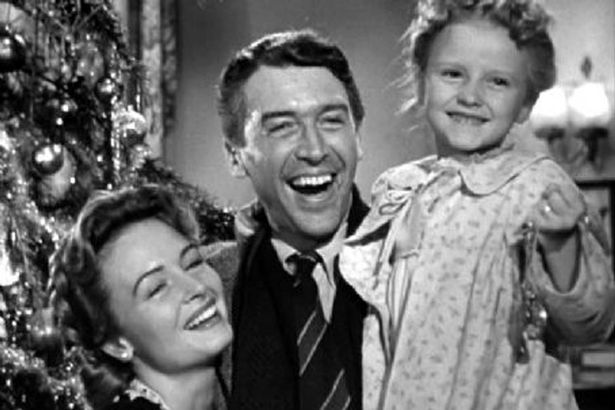
One of my favorite Christmas movies has always been “It’s a Wonderful Life.” The movie tells the story of a man who finds himself desperate, sad, frustrated, angry, and suicidal on Christmas Eve –sounds like a real winner, huh? But before he gets to that point, Heaven is preparing an angel to come to his rescue. Through the eyes of the angel, the viewer “gets to know” George Bailey– his family, his friends, his struggles and his joys–and gets to see his life in perspective. The angel, Clarence, decides to give George an unusual gift– the chance to see what the world would be like, not just if he were to commit suicide, but what it would be like if he, George Bailey, had never existed. George is astounded and horrified to see the effects of his absence, and he learns to value his life, his family, and his friends as never before.

The dramatic effect of one person’s life cannot be overstated, but this is especially true of the life of Christ! Can we dare to imagine what life would be like today if Jesus had never been born?

Of course, the most obvious and tragic consequence is that there would be no Salvation by Grace. For a more complete discussion on this, there are several other essays and even books, including “What if Jesus Had Never Been Born” by D. James Kennedy and Jerry Newcombe. (Full disclosure: I have not read this book– I just found out about it as I was writing this, but I trust it is a good resource.) And all speculation on this subject is just that– the Bible is clear that it was always God’s plan for Jesus to come, to live, to die, and to defeat death, just as He did, just when He did. Any alternative vision is not from God, but from our own imaginations. But what other “ripples” do we take for granted in our world, that would not have happened (or would have happened very differently) if Jesus had never been born, or had not completed the work of His life, death, and resurrection?

  • There would be no Christmas. Not just the Christian celebration of Christmas, but much of what we call “secular” Christmas. While some cultures might have a local festival for winter solstice, there would be no worldwide celebration such as we know.
  • There would be no “Santa Claus,” no “St. Nick,” no “Father Christmas,” no “Papa Noel”, etc. The model for our modern Santa Claus, St. Nicholas, wouldn’t have been a Christian Bishop in Asia Minor, because there would have been no Christians there, or anywhere else.
  • No Christmas Cartoons– no story about Rudoph the Red-Nosed Reindeer; no singing elves and jolly Mrs. Santa Claus; no Heat Miser and Snow Miser (if you know some of the other Rankin-Bass productions..) Hours of childhood memories erased.
  • No other Christmas stories and movies– no Scrooge and Marley; no MIracle on 34th Street; no “Yes, Virginia, There is a Santa Claus”; no “Santa Clause” (and its successors) no “Christmas Story” or “Christmas Vacation”; not even Hans Gruber falling from the Nakatomi Tower. Millions of DVDs, books, VHS tapes, local theater productions– never existed.
  • We can kiss Frosty the Snowman goodbye, as well. Without the magical snowfall of Christmas, the story never takes shape– literally.
  • No Christmas Carols or Christmas music. I know of at least three local radio stations that are playing Christmas music exclusively right now. They started the day after Thanksgiving, and they will continue through the end of the month. Thousands of Christmas songs– from favorites like “O, Come All Ye Faithful,” and “O, Holy Night,” to annual disasters, like “Last Christmas,” and “Santa, Baby”– all wiped out.
  • No Christmas cards. Millions of cards are sent out each year, connecting family and friends around the world. Except there wouldn’t be any if Christ had never been born.
  • No Christmas Lights.
  • No Christmas shopping. (And while that may seem like a good thing for my personal budget, have you ever looked at what the Christmas season means for most Western economies?) No Christmas wrapping; no Christmas ornaments; no Christmas sweaters or socks; no Christmas candy or cookies…
  • No Salvation Army bell ringers at the stores– no Salvation Army; no reason to ring bells…
  • No Christian charities– not just the Salvation Army, but every other charity that was founded on Christian principles, or for Christian outreach…no downtown rescue missions, no soup kitchens, no international Christian efforts to rescue hurting children or provide relief for families. I by no means want to suggest that ONLY Christians are charitable, or that NO charities would exist without Christ. Charities are a mainstay of most religions, and always have been. The distinction I would make is that more Christian charities have been developed and have thrived in the last 2,000 years, than charities started by other religious and secular organizations, and there is evidence that they do more efficient and more broad-based work than their counterparts. https://www.christianpost.com/news/christian-charities-more-reliable-than-others-according-to-forbes.html
  • No Christian colleges or universities– Are you a fan of Notre Dame Football? Sorry. Notre Dame doesn’t exist. Neither do Harvard, Yale, Princeton, Cambridge, Oxford, Saint Andrews, Georgetown, and several other colleges and universities throughout Europe, North America, and elsewhere. Even universities that are completely secular today were once founded on the idea that education was a Christian virtue. This doesn’t mean that there would be no places of higher learning– there would just be far fewer than we know today.
  • No “Christian” books– and this includes books that introduce Christian concepts, allegories, and allusions. No “Pilgrim’s Progress,” no “Jane Eyre.” no “Lord of the Rings…”
  • No Churches– no cathedrals, no picturesque country chapels, no strip mall fellowships, no megachurches…
  • None of the Christian Memes; Promises; favorite verses… no Beatitudes; no Fruit of the Spirit; no “Golden Rule,” no Romans 8:28 or John 3:16 or Philippians 4:13…
  • No Twenty-First Century! Our calendar is literally based in part on the assumed birth of Christ. And while there are other calendars– Chinese, Aztec, Hebrew, etc., that are numbered differently, most of the world uses the Roman/Julian/Gregorian Calendar, which splits time into B. C. or B.C.E. — literally “Before Christ” or “Before the Christian Era”, and A.D. (Anno Domini– year of our Lord!) or C.E. “Christian Era.”

It paints a pretty bleak picture. Our world, as we know it, would be vastly different if Christ had never been born. That is not to say that the innovations, inventions, or achievements of the past centuries might NOT have happened at all– but they would have happened without the same purpose and effect. Many of the events of the past two millennia were inspired by, undertaken by, and driven by the message of the Christ– His birth, death, resurrection, and promised return! We hear about some of the negative things of the Church– wars and excesses, scandals and failures. But what about the successes– the transformation of violent cultures and conflicts into peaceful resolution, the drive to end slavery, cure illnesses, eradicate hunger–so many of the blessings we enjoy here on earth are the result of work done by those who long to love their neighbors as themselves and to see God’s will done “on earth as it is in Heaven!” The Joy and Generosity of the Christmas season cannot be separated from its central cause. The Wonder, the sense of the Miraculous and Holy, the sense that there is something “More” beyond a crisp winter morning or a day off work or a genial meal with friends–it all MEANS something. It doesn’t just come from nowhere, or a human desire to be kinder this one day each year. The character of George Bailey exemplifies an ordinary life that has meaning and purpose. His sense of purpose has gotten lost in the crush of bills, obligations, disappointments, and injustices. His prayer is one of quiet desperation; he is completely unaware that it is part of a vast chorus of prayers. But God hears it– and God sends Clarence!

There is a reason that George is visited by an Angel on Christmas Eve. Clarence may not be suave and sophisticated; he may not have intellectual arguments that can help George comprehend all of life’s wonder and purpose. But just like the angels at the first Christmas, Clarence comes from Heaven. He is God’s chosen messenger. He brings Heaven’s perspective and truth into a dark world, showing George what IS and HAS BEEN and what CAN BE– all because George was born– because CHRIST was born! It IS a WONDERFUL Life– not because of our circumstances, but because God’s Greatest Gift redefines our circumstances and transforms our perspective!

4-7 But when the time arrived that was set by God the Father, God sent his Son, born among us of a woman, born under the conditions of the law so that he might redeem those of us who have been kidnapped by the law. Thus we have been set free to experience our rightful heritage. You can tell for sure that you are now fully adopted as his own children because God sent the Spirit of his Son into our lives crying out, “Papa! Father!” Doesn’t that privilege of intimate conversation with God make it plain that you are not a slave, but a child? And if you are a child, you’re also an heir, with complete access to the inheritance.

Galatians 4:4-7 (The Message)

George emerges from his nightmare experience to find he is, in fact, “the richest man in town.” Oh, that we would wake up this Christmas morning fully aware of the rich heritage that is ours– because WE were born. Because HE was born! Because we can be BORN AGAIN!

Behold!

Matthew 6:22-23 English Standard Version (ESV)

22 “The eye is the lamp of the body. So, if your eye is healthy, your whole body will be full of light, 23 but if your eye is bad, your whole body will be full of darkness. If then the light in you is darkness, how great is the darkness!

adult anger art black background
Photo by Pixabay on Pexels.com

O be careful little eyes what you see

O be careful little eyes what you see

There’s a Father up above

And He’s looking down in love

So, be careful little eyes what you see

whole song text here

This little light of mine–I’m gonna let it shine!

black frame sunglasses beside table lamp

Both the scripture text and the children’s song above are often used in the context of watching pornography or violent images, and their negative effects.  It is true that if we fill our sight with negative and sinful images, we will be impacted negatively.  We become desensitized to violence and evil; we become addicted to images that shock or excite us.

But I think there is more going on in this text, and I think it has a bearing on our prayer life.  What we choose to see also involves what we choose NOT to see. We talk a lot about what we shouldn’t be watching or seeing, but there are some things– even unpleasant things– that we MUST see if we are to be the light of the world.  Not only must we see such things, we must shine a light on them and cause others to see them.  Injustice, corruption, dishonesty– we must be careful to see them for what they are. And we must see them clearly to pray about them wisely.

person holding magnifying glass

We live in a world of optical illusions, and it can be very difficult to see clearly.  But that is what we are called to do.  If our eyes are good/healthy, we will let in the light of truth, so that shadows and illusions will become stand out.  If our eyes are bad/unhealthy, the shadows and illusions will trick us.  We will see only what can be seen in a glance, and miss the bigger picture. And we will pray, not with an eye toward the bigger picture, but narrowed in on our own limited vision of the world around us.

John the Baptist had excellent “vision.”  As he was out in the hot sun glinting off the Jordan, he looked up to see hundreds of people waiting to be baptized.  But his eyes were searching the horizon, seeing all the others, but seeking one face.  And when he saw it, he drew everyone’s attention to it– “Behold! The Lamb of God who takes away the sin of the world.”  (John 1:29)  Our eyes, like those of John, should be looking with purpose and hope.

built structure against sunset sky

Throughout the Bible, God looks at people with love and compassion.  Several times in the gospels, Jesus looks upon or takes note of people (some of whom are seeking him, and others who know nothing of him) and has compassion on them.  Our eyes, like those of our Father, should be looking in love.  Love sees things as they really are– it sees sin, pain, disease, betrayal, war, hatred, greed.  But love sees beyond to people who need salvation, healing, restoration, peace, compassion, and hope.

I need to give careful consideration to what I allow myself to see– do I see all the negative, hateful, sinful things going on around me?  Do I see such things with a sense of purpose and with compassion?  Or do I ignore them and turn my gaze inward, shutting out the hurt and need all around me?  Do I see all the shadows and illusions and let my own light grow dim?  Or do I see the Light of the World, ready to shine (even through me), with hope and redemption?  Will I pray with my eyes closed and shuttered, or wide open?

Searching for the “Oh!”

I like to play Scrabble, and other word games. Sometimes, in order to make a certain word in Scrabble, you need to wait for an opportunity and a particular tile. It can be very frustrating to play when you have only consonants or only vowels. You need both to make most words. Vowel tiles are not worth as much as the consonants. And so most players tend to discount them. After all, if someone else has made a word, you can use the vowel from their word to make yours– sometimes. But sometimes, you really need a vowel in the right position to make your word. Sometimes, you need a particular vowel. The other day, I was hoping for an “o.” Instead, I had four “i”s! I could try to make use of the vowels I had, or lose a turn and trade in my “i”s for other letters– which might all be consonants!

Photo by Pixabay on Pexels.com

Life is not a game of Scrabble. But there are times when we are looking for something to help make sense of life. It seems like whatever “hand” we’ve been given adds up to nonsense. We need an “o” to make it work. Deep down, though, I think most of the time, we really need an “OH!” We need to look beyond whatever we have, and see the wonderful things God has already done in and around and through us.

As I was driving to my doctor’s appointment the other day, it was hazy and cool for late June. It could have felt depressing or even oppressive. But I was listening to a song on the radio. The singer pointed out that God’s goodness, His Mercy, and His artistry are all around us in nature– the sky, the singing of birds, the colors of the sunrise or sunset, the majesty of trees or mountains, the comfort of a gentle rain–and suddenly, I found my “OH!” moment. Recent rains had brought a newer, deeper shade of green to the leaves, and had caused the corn and beans in the fields to begin springing up. The haze could not hide all the life and growth going on all around me. God’s magnificence was there for anyone to see.

Sometimes, I try to substitute an “I” for the “Oh!” Instead of focusing on the SON, I fall into SIN. When I look at what I have done, or the plans or dreams I have, it can fall short. I can’t make the stars shine. I can’t create a forest, or sing a song more beautiful than a babbling brook through a meadow of flowers. My best efforts with “i” aren’t worth much. But, OH!, what God can do! OH! What God has done! And it’s this same God who loves me and knows my name!

Are you having a “hazy” day? Are you looking around for something? Something clear, and beautiful, and worthwhile? Maybe, if you have an old Scrabble game, you could put an “o” tile in your pocket or purse to remind you to see the “OH!” all around you today!

20 For since the creation of the world God’s invisible qualities—his eternal power and divine nature—have been clearly seen, being understood from what has been made, so that people are without excuse. 21 For although they knew God, they neither glorified him as God nor gave thanks to him, but their thinking became futile and their foolish hearts were darkened.

Romans 1:20-21 (NIV)

The Longest Day

Today is the Summer Solstice. In the Northern Hemisphere, it marks the “longest day” of the year. However, today will have exactly the same number of minutes and hours as any other day. The difference is the amount of sunlight/daylight hours, as opposed to hours of night/darkness. And even this varies by where we live in relation to the equator. Those who live close to the equator will see little difference today– those near the North Pole will not see the sun dip below the horizon at all.

In some ways, today is NOT the longest day of my year. One of the longest days for me so far this year was the day my mother died. Even though it was February, when the days are “short,” that day was filled with questions, emotions, and obligations. Time seemed to stand still for a while, as we took in the reality that she had left us to go Home, and then time seemed to expend for all the aftermath of death. Who needed to be called and contacted? What would we need to do in the coming days and weeks to plan a funeral, notify authorities, pay bills and close accounts, etc.? How would we notify family and friends without “missing” someone? Each tick of the clock seemed to bring new thoughts and emotions.

I was thinking about time recently. We are still busy cleaning up Mom’s house and settling her estate. Days seem to pass quickly now, as we have deadlines, and much work to keep us busy. I’m glad for the extended daylight hours, but I’m also tired! Most days– even longer days!– I feel like I’m falling behind. And I find many hours are “wasted” on unimportant things; inconsequential things. Will I spend my time today any differently or more efficiently than any of the “shorter” days to come?

The Bible says a lot about time. (https://www.openbible.info/topics/time) We are creatures bound by time. We have a beginning and an end; we have a limited life span. And we do not know those limits. We cannot break the bonds of time to live longer lives, or to live our lives in the distant past or future. That is the “stuff” of science fiction and daydreams. We cannot bargain for more time, whether we are thirty and diagnosed with cancer or ALS or another terminal illness, or we are ninety-two and long to reach our centennial birthday. Even our individual days are dictated by the march of time. We cannot live our days backward. We cannot stop the clock or stretch out a certain hour over any other. Instead, we must make the most of every minute; every day that we are given.

But we were not created just for one short lifespan. Our bodies will wear out and die, but our spirits were created for eternity. There will be no “longest” or “shortest” days in Heaven or Hell. There will be no sunsets, no endings or “do-overs”, no deadlines. For the Christian, this is a great comfort. My Mom has said her last “Goodbye.” She never has to worry about deadlines, unfinished tasks, or “putting off until tomorrow..” My grieving is over a temporary loss; a brief “au revoir”, rather than a gaping chasm of eternal separation.

But there will be a very different “longest day” for those who do not choose Christ in this life. And that day will be one of endless darkness, endless despair. There will be no sunrise, no rest, no refreshment or renewal, no “tomorrow.” Today, I pray that we would “number our days” in this life (Psalm 90:12), and put them to good use. I pray that I would reflect God’s love to those who are living in the shadow of that endless darkness. I pray that the Holy Spirit might shine a light (through me and through others) that would draw people to Him.

There will be many hours of light today, but the days will grow shorter. The seasons remind us that time on Earth is fickle and fleeting. May we live wisely in this “longest” day of the year!

Blog at WordPress.com.

Up ↑