When Prayer is Not Enough…

“Stop praying and DO something!”

“I’m sick of thoughts and prayers…it’s time for action.”

“Prayer doesn’t work!”

Photo by Markus Spiske on Pexels.com

What happens when your prayers don’t seem to make any difference? People around you complain that you are passive, even apathetic about critical needs. “People are dying!” “People are suffering, and you want to stop and pray?!”

YES! Buy why do I continue to advocate for prayer in the face of overwhelming injustice and evil? Shouldn’t I be talking about action? Shouldn’t I be posting plans to end injustice or poverty or war? Shouldn’t I be willing to say that sometimes, prayer just isn’t enough?

Well, firstly, I believe that Prayer is far more powerful than most people know. Prayer IS enough, because GOD IS ENOUGH! I can’t stop gun violence, or human trafficking, or an epidemic. I can’t– not with all the resources in the world; not with all the action I can muster; not with any effort or plan or army of willing human helpers. And neither can anyone else. I can march in protest, I can write and call and badger legislators to change laws or enforce the laws we already have. Such actions might make me feel better– they might even have some immediate effect. But they won’t “fix” the continuing and underlying problem of Sin. Only God can do that, and He WILL do it. He may choose to work through human agency to right some wrongs or change the immediate future, but our world is broken, and God’s ultimate plan is bigger than just a convenient patch for Sin’s consequences.

Photo by Pavel Danilyuk on Pexels.com

However, I will concede that sometimes prayer, by itself, is not nearly “enough.” Prayer must be paired with Faith. I know many people who say that prayer “doesn’t work,” not because they didn’t pray, or weren’t sincere in their desire or their wish for God to act on their behalf, but because they believe in their desire– their wish or their plan– more than they believe in God’s goodness or His ability to bring good out of whatever struggle we are facing.

This is not a simple concept– that God is eternally good even in the midst of evil and horror– it can be painful beyond words. God may choose to allow the sin of drunk driving to take the life of an innocent person in our family, or leave us permanently paralyzed. Or He may allow war to strip us of all that we own– our home and our freedom. How can we possibly view such circumstances as “good?” Why does God allow for violence and injustice? Why does He allow it to continue– seemingly unabated and unchecked? How can God call Himself “Good” while letting evil touch our lives and the lives of millions innocent people? Praying — and continuing to pray– in such circumstances seems like a mockery of our pain and grief. It seems like God is deaf to our cries– indifferent, or even watching smugly from a distance. Why pray to such a God?


But IS this what God is really like? And why do we believe the worst about Him, rather than trust that His wisdom and Love are actually greater than what we can comprehend or experience in the present? Why do we blame God for the evil we see in others? Why do we ignore our own actions or inaction that often contribute to our situation? Why do we believe that God “owes” us a life without sorrow and pain– even as we see others suffering the consequences of sin– sometimes because of our failures? Why do we insist that God always act in accordance with OUR desires, when we often will not act in accordance with His? Why do we “test” God with prayers in our times of trouble, when we will not trouble Him with our prayers in times of peace and plenty? If anyone should have led a life without sorrow or pain, it should have been Jesus. Jesus prayed all the time– He even taught others how to pray (Matthew 6:9-15). He was completely obedient to His Father. Yet God’s own Son faced heartbreak, betrayal, and a painful, unjust death on the Cross. He wept over the death of a close friend– a death He Himself could have prevented (and later reversed)! (John 11) He was in such deep distress in the Garden of Gethsemane that He sweat blood! (Luke 22:44) God’s plan is not for us to live a life free of trouble, but a life of victory OVER despair and doubt!

Seeking “more” than prayer is often seeking “more” than God–as if we can do better on our own. As though we can out-love, out-give, out-do, and over-power the God of creation;the God of the Cross, and the God of the Resurrection and the Life. Deriding prayer is deriding the God to whom we pray– we minimize His power and His compassion while inflating our own. If God doesn’t exist, one might argue that it doesn’t matter– but then, why waste time deriding what doesn’t exist?! Prayer matters because God DOES exist, and because God matters Trusting God means being willing to wait and accept His will; even if we don’t get the answer we want. God’s ways are not our ways, but that doesn’t mean they are inferior or ineffective. God will not “undo” our circumstances, but He will help us through our circumstances. He won’t take away our grief. But He will shape it into something with purpose– if we let Him.

Finally, there are times when prayer must be paired with action. It IS enough to pray for God to act. But when God prompts US to act, and we do not, our prayers are empty words. Faith may lead us to wait, but it won’t lead us to sit idly by when we have the opportunity to help. Faith may lead me to keep taking the next step– even when I can’t see the way forward. Faith may lead me to let go of a dream I thought would be “enough.” It may lead me into the valley of the shadow of death– in my own life, or on behalf of someone else. I can’t take away someone’s grief at the loss of a child– but I can share in it. I can listen and offer friendship, rather than a quick platitude and a few empty words. I can continue to be there when others fade away. I can’t undo the horrors of war– but I can help care for refugees, and I can work to build peace in my neighborhood, even as I pray. I can take the next step in making someone else’s burden just a little lighter, and making the world a little brighter wherever God gives me the chance. And prayer is one way I can focus on the source of strength, wisdom, and compassion to allow me to do my part better.

Photo by Liza Summer on Pexels.com

The next time you hear someone saying that prayer is “not enough,” remember that no human effort will ever be “enough” to do what only God can do! But prayer taps into the power and grace that is “sufficient” for all our greatest needs.

But I Didn’t…

I could have welcomed that visitor at church this morning…
The one who looked a little lost; a little overwhelmed.

Photo by cottonbro studio on Pexels.com

I could have smiled when I paid my utility bill the other day–
When the clerk asked if she could help me, and thanked me, and sent me on my way.

I might have offered my unused coupons to that young man who was shopping–
The one with two boisterous kids in the cart, and very few groceries.
Maybe he would have been offended. But maybe it would have given him an opportunity
And a little hope.

I thought about calling an old friend and asking if we could pray together.
Maybe we could have met for tea or gone for a walk together.

Photo by cottonbro studio on Pexels.com

I had planned to clean out the closet and set aside some clothes to take to a local shelter.

I considered calling my sister, sending a card to that widower from church, or e-mailing my cousin…

I really needed to spend a little time in confession and repentance, and cleansing.
I needed to be renewed, recharged, and transformed. At least, I thought I did.
But something else claimed my thoughts, and my good intentions.
Now, I just feel worn and guilty and unworthy.

Photo by Engin Akyurt on Pexels.com

And the “thing” is– I didn’t do anything horrible. I didn’t make anyone cry, or rob a bank.
I didn’t burn dinner or break the speed limit. I didn’t break my marriage vows or embezzle a fortune.
I didn’t break the law– I didn’t even break a sweat!

I just
Didn’t.

Lord, today, I pray that you would light a fire under me. Help me to see the opportunities all around me– tiny acts of kindness, and truths that I need to hold tight. Show me people who need a listening ear, or a helping hand, or a word of encouragement. Help me to move “at the impulse of your love.” And when You direct me to be still, help me to be still and KNOW that You are a God of purpose and hope; joy and abundance. Help me to BE first–to Be obedient, to Be humble, to Be available. But then, help me to DO what you would have me do for Your Great Name. Thank you for second (and third) chances to BE and DO all that brings You honor. Amen.

Photo by Munmun Singh on Pexels.com

I Already Prayed About That…

Have you ever been in a season where you felt like you were praying about the same situation over and over with no results? No answers, and no indication that God has even heard? And you feel frustrated and even guilty about praying AGAIN about it?

Photo by SHVETS production on Pexels.com

We live in an “instant” culture. Instant banking, instant coffee, drive-through fast food, and 24-hour news cycles give us the expectation that we can get whatever we want or need with the push of a button or flip of a switch. Just yesterday, I pulled into the grocery store parking lot, and, seeing how full the parking lot was, I drove two miles away to a different store, because I anticipated long lines at the checkout! I don’t like waiting. I don’t like “wasting” time.

Photo by RODNAE Productions on Pexels.com

But God often puts us in a “holding pattern.” He may seem silent or distant, non-responsive or even absent. And in our impatience, we may stop bringing our burden to God, and seek elsewhere for answers or relief. Even when we know that God has promised to hear us, and never leave us alone, we long for instant gratification. And when we don’t get it, we start to wonder and doubt.

Photo by Liza Summer on Pexels.com

Sometimes, I feel angry in my impatience. I want answers! I want to know the next step forward! Other times, I feel hurt. Does God not hear me? Does He not understand my need? Sometimes, I even feel guilty. I know that God “knows” everything. Why do I keep bothering Him with the same thing? Am I asking for the wrong thing? Am I asking in the wrong way?

Photo by Nathan Cowley on Pexels.com

It is okay to have questions. It is normal to wonder. And I don’t have a “quick fix” answer for times like this. I think most of us experience these questions at some point. And the Bible has many examples throughout history of others who waited– some patiently, and others not so much…

Abraham and Sarah waited years for a family. In their impatience, they tried to do it in their own wisdom with heart-breaking results that echo down through thousands of years. Hannah prayed for years while enduring the taunts of her rival, Peninnah, before God gave her a son. A woman who touched Jesus’s robe had prayed and waited years for healing from her constant bleeding and pain. I know of parents who prayed for years that their wayward son or daughter would return home– some kept praying until they died, never seeing an answer.

But one comforting takeaway from all these Biblical and real-life examples– God DOES see and hear us. He left all those stories for us to read, knowing that we, too, would face trying and overwhelming circumstances. God doesn’t always give us an immediate or conclusive answer in our struggles. If He did, we would never develop a real and solid faith. God is less interested in answering our questions than He is in sharing our struggles. He does not want to walk ahead of us and smooth out our every path. Instead, He wants to walk beside us in the hills and the valleys of life.

Photo by Ivan Samkov on Pexels.com

So even if “I already prayed about that..” I can keep praying with confidence. God hears. He knows. And He cares enough to slog it out right by my side. And yours.

Vending Machine Prayers

As I write this, my mom is dying. We don’t know how much longer she has, but we’ve asked for prayers as she takes this journey toward death and resurrection. These are sometimes difficult prayers to make. We don’t like to see Mom suffering, but we don’t like the thought of separation through death, either. Our initial prayer would be for complete healing. But that’s not realistic, given that Mom has heart failure and is almost 90 years old. That doesn’t mean that God cannot or would not grant total healing. But we aren’t expecting that kind of miracle when we pray today.

Photo by Andrea Piacquadio on Pexels.com

For some people, our prayers seem meaningless. One of my classmates from school reacted to my request for prayer by saying, “I just wish that prayer DID something…” I take this to mean that if we don’t get a miraculous outcome, she believes our prayers are wasted. I hope I’m misinterpreting here, but I know that this is a common criticism of prayer in tough times. It seems that every time there is a natural disaster, or a mass shooting, people who offer “thoughts and prayers” are roundly criticized for praying “instead” of “doing.” As though the two are mutually exclusive. As though prayer is an empty gesture in the face of disaster and distress. As though there is no hope, no comfort, and no help in praying.

There are others who will assert with complete confidence their belief that God will answer any prayer for a miracle, simply because they ask it “in Jesus’ Name” or because many people are praying for the same outcome. I call these kinds of prayers, and attitudes about prayer, “Vending Machine Prayers.” It is the belief that prayer must produce an immediate and positive outcome, or it is “broken” or invalid. If you don’t get what you were expecting, you must have prayed “wrong,” or didn’t have “enough” faith. Or your prayer just didn’t “work.” When someone puts money into a vending machine, and presses a button or punches in a code or pulls a knob, and they don’t get the expected item, some of them will kick the machine, or curse. Or they will try again, carefully trying to get the “right” result. Vending machines are inanimate objects designed to give a satisfactory consumer experience. If the coins or bills “jam,” if the knobs or buttons malfunction, if the product gets “stuck,” or isn’t available, the consumer feels cheated. Sometimes, they can get their money returned, but most often, they go away angry and unfulfilled.

God is not a vending machine. He is not “designed” to serve us or give us satisfaction. There is nothing we can “insert” in our relationship with God –even sincere prayer–that obligates Him to give us what we desire. God chooses to answer prayers in whatever way He knows is best for our eternal and overall well-being. God still gives miracles. I’ve seen it and experienced it. In fact, we could have lost Mom several years ago, when her heart failure put her in a similar state. God provided a miracle in the form of heart valve replacement surgery–and a cancellation that moved her surgery schedule forward before her condition was too far gone. I’ve seen people healed of cancer– and people whose prayers for healing ended in their rapid decline and death. But none of those prayers were wasted. Not one. God was working– sometimes on the sidelines, strengthening family members to deal with grief; sometimes providing testimonies to those with doubts and questions; sometimes planting seeds that would bear fruit years later in the lives of those left behind–sometimes God was working “sideways,” as He did with Mom years ago to give her several more years of life, even though she wasn’t completely healed, to grow and prepare for this next step and testify to God’s sustaining power.

God is not apathetic, and He certainly isn’t “happy” about Mom’s decline and her impending death. He shares our sufferings and our sorrows. But God knows and sees the “rest of the story!” Jesus wept over the death of His friend Lazarus, even though He knew that Lazarus would be raised back to life. Jesus was sharing the deep grief over the loss and sorrow felt by all of His friends, just as He rejoiced with them as Lazarus walked home from the tomb! (See John 11 for the whole story.) God doesn’t delight in death. He is the author of LIFE. But He is very present through every stage of life– even that last bitter taste of death we all must experience. And just as we pray for God’s miraculous presence, we pray for His guiding, comforting, and hopeful presence in ALL situations.

Prayer DOES something! Even if we don’t see immediate changes in situations; prayer changes US. It changes OTHERS. It changes our priorities and perspectives. It draws us close– to each other and to the One whose Love is Eternal and unchanging.

116 I love the Lord, because he hath heard my voice and my supplications.

2 Because he hath inclined his ear unto me, therefore will I call upon him as long as I live.

The sorrows of death compassed me, and the pains of hell gat hold upon me: I found trouble and sorrow.

Then called I upon the name of the Lord; O Lord, I beseech thee, deliver my soul.

Gracious is the Lord, and righteous; yea, our God is merciful.

The Lord preserveth the simple: I was brought low, and he helped me.

Return unto thy rest, O my soul; for the Lord hath dealt bountifully with thee.

For thou hast delivered my soul from death, mine eyes from tears, and my feet from falling.

I will walk before the Lord in the land of the living.

10 I believed, therefore have I spoken: I was greatly afflicted:

11 I said in my haste, All men are liars.

12 What shall I render unto the Lord for all his benefits toward me?

13 I will take the cup of salvation, and call upon the name of the Lord.

14 I will pay my vows unto the Lord now in the presence of all his people.

15 Precious in the sight of the Lord is the death of his saints.

16 O Lord, truly I am thy servant; I am thy servant, and the son of thine handmaid: thou hast loosed my bonds.

17 I will offer to thee the sacrifice of thanksgiving, and will call upon the name of the Lord.

18 I will pay my vows unto the Lord now in the presence of all his people.

19 In the courts of the Lord’s house, in the midst of thee, O Jerusalem. Praise ye the Lord.

Psalm 116 KJV (emphasis added)
Photo by Tima Miroshnichenko on Pexels.com

There are dozens, if not hundreds, of people praying for my Mom (and all of us who love her so very much). And probably, there are some “vending machine” prayers among them. That’s ok. God hears them all. And I am so very blessed by them all. Because prayers DO SOMETHING AMAZING. They rise to a God who sees, who hears, and who LOVES unconditionally, eternally, and perfectly! We’re actively trying to do what we can do to make Mom comfortable and seeking treatment that will ease her last days, but we depend on God’s touch, His healing, His timing, and His good will to see us all through and keep us in perfect peace.

Who’s Your Daddy?

When I was growing up, I knew three important things about my father:
I knew he loved me–and the rest of our family–faithfully and truly.
I knew he loved God–He was a man of faith, prayer, integrity, and obedience to the Word.
I knew he would do anything to protect and provide for our family.

But I also knew that my Daddy wasn’t perfect. He was not the strongest man in the neighborhood; or the fastest, or richest, or most respected. He wasn’t the tallest, or most athletic. He wasn’t a leader in local politics or a chamber group or fraternal organization. He didn’t have a string of degrees, or a fleet of fancy cars. He didn’t even have a lot of hair, or perfect teeth. But he had a gentle laugh, a deep wisdom, and a hug that made me feel safe and precious. He had a enormous heart– one that was easily touched, but firmly committed. He was humble and kind; he was loyal and brave and joyful.

Photo by August de Richelieu on Pexels.com
Photo by Abdel Rahman Abu Baker on Pexels.com

I was blessed to have such a Dad. I know people whose earthly fathers were distant, disapproving, absent, or even abusive. Earthly dads, even one like mine, are still human. They make mistakes and bad choices; they carry baggage from their own childhoods; they carry fears and failures; they fall short of our expectations, and their own hopes and dreams. And yet, we long to have a father we can trust; a father who won’t fail us, even in the little things; a father who will perfectly understand us, provide for our needs, and protect us. No matter how old we are, or how successful we may be, our need for a father’s love and approval never end.

Our mental and emotional picture of God is often shaped by our relationship with our earthly fathers. Especially if our father was abusive, it can be difficult to believe that God really loves us. After all, if God loves me, why did He give me an abusive Dad? If God can protect me, why did He allow me to go through a journey with Cancer? Or poverty? Our fallen world leads us into circumstances that cause us to doubt God’s goodness and His ability to redeem our broken past. But, while God sees our painful circumstances, He also sees things that we can’t. He sees the pain that our fathers feel in their own brokenness and inability to “fix” their own past. He sees the kind of growth and compassion that we can learn in our difficulties– lessons that we would not learn in ease and apathy.

God is a different kind of Father. He is eternally sovereign; the King of Kings, and the Creator of the Universe. There is no comparing Him with anyone else’s father– because He is the Ruler and Father of all! Yet, He wants a close loving relationship with each one of us– with me! With you! He is not just committed to doing His best to provide and protect some of us– He is fully capable of providing ALL our needs and protecting us against ALL enemies, including sin and death! For those who have grown up with a distant or abusive father, it can be difficult to hear of God as our “Father” and feel the kind of comfort and trust that we are meant to have. Yet God invites us into His very presence– ALL the time; ANYTIME. He is everything that the word “Father” was meant to be!

Photo by Juhasz Imre on Pexels.com

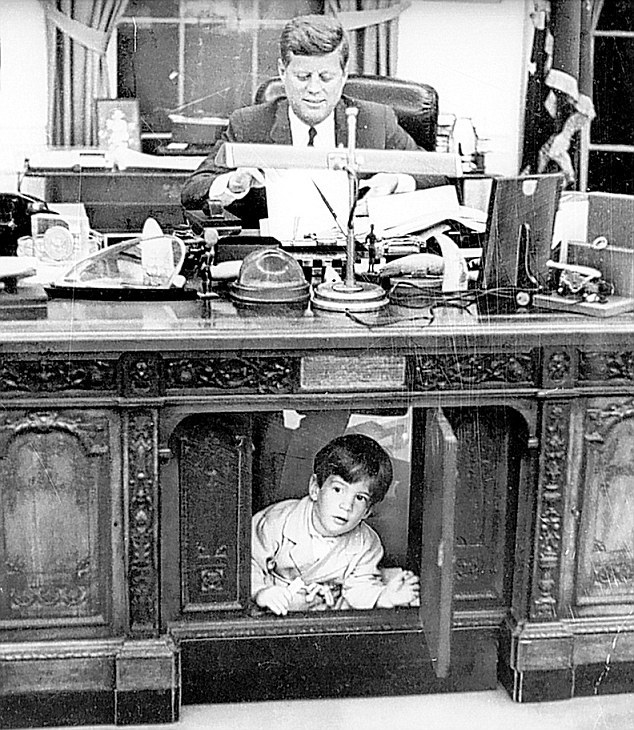
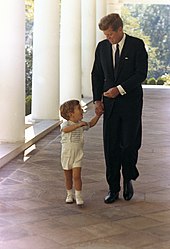
Someone once used the analogy of President John F. Kennedy to describe how we can relate to God as “Father.”. As President, JFK was arguably the most powerful man in the world– the leader of the most powerful nation on earth. At his command, soldiers, sailors, pilots, and even nuclear missiles, could be deployed. The stroke of his pen could sign bills into law, grant pardons, and appoint powerful positions. To enter the Oval Office and have an audience with the President was an honor reserved for rulers and generals and authorities– and his children.

There is a picture of JFK, Jr. as a small boy, peeking out of the Resolute Desk, as his father sits behind the desk conducting the business of the nation. The son had complete access to his father’s presence– access to the most powerful man on earth–his Daddy. He may not have fully understood what his father was doing, or even how important his father was– but he knew that he could spend time with his Dad.

Of course, President Kennedy was not God. He was fallible, and terribly mortal, as the nation learned to its grief. But the idea that God is distant and uncaring, or even vindictive and petty, is belied by the many Psalms and hymns and prayers throughout the ages. And the idea that God is just another “pal”, or “the man upstairs”–someone who loves us, but has no real power to command our obedience or rescue us from our enemies–is also belied by the many miracles and examples of His power in nature and in history. And unlike the exclusive nature of the relationship between JFK and his biological children, God invites ANYONE who calls on Him through His Son to be adopted as a son/daughter with the same intimate privilege of total access. https://www.biblegateway.com/passage/?search=John%201:11-13&version=HCSB (John 1:12)

So when I pray today, I’m not praying to my “Daddy” in any earthly sense. As much as my earthly Dad loved me, I am praying to someone who loves me more, and better, and perfectly. I am praying to the King of Kings, who also invites me to call him, “Abba”– “Dad.”

Leftovers

As I type this, I am eating leftovers. I made a big pot of beef stew the other night, and we’re making another meal out of what was left. Some things, like beef stew, often taste just as good (or even better) warmed up again. And it’s very convenient not to have to make a new meal from scratch. We like leftovers, and I am very thankful that we are able to have an abundance of good food. But today’s leftovers started me thinking…

Photo by SenuScape on Pexels.com

Did you know the Bible has something to say about leftovers? I’ve been reading in Exodus and Leviticus lately, and as God was giving instructions for the Passover Seder, the gathering of Manna in the desert, and the priestly sacrifices, He spoke about leftovers. During the Passover, all the meat was to be eaten on the night of the Passover Seder. Any meat left over was to be thrown away. Several families could share a Passover meal, in order to avoid waste, but the meat was to be eaten in one meal. Similarly, Manna was to be gathered and eaten for a single day (except over the Sabbath). No leftovers! The priests were allowed to eat leftover meat for a single day after the sacrifice, but no more than that.

Photo by SHVETS production on Pexels.com

So often, the “rules” of the Old Testament seem strange to us– arbitrary and even harsh. But in context, they paint a picture of God that we would do well to study. So what do the rules about “leftovers” teach us about God and our relationship to Him?

  • First, God knows what we need. We may often plan too much or too little, or use more or fewer of our resources, but God knows exactly what is necessary. And if we are listening to and trusting God, we can be sure that His plans and resources are sufficient!
  • Secondly, God PROVIDES what we need. Our tendency to store extra food and other resources “just in case” may be motivated by a sincere desire to help our neighbors in times of trouble– there’s nothing wrong with that– but often we are motivated by fear or pride, instead. We fear not having enough, instead of trusting God to provide. Or we pride ourselves on our ability to provide, rather than acknowledging that our resources and abilities all come from God.
  • God’s ways are NOT our ways. God sent the entire nation of Israel into the wilderness. They had all their animals with them– but no place to plant, grow, or harvest wheat or other grain. God could have ordered them to slaughter their animals for meat, or sent them with huge stores of harvested grain, or led them through areas with gardens and orchards. But instead, He sent Manna and quail for them to eat. He provided in ways that they could NOT.
  • God’s mercies (and provisions) are “new every morning.” (Lamentations 3:22-23) God doesn’t give us the “leftovers” of His abundance. He lavishes us with Love and Grace. Every day!
  • God isn’t impressed with my “leftovers.” My leftover offering; my leftover time spent in prayer or Bible Study; my leftover interactions with others, my leftover discipline.
Photo by Foss Valentine on Pexels.com

And that brings me around to prayer and giving. Do I give God my “leftover” praise and thanks? My “leftover” confession (after I’ve pouted and argued and justified by actions to myself)? Do I lift up “leftover” requests–those things I think I’m “supposed to” pray about, but not those I judge unworthy of MY time or attention? After all, would I want God’s “leftover,” absent-minded help? Would I want His half-hearted blessing? Do I give “leftovers” to my family, friends, and neighbors? Or mere scraps to those in need?

The other day, I was on Facebook, and one of my friends requested prayer. It was something I felt was a trifling situation, and I scrolled past her post. But then I realized that I was scrolling past an opportunity to join God in what He would do for my friend. It might not have felt like a big deal for me, and certainly it wasn’t beyond God’s ability to work in that situation. Why did I hesitate? Did I feel I had the right to judge either my friend’s motives or her situation? Did I think I could lift up a “leftover” prayer– “God, help _________. Amen.” I stopped, scrolled back and took a moment to lovingly lift her up, and pray that God would intervene in her situation and forgive me for presuming to judge.

Leftovers are not “bad” or “wrong” in and of themselves. They are blessings. But we should not live on “leftovers”– especially when it comes to our relationships with God and others! Like God, let our mercies be “new every morning,” and let us share gladly from the abundance God has given, not grudgingly or half-heartedly.

Photo by Andrea Piacquadio on Pexels.com

All the Time in the World..

I never seem to have enough time…

Photo by Taryn Elliott on Pexels.com

But that is an illusion. I have the same amount of time as anyone else. And I can’t do anything to add to the amount of time I have in a day, or a week, or even a lifetime.

27 Can any one of you by worrying add a single hour to your life?… 33 But seek first his kingdom and his righteousness, and all these things will be given to you as well. 34 Therefore do not worry about tomorrow, for tomorrow will worry about itself. Each day has enough trouble of its own.

Matthew 6:27; 33-34 NIV via Biblegateway.com
Photo by Andrey Grushnikov on Pexels.com

What’s more, I was created for eternity– I have all the time in the world! Or, at least, I will. Right now, I feel bound and limited by time. And sometimes, I feel controlled by it. Deadlines, promises, schedules–all hem me in and press in on me, making life stressful and forcing me to make tough choices.

Photo by Oladimeji Ajegbile on Pexels.com

Will I choose to use my time each day wisely? Will I let pressing tasks and urgent interruptions throw me off-stride or make me feel guilty? Will I see time as a resource, or let it become my master?

Over the years, I have found several things to be true about time– you’ve probably noticed them too (and maybe even more!), but it’s nice to have a reminder every now and again:

  • Time spent with God in prayer, meditation, worship, and Bible study is NEVER wasted time. It is an investment in eternity. No matter how long or short, it never seems as though I’ve spent “too much” time with God at the expense of other things. It’s when my quiet time turns into self-talk or daydreaming, or when my mind is divided with worry and distraction that it eats into the rest of the day.
  • Time spent caring for others is better than time spent amusing myself. That doesn’t mean that I don’t need “down” time, and “self-care”, and boundaries– everyone does. But hoarding time for my entertainment and achievement at others’ expense is a recipe for depression and emptiness.
Photo by Lgh_9 on Pexels.com
  • Time IS a resource. It should be managed wisely. That means having a schedule, but not being enslaved by it. There is always something you CAN be doing, something you probably SHOULD be doing, and something you SHOULDN’T be doing. None of them matter. What you CHOOSE to be doing is what will get done. Someone may argue that they have no choice–” when I’m at work, I don’t get to choose what I do; when I have chores or housework or family obligations, I don’t have a choice”–but that’s a false argument. You CHOOSE to go to work, to fulfill your obligations and family commitments, to do the “next right thing” that comes your way. And every time you make a choice, you show what is important to you. The difference is owning up to your choices– both good and bad– and recognizing that time (in this life) is a finite commodity. You can’t be everywhere at once or do everything at once.
  • God is beyond time and the giver and keeper of time. He doesn’t want us to waste His gift, and He won’t give us “more” time in our day, but He can redeem some of the mistakes we’ve made with time, and He can give us the wisdom to make the most of today, and help us manage each day to come.
Photo by Andrea Piacquadio on Pexels.com

As Iron Sharpens Iron

As iron sharpens iron, so one person sharpens another.

Proverbs 27:17
Photo by igovar igovar on Pexels.com

Do you have a friend who “sharpens” you? Someone who keeps you honest? Someone who challenges you? Someone who holds you accountable? The Bible has much to say about relationships that we form– and some of it may surprise us. Earlier in Proverbs 27, the writer says, “Better is open rebuke than hidden love.” (v.5 NIV) and, “Faithful are the wounds of a friend, but the kisses of an enemy are deceitful.” (v. 6 NKJV).

Photo by Liza Summer on Pexels.com

I don’t know about you, but I want friends who encourage, friends who make me feel good about myself; friends who make life more pleasant and uncomplicated. I don’t enjoy hearing criticism, or having my beliefs and ideas challenged. I don’t enjoy conflict, and I tend to avoid it whenever possible. However, I also know the truth of verse 6 from experience–I can trust the constructive criticism of a good friend, even when it stings in the moment. A loving friend will take the risk of saying what needs to be said, and not just what I want to hear.

Photo by Tirachard Kumtanom on Pexels.com

There are three points that struck me recently as I came across these verses:

  • “Iron sharpens iron”–nothing gets sharpened by a marshmallow, and an iron blade that is left unsharpened will either lose its edge over time, or rust from disuse. We may not like conflict. But we need to be disciplined, and that means that we need to be held accountable. We need to be challenged and sharpened, or we will grow dull or rusty. God can use the “fire” of circumstances to soften our hard hearts, but He often uses other people to “spark” us into action. Left to my own devices, I can grow rusty and useless. I can feel sorry about a bad or sinful habit– I can confess it, and make plans to change. But I am more likely to grow and develop positive habits and actions if there is someone keeping me honest. I can have good ideas; I can know what the Bible says– but I can also fall into deception, lazy thinking, and pride. A good friend can help keep me “sharp” in both actions and thinking. We are not meant to do life alone, and God does not want “Holy Hermits.” He also does not want us to be so timid and accepting that we fail to sharpen others. It is really hard to risk a friendship by speaking the truth–but NOT speaking is sometimes more damaging to the friendship– and to our friends!
  • “Iron” is what sharpens “Iron”–We need to seek out truth and wisdom, and that’s what we need to offer others, as well. We should not waste time on petty disagreements, trying to “win” every point in an argument, or pointing out every minor fault. We also need to have mutual respect; being willing to listen, willing to let a few sparks fly, and willing to respect another’s strengths as we develop our own. This verse is not about letting someone else dominate you or shut down your voice, just as it is not about dominating or “fixing” someone else by forcing your opinions (even if grounded in the truth) down their throat.
  • “So one person sharpens another.” Notice it doesn’t say whether the person is a believer, a dear, personal friend, or a relative. Any person can “sharpen” us. I may disagree with another person– a coworker, a peer, a neighbor–and still respect that their ideas, their words, even their criticism.
Photo by SHVETS production on Pexels.com

How does this tie into our pursuit of prayer? Conflict and testing can make us better or bitter–in this analogy, it can make us humble or it can make us brittle. A humble person will be shaped and sharpened. A brittle person will snap or break.

Photo by Pavel Danilyuk on Pexels.com

When I am challenged or criticized, do I take it to God or do I take it to heart? Do I ask God to reveal truth or have I already decided what I want to believe? Not all criticism is constructive; not all challenges are meant to sharpen us. Do I react in anger? Do I become sullen? Do I crumble into a puddle of doubt? Or do I see it as an opportunity to become sharper, to change course, or to refine my thinking? Conflict and criticism do not happen in a vacuum–God is as close as a prayer, and willing to give wisdom, discernment, and strength!

How do I react to the other person? Do I become bitter toward them? Do I seek for ways to repay them with criticism or prove myself to them? Do I pray for THEM to change, without looking at my own responsibility? Do I appreciate the risk they may have taken to speak up? (Or do I appreciate the reasons they may have for feeling or thinking as they do, even if I am convinced they are in error?) Can I offer thanks to God for the way He may be using that person to sharpen me–even if that is not their intent? Can I pray for God to bless and strengthen them, even if we don’t agree?

Photo by Jopwell on Pexels.com

This is all easier to write than to put into practice. But I can say from experience that God has often used the most unlikely people to “sharpen” me in unlikely ways and unlikely moments, and I am so grateful for the “faithful” (and temporary!) wounds of friends. I am also grateful for others who challenge me to defend the Faith, and who open their hearts to me– even when we clash sometimes.

Selective Hearing

Ninety years ago today, my grandparents were married in a small ceremony in Elkhart, Indiana. Thirty-one years later, my parents were married in another small ceremony in Cassopolis, Michigan. My grandparents were married almost 63 years before my grandmother passed away. My parents were married over 35 years before my dad passed. My mother, when I was preparing to marry, passed on some of the advice she had received from her grandparents (who were married over 50 years themselves!) . It involved what my great-grandmother called “selective hearing.”

Photo by Kevin Malik on Pexels.com

My great-grandmother, my grandfather, and my mother were all “fussers.” They tended to fret and stew over little things. They liked to “vent” their feelings in the moment when they felt them. Their spouses learned to listen without comment, or even walk away and let their partners “get it out of their system.” Later, they could have a calmer discussion if the situation warranted it. Similarly, if the “fretting” partner was impatient about something, the other would sometimes selectively “ignore” a summons or critical remark. It wasn’t that they were bad listeners– in fact they were excellent listeners–but they learned the wisdom of not immediately responding or reacting to things said in moments of emotion or frustration. They were listening beyond just the words that were being spoken– especially when the words were many and emotional!

Photo by Alex Green on Pexels.com

God is always listening to us. He hears our every cry for help, and also all of our complaints! In His wisdom, He also practices “selective hearing.” He may sometimes seem silent or even indifferent; but often He is letting us “talk it out of our system.” He remains with us, ready to give us the help we need, but not willing to indulge our emotional tirades or snits.

Photo by Andrea Piacquadio on Pexels.com

One of the greatest examples of this can be found in the Psalms. David (and other psalmists) often poured out all their fears and frustrations– “where are you, God?,” “why do the wicked prosper?,” “when will you rescue me?” Amazingly, many of their complaints and questions are not answered with a specific action. Yet these same psalms end with hope and assurance–as the psalmist “talks it out,” he is reminded of God’s essential character and faithfulness through the years. God’s steady and gentle presence, though silent, communicates His commitment and Love.

I tend to be a “fretter,” and my loving husband has learned to have “selective hearing” around me. His faithful presence and willingness to let me “talk it out” without judgment and recrimination is very freeing. David very seldom “frets,” but when he does, I am learning to respond with wisdom and selectively hear what is in his heart, and not just what comes out of his mouth in a moment of frustration.

Photo by Leah Kelley on Pexels.com

I am so thankful for the wisdom of God (and the wisdom of my husband), that doesn’t immediately jump into my occasional emotional whirlpool, but waits to pull me out and set me on calmer, solid ground! I am grateful for God’s “selective hearing!”

Be Reconciled

23 So if you are offering your gift at the altar and there remember that your brother has something against you, 24 leave your gift there before the altar and go. First be reconciled to your brother, and then come and offer your gift.

Matthew 5:23-24 (ESV)
Photo by RF._.studio on Pexels.com

Why do we find it so difficult to be reconciled? We crave God’s forgiveness, but we withhold our own toward our neighbors, or family members. We let anger and bitterness keep us apart. We let pride keep us from doing what we know is right in God’s eyes.

I speak from conviction. I have been estranged from a cousin of mine. Years have passed since we’ve spoken. We argued about something, and simply stopped talking. I tell myself that I have nothing for which to apologize–that’s just the way things ended. And my life is far less stressful since we’ve stopped talking. I do not “hate” my cousin, or feel bitter toward her. In fact, I tell myself that I only wish her the best– I just don’t want to be involved in her life, or have her involved in mine.

Photo by Josh Sorenson on Pexels.com

I know this is not what God wants. I know I should get in touch, and reassure her that “we’re okay”. Yet I am afraid to reach out and re-establish contact. Not because she poses any sort of physical threat, but she threatens my pride and my comfort. I find her difficult to talk to; difficult to understand. We have different ideas about boundaries and expectations–I find her “needy,” and she finds me “aloof.” I don’t think time will have made our relationship “easier.”

Photo by Liza Summer on Pexels.com

But God finds her precious in His sight– and worthy of my effort to reconcile our relationship. That doesn’t mean that I must allow her to manipulate me or abuse my emotions, or that I must demand that she be someone she is not to make me more comfortable. But it does mean that I may be embarrassed or inconvenienced at times. I need to be willing to listen, even when it is difficult, and so speak, even when it seems like I’ve said the same thing before. And it means that I must learn to set healthy boundaries and insist on them– not to shut her out as I have been doing, but to keep our relationship balanced and safe for both of us.

God puts a great premium on our willingness to be reconciled to one another. So much so, that Jesus told His listeners in the Sermon on the Mount, that if they were ready to bring an offering, and they remembered that someone had something against them, that they should leave their offering– unoffered– and go be reconciled first. Being at odds with others puts us at odds with their Creator and the One who loves them. Whenever possible, we should seek to reconcile. Broken relationships are sometimes a reflection of our relationship with Him. It hinders our prayer life, as well as our witness to the Power of God to redeem and reconcile the world around us.

Photo by Timur Weber on Pexels.com

God is aware that we are sinful people. And there are some relationships that are absolutely toxic. Reconciliation and forgiveness are NEVER about allowing another person to continue to abuse or manipulate you. Especially if this involves physical or sexual abuse. Forgiveness is not the same as accepting someone else’s manipulation or abuse. God, and only God, can redeem us and make us a new creation. Some relationships cannot be fully “reconciled” in this life. But “letting go” is not the same as “locking out” or “running away.” We must let others know that God can do what we cannot–He can restore broken relationships. He can make all things new.

Blog at WordPress.com.

Up ↑