Head and Shoulders, Knees and Toes

I worked for many years at a public library doing pre-school story time programs. One of the favorite songs among the children was “Head and Shoulders, Knees and Toes.” Children love rhymes, music, and movement, and this song involved all three. Children stood, ready to stretch and bend, point, and sing: “Head and shoulders, knees and toes, knees and toes.” Their hands flew from one body part to another as we sang, faster and faster. “Eyes and ears and mouth and nose; head and shoulders, knees and toes, knees and toes.” Faster and faster, louder and louder, the excitement growing, until the song ended in a breathless shout, “Knees and toes”!

Another favorite was the “Hokey Pokey”, in which we formed a circle and took turns “putting in” and “putting out” various limbs and body parts, “turning (ourselves) about” and clapping. We “put in” our right arms, our left legs, our heads, and “our whole selves.” From the earliest of ages, we become aware of the various parts of our bodies, their names and functions, and how they work together.

As God’s people, we are to be the “Body of Christ” (1 Corinthians 12:12-14) and our bodies are to be His temple(1 Corinthians 6:19). It is important that we recognize how every part of our body needs to be consecrated and ready to serve, to worship, and to reflect God’s Glory.

Photo by nappy on Pexels.com

This is not a new concept. In fact, much of the book of Leviticus is given over to consecrating every aspect of the worship of God by His children. There are detailed instructions for the priests– how and when to enter the Tabernacle; what to wear, what kind of offerings to bring and how to prepare for service. One set of details involves the installation ceremony for the priests. They were to wash from head to toe, before putting on the sacred garments. They were to offer a blood sacrifice, and some of the blood was to be placed or smeared in three places– the lobe of the right ear, the thumb of the right hand, and the big toe of the right foot (Leviticus 14:28).

Scholars through the years have given us many reasons for these detailed instructions (see this link for a terrific overview) https://www.myjewishlearning.com/article/ears-thumbs-and-toes/, and most of them bring out the idea that God wants us to worship and be consecrated “from head to toe.” God has authority over how we choose to use our ears, hands, and feet– He wants purity in our words and deeds. He wants us to listen to Him, obey Him, and follow Him.

The smearing of blood in these three areas also demonstrates a need for atonement– only blood can cover or atone for our lack of attentiveness, our lack of obedience, and our open rebellion against God’s authority. The blood of the ritual sacrifices in Leviticus are a foreshadowing of the ultimate atonement we receive from the sacrifice of the Only True Lamb, Jesus Christ. Christ takes away our sin, and consecrates us to His service and worship– from head to toe!

Photo by Pixabay on Pexels.com

And, unlike the Hokey Pokey, THAT’S what it’s all about! God gives us His life and purity, His Grace and forgiveness, His divine purpose and eternal Glory when we “put our whole selves” in His hands, and He “turns us all about,” to become more than conquerors (Romans 8:37), a royal priesthood (1 Peter 2:9), and the sheep of His pasture. (Psalm 100:3)

“Piece” of Mind

I gave that fellow a piece of my mind! I let him know how wrong he was, how backward, how ill-informed. And he just wouldn’t see reason.
He had the nerve to call me hateful, judgmental, and “toxic!” Doesn’t he understand? He is selfish, rebellious, arrogant, and “lost.” I was just trying to give him a warning. If he doesn’t repent, he will end up in Hell. I was good enough to spend my valuable time trying to set him straight, and all I got for it was abuse! Well, you know what they say, “Hate the sin, love the sinner.” At least I tried.

Photo by Designecologist on Pexels.com

I gave that woman a piece of my mind! I let her know how judgmental and backward and hateful she is. Who is she to tell me what to think? She called me a sinner and told me I was going to Hell– and then she wants me to thank her for it?! She was completely unreasonable. Why would I want to spend time with someone like that? People like her are what’s wrong with this world. They talk about love, but only if you act and think exactly like them– what kind of “love” is that? What a hypocrite!

Photo by Lukas on Pexels.com


Christ’s Example of Humility
2 So if there is any encouragement in Christ, any comfort from love, any participation in the Spirit, any affection and sympathy, 2 complete my joy by being of the same mind, having the same love, being in full accord and of one mind. 3 Do nothing from selfish ambition or conceit, but in humility count others more significant than yourselves. 4 Let each of you look not only to his own interests, but also to the interests of others. 5 Have this mind among yourselves, which is yours in Christ Jesus, 6 who, though he was in the form of God, did not count equality with God a thing to be grasped, 7 but emptied himself, by taking the form of a servant, being born in the likeness of men. 8 And being found in human form, he humbled himself by becoming obedient to the point of death, even death on a cross. 9 Therefore God has highly exalted him and bestowed on him the name that is above every name, 10 so that at the name of Jesus every knee should bow, in heaven and on earth and under the earth, 11 and every tongue confess that Jesus Christ is Lord, to the glory of God the Father.
Lights in the World
12 Therefore, my beloved, as you have always obeyed, so now, not only as in my presence but much more in my absence, work out your own salvation with fear and trembling, 13 for it is God who works in you, both to will and to work for his good pleasure.
14 Do all things without grumbling or disputing, 15 that you may be blameless and innocent, children of God without blemish in the midst of a crooked and twisted generation, among whom you shine as lights in the world, 16 holding fast to the word of life, so that in the day of Christ I may be proud that I did not run in vain or labor in vain. 17 Even if I am to be poured out as a drink offering upon the sacrificial offering of your faith, I am glad and rejoice with you all. 18 Likewise you also should be glad and rejoice with me.

Philippians 2:1-18 English Standard Version (ESV) (www.biblegateway.com) Emphasis added.
Photo by Magda Ehlers on Pexels.com

Lord Jesus, help me to give others the “Peace” of Your mind today, rather than a “piece” of mine!

A Sacrifice of Praise

Hebrews 13:15 English Standard Version (ESV)

15 Through him then let us continually offer up a sacrifice of praise to God, that is, the fruit of lips that acknowledge his name.

Praise is an essential part of prayer– God is worthy of our continual praise and worship.  He is eternally good and thoroughly righteous; all-powerful and all-wise.  The author of Hebrews reminds us that we are to offer a sacrifice of praise–continually– to God.

This is more than just a simple “Praise the Lord” uttered when we are at church or surrounded by fellow believers.  A “sacrifice” of praise implies more than just a gift or even an acknowledgement of God’s worthiness and majesty.  It implies cost, and hardship; a giving up of something precious in the act of worship.

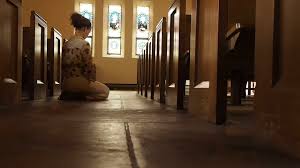
bow down

Sometimes, the sacrifice is small–giving up our right to take credit for God’s mercies; being thankful (instead of jealous) of our neighbor’s success.  Other times, the sacrifice is painful– praising God in the aftermath of a daughter’s rape, or a spouse’s betrayal, or acknowledging God’s goodness after a diagnosis of cancer or dementia.

God isn’t looking for false and empty worship–He wants us to be real.  Sometimes, the sacrifice isn’t eloquent, polished, or “pretty”; it comes with tears, tormenting questions, and anguish.  Sacrifices are poured out, broken, or burned up– dreams that have been dashed, hopes and plans that have been abandoned, heartaches that crush the soul.

God wants these sacrifices– but not because He is a cruel God who wants to see us crushed and hopeless.  God wants these sacrifices because only when we are ready to put them on the altar can He make the exchange– Beauty for ashes; eternal hope for temporary dreams; trust and security for our doubts and fears.

pexels-photo-133170.jpeg

In the same verse (Hebrews 13:15), the author describes the sacrifice of praise as the “fruit of lips that acknowledge his name.”  The Hebrews to whom he was writing were making a huge sacrifice in just uttering the name of Jesus.  They were beset on all sides– from the Jews who did not acknowledge Jesus as the Messiah; to the Romans who were using them as scapegoats for troubles within their Empire.  In the midst of their troubles, God did not ask them to slaughter their enemies, or to create a separate society and live only to themselves.  He didn’t ask for impossible deeds of daring–though many endured persecution and became martyrs for the Cross of Christ.  God asked for the sacrifice of praise.  God’s ways are not our ways– his weapons are not our weapons, and his words are not our words– God’s words are more powerful than any weapon or plan that we could ever imagine.

pexels-photo-546657.jpeg

The practice of praying the various names of God and titles of Jesus and the Holy Spirit– Almighty, Father, King of Kings, Lord of Lords, Counselor, I AM, Savior, Redeemer, etc.–is the essence of praise.  In times of trouble, God’s attributes may seem hidden, but when we acknowledge what we do not see, we are harvesting the fruit of our faith and putting it on the altar.

Stand back– God has been known to set both the sacrifice and the altar on fire!

fire wallpaper
Photo by Pixabay on Pexels.com

The Empty Cross

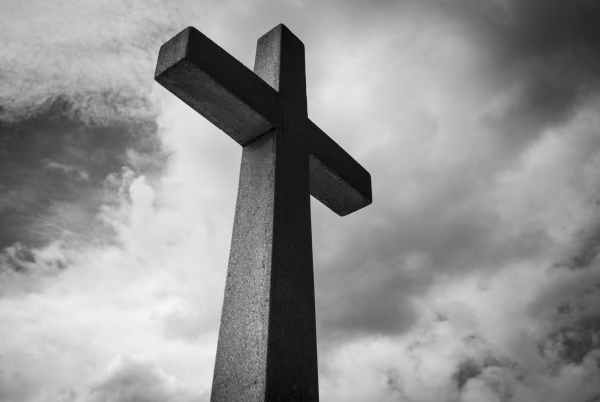
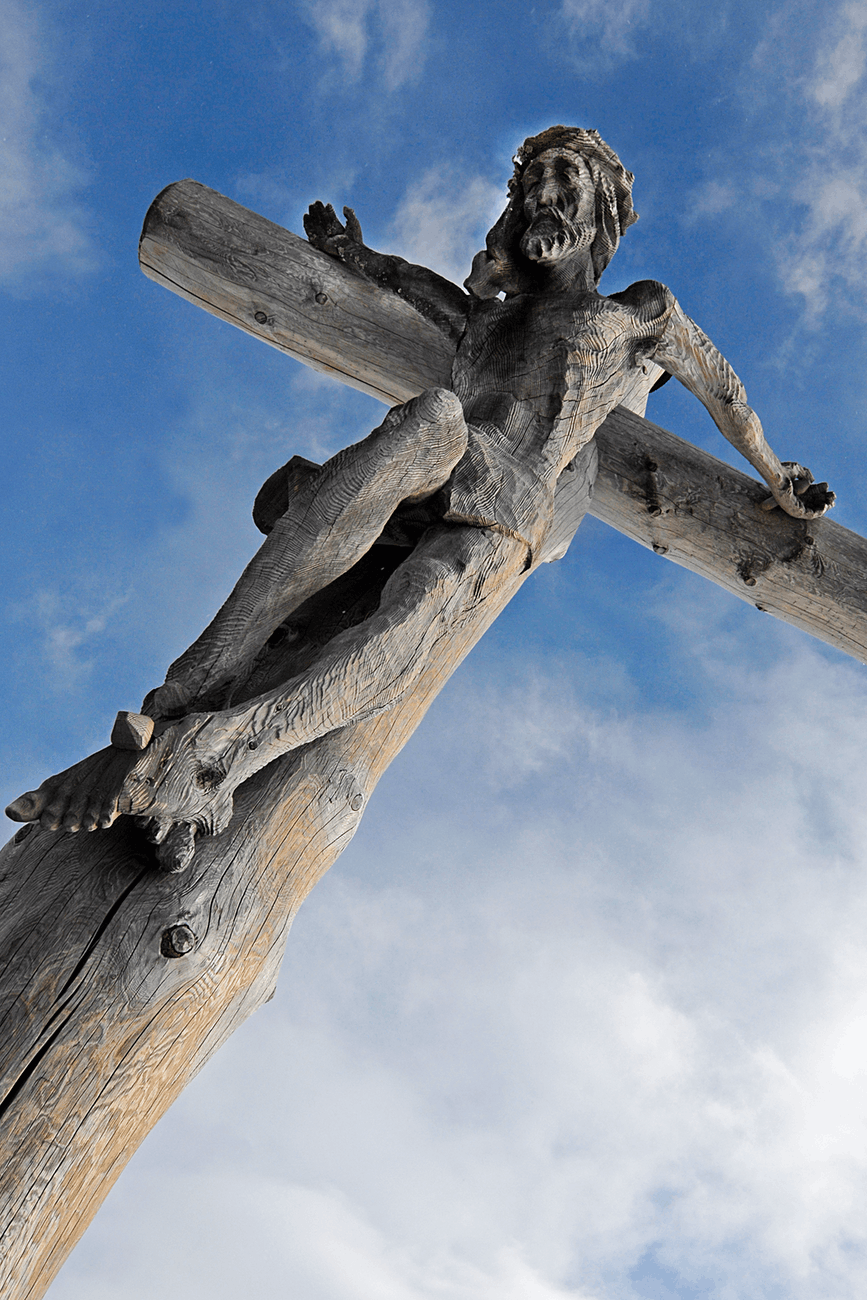
The most common symbol of the Christian religion is the cross.  And, while many statues and necklaces and artistic renderings include a dying Christ figure , the kind you most often see is the empty cross.  On this day between the crucifixion and the resurrection, I want to consider the significance of the empty cross.

  • First, the empty cross reminds us that Christ lived.  In spite of those who continue to challenge the historical evidence, there was a man named Jesus of Nazareth.  He lived in a particular time and place, and he was tried and sentenced to death by crucifixion.  His existence caused the modern Western Calendar to be split into two distinctive parts based on the estimated year of his birth, and his life, death, and resurrection gave rise to a movement that has never been stamped out, equaled, or eclipsed.

pexels-photo-51524.jpeg

  • Second, it reminds us that Christ died.  He was fully human in his capacity to feel pain, rejection, betrayal, hunger, thirst, and grief.  Yet he also experienced joy, companionship, hope, love, compassion, laughter, and growth.  He didn’t just grow old or fade into obscurity.  He didn’t leave his life’s work unfinished, he didn’t compromise or change his message; he didn’t give up or start over with a different “crew.”  Though he never staged a coup, or built up an arsenal, or rose to a seat of power or influence, this homeless, itinerant, soft-spoken rabbi was seen as enough of a threat to the leaders of his time that he was framed, tried and convicted, and sentenced to death.
  • The empty cross also reminds us how he died.  Modern crosses often look imposing and even triumphant, as they tower over a mega church parking lot, or hang on a chain of elegant silver, or stand in rows of chiseled rock in a military cemetery.  “O death, where is your sting?  O grave, where is your victory?”  (I Cor. 15:55)  But the torture before and during the crucifixion were brutal– bones were not broken, but they were pulled out of joint and then forced to bear the full weight of a bloody, swollen and bruised body of ripped muscles and exposed flesh.  Heat caused the salty sweat mixed with blood to drip into his eyes, his open wounds, and around his nose and mouth, but he was unable to wipe any of it away.  Flies gathered; he couldn’t keep them from buzzing or biting.  Each breath was a torturous push and pull of the arms and body upon the nails holding him at an unnatural angle against a wooden bar that rubbed against his already raw back.  And all of this was public; entertainment for the masses of hecklers, and those who were rejoicing in his humiliation and failure.  There was nothing pretty or majestic about the cross on that day.

jesus-cross-summit-cross-37737.png

  • The empty cross reminds us that Jesus was buried and put under Roman guard.  His emaciated, bloody, barely recognizable remains were wrapped up and prepared with spices.  Guards, whose lives depended on this body remaining in the tomb and undisturbed, were posted, and a huge boulder rolled into place to block entry to and exit from the tomb.  Jesus didn’t spontaneously climb down off the cross, or waltz out of an air-conditioned cave.
  • Finally, the empty cross reminds us that Jesus was the Christ–death could not stop him; the grave could not hold him.  His victory was complete.  He didn’t claw his way out of that tomb; he didn’t sneak out in the dead of night; he didn’t hobble into hiding for several weeks because he was only “mostly dead” of his torturous injuries.  He arose, victorious, recognizable to those who knew him best; healed and full of power.

pexels-photo-635699.jpeg

There are hundreds of reasons why we “cherish the Old Rugged Cross.”  And, though the cross stands empty, our reasons are not.  Hallelujah!  Tomorrow, hundreds of millions of Christians will be celebrating the empty tomb.  But for today, I want to celebrate the empty cross.

What? A Privilege?!

“What a Friend we have in Jesus,  all our sins and griefs to bear!  What a privilege to carry everything to God in Prayer!”

The word “privilege” has taken a beating lately.  A privilege used to be considered a good thing.  Merriam-Webster defines it as, “a right or immunity granted as a particular benefit, advantage, or favor.”  A privilege is granted–given as the prerogative of someone in power or authority– to someone else.  It may be given as a reward, or granted for a limited time and under certain conditions.  But a true privilege is a gift–you can’t make your own privilege, and you cannot own or control a privilege– the terms are set by the giver, not the receiver.

In the past generation, the word “privilege” has become charged with political and societal connotations.  Those connotations, and the issues surrounding them, are worthy of discussion and could fill volumes, but I want to talk about a privilege that should be free of undertones and dubious meanings.

Prayer is a pursuit, and a practice.  It is personal, practical, and powerful.  But it is also a privilege.  Often one that we take for granted.

In pursuing prayer, we are not just developing a personal routine or discipline.  We are not just approaching a powerful supernatural entity.  We are fallen creation entering the presence of a Holy Creator; we are rebels entering the throne room of the King of Kings.

We have the right to approach God; to talk to, converse with, ask favors of, plead with, confess to, and expect answers from the One who creates galaxies with a single spoken word, and designs every unique flake of snow.  This same God grants us the right to draw breath, to experience both beauty and wonder, to question and to create.

Prayer in ancient times was almost universally accompanied by sacrifices, and surrounded with ritual– incense, bowing and prostrating oneself, covering or uncovering the head–in recognition of the horrible chasm, the great separation between God and mankind.  Many traditions still use ritual for prayer, and there is nothing wrong in this reminder of God’s Holiness and Sovereignty.  Yet God talks of prayer in intimate terms.  He didn’t impose ritual and sacrifice for his benefit, but for ours.  Several times throughout the Bible, he makes clear that he does not require the blood of bulls and goats–what he wants most is a humble and pure heart.  At the moment Jesus died, the great veil in the Temple was ripped in half from top to bottom–the most holy place laid open to all who might come into God’s presence.  Christ’s death and resurrection were not just means of saving us from Hell, but the means of bringing restoration of the intimacy God designed from the beginning.  God– Almighty, Omnipotent, and completely Holy–wants to give us the privilege to enter his presence and pour out our thoughts, feelings, burdens, and triumphs; to share intimacy with HIM.  We are not just objects of his care (or his wrath), not just creatures in whom he has a certain fond but distant interest.  We are recipients of lavish love and priceless privileges– forgiveness, power over sin, power to become more Christlike, restoration and renewal, and yes,  the pursuit of  prayer.

Blog at WordPress.com.

Up ↑