Inconceivable?

One of my favorite movies is “The Princess Bride.” Based on a modern “fractured” fairy tale by William Goldman, it tells the story of a young couple whose “fairy tale” romance is complicated by his death, her kidnapping on the eve of her wedding to an evil prince, and rodents of unusual size…

One of the kidnappers is a Sicilian mercenary named Vizzini. Vizzini brags about his intellect, and claims to know more than anyone. He also claims that his plot to kidnap Princess Buttercup is perfect to the last detail. But when a mysterious stranger begins following them, and foils each of Vizzini’s efforts to shake him, Vizzini grows more and more rattled. His brilliant plan turns out to be less than perfect. In fact, the mysterious stranger (who turns out to be Princess Buttercup’s long-lost true love) succeeds in rescuing the princess and defeating Vizzini in a battle of wits.

As each of Vizzini’s efforts fails, he declares it is “inconceivable” that the stranger should win. Even in the face of clear evidence, Vizzini finds it unbelievable that his plan should have failed–and failed again! Finally, one of the other kidnappers turns to Vizzini and says, “You keep using this word; I do not think it means what you think it means”.

I often hear people scoff at faith in God– “it doesn’t make sense.” “There’s no proof that God exists.” “How can you believe all those old myths–Noah and the Ark; Moses and the Red Sea; David and Goliath–they’re impossible in ‘real life’.” “It’s inconceivable!” “Stop saying all that stuff about God!” “Stop saying you’ll pray for me.” “Prayer is nothing more than wishful thinking.”

Photo by 3Motional Studio on Pexels.com

And it can be difficult to have faith, sometimes. We don’t ‘see’ what God is doing in our lives and circumstances.” We don’t understand the bigger picture. We don’t believe that God sees or hears us in the middle of our struggles. But God tells us time and time again that nothing is impossible for Him; that He knows all that happens, and that He works all things together for the good of those who follow Him (Romans 8:28). God is able to do “exceedingly, abundantly, above all that we ask or think..”(Ephesians 3:20)

Those stories in the Bible; those “unbelievable” stories we hear or read about miraculous healings and lives transformed…we can choose to ignore them, or scoff at them. We can, like Vizzini, claim that they are “inconceivable,” or try to explain them away while trusting our own knowledge and experiences to get us through life. We can ignore the wise counsel of others, ignore our conscience, and laugh in the face of danger. But in the end, we are human. We are fallible. We are not all-knowing or all-powerful. And we are not immune to sin and its poisonous consequences. The only chance of escape is to be rescued by someone who is “immune” to sin– our Savior, Jesus the Lamb of God.

Photo by Pixabay on Pexels.com

It may seem “inconceivable” that God would part the Red Sea, or save Noah in the Ark; it may seem beyond belief that Jesus would be born as a human, live among people who denied Him, die on the cross and be resurrected on the third day, so that He could take away the power of sin and death for anyone who will trust Him. But it is precisely this Good News that has transformed the lives of millions of people throughout the centuries since he came.

Photo by Matheus Bertelli on Pexels.com

It may seem “inconceivable” that God would listen to our “little” prayers and care about our every need– but He does! His Love may be beyond our ability to comprehend or explain– His power extends beyond our wildest imagination. But if we have faith– even as small as a mustard seed (Matthew 17:20)– we can experience God’s Love, Power, Grace, and Salvation in miraculous ways.

Head and Shoulders, Knees and Toes

I worked for many years at a public library doing pre-school story time programs. One of the favorite songs among the children was “Head and Shoulders, Knees and Toes.” Children love rhymes, music, and movement, and this song involved all three. Children stood, ready to stretch and bend, point, and sing: “Head and shoulders, knees and toes, knees and toes.” Their hands flew from one body part to another as we sang, faster and faster. “Eyes and ears and mouth and nose; head and shoulders, knees and toes, knees and toes.” Faster and faster, louder and louder, the excitement growing, until the song ended in a breathless shout, “Knees and toes”!

Another favorite was the “Hokey Pokey”, in which we formed a circle and took turns “putting in” and “putting out” various limbs and body parts, “turning (ourselves) about” and clapping. We “put in” our right arms, our left legs, our heads, and “our whole selves.” From the earliest of ages, we become aware of the various parts of our bodies, their names and functions, and how they work together.

As God’s people, we are to be the “Body of Christ” (1 Corinthians 12:12-14) and our bodies are to be His temple(1 Corinthians 6:19). It is important that we recognize how every part of our body needs to be consecrated and ready to serve, to worship, and to reflect God’s Glory.

Photo by nappy on Pexels.com

This is not a new concept. In fact, much of the book of Leviticus is given over to consecrating every aspect of the worship of God by His children. There are detailed instructions for the priests– how and when to enter the Tabernacle; what to wear, what kind of offerings to bring and how to prepare for service. One set of details involves the installation ceremony for the priests. They were to wash from head to toe, before putting on the sacred garments. They were to offer a blood sacrifice, and some of the blood was to be placed or smeared in three places– the lobe of the right ear, the thumb of the right hand, and the big toe of the right foot (Leviticus 14:28).

Scholars through the years have given us many reasons for these detailed instructions (see this link for a terrific overview) https://www.myjewishlearning.com/article/ears-thumbs-and-toes/, and most of them bring out the idea that God wants us to worship and be consecrated “from head to toe.” God has authority over how we choose to use our ears, hands, and feet– He wants purity in our words and deeds. He wants us to listen to Him, obey Him, and follow Him.

The smearing of blood in these three areas also demonstrates a need for atonement– only blood can cover or atone for our lack of attentiveness, our lack of obedience, and our open rebellion against God’s authority. The blood of the ritual sacrifices in Leviticus are a foreshadowing of the ultimate atonement we receive from the sacrifice of the Only True Lamb, Jesus Christ. Christ takes away our sin, and consecrates us to His service and worship– from head to toe!

Photo by Pixabay on Pexels.com

And, unlike the Hokey Pokey, THAT’S what it’s all about! God gives us His life and purity, His Grace and forgiveness, His divine purpose and eternal Glory when we “put our whole selves” in His hands, and He “turns us all about,” to become more than conquerors (Romans 8:37), a royal priesthood (1 Peter 2:9), and the sheep of His pasture. (Psalm 100:3)

This Little Light of Mine…

John 1:4-5 American Standard Version (ASV)
 4 In him was life; and the life was the light of men. And the light shineth in the darkness; and the darkness [a]apprehended it not.

Footnotes:John 1:5 Or, overcame.

via http://www.biblegateway.com
Photo by Pixabay on Pexels.com

I love words. But sometimes, it can be frustrating to find just the right word to express a complex idea. I’m sure the Apostle John felt the struggle as he began writing his Gospel account of the life of Christ. How can mere words describe the arrival of GOD– creator and ruler of the universe– into a darkened and sin-filled world, come to live among and serve the very lost souls He would die to save? John, of all the Gospel writers, uses the most visual metaphors to describe the Advent of Jesus (many of which he heard from the lips of Christ Himself)– He was the “Light of the World”, the “Bread of Life”, the “Living Water,” the “Way, the Truth, and the Life,” and the “Good Shepherd.”

But right away, the phrase John uses to talk about the “Light of the Life” causes modern English scholars confusion. John says that the light “shineth”, or “shines” in the darkness and the darkness “comprehended” (or apprehended, or understood, or overcame) it not. The phrase is simply too big for one word, or idea. The Greek word comes closer to expressing a dual idea, but even it can’t wrap up the totality of such an event.

Photo by Luck Galindo on Pexels.com

Consider–This Jesus, one with God from the beginning, and the “Word” of creation, spoke light into existence. Where there was darkness, He exploded– light upon light– stars and galaxies of light! Even on the darkest night we will ever know, there are millions of lights spread out across the vastness of space, including our own sun, even unseen on the other side of the planet. Darkness can never “comprehend”, let alone “overcome” the existence of light in our world.

Moreover, when we see physical light piercing the darkness, we are aware of it, but we rarely comprehend, or understand it. Whether we are blinded by a flash of light, or compelled to seek out a single hint of light in a darkened tunnel, it is not obvious at first glance (and sometimes even after diligent study) the source or scope of the light. It may be a candle, or a set of glaring headlights, or the glint of reflected light in a mirror. It could be a distant star, a satellite, or a street light shrouded in fog.

Photo by Miguel Á. Padriñán on Pexels.com

But in a spiritual sense, it is even more true that “Light has come into the world” (John 3:19), and it “shines” in the darkness, and the darkness has not understood, or apprehended, or overcome it. Jesus came as an infant to His own chosen people, people who were longing for the advent of their Messiah. But few of them recognized Him. They didn’t understand– even Jesus’ closest friends didn’t “get it” at first. And some of them tried their best to “overcome” and “apprehend” the Gospel message– zealous religious leaders like Saul tried to stop the “light” of Jesus’ message and all those who trusted in it. Saul had to be “blinded” by a light on his way to Damascus, so that he could finally “see” Christ (Acts 9).

And the light is still shining in the darkness– as followers of Christ, we are to reflect God’s love and grace to those around us. Many of them will not comprehend; many will try to overcome or even destroy the message we bring. Our light may seem small and insignificant. It may seem like we are surrounded by the vast darkness of space, or shrouded in fog. But the light of Christ cannot be extinguished, or rationalized out of existence, or contained. All the words ever spoken, written, or thought throughout all the ages of mankind cannot compare to the power of God’s “Word”, who spoke worlds into being in an instant, and yet entered His own creation with a soft cry of an infant in the middle of a dark night so long ago.

Photo by 3Motional Studio on Pexels.com

This is the “little light of mine”, and of yours if you are a follower of Christ. It pierces through the darkness of despair, hatred, addiction, injustice, greed, oppression, malice, rebellion, war, grief, loss, disease, and sin.

This season, as we anticipate the Advent, let us remember the greatness of the tiniest of lights, and the triumph of that light over the vast darkness. It is easy to get distracted by the twinkling of a thousand artificial and commercial lights this season, or blinded by the soot and smog and clouds of gloom and pain that surrounds us. It’s so important that we keep shining; continue reflecting the true light that only comes from the “Light of the World”

Photo by Lennart Wittstock on Pexels.com

“This little Light of mine–I’m gonna let it shine!
This little Light of mine– I’m gonna let it shine,
Let it shine, Let it shine!”

There my Burdened Soul Found Liberty

Prayer is often about burdens– the burden of need; the burden of sin and guilt; the burden of worry and distress. We bring our burdens to God, to the “throne of Grace;” we bring them “in Jesus’ Name,”, and we bring them to “Our Father.” But how often do we bring them to “Calvary?”

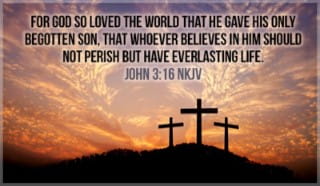
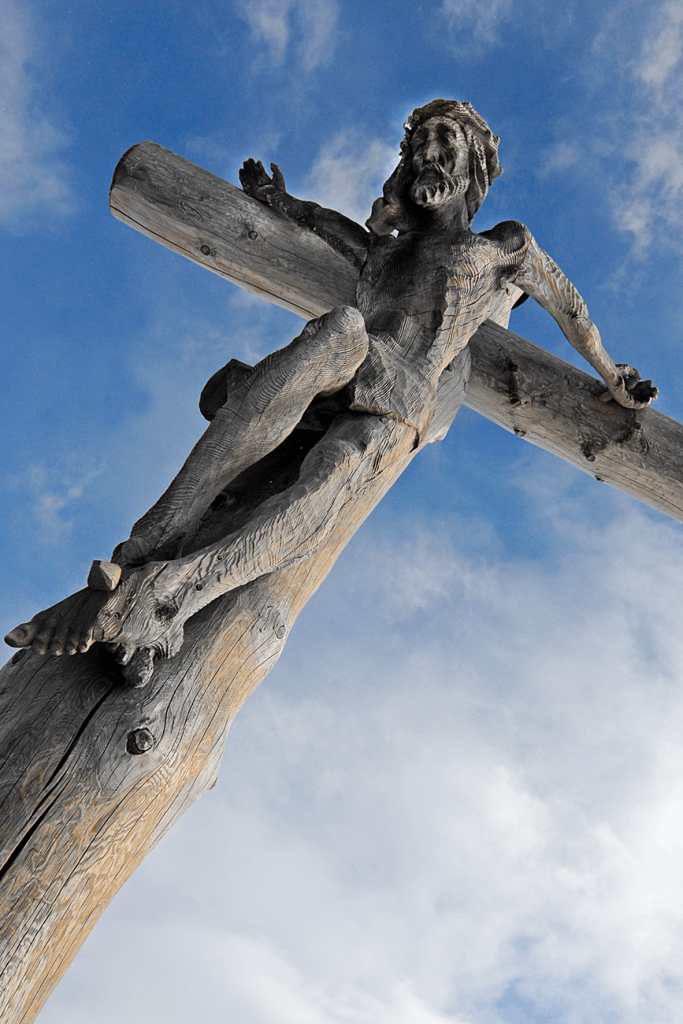
Not the victorious empty cross on the hillside with a beautiful sunset in the background, but the bloody, hot, dry and dreadful Calvary of the crucifixion? How often do we make the pilgrimage to that rocky outcropping with the smell of blood and sweat and death and agony? How often do we cry out to the one who was lifted up, struggling to breathe, pierced, wounded, broken and humiliated? When do we reach out to touch the scars and bruises he received in our place?

Photo by Pixabay on Pexels.com

It is at Calvary that we get the real story of Grace, Mercy, and forgiveness–the real cost of victory and peace. It is at Calvary that we see the full extent of God’s Holiness married to the full extent of His Love. Holiness demands justice; Love demands intimacy– together, they require sacrifice.

And it is at Calvary that we find, in the darkest and most hopeless of moments– God forsaking Himself, giving all He IS to bring justice and reconciliation for all we’ve done–that we trade our burdened souls, our worries, our despair for God’s embrace. Arms stretched so wide they are pulled from their sockets; blood spilled from head to toe; breathless and exposed in His passion for your soul and mine–that’s what God offers at Calvary.

Photo by Pixabay on Pexels.com

Why do I pray? I am ambushed and overwhelmed and enraptured by such a love. God had no need to suffer even a moment’s discomfort. He owed nothing to His rebellious creation; no mercy, no explanation, no hints as to His character (or ours). The creator of galaxies had no need to lift a finger to save one puny planet or any of its inhabitants from His own right to un-create them and blot out even their memory. Instead, He showed the greatest act of Love across all of space and time–to me!– At Calvary!

Photo by Pixabay on Pexels.com

Jesus Calls Us

I was at worship yesterday. We sang some wonderful hymns and songs of worship. Still, I miss some of the “old” hymns we used to sing in the small country church of my youth. This was one of them:

In case the video does not show up, here are the words:
Jesus calls us: o’er the tumult of our life’s wild, restless sea,
Day by day His sweet voice soundeth, saying, “Christian, follow Me.”
Jesus calls us from the worship of the vain world’s golden store,
From each idol that would keep us, saying, “Christian, love Me more.”
In our joys and in our sorrows, days of toil and hours of ease,
Still He calls, in cares and pleasures, “Christian, love Me more than these.”
Jesus calls us: by Thy mercies, Saviour, may we hear Thy call,
Give our hearts to Thine obedience, serve and love Thee best of all. Amen.

Photo by Victor Freitas on Pexels.com

Prayer is never just a one-way communication. We may not “hear” from God in an audible voice, but He calls us into communion with Him daily. He wants to hear from us; He wants to speak to us–through His word, through our experiences, through friends and neighbors and even chance encounters. We may not have a deep spiritual burden to bring before the throne of grace– does that keep us from needing to share a quiet moment with the lover of our soul?

Suppose the only time you ever spoke to your spouse was when you desperately needed her/his help? What would that say about your relationship? The same holds with our spiritual walk. God wants to speak to us; to have us notice the beauty of the sunrise, or the grace of moonlight in the mist. He wants to bring us hope and comfort in the stories and psalms of scripture. He wants us to share our nagging worries and our minor triumphs– not because He doesn’t know or cannot see–because He wants to share in our struggles and our joys, our deep grieving and our small amusements.

He wants all of this because of His great love for each of us. If we could just see His eyes light up with love when we walk into a room…and if we could hear the love in His voice– we would be undone. Someday, we will be– undone, and remade, and able to catch His eye without shattering in the light of that love.

But for now– He is calling…

Bringing in the Sheaves

It is harvest time where I live. It is especially fraught with significance this year, as we have had a bad growing season– heavy rains in the spring and low temperatures meant that much of the planting was delayed or cancelled. Fields that normally produce excellent crops of corn or wheat or soybeans look stunted and sickly, or they lie barren. Recent rains and threats of early snow mean that crops must be harvested now or lost, even if the yields are low or the crops not fully mature. While there will be a lot of grief and exasperation among farmers this year, there will also be relief and rejoicing in certain quarters.

Photo by Kaboompics .com on Pexels.com

The Bible uses farming and harvest imagery to describe the Kingdom of Heaven. Jesus told the parable of the sower and seed in Matthew 13 (also in Mark and Luke– see here:https://www.biblestudytools.com/bible-stories/parable-of-the-sower.html), and He spoke of fields being ripe for harvest (John 4:34-38/www.biblegateway.com/passage/?search=John+4%3A34-38&version=NIV)

Photo by Dominika Roseclay on Pexels.com

As followers of Christ, we are both harvest and harvesters. Like seed, we “die” to our nature, and grow and mature in newness of life by the Holy Spirit. And like farmers and harvest workers, we are called to plant seeds, to “sow” the Gospel of Christ, to tend to one another’s growth and nurture, and to “harvest” a crop– bringing others toward repentance and faith.

Another song from my childhood impressed itself upon me during my worship time today– a simple chorus, but filled with joy. Our mornings, evenings, sunny days and wintry nights may be filled with sowing seeds and tending crops; the work may seem tedious or even thankless. But we can take joy in knowing that there is a joyful and glorious Harvest ahead. Some day, we will be gathered together– not a puny harvest hastily gathered to avoid spoiling, but an abundant, fruitful harvest of God’s love lavished, nourished, and brought to perfection.

Lord, thank you for the reminder that all of this life –even the trials and frustrations–will produce a harvest of praise and worship. Give me the strength and wisdom to work joyfully for Your glory today. Help me to sow the seeds of Grace and Truth that come from your word, and to help others grow. Help me to respond with eagerness to the Holy Spirit’s prompting and counsel, and be a blessing to those around me. Amen.

Love Lifted Me

I love you, Lord, my strength.
The Lord is my rock, my fortress and my deliverer;
    my God is my rock, in whom I take refuge,
    my shield and the horn of my salvation, my stronghold.
I called to the Lord, who is worthy of praise,
    and I have been saved from my enemies.
The cords of death entangled me;
    the torrents of destruction overwhelmed me.
The cords of the grave coiled around me;
    the snares of death confronted me.
In my distress I called to the Lord;
    I cried to my God for help.
From his temple he heard my voice;
    my cry came before him, into his ears.
The earth trembled and quaked,
    and the foundations of the mountains shook;
    they trembled because he was angry.
Smoke rose from his nostrils;
    consuming fire came from his mouth,
    burning coals blazed out of it.
He parted the heavens and came down;
    dark clouds were under his feet.
10 He mounted the cherubim and flew;
    he soared on the wings of the wind.
11 He made darkness his covering, his canopy around him—
    the dark rain clouds of the sky.
12 Out of the brightness of his presence clouds advanced,
    with hailstones and bolts of lightning.
13 The Lord thundered from heaven;
    the voice of the Most High resounded.
14 He shot his arrows and scattered the enemy,
    with great bolts of lightning he routed them.
15 The valleys of the sea were exposed
    and the foundations of the earth laid bare
at your rebuke, Lord,
    at the blast of breath from your nostrils.
16 He reached down from on high and took hold of me;
    he drew me out of deep waters.
17 He rescued me from my powerful enemy,
    from my foes, who were too strong for me.
18 They confronted me in the day of my disaster,
    but the Lord was my support.
19 He brought me out into a spacious place;
    he rescued me because he delighted in me
.

Psalm 18:1-19 NIV (taken from biblegateway.com)
Photo by Victor Freitas on Pexels.com

I grew up hearing hymns– lots of them. My mother and grandmother and aunt all played the piano or organ for church, and often practiced during the week. My father led the congregational singing sometimes, and my grandfather taught himself to play many musical instruments, and used hymns to become familiar with the chords, notes, and fingerings of the instrument du jour. The congregation at our small church sang with more gusto than musical talent, but we sang during the Sunday morning service, the Sunday evening service, the Wednesday evening service, and at any special occasion.

Photo by Pixabay on Pexels.com

Two things happened as a result of this: one not-so-good, and one very good thing. The not-so-good thing was that I became somewhat inured to the songs and lyrics– I knew what the songs said, but I didn’t really understand or internalize the truths they contained. However, the very good thing was that the hymns stuck in my memory– years later they came back like the best of friends to comfort me, challenge me, and remind me of sacred realities in the midst of mundane frustrations and worldly confusions.

This old hymn, neglected, out-dated, and seldom sung in our current services, was my lullaby growing up. My mother would sing it over and over as she rocked me to sleep, often running out of verses and words and just humming or filling in with “la, la la, la,” until she reached the chorus.
“Love lifted me. Love lifted me. When nothing else could help, Love lifted me.”

As a young child, I experienced the loving arms of my dear mother lifting me to her lap and rocking me for what seemed like hours until I drifted off to sleep. As a teen, I scoffed at the lyrics a bit–what need had I to be lifted and helped, when I was invincible and young and ready to conquer the world. As an adult, this old hymn came back with power and comfort when my own efforts and life’s stormy circumstances left me with little hope and lots of confusion, doubt, and regret. It reminds me that help and hope can be found even in the raging storms of grief, depression, oppression, and pain. “When nothing else could help…” God could, and did! He can and will!

Photo by Pixabay on Pexels.com

“Love lifted me”–such a simple phrase, and by itself not a solid foundation for hope and victory. In fact, there are many popular songs that speak of love lifting a person up, making one feel buoyant and hopeful, joyful or young. But this song speaks of a different and everlasting, all-powerful love– the Love of Christ. And it doesn’t just lift us up from one pleasant place to another. It reaches down into the depths of sin, despair, and even death to lift us up beyond all hope, beyond any strength or effort we could generate or receive from any other source. And this great Love reaches down to lift me–even me! It does not belong only to the elite, the wealthy, the beautiful people, the gifted or the powerful. In fact, this love is especially close and available to those who have done nothing to deserve it; those who have been bypassed and ignored and left to drown in their own shame and sorrow.

Photo by Edward Eyer on Pexels.com

Love. Lifted. Me! My prayer is that this same Love will surround you today, lifting you up, and helping you, just as it helps me and brings me life and hope, to the Glory of Christ our Savior.

Come Home

It’s Football season again here in the U.S. (American Football, that is). High Schools and colleges across the country are having “homecoming” festivities, as their teams return “home” after playing games on the road. Elaborate floats, dress-up days, pep rallies, parades, ceremonies, homecoming princes and princesses, dances, tailgate parties..homecoming is a big deal. There is something about the idea of returning home that captures our emotions and brings out joy and excitement.

Photo by Joe Calomeni on Pexels.com

One of the most famous of Jesus’ parables involved a son who comes home after living a life of dissipation, folly, and dishonor. https://www.biblegateway.com/passage/?search=Luke+15%3A11-32&version=NIV. As he is making his way home, but is still “a long way off,” his father sees, him, has compassion on him, and runs to meet him and welcome him. He then commands that clothes should be brought, and a feast prepared to welcome his son back home.

Photo by Pixabay on Pexels.com

What a beautiful picture of God’s love for us–it overcomes shame and disgrace, dishonor, and ruin. God watches for us to change directions and seek His face. But He doesn’t demand that we crawl home in defeat and beg Him to take us back. He runs to meet us with joy and excitement even greater than all the parades and floats and dances of any homecoming celebration. All of Heaven rejoices over every one who comes to repentance!

Photo by Pixabay on Pexels.com

But there are two sons in this story. The “other” son does not want to join in the celebration– he is resentful and bitter over his brother’s behavior and his father’s willingness to celebrate. We do not get to know all the reasons why he might be resentful, but his father gently reminds him that he is loved and secure, and still has his inheritance. The return of the brother doesn’t change any of that.

In prayer, we should remember this parable and some of the lessons it can teach. Let’s ask ourselves:

  • Am I making some of the same mistakes as the “prodigal son?” Am I running away from “home” and God in selfish pursuits? Am I asking God for an “advance” on my inheritance–wanting blessings and rewards before God’s time or outside of God’s will? Am I wasting time or resources or talents that God has given me? Am I stubbornly refusing to return home, even when it’s obvious that “my” way isn’t working? Do I think I need to work my way back to God by bargaining my good works?
Photo by Pixabay on Pexels.com
  • Am I making some of the mistakes of the “other” brother? Do I resent God’s mercy toward people I think of as “unworthy?” Do I refuse to celebrate and welcome my brothers or sisters who have come “home?” Do I blame God for “withholding” blessings, even though I never sought them? Do I doubt God’s love for me because my life story isn’t dramatic or filled with miraculous demonstrations of grace (apart from the ultimate miracle of the Crucifixion and Resurrection!!!)
  • Am I watching and running with the Father to welcome others “home?” Am I joining in the Homecoming festivities for those who are being rescued from ruin and death? Am I filled with joy and excitement about the Gospel?
  • Am I anticipating the ultimate “Homecoming” –the indescribable joy of spending eternity with the Father, Son, and Holy Spirit, along with all the saints in Glory?

Lord, help me to see the faces of my neighbors and friends, and enemies, and even strangers, as you do–help me to delight in their redemption, ready to celebrate and share in the joy; help me to search for them, run to them, and lead them to You! And help me to never take for granted the amazing love you have for me–even me!

Photo by Munmun Singh on Pexels.com
  1. Softly and tenderly Jesus is calling,
    Calling for you and for me;
    See, on the portals He’s waiting and watching,
    Watching for you and for me.
    • Refrain:
      Come home, come home,
      You who are weary, come home;
      Earnestly, tenderly, Jesus is calling,
      Calling, O sinner, come home!
  2. Why should we tarry when Jesus is pleading,
    Pleading for you and for me?
    Why should we linger and heed not His mercies,
    Mercies for you and for me?
  3. Time is now fleeting, the moments are passing,
    Passing from you and from me;
    Shadows are gathering, deathbeds are coming,
    Coming for you and for me.
  4. Oh, for the wonderful love He has promised,
    Promised for you and for me!
    Though we have sinned, He has mercy and pardon,
    Pardon for you and for me.

P.S. I Love You

There are at least two great songs and one movie with the title, “P.S. I Love You.” The idea comes from a letter– one in which the writer wants to make sure that “I Love You” are the last three words on the page– the lasting impression for the letter’s recipient.

The Bible is many things– a history, a book of laws, a narrative of God’s dealings with humankind–but it is also a love letter. Scattered throughout the lists of generations, the poetry, the prophecies, the gospels, and yes, the letters to churches, are expressions of love. God begins by creating a beautiful garden, creating Adam in his own likeness, and creating a suitable helper from Adam’s side. He gives them everything they need to live and enjoy everything around them–He even comes to walk and talk with them!

Photo by Pixabay on Pexels.com

God rescues the nation of Israel from slavery and cruelty in Egypt, and guides them in the wilderness for 40 years–providing food and water, even preserving their clothing and shoes, so they have no lack!

God punishes the rebellious nation, sending them into exile– but He gives them promises, and even in the worst of their punishment, He speaks words of love and healing and reconciliation.

Photo by Pixabay on Pexels.com

God sends the ultimate Word of Love in His Son– who loves, heals, forgives, and serves, even to the point of dying! And in the death and resurrection of Jesus, this love is extended to everyone who will accept Him.

Finally, God promises an end to death and rebellion–eternal reconciliation and life with Him who loves us best. His love letter ends with a glorious P.S.:

22 Then the angel showed me the river of the water of life, as clear as crystal, flowing from the throne of God and of the Lamb down the middle of the great street of the city. On each side of the river stood the tree of life, bearing twelve crops of fruit, yielding its fruit every month. And the leaves of the tree are for the healing of the nations. No longer will there be any curse. The throne of God and of the Lamb will be in the city, and his servants will serve him. They will see his face, and his name will be on their foreheads. There will be no more night. They will not need the light of a lamp or the light of the sun, for the Lord God will give them light. And they will reign for ever and ever… 16 “I, Jesus, have sent my angel to give you this testimony for the churches. I am the Root and the Offspring of David, and the bright Morning Star.” 17 The Spirit and the bride say, “Come!” And let the one who hears say, “Come!” Let the one who is thirsty come; and let the one who wishes take the free gift of the water of life… 20 He who testifies to these things says, “Yes, I am coming soon.” Amen. Come, Lord Jesus. 21 The grace of the Lord Jesus be with God’s people. Amen.
(Revelation 22:1-5; 16-17; 20-21.)

https://www.biblegateway.com/passage/?search=Revelation+22&version=NIV
Photo by Pixabay on Pexels.com

Even when God sends punishment, or stays silent in the face of our immediate questions, He never stops saying “I Love You.” I. LOVE. YOU!

Lord, may I take time today to read your love letter. May I savor Your words and may I take the time to read Your Post Script– and respond to Your Eternal and Fathomless Love! Amen!

Holy Terror

All Hallow’s Eve, or Halloween, brings out the fearsome, garish, gory, scary, and macabre in many people.  Movies, costumes, and stories concentrate on death, mystery, nightmares, ghosts, and terror.

I am not a fan of horror in any of its forms.  I don’t like to be scared, startled, tricked, haunted, or frightened.  I don’t like seeing others being terrorized, tortured, or hurt.

So it is with great interest and some surprise to find that the Bible tells us to fear.  Of course, it also tells us NOT to fear– several times, in fact.  We are told that we need not fear the future (Matthew 6:34), struggles, battles, or long journeys (Joshua 1:9), shame or disgrace (Isaiah 54:4), terror, evil, and the “shadow of death” (Psalm 23:4),  actual death, angels or demons (Romans 8:38), or anyone at all (Psalm 27:1; Psalm 188:6).  But there is one fear the Bible does nothing to dispel.

metal vintage old antique
Photo by Skitterphoto on Pexels.com

There is a Holy terror that comes from the recognition that God is Holy– and we are NOT.  There is a very real, very terrible chasm separating us from an eternally sinless and perfect God.  There is nothing we can do on this side of the chasm to close the gap– no way to escape the eternal. hopeless and horrific state of being separated from all that is good, and noble, and peaceful, and joyous.  In life, we get glimpses of glory–flashes of amazing grace at work in the world around us.  Even though we live in a fallen world, we do not live in a place rejected or abandoned by God.

beautiful blue sky bright cloudiness
Photo by icon0.com on Pexels.com

This should cause us to have a healthy “fear” of God– a soul-deep awe of His “Other-ness”, His Authority, and His Pre-eminence.  And it should give us a terror of remaining in separation from Him– especially as He offers the very restoration and renewal we can never achieve for ourselves.  And He offers it as a free gift to ANYONE who will receive it!

ash background beautiful blaze
Photo by icon0.com on Pexels.com

Far from trying to “scare someone into Heaven,” sermons and admonitions about Hellfire and eternal damnation are meant as very real warnings with real and eternal consequences.  No horror on earth can compare with an existence devoid of all joy, peace, love, light, help, and hope–and filled with the knowledge of “all that might have been.”  Zombies, vampires, ghouls, and monsters can terrorize in the movies for an hour or two, or in books for a week or more, but what makes people willing to entertain such horrors is the latent hope that we will close the book cover, exit the theater, and wake up from the nightmares presented there.  The idea that Good will eventually triumph; that order, peace, and justice can be restored; that love conquers all, and “something” will survive, re-emerge, and carry on into the future.  All of these hopes are possible because God exists and is eternal.  When we reject God’s authority; His sovereign direction and His call to salvation, we reject all that comes with it.  While we live on His earth, we will still see the glimpses of glory– we can pretend that it is enough for now, or choose to settle for false “hope” of emptiness in death.  But we cannot escape the search for meaning and purpose that drives us to build and plan for a future we have never seen; nor can we know the peace that comes from looking forward and seeing more than darkness, doubt,  and destruction.

Blog at WordPress.com.

Up ↑