Passing Gas

There once was a distinguished scholar and lecturer who was invited to be part of a symposium at a prestigious university. But during his time on stage, the professor realized that he was having a gas attack. Not wanting to embarrass himself by passing gas in front of the rest of the panel (and indeed the entire auditorium full of students) he politely asked to be excused to take a short break as the rest of the panel discussed a minor issue. He proudly excused himself, making it seem as though he was merely bored and wanted to stretch his legs a bit. Exiting the auditorium, he raced to the nearest bathroom and “let it rip,” not realizing that his portable microphone was still “hot.” The entire audience could hear, not only the gas he passed, but the other noises he made– of pain as the gas was passing, and of relief at the end of the attack. As he returned to his seat on stage, he was stunned to see people grinning and pointing, and hear stifled giggles as he rejoined the panel. Even his colleagues were finding it difficult to meet him with a straight face. Finally, the moderator asked, somewhat sarcastically, if the professor felt better after his break, and could be please be sure that his microphone was “turned back on…” As he finally realized what had happened, the professor was mortified, and barely spoke during the rest of the symposium. He left in a hurry, and it was many years before he agreed to visit that university again.

We may laugh at the downfall of the proud professor, but how often do we try to “pass gas” discreetly, pretending that we are “above” petty embarrassments and minor setbacks. As Christians, it is especially tempting to pretend that we “have it all together;” that because we follow Christ, we never struggle with pain, or niggling doubts, or unanswered questions. We sit in judgment on our neighbors because we do not stumble over the same sins that we see in them.

The world is watching. They pay close attention, not only to the sins we avoid, but to the sins we push aside or try to explain away. Sins like pride and gossip; sins like “bending the rules” and “fibbing.” It’s not that they don’t know about their own sins. In many cases, they are trapped in a cycle of guilt about their own sins, and their inability to escape the cycle on their own. Or they live in a web of lies about their lifestyles and habits– “I’m no worse than Him!” “God understands my weakness. He can’t condemn me for being the way He made me!” “God and I have a bargain. I don’t do X, and he’s ok that I do Y instead…”

But are we any “better?” “I don’t gossip. I ‘share’ prayer concerns.” “I’m a work in progress. God isn’t finished with me yet!” “King David told lies, and he was a ‘man after God’s own heart’!” “I’m not cheating on my taxes. You should hear my neighbor talk about what he’s done!” “I know I need to lose weight, but, well, there’s just more of me to love!” We are just as ready to find excuses for doing things we know to be wrong, unhealthy, unloving, and sinful, as our neighbor or our “enemy.”

Even more, we are tempted to pretend that we “have all the answers.” After all, if we trust God, how can we still have questions about pain or suffering or grief? We feel that admitting our weaknesses will expose us to ridicule, and that it may hurt our testimony.

That doesn’t mean that we should condone the sins of others, or that we should carry a load of shame over our own lapses. The point is that Jesus calls us to walk humbly and bring ALL our burdens to Him in prayer. Do I still struggle with my tongue–am I still spouting sarcastic retorts make me look smart, while putting others down? I need to submit that habit to the Lord. Does it bother me that my brother smokes or looks at porn? I should not condone such behavior, but it’s not my place to “make him” change his behavior. I should pray about it, and let him know I care about what these habits may be doing to his health and relationships. God doesn’t “hate” my neighbor who can’t seem to hold down a job, nags her husband and kids, and uses foul language– and neither should I! I shouldn’t encourage her bad behavior, but I should be willing to listen to her, show her compassion as someone Christ died to save, and offer her the same friendly helping hand I would be willing to give my other neighbors.

And I should be honest about my own limitations. God has saved me. I am His. But he didn’t save me because I had “cleaned up my act.” And he doesn’t reject me because I still don’t know all the answers or do all the “right” things. Instead, He guides me to be more like Him as I faithfully follow His ways, including confessing when I mess up. God is big enough to save me and re-shape my future in ways I can’t even imagine. I didn’t “win” my salvation. It is a gift– one that keeps on giving!

Being a Christian isn’t about acting “better” than those around us– though we should be walking in Jesus’ footsteps and living more like Him each day. It can be difficult, as the rest of the world may hold us to a higher standard. We will be judged more harshly than our neighbors who do not attempt to follow Christ. We will be accused of holding judgmental attitudes, even when we don’t display them. And we will find our standards and morals being maligned as “old-fashioned” or “snobbish” or even “hateful.” Not because they are any of those things, but because God’s standards (and anyone who agrees with them) offend those who rebel against them. And we still live in a fallen world, just like everyone else. We still wrestle with temptations, we still experience the consequences of sin– our own and others’–that make us sick, or weak, or poor, or otherwise look like “failure” to those around us. And it does no good to pretend that life isn’t sometimes difficult and painful–we’re not fooling anybody!

Instead, being a Christian is about “becoming” better than we can be without God’s Spirit living, moving, and acting THROUGH us. And a big part of that process involves “passing gas.” We need to let go of the sin and the “bad gas” that still builds up inside of us– pride, shame, stubbornness, laziness, envy, criticism, apathy, anger, bitterness, hatred, and so much more. And we need to acknowledge that our Salvation– now and through eternity– only comes through the finished work of Jesus Christ, not our own efforts. This process is called “Sanctification.” We are “saved” by Grace through Faith (see Ephesians 2:8-9). We cannot boast about having been saved. But we testify about our salvation by a changed nature, led by God’s spirit– a “new” compassion for those around us; a new delight in following God’s standards; a new humility about our own limitations, and a new joy for the way God can work through even our weaknesses to give us victory!

Ironically, passing gas is a necessary part of our bodily processes. If we don’t get rid of the “bad” gas, it will lead to bloating and actually poison us! Similarly, if we don’t acknowledge areas where we need to confess, continue in obedience, and submit our will to the Holy Spirit’s promptings, we will become bloated with our own self-importance, and poisoned by our self-deceptions.

So today, as I pass gas– as I surely will at some point– I hope that I will be convicted, and even amused, at how God uses the lowly things of this world for our benefit, and His Glory!

Orphan Train

Across from our shop, there is a mural that tells the story of the first “Orphan Train.” In October of 1854, 45 children– some orphaned, others abandoned–arrived in southwest Michigan from New York City. Conditions for such children in the large cities were dangerous. Floods of immigrants included children who had lost their parents on the voyage to America, or who had been separated from their families upon arrival. There were very few orphanages, and almost no resources dedicated to child welfare. Hunger, disease, crime, and exposure to the elements meant that many children never lived to maturity. Most of them lived on the streets; ignored, preyed upon, or simply forgotten. A group called the Children’s Aid Society, founded in 1853, had tried helping children– especially boys–but their limited resources were overwhelmed within the first year.

Section of the Orphan Train Mural, Dowagiac, Michigan (Ruth Andrews)

It was the idea of a man named Charles Loring Brace that large numbers of these children could escape the dangerous environs of the city and find safety and hope in the expanding “West.” With the help of the new railroads, groups of children could travel west, where kind-hearted families could adopt them. Food, shelter, education, fresh air, opportunity, and a loving family- this was the promise of the orphan train. For some children, it was the start of a wonderful new life. For some, it was trading a hard life in the city for a hard life on the frontier.

I can only imagine how frightening it must have been for the first train-load of orphans to travel here. Few people had ever traveled by train in those days. Some of the children had never traveled more than a few blocks from where they had been born– had never seen a farm or a forest. Part of their journey was on a steamboat. The journey would not have been comfortable, but it would have been exciting and even terrifying at times. They had no guarantee of finding homes or families who would be willing to take care of them– only the hope that someone might.

What does this have to do with prayer? Well, the obvious connection would be that everyone involved with this venture must have prayed diligently. All 45 children were placed with local families in that first journey. And the success of this first placement encouraged future endeavors. The “orphan trains” ran for 75 years, and carried nearly a quarter of a million children to new homes throughout the growing United States. And while not every child found a “happy ending” with their new family, most of them survived to create a new life as adults–an opportunity many other orphans had been denied.

Orphan Train Mural, Dowagiac, Michigan (Ruth Andrews)

But it struck me today, as I was looking at the mural and thinking about the fate of these children, that we are or were all in a similar situation. I am so thankful to be able to pray to my Loving Father– but there was a time when I was lost and without hope. There was a time when Sin had made me an orphan. I was alone and frightened and helpless to save myself. Like the orphans in first part of the mural, I was sick and sad, my best intentions were no more than tattered rags. Even as they line up to board the train, their faces show fear and pain.

It can be frightening to call out to God– frightening to leave the life we know, even when it is dangerous and unhealthy. God’s way takes us to uncomfortable and unfamiliar places–we can’t see the road ahead, and we don’t know what our “new” life will be like.

As I gaze once again at the mural, the last section shows an idealized version of the “new life” experienced by the riders of the “Orphan Train.” It shows a groups of children in a circle, holding hands and playing in the sunshine among grass and trees, while a bird flutters nearby. It is a heavenly place– the children’s clothes are clean, and they look healthy and happy. And while this is an ideal, rather than the reality for some of the children, it is a reminder of the contrast with the life they left behind.

Thanks be to God for His Grace that rescues us from the ravages of Sin. He offers us an escape to a new life– complete with a new family and a glorious hope of Heaven. He offers full adoption– guaranteed by the blood of His own Son– for those who will choose to leave their old life of Sin behind and travel as an orphan on His own “Orphan Train.”

I mean that the heir, as long as he is a child, is no different from a slave, though he is the owner of everything, but he is under guardians and managers until the date set by his father. In the same way we also, when we were children, were enslaved to the elementary principles of the world. But when the fullness of time had come, God sent forth his Son, born of woman, born under the law, to redeem those who were under the law, so that we might receive adoption as sons. And because you are sons, God has sent the Spirit of his Son into our hearts, crying, “Abba! Father!”

Galatians 4:1-6 ESV (via biblegateway.com)

https://www.desiringgod.org/messages/adoption-the-heart-of-the-gospel

The ABCs of Grace

“Amazing Grace, how sweet the sound…” Thus starts one of the best-known hymns of the Christian Faith. But, do we sometimes take Grace for granted? I realized the other day that I needed a “refresher course” on Grace. Let’s go back to the ABCs…

A–AMAZING. We sing about it, but are they just words? What is so actually so amazing about Grace? Whole books have been written on the topic (including one by Philip Yancey titled “What’s so Amazing about Grace?”) To answer the question, it helps to define what Grace actually IS. Grace is undeserved or unmerited favor. You cannot “earn” Grace. You cannot buy it. You cannot trade for it. It is a gift given to the undeserving. Something wholesome and blessed that comes unexpectedly. And the amazing part of Grace, as described in the Bible, is that God– the perfect giver of all good gifts– pours out blessings on US. We are not just powerless to earn such blessings, we often scorn or even refuse them; we reject, neglect, abuse, and even destroy God’s greatest gifts. 

We waste our lives in worthless pursuits, we sabotage relationships, we mistreat nature, we laugh at God’s words of wisdom, and we deny God’s loving care– or even His very existence. Yet God still makes the sun to shine, the rain to fall; He gives us breath for our lungs and leads us to food and water and shelter. He gives us eyes to see, hands to work, minds to invent and plan, and access to friends and families where we might find love and acceptance. Instead of being amazed, we are often bitter and ungrateful as we see such gifts being misused or twisted by others like us. We want “more.” We want “different.” We want to manipulate the very gifts God offers us, and then complain when we are not satisfied with the results.

B– Boundless. God’s Grace knows no boundaries. God is gracious toward sinners. He lavishes riches on those who turn around and squander them! God gives good gifts to losers and rebels and lost causes, as well as His beloved children. God’s Grace can surprise us anywhere, any time. We can be in prison, and God’s Grace will still find us. We can be in a war-torn make-shift shelter; God’s Grace can still show up. We can be in the mountains, in the middle of the sea, or lost in the desert. We can be surrounded by noise and filth, or we can be alone in the dark, God’s Grace is there– if we are open to receive it. 

And, having received God’s Grace, we can, through Him, extend the most extraordinary Grace to others. We can forgive those who have wronged us– those who have set themselves up as our enemies, or those who have neglected our rights. NOT because Grace causes us to be wimpy or powerless to seek justice, but because Grace is STRONGER than justice. God’s Grace never comes at the EXPENSE of justice, but it comes because God holds both Justice and Grace in His hands, and He chooses to deal with Justice in His time, not ours. He does the same with Grace– choosing to bless us when we cannot expect to earn it. And we have the power to do the same– to choose blessing over cursing; to choose love and forgiveness over bitterness and revenge.

C–Complete. God’s Grace is sufficient. Period. (see Romans 3:24, 2 Corinthians 9:8, 2 Corinthians 12:9, 2 2 Peter 1:3 We cannot add anything to God’s Grace to make it better or more effective. We cannot hoard God’s Grace for a “rainy day.” We cannot try to compound God’s many blessings into a “super” blessing. And we cannot compare our blessings with those of others. God, in His wisdom, gives us what He determines is best for us. And that includes Grace. He doesn’t give “lesser” Grace to someone who needs is “less” or deserves it “less.” His Grace is always enough. It washes away petty gossip and first degree murder. It renews lives touched by gambling addictions and sexual assault. It mends sibling rivalries and ancient feuds, neighborly spats and international conflicts.

Today, I choose to look for Grace– both in the way God has poured His Grace on me, and in the way He can empower me to show Grace to others. I pray that I will not take God’s Grace for granted in my life, but cherish it, recognize it, be grateful for it, and pass it on. 

And I know I will be AMAZED! I pray you will find Amazing Grace today, as well. It’s really as simple as ABC!

A “Lot” to Learn

I learned a “lot” studying the character of Abraham’s nephew, Lot. (Read Genesis 13, 14, and 19) Today, I want to summarize…

  • Our lives depend on choices, rather than chances…Lot experienced many opportunities and some tragedies beyond his control. But even when God gave Lot some amazing opportunities– even when He offered miraculous rescue–Lot continued to make bad decisions or no decision at all. When have I done the same? Do I wait for chance and circumstance to find me? Do I drift along without making wise choices, allowing life to carry me to my next destination? Or do I seek God–His wisdom, His Word, His provision–and choose to obey Him?
  • Not making a choice IS making a choice…Lot chose to live outside of Sodom– but he ended up in the city. Lot spent much of his time NOT making decisions or plans. He chose inactivity, chose to be vulnerable to attack, chose to live in a city so wicked it was doomed to destruction, chose to compromise and bargain with his wicked neighbors, chose to drag his feet (literally) about leaving, chose to let his daughters control his destiny and legacy. How often do I pray for God to direct my steps and guide my life, and then sit on the couch doing nothing? Lot’s story doesn’t include a single instance of Lot taking initiative. He simple reacts to, takes advantage of, or accepts whatever opportunities or misfortunes befall him. And he doesn’t see his inactivity as a sin or rebellion against God. But he never CHOOSES to follow God; to seek Him or obey him. He assumes that not choosing active rebellion and evil is enough. Have I done the same? Do I think that because I am not actively involved in wickedness that I am honoring God with my inaction and apathy?
  • You cannot live surrounded by evil and not be hurt by it. Ignoring the warning signs, tolerating evil because it becomes familiar, turning a blind eye to the ways others are being hurt–if we are not part of a solution, we are part of the problem. Lot had options– he could have moved away from Sodom; he could have stayed outside the city; he could have spoken up about the evil all around him–he did none of those things. He lived a compromised life; a life in denial. What have I done to flee evil? To speak out against injustice and oppression? To stand up for what is right? When have I winked at evil, or turned a blind eye to wickedness? How often have I sat in uncomfortable silence while someone else suffered? Because “it’s not my problem.” “One voice won’t make a difference.” “It’s just the way they are.” “I don’t want to offend anyone by getting involved. It’s none of my business, anyway.” Lot and his family suffered greatly, even as they tried to “coexist” with their wicked neighbors.

That’s a lot to consider in the life of one man. But more importantly, there are a “lot” of things to learn about the character of God in this story:

  • God sees us. God included Lot in the larger story of Abraham– He gave an orphaned boy a family, a fortune, and a future. Lot had done nothing to “earn” God’s protection or favor. He certainly did nothing to deserve being rescued– twice– and he did nothing to show gratitude for either rescue. But God didn’t make a mistake in showing Lot mercy. God wasn’t surprised by Lot’s life choices– He didn’t “fail” Lot, and He didn’t forget about Him– even after generations.
  • God is a judge. We like to concentrate on God’s mercy and blessings, but God’s goodness requires that sin, wickedness, and evil be punished. God doesn’t delight in punishment, but He will not forget the cries of the oppressed. Those who practice evil and seem to “get away with it” will face judgment. If they do not seek God’s forgiveness, they will be destroyed. The cities of Sodom and Gomorrah were destroyed by supernatural fire; Lot was destroyed by his own fears and compromises.
  • God is merciful. God destroyed Sodom and Gomorrah, but He was willing to save the cities for the sake of as few as ten “righteous” people. We know that “There is no one righteous, not even one..” (Romans 3:10), but God thoughtfully listened to Abraham, and promised to seek for anyone who could be considered worthy of saving. That He saved only Lot and his small family was for Abraham’s sake, not Lot’s– yet save them He did. God doesn’t save the “deserving”– He saves the lost!
  • God’s plans are perfect, detailed, and eternal. God saved the unworthy Lot, and even when his family repaid God’s mercy with incest, violence, and wickedness against Israel, God orchestrated the story of Ruth– a story of love, faithfulness, and redemption pulled from the ashes of this tragic story in Genesis. God has a plan for each of us– He already knows if we will participate eagerly in a story of beauty and blessing, or be dragged through a story of compromise and tragedy. But ultimately, our story will be woven into a tapestry of God’s faithfulness, righteousness, and restoration. How we respond will change our life, and potentially, the lives of generations to come. And God will give us opportunities to choose lives of obedience, wisdom, and faith. No matter if we live in Sodom, or wasted earlier chances, we can choose rescue and redemption because of God’s great love and mercy!

The Bible never records a prayer by Lot– whether he DID pray is a matter of speculation. But it seems clear that Lot did not seek God in any meaningful way– he didn’t obey God, he didn’t honor God, he didn’t walk with God as his uncle did. Abraham’s life wasn’t perfect– he lied about his wife, became impatient for God’s promised son and took matters into his own hands– but Abraham learned from his mistakes. He humbled himself, looked to God for wisdom, and trusted Him for the next step. He honored God, built altars, and called on the Name of the Lord. May we call out to the same God of Abraham for guidance and wisdom today.

A Bulwark Never Failing…

“A Mighty Fortress is our God; a bulwark, never failing..”
These words are known and sung (in various translations and languages) around the world. But Martin Luther wrote this song over four hundred years ago. What relevance can these words have in an age of nuclear bombs and globalized economies and climate change? What do they mean to us today?

I don’t live in a nation of many castles. There are two stone “mansions” in the small town where I live. They seem tiny compared to mansions in other parts of the U.S. and the world. And we have a small armory; home to a National Guard outpost. But a mansion (or even an armory) is not the same as a castle or a fortress. Mansions are built to be impressive; armories are built to be immediately prepared for disasters or attacks; castles are built to be impregnable and permanent. Our God is not just a fortress; one outpost among many mighty gods– He is The Mighty One–uniquely sovereign, eternally victorious, and perfectly protecting all within His power.

And this protection doesn’t depend on my might or fighting ability, or my weapons or strategies. It depends on my being inside the fortress, safe and sound. The war rages all around, but it cannot defeat me, so long as I am in the fortress.

There are mighty castles, forts, towers, citadels, and walls around the world– all built by people and victims of the ravages of war, time, weather, fire, bad management, etc. Over the years, types of fortresses have given way to new weapons designed to bring them down. Wooden forts are susceptible to fire; stone castles can be brought down by catapults, battering rams, and bombs. Underground bunkers can even be ruined by earthquakes or nuclear assault. And yet, we are still amazed at the power and legacy they represent. Many have stood for hundreds or even thousands of years. But God is eternal; His might and protection will never fail. No weapon forged or imagined can triumph over His power and sovereignty.

Prayer brings us into the safe and powerful presence of God Almighty. There is nothing of our worries, our guilt, our doubts, or the accusations of the enemy that can shake the foundations of God’s fortress. And the cornerstone is none other than Jesus Christ– unshakable, victorious, and eternally one with the Father and the Spirit.

That doesn’t mean that we won’t ever find ourselves in battle, trusting in God’s armor against the arrows of the enemy. But the war is already won– His Kingdom is forever! And ever!

The Value of a Life

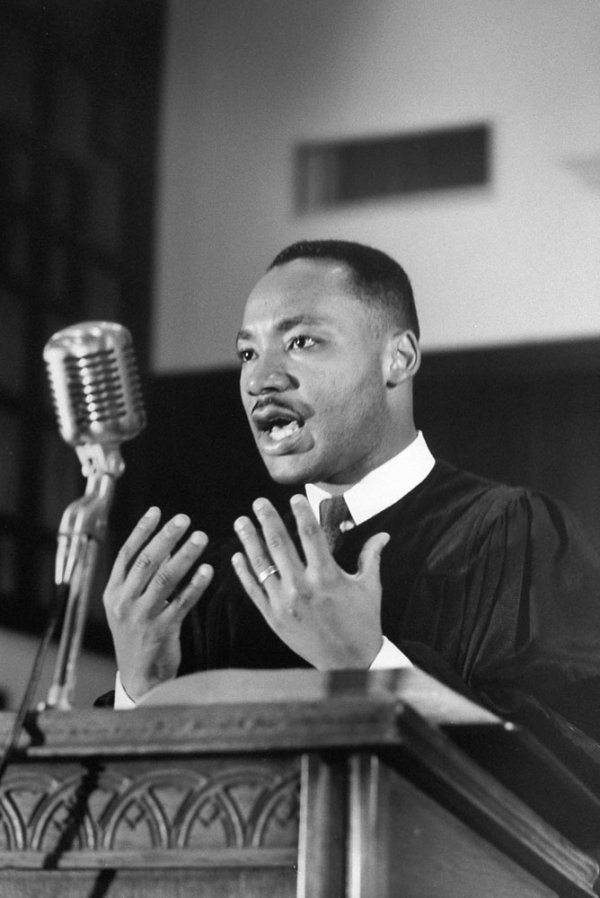
Today in America, we celebrate the life of Dr. Martin Luther King, Jr. Dr. King was a minister, a brilliant writer and student of theology, a leader in the Civil Rights movement of the late 1950s and early 1960s, a noted speaker, and man who arguably made a difference in the world. Dr. King was murdered in 1968, at the age of only 39, leaving a family and a nation devastated by his loss.

Next Monday, we will observe the 51st anniversary of the Supreme Court decision Roe v Wade, in which nine judges effectively legalized abortion in the U.S. for over half a century. Even though this decision has been overturned, many states, using the precedent of Roe v Wade, have changed their state laws to allow for abortion. In many states, it is now legal to abort a child right up to the moment of birth!

What is the value of a single life? Who gets to decide that they have the right to take another person’s life– whether by assassination, capital punishment, abortion, murder, or euthanasia?

It is a question that our society has struggled with for centuries. Who can give life? Who can take life? Who can determine the conditions of another person’s existence? And, for those who live, what is the “value” of their life–to their family, to their neighborhood, to their nation, or to history? Who gets to set the standard of what constitutes a “worthwhile” life or the “quality” of life for someone else? For themselves?

I’ve been reading through the book of Genesis this month, and, according to the Bible, this subject is as old as human life on earth. Cain decided that Abel’s life was expendable, so he killed him– the first murder. The people of Sodom and Gomorrah felt they had the right to enslave and rape anyone they wanted to. Joseph’s brothers plotted to kill him, before selling him into slavery, instead.

The Bible doesn’t hide this history, nor does it sugar-coat the actions of those featured in its pages. But, the Bible offers us a clear picture of WHO gives life, and WHO has the authority to decide what life is worth. God alone has this authority. It is God alone who can create and sustain life. Mankind has the choice– to protect life or destroy it; to treat life with respect or with disdain; to honor the Giver of Life, or to rebel against Him.

All the atrocities of the Old Testament lead to the ultimate decision on the value of a single life. Jesus lived a simple, ordinary human life. He lived with compassion, with purpose, and with humility. And He was willing to GIVE His life to atone for all the murders, all the abortions, all the slavery, all the injustices in history, so that WE could enjoy abundant, eternal life with Him. By looking to this singular life, and trusting in the power of His death and resurrection, we can choose to honor all life. We can make a difference. We can live with purpose and joy.

Dr. King’s legacy is one of honoring life, and pointing out the evils of those who seek to devalue the lives of others based on the color of their skin. Abortion’s legacy is one of destroying life, and promoting those who devalue the rights of the helpless.

The choice is still before us. How will we determine the value of a single life in the coming week? How will be add value to life on earth? How will we live for more than just the moment?

How Much Is That Doggie In the Window?

How much is that doggie in the window?
The one with the “waggly” tail…
How much is that doggie in the window?
I do hope that doggie’s for sale!

Two songs about puppies–how could that possibly relate to a life of pursuing prayer? Well, I’m going out on a limb, but let me try to connect the dots.

“If anyone comes to me and does not hate his own father and mother and wife and children and brothers and sisters, yes, and even his own life, he cannot be my disciple. Whoever does not bear his own cross and come after me cannot be my disciple. For which of you, desiring to build a tower, does not first sit down and count the cost, whether he has enough to complete it? Otherwise, when he has laid a foundation and is not able to finish, all who see it begin to mock him, saying, ‘This man began to build and was not able to finish.’ Or what king, going out to encounter another king in war, will not sit down first and deliberate whether he is able with ten thousand to meet him who comes against him with twenty thousand? And if not, while the other is yet a great way off, he sends a delegation and asks for terms of peace. So therefore, any one of you who does not renounce all that he has cannot be my disciple”

Luke 14:26-33

33 But seek first his kingdom and his righteousness, and all these things will be given to you as well. 34 Therefore do not worry about tomorrow, for tomorrow will worry about itself. Each day has enough trouble of its own.

Matthew 6:33-34 (NIV)

22 But be doers of the word, and not hearers only, deceiving yourselves. 23 For if anyone is a hearer of the word and not a doer, he is like a man observing his natural face in a mirror; 24 for he observes himself, goes away, and immediately forgets what kind of man he was. 25 But he who looks into the perfect law of liberty and continues in it, and is not a forgetful hearer but a doer of the work, this one will be blessed in what he does.

James 1:22-25 (NKJV)

Children love puppies. Most children have expressed desires similar to the ones in both of the songs above. They wish and dream and beg for a pet to love; a furry “best buddy” to play with and befriend. There is a longing deep in our hearts for someone to understand; someone who is always ready to greet us with unconditional love and companionship. And sometimes, we have a tendency to take this desire–this wish– and see in our relationship with Christ its fulfillment. Christ is the our “forever” friend; someone we can talk to; someone who will share our burdens, and walk along with us “most everywhere.” This is not “wrong.” But Jesus warned His listeners that becoming a disciple would involve more than just dreams, wishes, and good feelings.

Following Christ comes with a cost– we cannot just wish for God’s presence when it is convenient and jolly, and escape or turn our backs when our Christian Walk involves sacrifice or hardship. Jesus is not just our Friend; He is our Lord! We need to be ready to let go of anything that would hinder our relationship with Him; we need to be willing to risk and even lose things we love in the pursuit of the One we Love Best. After all, Jesus gave up everything– including His Life– to make our relationship and reconciliation possible.

Jesus challenged His followers to “count the cost” of their discipleship. It’s more than just wanting a “fuzzy feeling” of belonging and listening to the Wisdom of God. It’s committing to a life of growth, work, and submission to His Will and His Purposes. A child may want a puppy, but may not be mature or responsible enough to care for it. We may want a relationship with Christ, but we need to measure our willingness to do His Will and make changes and sacrifices. And when we count the cost, we also need to assess the value of what we are gaining! We may “lose” the life we dream about, filled with warm puppies and cloudless days. But we will gain eternal life in the Presence of the one who created the clouds and puppies, as well as the one who fashioned our very soul. Christ gave up His life so that we could experience a more abundant life. Not an easier or dreamier life, but a life with purpose and victory.

The Christian Walk is far more than just “dreams and wishes.” It is more than just asking about the initial price– because that is far beyond what we could ever pay! Redemption and Eternal Life are beyond any price. But they are also free! The cost of our Salvation has already been paid. The cost of our sanctification– our growth and maturity– is what we need to consider as we walk forward.

And the joy we will experience on this journey is greater than the joy of having a puppy–greater than the fulfillment of all our dreams and wishes–it is nothing less than the Glory of Eternity in the Presence of the One who truly loves us perfectly and unconditionally! That is worth the pursuit. That is worth EVERYTHING.

Prepare Him Room

“Let every heart prepare Him room,
And Heaven and Nature sing!”

from “Joy to the World”, by Isaac Watts

I cleared a space in my living room for a tree.
I placed a Nativity set on our newly-cleaned mantle place.

I found a cozy nook to wrap all the Christmas gifts,
And I used candles and decorations to fill all the empty space.

I cashed in my Christmas club money to buy the gifts
For friends and family.

I set aside money to buy stamps for Christmas cards
And to give to charity.

I cleared my schedule and made time for
All the extra running this Holiday season.

For parties and shopping with friends;
For Church and family–all excellent reasons!

But it wasn’t until I made time and space for the Babe–
God come to Earth as a baby Boy–

It wasn’t until I let go of all of “it” for “HIM,”
That my heart was transformed with Unspeakable Joy!

Christmas has room for bells and lights,
For carols, and cookies, and festive nights.

Christmas has room for laughter and presents.
But it isn’t really Christmas without HIS PRESENCE.

“Let every heart prepare Him room” this year.
Let every heart be filled with true cheer.

Let us Adore Him–far and wide–
This Savior who was born; who died

And rose victorious over the tomb!
Who entered our world in a Virgin’s womb,

The one who came to save the human race;
The one who is filled with “redeeming Grace!”

May Christmas Day, and ALL our days
Be filled with Wonder, Joy, and Praise!

Today, as we celebrate the coming of Jesus Christ into the world, let us remember that He came into a world that wasn’t prepared. There was no room in the inn. There was no baby shower, anticipating the arrival of a long-expected birth. In fact, His birth came without all the trappings that we have added to the Holiday. I love all the wonder of the Christmas Season– all the lights and songs; gathering with family, and friends, Advent services and Christmas Eve candlelight vigils, gifts and cookies, Christmas movies and Christmas cards– I could go on for pages!

But the heart of Christmas comes quietly and simply; when we step back from all the glitter and activity and take in the absolute wonder that the God of the Universe stepped into all the limitations of His Creation– a world of time and space, dirt and disease, broken hearts and broken bodies–and He did it for YOU and for ME. He had to be fed and changed–the ruler of Nations!–and placed in a manger to lie in all the helplessness of infancy. He had to walk wherever He wanted to go. He had to eat and sleep and wait in lines and wash away the dirt and sweat of His exertions. He had to listen to the foolish arguments and explain Himself to critics whose very souls He had lovingly created. And He let them condemn Him unfairly and kill Him in the most painful and humiliating way they could dream up.

Christmas is about Joy bursting into a world that was NOT prepared for it. It is about the inextricable link between suffering and celebration; between seeking and being sought out; between salvation and sacrifice.

Our Joy at Christmas cannot be manufactured by songs or gifts or entertainments. It can’t even be found in rituals and traditions. But when Jesus finds room in our meditations, our relationships, and our lives, Joy is the overflow.

May we all find Joy this Christmas– whether or not we prepared in advance; whether or not we checked off all the items on our “to-do” lists; whether we can afford all the trimmings and decorations; even if we are crying out in the darkness– may the Joy of Christmas burst upon us, just as Jesus burst upon a weary world so long ago! 

“Joy to the world! The Lord has Come!”

God Is Not Dead, Nor Doth He Sleep..

It was almost 160 years ago, during the darkest days of America’s Civil War, that Henry Wadsworth Longfellow wrote a poem “Christmas Bells” that would become the Christmas Hymn, “I Heard the Bells on Christmas Day.” His son had been badly wounded in battle; his wife had died just a few years earlier, and the nation was in ruins and chaos. No one knew how much longer the war would continue or what the final outcome would be; Longfellow did not know if his son would live, or if he would be paralyzed for life. As he listened to the bells of Christmas ringing from church towers, he poured out all his doubts and fears in verse. Yet he concluded, “The Wrong shall fail, the Right prevail, with peace on earth, good-will to men.”

Christmas is not just a celebration of “comfort and joy” that comes from tinsel and lights, cozy fires, or gifts under brightly lit trees. Christmas is about Hope in times of darkness. It is about promises kept; prophesies fulfilled, victory assured, even when it looks as though the Enemy has the upper hand.

It is horribly tempting in troubled times to wonder and question God’s ways– does He hear? Does He see? Is He asleep? Does He exist? How can a “good” God allow such suffering and pain? And like Longfellow, we listen to our circumstances, and they seem to drown out the message of Christmas– “For Hate is strong, and mocks the song of peace on earth, good-will to men.” The cannons of yesteryear may have been replaced with 24-hour news cycles or Facebook news feeds, with protests and terrorist attacks; war and political corruption; social tensions and economic turmoil, but the noise is still the same. There is hatred, deceit, destruction, and doubt in our world–it was present during the Civil War; it was present during the Roman occupation at the time of Christ’s birth. But that birth brought a singular hope– one that has become so familiar, and so casual as to be almost forgotten amidst the immediate urgent noises of the day.

Photo by Perchek Industrie on Pexels.com

The trappings of Christmas sometimes hide the very Glory of Christ’s Advent. God CAME. He LIVED AMONG US. He was humble. He felt the cold and heat of long days and nights; his feet got dirty from walking. He laughed and cried. And, He DIED. He felt agony and shame and fear as he gasped for breath, naked and bloody and facing sneers and anger from the crowd. But God IS NOT DEAD–He conquered death; He rose again victorious. And He did it so that our suffering is not in vain– our suffering is not the end of our story.

GOD IS NOT DEAD. Hope is not in vain. Nor does He sleep–even in the silence of our lonely nights, even in the noisy chaos of life in 2023–God has not stepped off His throne; He has not turned His back on mankind. “The Wrong shall fail–” though it may seem strong and strut arrogantly through the streets, shouting and threatening–God is the final authority. Nothing is hidden from Him. He sees every injustice, every secret sin; He hears every lie, every twisted truth, every deceit. And He has no favorites– there is no excuse, no “religious” exemption– ALL have sinned, and all will be held to account.

EXCEPT– because of that one birth and death and resurrection–the debt is already paid. “The Right (shall) prevail with peace on earth, good-will to men.” For those who listen beyond the noise of battle, the bells of Christmas ring “more loud and deep” with the hope and joy and strength that overcome our pain and struggle. Longfellow found that truth– and I’m so glad he shared it. I hope his words will continue to remind us to listen through this season for the true message of Christmas.

Photo by Pixabay on Pexels.com

Let Heaven And Nature Sing!

Christmas is so much bigger than just us. That struck me afresh as I was listening to Christmas Carols earlier this week. It is more than just preparing our individual hearts, as crucial as that is, to accept the wonder and miracle that the God of the Universe would empty Himself of all His Royal Prerogative; all His Glory, to become, not just a human being, but a baby! To grow up among His flawed and rebellious creation; to know hunger and exhaustion; to wait in lines, to obey His “elders.”

His coming was not just a quiet birth in the night– though it was that, too. Such a paradox. His birth split the heavens, and divided all time into “before” and “after.” And yet, it went unnoticed by so many people crowded into Bethlehem that night. People living outside of Judea had no idea (other than some wise men from the East) that their King and Savior; their Creator and Redeemer, had just burst into history and humanity with a tiny mewling cry and covered in placenta.

But the Heavens knew! Angels marveled and shouted His Praise! Rocks and hills thrummed with the joy of it. The oceans may have danced, mountains skipped, trees cheered, frosty air molecules jumped up and down, and the stars– the suns of millions of galaxies– laughed in delight! For this was Their Savior, too! Jesus came to redeem all of creation–to fulfill God’s perfect plan!

Photo by Felix Mittermeier on Pexels.com

How can this be? After all, we still have earthquakes and tidal waves; we still have forest fires and smog. Nature is still unpredictable and untamed. And yet, Christ’s coming was the sign that the “groaning” of all creation would certainly come to an end. The promise was true! The Hope of Heaven, the Light of the World, the Word of God, was HERE. Living ON the earth. Able to climb a tree, step into (or walk on top of) the water, breathe the scent of flowers, and look up at all the stars He Himself had placed in the reaches of space. Able to enjoy– as He meant for US to enjoy– all the bounty of the Earth. 

And this same Savior has prepared another place– one that is already perfect and needs no redemption, no taming or saving or reclaiming–for those who put their Trust in Him. This tiny Babe, held in the arms of an ordinary girl in a grubby little stable in a tiny corner of the world He holds in His own arms. He is Lord of ALL Nature– that we can see on the Earth, and that which awaits us in a New Heaven and a New Earth!

Christmas is bigger than you and I. It is bigger than our lights and traditions. It is bigger than all of history. Bigger than the night sky; bigger than all we can imagine or dream. Because Christmas is the Advent of Christ– the one who encompasses everything. Let ALL Heaven and Nature Sing! Let the Angels announce His Glory! And let us Repeat the sounding JOY!

Father, I marvel at your Creation. I marvel at your desire to enter into it; to teach us how to have Joy in our journey through it. And I bow in Awe that You would include me in the bigger picture of eternity. Help me to carry this marvel into each moment, as I seek to Honor You and Enjoy the Wonder of Your Nature– both Your Creation, and Your Character! Amen!

Blog at WordPress.com.

Up ↑