I love flipping through old photo albums. I’m reminded of special times and special people. Sometimes, the memories make me a little sad, as I see familiar faces of those who have passed away, or times of struggle or stress. But most of the time, memories fill my heart with gladness and comfort, strength and resolve.
I’ve been reading through the Psalms lately, and many of them speak of remembering. When God’s people faced struggles, they were told to remember the great stories of the past– the plagues of Egypt, the parting of the Red Sea, the conquest of the Promised Land, and many other times when God gave miraculous provision, restoration, and victory. These songs were not just a matter of recapturing the “glory days” of old– they were part of God’s command to remember and pass along God’s deeds and His laws to each new generation.
In the Psalms, we are also encouraged to remember our own past actions– both righteous and rebellious– and God’s faithfulness in spite of our failures. We are to remember God’s correction and discipline; God’s forgiveness, and His Mercy– not just in our own lives, but over many generations and throughout the years.
God instituted festivals, and rites, and Holy Days of remembrance– special times set aside for remembrance and meditation, because it is important to Him that we never lose our focus. We can get so wrapped up in the present (or worrying about the future) that we forget God’s timeless and eternal nature.
Even Jesus, before He went to Calvary, instituted a new rite of remembrance– Communion– in which He called His disciples to “do this in remembrance of me.”
Today, I want to pray a prayer of remembrance. I want to spend time in worship and gratitude for who God IS, but also for who He always HAS BEEN. Thank you for your eternal faithfulness, and for your eternal plan of Salvation. Thank you for the ways you have provided in my life, in the lives of those who came before, and in the lives of generations of faithful saints. May I remember your Great Love and Power as I face uncertainties in the day ahead. May the remembrance of you lead me to trust you completely, follow you boldly, and share you with those I meet.
Today is May 8th. Historically, this is known as V-E Day, or Victory in Europe Day. On this day, in 1945, the German forces surrendered, ending World War 2 in Europe. Parades and parties broke out in several cities. People celebrated the end of war and the promise of peace. But the war was NOT over– not for everyone. War continued to rage in the Pacific for several months. Prisoners in concentration camps were still being liberated, many of whom had lost their homes and families. And the devastation across Europe and North Africa would take decades to clean up. Millions were still facing food rationing and homelessness; there were unexploded bombs and land mines, craters and ruins–all was not suddenly peaceful and prosperous.
The events of V-E Day happened years before I was born. But my parents and grandparents remembered it well. And as someone who loves history, I look back on events of the past and ask, “What can I learn from this day?”
Today, I want to look at what “victory” looks like. Not the thrilling victory of winning a race, or the victory of one army over another in a past century, but true “victory”–an end to all war and struggle and pain and uncertainty. What will that look like?!
In my life, I have experienced small victories, and victories that seem large in the moment. Graduation ceremonies, job promotions, signing the papers on a new car or house, saying “yes!” when David proposed, and later celebrating our marriage with friends and relatives at our reception…These were all moments of celebration and victory. But like the victory of V-E Day, there was still work to do, challenges to face, and even difficulties and set-backs that clouded each victory. Even my greatest Victory– coming to faith and knowing my name is written in the Lamb’s Book of Life– is in the “here and now.” I still face trials and temptations in this life, even though I can claim victory over Sin and Death through the work of Jesus Christ. But true “Victory” is in the “not yet.”
It can be tempting, when celebrating our earthly victories, to get caught up in the momentary feelings of success and happiness. But what happens on May 9? What happens after the parade? What happens when we face the next challenge? I find myself too often disappointed with the fleeting nature of my victories in life. And in the disappointment, I lose not only the joy of the victory, but the strength of the promise of victories yet to come!
There is a day coming– one that will make V-E Day pale in comparison! Some day, the forces of Evil will be utterly crushed. It will be total surrender. No occupying forces, no rationing or homelessness, and no more death or destruction for those who have trusted in Christ. Just sweet Victory. In a moment; in the blink of an eye, God will say, “ENOUGH!” The war will end. The suffering will end. The waiting will end. The dead will rise and the living will be changed.
I can only imagine what that day will truly be like. But I can live with the certainty of a coming day of “Victory.” I can know the hope and the joy of each small victory today, as it reminds me that there is much more to come!
Thank you, Jesus, for each small victory today. Thank you for the ultimate Victory that I find in You!
In the Gospel of John, there is the curious story of Lazarus. Lazarus and his two sisters, Martha and Mary, were good friends of Jesus. There are other stories throughout the gospels of Jesus interacting with this family. But this story appears only in John’s gospel, and it contains some details that raise several questions.
The story begins with an urgent message. Lazarus is gravely ill, and the sisters send word to Jesus to come quickly. Yet Jesus seems to dismiss the message, saying that it is not a sickness that will end in death, and he lingers two days before he decides to begin the journey toward Bethany. There is no sense of panic or urgency in Jesus’s response. And, though it says he loved Mary, Martha, and Lazarus, he seems unmoved by their obvious distress.
When Jesus finally arrives, Lazarus has been dead for four days. The two sisters both mention, with some bitterness, that if Jesus had come sooner, their brother need not have died. Jesus never gets defensive, but he challenges the sisters about their faith. In his exchange with Martha, he says that her brother will rise again. She agrees that he will rise again in the resurrection at the end of time. But Jesus redirects her faith–“I am the resurrection, and the life: he that believeth on me, though he were dead, yet shall he live: And whosoever liveth and believeth in me shall never die. Believest thou this?” (v. 25b-26). Her statement of faith, in spite or her grief and bitterness, prompts her to act. She goes to find her sister and bring her to the Savior, that she might be comforted.
Martha’s faith is small comfort in the circumstances. Her brother is still dead. His body lies rotting in a nearby cave. Her faith is fixed in the distant future, even as the author of Life and Eternity stands next to her. Her belief is wispy– more of a wish or a dream than the solid God-in Flesh standing before her.
Yet Jesus chose to use this seeming defeat as a showcase for His power to give life and resurrection. Many people who saw this were transformed and put their trust in Him. Others saw Jesus’ growing ministry as a threat to their own power and authority. They reacted with fear and even anger, that Jesus would bring the miraculous into their well-ordered normality. The Pharisees, including the chief priest, Caiaphas, determined that Jesus must die in order to “save” them from the Romans. Instead of seeing Him as the agent of their eternal salvation, they saw Him as an obstacle to their limited “freedom” to operate under the Roman oppression.
What is my faith like as I pray today? Do I believe that God “could’ve” or “should’ve” solved a problem in my past? Do I believe that God is not acting fast enough or decisively enough? Do I have a wispy faith that God will make all things right in Heaven, but is uninterested in the “here and now?” Do I believe that God’s answers might upset my life or cause me to “lose” control?
God, as you challenge my faith, help me to declare even my weak and imperfect belief; help me to act on it, and bring others to you for comfort. For in doing, so, I may be preparing the way for an incredible miracle– for revival and renewal; for the glory of Your great Name! And help me to see your answers through eyes of faith, and not fear of the unknown. Help me to trust you for the future I cannot see– a future that is in your capable and loving hands.
One of the prayer models I like to use often is based on the acronym ACTS. ACTS stands for Adoration, Confession, Thanksgiving, and Supplication. I like this model because it is well-rounded. It works like this:
ADORATION–I love to begin prayer by remembering and acknowledging God’s worth, His supremacy, His Holiness, and His majesty. It sharpens my focus on the WHO of prayer, rather than the WHAT of my worries or doubts. And it puts everything in the proper perspective. Sometimes, I come to God by praying a Hymn, or praying a Psalm, or remembering the many names of God.
CONFESSION–Confession is important in prayer, and since I want to concentrate on it, I’ll come back to this element below.
THANKSGIVING– Thanksgiving returns me to remembering what God has already done– for me, for others, throughout history, and just yesterday in my life. Instead of prayer being all about my needs, wants, or concerns, prayer should be an honest conversation with God. And that must include gratitude, because God is truly GOOD! If you ever doubt that, think about the first five minutes of your morning. If you awoke, you are alive (thank you, God!). If you heard your alarm, opened your eyes and saw anything, if you were lying on a bed, in a shelter with a roof, if you were able to sleep through the night without the terrors of war, slavery, starvation, torture, or chronic agonizing pain, you have much for which to be grateful. If you were able to get out of bed on your own, able to eat breakfast, get dressed, and you have a job to go to or a purpose to fulfill in this day, you are among the blessed. To withhold praise and thanksgiving is to miss one of the privileges of life.
SUPPLICATION–Yes, we bring requests to God. And He already knows what we need, what we desire, and what He has planned for us. So supplication is not about making God aware of our needs. But it is another act of acknowledging that God hears and responds to us. Because that’s the kind of God He IS! And because we have spent time Adoring, Confessing (to), and Thanking God, we know that we can present our requests without fear or doubt.
Most of us are fine with Adoring, Thanking, and Saying our requests, but Confession can be tricky– especially in our culture. What are the elements of Confession that trip us up? Mostly, I think, it’s a misunderstanding of what confession is (within the element of prayer) and what it is NOT.
Confession is defined as admitting to guilt, or to a crime or sin or wrongful act. But, even more basically, confession is an admission that we are not the ultimate authority over our lives or the lives of others. As such, we must confess before we can accept God’s atonement for our Sin. If we do not confess our need for God, we cannot accept, understand, or appreciate the depth and nature of His sacrificial Love for us. So when we pray, we must confess, not only God’s Glory in the heavens and the Earth, but His Sovereignty in our lives; His authority over our emotions, our thoughts, and our actions. King David gave us many great examples of confession in his Psalms– and they can be terrific models to use in our own prayers. (See Psalm 6, Psalm 32, Psalm 38, Psalm 51, and others.)
Confession in prayer is not primarily a list of our petty missteps– though we should be willing and able to name them, rather than denying what we’ve said and done–but a daily admission of God’s right to determine how we conduct our thoughts, our habits, our priorities, and our relationships, and acknowledging that God is Merciful, Gracious and Loving– beyond all our failures, mistakes, and even past rebellion. Confession shouldn’t focus so much on what we’ve done, as on how God is able to free us from guilt and shame, and how we intend to move on away from the past. We confess that our ways are not Holy, and in doing so, we underscore that God’s ways ARE Holy, perfect, wise, and good. God already knows our thoughts and actions, but WE need to be reminded of our goal– to run the good race (see Hebrews 12:1, and 1 Timothy 6:12) to follow Christ; to become more like God each day!
Confession is primary to the Christian Life– we confess that ONLY by the work of Jesus (the cross and resurrection) can we be reconciled to God. We cannot pray openly to God if we don’t believe–and confess– that this is true. God is not fooled by sweet talk or glib arguments. We cannot believe that Jesus’ atoning death and resurrection saved us if we don’t believe that it was necessary and good for Him to do so. And besides, confession is good for the soul!
“If we confess our sins, he is faithful and just to forgive us our sins and to cleanse us from all unrighteousness.”
1 John 1:9 (KJV)
Confession has a negative reputation in many Christian circles, and it is misunderstood in others. Just listing our sins or admitting we did something wrong doesn’t have any value without the positive confession that Jesus is “the way, the truth, and the life.” (see John 14:6) In fact, a better definition of Christian confession is this– agreeing with God about who I am (a sinner/imperfect/unable to attain Holiness on my own), and who HE is (perfect/Holy/Sovereign/the One who Loves me absolutely)
When we pray today, I hope we will confess– positively, profoundly, willingly, and whole-heartedly. I hope we will humbly and honestly confess any actions or habits that are interfering with our Christian walk. And I hope we will joyfully confess that Jesus is LORD; that we are trusting in Him to guide us, intercede for us, and give us the power to live more abundantly in this life, and throughout eternity. What a great way to pray!
I love solving things–puzzles, mysteries, codes–I love finding the answer. It’s very satisfying. And I love reading mystery stories–Agatha Christie, Georges Simenon, Dorothy Sayers… But I have very mixed feelings about Sherlock Holmes. Always have had. I loved the intricacy of the mysteries themselves. They seemed impossible; unsolvable. Yet somehow, Holmes always knew the answer. And then, as he calmly explained how “elementary” it was, he would throw out details that no one else could possibly know without three doctorate degrees and a photographic memory.
I recently watched a series of TV episodes about Sherlock Holmes, and it struck me again. However, in our modern age, it is not so very impossible to become an expert on esoteric topics in almost no time. We have the internet, where vast amounts of information is available at the tip of our fingers. We can find facts about nearly everything, everywhere, at any point in history. We can virtually track people, visit places, experience adventures, and yes, even solve mysteries– all without leaving our couch. And while there are numerous dangers of relying on information found in cyberspace, there is no denying the easy availability of it.
One of the things I like about most mysteries is that they show the triumph of good over evil. Mysteries tend to show us, not only the impact of evil in the loss of life or property, the suffering of victims, and the need for vigilance, but the longing for order and knowledge and safety that we hope someone can “solve.” A good mystery story ties up all the “loose ends” and answers all the burning questions– “Who did it?” “How?” “Why?” By the end of the story, we feel victorious and safe and satisfied.
But reading mysteries or solving puzzles can give us a false sense of safety and knowledge. In real life, there are many unsolved puzzles, unanwered questions, and “cold” case crimes with no resolution. We are left asking “Why?” and “How?” about many of the things that have happened in our lives. And the answers are not “elementary”– even for the most intelligent among us.
As an adult, I read (and watch) the Sherlock Holmes mysteries with a different mindset. I know, from past experience, that Sherlock Holmes will always outwit the criminal. And I will probably learn some little-known fact– likely one that I never needed to know–that may be astonishing. But I am more interested in the character of Sherlock Holmes himself, now. Likewise with many of the other detectives I enjoy reading about. Because mysteries involve the triumph of good over evil, they attract writers who study the ongoing fight between the two. Mysteries often involve complex machinations, intricate plots, many-layered characters, and misleading information.
And the detectives are often equally complex and many-layered. Their startling intellect and deductive skills leave us in awe. Yet, they also have human frailties that lead them to overlook key clues or lead them to take risks beyond what we would consider wise. And many of them wrestle with the concept of good and evil–they are often tempted to take the law into their own hands, or to do something illegal in order to bring a criminal to justice. Thus, the reader is left with another mysterious question– just what is “Good” or “Evil?” Are there times when, in order to do “right” we may need to do something that others consider “wrong?” Can two “wrongs” make a “right?”
Some of the best detective characters are almost god-like in their ability to ferret out evil. But they are constrained in their ability to defeat evil. They are, in the end, human. Even Sherlock Holmes, with his arrogant assumptions and dizzying deductions, cannot wipe out evil; cannot keep it from touching and even ruining lives. In fact, as Sherlock Holmes (and others) discovers, intelligence is often a key ingredient of evil. “Stupid” criminals are easy to catch. The great detectives are needed to find the brilliant masterminds of evil; the ones who would otherwise go undetected and unstopped.
The man who created Sherlock Holmes, Sir Arthur Conan Doyle, was an agnostic and, in later life, became a spiritualist. He wrestled with the concepts of good and evil and particularly with the concept of how a “good” God could allow evil to exist. He was skeptical of the existence of the Biblical God, but instead believed in the continuing existence of the human spirit after death. He believed that the battle between good and evil was left to mankind to solve. He, like his famous character’s sidekick, Watson, was a medical doctor. He was a man who worshipped science– a man who valued facts above all. In fact, the stories of Sherlock Holmes offer us what seems to be a triumph, not just of good over evil, but of facts over faith.
Today, we celebrate the triumph of faith and facts over skepticism and arrogance. Jesus, unlike Sherlock Holmes, did not come to the earth to “solve the puzzle of evil” by bringing individual human criminals to justice. He did not brag about His great intellect, though He dazzled the Jewish Priests of His day with His knowledge and understanding of Scripture. Jesus had no fixed address. He did not write treatises or analyze dust samples– He created nature; He had no need for further study! His disciples did not write about Jesus merely because He did miracles. They did not write about Him in order to become rich or famous. Instead, they were martyred and exiled. Jesus did not put an end to the corruption of the priesthood under the Pharisees and Sadducees. He did not break the yoke of the powerful Roman Empire. He died on a wooden cross, hung between two criminals, after being convicted in an illegal trial, and a farce of an appeal to Pilate. He was flogged, taunted, pierced, and buried in a borrowed tomb. He was, by all appearances, defeated by evil and death. He lost– by human standards and appearances.
But faith tells us that God is Good; that Jesus is God; that Good triumphs over evil. And the facts bear out our faith. Yes, Jesus died. It was recorded, affirmed, and witnessed. But that wasn’t the end of the story. He rose again. There is no body in the tomb. There are witnesses to His post-crucifixion appearances. There were witnesses of his ascent into Heaven. His disciples died for their testimony and continued faith in the face of persecution, torture, and threats. And believers over the past two millennia have lived and died in the faith. We are witnesses of His power to redeem, to restore, and renew lives.
The events of Good Friday and Easter present the ultimate mystery. Jesus, Son of God, Messiah– eternal, all-powerful, all-Good– became a sacrifice for us. He allowed Himself to be an innocent victim of Evil for our Good. And in doing so, He didn’t just “solve” a puzzle– He defeated the power of Evil once for all! We don’t have to know more than the enemy. We don’t have to chase down and outwit death. We don’t have to be terrorized by the threat of evil, the weight of our guilt, or the power of the grave. All we have to do to defeat the evil in our lives is to trust in the work of the Risen Savior and follow Him.
“Look at the proud! They trust in themselves, and their lives are crooked, but the righteous will live by their faith.”
Habakkuk 2:4
Is it rational to believe in God? About three and a half centuries ago, the French philosopher, Blaise Pascal, drew up what is now known as “Pascal’s Wager.” In it, he gives a “rational” justification for belief in God (theism). In it, he posits that if God doesn’t exist, it doesn’t matter whether or not we believe that He does. But if God is real, the consequences of our belief or denial are crucial. If the God of the Bible exists (along with heaven and hell, sin and salvation), the failure to believe will lead us to lose everything; the decision to believe will lead us to gain everything…there is no in between.
I’m not a big fan of Pascal’s Wager. Not because it’s bad logic, per se, but because it depends on belief, but not faith.
What’s the difference? Belief says that God exists–that He is supreme, that He controls our destiny, and that He must be obeyed. It will produce a life of theistic obedience to God’s Law, including a life of “good” works, moral conduct, and “right” thinking. But it will not produce a Godly character. It will not be a life of righteousness.
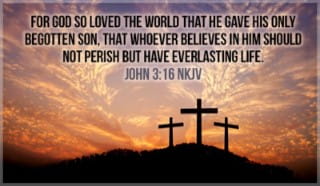
Faith, on the other hand, believes that God not only exists, but that He rewards those who earnestly seek Him (Hebrews 11:6) and that He so loved the world, that He gave His only Son (John 3:16) to save us from Sin and Death (1 Corinthians 15:56-7). It is not our belief in God’s existence that saves us and gives us life; rather it is Faith by His Grace! (Ephesians 2:8-9) in the nature and character of God– in the atoning work of Jesus as revelation and proof of His character– that saves us from Sin and Death.
Pascal’s Wager is a way of thinking about God. It can lead someone to believe, which can produce a life of Faith. But it can also produce a kind of life that is ruled by grudging obedience, resentment, and pride in one’s own powers of self-control and understanding. Faith lives in dependence and humility, and joyous gratitude for God’s gifts.
The prophet Habakkuk, who first wrote the phrase, “the righteous will live by faith,” learned this lesson in dramatic fashion. He “believed” in God– in His righteousness and justice. He spoke to God about the wickedness he saw all around him, among his own people. God gave him a difficult answer: Justice was coming in the form of an invasion by the Babylonians– a group known for their wickedness and cruelty and lack of justice! God’s answer was shocking and counter-intuitive. But Habakkuk chose to believe and put his faith in God’s Eternal Character, as God revealed the “rest of the story.” Israel would suffer; justice would be cruel–but God’s glory and His salvation would triumph. Habakkuk’s response was a song of praise. Regardless of his circumstances, Habakkuk would wait and rejoice, knowing that God’s ways are perfect.
It’s not difficult to say we believe in God. But are we living in Faith? I find it easy to let circumstances–especially injustice and wickedness–overwhelm me and rob me of peace and joy. But I find it comforting to know that my momentary doubts cannot stop God’s promises, His Mercy, or His power to help me live by Faith. That’s due to His righteousness, not mine, but through Christ, I can trust in it, walk in it, and live in it!
“Times are tough!” I hear many people complaining about the economy lately. And they have good reason– gas prices, food prices, housing prices, taxes– everything is getting more expensive, and wages or other sources of income just aren’t keeping up.
While we may worry about the current economic conditions, we need to step back and look at a different economy– God’s economy.
This weekend, I wrote out checks and paid bills. I even put some money in the offering at church. But God doesn’t look at the amount of money I paid or gave away, how much I spent or saved, earned or invested. He’s aware, of course, of such things, but God looks at a different “bottom line.” God cares how I spend or save money, whether it’s pennies or thousands of dollars. But He also cares how I spend my time and energy. And my life is “richer” than just the money in my bank account or the things in my house.
God doesn’t give us everything we want– He loves us too much for that. Life isn’t about having the most “toys;” it isn’t about having the easiest or most entertaining experiences. It isn’t about “winning” and having “more.”
I have noticed that the happiest people are often those who have had to struggle the hardest. In God’s economy, it is His pleasure to give more than we can ask or imagine– but often in ways we would never expect. (see Ephesians 3:20-21) In God’s economy, I am rich. Not because of anything that I have done, or earned, or because I was born to a wealthy family or because I won the lottery. I am rich because of what God has done. And if I am tempted to doubt that, I can begin listing all the blessings of God– and I will run out of space and time!
God has given me life. I didn’t choose to be born. I did not have the power to create myself. But God made me unique among all the people who have ever lived. He gave me a body, a mind, a soul, and a spirit. He gave me thoughts and dreams and opportunities to grow and enjoy life.
God gives me hope and purpose and a reason to live. Life can be difficult. It can be painful. It can be tempting to see only the darkness, the grief, the regrets. But it can be beautiful. It can be almost painfully beautiful, sometimes. What a gift. And what a gift God offers in each new day. A new chance to hope. A new chance to strive. A new chance to make a difference.
God has given me family and friends. And sometimes, that can be a struggle! We aren’t perfect, and we don’t always see eye to eye. We step on the toes or we step on the feelings of others. But we also make each other laugh. We make each other stronger. We help each other grow. We enrich the lives of others, and others enrich our lives in return.
God has given me His word– His promises; His love-letter; His wisdom; His counsel; His power to shape my story. And yours! The Bible is not just a collection of stories or words. It is Truth. It is Grace. It is how we can KNOW the riches God has for each of us.
God has given me His Salvation. No matter what today brings; no matter what has happened in my past– whether things I have done, or things that have been done to me–God sees me as His child. And if I believe in Him; if I trust Him to be who He says He is– my Father, my Savior, my Lord–He will throw my past and my guilt “as far as the east is from the west”(see Psalm 103:12). I am debt-free! And I will inherit all that God will share with His children throughout eternity!
And God has given my His Presence. I am never alone. I am never forsaken or forgotten. NEVER. (Hebrews 13:5) If I am sitting in despair on an ash heap, seeing no hope and no future, God is sitting there with me, waiting for me to see Him, and accept that He is more than “enough” to get me through.
And with such riches, I can follow God’s lead and be generous in return. I don’t have the power to give life, but I can celebrate it, advocate for it, protect it, and remind others of its beauty and promise.
I can encourage others– with acts of service, with a smile, by faithfully lifting them up in prayer. What if we thought about hugs as endowments? What if, in God’s economy, every hug you give is worth $2,000? What if every prayer is like investing in a bank account? What if your smile is worth a fortune to someone today? I can be a friend to someone who feels unseen or unheard. I can share a conversation with someone who feels lonely. I can share a burden for someone who just needs a helping hand.
I can share God’s promises. I can share His wisdom. I can share His compassion. I can share His Mercy and Grace with those who least expect or “deserve” it. I can share my hope and my joy. I can help someone look up and look beyond a bad day. And where there is suffering and pain– I can share that, too, knowing it is part of God’s good economy. And maybe, as I offer my presence, I can help someone else see the presence of God sitting there with us both!
You may not feel very rich today. And in this world’s economy, you may be in great need. God may not shower you with cash or assets in the present moment. But God has promised to give you everything you truly need for life and Godliness (2 Peter 1:3-4)
There once was a distinguished scholar and lecturer who was invited to be part of a symposium at a prestigious university. But during his time on stage, the professor realized that he was having a gas attack. Not wanting to embarrass himself by passing gas in front of the rest of the panel (and indeed the entire auditorium full of students) he politely asked to be excused to take a short break as the rest of the panel discussed a minor issue. He proudly excused himself, making it seem as though he was merely bored and wanted to stretch his legs a bit. Exiting the auditorium, he raced to the nearest bathroom and “let it rip,” not realizing that his portable microphone was still “hot.” The entire audience could hear, not only the gas he passed, but the other noises he made– of pain as the gas was passing, and of relief at the end of the attack. As he returned to his seat on stage, he was stunned to see people grinning and pointing, and hear stifled giggles as he rejoined the panel. Even his colleagues were finding it difficult to meet him with a straight face. Finally, the moderator asked, somewhat sarcastically, if the professor felt better after his break, and could be please be sure that his microphone was “turned back on…” As he finally realized what had happened, the professor was mortified, and barely spoke during the rest of the symposium. He left in a hurry, and it was many years before he agreed to visit that university again.
We may laugh at the downfall of the proud professor, but how often do we try to “pass gas” discreetly, pretending that we are “above” petty embarrassments and minor setbacks. As Christians, it is especially tempting to pretend that we “have it all together;” that because we follow Christ, we never struggle with pain, or niggling doubts, or unanswered questions. We sit in judgment on our neighbors because we do not stumble over the same sins that we see in them.
The world is watching. They pay close attention, not only to the sins we avoid, but to the sins we push aside or try to explain away. Sins like pride and gossip; sins like “bending the rules” and “fibbing.” It’s not that they don’t know about their own sins. In many cases, they are trapped in a cycle of guilt about their own sins, and their inability to escape the cycle on their own. Or they live in a web of lies about their lifestyles and habits– “I’m no worse than Him!” “God understands my weakness. He can’t condemn me for being the way He made me!” “God and I have a bargain. I don’t do X, and he’s ok that I do Y instead…”
But are we any “better?” “I don’t gossip. I ‘share’ prayer concerns.” “I’m a work in progress. God isn’t finished with me yet!” “King David told lies, and he was a ‘man after God’s own heart’!” “I’m not cheating on my taxes. You should hear my neighbor talk about what he’s done!” “I know I need to lose weight, but, well, there’s just more of me to love!” We are just as ready to find excuses for doing things we know to be wrong, unhealthy, unloving, and sinful, as our neighbor or our “enemy.”
Even more, we are tempted to pretend that we “have all the answers.” After all, if we trust God, how can we still have questions about pain or suffering or grief? We feel that admitting our weaknesses will expose us to ridicule, and that it may hurt our testimony.
That doesn’t mean that we should condone the sins of others, or that we should carry a load of shame over our own lapses. The point is that Jesus calls us to walk humbly and bring ALL our burdens to Him in prayer. Do I still struggle with my tongue–am I still spouting sarcastic retorts make me look smart, while putting others down? I need to submit that habit to the Lord. Does it bother me that my brother smokes or looks at porn? I should not condone such behavior, but it’s not my place to “make him” change his behavior. I should pray about it, and let him know I care about what these habits may be doing to his health and relationships. God doesn’t “hate” my neighbor who can’t seem to hold down a job, nags her husband and kids, and uses foul language– and neither should I! I shouldn’t encourage her bad behavior, but I should be willing to listen to her, show her compassion as someone Christ died to save, and offer her the same friendly helping hand I would be willing to give my other neighbors.
And I should be honest about my own limitations. God has saved me. I am His. But he didn’t save me because I had “cleaned up my act.” And he doesn’t reject me because I still don’t know all the answers or do all the “right” things. Instead, He guides me to be more like Him as I faithfully follow His ways, including confessing when I mess up. God is big enough to save me and re-shape my future in ways I can’t even imagine. I didn’t “win” my salvation. It is a gift– one that keeps on giving!
Being a Christian isn’t about acting “better” than those around us– though we should be walking in Jesus’ footsteps and living more like Him each day. It can be difficult, as the rest of the world may hold us to a higher standard. We will be judged more harshly than our neighbors who do not attempt to follow Christ. We will be accused of holding judgmental attitudes, even when we don’t display them. And we will find our standards and morals being maligned as “old-fashioned” or “snobbish” or even “hateful.” Not because they are any of those things, but because God’s standards (and anyone who agrees with them) offend those who rebel against them. And we still live in a fallen world, just like everyone else. We still wrestle with temptations, we still experience the consequences of sin– our own and others’–that make us sick, or weak, or poor, or otherwise look like “failure” to those around us. And it does no good to pretend that life isn’t sometimes difficult and painful–we’re not fooling anybody!
Instead, being a Christian is about “becoming” better than we can be without God’s Spirit living, moving, and acting THROUGH us. And a big part of that process involves “passing gas.” We need to let go of the sin and the “bad gas” that still builds up inside of us– pride, shame, stubbornness, laziness, envy, criticism, apathy, anger, bitterness, hatred, and so much more. And we need to acknowledge that our Salvation– now and through eternity– only comes through the finished work of Jesus Christ, not our own efforts. This process is called “Sanctification.” We are “saved” by Grace through Faith (see Ephesians 2:8-9). We cannot boast about having been saved. But we testify about our salvation by a changed nature, led by God’s spirit– a “new” compassion for those around us; a new delight in following God’s standards; a new humility about our own limitations, and a new joy for the way God can work through even our weaknesses to give us victory!
Ironically, passing gas is a necessary part of our bodily processes. If we don’t get rid of the “bad” gas, it will lead to bloating and actually poison us! Similarly, if we don’t acknowledge areas where we need to confess, continue in obedience, and submit our will to the Holy Spirit’s promptings, we will become bloated with our own self-importance, and poisoned by our self-deceptions.
So today, as I pass gas– as I surely will at some point– I hope that I will be convicted, and even amused, at how God uses the lowly things of this world for our benefit, and His Glory!
Across from our shop, there is a mural that tells the story of the first “Orphan Train.” In October of 1854, 45 children– some orphaned, others abandoned–arrived in southwest Michigan from New York City. Conditions for such children in the large cities were dangerous. Floods of immigrants included children who had lost their parents on the voyage to America, or who had been separated from their families upon arrival. There were very few orphanages, and almost no resources dedicated to child welfare. Hunger, disease, crime, and exposure to the elements meant that many children never lived to maturity. Most of them lived on the streets; ignored, preyed upon, or simply forgotten. A group called the Children’s Aid Society, founded in 1853, had tried helping children– especially boys–but their limited resources were overwhelmed within the first year.
Section of the Orphan Train Mural, Dowagiac, Michigan (Ruth Andrews)
It was the idea of a man named Charles Loring Brace that large numbers of these children could escape the dangerous environs of the city and find safety and hope in the expanding “West.” With the help of the new railroads, groups of children could travel west, where kind-hearted families could adopt them. Food, shelter, education, fresh air, opportunity, and a loving family- this was the promise of the orphan train. For some children, it was the start of a wonderful new life. For some, it was trading a hard life in the city for a hard life on the frontier.
I can only imagine how frightening it must have been for the first train-load of orphans to travel here. Few people had ever traveled by train in those days. Some of the children had never traveled more than a few blocks from where they had been born– had never seen a farm or a forest. Part of their journey was on a steamboat. The journey would not have been comfortable, but it would have been exciting and even terrifying at times. They had no guarantee of finding homes or families who would be willing to take care of them– only the hope that someone might.
What does this have to do with prayer? Well, the obvious connection would be that everyone involved with this venture must have prayed diligently. All 45 children were placed with local families in that first journey. And the success of this first placement encouraged future endeavors. The “orphan trains” ran for 75 years, and carried nearly a quarter of a million children to new homes throughout the growing United States. And while not every child found a “happy ending” with their new family, most of them survived to create a new life as adults–an opportunity many other orphans had been denied.
But it struck me today, as I was looking at the mural and thinking about the fate of these children, that we are or were all in a similar situation. I am so thankful to be able to pray to my Loving Father– but there was a time when I was lost and without hope. There was a time when Sin had made me an orphan. I was alone and frightened and helpless to save myself. Like the orphans in first part of the mural, I was sick and sad, my best intentions were no more than tattered rags. Even as they line up to board the train, their faces show fear and pain.
It can be frightening to call out to God– frightening to leave the life we know, even when it is dangerous and unhealthy. God’s way takes us to uncomfortable and unfamiliar places–we can’t see the road ahead, and we don’t know what our “new” life will be like.
As I gaze once again at the mural, the last section shows an idealized version of the “new life” experienced by the riders of the “Orphan Train.” It shows a groups of children in a circle, holding hands and playing in the sunshine among grass and trees, while a bird flutters nearby. It is a heavenly place– the children’s clothes are clean, and they look healthy and happy. And while this is an ideal, rather than the reality for some of the children, it is a reminder of the contrast with the life they left behind.
Thanks be to God for His Grace that rescues us from the ravages of Sin. He offers us an escape to a new life– complete with a new family and a glorious hope of Heaven. He offers full adoption– guaranteed by the blood of His own Son– for those who will choose to leave their old life of Sin behind and travel as an orphan on His own “Orphan Train.”
4 I mean that the heir, as long as he is a child, is no different from a slave, though he is the owner of everything, 2 but he is under guardians and managers until the date set by his father. 3 In the same way we also, when we were children, were enslaved to the elementary principles of the world. 4 But when the fullness of time had come, God sent forth his Son, born of woman, born under the law, 5 to redeem those who were under the law, so that we might receive adoption as sons. 6 And because you are sons, God has sent the Spirit of his Son into our hearts, crying, “Abba! Father!”
“Amazing Grace, how sweet the sound…” Thus starts one of the best-known hymns of the Christian Faith. But, do we sometimes take Grace for granted? I realized the other day that I needed a “refresher course” on Grace. Let’s go back to the ABCs…
A–AMAZING. We sing about it, but are they just words? What is so actually so amazing about Grace? Whole books have been written on the topic (including one by Philip Yancey titled “What’s so Amazing about Grace?”) To answer the question, it helps to define what Grace actually IS. Grace is undeserved or unmerited favor. You cannot “earn” Grace. You cannot buy it. You cannot trade for it. It is a gift given to the undeserving. Something wholesome and blessed that comes unexpectedly. And the amazing part of Grace, as described in the Bible, is that God– the perfect giver of all good gifts– pours out blessings on US. We are not just powerless to earn such blessings, we often scorn or even refuse them; we reject, neglect, abuse, and even destroy God’s greatest gifts.
We waste our lives in worthless pursuits, we sabotage relationships, we mistreat nature, we laugh at God’s words of wisdom, and we deny God’s loving care– or even His very existence. Yet God still makes the sun to shine, the rain to fall; He gives us breath for our lungs and leads us to food and water and shelter. He gives us eyes to see, hands to work, minds to invent and plan, and access to friends and families where we might find love and acceptance. Instead of being amazed, we are often bitter and ungrateful as we see such gifts being misused or twisted by others like us. We want “more.” We want “different.” We want to manipulate the very gifts God offers us, and then complain when we are not satisfied with the results.
B– Boundless. God’s Grace knows no boundaries. God is gracious toward sinners. He lavishes riches on those who turn around and squander them! God gives good gifts to losers and rebels and lost causes, as well as His beloved children. God’s Grace can surprise us anywhere, any time. We can be in prison, and God’s Grace will still find us. We can be in a war-torn make-shift shelter; God’s Grace can still show up. We can be in the mountains, in the middle of the sea, or lost in the desert. We can be surrounded by noise and filth, or we can be alone in the dark, God’s Grace is there– if we are open to receive it.
And, having received God’s Grace, we can, through Him, extend the most extraordinary Grace to others. We can forgive those who have wronged us– those who have set themselves up as our enemies, or those who have neglected our rights. NOT because Grace causes us to be wimpy or powerless to seek justice, but because Grace is STRONGER than justice. God’s Grace never comes at the EXPENSE of justice, but it comes because God holds both Justice and Grace in His hands, and He chooses to deal with Justice in His time, not ours. He does the same with Grace– choosing to bless us when we cannot expect to earn it. And we have the power to do the same– to choose blessing over cursing; to choose love and forgiveness over bitterness and revenge.
C–Complete. God’s Grace is sufficient. Period. (see Romans 3:24, 2 Corinthians 9:8, 2 Corinthians 12:9, 2 2 Peter 1:3 We cannot add anything to God’s Grace to make it better or more effective. We cannot hoard God’s Grace for a “rainy day.” We cannot try to compound God’s many blessings into a “super” blessing. And we cannot compare our blessings with those of others. God, in His wisdom, gives us what He determines is best for us. And that includes Grace. He doesn’t give “lesser” Grace to someone who needs is “less” or deserves it “less.” His Grace is always enough. It washes away petty gossip and first degree murder. It renews lives touched by gambling addictions and sexual assault. It mends sibling rivalries and ancient feuds, neighborly spats and international conflicts.
Today, I choose to look for Grace– both in the way God has poured His Grace on me, and in the way He can empower me to show Grace to others. I pray that I will not take God’s Grace for granted in my life, but cherish it, recognize it, be grateful for it, and pass it on.
And I know I will be AMAZED! I pray you will find Amazing Grace today, as well. It’s really as simple as ABC!