Let Heaven And Nature Sing!

Christmas is so much bigger than just us. That struck me afresh as I was listening to Christmas Carols earlier this week. It is more than just preparing our individual hearts, as crucial as that is, to accept the wonder and miracle that the God of the Universe would empty Himself of all His Royal Prerogative; all His Glory, to become, not just a human being, but a baby! To grow up among His flawed and rebellious creation; to know hunger and exhaustion; to wait in lines, to obey His “elders.”

His coming was not just a quiet birth in the night– though it was that, too. Such a paradox. His birth split the heavens, and divided all time into “before” and “after.” And yet, it went unnoticed by so many people crowded into Bethlehem that night. People living outside of Judea had no idea (other than some wise men from the East) that their King and Savior; their Creator and Redeemer, had just burst into history and humanity with a tiny mewling cry and covered in placenta.

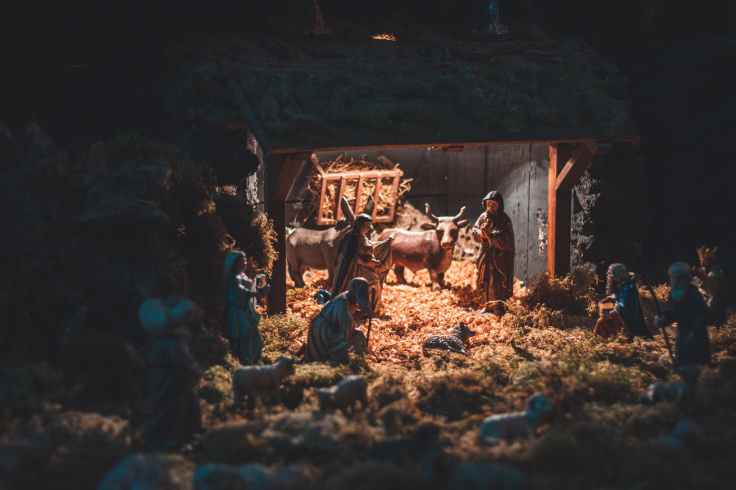
But the Heavens knew! Angels marveled and shouted His Praise! Rocks and hills thrummed with the joy of it. The oceans may have danced, mountains skipped, trees cheered, frosty air molecules jumped up and down, and the stars– the suns of millions of galaxies– laughed in delight! For this was Their Savior, too! Jesus came to redeem all of creation–to fulfill God’s perfect plan!

Photo by Felix Mittermeier on Pexels.com

How can this be? After all, we still have earthquakes and tidal waves; we still have forest fires and smog. Nature is still unpredictable and untamed. And yet, Christ’s coming was the sign that the “groaning” of all creation would certainly come to an end. The promise was true! The Hope of Heaven, the Light of the World, the Word of God, was HERE. Living ON the earth. Able to climb a tree, step into (or walk on top of) the water, breathe the scent of flowers, and look up at all the stars He Himself had placed in the reaches of space. Able to enjoy– as He meant for US to enjoy– all the bounty of the Earth. 

And this same Savior has prepared another place– one that is already perfect and needs no redemption, no taming or saving or reclaiming–for those who put their Trust in Him. This tiny Babe, held in the arms of an ordinary girl in a grubby little stable in a tiny corner of the world He holds in His own arms. He is Lord of ALL Nature– that we can see on the Earth, and that which awaits us in a New Heaven and a New Earth!

Christmas is bigger than you and I. It is bigger than our lights and traditions. It is bigger than all of history. Bigger than the night sky; bigger than all we can imagine or dream. Because Christmas is the Advent of Christ– the one who encompasses everything. Let ALL Heaven and Nature Sing! Let the Angels announce His Glory! And let us Repeat the sounding JOY!

Father, I marvel at your Creation. I marvel at your desire to enter into it; to teach us how to have Joy in our journey through it. And I bow in Awe that You would include me in the bigger picture of eternity. Help me to carry this marvel into each moment, as I seek to Honor You and Enjoy the Wonder of Your Nature– both Your Creation, and Your Character! Amen!

When Half-Spent Was the Night

‘Tis the season for Christmas Music– hymns and carols, ancient songs and modern tunes celebrating the Advent and Birth of the Lord Jesus. Joyful, passionate, somber, or even a bit silly, such music can lighten our spirits, and remind us of the incredible gift of God– Emmanuel–His very presence among mankind.

Christmas lyrics often use wonderful imagery to retell this amazing story. The Bible accounts tell of shepherds, angels, wise men, and stars– the songs give us the immediacy of a dark night– “silent”, “still”, “earth as hard as iron; water like a stone”, “a midnight clear”, “half-spent was the night”…

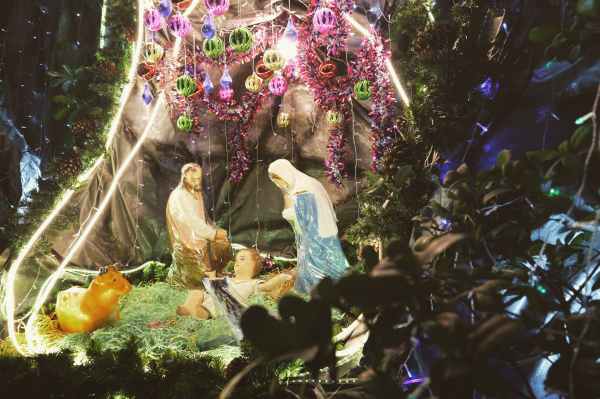
Most of us live in a world that rarely gets so dark. If we live in a town or city, we are surrounded by street lights, security lights, even night-lights in the hallway. Even so, we have a feeling for how the midnight and early morning hours seem darker, colder, quieter, and more dreary than any other time. And there is a significance in remembering that Jesus came to earth in the midst of literal and metaphorical darkness, “when half-spent was the night.”

Photo by Alex Fu on Pexels.com

God is Omnipresent– it is not as though God leaves us when all is merry and bright– but His presence is often most keenly sought, and unexpectedly found, in darkness and distress. When all seems bleak, cold, and hopeless, Jesus comes silently, small and fragile as a baby, bringing light, hope, joy, and peace. He comes when the night is “half-spent”– when the darkness is deepest, the silence weighs heaviest, and the cold is most bitter; when hope and light seem lost.

Jesus’ Advent came after four hundred hears of silence. Prophets, such as Isaiah, Zechariah, and Micah, had spoken of Messiah rescuing Israel from captivity. But the years had passed, and Rome ruled the Jewish people with an iron fist. God had stayed silent, and hope seemed remote. Rome would continue to rule the world for another four hundred years. But when Messiah arrived, He didn’t come to break the power of Rome. He didn’t come at the end of that particular “night”; rather, He came when the night was “half-spent.” He came gently, quietly, and humbly. He came to deliver Israel from something much darker, colder, and deadlier than a foreign occupation. Jesus, through His life and death and resurrection, came to deliver Israel, and the rest of the world, from the power of sin and death.

All the promise of deliverance and salvation that came in the middle of that bleak night so long ago, remains for us to celebrate– even in the middle of our “half-spent” nights.

We may not see the dawn in the middle of our struggles. We may not hear the angels singing or feel the warmth of the new day coming. But because of this “Rose e’er Blooming”, we can rejoice. We can find hope and peace in the present night, knowing that Emmanuel is with us! Like a lamp in the night, He will stay with us as we travel through the present darkness. After all, “Thy WORD is a lamp unto my feet and a light unto my path.” (Psalm 119:105) Jesus is the Living Word of God, and thus, our living light!

What If HE’D Never Been Born?

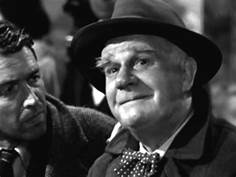
One of my favorite Christmas movies has always been “It’s a Wonderful Life.” The movie tells the story of a man who finds himself desperate, sad, frustrated, angry, and suicidal on Christmas Eve –sounds like a real winner, huh? But before he gets to that point, Heaven is preparing an angel to come to his rescue. Through the eyes of the angel, the viewer “gets to know” George Bailey– his family, his friends, his struggles and his joys–and gets to see his life in perspective. The angel, Clarence, decides to give George an unusual gift– the chance to see what the world would be like, not just if he were to commit suicide, but what it would be like if he, George Bailey, had never existed. George is astounded and horrified to see the effects of his absence, and he learns to value his life, his family, and his friends as never before.

The dramatic effect of one person’s life cannot be overstated, but this is especially true of the life of Christ! Can we dare to imagine what life would be like today if Jesus had never been born?

Of course, the most obvious and tragic consequence is that there would be no Salvation by Grace. For a more complete discussion on this, there are several other essays and even books, including “What if Jesus Had Never Been Born” by D. James Kennedy and Jerry Newcombe. (Full disclosure: I have not read this book– I just found out about it as I was writing this, but I trust it is a good resource.) And all speculation on this subject is just that– the Bible is clear that it was always God’s plan for Jesus to come, to live, to die, and to defeat death, just as He did, just when He did. Any alternative vision is not from God, but from our own imaginations. But what other “ripples” do we take for granted in our world, that would not have happened (or would have happened very differently) if Jesus had never been born, or had not completed the work of His life, death, and resurrection?

  • There would be no Christmas. Not just the Christian celebration of Christmas, but much of what we call “secular” Christmas. While some cultures might have a local festival for winter solstice, there would be no worldwide celebration such as we know.
  • There would be no “Santa Claus,” no “St. Nick,” no “Father Christmas,” no “Papa Noel”, etc. The model for our modern Santa Claus, St. Nicholas, wouldn’t have been a Christian Bishop in Asia Minor, because there would have been no Christians there, or anywhere else.
  • No Christmas Cartoons– no story about Rudoph the Red-Nosed Reindeer; no singing elves and jolly Mrs. Santa Claus; no Heat Miser and Snow Miser (if you know some of the other Rankin-Bass productions..) Hours of childhood memories erased.
  • No other Christmas stories and movies– no Scrooge and Marley; no MIracle on 34th Street; no “Yes, Virginia, There is a Santa Claus”; no “Santa Clause” (and its successors) no “Christmas Story” or “Christmas Vacation”; not even Hans Gruber falling from the Nakatomi Tower. Millions of DVDs, books, VHS tapes, local theater productions– never existed.
  • We can kiss Frosty the Snowman goodbye, as well. Without the magical snowfall of Christmas, the story never takes shape– literally.
  • No Christmas Carols or Christmas music. I know of at least three local radio stations that are playing Christmas music exclusively right now. They started the day after Thanksgiving, and they will continue through the end of the month. Thousands of Christmas songs– from favorites like “O, Come All Ye Faithful,” and “O, Holy Night,” to annual disasters, like “Last Christmas,” and “Santa, Baby”– all wiped out.
  • No Christmas cards. Millions of cards are sent out each year, connecting family and friends around the world. Except there wouldn’t be any if Christ had never been born.
  • No Christmas Lights.
  • No Christmas shopping. (And while that may seem like a good thing for my personal budget, have you ever looked at what the Christmas season means for most Western economies?) No Christmas wrapping; no Christmas ornaments; no Christmas sweaters or socks; no Christmas candy or cookies…
  • No Salvation Army bell ringers at the stores– no Salvation Army; no reason to ring bells…
  • No Christian charities– not just the Salvation Army, but every other charity that was founded on Christian principles, or for Christian outreach…no downtown rescue missions, no soup kitchens, no international Christian efforts to rescue hurting children or provide relief for families. I by no means want to suggest that ONLY Christians are charitable, or that NO charities would exist without Christ. Charities are a mainstay of most religions, and always have been. The distinction I would make is that more Christian charities have been developed and have thrived in the last 2,000 years, than charities started by other religious and secular organizations, and there is evidence that they do more efficient and more broad-based work than their counterparts. https://www.christianpost.com/news/christian-charities-more-reliable-than-others-according-to-forbes.html
  • No Christian colleges or universities– Are you a fan of Notre Dame Football? Sorry. Notre Dame doesn’t exist. Neither do Harvard, Yale, Princeton, Cambridge, Oxford, Saint Andrews, Georgetown, and several other colleges and universities throughout Europe, North America, and elsewhere. Even universities that are completely secular today were once founded on the idea that education was a Christian virtue. This doesn’t mean that there would be no places of higher learning– there would just be far fewer than we know today.
  • No “Christian” books– and this includes books that introduce Christian concepts, allegories, and allusions. No “Pilgrim’s Progress,” no “Jane Eyre.” no “Lord of the Rings…”
  • No Churches– no cathedrals, no picturesque country chapels, no strip mall fellowships, no megachurches…
  • None of the Christian Memes; Promises; favorite verses… no Beatitudes; no Fruit of the Spirit; no “Golden Rule,” no Romans 8:28 or John 3:16 or Philippians 4:13…
  • No Twenty-First Century! Our calendar is literally based in part on the assumed birth of Christ. And while there are other calendars– Chinese, Aztec, Hebrew, etc., that are numbered differently, most of the world uses the Roman/Julian/Gregorian Calendar, which splits time into B. C. or B.C.E. — literally “Before Christ” or “Before the Christian Era”, and A.D. (Anno Domini– year of our Lord!) or C.E. “Christian Era.”

It paints a pretty bleak picture. Our world, as we know it, would be vastly different if Christ had never been born. That is not to say that the innovations, inventions, or achievements of the past centuries might NOT have happened at all– but they would have happened without the same purpose and effect. Many of the events of the past two millennia were inspired by, undertaken by, and driven by the message of the Christ– His birth, death, resurrection, and promised return! We hear about some of the negative things of the Church– wars and excesses, scandals and failures. But what about the successes– the transformation of violent cultures and conflicts into peaceful resolution, the drive to end slavery, cure illnesses, eradicate hunger–so many of the blessings we enjoy here on earth are the result of work done by those who long to love their neighbors as themselves and to see God’s will done “on earth as it is in Heaven!” The Joy and Generosity of the Christmas season cannot be separated from its central cause. The Wonder, the sense of the Miraculous and Holy, the sense that there is something “More” beyond a crisp winter morning or a day off work or a genial meal with friends–it all MEANS something. It doesn’t just come from nowhere, or a human desire to be kinder this one day each year. The character of George Bailey exemplifies an ordinary life that has meaning and purpose. His sense of purpose has gotten lost in the crush of bills, obligations, disappointments, and injustices. His prayer is one of quiet desperation; he is completely unaware that it is part of a vast chorus of prayers. But God hears it– and God sends Clarence!

There is a reason that George is visited by an Angel on Christmas Eve. Clarence may not be suave and sophisticated; he may not have intellectual arguments that can help George comprehend all of life’s wonder and purpose. But just like the angels at the first Christmas, Clarence comes from Heaven. He is God’s chosen messenger. He brings Heaven’s perspective and truth into a dark world, showing George what IS and HAS BEEN and what CAN BE– all because George was born– because CHRIST was born! It IS a WONDERFUL Life– not because of our circumstances, but because God’s Greatest Gift redefines our circumstances and transforms our perspective!

4-7 But when the time arrived that was set by God the Father, God sent his Son, born among us of a woman, born under the conditions of the law so that he might redeem those of us who have been kidnapped by the law. Thus we have been set free to experience our rightful heritage. You can tell for sure that you are now fully adopted as his own children because God sent the Spirit of his Son into our lives crying out, “Papa! Father!” Doesn’t that privilege of intimate conversation with God make it plain that you are not a slave, but a child? And if you are a child, you’re also an heir, with complete access to the inheritance.

Galatians 4:4-7 (The Message)

George emerges from his nightmare experience to find he is, in fact, “the richest man in town.” Oh, that we would wake up this Christmas morning fully aware of the rich heritage that is ours– because WE were born. Because HE was born! Because we can be BORN AGAIN!

O Come, O Come, Emmanuel

During this season of Advent, we often sing this ancient hymn.  It dates back nearly 900 years, and continues to be sung and/chanted in Latin.  https://hymnary.org/text/o_come_o_come_emmanuel_and_ransom

The hymn is a contrast of weary longing and hopeful prophecy.  The promised Messiah has not yet arrived, but his coming is sure, and cause for great rejoicing.

The hymn is also a prayer– pleading for the coming of Messiah, even as it comforts with the reminder that he WILL come.  And it reminds us of the power of prayer– not just the power of approaching Almighty God, but the power of acknowledging our longings, our needs, and our dependence on God.  Even in our darkest hours, even in captivity and oppression, we can have hope in God’s timing and wisdom.  He DOES see our struggle; he DOES care, and he WILL send hope and rescue.

But the song also points out a pitfall–in the first verse, the prayer is for Emmanuel to rescue Israel from Roman Occupation; to end its immediate plight of being politically and economically oppressed.  There were many people who saw Messiah, heard him speak, even felt his touch, who rejected him because he did not do what they were expecting.  There are many today who cannot believe in Jesus Christ because he doesn’t take away their current circumstances of pain and suffering.

In their narrow focus, people miss the greater miracle of what Messiah is all about.  Jesus did not come to free us from temporary troubles and trials; to make us comfortably apathetic or arrogantly victorious over personal poverty or sickness.  He came to free us to be able to endure and/or overcome our circumstances; to offer hope where there seems to be no hope.  He came to show us that our circumstances don’t define us or cut us off from God’s love; that our past is not more powerful than His forgiveness and power to heal; that even suffering and oppression can be endured with joy, even as we work together to overcome them.

This year, as I ponder this hymn, I am both discouraged, and emboldened. I am discouraged, because I hear voices calling out for many things, but few of them are calling for a Messiah. We live in a world that desperately wants what Christ offers– peace, unity, forgiveness, eternal life– but without a Savior. We want to save ourselves, and we want to do it casually, heroically, and without acknowledging our helplessness. We read books, seek out gurus and life coaches, haunt the internet, all searching for answers that only God can provide. We long to see an end to injustice and oppression– or whatever seem unfair or difficult to us or those we champion– but we don’t want to submit to the example of a humble Christ who serves others.
But I am emboldened to pray that more of us would desire more than the “quick fix” or the “feel good” solutions of the world. I pray that we would earnestly desire that this Advent Season would be a time of yearning for MORE of Christ; more of His Joy; more of His Love for others; more of His Hope to spread around us. I want us to Rejoice– not in the bright lights and decorations, or even the beautiful melodies of Christmas carols– but in the real gift of Christmas! Emmanuel!

This season, as we sing this hymn, I pray that we would see the continuation of its message.  Emmanuel HAS come– Jesus not only came and won the victory over sin and death on Calvary; he has commissioned US to be the bearers of the Good News.  There are dark places in the world praying for hope and rescue to COME.  Will we share the love of Christ in our own neighborhoods?  When we bear the name of Christ, we should be on mission to rescue those who are captives, not of Rome, but of Sin and the tyranny of Death.  So that we all can  know the reason to Rejoice! Rejoice!

Great Things He Hath Done

2 Corinthians 9:15 Christian Standard Bible (CSB)
15 Thanks be to God for his indescribable gift!

via biblegateway.com

I love this season of the year–as we approach Thanksgiving and prepare for Advent and Christmas, it is a good time to reflect and celebrate all the wonderful things God has done, and all the ways He has blessed us. But there is also a danger in this season. We are tempted to look around and compare our blessings (and our struggles) with others around us. We are tempted to be envious, depressed, and stressed about our circumstances. Or we look at our blessings and feel smug and self-satisfied, instead of grateful and humble.

What “Great” things am I thankful for? Sometimes I make a list of all “my” blessings–my health, my family, my home or car, my freedom (as though I had done anything to earn such blessings)–and I stop. Sometimes I make another list of all the “Great” things God has done in nature–beautiful sunsets and majestic forests, glistening snowflakes and spring blossoms–and I stop. Sometimes, I even thank Him for the trials and struggles and difficult relationships that He has allowed to refine me and build my character to be more like His– and I stop. Sometimes, I thank Him for the great things he has done for others–miracles of provision, safety, or healing.

But there is a deeper level of thankfulness– one that takes my breath away and causes me to fall to my knees– one that thanks God for WHO HE IS– truth, righteousness, salvation, mercy, wisdom, power, and boundless, unconditional love. Every great work of God has its origin in God’s Character. Every sunrise shows His faithfulness, every snowflake His infinite creativity. Even tragedy can reveal His tenderness and healing and precious promise that NOTHING can separate us from His love. In giving His greatest gift, God spared no expense; he held nothing back. Jesus defeated sin and death by becoming sin and experiencing death–FOR YOU and for ME! For anyone, for everyone, who will accept His gift and trust in His character. How often do I list all the great things God has done and stop before I let the amazement of the Great I AM to overwhelm me? How often to I celebrate Thanksgiving without ever reaching this level of true Thanks-giving?

Whether we celebrate Thanksgiving with turkey and pumpkin pie, or with beans and wienies; whether we celebrate with family, friends, strangers or alone; even if we celebrate on a different day, or in a different way, may we always find ourselves amazed by the Greatness of God. May we truly give God more than just thanksgiving this year. May we give Him all the Glory–Great things He hath done!

“Losing” a Loved One

Our family had a funeral this week. One of my mom’s cousins passed away. We are a close family– distance-wise, as well as emotionally close. So the funeral was huge…hundreds of people coming to pay their last respects. And most of us spouting the same old phrases and platitudes: “So sorry for your loss.” “She will be greatly missed.” “At least she’s not in pain anymore.” “It’s so hard to lose a loved one.”

Except– she’s not lost! She hasn’t gone missing. She died. And, because she is a believer, she is HOME! Yes, WE experience a sense of loss. We grieve and mourn her absence from us. And the pain and grief is very real. I still find myself grieving the “loss” of my dad after 25 years, and the more recent death of my mom earlier this year. But sorrow and grieving for us as Christians is tempered with hope, comfort, peace, and even joy and amazement. Linda, Mom, Dad, Grandma and Grandpa, and so many other precious believers are not Lost. They are not the victims of Death. In fact, as part of the funeral service, we were reminded of the words of the Apostle Paul in 1 Corinthians:

54 When the perishable has been clothed with the imperishable, and the mortal with immortality, then the saying that is written will come true: “Death has been swallowed up in victory.”
55 “Where, O death, is your victory?
    Where, O death, is your sting?”
56 The sting of death is sin, and the power of sin is the law. 57 But thanks be to God! He gives us the victory through our Lord Jesus Christ. 58 Therefore, my dear brothers and sisters, stand firm. Let nothing move you. Always give yourselves fully to the work of the Lord, because you know that your labor in the Lord is not in vain.

1 Corinthians 15:54-58

Yet Death does claim victims, and there are people who are “Lost,” who will be “greatly missed.” They are the ones who have died without hope, without peace, and without eternal life. In fact, many of them are still walking around– the living dead– the unsaved. I shed far more tears over those who are forever lost– those who will not accept the free gift of eternal life– than I will for those loved ones who have died in Christ. God welcomes us to be “found” in Him. He went to great lengths to defeat the power of Death, to bring true justice, and to shower us with Grace beyond our wildest imaginings. It is His gift to anyone who will trust Him. Yes, we will still taste death– and suffer pain and injustice, heartbreak and grief in this life. But these are the shadows. What comes after is the Light!

We shed some tears at the funeral this week, but we also laughed, hugged, sang, and said, “AMEN!” Linda ran the race, and she did not die (or live) in vain. She left a legacy of love and kindness that was celebrated this week. Heaven “gained” a loved one. And, while it hurts us not to be able to see her or laugh or sing with her right now, we know we will be reunited. And she is reunited with loved ones who have passed on before. But most of all, she is united with her Creator, her Redeemer, the Lover of her Soul, and her Lord. And ten thousand years from now, Linda will still be singing His praises!

The Power of Pictures

When my Mom died back in February, she left a house full of memories, and also a house full of papers and empty containers, old clothes and books, and worn furniture and broken appliances. Mom was a hoarder, and it has taken months to begin sorting through all that Mom treasured. Yesterday, I was sorting through a tub of old photos. Mom took thousands of photos over the years, and we gathered up over 25 tubs of them. They are in random order, so one group of photos may be from the late sixties, while the next might have been taken just a few years ago.

It’s been both frustrating and entertaining to go through batches of photos. Seeing my face at age 6 with missing front teeth; seeing my nephew holding his newborn daughter; seeing my Dad in his work uniform; seeing long-lost relatives when they were both alive and younger than I am now! It can be jarring. I found a photo of my favorite pair of sneakers from childhood– they were bright yellow with black stripes and white treads. I loved those sneakers and I finally wore them out. But there they were, staring up at me from an old photo– brand new– and I felt the same sense of excitement I had when I was 10 years old. I also found an old photo of a cousin who recently passed away. There she was, fifty years younger at a family reunion, a young mother with two sons (another son and daughter were yet to be born!) It was a sharp stab to know how much her family is grieving right now. And yet, it was a beautiful reminder that she is NOT gone; she is raised to life, and grief will be turned to joy as we have an eternal “Family Reunion” in heaven!


Mom took a lot of wonderful pictures that mean so much to us now. But Mom also took a lot of “dud” pictures– pictures that were out of focus; pictures of old clothes, or faded flowers. Several pictures of the same thing from different angles. Pictures of people eating–their mouths wide open and gaping angrily. There are no labels telling why such pictures were taken, or what they might mean. Years later, they leave us confused and frustrated– and ready to throw them out!

They say a picture is worth a thousand words. And I have been living that lately, as I sort through old memories. But the pictures are reminding me of other memories– other “pictures” that are even more powerful.

God reveals Himself to us in so many ways– and in so many “pictures.” The Bible is full of parables, metaphors, proverbs, and histories that provide us with word pictures of His character. In Genesis, we read the story of Abraham and Isaac, which illustrates the great sacrifice God would make for our Salvation. Abraham was willing to give his son– the son God had promised– believing that God could raise him from the dead. Isaac didn’t die. He didn’t even know what was coming. But Jesus DID. God’s promises never fail. Unlike Isaac, Jesus KNEW what awaited Him at Calvary. He knew there would be no last-minute, substitute ram. HE was the lamb who would be slain. And He would rise victorious!

In Exodus, God provides another parallel; another word picture to show what He would do. He sent ten plagues on Egypt to prove His power, both to the Egyptians AND to the nation of Israel. But the tenth plague was much more than just a display of power. It was a metaphor for the Cross. In order to escape the Angel of Death, the Israelites were to use hyssop and the blood of the Passover lamb to “paint” the top and sides of their doorframes. Using the hyssop, they “whipped” blood onto the wooden doorframe, causing it to “bleed”– at the top, and on each side. The blood would drip down, creating a similar pattern to the blood on the cross–blood from the wounds on Jesus’ head and outstretched hands. There would even be a pool of blood on the ground, suggesting where His feet would be nailed to a wooden cross. It is a stark picture– a gruesome picture of pain and suffering. But it is a powerful picture that shows us how Jesus’ pain and suffering led to our Salvation. Death holds no power over the Cross! We can rest, knowing that God’s plan is for our rescue, not our destruction.

In the New Testament, Jesus used metaphors and explained how ancient stories foretold His arrival, as well as His death and resurrection. He used the story of Jonah to explain that He would be in the grave for three days. He used the prophets to remind His listeners of God’s many promises. His disciples recorded the stories. The Apostles continued to use the ancient scriptures to “show” that Jesus was the Messiah and that His life and death fulfilled the promises and prophecies.

Time after time, Jesus told parables– stories that were meant to “show” the character of His Father. And WE are also meant to reflect Our Father to the world! WE are to be pictures of God’s Love, His Grace and Mercy, His Faithfulness, and His Holiness. Whatever we do, wherever we go today, we WILL be like a photograph, showing others who we are inside– what we value, what we believe, who we trust, how we love and how we live. We can be powerful witnesses to God’s Love by the way we go about our daily activities. But we can also be “duds”– pictures of people pursuing worthless activities, or looking at the world from a dozen skewed perspectives.

I pray that my “photo” today will reflect God’s character, challenge assumptions, encourage others, and stir powerful reactions for HIS Glory!

As In the Days of Noah

We’re getting some rain outside as I write this. Not pouring rain; nor torrential rain; just a steady drizzle. But it looks as though we will get rain for another two days at least. Without stop. Cloudy, wet, chilly, dreary weather.

The news has been dreary, too. War, political upheaval, economic disaster looming, and general unrest. And it isn’t just localized. There is trouble everywhere, and, seemingly, all the time. And yet…events march along as though things are normal– as though the future will be bright tomorrow. There are festivals being planned (some with rain dates, others may be cancelled or lightly attended if the rain continues or worsens); people seem to be in the same hurrying, scurrying rhythm as yesterday. Some complain, or seem a bit oppressed, but most don’t even comment on the catastrophic events unfolding around us. They buy and sell, eat and drink, and rush to and fro like always.

There seems to be a universal weariness– people are tired of bad news, anger, protests, and arguing, but no one seems to want to DO anything positive, unless it is to live in denial of what is actually happening. “Oh, they are just exaggerating.” “That might happen elsewhere, but it will never happen HERE!” “Things will work out– we just need to wait it out.”

It reminds me of the warning of Jesus in Matthew 24:

 For as in those days before the flood they were eating and drinking, marrying and giving in marriage, until the day when Noah entered the ark, 39 and they were unaware until the flood came and swept them all away, so will be the coming of the Son of Man.

Matthew 24:38-39 ESV

While I can listen to or watch bad news unfolding, it hasn’t impacted me directly. I don’t have to worry about bombs coming into my neighborhood (at least, I’m not expecting any today); I haven’t lost my home or a loved one in the past week. I watch the clouds and rain from the safety of a warm, dry apartment. It is easy to become apathetic. And, if I think about any of it, it is easy enough to say a quick prayer for “others” “over there.”

But I’m not building an ark. Jesus’s warning was not to “toss off a quick prayer” as we see signs of danger and await His return. Prayer is important, but it isn’t something to be done lightly. Living for Christ is more than wearing the name “Christ Follower” and a t-shirt or cross necklace. When was the last time I spent an hour in earnest prayer? When was the last time I fasted? When was the last time I felt compelled to act for the cause of Christ?

I’m not surprised that most people walk around angry, or apathetic about the state of the world. But as Christians, we should be working to make a visible difference. And that means our prayers must also be different than the comfortable “good wish” prayers that many of us (and I must include myself) often practice.

In the days of Noah, people were going about their daily lives without any clue of the horrors to come. And yet, there were signs, even then. There was evil everywhere– corruption, fighting, cheating, lies, danger, disease, famine, and oppression. But only Noah was building an Ark. He wasn’t caught up in watching CNN or trolling the internet, but he also wasn’t leading an “ordinary” life. His life stood out, because he listened to God. He was focused on what really mattered– saving those who would enter the Ark and survive the judgment to come. The Ark had room for more people– but they refused the invitation. Maybe they had a dentist appointment scheduled for that day; maybe they didn’t want to miss their “girls day out.” Perhaps they were planning a fishing trip or they were buying a house.

But he said to him, “A man once gave a great banquet and invited many. 17 And at the time for the banquet he sent his servant to say to those who had been invited, ‘Come, for everything is now ready.’ 18 But they all alike began to make excuses. The first said to him, ‘I have bought a field, and I must go out and see it. Please have me excused.’ 19 And another said, ‘I have bought five yoke of oxen, and I go to examine them. Please have me excused.’ 20 And another said, ‘I have married a wife, and therefore I cannot come.’ 21 So the servant came and reported these things to his master. Then the master of the house became angry and said to his servant, ‘Go out quickly to the streets and lanes of the city, and bring in the poor and crippled and blind and lame.’ 22 And the servant said, ‘Sir, what you commanded has been done, and still there is room.’ 23 And the master said to the servant, ‘Go out to the highways and hedges and compel people to come in, that my house may be filled. 24 For I tell you, none of those men who were invited shall taste my banquet.’”

Luke 14:16-35 ESV

Again, Jesus warns that we are to be prepared to drop the “business” of daily living; to be prepared for the Return of Christ. There is a cost involved in being a “Christian” or a “Christ Follower.” We are not to be like those who are walking around with our heads in the clouds, or worse, with our heads filled with apathy or gloom. We are to be salt and light in this dark world. We should be praying for boldness and wisdom to seek out opportunities to serve, to encourage, and to share the Gospel.

“Lord, take over my days and my prayers, that I would not settle for comfort, but seek you with a fervent heart, and seek not to just observe, but to serve!”

Building Blocks of Healthy Prayer

When I was in elementary school, we learned about nutrition. Back then, we were taught that there were four basic food groups (nutrition education has gone through several “cycles” since then– food pyramid, healthy plate, “eating the rainbow”, etc.). Eating a healthy balance of foods is essential to good health. If I only eat meat, or only sweets, I will not be healthy. If I just eat whatever or whenever I feel like it, my body won’t get all the necessary nutrients to grow, fight off diseases, and stay strong.

Pursuing a healthy prayer life includes essential “building blocks” or nutrients, as well. Over the course of many years, I have seen various guidelines and acronyms to help include different building blocks in prayer. I want to share a couple of them again today. These guidelines are just that– guidelines. But they can help balance our prayer life, and help it grow.

The first acronym I learned, and the one I have used for decades, is ACTS. Here’s how it works:

  • Adoration/Acknowledgement– begin each prayer by acknowledging God’s Sovereignty, His Holiness, His Goodness, and other qualities worth worshipping. This helps put you in the right frame of mind when talking to God. I am not just talking to a neighbor or a “good buddy”– I am speaking with the One who holds all of Creation in His hands! And He WANTS a relationship with me! He is all-powerful: there is nothing I can ask that He cannot do! His is all-loving: there is nothing I can ask that He won’t filter through His loving wisdom and will. Even if I don’t know what to ask for; even if I ask for the “wrong” thing– God will only allow those things that He can use for good. God is beyond space and time: He knows all that has happened– all the triumphs and tragedies of my life so far, and all that is to come. He is LORD: He is in control– now and forevermore. Whatever seemingly impossible circumstances I face, they are nothing compared to the eternal, almighty plans of God.
  • Confession–This doesn’t mean an endless repetition of all my failures and sins from six months ago, or raking myself over the coals for not being “holy enough.” This is an honest assessment of who I am in relation to God. God is Holy and perfect. I am not. If I acknowledge God’s goodness, I must also acknowledge that I fall short. I don’t know everything. I don’t always act with the right motives. I NEED the Holy Spirit’s guidance, and I DEPEND on Christ’s finished work on Calvary for my Salvation. This should naturally lead to
  • Thanksgiving/Trust– I can trust God to save me, NOT because of who I am, but because of what He has done. I can see God’s hand working in and around and through me as I yield to His Spirit in me. I can recall, and acknowledge so many of the ways that God has blessed me and others around me. Once I have these building blocks in place, I can bring burdens to God through
  • Supplication– this is just a fancy term for asking God to work His will in specific areas– healing, guidance, encouragement, strength, understanding, submitting to His will, and following Him. I can ask for personal help, or lift up family members, neighbors, friends, and yes, even enemies! I can pray about situations great and small–from wars and famines to lost keys and short tempers.

I learned about ACTS when I was in college, and I have found it to be a great guideline. While I don’t use it for every prayer– sometimes an issue calls for immediate and direct supplication, for instance– I find that using this in daily prayer helps me grow in faith, patience, endurance, and hope. When I come to God in panic or stress, and I haven’t built up a healthy, consistent practice of prayer, my words can be anemic– lacking in faith and based on my fear or anger. I pray with my focus on problems, rather than on God’s power to overcome any circumstance. Using ACTS helps me remember that it is GOD who “acts,” and always for the best!

The second acronym I have used is PRAY. It is very similar to ACTS, but the end focus is slightly different:

  • Praise/Adoration– once again, it begins with praising the God who is worthy; the God who hears me, sees me, loves me, and knows what is best. I cannot live victoriously without remembering the source of hope and victory, and putting my heart in HIS hands.
  • Repentance– as with Confession above, this is not an act of groveling and rehearsing past shame. It is acknowledging anything that I might be holding on to that gets in the way of my worship of and submission to God’. E.M. Blaiklock, the Christian apologist from New Zealand once said: “God alone knows how to humble us without humiliating us and how to exalt us without flattering us.”  Repentance is not about humiliation or holding on to guilt, but rather about staying humble and honest about our need for God’s Grace and Power. And turning from anything that might get in the way of following Jesus Christ.
  • Ask– once we have a right view of who God is, and who we are, we are free to ask Him whatever is on our mind, and share our questions, fears, burdens, etc., with the One who has all the answers!
  • Yield/ “Yes, LORD!”– The final step is making sure we are ready to listen and respond to God as we expect His answer. No matter what God’s answer may be, we should trust and obey His wisdom above our own.

I have come to value PRAY as a wonderful tool to help in my pursuit of prayer, and in my broader pursuit of Christlikeness. Both ACTS and PRAY help me pray “better.” It’s not that God grades my prayers or listens more or responds differently: but it helps me to better appreciate the power of prayer, and the power behind prayer. Individual prayers can change circumstances, but the pursuit of prayer is meant to change US as well. Prayer that shapes us, helps us grow– if that isn’t at least part of our pursuit of prayer, we are missing out on what God wants to do through us, and not just for us.

It is important, just as with nutrition, that we have a healthy balance in our prayer life. That balance consists of worship, repentance, sharing our burdens, showing gratitude, and offering ourselves in humble service. Prayer is too important to just “wing it.” We need to pursue it with the same (or better!) dedication that we give to our physical health.

Miss Whitcomb

When I was in seventh grade, I had a teacher named Miss Whitcomb. She was notorious throughout the school system as the “toughest” teacher we would ever have. She was ruthless. She demanded absolute quiet, she did not grade “on a curve,” and she never smiled. She had an ongoing war with grape-flavored chewing gum and students who were three seconds late for class. She gave impossible assignments and offered little in the way of help, comfort, or guidance. She had a point system for behavior, and most students ended up earning detentions. Everyone dreaded her class. Many normally confident and competent students failed her class. They worried themselves into sleepless nights and second-guessing their own abilities.

I suffered through two years of Miss Whitcomb’s classes. I had her for American History, English, and introductory drafting class. She was exacting and frustrating. But I learned a lot. Her assignments often seemed impossible, but some of them were creative as well as challenging. I never learned to love Miss Whitcomb’s class, but I learned to survive it– and, while I can’t say I learned to like her, I learned to respect her.

Years later, I returned to my home town as a teacher. And Miss Whitcomb was my colleague. A new generation of students were suffering under Miss Whitcomb’s impossible demands, and many were sure they could petition the school administration to get her fired. They came to me seeking support. I wouldn’t give it. I told them I remembered how difficult her classes were, but that I felt that it was important that they experience tough teachers, like Miss Whitcomb, because they would often experience tough bosses or professors, and tough situations as adults; learning to survive Miss Whitcomb’s class would give them practice for tough times in the future. And I suggested that they look at her classes as a challenge to be faced, rather than a punishment to be feared.

I had a difficult time understanding why Miss Whitcomb was so “tough.” But I got an insight from an unexpected event. A group of high school students were going on a field trip to see the hit musical, “Les Miserables” at a local university theater. They needed chaperones, and I agreed to come, as it was a wonderful chance to see a national touring company perform a terrific play. Surprisingly, Miss Whitcomb also came as a chaperone. I never thought of musicals as “her thing,” but she had decided to give it a try. Of course, the students were terrified of her, and she ended up sitting on the far side of the group (but it was a much quieter ride up to the campus!)

The play was magnificent, but Miss Whitcomb was very disturbed by it. The next day, she tackled the teacher who had organized the trip to complain. Her complaint was not with the students or the performers. It was about the story itself! She was somewhat familiar with the novel’s plot, but seeing it “live,” she was bothered by the character of Javert, and his pursuit of the main character, Jean Valjean. In the story, Javert has spent the better part of 25 years tracking Valjean, an escaped convict. When he finally finds him, Valjean ends up saving his life. Javert cannot reconcile that the “criminal” he has been looking for– his enemy– has saved him. Miss Whitcomb so identified with Javert, that she found the story untenable.

Why was she so upset? Because Javert was “righteous.” He represented the law. His quest was legal–his foe, Valjean, HAD escaped from prison. He had every “right” to pursue him and force him to complete his extra sentence (Valjean had completed his original term). But Javert was the one, in the end, who needed to be saved. And Valjean, who had every reason to let Javert die, risked his life to save his arch-enemy. This was not how Miss Whitcomb viewed life. The righteous should be the saviors; the guilty should be punished, not celebrated. Miss Whitcomb understood right and wrong– but she had no room for grace or forgiveness.

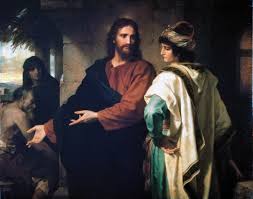
There is a Bible verse that has always caused me to be curious. Romans 5:8 is well known– “But God demonstrates His own love for us in this: while we were still sinners, Christ died for us.” But Romans 5:7 says, “Very rarely will anyone die for a righteous person, though for a good person someone might possibly dare to die.” (emphasis added) Paul is making a distinction that Jesus also often made–not everyone who is “righteous” is “good.” In Mark 10, Jesus is asked by a rich young ruler what he must do to inherit eternal life. The young man calls Jesus, “good teacher.” But before Jesus answers the question, he turns it back on the young man. “‘Why do you call me good,’ Jesus asked. ‘Only God is truly good” (v. 18). The rich young ruler does not want to know how to become “good.” He does not want to learn from Jesus. He merely wants to be judged as “good enough” to inherit eternal life. And he believes that he is “righteous” enough to have earned it.

Miss Whitcomb was a dedicated teacher. She was a “righteous” educator. But she never learned (or was able to teach) compassion, humility, or mercy. And that was a lesson her students missed. It is a lesson far greater than knowing U.S. History, or Government, or English grammar. I have heard from some of her adult education students that she was far less harsh with them. I hope this is true. She had a lot to give, and she suffered greatly from her own high standards and lack of compassion in relation to her younger students. I believe she had “good” intentions– that she believed her high standards were “right” and that any show of mercy was a weakness. But she missed out on so much– so many students who might have liked her better, and learned more from her–by putting righteousness ahead of mercy.

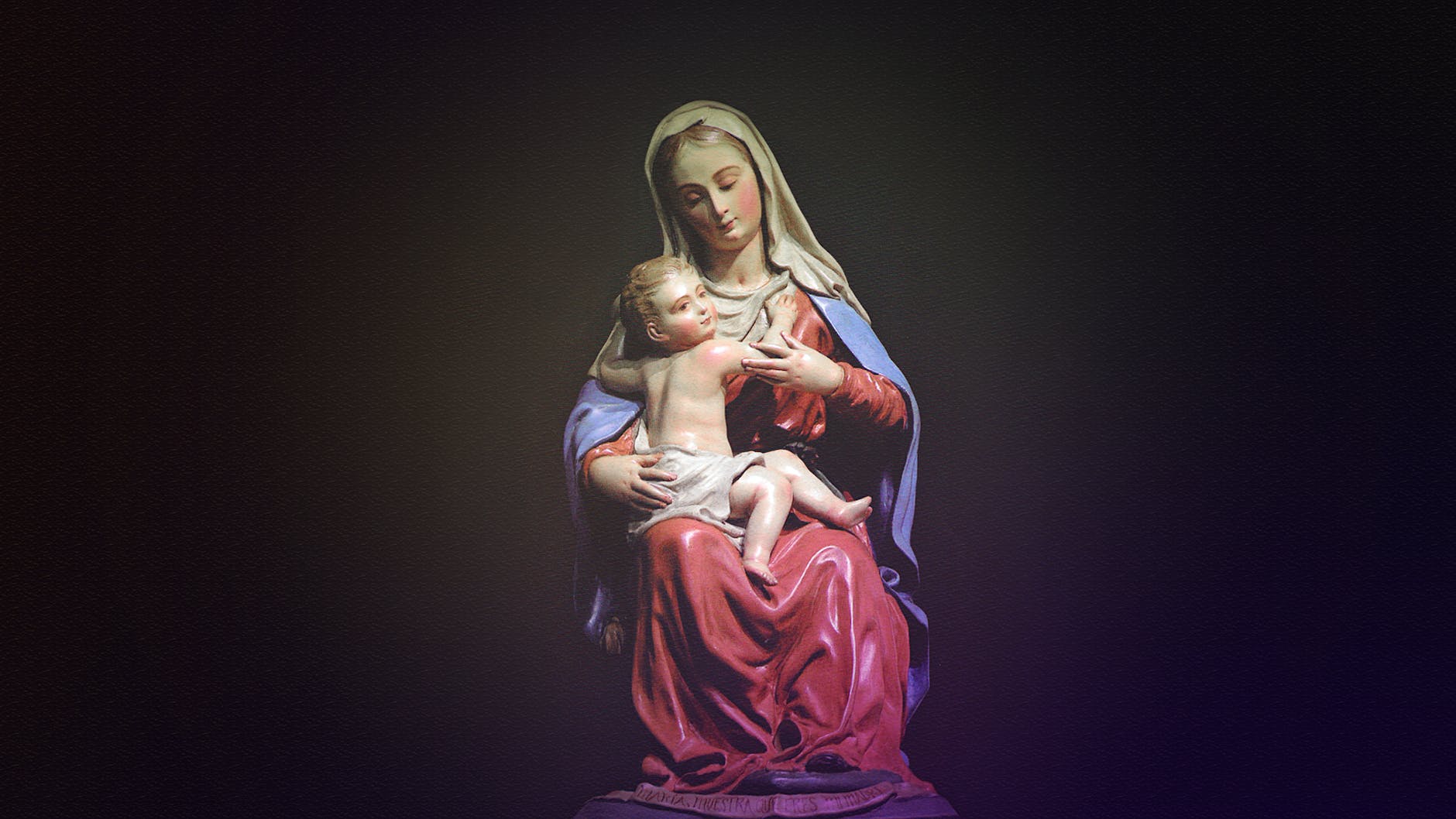
Photo by Ivan Samkov on Pexels.com

We serve a God who is BOTH– completely HOLY and Good, and Righteous, as well as merciful, gracious and compassionate. God forgives us without lowering His standards. He sent His Son to save us– While we were yet sinners! Romans 5 continues, “ Since we have now been justified by his blood, how much more shall we be saved from God’s wrath through him! For if, while we were God’s enemies, we were reconciled to him through the death of his Son, how much more, having been reconciled, shall we be saved through his life!” (Romans 5:9-10) We don’t have to be terrified of God. We don’t have to be constantly reminded of our past guilt and shame. We don’t have to fear that we will “fail” to please God if we choose to follow Him.

Blog at WordPress.com.

Up ↑