We were reviewing last week’s VBS at our church–sharing stories, “crunching” numbers, evaluating the various elements that made up each day… One of the phrases that came out of our various talks and meetings was that Bible School week had been “bathed in prayer.” What does that actually mean?
For me, it represents how prayer surrounded us– much like bath water.
It covered every part of our efforts– we prayed for the children who were registered– and those who came unexpectedly as guests. We prayed for the families of the children–those from our church, those from neighboring churches, and those who are unchurched. We prayed for all the volunteers– teens, adults, those who where there each day of VBS, and those who helped before and after with decorations, building, providing supplies and funding, advertising, etc. We prayed for each team– teaching, drama, singing, videography, sound and lights, registration, group leaders, science and crafts, snacks, sports and games, record-keeping, security, and more! We prayed weeks before VBS, and we are still praying that the seeds planted last week will grow and produce a harvest!
It flowed freely. We had organized prayer meetings, and spontaneous outbursts of prayer. We prayed in the “opportune moment” and in the planned schedule. Prayer was a consistent part of each day, but came in random bursts, as well. It came from staff, from volunteers, from children and retirees. Everyone can’t work at VBS– but everyone can pray!
It “cleansed” our efforts. It is easy to get side-tracked with the chaos and fol-de-rol of an event like Bible School. It is easy to lose focus and let stress, frustration, and even bitterness worm their way into our efforts. On the very first day, our registration and check-in system crashed– and this could have been a disaster. But we had prayed before; we prayed during our confusion, and we praised God that, system or no, HE knew who was there, where they should go, and how we should respond to THEM. We are in the middle of a construction project in our children’s wing– we had to plan around fewer classrooms available, and less indoor space. On the hottest week of the summer (so far) we had to hope that the weather would cooperate for our games. God provided cloud cover on at least two of the mornings, and overnight showers– we did not have to deal with heavy rains or the worst heat of the day on any of our days! And (at least partly) because we had prayed in advance, we were grateful instead of stressful about our circumstances, marveling at God’s provision.
Praying brings peace– like the clean and relaxed feeling you have after a good soak in the bath! And I hope that peace was reflected in the way we welcomed each child each day– in the way we listened, and in the way we spoke; in the way we encouraged, and in the way we taught; in the way we interacted with the children, and with the other volunteers.
We tend to “bathe” our “big concerns” in prayer. But what about our “little things?” What if we spent as much time praying about our next doctor appointment? Our next church service? Our next family outing?
We NEED prayer! Our efforts, without prayer, humility, and submission to the Spirit of the Lord, will be fruitless. With prayer, our lives, efforts, and plans will be clean, and bring Glory to God!
Just a thought– but if we bathed more things in prayer, we might just receive more “showers of blessing!”
I spent last week helping out at Vacation Bible School. But most of the kids didn’t see me “working.” I was behind a curtain, helping with the puppet show. My puppet was a little boy named “JJ.” He was a hand puppet. Hand puppets are pretty simple to operate– you stick your hand inside the puppet, and move its mouth as you talk. There are also “hands” you can operate with your fingers to make the puppet clap or wave, etc. During the course of the week, “JJ” also had one “costume change”– he wore a simple plastic bag poncho, but he put it on backwards. “JJ” was the comic relief of the puppetry team! But his purpose was to expand on the Biblical principles we were teaching throughout the week. “JJ” learned about sin and its effects– often by example– and about God’s forgiveness. And he helped the younger kids review their daily Bible verse.
I have worked with puppets off and on over the years, especially during my time as a youth services librarian. Puppets help tell stories in an entertaining and engaging way. But puppets are merely tools. The same stories can be told using flannel cut-outs, or videos, or illustrated comic books. In fact, everything that “JJ” did was scripted. If he nodded, it was because the script said to nod. If he sang, the song was in the script. And when the puppet show was done for the day, “JJ” rode around in a canvas bag, lifeless and unused.
We use puppets at VBS to teach about Christian principles– but pursuing a Christian life is NOT about being a puppet. Many people reject Christ, because they believe that God is asking them to become puppets. They learn about concepts like the indwelling of the Holy Spirit, and it sounds to them as though God will “possess” them, and take away their free will and their ability to live life on “their” terms. But that is not what Jesus taught. Jesus was perfect in Righteousness– yet he clearly CHOSE to follow His Father’s instructions, and he did it using His own unique personality and style. Jesus did not parrot the words of God when He taught. He told stories– parables– that brought God’s laws and commands to life, and helped people understand them better. Jesus was no puppet. And He doesn’t ask us to be puppets, either. Instead, we are witnesses– telling our own stories, living our own lives–SHOWing others how Christ lives THROUGH us. God doesn’t want “tools” or mindless puppets. He wants a relationship with us that gives our unique experiences an eternal and sacred purpose.
Yes, in Christ, we become a “new creation.” (see 2 Corinthians 5:17) We see the world through a different lens; our minds are renewed (see Romans 12:2); we follow Christ’s example and walk in obedience to God. But we do so out of our desire to be closer to God– our desire to pursue the relationship that only God can offer us. The Holy Spirit indwells us; He doesn’t coerce us or take over our mind– rather, He helps us continue in our newness and progress toward greater Godliness!
It was fun to spend a week using “JJ” to help teach the daily lessons. But we had dozens of amazing volunteers who also made VBS memorable, fun, and, hopefully a life-changing week for the kids who came. There were the actors who did a daily skit; the singers who taught the kids vibrant songs and dance moves; the Bible teachers who explained deep issues with wonderful skill; the volunteers who taught science lessons and crafts that tied in with our daily themes; the food staff, who created treats that told a story; the sports team that provided games (and plenty of water on hot days!) and the group leaders, greeters, and security staff that ensured that the kids were welcomed, introduced to others, and kept safe. Each of us lived out the message of the Gospel– God’s love for each of His children!– in our unique ways.
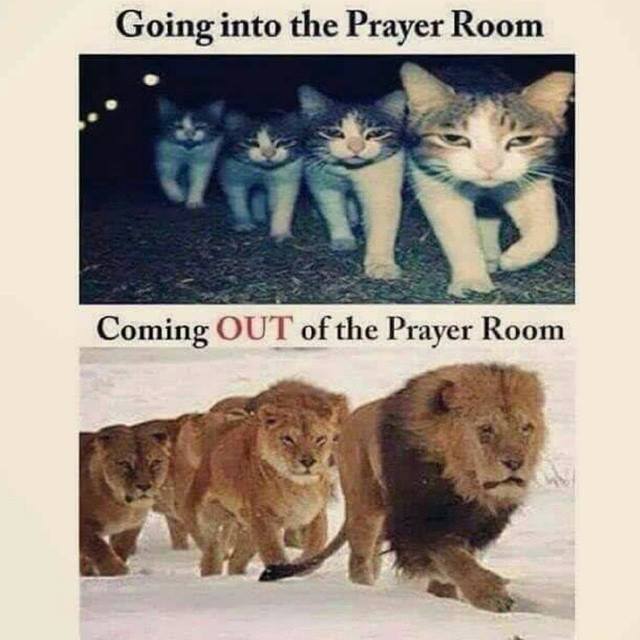
One of the ways we served last week was in prayer. We prayed together as a team. We prayed in our small groups and areas, and we prayed with the kids. And each person’s prayer was unique. Some people get nervous about praying aloud in a group– others are eloquent speakers. But each person’s prayer shows their heart for God and others. In our puppet skit, JJ talked about wanting to pray with his “granny” after the skit. But the puppets never prayed. And I think that is appropriate. Prayer is not about a “script.” Prayer is not about someone else putting words in your mouth. Prayer doesn’t come from a hand or a finger moving us to speak. Prayer comes from the heart. And I hope the kids (and adults) last week were moved more by our prayers than by our puppets!
I love solving things–puzzles, mysteries, codes–I love finding the answer. It’s very satisfying. And I love reading mystery stories–Agatha Christie, Georges Simenon, Dorothy Sayers… But I have very mixed feelings about Sherlock Holmes. Always have had. I loved the intricacy of the mysteries themselves. They seemed impossible; unsolvable. Yet somehow, Holmes always knew the answer. And then, as he calmly explained how “elementary” it was, he would throw out details that no one else could possibly know without three doctorate degrees and a photographic memory.
I recently watched a series of TV episodes about Sherlock Holmes, and it struck me again. However, in our modern age, it is not so very impossible to become an expert on esoteric topics in almost no time. We have the internet, where vast amounts of information is available at the tip of our fingers. We can find facts about nearly everything, everywhere, at any point in history. We can virtually track people, visit places, experience adventures, and yes, even solve mysteries– all without leaving our couch. And while there are numerous dangers of relying on information found in cyberspace, there is no denying the easy availability of it.
One of the things I like about most mysteries is that they show the triumph of good over evil. Mysteries tend to show us, not only the impact of evil in the loss of life or property, the suffering of victims, and the need for vigilance, but the longing for order and knowledge and safety that we hope someone can “solve.” A good mystery story ties up all the “loose ends” and answers all the burning questions– “Who did it?” “How?” “Why?” By the end of the story, we feel victorious and safe and satisfied.
But reading mysteries or solving puzzles can give us a false sense of safety and knowledge. In real life, there are many unsolved puzzles, unanwered questions, and “cold” case crimes with no resolution. We are left asking “Why?” and “How?” about many of the things that have happened in our lives. And the answers are not “elementary”– even for the most intelligent among us.
As an adult, I read (and watch) the Sherlock Holmes mysteries with a different mindset. I know, from past experience, that Sherlock Holmes will always outwit the criminal. And I will probably learn some little-known fact– likely one that I never needed to know–that may be astonishing. But I am more interested in the character of Sherlock Holmes himself, now. Likewise with many of the other detectives I enjoy reading about. Because mysteries involve the triumph of good over evil, they attract writers who study the ongoing fight between the two. Mysteries often involve complex machinations, intricate plots, many-layered characters, and misleading information.
And the detectives are often equally complex and many-layered. Their startling intellect and deductive skills leave us in awe. Yet, they also have human frailties that lead them to overlook key clues or lead them to take risks beyond what we would consider wise. And many of them wrestle with the concept of good and evil–they are often tempted to take the law into their own hands, or to do something illegal in order to bring a criminal to justice. Thus, the reader is left with another mysterious question– just what is “Good” or “Evil?” Are there times when, in order to do “right” we may need to do something that others consider “wrong?” Can two “wrongs” make a “right?”
Some of the best detective characters are almost god-like in their ability to ferret out evil. But they are constrained in their ability to defeat evil. They are, in the end, human. Even Sherlock Holmes, with his arrogant assumptions and dizzying deductions, cannot wipe out evil; cannot keep it from touching and even ruining lives. In fact, as Sherlock Holmes (and others) discovers, intelligence is often a key ingredient of evil. “Stupid” criminals are easy to catch. The great detectives are needed to find the brilliant masterminds of evil; the ones who would otherwise go undetected and unstopped.
The man who created Sherlock Holmes, Sir Arthur Conan Doyle, was an agnostic and, in later life, became a spiritualist. He wrestled with the concepts of good and evil and particularly with the concept of how a “good” God could allow evil to exist. He was skeptical of the existence of the Biblical God, but instead believed in the continuing existence of the human spirit after death. He believed that the battle between good and evil was left to mankind to solve. He, like his famous character’s sidekick, Watson, was a medical doctor. He was a man who worshipped science– a man who valued facts above all. In fact, the stories of Sherlock Holmes offer us what seems to be a triumph, not just of good over evil, but of facts over faith.
Today, we celebrate the triumph of faith and facts over skepticism and arrogance. Jesus, unlike Sherlock Holmes, did not come to the earth to “solve the puzzle of evil” by bringing individual human criminals to justice. He did not brag about His great intellect, though He dazzled the Jewish Priests of His day with His knowledge and understanding of Scripture. Jesus had no fixed address. He did not write treatises or analyze dust samples– He created nature; He had no need for further study! His disciples did not write about Jesus merely because He did miracles. They did not write about Him in order to become rich or famous. Instead, they were martyred and exiled. Jesus did not put an end to the corruption of the priesthood under the Pharisees and Sadducees. He did not break the yoke of the powerful Roman Empire. He died on a wooden cross, hung between two criminals, after being convicted in an illegal trial, and a farce of an appeal to Pilate. He was flogged, taunted, pierced, and buried in a borrowed tomb. He was, by all appearances, defeated by evil and death. He lost– by human standards and appearances.
But faith tells us that God is Good; that Jesus is God; that Good triumphs over evil. And the facts bear out our faith. Yes, Jesus died. It was recorded, affirmed, and witnessed. But that wasn’t the end of the story. He rose again. There is no body in the tomb. There are witnesses to His post-crucifixion appearances. There were witnesses of his ascent into Heaven. His disciples died for their testimony and continued faith in the face of persecution, torture, and threats. And believers over the past two millennia have lived and died in the faith. We are witnesses of His power to redeem, to restore, and renew lives.
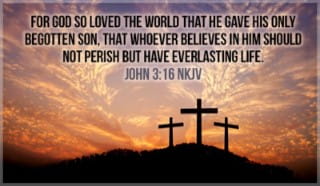
The events of Good Friday and Easter present the ultimate mystery. Jesus, Son of God, Messiah– eternal, all-powerful, all-Good– became a sacrifice for us. He allowed Himself to be an innocent victim of Evil for our Good. And in doing so, He didn’t just “solve” a puzzle– He defeated the power of Evil once for all! We don’t have to know more than the enemy. We don’t have to chase down and outwit death. We don’t have to be terrorized by the threat of evil, the weight of our guilt, or the power of the grave. All we have to do to defeat the evil in our lives is to trust in the work of the Risen Savior and follow Him.
We’ve been cleaning out my Mom’s house for sale, and we came across a couple of shoeboxes of old rocks. I’m not sure which of us kids gathered them up, or when, but at some point, one of us excitedly gathered and saved some “pretty” rocks, thinking they might contain gold or crystals or some other special treasure. And Mom saved them.
I still like rocks– gemstones, geodes, fossils, etc. I like interesting and unusual rocks. My husband and I have several boxes of “pretty” rocks around the house. Some of them we polish and tumble to bring out more of their inner beauty; others we leave in their natural state.
When I was in college and early in my teaching career, it was common for young people to say that something “really rocks!” if they were impressed or excited. Of course, this phrase wasn’t referring to rocks and stones, but to rock and roll music, but the phrase has stuck with me. There is very little about most rocks that would cause me to say that they “Rock!” But that is my point. Jesus thinks a lot about rocks– even ordinary ones.
I was reminded today about some of what Jesus said about rocks and stones:
When he came near the place where the road goes down the Mount of Olives, the whole crowd of disciples began joyfully to praise God in loud voices for all the miracles they had seen: “Blessed is the king who comes in the name of the Lord!” “Peace in heaven and glory in the highest!”| Some of the Pharisees in the crowd said to Jesus, “Teacher, rebuke your disciples!” “I tell you,” he replied, “if they keep quiet, the stones will cry out.” As he approached Jerusalem and saw the city, he wept over it and said, “If you, even you, had only known on this day what would bring you peace—but now it is hidden from your eyes. The days will come upon you when your enemies will build an embankment against you and encircle you and hem you in on every side. They will dash you to the ground, you and the children within your walls. They will not leave one stone on another, because you did not recognize the time of God’s coming to you.”
Luke 19:37-44 NIV (emphasis added)
And do not presume to say to yourselves, ‘We have Abraham as our father,’ for I tell you, God is able from these stones to raise up children for Abraham.
Matthew 3:9 ESV
But all those who come and listen and obey me are like a man who builds a house on a strong foundation laid upon the underlying rock. When the floodwaters rise and break against the house, it stands firm, for it is strongly built.
Luke 6:47-48 The Living Bible (emphasis added)
We spend most of our lives surrounded by rocks, but we rarely take notice. Rocks are generally ugly, hard, and inconvenient. We stumble over them (see many other scripture references!), pile them up, remove them from our gardens and fields, and throw them or kick them out of our way. But Jesus sees rocks just as He does all of His creation. Rocks serve as an enduring foundation for buildings– making them a visual reminder of God’s enduring strength and faithfulness. And did you know that rocks may literally “cry out” in testimony of God’s power?! https://www.templeton.org/news/can-the-rocks-cry-outhttps://www.icr.org/article/stones-cry-out-what-rocks-fossils-say/
As I was thinking of rocks and stones– how common and ordinary they seem– I was also reminded that Jesus relished in using the ubiquitous and ordinary things around us to teach lessons. Seeds, rocks, sheep, trees– all were used in Jesus’ parables to give us practical ways of understanding God’s mysterious nature. And the same is true today. I often learn more about God by interacting with ordinary people and performing humble tasks than I sometimes do at “religious” retreats or doing “holy” work.
There are days when I don’t feel very “successful” in sharing the Gospel message or helping shape disciples for Christ; when I feel like I’m writing to an invisible audience of one or two people, and saying the same things over again. And yet, God called Peter a “Rock” upon which He would build His church– Peter the fisherman; Peter the one who denied Christ three times during His moment of greatest crisis; Peter who had no formal training in theology. And this same Peter calls us “living stones” building up the Church. I am not called on to be sparking like a gem, but I am called on to be like a stone– resting on Jesus the Cornerstone (see 1 Peter 2 :4-8). So God calls me to continue to write, even as I go about my other daily work.
And God can use the “rocks” in our lives– the things we stumble over, the things that seem hard and even useless–to do amazing things. That neighbor who seems stubborn and resistant…that problem that just doesn’t seem to go away… that nagging pain…those voices telling us that we are not enough. God can turn them into “children of Abraham.” God can use them to build us up. God can change hearts of stone into hearts of flesh, overflowing with compassion (see Ezekiel 36:26) God can cause even the rocks to cry out in praise!
And in all that I do, I too want to “cry out”– both in prayer TO God and in testimony ABOUT God. And my testimony is that Jesus ROCKS!
I just finished reading a book about atheism– or more accurately, a book about the unreasonableness and faulty logic of modern atheism as espoused by many scientists and philosophers. https://www.goodreads.com/book/show/56614922-is-atheism-dead One of the arguments concerns the view, held by many atheists, that life exists only in the material– in other words, that only “matter” “matters.” They argue against the existence of the soul, or the uniqueness of mankind in relation to other living things. There is nothing beyond science and whatever science can explain. Therefore, there is no God. If there is no God, and we were not created in His image, they argue, then there is no Heaven or Hell, and nothing beyond what we can experience with our senses. There is no purpose for our lives; no consequences for our thoughts or actions; no higher power or authority than our own. We are simply a product of the evolutionary process and a sum of our material components. Our thoughts are simply products of brainwaves firing in a certain pattern; our emotions conditioned and triggered by no more than a series of chemical and physical reactions to stimuli.
It is not my intention to argue or take the time to explain in the same detail that was in the book I finished, but I was struck by one of the points the author made. Without a belief in the God of creation, it is illogical and inexplicable that we should be affected emotionally by ANYTHING outside of the realm of material experience and scientific study. That means that we cannot fully explain or appreciate art, music, the grandeur of the night sky, the softness and warmth of a baby’s cheek, the thrill of a perfect sunset, the memory-evoking smell of a loved-one’s perfume or after-shave…our senses should not “move” our emotions. We can analyze a piece of artwork– it’s color or composition, the balance of light and dark, or the perfection of its perspective. But we cannot explain why it is “art,” or why it “speaks” to us (or turns us off!) We can discuss sound waves and tonality in music, but we cannot explain why certain songs move us to tears or cheer our spirits. We cannot say what makes a poem “connect” to something in our psyche, such that its lines come to us almost unbidden in times of distress.
But all of this makes amazing sense in a world where God exists– a God that is the Author of Creation; of Glory; of Compassion and Wonder. God not only exists– He makes Himself known in the music of a waterfall, in the gentle fall of snowflakes, in the scent of lilacs, and in the smile of someone we love. And He has given us the ability to feel awe, and to strive to add beauty, art, and meaning to the world around us. This is unique among His creation. Birds sing; dogs romp and play; flowers bloom– but they do not fall to their knees in worship; they do not compose sonnets or build cathedrals in acts of sheer adoration. They are not moved to tears or stunned into silence by sun glinting on a spider’s web– even the spider ignores the beauty of its own functional creation.
We are fearfully and wonderfully made–and wonder-ful-ly made! Today is a great day to look and listen for God’s glorious touches all around us. And it’s a great day to reflect back to Him all the wonder and glory of Who He Is in praise!
The heavens declare the glory of God; and the firmament sheweth his handywork. Day unto day uttereth speech, and night unto night sheweth knowledge. There is no speech nor language, where their voice is not heard. Their line is gone out through all the earth, and their words to the end of the world. In them hath he set a tabernacle for the sun, which is as a bridegroom coming out of his chamber, and rejoiceth as a strong man to run a race.His going forth is from the end of the heaven, and his circuit unto the ends of it: and there is nothing hid from the heat thereof.
I have a friend who is very keen to study if prayer “works.” His theory is that if someone were to measure the number of prayers said in various regions of the world during the COVID-19 pandemic, and compare those numbers to the rates of infection, numbers of deaths, etc, for the same regions, one could “prove” whether or not prayer is effective.
I don’t think my friend is being sarcastic or overly cynical– I believe he is sincere in wanting to study prayer. I accept his desire to study prayer–to quantify it, even to “prove” it, or legitimate it for those who are skeptical. Unfortunately, he wants to study it as an observer, and not a participant, and he wants to conduct a physical study of a metaphysical practice.
Scientists are conducting several studies during this time, to see what “works.” Does social distancing “work” better than building up “herd immunity?” Is there a treatment that works better, or faster than others? Can we develop an effective vaccine? What practices– social, hygienic, medical, political– might help mitigate the spread of future viruses? Even these studies will not be definitive. The results will depend a great deal on methodology, and the conclusions will be open to interpretation.
There are additional problems in studying whether or not prayer “works” or not, because prayer is metaphysical. Here are just a few of the “measurement” problems:
How do you measure prayer? By length of time? Number of words used? The number of prayers prayed by each person over a certain period of time?
Do you count ritual prayers? Mantras? Meditation? Unspoken “thought” prayers? Recitations? Prayers spoken “in tongues” or in ecstatic states?
Do you count corporate prayer as a single prayer or by the number of people in the group?
What about social media? Do you count all the people who say they will send “thoughts and prayers?” Do you count those who say they “will pray,” or only those who are “praying,” or “praying now.”
If you are testing by geographical region, how do you account for people who are praying for others around the world?
How do you measure the efficacy of prayer (as opposed to other factors)? If a region has a higher mortality rate, even though many people prayed, does that mean that prayer “doesn’t work?” Or does it mean that the mortality rate would have been even more devastating (given other factors) without prayer?
More than just measurement problems, there are problems with the very nature of prayer that make such a study impossible:
Even if you could come up with a standard definition of “prayer” in order to get a count, prayer is not a physical substance or action. Prayer is not a “cause and effect” exchange. It is communication. If ten people say the same thing at the same time to the same person, it is not necessarily “more effective” than a single person-to-person exchange. If a thousand people pray to the same “god” who is not a god–“Mother Nature” or “The Force,” for example, it cannot be compared to a single person praying to a Loving and All-Powerful God.
God’s ways are not our ways. If we are measuring for one thing, God may be working for a different, unseen outcome. If more people contract the virus during the “study period”, we see that as “failure.” But God may be preparing that region to build up a resistance or immunity for a future outbreak. God answered prayer in a mighty way that we won’t see immediately. I have known a great many people, and prayed for a great many people who have not received physical healing in this world. They have suffered. They have died. But that doesn’t mean that prayer “didn’t work.” Their sufferings and eventual deaths have often brought about unbelievable works of God– salvation, families restored, friends discovering renewed purpose, strengthened efforts to fight disease, injustice, poverty, etc., and communities coming together in unity and hope.
Prayer is not about measurable results. Prayer is a heart-cry to a caring Creator. It doesn’t just involve asking for healing or miracles or “wish fulfillment.” Prayer involves thanksgiving, worship and adoration, repentance and confession, sharing burdens, asking questions, and building an eternal relationship with God Almighty.
In the end, any study results will be interpreted differently by different people. Some people will be convinced by numerical comparisons to re-consider their view of prayer. Others will never be convinced, no matter how much “evidence” someone else presents.
Prayer isn’t like taking an aspirin, or holding a protest rally, or doing research for a cure. Prayer isn’t about “winning the battle.” It isn’t about “what works.” It isn’t about “what” at all. It’s about WHO.
God “works.” God is sovereign, loving, and wise beyond what we can imagine. His ways endure. And He has vanquished the power of death and disease. Yes, it can still touch us in the here and now, spreading havoc and pain and mourning. But it will never triumph over Hope, and Life, Truth, and Faith. And when we pray, we connect to the source of all that is Eternally victorious! Beyond ANY measure!
It appears on our money in the United States. It is our official national motto, “In God We Trust.” See article here But is it true?
In recent years, many people and groups have tried to challenge this simple four-word phrase. Some claim that it violates the “separation of church and state”. However, the phrase is not specific to any one religion– most of the major world religions (and most of those practiced in America) agree that there is (at least) one God, who can and should be trusted.
I actually worry a little less about those who are challenging the phrase than about those who simply ignore it or give it lip service. And I pray that I don’t fall into the latter group, but in certain moments, I can’t honestly say that I am trusting fully in God. Instead, I tend to trust in various “God-like” things:
I trust my own intuition or my own reason
I trust “experts”
I trust “the science”
I trust “the numbers”
I trust in the money that bears the motto
I trust in my own strengths and abilities
I trust in my husband
I trust my church
I trust my family
I trust what I read on Wikipedia or what I look up on Google
I trust what my friends send me on Facebook or Twitter
Of course, some of the things listed above are obviously suspect; others seem reliable and true. It’s hard to argue against some of the things on the list– it’s hard to doubt what I see, what can be measured, or what has proved true in the past. And yet, I have been hurt and betrayed by many of these things– my feelings are unreliable; my friends or family give me advice with good intentions, but bad results; images and even eyewitness accounts don’t always tell the whole story, and, increasingly, honesty and integrity are being crushed out by compromise and expediency. “If it bleeds, it leads…” “The truth is evolving..” “We all have our own ‘truth’..”
God’s truths are eternal and righteous; that doesn’t make them easy or comfortable. Sometimes it seems as though God takes a stand on both sides of an important issue– or that He takes no side at all– leaving us confused and wanting quick and well-defined answers. I have friends who agonize about being on the “wrong side of history” with many current issues. Let’s face it– no one wants to be on the “wrong side” of anything. We draw lines and pick sides– both sides can’t be “right”, can they? So how can we know if we’re trusting God if God is silent or ambiguous?
In the end, there are a few guidelines that have helped me be more confident and have acted as anchors for my faith:
Reading the Bible: not a verse here, or a chapter there to support a particular action or position–consistent reading THROUGH the Bible– from beginning to end, or at least through an entire book at a time.
Asking tough questions: I would love to assume that I already know the answers or have the “right” opinions, but if I can’t handle being challenged; if I never have any questions or can’t ask the ones I keep pushing down, that should be a sign. Sometimes the more questions I ask, the more I have! But, as uncomfortable as it is in the beginning, it is better to ask, and chase after an uncomfortable answer than to ignore the question or pretend to have all the answers.
LISTENING— really listening, whether to friends who seem to know all the answers (see above) , or those with really good questions. It also means listening to those with whom I am tempted to disagree, and to those with whom I passionately disagree. Listening is not the same as accepting or agreeing, but it is important for at least two reasons:
Every person is made in the image of God– how I treat them is a reflection of my love for God. I will fall short; I will still hurt people’s feelings, whether or not that is my intention, but if I’m doing it through pride, hatred, or disdain, I am dishonoring God.
Second, I cannot say I understand a person if I’m cutting them off, talking over them, and finishing their sentences for them. Often, while we may disagree on semantics or details, it turns out we agree on more than we assume we know about “the other side.”
Praying for wisdom and discernment. It sounds odd to those who trust in their own understanding, but God WILL open your eyes, ears, and mind to truth, even if it’s being twisted, covered up, hidden, or falsified. God promises, again and again, to give wisdom freely to those who ask. He doesn’t want us to be confused and frustrated– but He does want us to seek out His truth instead of wallowing in the bog of “little white lies” and obfuscation around us.
Waiting and listening for the Holy Spirit to prompt my conscience. This is much like asking for wisdom, but more subtle, and in some ways more dramatic. The Holy Spirit is our guide and counselor (think Jiminy Cricket, but much more spiritual and always right). Even if I’m not aware enough to know what to ask or what to question, the Holy Spirit will often prompt me. Have you ever been reading along, or listening to someone’s story, and suddenly you just get the sense that something is “wrong”– you’re not getting the whole truth; or there is a detail that stands out and doesn’t make sense, and it keeps niggling at your conscience? Yeah– that. Pay attention to that– even amidst the graphic images and angry voices surrounding you.
Keeping track of God’s faithfulness– I don’t maintain this blog because I “wish” that God was faithful, or because someone managed to convince me that this is what I “should” believe. God has proven faithful through all my questions. I know I can trust Him because I have trusted Him through good times and difficult times; times when it didn’t make sense, when it wasn’t popular, and when circumstances pointed in other directions. I have seen God’s hand at work in history and prophecy and personal testimony in ways that defy expectation and explanation.
And whether of not it’s printed on my money; whether or not it’s popular or “patriotic” or punishable by law, I will continue to trust in God. He is trustworthy and true; faithful in mercy and love; sovereign and altogether righteous. In God I have trusted; In God I trust; and In God I will continue to trust.

































 Pursuing Prayer